
SelfControl Willpower and Ego Depletion Roy F Baumeister
Self-Control, Willpower, and Ego Depletion Roy F. Baumeister University of Queensland & Florida State University
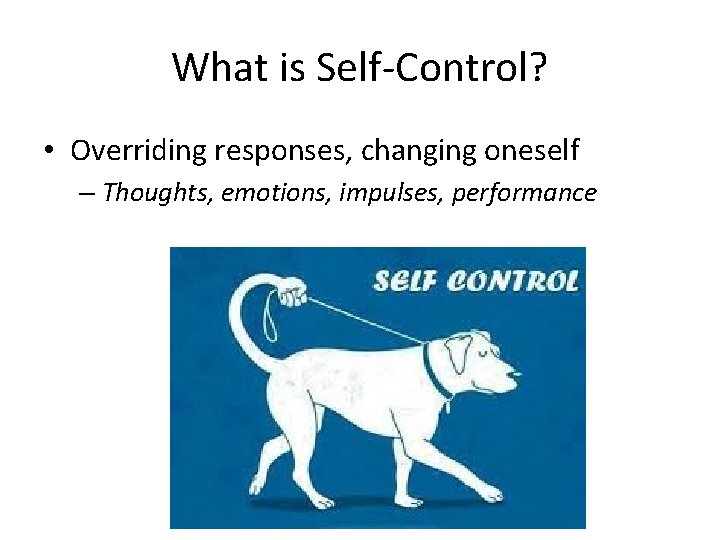
What is Self-Control? • Overriding responses, changing oneself – Thoughts, emotions, impulses, performance

What is Self-Control? • Overriding responses, changing oneself – Thoughts, emotions, impulses, performance • • • Regulate: Change based on idea (standard) Vital for human social life (culture) Managing motivational conflict Key to understanding self Psychological basis of morality Basis for free will
Value of Self-Control • Longitudinal studies • Positive correlations with good outcomes … • Cf. self-esteem
Value of Self-Control • • • Success in work, school Good relationships Happy, low stress Adjustment, mental health Physical health Money problems, debt Good behavior (vs. crime, abuse, prejudice) Longevity Most major personal problems include self-control failure
First Hints • Pattern noticed common to multiple literatures ( Quitting smoking, dieting, alcohol, possibly sex, aggression ) • Self-control deteriorates over time – Also following other demands – Dieters trying to quit smoking at same time do badly at both • Also poor affect regulation
Ego Depletion Theory • • Limited resource Performance declines as willpower depleted Linked to blood glucose Also used for choice, intelligent thought, initiative – Also non-behavioral functions, such as immune system
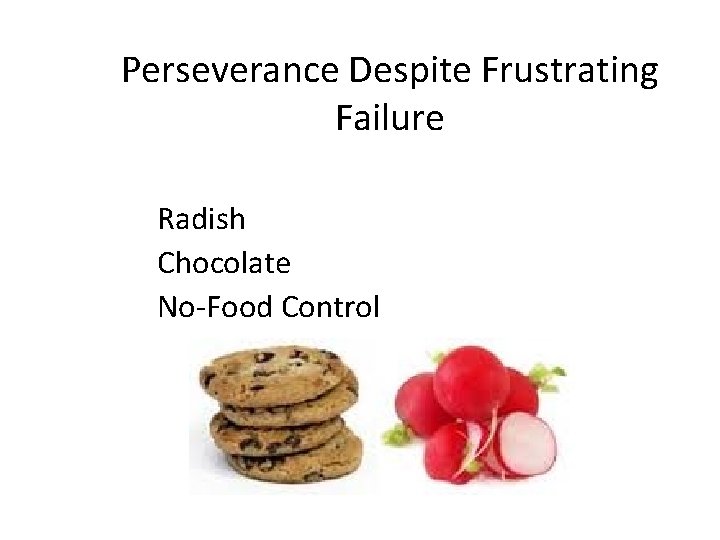
Perseverance Despite Frustrating Failure Radish Chocolate No-Food Control
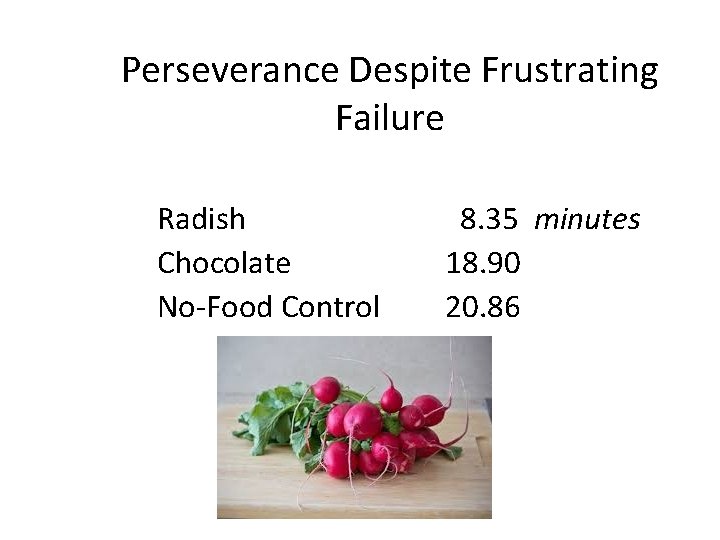
Perseverance Despite Frustrating Failure Radish Chocolate No-Food Control 8. 35 minutes 18. 90 20. 86
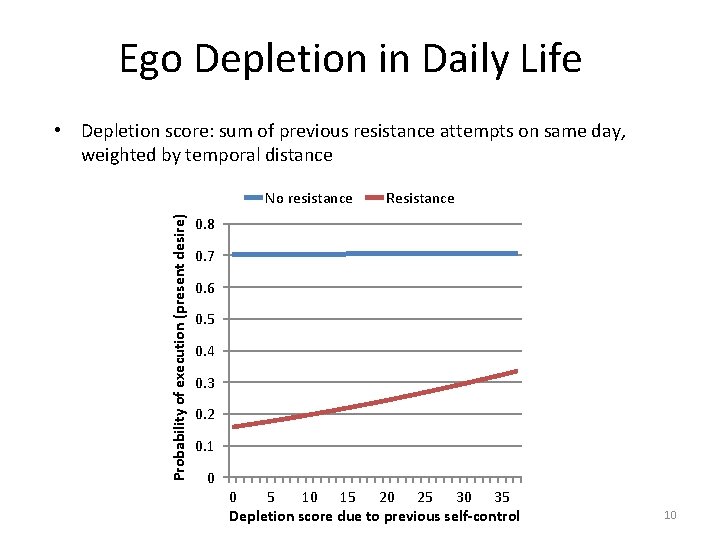
Ego Depletion in Daily Life • Depletion score: sum of previous resistance attempts on same day, weighted by temporal distance Probability of execution (present desire) No resistance Resistance 0. 8 0. 7 0. 6 0. 5 0. 4 0. 3 0. 2 0. 1 0 0 5 10 15 20 25 30 35 Depletion score due to previous self-control 10
First Revisions • Initial idea: running out of fuel. Suspected as like muscle tiredness, insufficient energy to perform task • Problem findings: depletion could be overcome with incentives • Revised: depletion is conservation, not exhaustion – You can overcome it – But then you’re super depleted – Mimic depletion when anticipating future • (Turns out muscle tiredness is like that too. )
Muscle Metaphor • Tired following exertion • Conservation, not exhaustion • Exercise increases strength – Building character
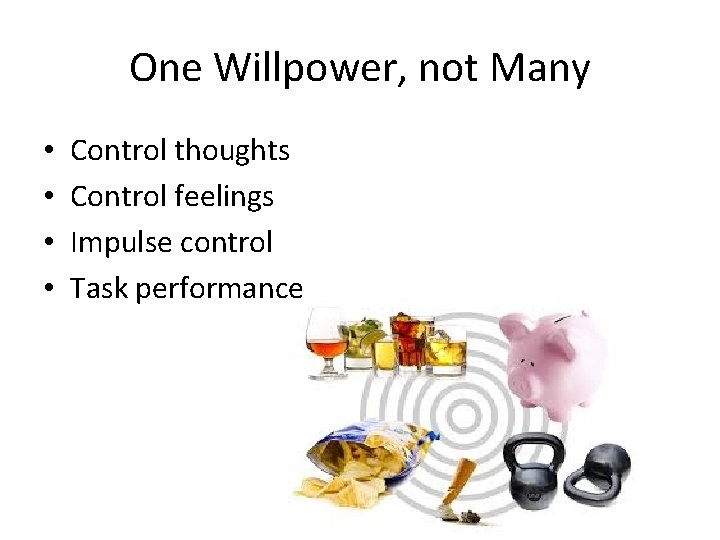
One Willpower, not Many • • Control thoughts Control feelings Impulse control Task performance
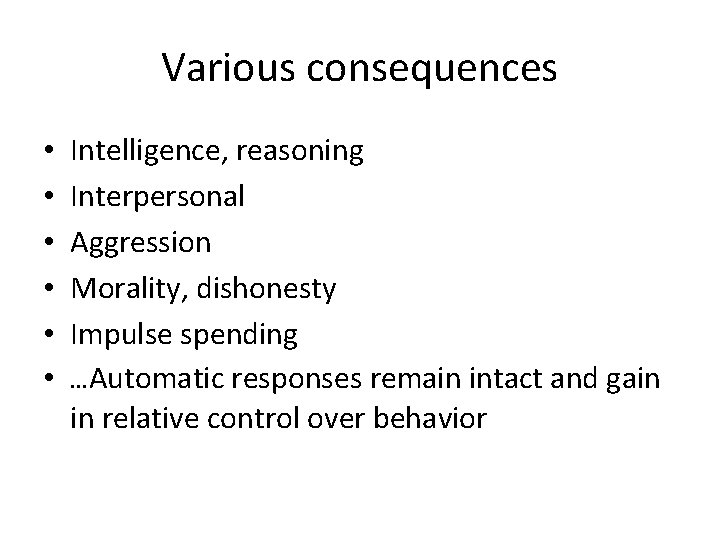
Various consequences • • • Intelligence, reasoning Interpersonal Aggression Morality, dishonesty Impulse spending …Automatic responses remain intact and gain in relative control over behavior
Strength Beyond Self-Control • Choice is depleting – Decision fatigue – Free will
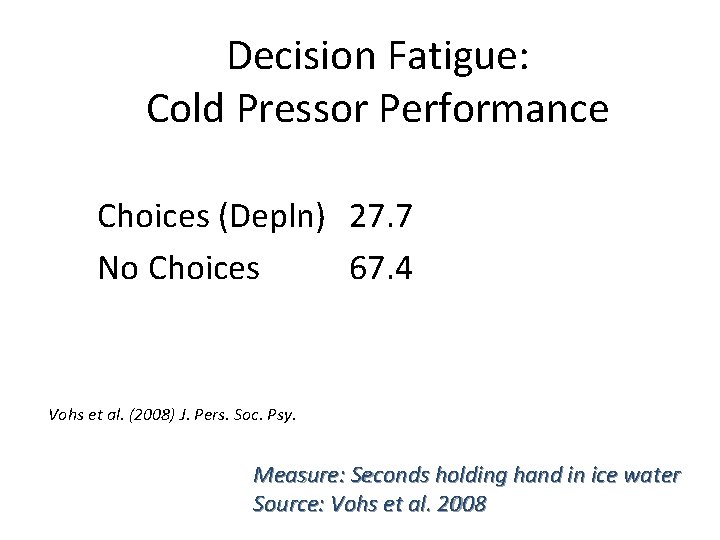
Decision Fatigue: Cold Pressor Performance Choices (Depln) 27. 7 No Choices 67. 4 Vohs et al. (2008) J. Pers. Soc. Psy. Measure: Seconds holding hand in ice water Source: Vohs et al. 2008
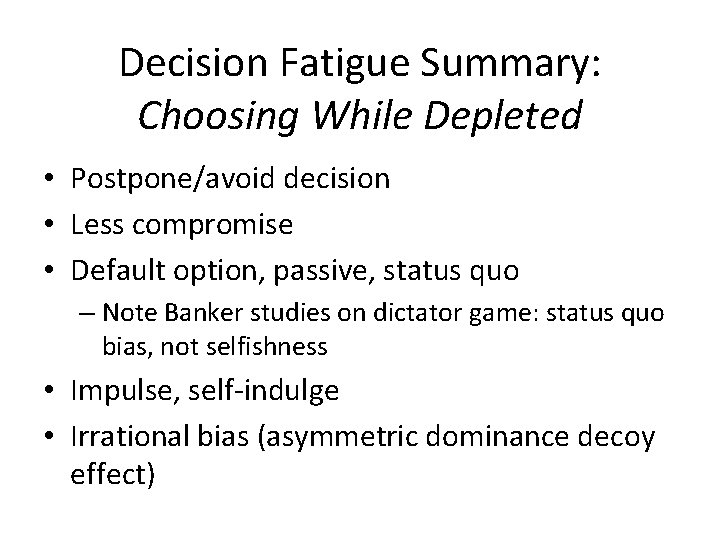
Decision Fatigue Summary: Choosing While Depleted • Postpone/avoid decision • Less compromise • Default option, passive, status quo – Note Banker studies on dictator game: status quo bias, not selfishness • Impulse, self-indulge • Irrational bias (asymmetric dominance decoy effect)
Nature of Decision Fatigue • Note depletion effects on decisions cannot precisely parallel self-control • Shift toward low-effort styles • Avoid risk, no compromise, irrational bias, short-term, status quo bias (conservative)
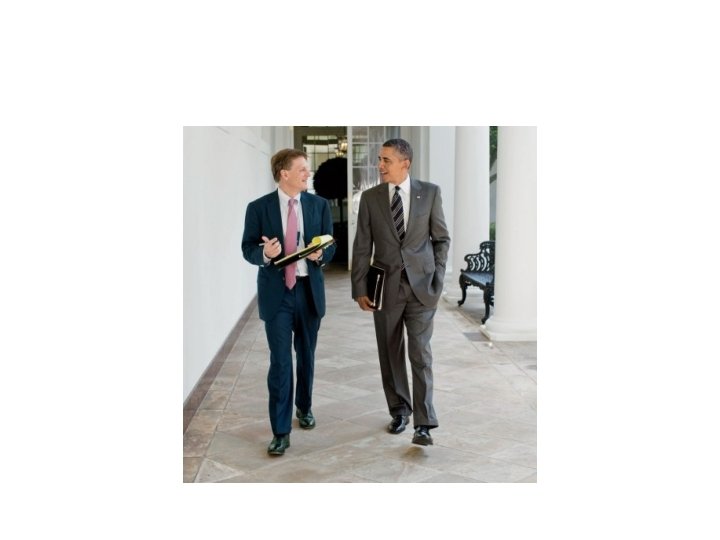
Obama interview • “You’ll see I wear only gray or blue suits, ” he said. “I’m trying to pare down decisions. I don’t want to make decisions about what I’m eating or wearing. Because I have too many other decisions to make. ” He mentioned research that shows the simple act of making decisions degrades one’s ability to make further decisions. “You need to focus your decision-making energy. You need to routinize yourself. You can’t be going through the day distracted by trivia. ”
Strength Beyond Self-Control • Choice is depleting – Decision fatigue • Active vs. passive (initiative)…
Depletion Causes Passivity? • Absence of top-down control • Possible disinhibited activity • But reduces taking initiative Vonasch et al. (in press). Motivation Science.
Taking the Easy Way Out • Depletion reduces top-down mental control • So the automatic, unconscious mind takes over… and does whatever is simpler • Experiment on eating nuts: Eat all you want – People who got peanuts without shells ate more when depleted – People who get peanuts still in shells ate less when depleted
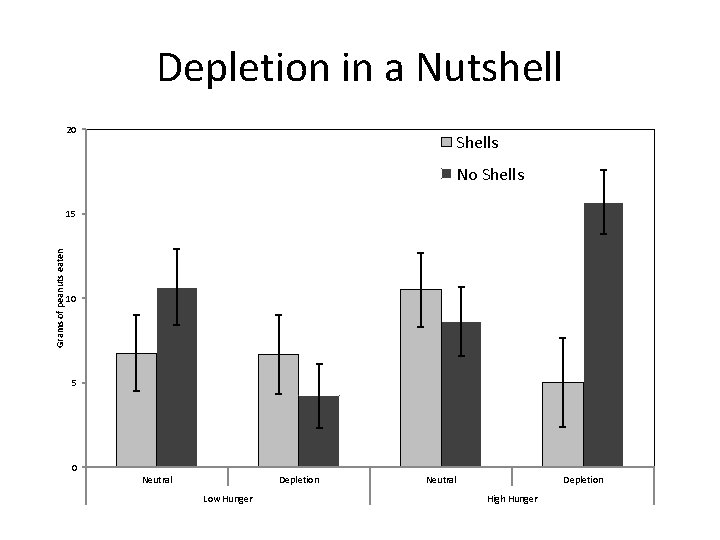
Depletion in a Nutshell 20 Shells No Shells Grams of peanuts eaten 15 10 5 0 Neutral Depletion Low Hunger Neutral Depletion High Hunger
Free Will Revisited • Unlikely that free will exists independent of these processes of self-control, rational choice, and initiative • If there is free will, this is it • If there is no free will, this is what is mistaken for it
Strength Beyond Self-Control • Choice is depleting – Decision fatigue – Free will • • Active vs. passive (initiative)… Planning Uncertainty Keeping secrets
Trait Self-Control • Note, no interaction with depletion in lab • But in life, much more reports of feeling depleted among the low TSC – In lab, everyone does the same task, so it’s equally depleting – Outside, mismanaged life means many more depleting experiences • High trait SC not more willpower, just used better • Manage habits; also more planning
High on Trait Self-Control • Less frequent resistance! • Fewer problematic desires • Less guilt – From other work: lower life stress • Implications: Playing offense, avoiding problems Hofmann et al. (2012) J. Pers. Soc. Psych.
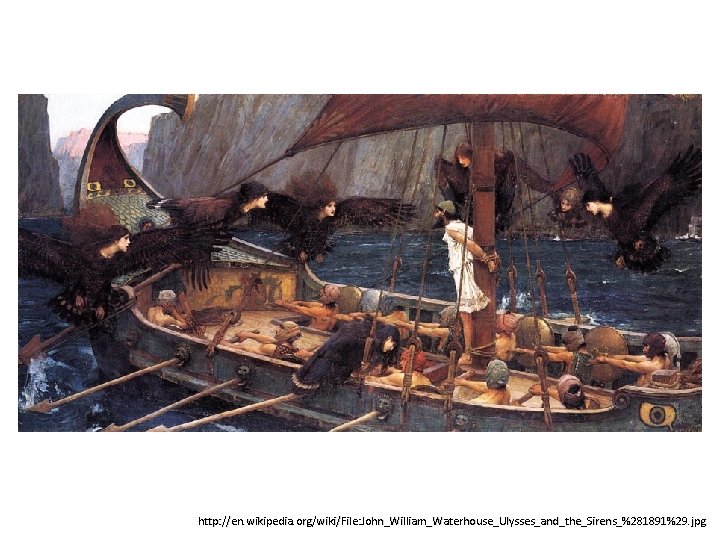
http: //en. wikipedia. org/wiki/File: John_William_Waterhouse_Ulysses_and_the_Sirens_%281891%29. jpg
Trait Self-Control • Many positive outcomes – Cf. self-esteem • Opposites attract (but don’t last) – And can two undercontrolled lovers find happiness together?
What Gets Depleted? Is willpower just a metaphor…or something real? Can energy models be revived? How are mind and body linked?
Willpower More than Metaphor? • The Mardi Gras Effect study • Glucose is relevant – PMS? • Allocation rather than running out
Self-Control Burns Glucose? • Glucose as fuel for brain • Some psychological processes consume more glucose than others • Glucose deficiencies have been found among people with self-control deficits (e. g. , juvenile delinquents)
Lab Studies on Glucose • Acts of self-control might reduce levels of glucose in bloodstream (? ) • Low levels of glucose predict poor performance on subsequent self-control tasks • Administering glucose counteracts effects of depletion – (Though so does mere taste)
Glucose and Decisions • Asymmetric dominance effect • Probability matching • Delay discounting
Understanding Glucose • • Self-control Allocation Immune system Premenstrual syndrome (PMS)
New Emerging View • Glucose is a big part of willpower – Body conserves naturally • “Central governor” does not have inventory of body’s energy reserves – Estimates consumption from byproducts (adenosine), “counting the ashes” – Errs on side of conserving • Evolved to protect immune system, etc.
So… • Mind and body act as if a resource is being depleted by self-control • AND a physical energy resource is genuinely being depleted • But those two facts are only loosely related – Cf. physical muscles
Improvement via Depletion? • Interracial interaction • Leadership studies
Ego Depletion Controversial? • Alternative explanations • No effect • (Contradictory)
Does Ego Depletion… • Always occur under all circumstances? • Sometimes occur under some circumstances? • Never occur under any circumstances?
Challenges, Alternative Theories • Selective allocation of glucose • Just motivation and attention – But self-reported motivation doesn’t change • All in your head/ expectations
Conclusion • • Energy Conservation Building character Trait and state Decisions Initiative, active/passive Glucose
The End
Depletion & Passivity ØAttention control manipulation: watched video of person, words at bottom, instructions to ignore or not ØSecond task, seated at computer for instructions. Blue screen only. ØMeasure: How long did they sit there without doing anything, as opposed to fetching the experimenter?
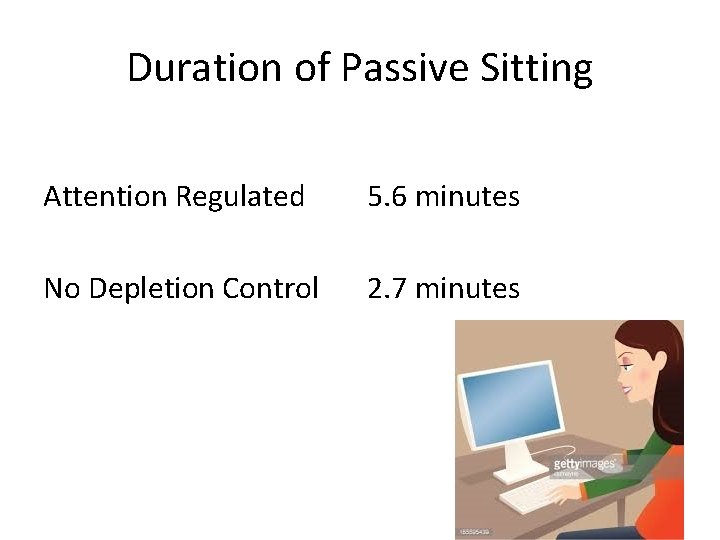
Duration of Passive Sitting Attention Regulated 5. 6 minutes No Depletion Control 2. 7 minutes
Thus, Depleted people are more passive. More prone to do nothing and to choose “default” option.
Selfishness or Passivity? • Dictator game • First studies, depleted persons kept more for self • But confound: That’s where money was • Later studies separated divider from initial stakeholder • Depleted people left the money where it was
Dec 2018 • B school, few brief interruptions, ran seriously over. Need to trim down to an hour. • Nicole suggests shortening the section on passivity. Keep the peanut shell study.
Applied to Morality • More immoral behavior – Cheating, lying
Moral Judgment? • Moral muscle assumes constant judgment • Trolley problem, etc • No reliable effects of depletion or low selfcontrol • BUT: process dissociation studies – E. g. , smother baby to save group from death, or only from non-fatal manual labor conscription • Avoid harm (D) vs. maximize total outcomes (U) • High trait self-control folks are higher on both
- Slides: 51