
Self Organizing Systems A Leadership of Chaos Series
- Slides: 14
Self Organizing Systems A Leadership of Chaos Series Presentation
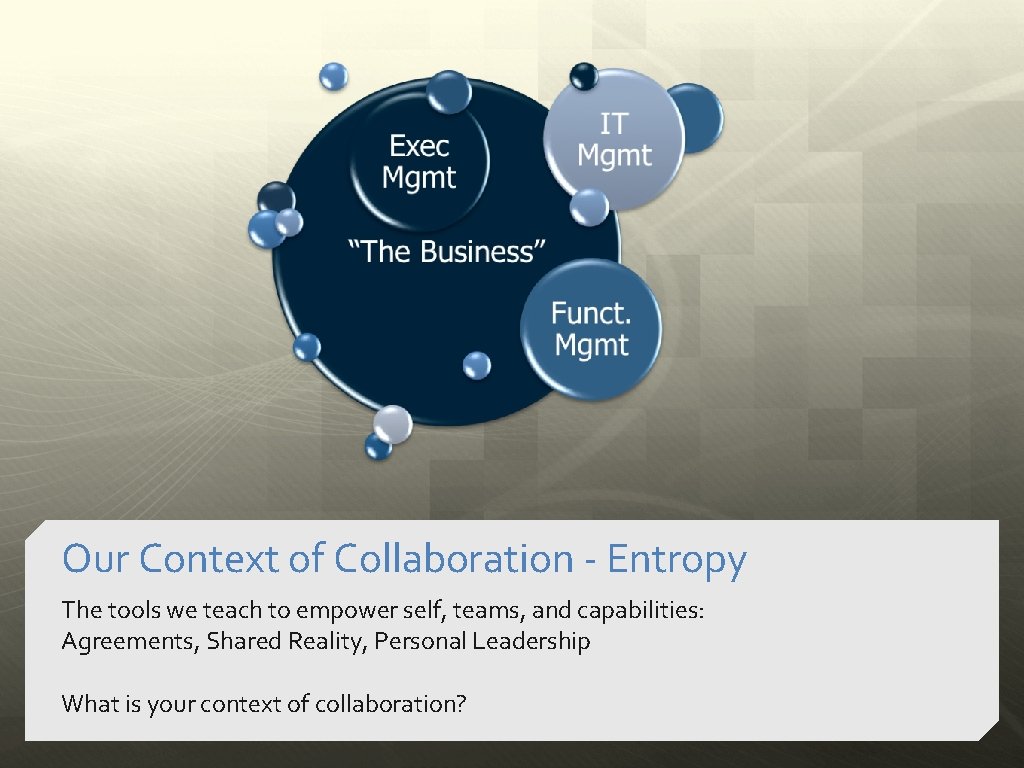
Our Context of Collaboration - Entropy The tools we teach to empower self, teams, and capabilities: Agreements, Shared Reality, Personal Leadership What is your context of collaboration?
Where are we now? Getting to where we want to be.
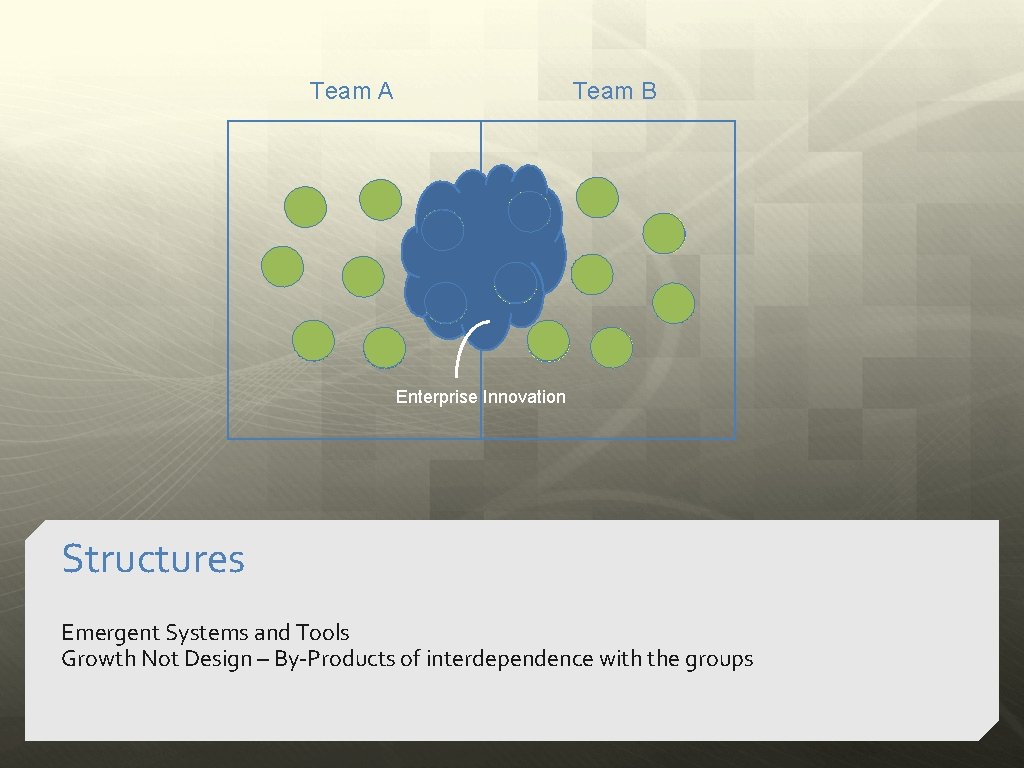
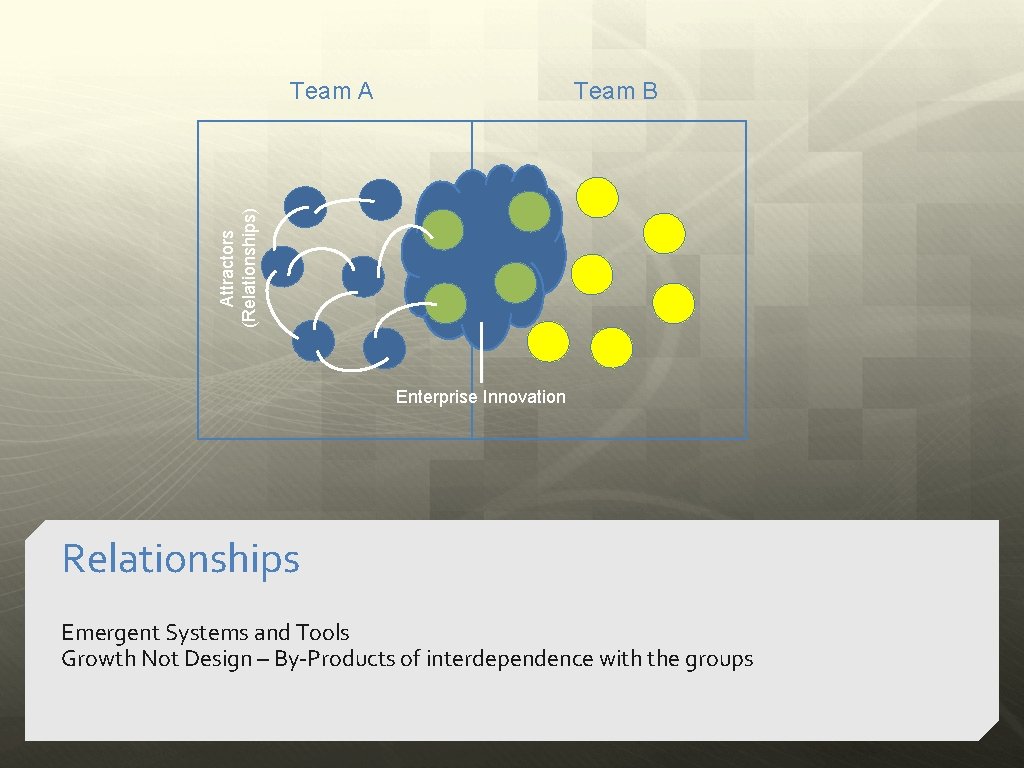
Team A Team B Enterprise Innovation Structures Emergent Systems and Tools Growth Not Design – By-Products of interdependence with the groups
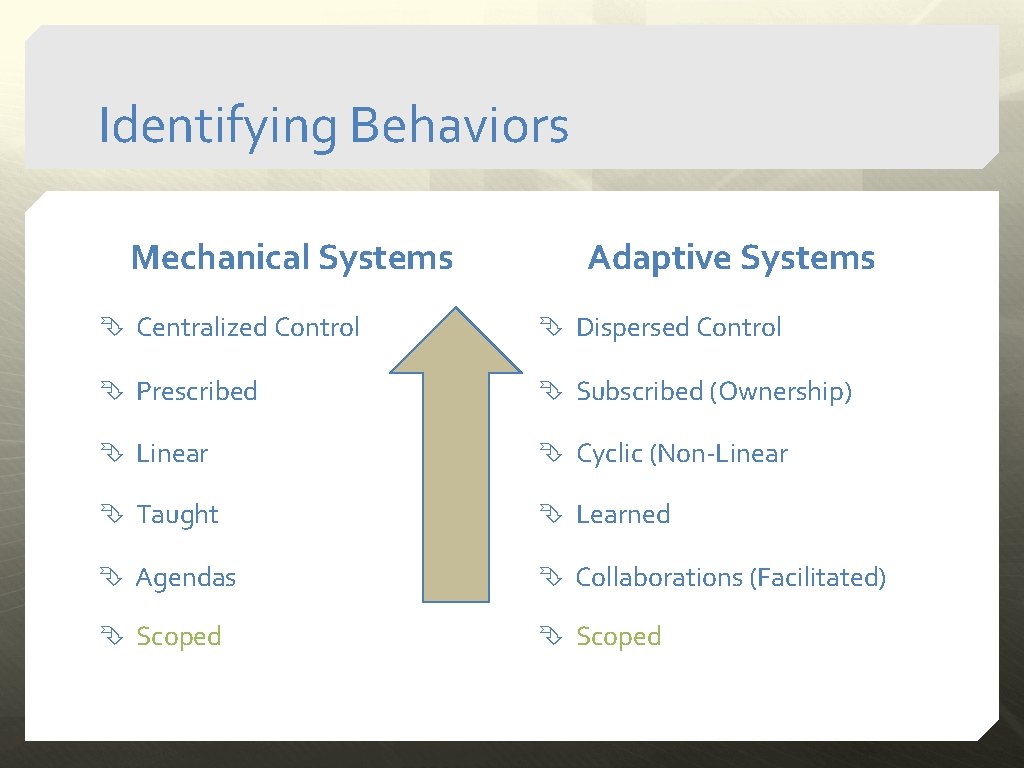
Identifying Behaviors Mechanical Systems Adaptive Systems Centralized Control Dispersed Control Prescribed Subscribed (Ownership) Linear Cyclic (Non-Linear Taught Learned Agendas Collaborations (Facilitated) Scoped
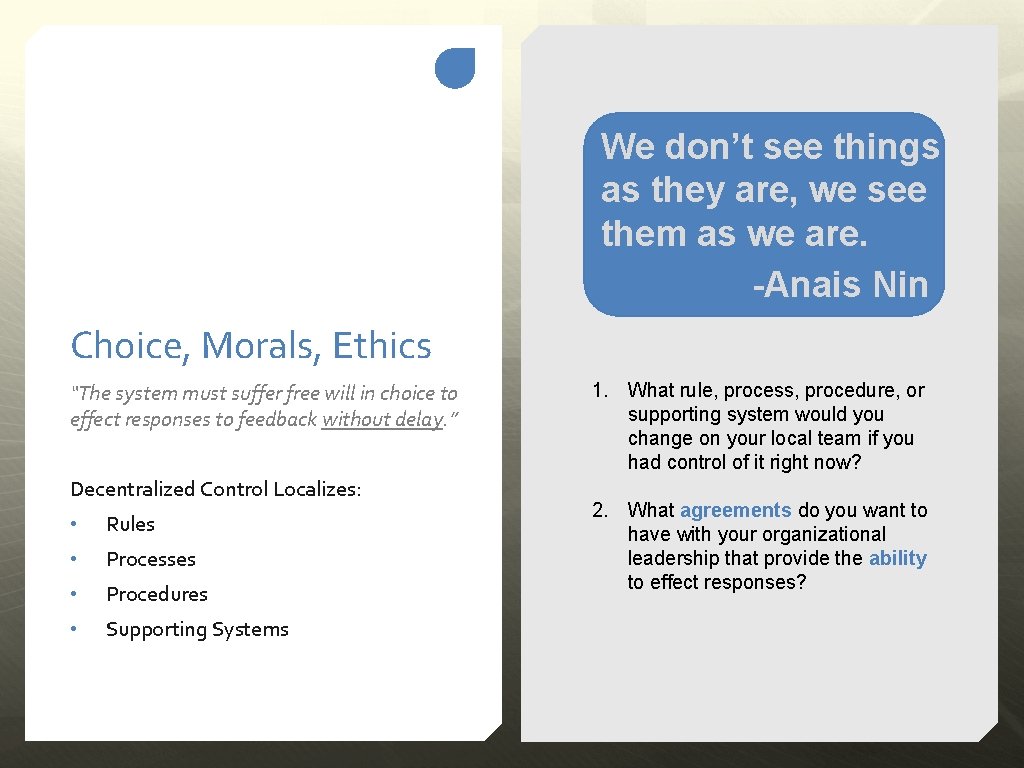
We don’t see things as they are, we see them as we are. -Anais Nin Choice, Morals, Ethics “The system must suffer free will in choice to effect responses to feedback without delay. ” Decentralized Control Localizes: • Rules • Processes • Procedures • Supporting Systems 1. What rule, process, procedure, or supporting system would you change on your local team if you had control of it right now? 2. What agreements do you want to have with your organizational leadership that provide the ability to effect responses?
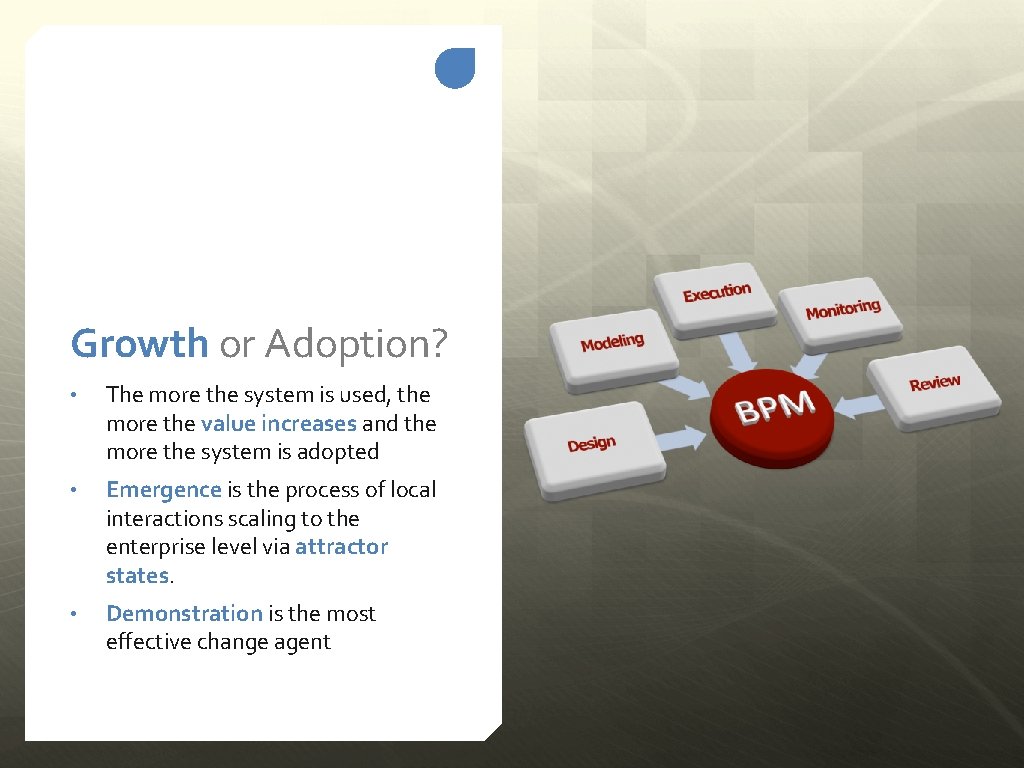
Growth or Adoption? • The more the system is used, the more the value increases and the more the system is adopted • Emergence is the process of local interactions scaling to the enterprise level via attractor states. • Demonstration is the most effective change agent
Why Agreements? The rules of engagement are owned, not prescribed • Empowers Choice • Anticipation • Inspection • Adaptation • Internal Accountability • Trust Ownership is what ‘can’ be done Plans are what ‘will’ be done 1. Does your current team have agreements in place? Are they visible? 2. What would change if they were? 3. What agreements do you want to have with your organizational leadership that provide the ability to effect responses?
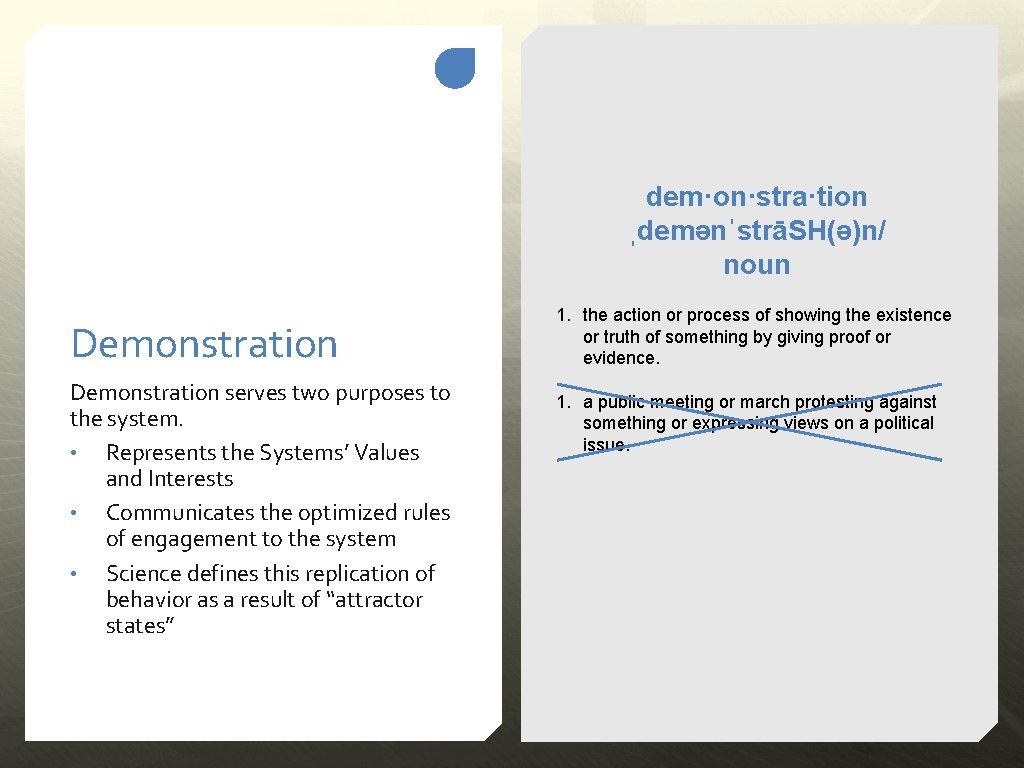
dem·on·stra·tion ˌdemənˈstrāSH(ə)n/ noun Demonstration serves two purposes to the system. • Represents the Systems’ Values and Interests • Communicates the optimized rules of engagement to the system • Science defines this replication of behavior as a result of “attractor states” 1. the action or process of showing the existence or truth of something by giving proof or evidence. 1. a public meeting or march protesting against something or expressing views on a political issue.
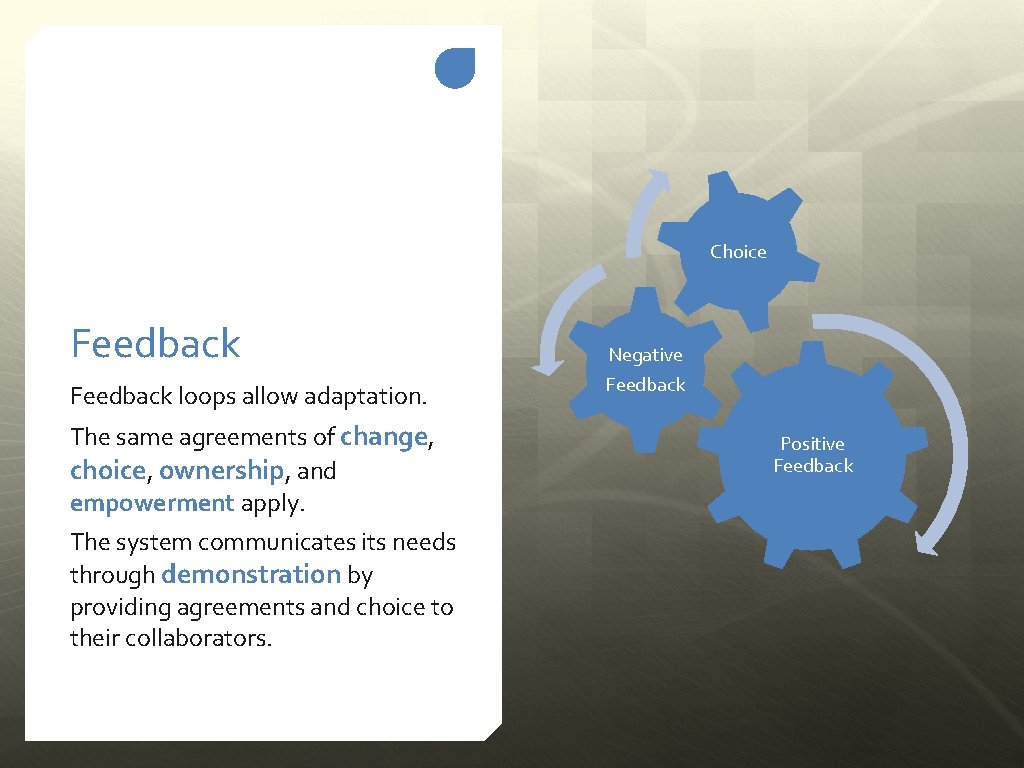
Choice Feedback loops allow adaptation. The same agreements of change, choice, ownership, and empowerment apply. The system communicates its needs through demonstration by providing agreements and choice to their collaborators. Negative Feedback Positive Feedback
Team B Attractors (Relationships) Team A Enterprise Innovation Relationships Emergent Systems and Tools Growth Not Design – By-Products of interdependence with the groups
Contribution The key to sustainability of the system is the responsibility of contribution by the local parts to their own innovation while the rest of the system remains open to feedback, input, and observation. All fueled by the choice to value or devalue the behaviors.
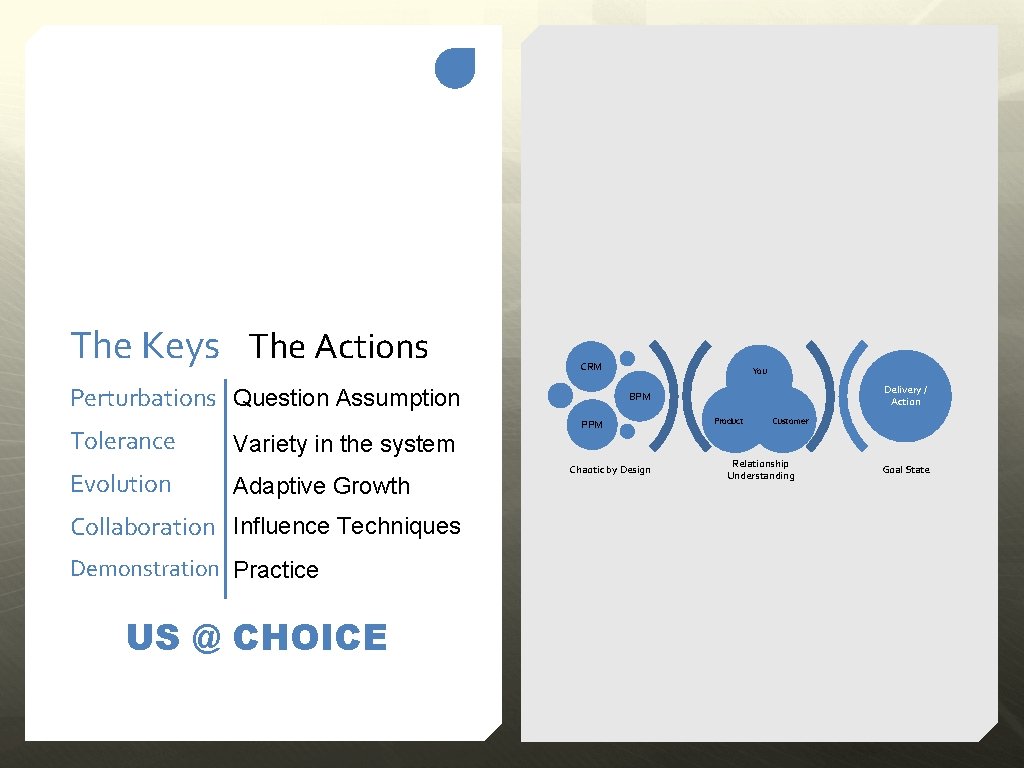
The Keys The Actions CRM Perturbations Question Assumption Tolerance Evolution Variety in the system Adaptive Growth Collaboration Influence Techniques Demonstration Practice US @ CHOICE You Delivery / Action BPM PPM Chaotic by Design Product Customer Relationship Understanding Goal State
Thank You! Change isn’t something we have to do all of the time. Change is a mechanism for our species to adapt and survive. http: //fb. com/XACTFIT http: //fb. com/bevilledge To thrive, however, is a choice. http: //fb. com/scotty. bevill http: //XACTFIT. co http: //bevilledge. com @scottyabevill @xactfit A Nexus. Org™ Professional “Scotty” http: //linkedin. com/in/scottybevill +Scotty. Bevill