
Self Learning Independent Learner Lifetime learning Scaffolding Development
- Slides: 21
Self Learning, Independent Learner, Life-time learning: Scaffolding Development of Advanced Reading Skills Cynthia Lin: General English Program Holistic Education Center Fu-Jen University
Cognitive Skills It’s a mental process to integrate and internalize information. n It’s more than familiarity and retention. n It does not concern rote learning. n It’s about how information is processed and used in appropriate context. n
Types of Cognitive Skills to Literacy Ability Memorize, Analyze, Compare, Discriminate, Planning, Decide, Evaluate, Grouping, Infer, Elaborate
Scaffolding Reading Strategies I. Identify Key Words a. Discriminate b. Decide c. Grouping d. Infer
Scaffolding Reading Strategies II. Formulate a Concept Map or Outline a. Grouping b. Planning c. Analyzing
Scaffolding Reading Strategies III. Summary : Oral or Written Report a. Analyze b. Compare c. Evaluate d. Infer e. Elaborate
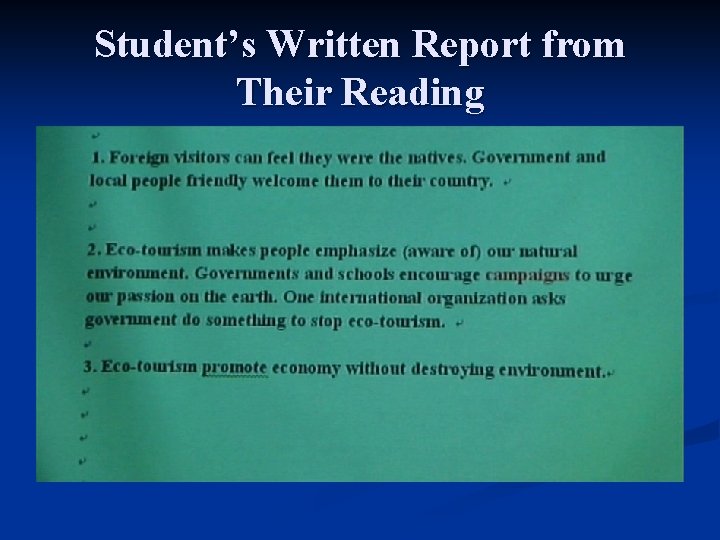
Student’s Written Report from Their Reading
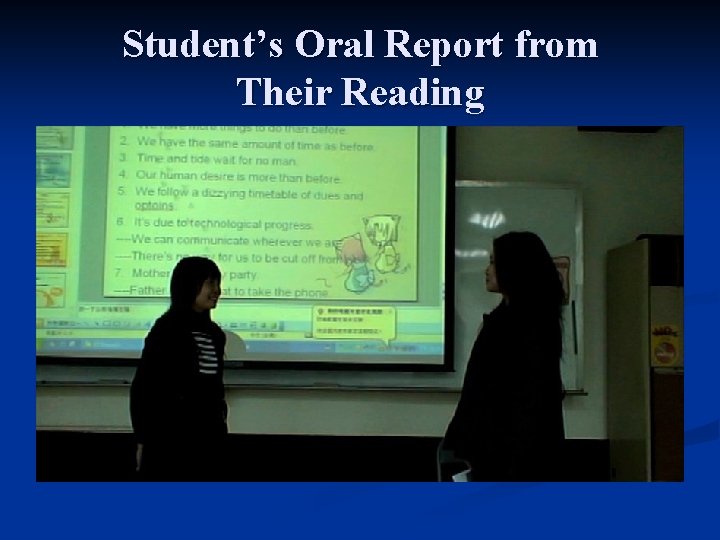
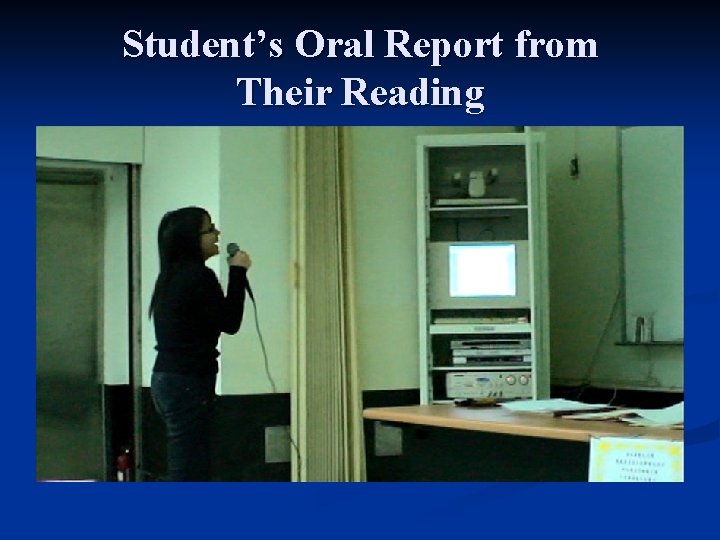
Student’s Oral Report from Their Reading
Student’s Oral Report from Their Reading
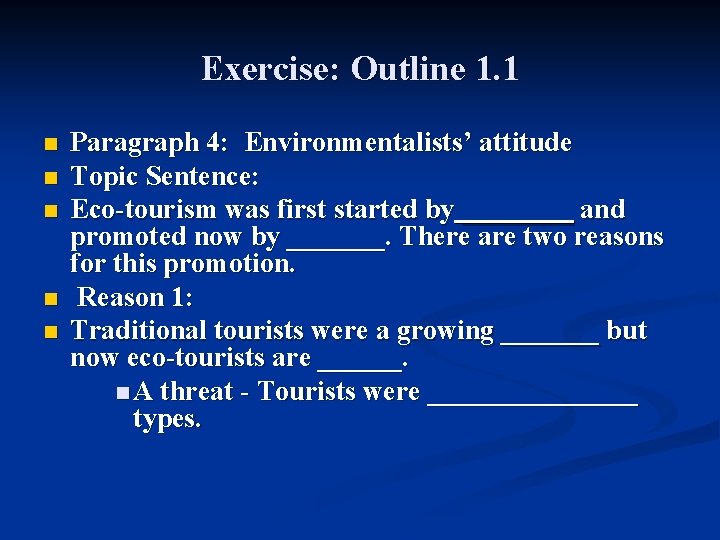
Exercise: Outline 1. 1 n n n Paragraph 4: Environmentalists’ attitude Topic Sentence: Eco-tourism was first started by ____ and promoted now by _______. There are two reasons for this promotion. Reason 1: Traditional tourists were a growing _______ but now eco-tourists are ______. n A threat - Tourists were ________ types.
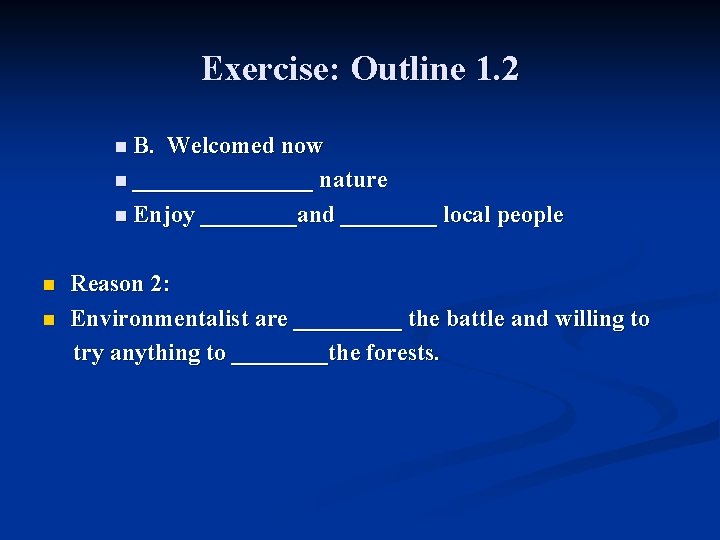
Exercise: Outline 1. 2 n B. Welcomed now n ________ nature n Enjoy ____and ____ local people n n Reason 2: Environmentalist are _____ the battle and willing to try anything to ____the forests.
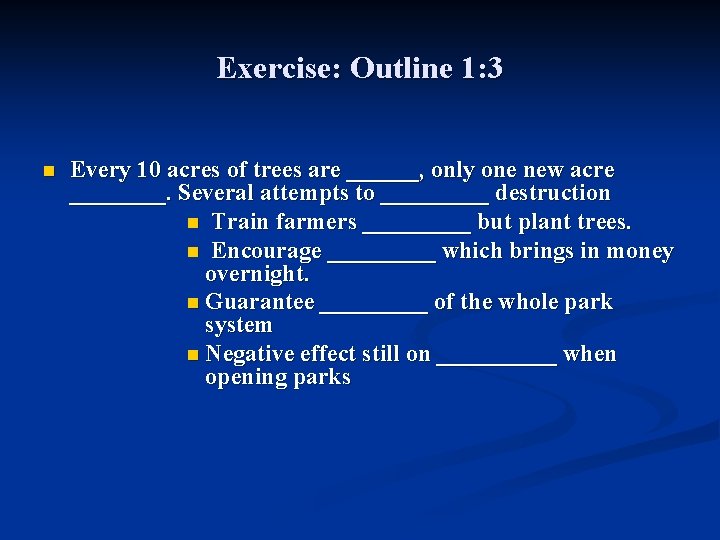
Exercise: Outline 1: 3 n Every 10 acres of trees are ______, only one new acre ____. Several attempts to _____ destruction n Train farmers _____ but plant trees. n Encourage _____ which brings in money overnight. n Guarantee _____ of the whole park system n Negative effect still on _____ when opening parks
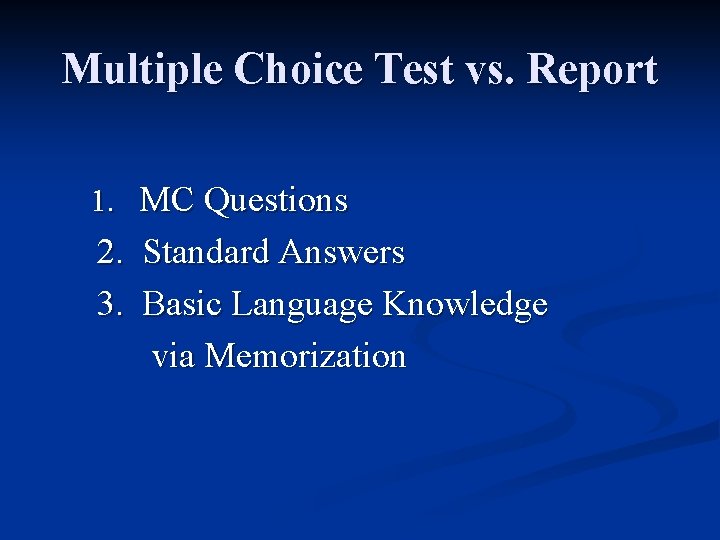
Multiple Choice Test vs. Report 1. MC Questions 2. 3. Standard Answers Basic Language Knowledge via Memorization
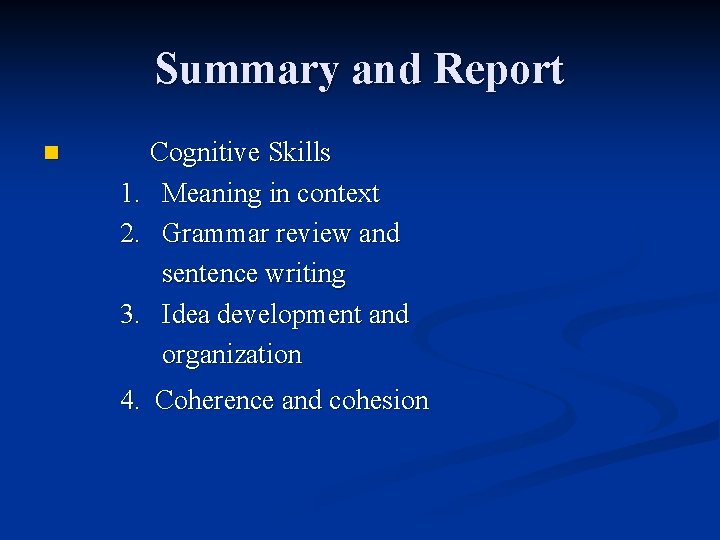
Summary and Report n Cognitive Skills 1. Meaning in context 2. Grammar review and sentence writing 3. Idea development and organization 4. Coherence and cohesion
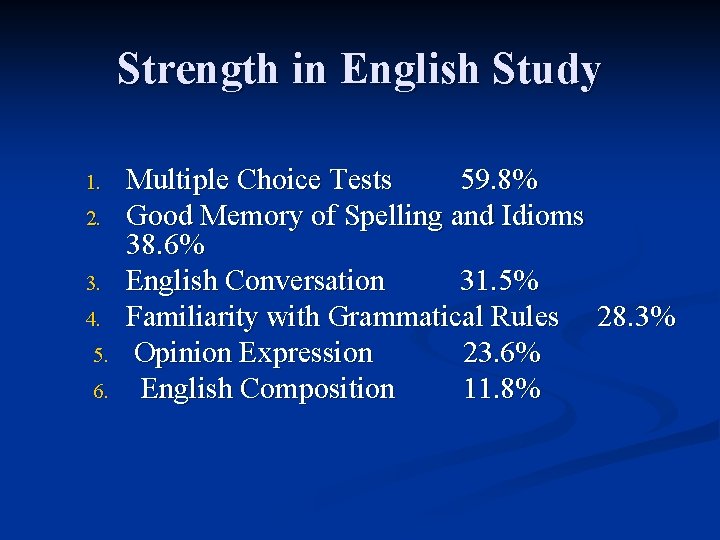
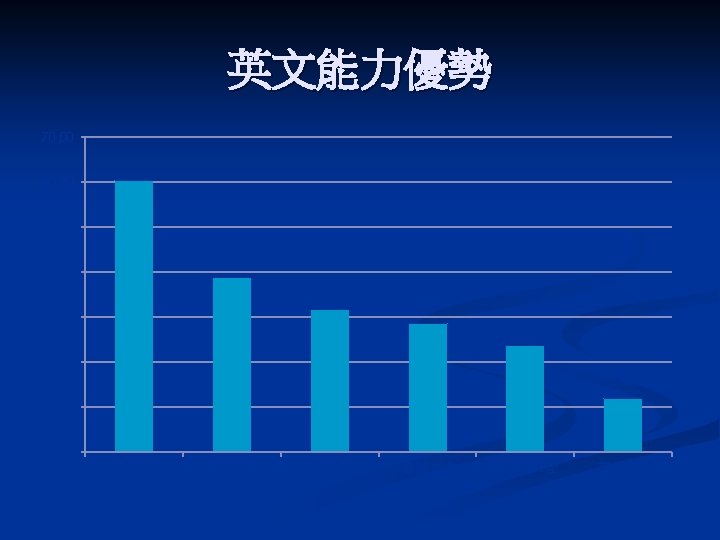
Strength in English Study 1. 2. 3. 4. 5. 6. Multiple Choice Tests 59. 8% Good Memory of Spelling and Idioms 38. 6% English Conversation 31. 5% Familiarity with Grammatical Rules 28. 3% Opinion Expression 23. 6% English Composition 11. 8%
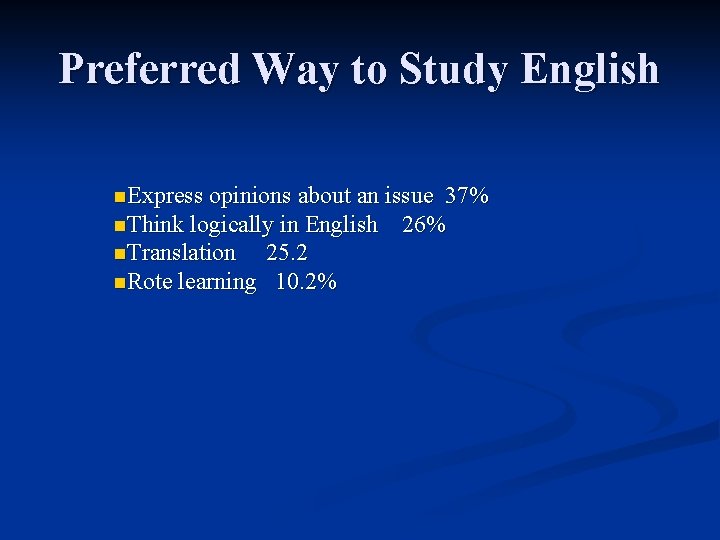
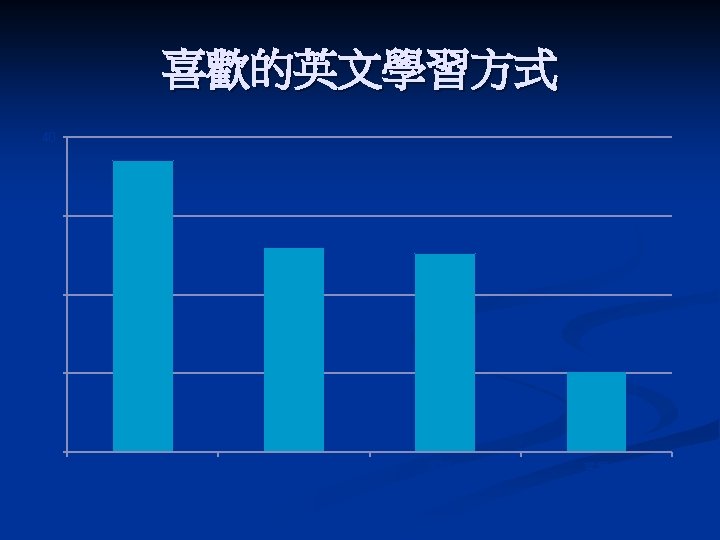
Preferred Way to Study English n. Express opinions about an issue 37% n. Think logically in English 26% n. Translation 25. 2 n. Rote learning 10. 2%
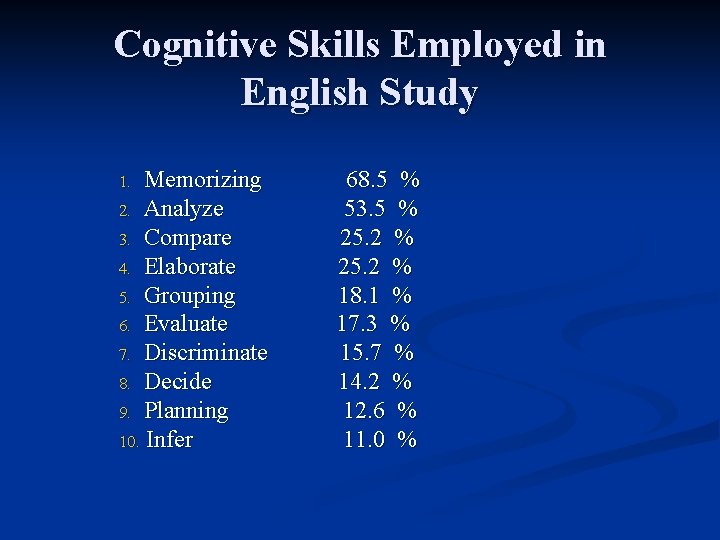
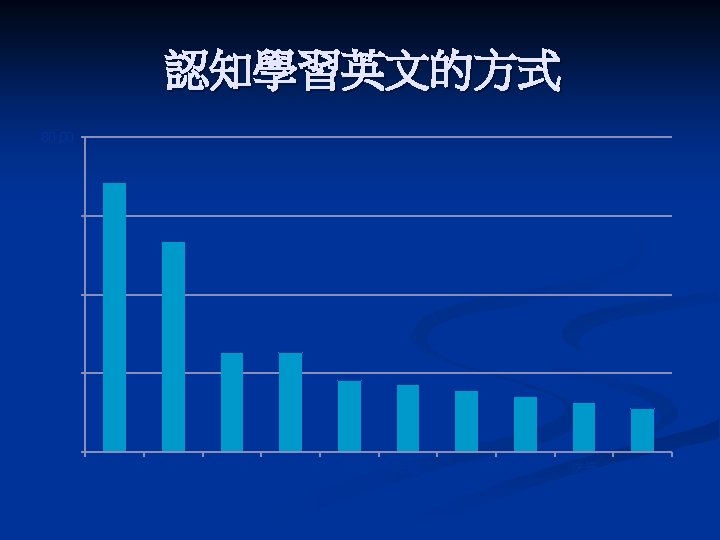
Cognitive Skills Employed in English Study Memorizing 2. Analyze 3. Compare 4. Elaborate 5. Grouping 6. Evaluate 7. Discriminate 8. Decide 9. Planning 10. Infer 1. 68. 5 % 53. 5 % 25. 2 % 18. 1 % 17. 3 % 15. 7 % 14. 2 % 12. 6 % 11. 0 %
Findings and Suggestions n n n 1. 1. Students are aware of cognitive skills and strategies. 2. Students are aware of the importance of cognitive learning. 3. Cognitive learning leads to effective and meaningful learning. 4. Cognitive learning builds up students’ confidence and sense of achievement. 5. In addition to standardized tests, provide more opportunities to application such as written or oral report. 6. Use multi-media material such as sound and images to trigger students’ cognitive abilities.