
Self in Interpersonal Communication Chapter 2 SelfConcept how

- Slides: 11
Self in Interpersonal Communication Chapter 2
Self-Concept = how you view yourself or your self image How the self-concept is developed: Reflected Appraisal- we match the way we believe others see us.
Communication and the Self. Concept • Significant Others-messages from people we value impact our self-concept • Social Comparison-evaluating ourselves in terms of how we compare with others (Reference groups)
Characteristics of the self-concept • The self-concept is subjective • Distorted feedback- negative feedback • Obsolete information-Past failures effect present circumstances
Cont’d. • Self Verification-Seeking Confirmation • Perfection • Social Expectations
The Self Concept… • Resists Change – Cognitive Conservatism-to seek and attend to information that conforms to an existing self concept. (obsolete information) • Influences Identity – Culture – Ethnicity – Sex & Gender
A stable set of perceptions that you hold of yourself • • Others’ Images of You Social Comparisons Cultural Teachings Your Own Interpretations & Experiences
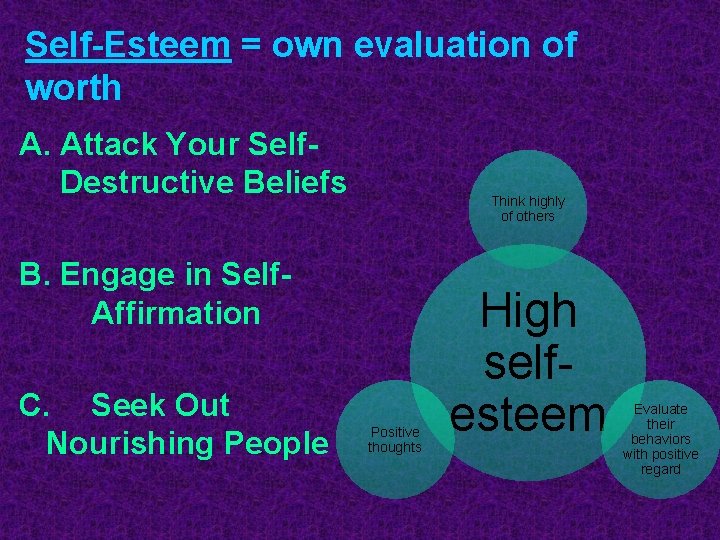
Self-Esteem = own evaluation of worth A. Attack Your Self. Destructive Beliefs Think highly of others B. Engage in Self. Affirmation C. Seek Out Nourishing People Positive thoughts High selfesteem Evaluate their behaviors with positive regard
Self-Fulfilling Prophecy • Self-fulfilling prophecy- occurs when a persons expectations of an event make the event more likely to occur • Self-imposed • Imposed by others
Presenting the Self • Identity Management- the communication strategies that people use to influence how other view them. • Perceived self- the person you believe yourself to be in moments of honest reflection • Presenting self-the way you want others to view you • Ideal self- the person you desire to be
Identity Management • We Strive to construct multiple identities • Identity Management is Collaborative • Can be deliberate or unconscious • Varies by situation • People differ in their degree of identity management