
SELF ESTEEM WHAT IS IT SELF ESTEEM WHAT
- Slides: 16
SELF ESTEEM WHAT IS IT?
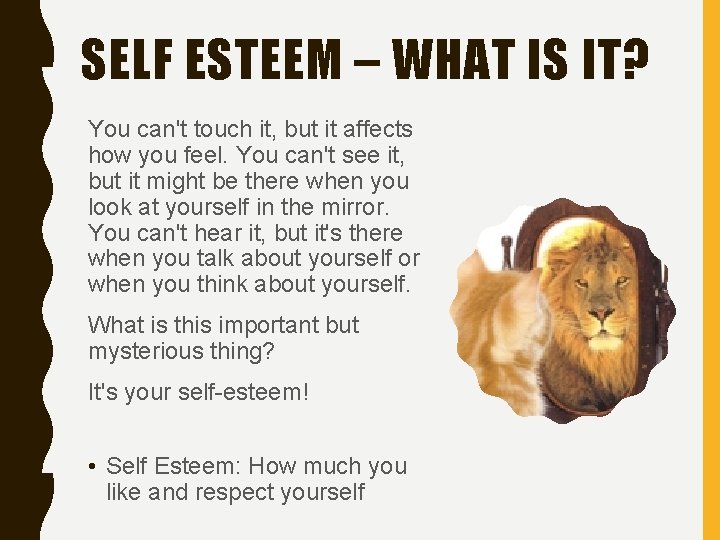
SELF ESTEEM – WHAT IS IT? You can't touch it, but it affects how you feel. You can't see it, but it might be there when you look at yourself in the mirror. You can't hear it, but it's there when you talk about yourself or when you think about yourself. What is this important but mysterious thing? It's your self-esteem! • Self Esteem: How much you like and respect yourself
SELF ESTEEM – WHAT IS IT? • Many psychologists think that high self-esteem has a positive effect on health while low self-esteem has a negative effect on health. • The most important thing to know about self-esteem is that it means seeing yourself in a positive way that's realistic, which means that it's the truth. So if you know you're really good at piano but can't draw so well, you can still have great self-esteem!
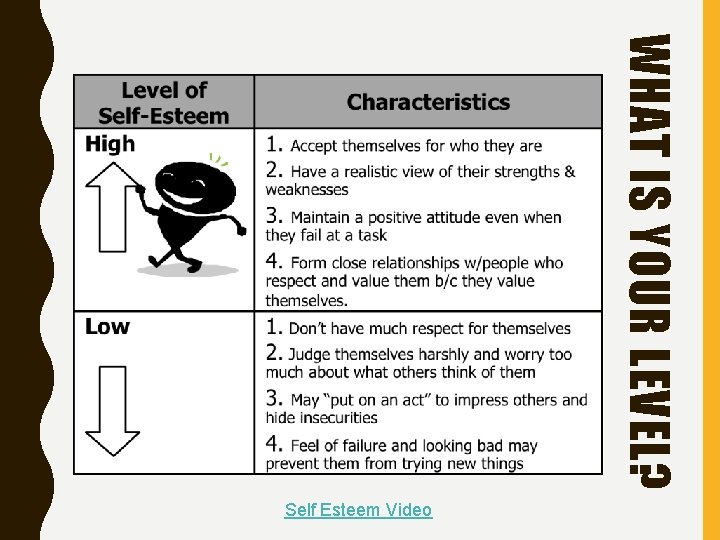
WHAT IS YOUR LEVEL? Self Esteem Video
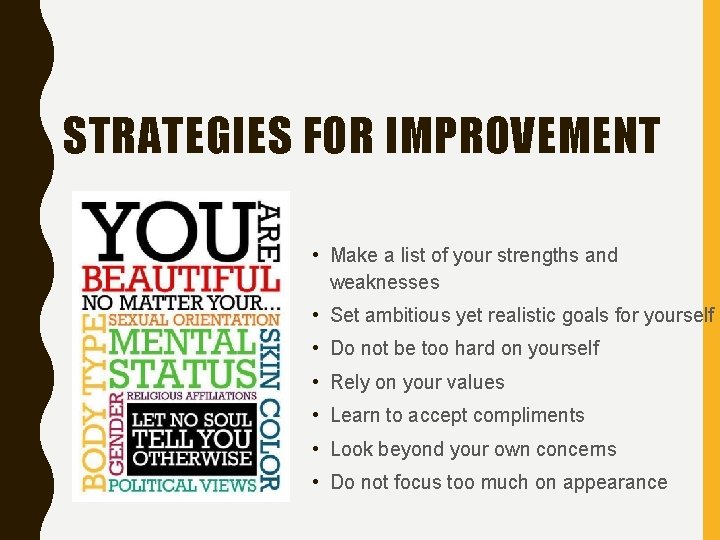
STRATEGIES FOR IMPROVEMENT • Make a list of your strengths and weaknesses • Set ambitious yet realistic goals for yourself • Do not be too hard on yourself • Rely on your values • Learn to accept compliments • Look beyond your own concerns • Do not focus too much on appearance
MASLOW’S HIERARCHY OF HUMAN NEEDS
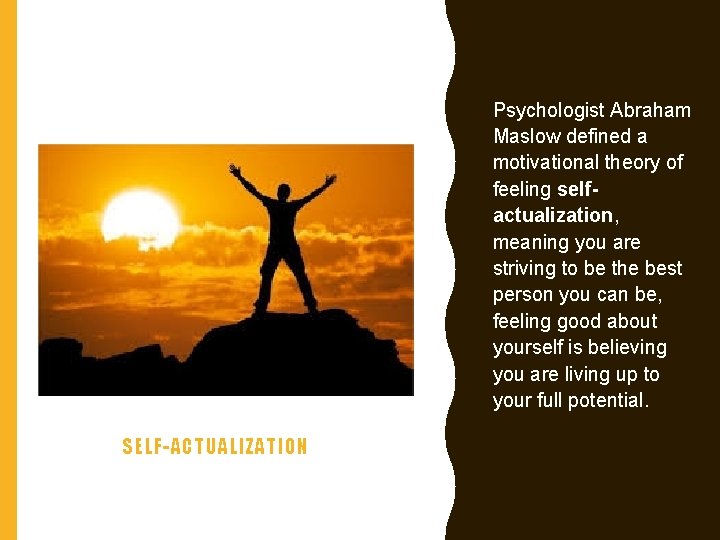
• Psychologist Abraham Maslow defined a motivational theory of feeling selfactualization, meaning you are striving to be the best person you can be, feeling good about yourself is believing you are living up to your full potential. SELF-ACTUALIZATION
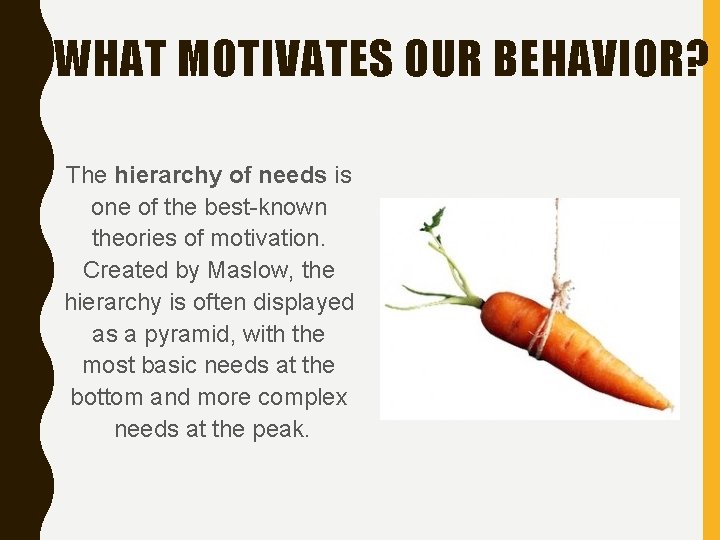
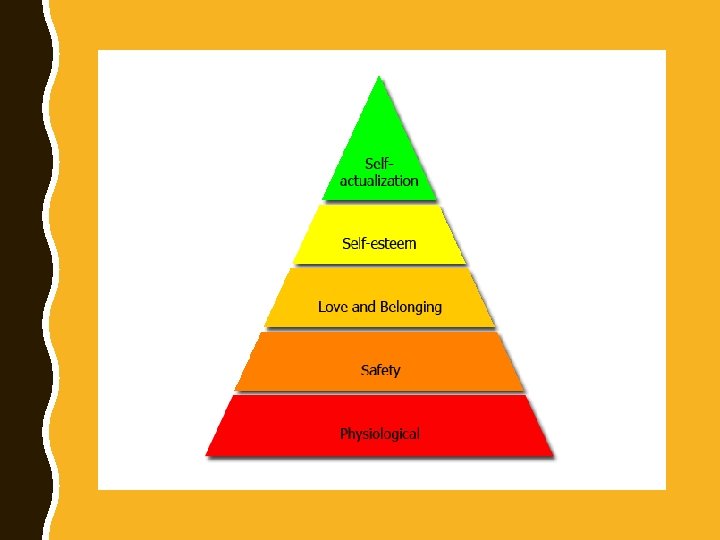
WHAT MOTIVATES OUR BEHAVIOR? The hierarchy of needs is one of the best-known theories of motivation. Created by Maslow, the hierarchy is often displayed as a pyramid, with the most basic needs at the bottom and more complex needs at the peak.
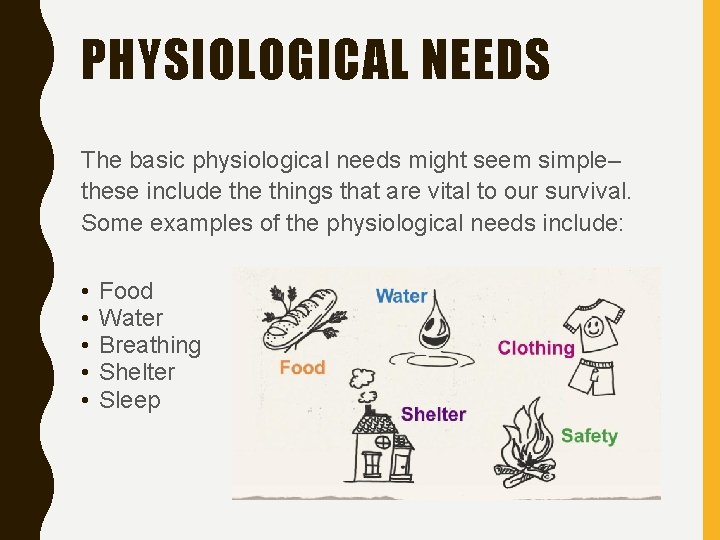
PHYSIOLOGICAL NEEDS The basic physiological needs might seem simple– these include things that are vital to our survival. Some examples of the physiological needs include: • • • Food Water Breathing Shelter Sleep
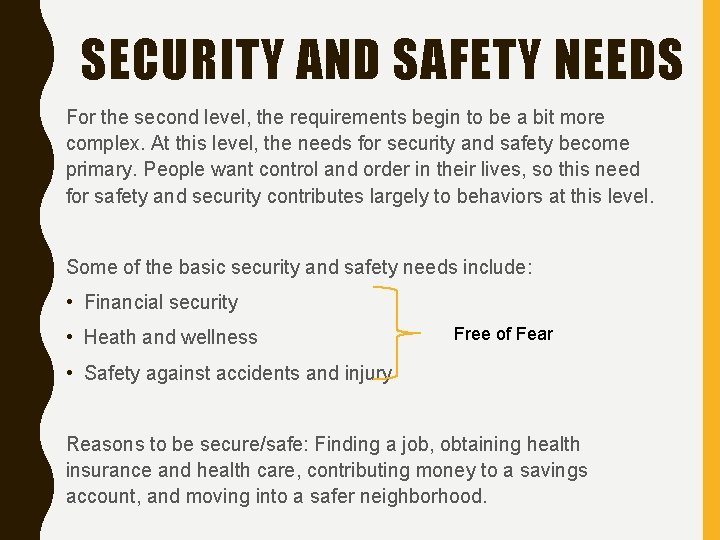
SECURITY AND SAFETY NEEDS For the second level, the requirements begin to be a bit more complex. At this level, the needs for security and safety become primary. People want control and order in their lives, so this need for safety and security contributes largely to behaviors at this level. Some of the basic security and safety needs include: • Financial security • Heath and wellness Free of Fear • Safety against accidents and injury Reasons to be secure/safe: Finding a job, obtaining health insurance and health care, contributing money to a savings account, and moving into a safer neighborhood.
Together, the safety and physiological levels of the hierarchy make up what is often referred to as the basic needs (lower level needs). Maslow believed that lower-order needs must be met before higherorder needs THE LOWER LEVEL NEEDS…
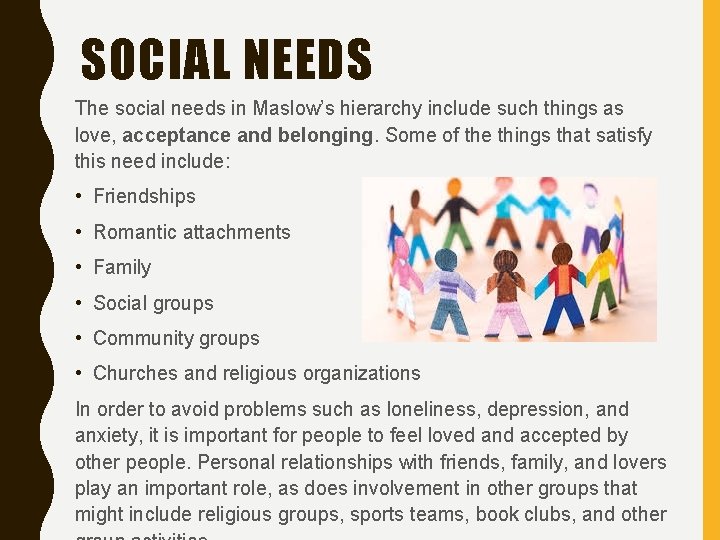
SOCIAL NEEDS The social needs in Maslow’s hierarchy include such things as love, acceptance and belonging. Some of the things that satisfy this need include: • Friendships • Romantic attachments • Family • Social groups • Community groups • Churches and religious organizations In order to avoid problems such as loneliness, depression, and anxiety, it is important for people to feel loved and accepted by other people. Personal relationships with friends, family, and lovers play an important role, as does involvement in other groups that might include religious groups, sports teams, book clubs, and other
SELF ESTEEM Liking and Respecting Yourself At the fourth level in Maslow’s hierarchy is the need for appreciation and respect. When the needs at the bottom three levels have been satisfied, the esteem needs begin to play a more prominent role in motivating behavior. • Feelings of accomplishment and prestige • Personal worth • Sense of value by others • Making a contribution to the world. Participation in professional activities, academic accomplishments, athletic or team participation, and personal hobbies can all play a role in fulfilling the
SELF-ACTUALIZATION When you reach your full potential "What a man can be, he must be, " Maslow explained, referring to the need people have to achieve their full potential as human beings. According to Maslow’s definition of self-actualization: "It may be loosely described as the full use and exploitation of talents, capabilities, potentialities, etc. Such people seem to be fulfilling themselves and to be doing the best that they are capable of doing. . . They are people who have developed or are developing to the full stature of which they capable. "
APPLY WHAT YOU LEARNED • Research historical figures or famous people and identify two people you would consider to be a “selfactualized” person. • Then, write a paragraph about each person justifying why you believe that they have reached this level.