
SELF CONCEPT IN CHILDREN AND ADOLESCENTS WITH ADHD
- Slides: 14
SELF CONCEPT IN CHILDREN AND ADOLESCENTS WITH ADHD
Introduction ◦ ADHD defined ◦The child’s self concept of the disease ◦Nursing management
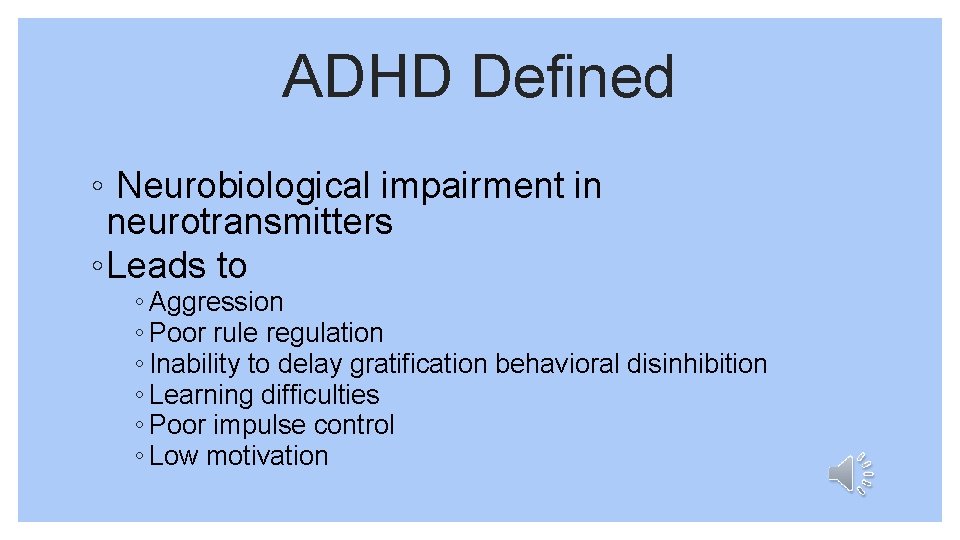
ADHD Defined ◦ Neurobiological impairment in neurotransmitters ◦Leads to ◦ Aggression ◦ Poor rule regulation ◦ Inability to delay gratification behavioral disinhibition ◦ Learning difficulties ◦ Poor impulse control ◦ Low motivation
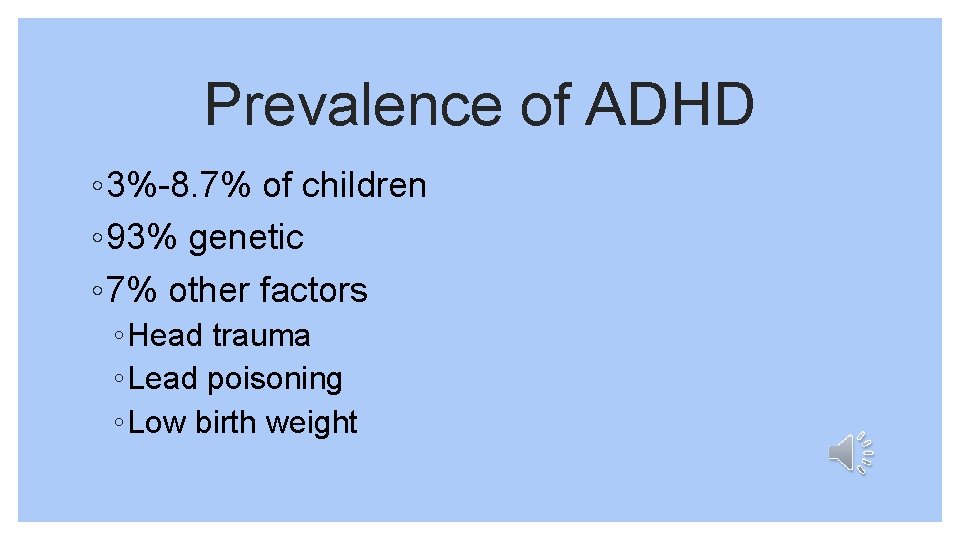
Prevalence of ADHD ◦ 3%-8. 7% of children ◦ 93% genetic ◦ 7% other factors ◦ Head trauma ◦ Lead poisoning ◦ Low birth weight
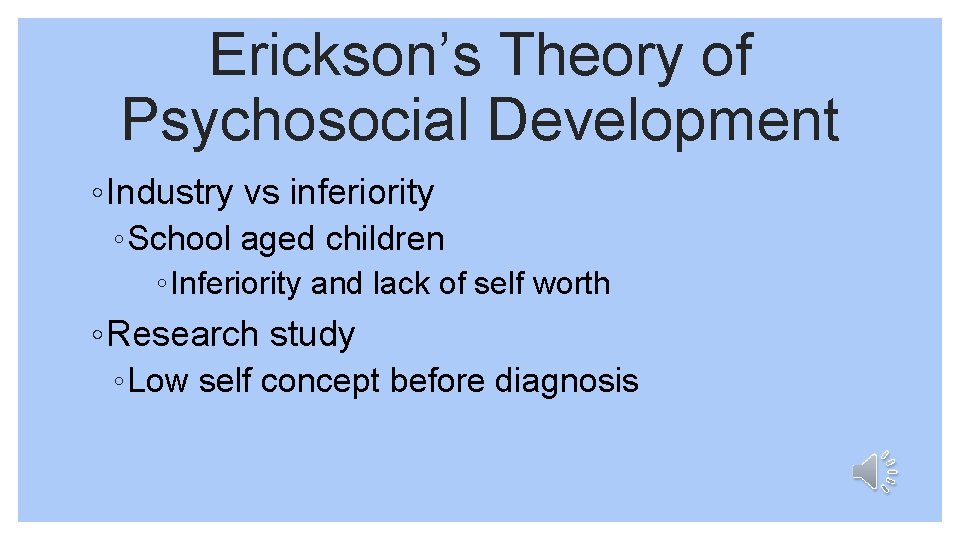
Erickson’s Theory of Psychosocial Development ◦ Industry vs inferiority ◦ School aged children ◦ Inferiority and lack of self worth ◦ Research study ◦ Low self concept before diagnosis
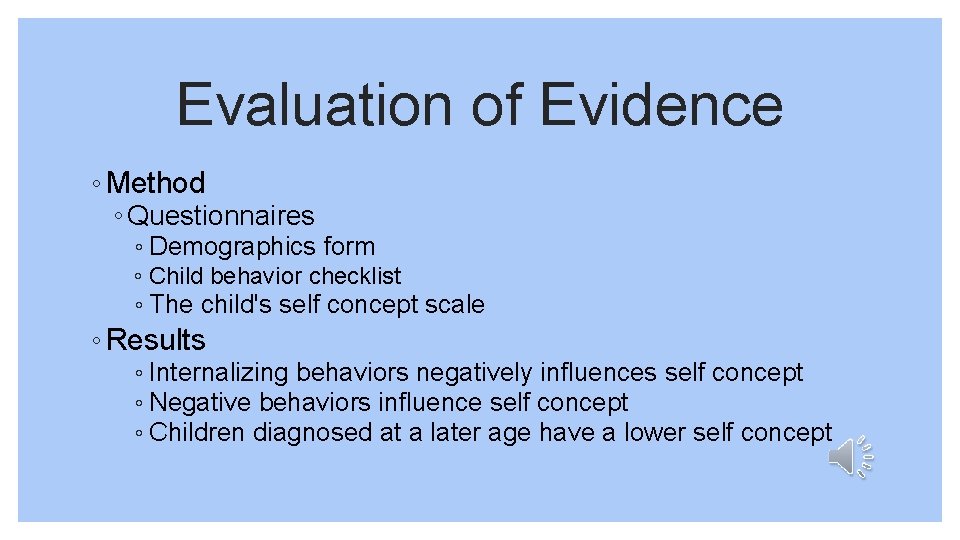
Evaluation of Evidence ◦ Method ◦ Questionnaires ◦ Demographics form ◦ Child behavior checklist ◦ The child's self concept scale ◦ Results ◦ Internalizing behaviors negatively influences self concept ◦ Negative behaviors influence self concept ◦ Children diagnosed at a later age have a lower self concept
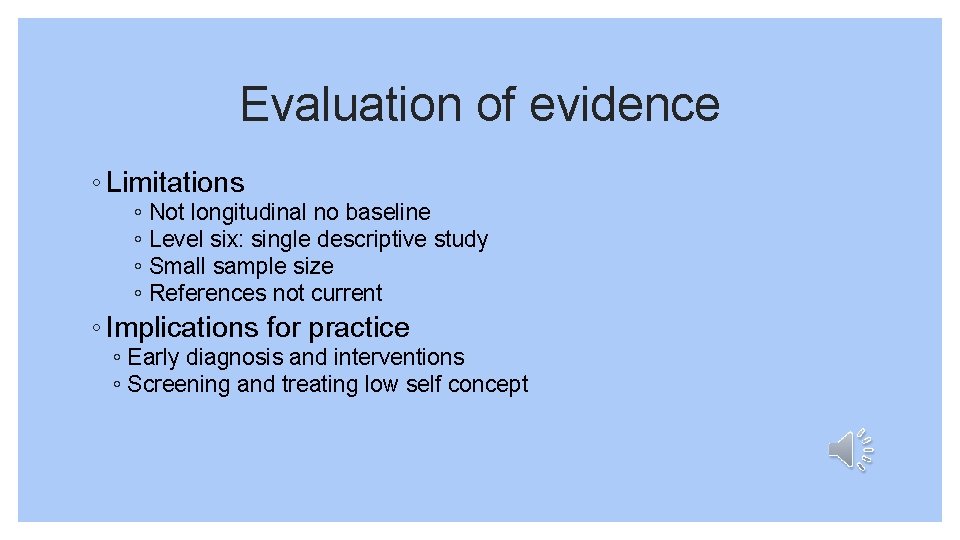
Evaluation of evidence ◦ Limitations ◦ Not longitudinal no baseline ◦ Level six: single descriptive study ◦ Small sample size ◦ References not current ◦ Implications for practice ◦ Early diagnosis and interventions ◦ Screening and treating low self concept
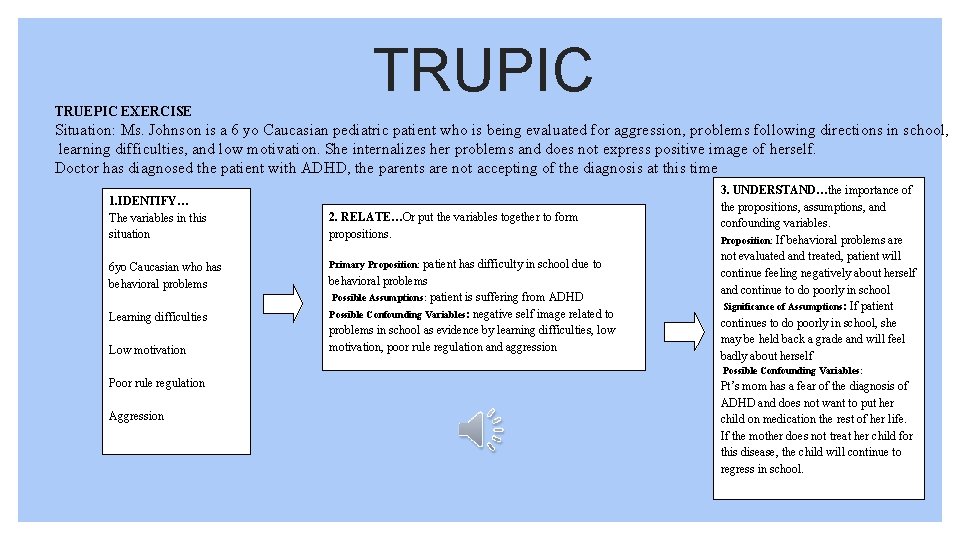
TRUPIC TRUEPIC EXERCISE Situation: Ms. Johnson is a 6 yo Caucasian pediatric patient who is being evaluated for aggression, problems following directions in school, learning difficulties, and low motivation. She internalizes her problems and does not express positive image of herself. Doctor has diagnosed the patient with ADHD, the parents are not accepting of the diagnosis at this time 1. IDENTIFY… The variables in this situation 6 yo Caucasian who has behavioral problems Learning difficulties Low motivation 2. RELATE…Or put the variables together to form propositions. Primary Proposition: patient has difficulty in school due to behavioral problems Possible Assumptions: patient is suffering from ADHD Possible Confounding Variables: negative self image related to problems in school as evidence by learning difficulties, low motivation, poor rule regulation and aggression 3. UNDERSTAND…the importance of the propositions, assumptions, and confounding variables. Proposition: If behavioral problems are not evaluated and treated, patient will continue feeling negatively about herself and continue to do poorly in school Significance of Assumptions: If patient continues to do poorly in school, she may be held back a grade and will feel badly about herself Possible Confounding Variables: Poor rule regulation Aggression Pt’s mom has a fear of the diagnosis of ADHD and does not want to put her child on medication the rest of her life. If the mother does not treat her child for this disease, the child will continue to regress in school.
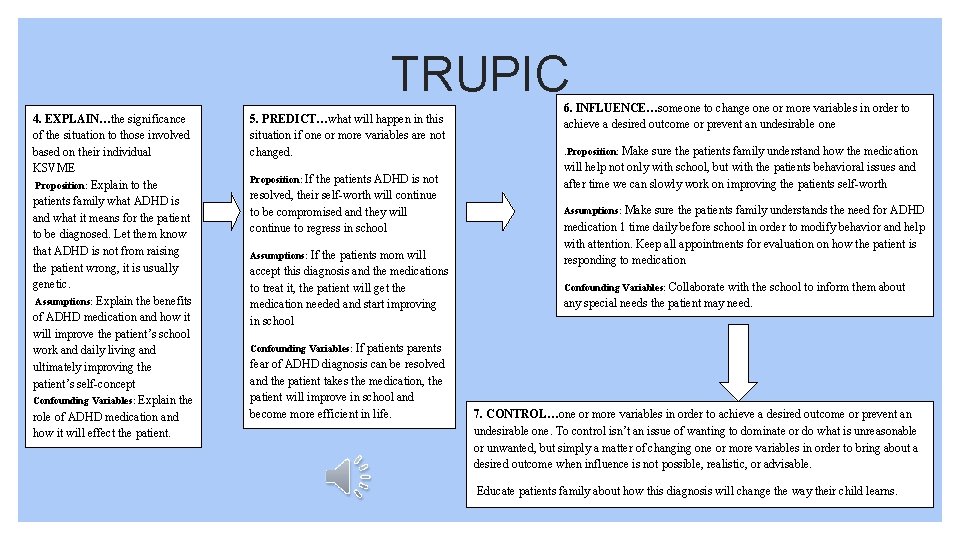
TRUPIC 4. EXPLAIN…the significance of the situation to those involved based on their individual KSVME Proposition: Explain to the patients family what ADHD is and what it means for the patient to be diagnosed. Let them know that ADHD is not from raising the patient wrong, it is usually genetic. Assumptions: Explain the benefits of ADHD medication and how it will improve the patient’s school work and daily living and ultimately improving the patient’s self-concept Confounding Variables: Explain the role of ADHD medication and how it will effect the patient. 5. PREDICT…what will happen in this situation if one or more variables are not changed. Proposition: If the patients ADHD is not resolved, their self-worth will continue to be compromised and they will continue to regress in school Assumptions: If the patients mom will accept this diagnosis and the medications to treat it, the patient will get the medication needed and start improving in school patients parents fear of ADHD diagnosis can be resolved and the patient takes the medication, the patient will improve in school and become more efficient in life. 6. INFLUENCE…someone to change one or more variables in order to achieve a desired outcome or prevent an undesirable one. Proposition: Make sure the patients family understand how the medication will help not only with school, but with the patients behavioral issues and after time we can slowly work on improving the patients self-worth Assumptions: Make sure the patients family understands the need for ADHD medication 1 time daily before school in order to modify behavior and help with attention. Keep all appointments for evaluation on how the patient is responding to medication Confounding Variables: Collaborate with the school to inform them about any special needs the patient may need. Confounding Variables: If 7. CONTROL…one or more variables in order to achieve a desired outcome or prevent an undesirable one. To control isn’t an issue of wanting to dominate or do what is unreasonable or unwanted, but simply a matter of changing one or more variables in order to bring about a desired outcome when influence is not possible, realistic, or advisable. Educate patients family about how this diagnosis will change the way their child learns.
Nursing Diagnosis ◦Readiness for enhanced self concept r/t negative view of self AEB the children's self concept scale
Advocate ◦ Parent teaching on self concept ◦ Compliment the child ◦ Positive comments ◦ School work ◦ Positive behaviors ◦ Referral to psychiatrist
Significance to Nursing ◦ Treating new ADHD patients ◦ Educating parents ◦ Helping improve the child's self concept
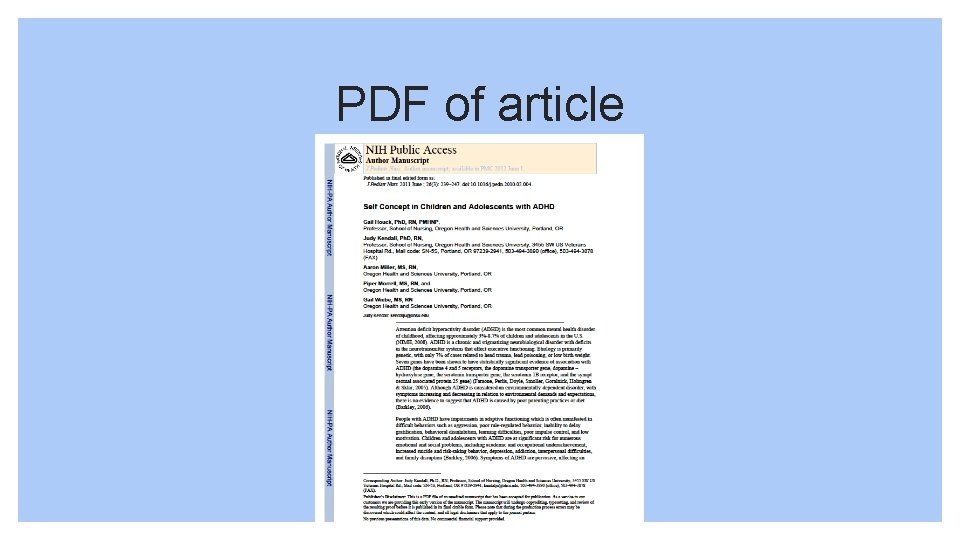
PDF of article
References ◦ Huock, G. , Kendall, J. , Miller, A. , Morrell, P. , Wiebe, G. (2012). Self concept in children and adolescents with ADHD. Journal of Pediatric Nursing, 26(3), 239 -247 doi: 10. 1016/j. pedn. 2010. 02. 004 ◦ Taylor, C. R. , Lillis, C. , Le. Mone, P. , Lynn, P. (2011). Developmental concepts. In Lippinco Williams & Wilkins, Fundamentals of Nursing (pp. 365 -366). Philadelphia, PA.