
Selenium Analysis Jason Unrine Department of Plant and
![[Se] cys proteins [Se] cystathioinine Se 0 [Se] Met proteins [Se] met Se. H](https://slidetodoc.com/presentation_image_h2/71249f8e96d45f9dd943f33bb3a7b5fe/image-7.jpg "[Se] cys proteins [Se] cystathioinine Se 0 [Se] Met proteins [Se] met Se. H")
- Slides: 31
Selenium Analysis Jason Unrine Department of Plant and Soil Sciences University of Kentucky, Lexington West Virginia Mine Drainage Task Force Symposium April 1, 2009 Jason. unrine@uky. edu
• Jason Unrine, University of Kentucky, Lexington • Dirk Wallschlager, Trent University, Peterborough, ON • Nicholas Ralston, University of North Dakota, Grand Forks Available for download on conference website or at www. namc. org
Overview • Background • Techniques for total Se analysis • Techniques for Se speciation
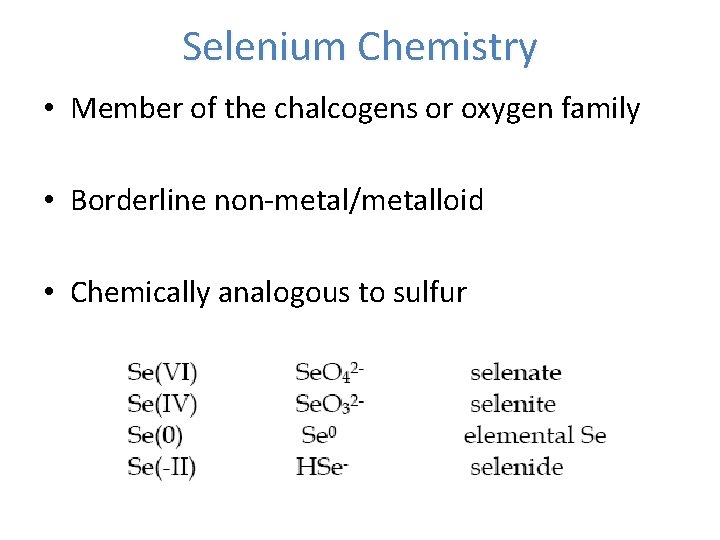
Selenium Chemistry • Member of the chalcogens or oxygen family • Borderline non-metal/metalloid • Chemically analogous to sulfur
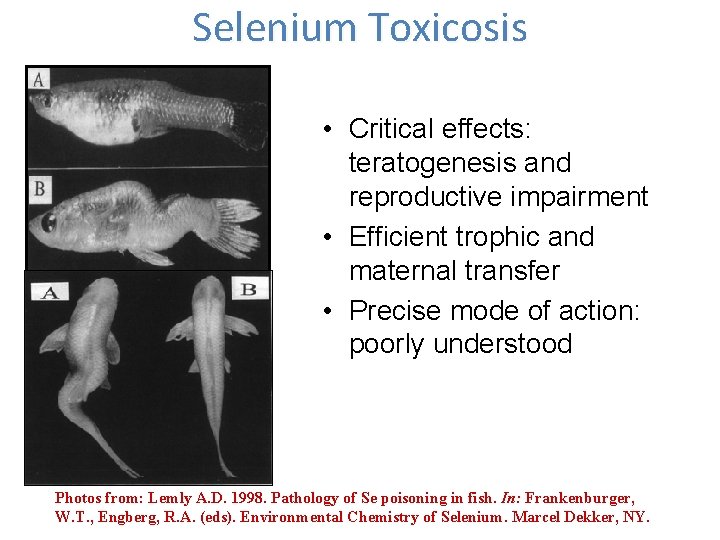
Selenium Toxicosis • Critical effects: teratogenesis and reproductive impairment • Efficient trophic and maternal transfer • Precise mode of action: poorly understood Photos from: Lemly A. D. 1998. Pathology of Se poisoning in fish. In: Frankenburger, W. T. , Engberg, R. A. (eds). Environmental Chemistry of Selenium. Marcel Dekker, NY.
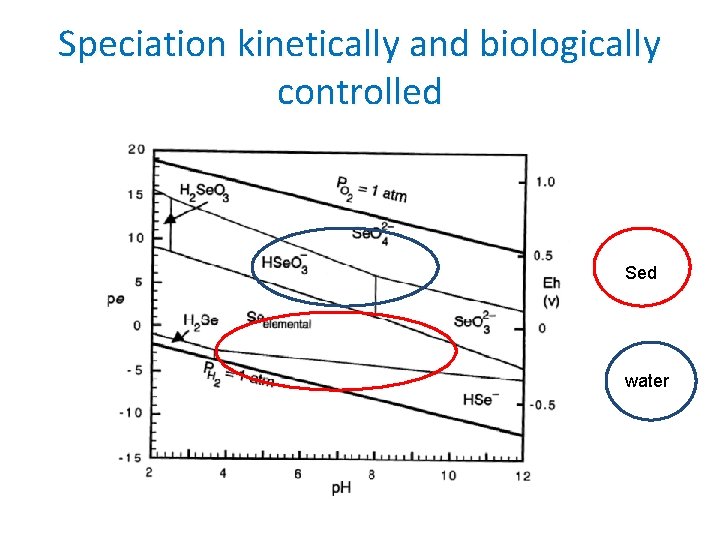
Speciation kinetically and biologically controlled Sed water
[Se] cys proteins [Se] cystathioinine Se 0 [Se] Met proteins [Se] met Se. H HSe. CH 3 (CH 3)x. Se Urine, breath GSSe. G Selenite Selenate HSe. PO 3 Sec t. RNA ser Sec t. RNA sec Sec proteins Adapted from: Sunde, R. A. 1997. Selenium. In: Handbook of Nutritionally Essential Mineral Elements (O'Dell, B. L. and R. A. Sunde, Eds. ), Marcel Dekker, New York, NY, p. 493.
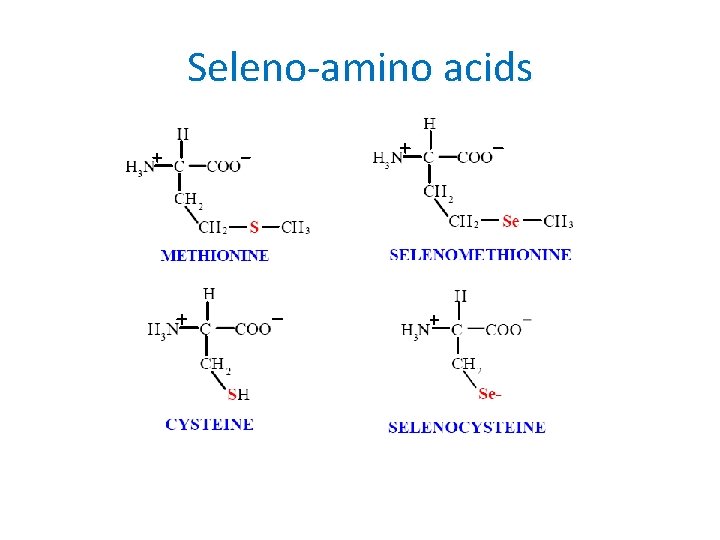
Seleno-amino acids
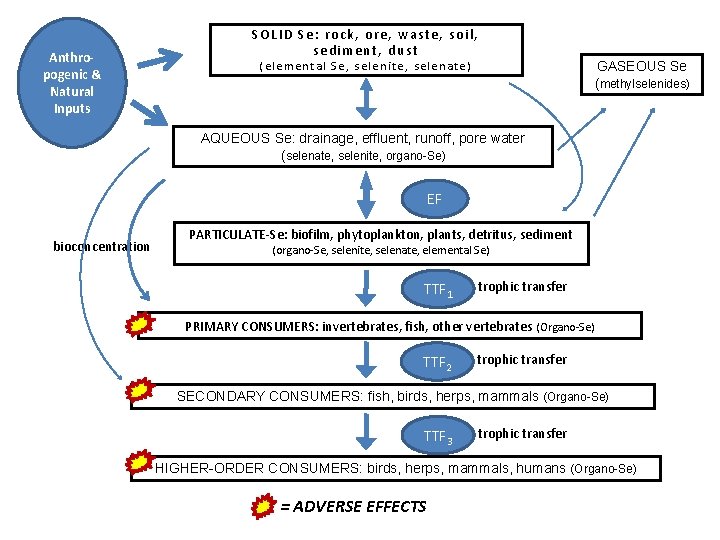
Anthropogenic & Natural Inputs SOLID Se: rock, ore, waste, soil, sediment, dust GASEOUS Se (methylselenides) (elemental Se, selenite, selenate) AQUEOUS Se: drainage, effluent, runoff, pore water (selenate, selenite, organo-Se) EF bioconcentration PARTICULATE-Se: biofilm, phytoplankton, plants, detritus, sediment BAF (organo-Se, selenite, selenate, elemental Se) TTF 1 trophic transfer PRIMARY invertebrates, CONSUMERS (invertebrates, fish) PRIMARY CONSUMERS: fish, other vertebrates (Organo-Se) TTF 2 trophic transfer SECONDARY CONSUMERS: fish, birds, herps, mammals (Organo-Se) TTF 3 trophic transfer HIGHER-ORDER CONSUMERS: birds, herps, mammals, humans (Organo-Se) = ADVERSE EFFECTS
SETAC Pellston Workshop, February 2228, 2009 (Pensacola, FL, USA) Ecological Assessment of Selenium in the Aquatic Environment • 46 experts from academia, consulting, industry, government • Executive summary booklet out soon • Book to come out next year • (www. setac. org)
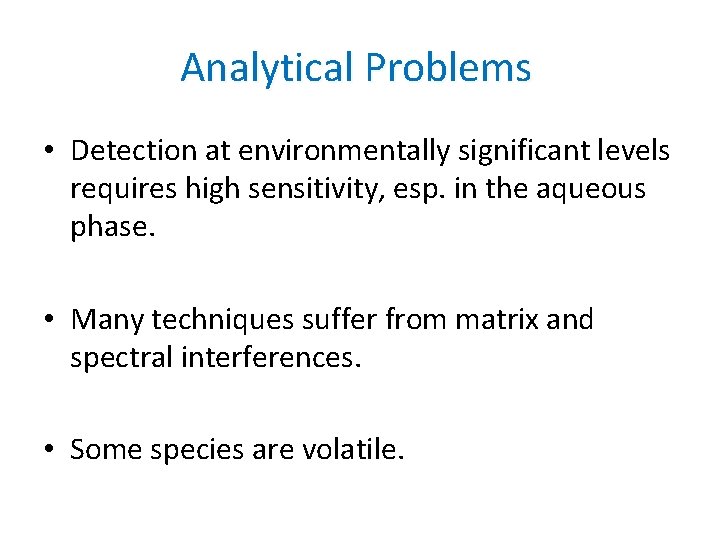
Analytical Problems • Detection at environmentally significant levels requires high sensitivity, esp. in the aqueous phase. • Many techniques suffer from matrix and spectral interferences. • Some species are volatile.
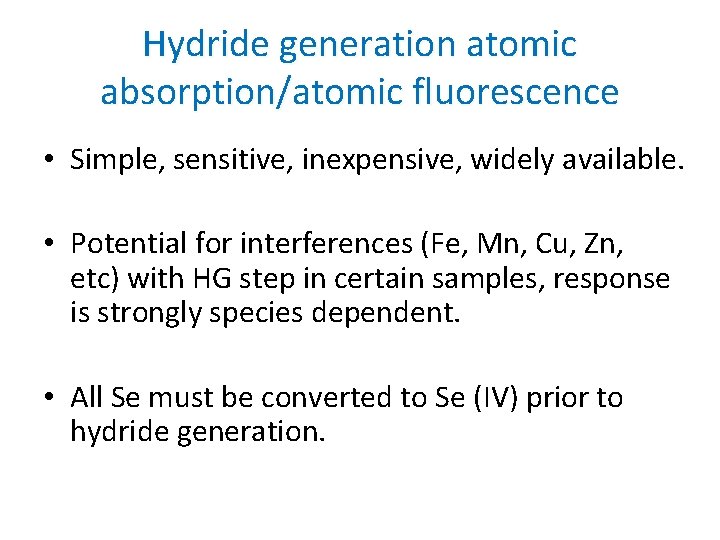
Hydride generation atomic absorption/atomic fluorescence • Simple, sensitive, inexpensive, widely available. • Potential for interferences (Fe, Mn, Cu, Zn, etc) with HG step in certain samples, response is strongly species dependent. • All Se must be converted to Se (IV) prior to hydride generation.
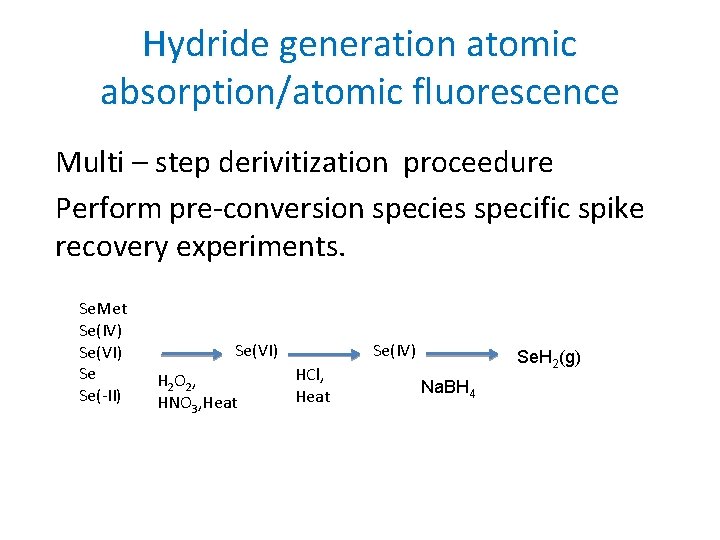
Hydride generation atomic absorption/atomic fluorescence Multi – step derivitization proceedure Perform pre-conversion species specific spike recovery experiments. Se. Met Se(IV) Se(VI) Se Se(-II) Se(VI) H 2 O 2, HNO 3, Heat Se(IV) HCl, Heat Se. H 2(g) Na. BH 4
Electrothermal (graphite furnace) AAS • Measurement of solid samples directly. • Measurement of water samples/digestates. • Very susceptible to matrix interferences.
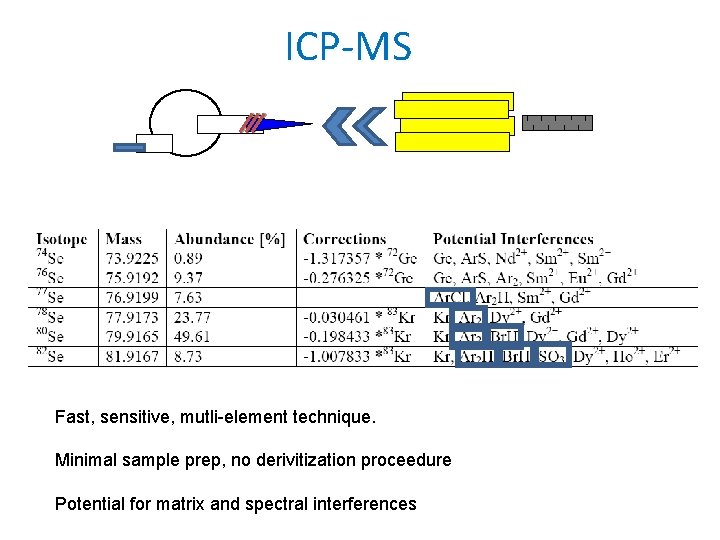
ICP-MS Fast, sensitive, mutli-element technique. Minimal sample prep, no derivitization proceedure Potential for matrix and spectral interferences
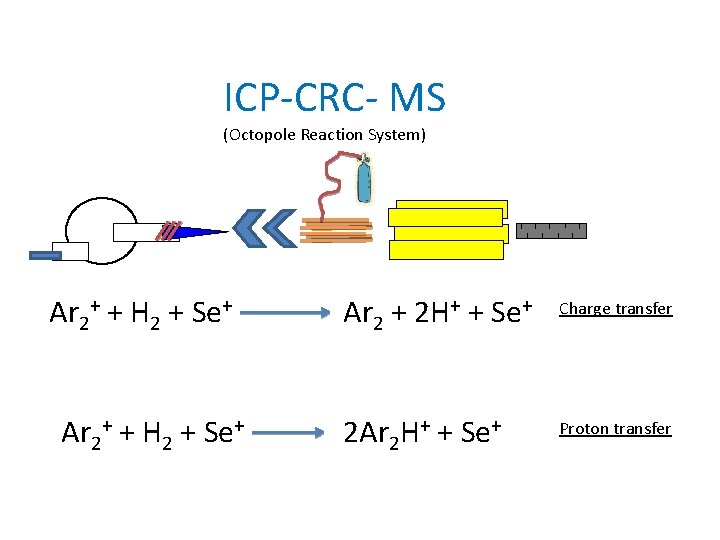
ICP-CRC- MS (Octopole Reaction System) Ar 2+ + H 2 + Se+ Ar 2 + 2 H+ + Se+ Charge transfer 2 Ar 2 H+ + Se+ Proton transfer
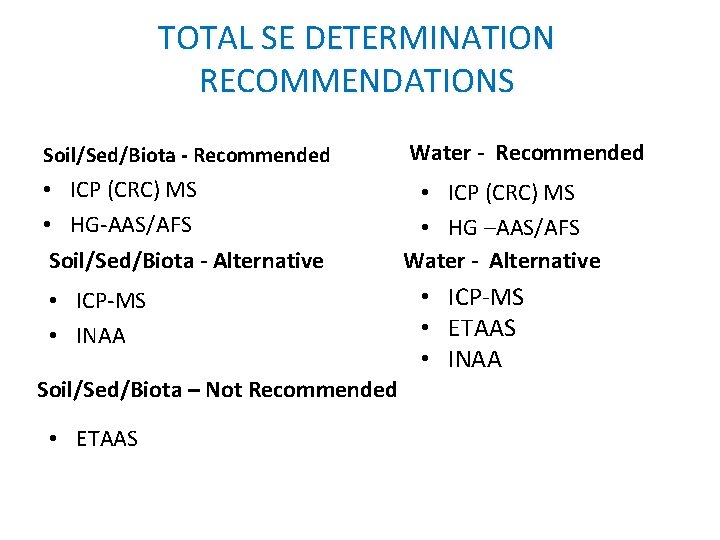
TOTAL SE DETERMINATION RECOMMENDATIONS Soil/Sed/Biota - Recommended Water - Recommended • ICP (CRC) MS • HG-AAS/AFS Soil/Sed/Biota - Alternative • ICP (CRC) MS • HG –AAS/AFS Water - Alternative • ICP-MS • INAA Soil/Sed/Biota – Not Recommended • ETAAS • ICP-MS • ETAAS • INAA
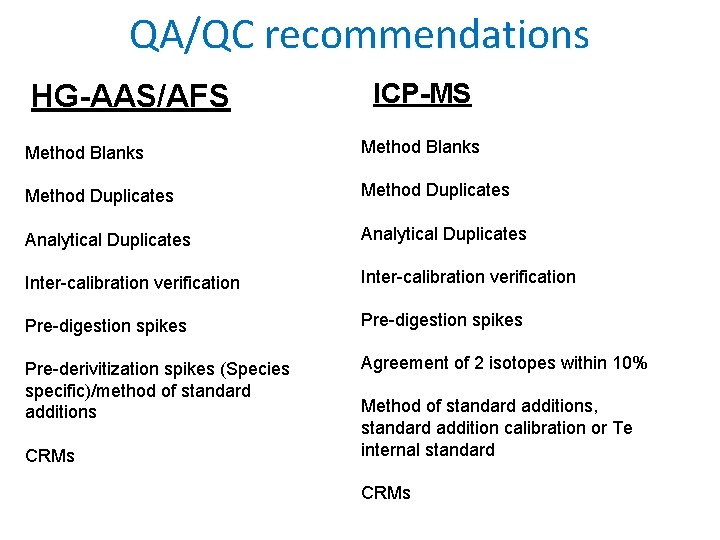
QA/QC recommendations HG-AAS/AFS ICP-MS Method Blanks Method Duplicates Analytical Duplicates Inter-calibration verification Pre-digestion spikes Pre-derivitization spikes (Species specific)/method of standard additions Agreement of 2 isotopes within 10% CRMs Method of standard additions, standard addition calibration or Te internal standard CRMs
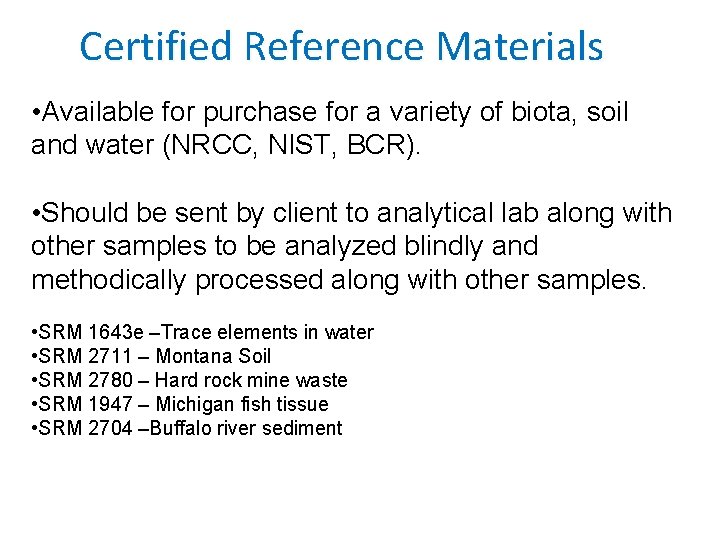
Certified Reference Materials • Available for purchase for a variety of biota, soil and water (NRCC, NIST, BCR). • Should be sent by client to analytical lab along with other samples to be analyzed blindly and methodically processed along with other samples. • SRM 1643 e –Trace elements in water • SRM 2711 – Montana Soil • SRM 2780 – Hard rock mine waste • SRM 1947 – Michigan fish tissue • SRM 2704 –Buffalo river sediment
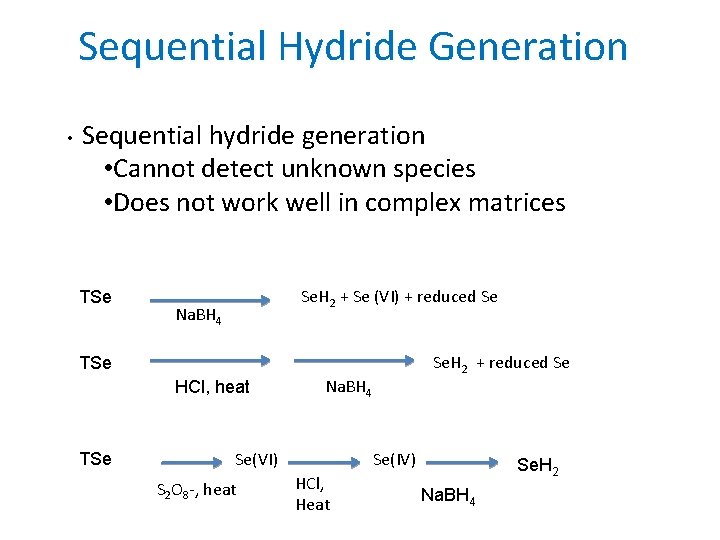
Sequential Hydride Generation • Sequential hydride generation • Cannot detect unknown species • Does not work well in complex matrices TSe Se. H 2 + Se (VI) + reduced Se Na. BH 4 Se. H 2 + reduced Se TSe HCl, heat TSe Na. BH 4 Se(VI) S 2 O 8 -, heat Se(IV) HCl, Heat Se. H 2 Na. BH 4
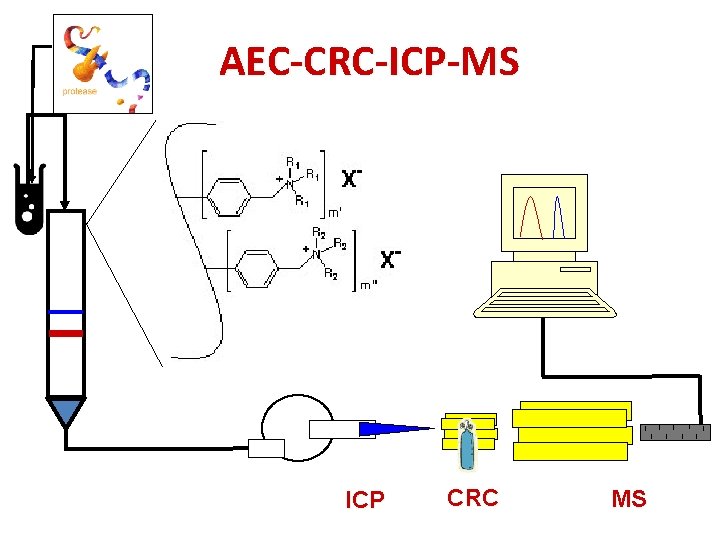
AEC-CRC-ICP-MS ICP CRC MS
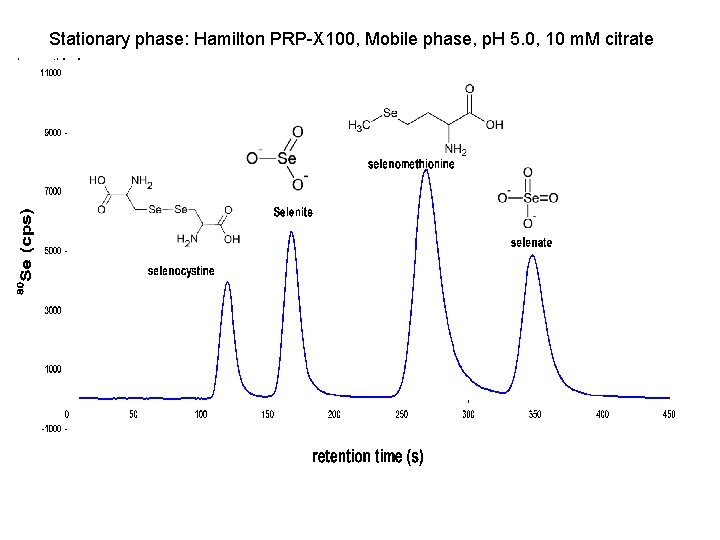
Stationary phase: Hamilton PRP-X 100, Mobile phase, p. H 5. 0, 10 m. M citrate
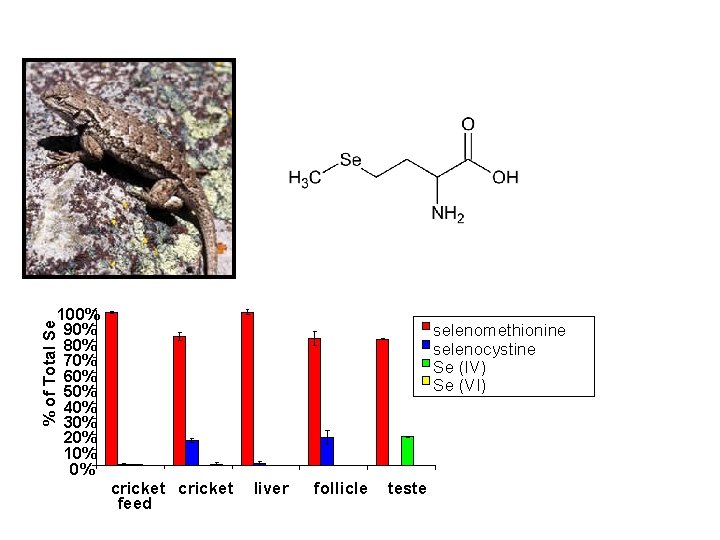
% of Total Se 100% 90% 80% 70% 60% 50% 40% 30% 20% 10% 0% selenomethionine selenocystine Se (IV) Se (VI) cricket feed liver follicle teste
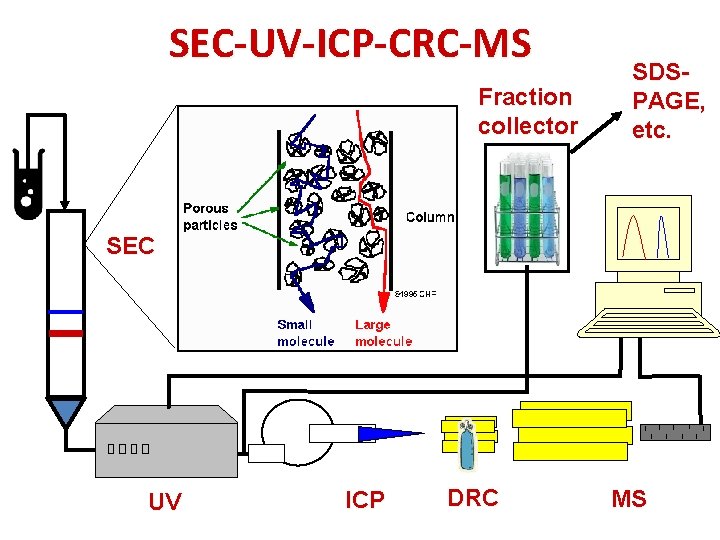
SEC-UV-ICP-CRC-MS Fraction collector SDSPAGE, etc. SEC UV ICP DRC MS
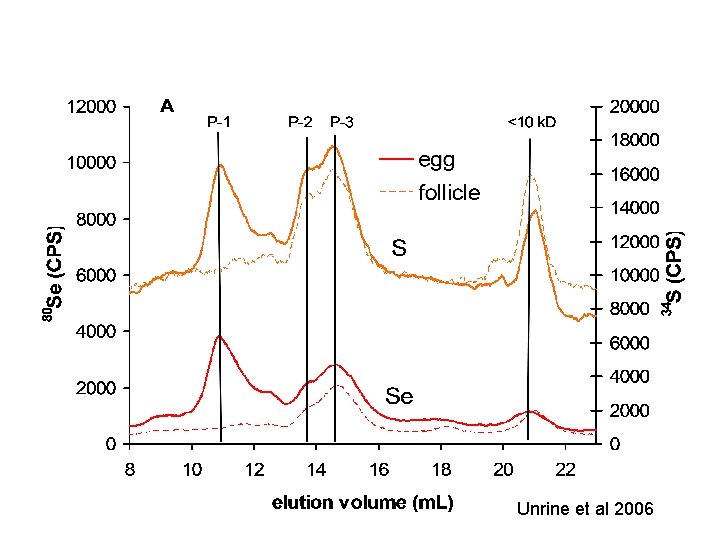
Unrine et al 2006
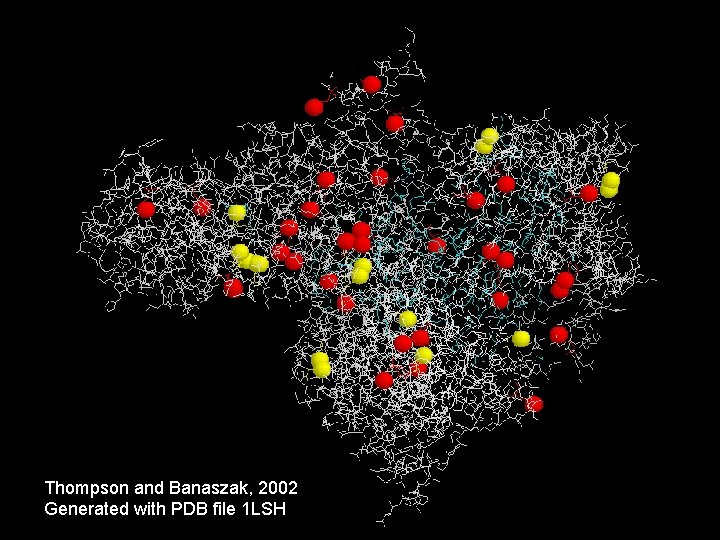
Thompson and Banaszak, 2002 Generated with PDB file 1 LSH
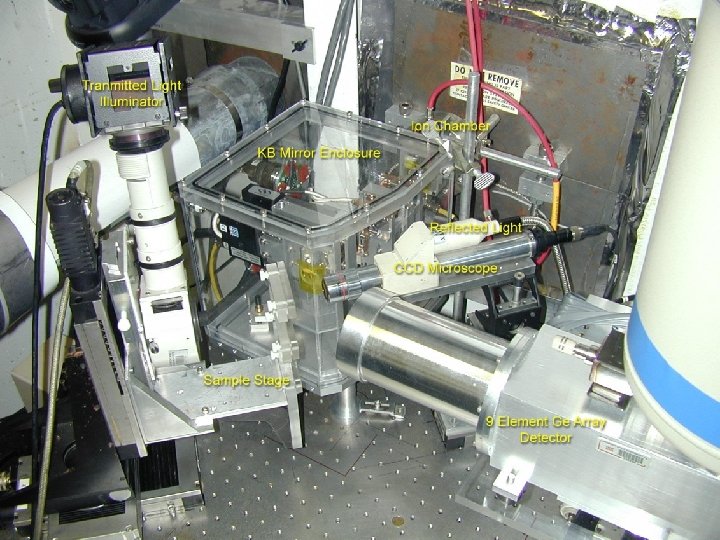
Solid phase Se speciationx-ray absorption spectroscopy • x-ray absorption near edge spectroscopy (XANES) • Extended x-ray absorption fine structure (EXAFS) • Requires access to synchrotron light source
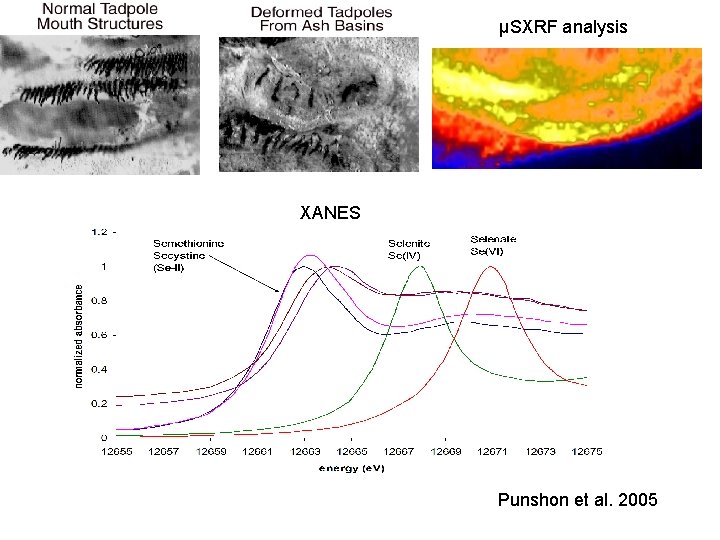
μSXRF analysis XANES Punshon et al. 2005
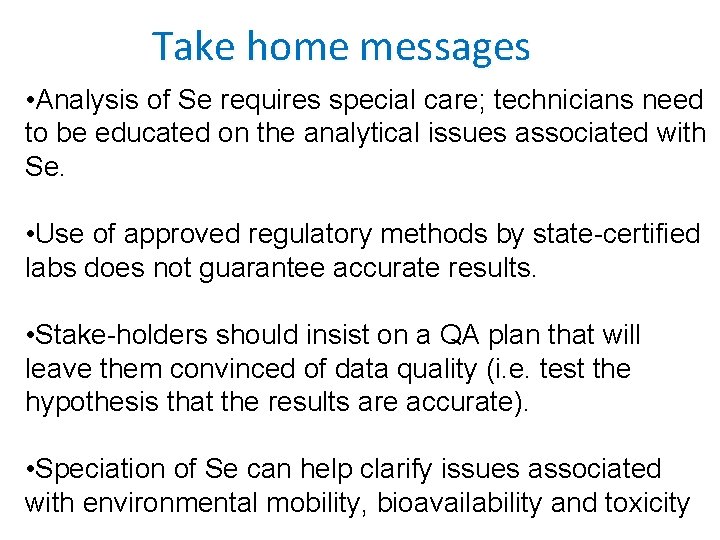
Take home messages • Analysis of Se requires special care; technicians need to be educated on the analytical issues associated with Se. • Use of approved regulatory methods by state-certified labs does not guarantee accurate results. • Stake-holders should insist on a QA plan that will leave them convinced of data quality (i. e. test the hypothesis that the results are accurate). • Speciation of Se can help clarify issues associated with environmental mobility, bioavailability and toxicity
Acknowledgements North American Metals Council (www. namc. org) North American Industry Selenium Working Group U. S. Department of Energy SETAC Dirk Wallschlager Nick Ralston Brian Jackson Tracey Punshon Portions of this work were performed at Beamline X 26 A, Bill Hopkins National Synchrotron Light Source (NSLS), Brookhaven Chris Romanek National Laboratory. X 26 A is supported by the Department of Brandon Staub Energy (DOE) - Geosciences (DE-FG 02 -92 ER 14244 to The Jennifer Baianno University of Chicago - CARS) and DOE - Office of Biological Paul Bertsch and Environmental Research, Environmental Remediation Sciences Div. (DE-FC 09 -96 -SR 18546 to the University of Kentucky). Use of the NSLS was supported by DOE under Contract No. DE-AC 02 -98 CH 10886. Office of Biological and Environmental Research, U. S. Department of Energy Financial Assistance Award No. DEFC 09 -96 -SR 18546 to the University of Georgia Research Foundation.