
Selective Breeding Vs Genetic Engineering Know Selective Breeding
Selective Breeding Vs Genetic Engineering
• Know – Selective Breeding involves choosing two organisms of the same species and mating them with the hope of getting the best qualities of each parent to show up in the offspring. – Genetic Engineering involves identifying certain genes and moving them from one organism to another – even to a different species or removing the gene entirely! – Both activities are controversial.

Selective Breeding: Details • Selective breeding involves mating organisms with different “desirable” traits to get offspring with the desirable traits of both parents SAME SPECIES! • Selective breeding is used mostly for dogs, cats, other pets, cattle, and crops.
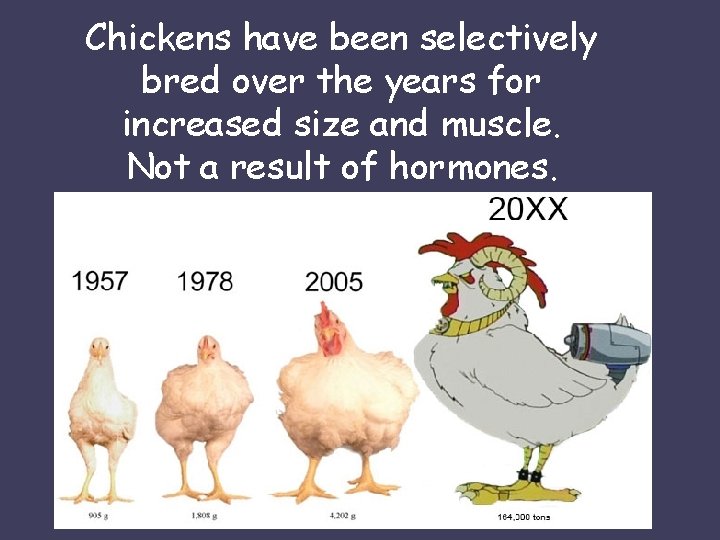
Chickens have been selectively bred over the years for increased size and muscle. Not a result of hormones.
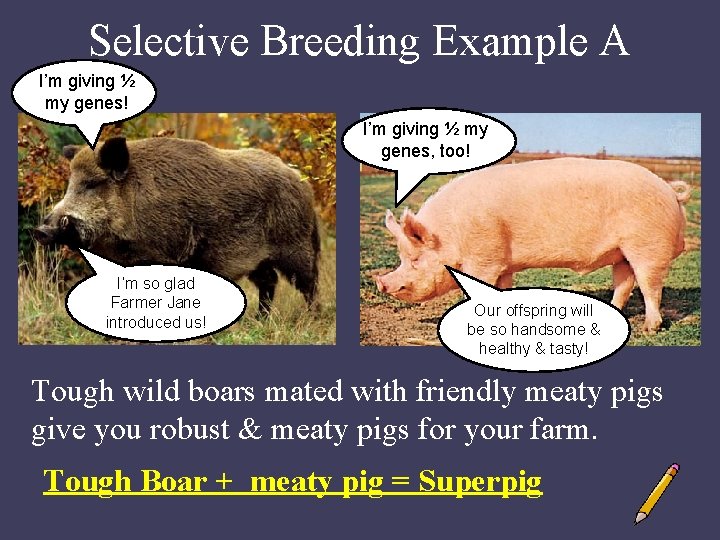
Selective Breeding Example A I’m giving ½ my genes! I’m giving ½ my genes, too! I’m so glad Farmer Jane introduced us! Our offspring will be so handsome & healthy & tasty! Tough wild boars mated with friendly meaty pigs give you robust & meaty pigs for your farm. Tough Boar + meaty pig = Superpig
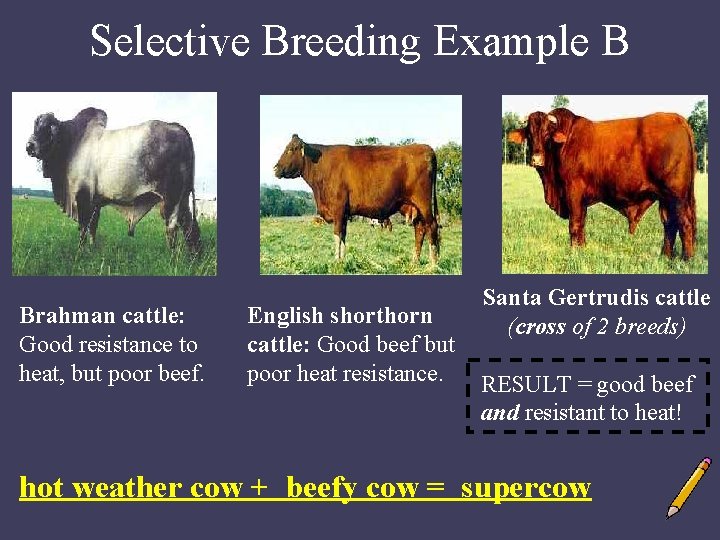
Selective Breeding Example B Brahman cattle: Good resistance to heat, but poor beef. English shorthorn cattle: Good beef but poor heat resistance. Santa Gertrudis cattle (cross of 2 breeds) RESULT = good beef and resistant to heat! hot weather cow + beefy cow = supercow
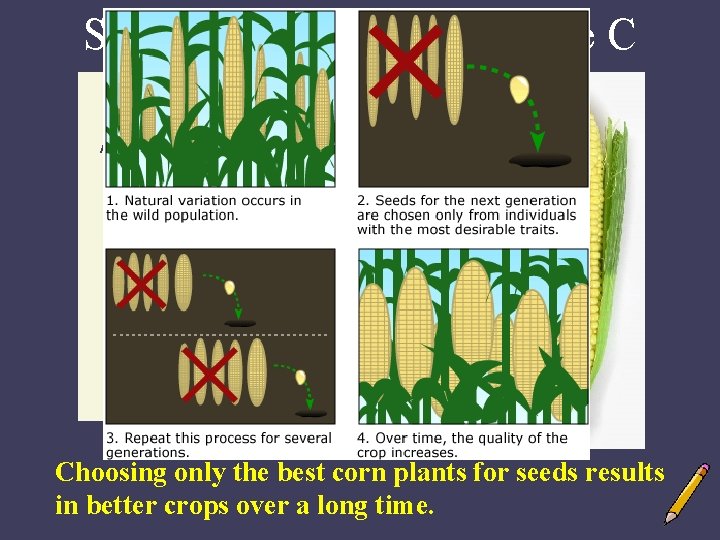
Selective Breeding: Example C Ancient corn from Peru (~4000 yrs old) Choosing only the best corn plants for seeds results in better crops over a long time.
Remember! • Selective breeding crosses (mates) organisms with desirable traits to produce offspring that have the traits from both parents!
Advantages of Selective Breeding • Might get improved organisms • Don’t need any special tools or lab • Can be performed easily by farmers & breeders
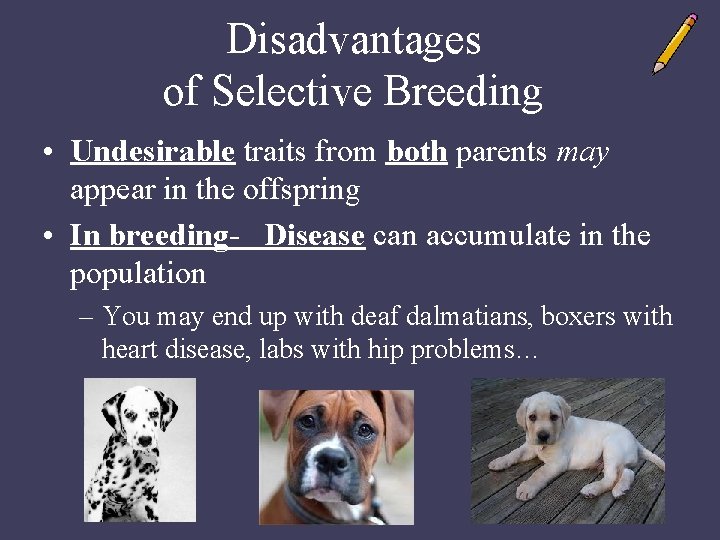
Disadvantages of Selective Breeding • Undesirable traits from both parents may appear in the offspring • In breeding- Disease can accumulate in the population – You may end up with deaf dalmatians, boxers with heart disease, labs with hip problems…
Genetic Engineering: Details • Taking DNA from one organism and inserting it into another organism’s DNA sequence, to ensure the organism will have a specific trait. • It produces an organism that has a new trait it would most likely not have developed on its own
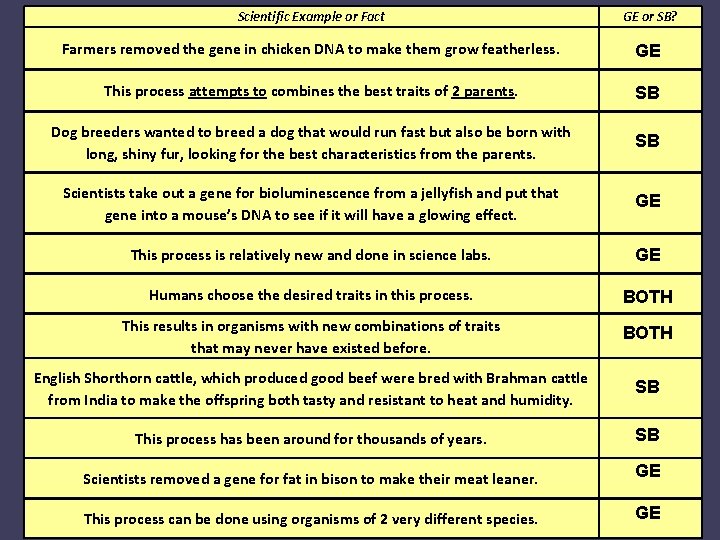
Scientific Example or Fact GE or SB? Farmers removed the gene in chicken DNA to make them grow featherless. GE This process attempts to combines the best traits of 2 parents. SB Dog breeders wanted to breed a dog that would run fast but also be born with long, shiny fur, looking for the best characteristics from the parents. SB Scientists take out a gene for bioluminescence from a jellyfish and put that gene into a mouse’s DNA to see if it will have a glowing effect. GE This process is relatively new and done in science labs. GE Humans choose the desired traits in this process. BOTH This results in organisms with new combinations of traits that may never have existed before. BOTH English Shorthorn cattle, which produced good beef were bred with Brahman cattle from India to make the offspring both tasty and resistant to heat and humidity. SB This process has been around for thousands of years. SB Scientists removed a gene for fat in bison to make their meat leaner. GE This process can be done using organisms of 2 very different species. GE
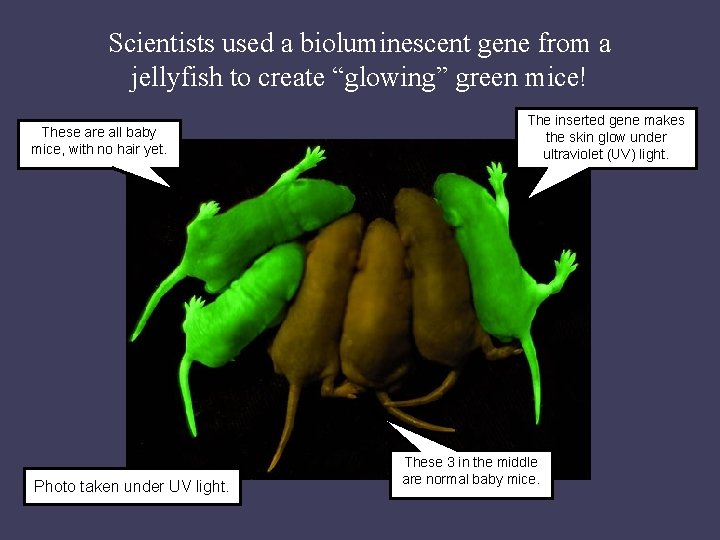
Scientists used a bioluminescent gene from a jellyfish to create “glowing” green mice! These are all baby mice, with no hair yet. Photo taken under UV light. The inserted gene makes the skin glow under ultraviolet (UV) light. These 3 in the middle are normal baby mice.
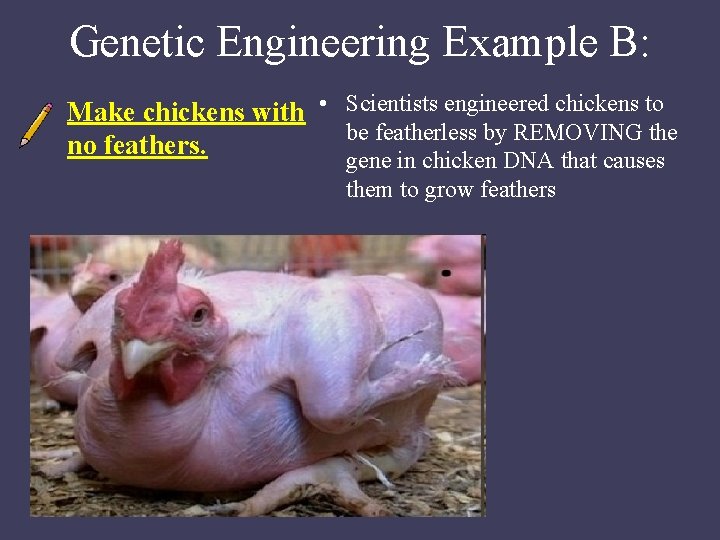
Genetic Engineering Example B: Make chickens with • Scientists engineered chickens to be featherless by REMOVING the no feathers. gene in chicken DNA that causes them to grow feathers
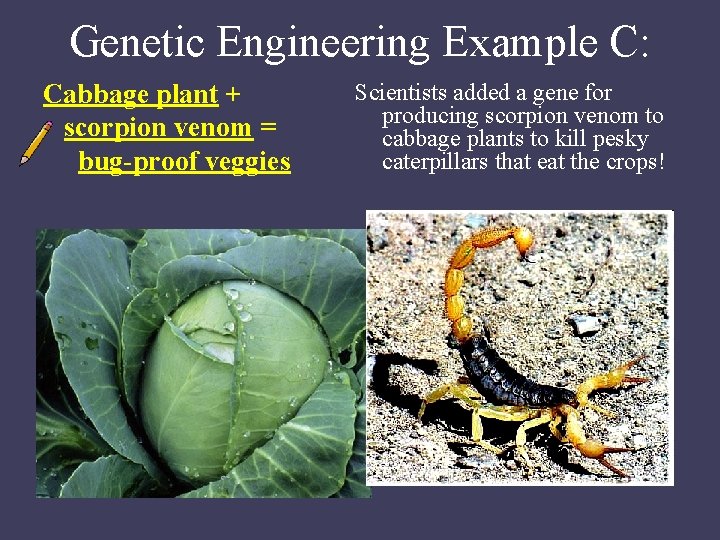
Genetic Engineering Example C: Cabbage plant + scorpion venom = bug-proof veggies Scientists added a gene for producing scorpion venom to cabbage plants to kill pesky caterpillars that eat the crops!
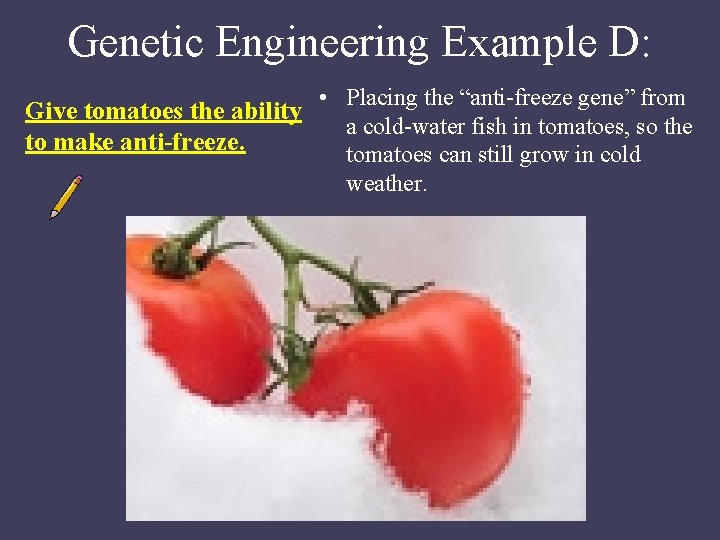
Genetic Engineering Example D: Give tomatoes the ability to make anti-freeze. • Placing the “anti-freeze gene” from a cold-water fish in tomatoes, so the tomatoes can still grow in cold weather.
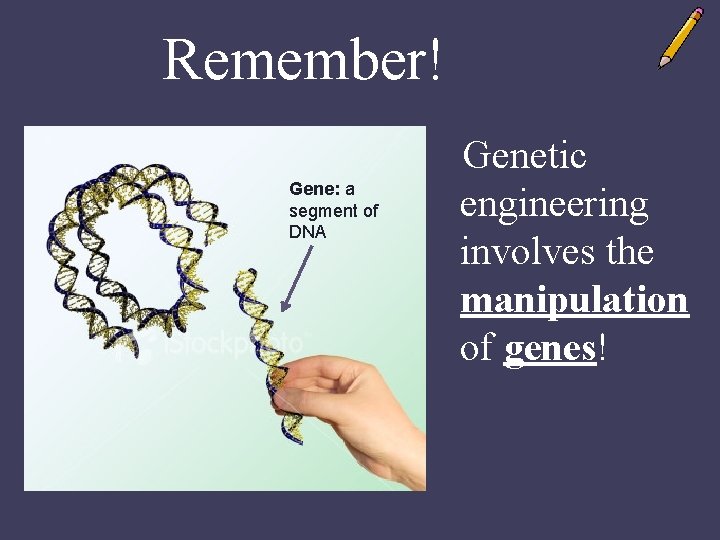
Remember! Gene: a segment of DNA Genetic engineering involves the manipulation of genes!
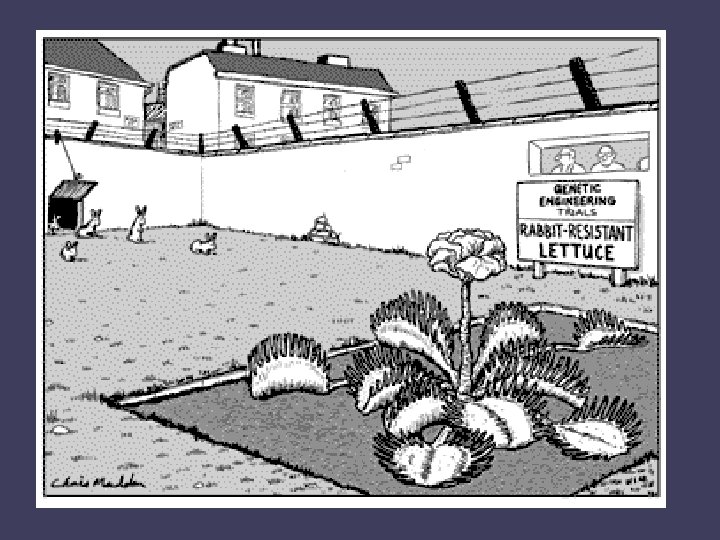
Advantages of Genetic Engineering • Will get improved organisms • Can create organisms with traits not previously thought possible • Can remove “bad” genes • Reduces the chance of getting “undesirable” organisms
Disadvantages of Genetic Engineering • • • Co$tly Must be performed in a lab with special equipment Ethical issues Long term negative affects Negative environmental impacts • Super-C apples (allergies!) • Superweeds! • Natural insecticides seep into soil & kill good insects! • Unknowns? ? ?
REVIEW • Genetic Engineering – Relatively new process performed within labs – Manipulates or alters the genetic makeup of organisms – Results in organisms with new traits • Selective Breeding – Process has been around for thousands of years – Combines the best traits of two organisms – Results in organisms that have the desirable traits of their parents
- Slides: 21