
Selective Breeding Over 1000s of years mankind has
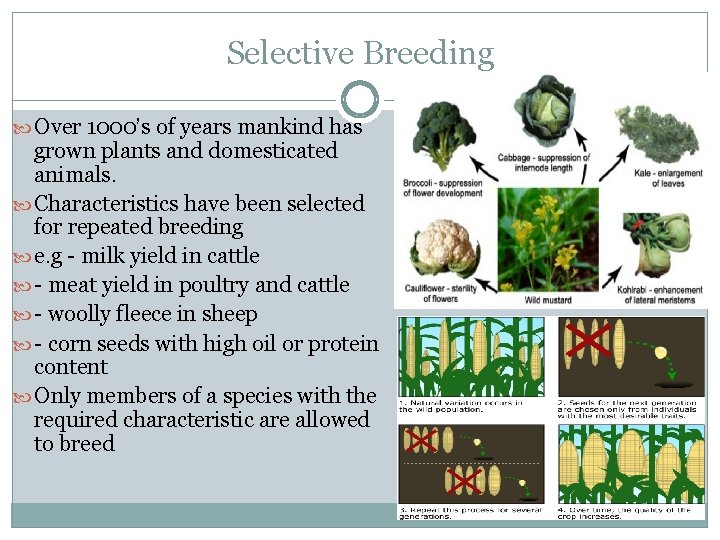
Selective Breeding Over 1000’s of years mankind has grown plants and domesticated animals. Characteristics have been selected for repeated breeding e. g - milk yield in cattle - meat yield in poultry and cattle - woolly fleece in sheep - corn seeds with high oil or protein content Only members of a species with the required characteristic are allowed to breed
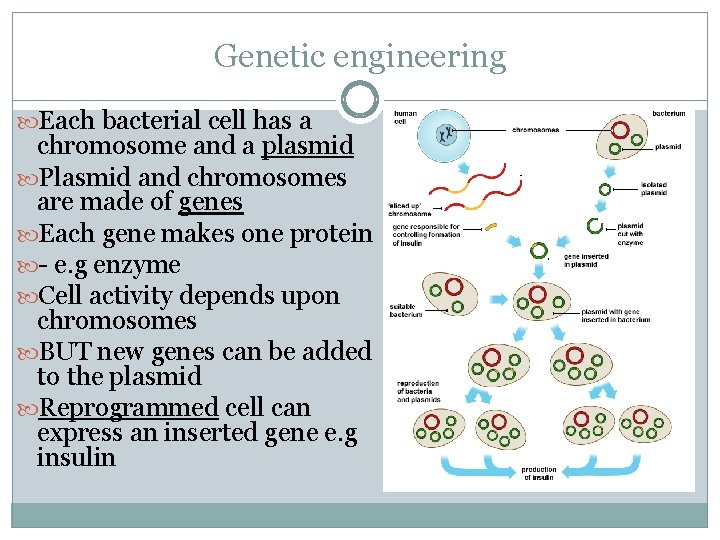
Genetic engineering Each bacterial cell has a chromosome and a plasmid Plasmid and chromosomes are made of genes Each gene makes one protein - e. g enzyme Cell activity depends upon chromosomes BUT new genes can be added to the plasmid Reprogrammed cell can express an inserted gene e. g insulin
Genetic Engineering v Selective Breeding Both can alter the genetic makeup of a species for scientific benefit Selective Breeding Requires years of careful selection & breeding Doesn’t always produce the ideal organism Only animals that would normally produce the required product can be used
Genetic Engineering v Selective Breeding Genetic Engineering Allows scientists to directly alter the genotype of a species - suited to mankind’s needs Species can be programmed to make products previously only made by another species Much easier & cheaper to mass produce bacteria cells (than other species) Mass quantities of a useful product e. g insulin can be produced
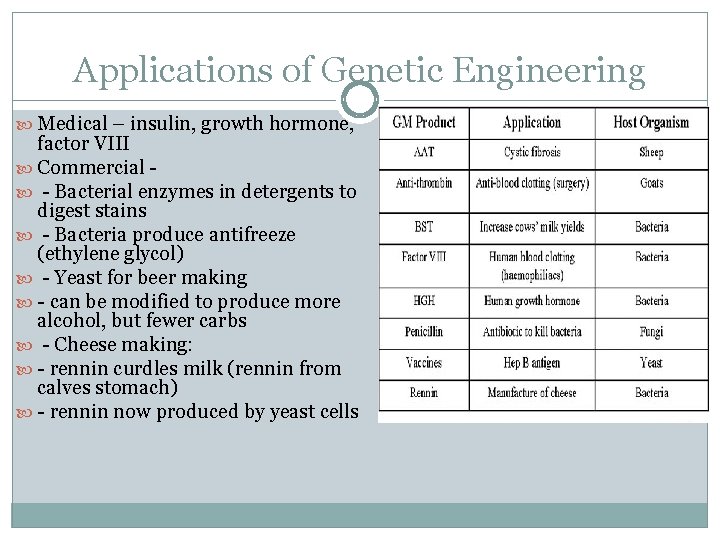
Applications of Genetic Engineering Medical – insulin, growth hormone, factor VIII Commercial - Bacterial enzymes in detergents to digest stains - Bacteria produce antifreeze (ethylene glycol) - Yeast for beer making - can be modified to produce more alcohol, but fewer carbs - Cheese making: - rennin curdles milk (rennin from calves stomach) - rennin now produced by yeast cells
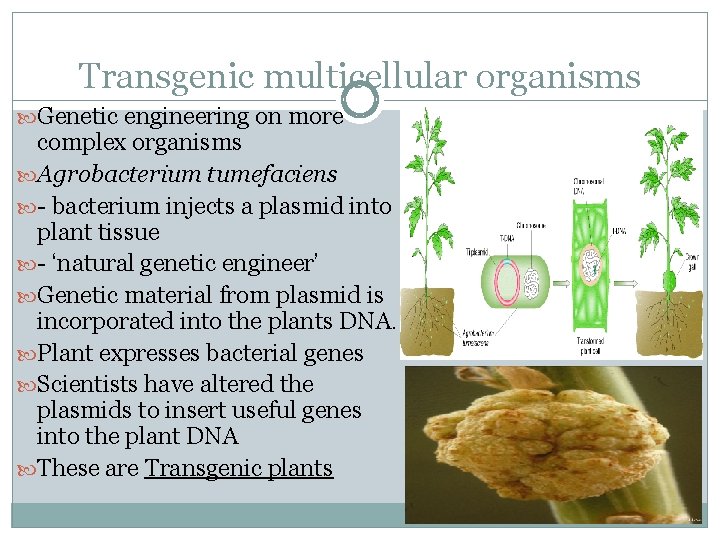
Transgenic multicellular organisms Genetic engineering on more complex organisms Agrobacterium tumefaciens - bacterium injects a plasmid into plant tissue - ‘natural genetic engineer’ Genetic material from plasmid is incorporated into the plants DNA. Plant expresses bacterial genes Scientists have altered the plasmids to insert useful genes into the plant DNA These are Transgenic plants
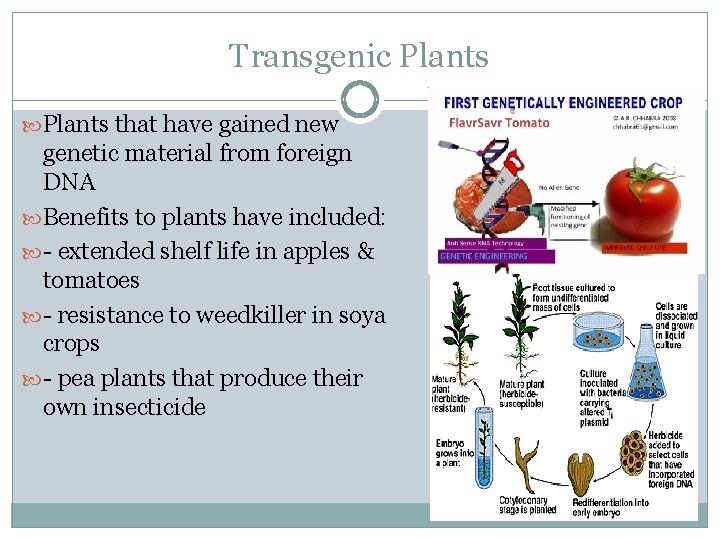
Transgenic Plants that have gained new genetic material from foreign DNA Benefits to plants have included: - extended shelf life in apples & tomatoes - resistance to weedkiller in soya crops - pea plants that produce their own insecticide
Transgenic organisms - future Cereals : crops will be modified to contain genes for certain characteristics e. g resistance to herbicides, drought, pests, microorganisms & salinity - increased photosynthetic rate Future - animal genes into plants e. g already haemoglobin grown in tobacco plants
- Slides: 8