
Selecting tomato for their ability to react and
Selecting tomato for their ability to react and conserved their quality during the process David Page 1, Alexandre Vilas-Boas 1, Robert Giovinazzo 2, Sylvie Bureau 1 1 INRA - Université d'Avignon et des Pays de Vaucluse, UMR SQPOV, Avignon, France 2 SONITO, Maison de l’Agriculture, Avignon, France 15 th ISHS Symposium on the Processing Tomato, June 11 th - 15 th, 2018, Greece
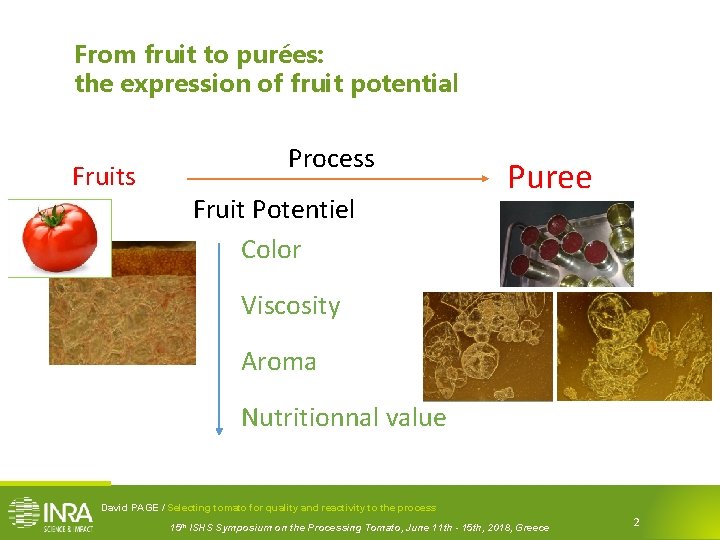
From fruit to purées: the expression of fruit potential Fruits Process Fruit Potentiel Color Puree Viscosity Aroma Nutritionnal value David PAGE / Selecting tomato for quality and reactivity to the process 15 th ISHS Symposium on the Processing Tomato, June 11 th - 15 th, 2018, Greece 2 2
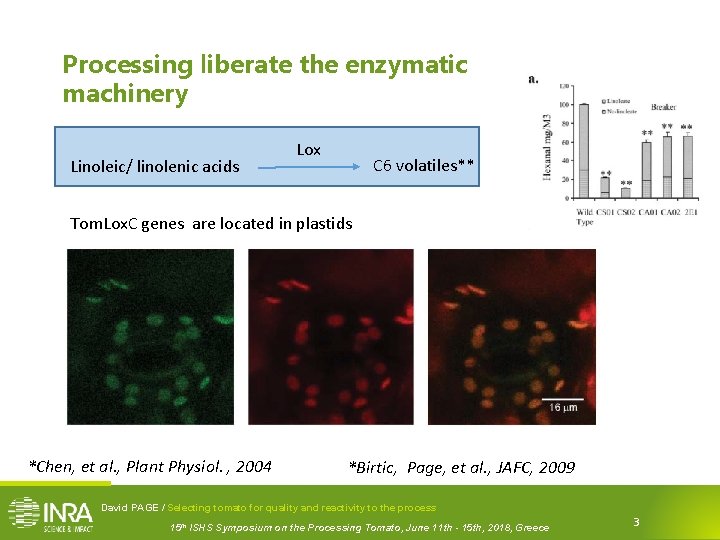
Processing liberate the enzymatic machinery Linoleic/ linolenic acids Lox C 6 volatiles** Tom. Lox. C genes are located in plastids *Chen, et al. , Plant Physiol. , 2004 *Birtic, Page, et al. , JAFC, 2009 David PAGE / Selecting tomato for quality and reactivity to the process 15 th ISHS Symposium on the Processing Tomato, June 11 th - 15 th, 2018, Greece 3 3
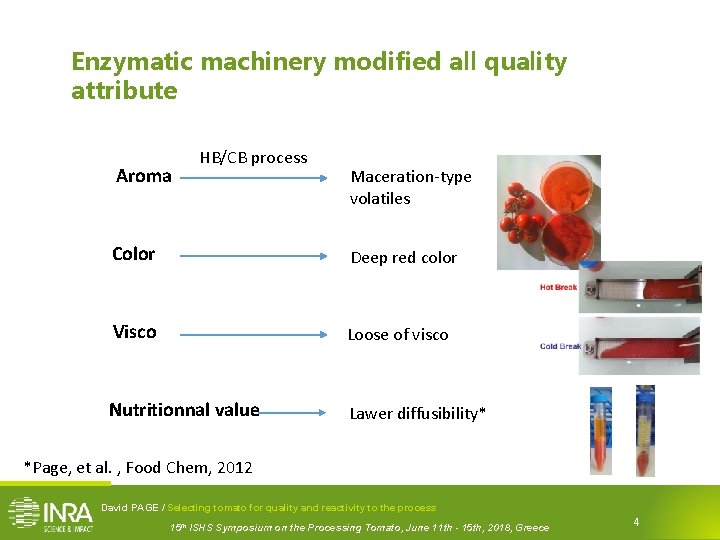
Enzymatic machinery modified all quality attribute Aroma HB/CB process Maceration-type volatiles Color Deep red color Visco Loose of visco Nutritionnal value Lawer diffusibility* *Page, et al. , Food Chem, 2012 David PAGE / Selecting tomato for quality and reactivity to the process 15 th ISHS Symposium on the Processing Tomato, June 11 th - 15 th, 2018, Greece 4 4
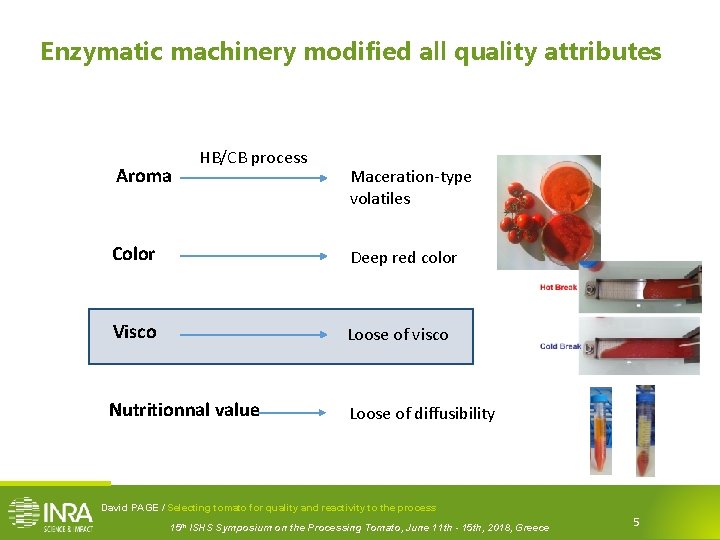
Enzymatic machinery modified all quality attributes Aroma HB/CB process Maceration-type volatiles Color Deep red color Visco Loose of visco Nutritionnal value Loose of diffusibility Mettre le focus sur visco David PAGE / Selecting tomato for quality and reactivity to the process 15 th ISHS Symposium on the Processing Tomato, June 11 th - 15 th, 2018, Greece 5 5
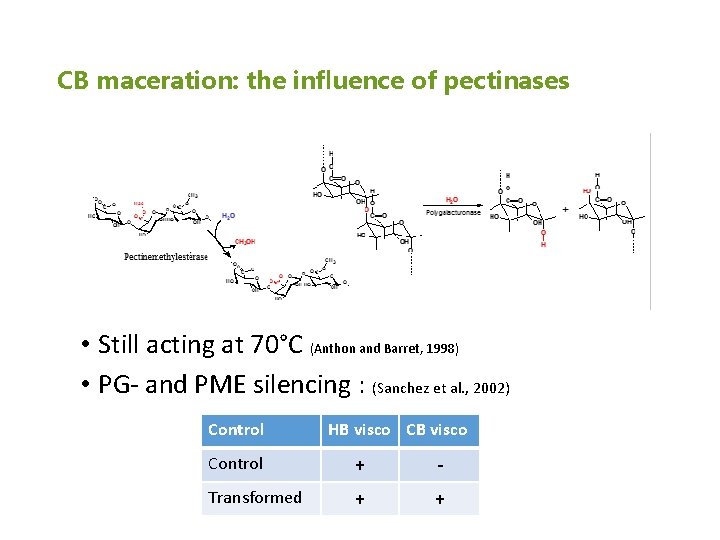
CB maceration: the influence of pectinases • Still acting at 70°C (Anthon and Barret, 1998) • PG- and PME silencing : (Sanchez et al. , 2002) Control HB visco Control + - Transformed + +
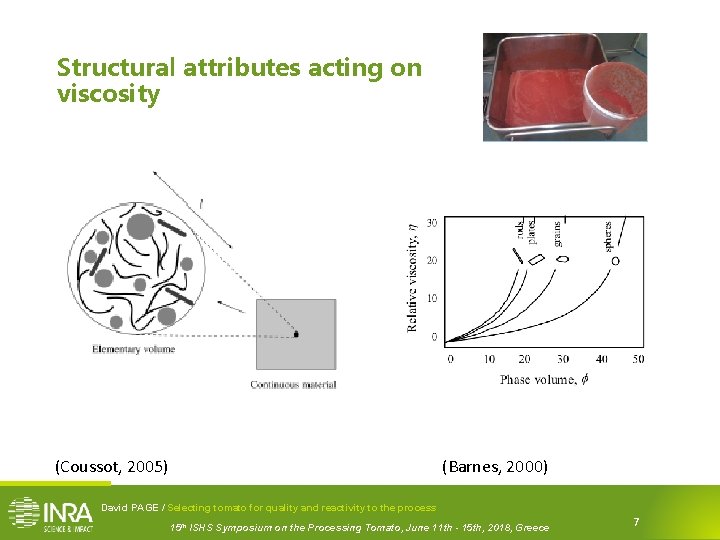
Structural attributes acting on viscosity (Coussot, 2005) (Barnes, 2000) Mettre le focus sur visco David PAGE / Selecting tomato for quality and reactivity to the process 15 th ISHS Symposium on the Processing Tomato, June 11 th - 15 th, 2018, Greece 7 7
Problematic and context • Viscosity potential of fruit is modified by the enzymatic reactivity • Controlling the reactivity to modulate the viscosity of industrial product: Genotype x Environment interactions Research focus • Variability and genetic of this reactivity ? • How to measure it accurately ? • Impact of the process on viscosity? David PAGE / Selecting tomato for quality and reactivity to the process 15 th ISHS Symposium on the Processing Tomato, June 11 th - 15 th, 2018, Greece 8 8
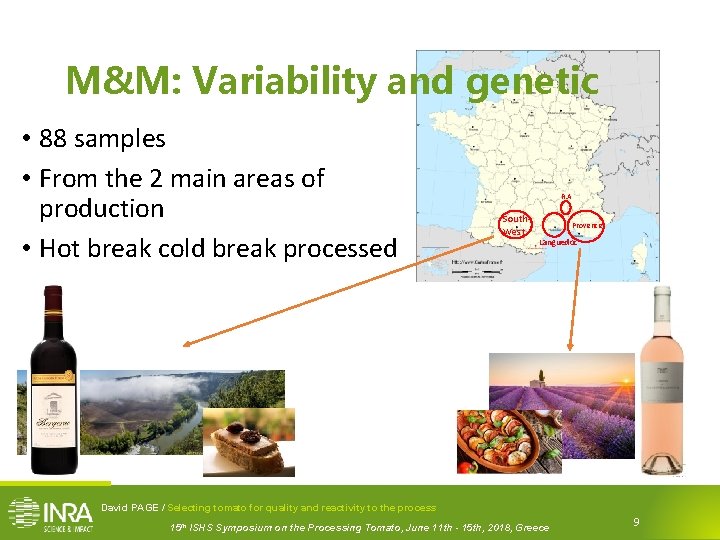
M&M: Variability and genetic • 88 samples • From the 2 main areas of production • Hot break cold break processed R. A South. West Provence Languedoc David PAGE / Selecting tomato for quality and reactivity to the process 15 th ISHS Symposium on the Processing Tomato, June 11 th - 15 th, 2018, Greece 9 9
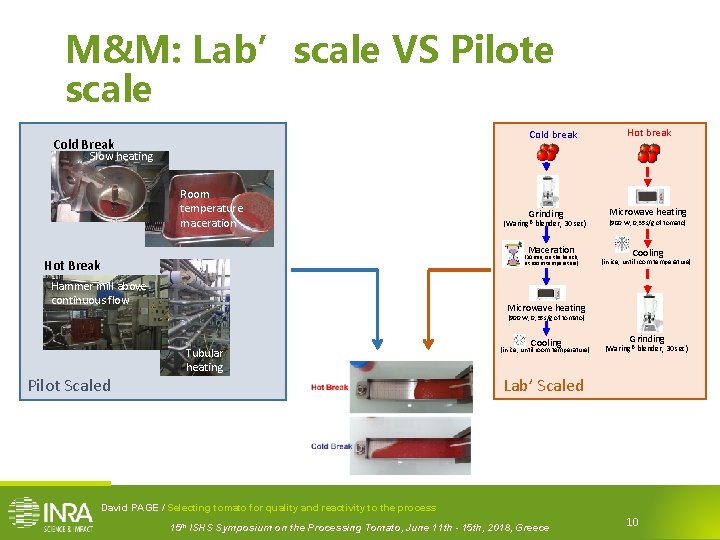
M&M: Lab’scale VS Pilote scale Cold break Cold Break Hot break Slow heating Room temperature maceration Grinding (Waring® blender, 30 sec) Maceration (30 min, on the bench, at room temperature) Hot Break Hammer mill above continuous flow Microwave heating (900 W, 0, 35 s/g of tomato) Cooling (in ice, until room temperature) Microwave heating (900 W, 0, 35 s/g of tomato) Pilot Scaled Tubular heating Cooling (in ice, until room temperature) Grinding (Waring® blender, 30 sec) Lab’ Scaled David PAGE / Selecting tomato for quality and reactivity to the process 15 th ISHS Symposium on the Processing Tomato, June 11 th - 15 th, 2018, Greece 10 10
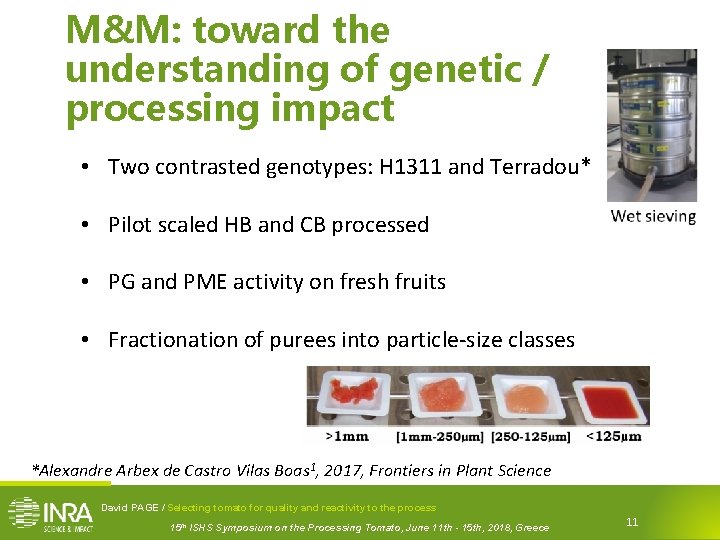
M&M: toward the understanding of genetic / processing impact • Two contrasted genotypes: H 1311 and Terradou* • Pilot scaled HB and CB processed • PG and PME activity on fresh fruits • Fractionation of purees into particle-size classes *Alexandre Arbex de Castro Vilas Boas 1, 2017, Frontiers in Plant Science David PAGE / Selecting tomato for quality and reactivity to the process 15 th ISHS Symposium on the Processing Tomato, June 11 th - 15 th, 2018, Greece 11 11
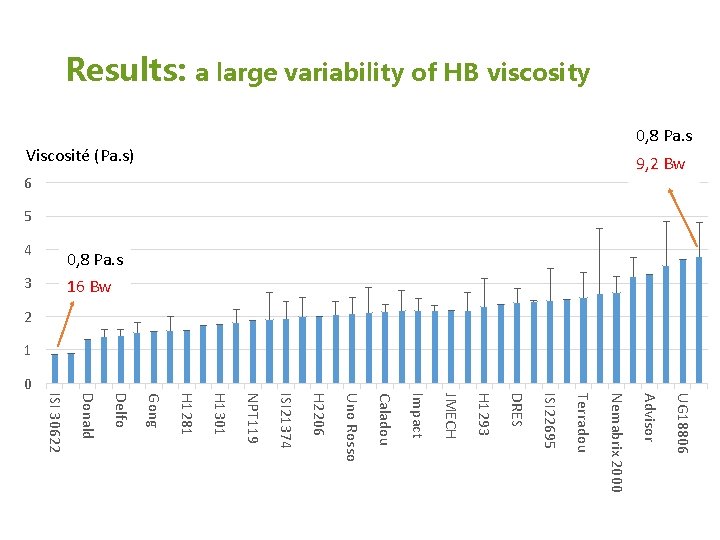
4 0, 8 Pa. s 3 16 Bw a large variability of HB viscosity Results: 0, 8 Pa. s 9, 2 Bw Viscosité (Pa. s) 6 5 2 1 0 UG 18806 Advisor Nemabrix 2000 Terradou ISI 22695 DRES H 1293 JMECH Impact Caladou Uno Rosso H 2206 ISI 21374 NPT 119 H 1301 H 1281 Gong Delfo Donald ISI 30622
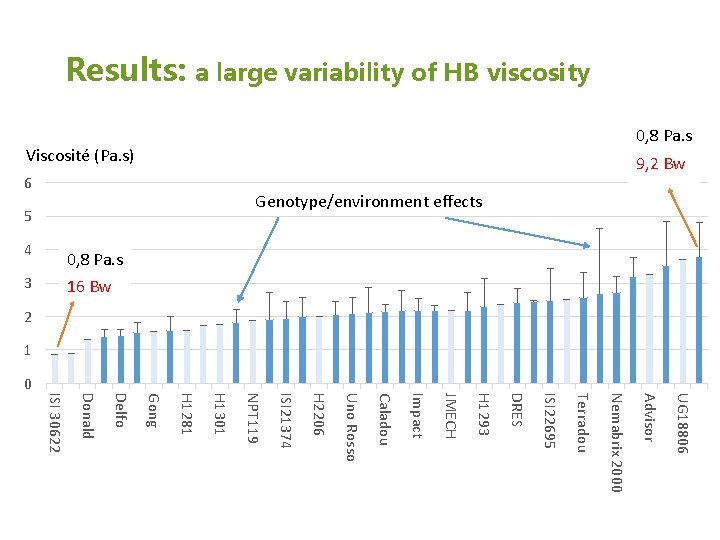
4 0, 8 Pa. s 3 16 Bw a large variability of HB viscosity Results: 0, 8 Pa. s 9, 2 Bw Viscosité (Pa. s) Genotype/environment effects 6 5 2 1 0 UG 18806 Advisor Nemabrix 2000 Terradou ISI 22695 DRES H 1293 JMECH Impact Caladou Uno Rosso H 2206 ISI 21374 NPT 119 H 1301 H 1281 Gong Delfo Donald ISI 30622
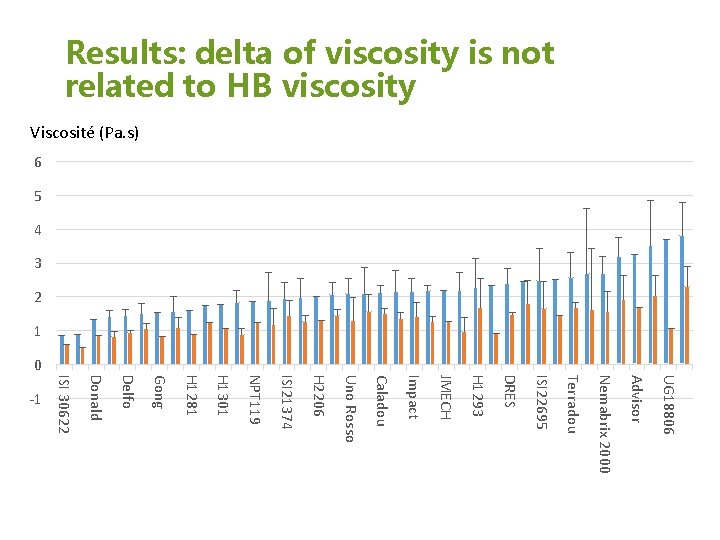
Results: delta of viscosity is not related to HB viscosity Viscosité (Pa. s) 6 5 4 3 2 1 0 UG 18806 Advisor Nemabrix 2000 Terradou ISI 22695 DRES H 1293 JMECH Impact Caladou Uno Rosso H 2206 ISI 21374 NPT 119 H 1301 H 1281 Gong Delfo Donald ISI 30622 -1
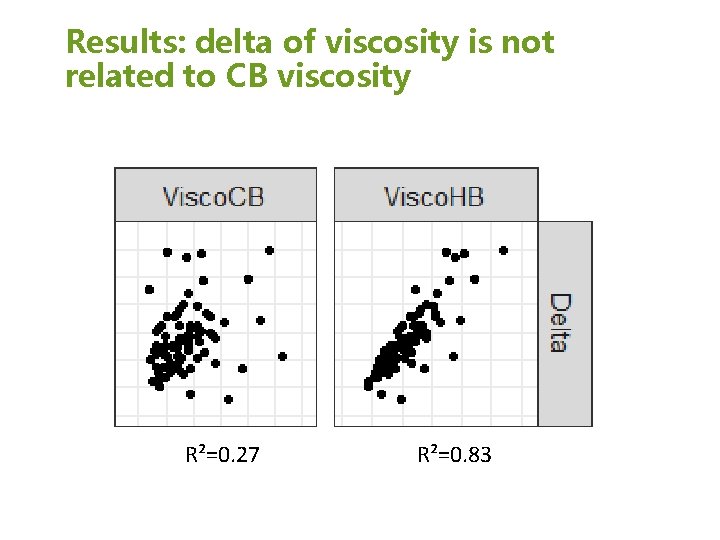
Results: delta of viscosity is not related to CB viscosity R²=0. 27 R²=0. 83
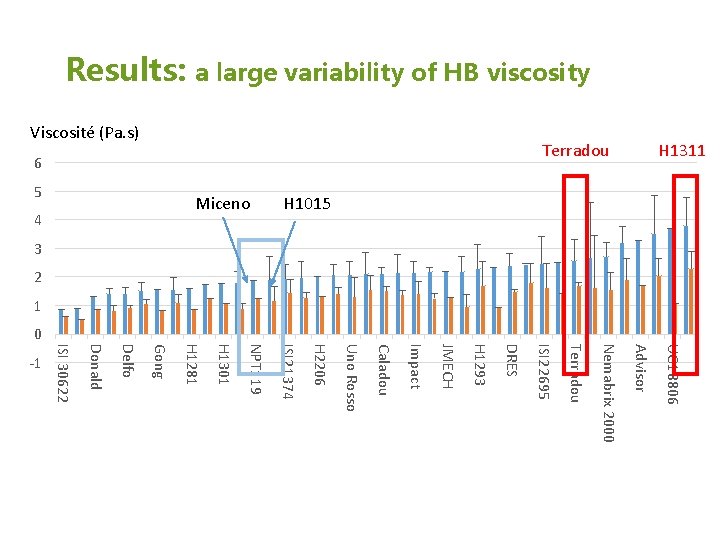
4 H 1311 Terradou Viscosité (Pa. s) 6 UG 18806 Advisor Nemabrix 2000 Terradou ISI 22695 DRES H 1293 JMECH Impact Caladou Uno Rosso H 2206 ISI 21374 NPT 119 H 1301 H 1281 Gong Delfo Donald ISI 30622 -1 H 1015 Miceno 5 a large variability of HB viscosity Results: 3 2 1 0
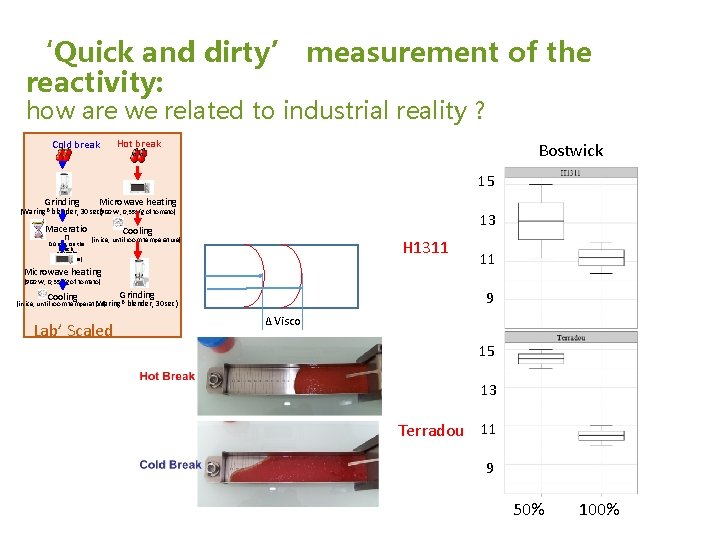
‘Quick and dirty’ measurement of the reactivity: how are we related to industrial reality ? Cold break Hot break Bostwick 15 Grinding Microwave heating (Waring® blender, 30 sec)(900 W, 0, 35 s/g of tomato) Maceratio n (30 min, on the bench, at room temperature) 13 Cooling (in ice, until room temperature) H 1311 Microwave heating 11 (900 W, 0, 35 s/g of tomato) Cooling Grinding 9 (in ice, until room temperature) (Waring® blender, 30 sec) Lab’ Scaled Δ Visco 15 13 Terradou 11 9 50% 100%
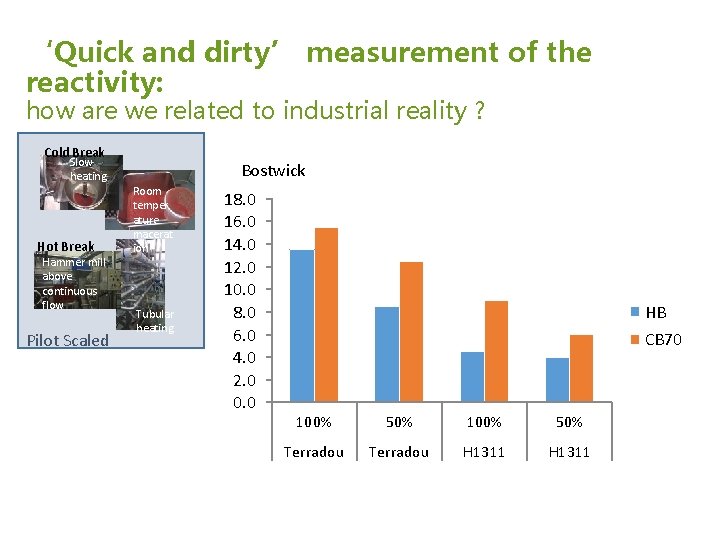
‘Quick and dirty’ measurement of the reactivity: how are we related to industrial reality ? Cold Break Slow heating Hot Break Hammer mill above continuous flow Pilot Scaled Bostwick Room temper ature macerat ion Tubular heating 18. 0 16. 0 14. 0 12. 0 10. 0 8. 0 6. 0 4. 0 2. 0 0. 0 HB CB 70 100% 50% Terradou H 1311
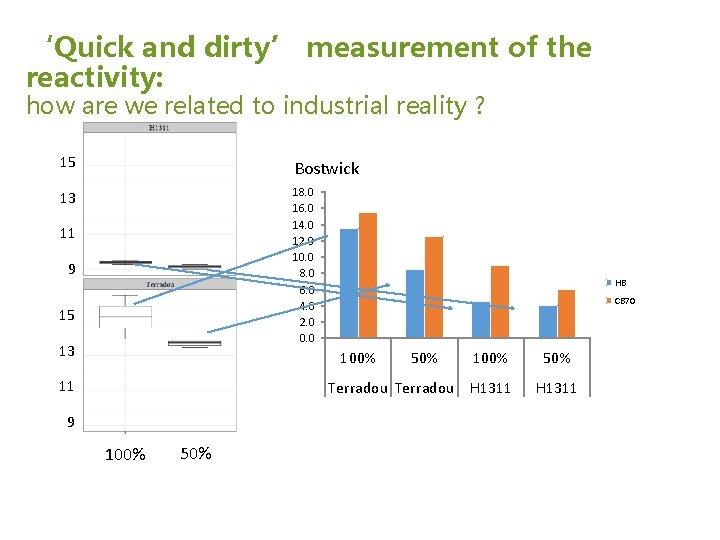
‘Quick and dirty’ measurement of the reactivity: how are we related to industrial reality ? 15 Bostwick 13 18. 0 16. 0 14. 0 12. 0 10. 0 8. 0 6. 0 4. 0 2. 0 0. 0 11 9 15 13 HB CB 70 100% 11 50% 100% Terradou H 1311 9 100% 50% H 1311
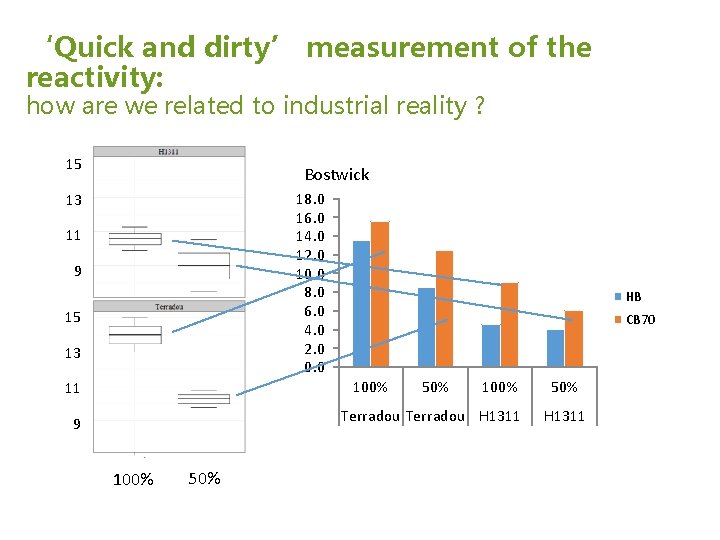
‘Quick and dirty’ measurement of the reactivity: how are we related to industrial reality ? 15 Bostwick 18. 0 16. 0 14. 0 12. 0 10. 0 8. 0 6. 0 4. 0 2. 0 0. 0 13 11 9 15 13 HB CB 70 100% 11 50% 100% Terradou H 1311 9 100% 50% H 1311
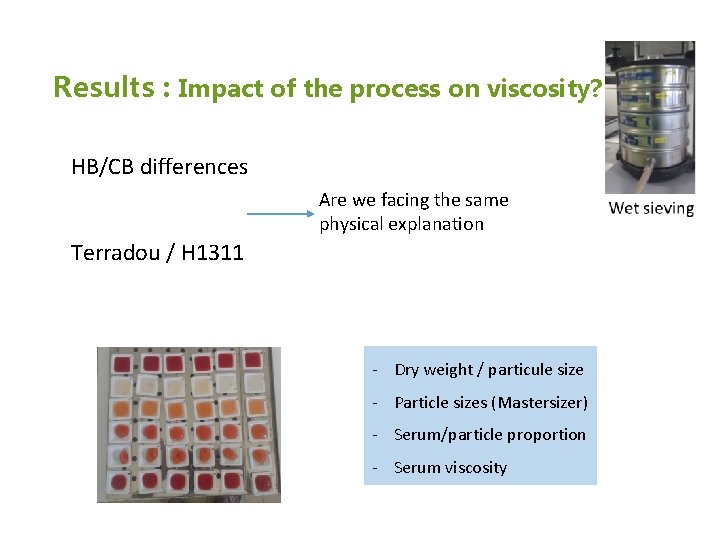
Results : Impact of the process on viscosity? HB/CB differences Are we facing the same physical explanation Terradou / H 1311 - Dry weight / particule size - Particle sizes (Mastersizer) - Serum/particle proportion - Serum viscosity
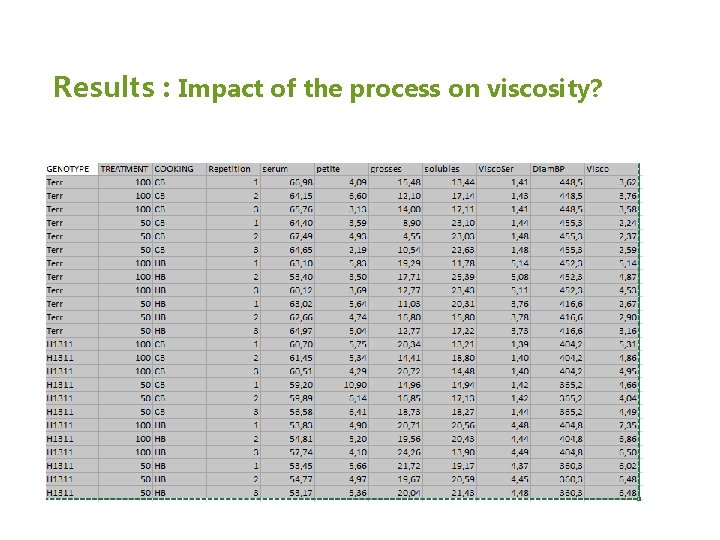
Results : Impact of the process on viscosity?
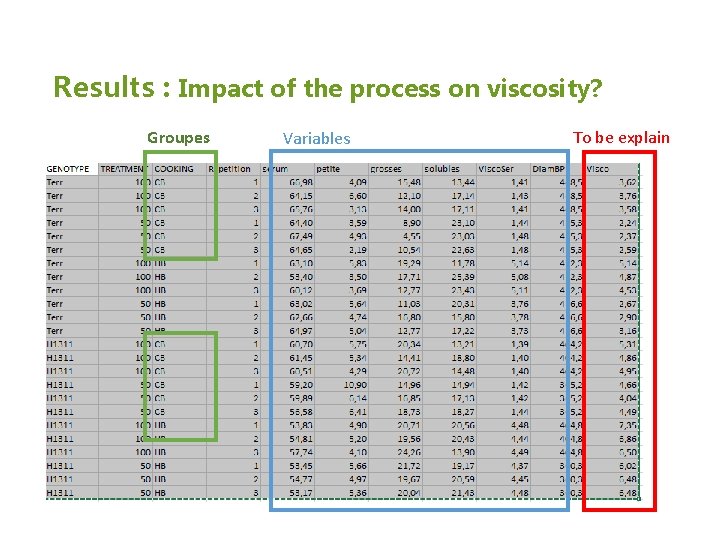
Results : Impact of the process on viscosity? Groupes Variables To be explain
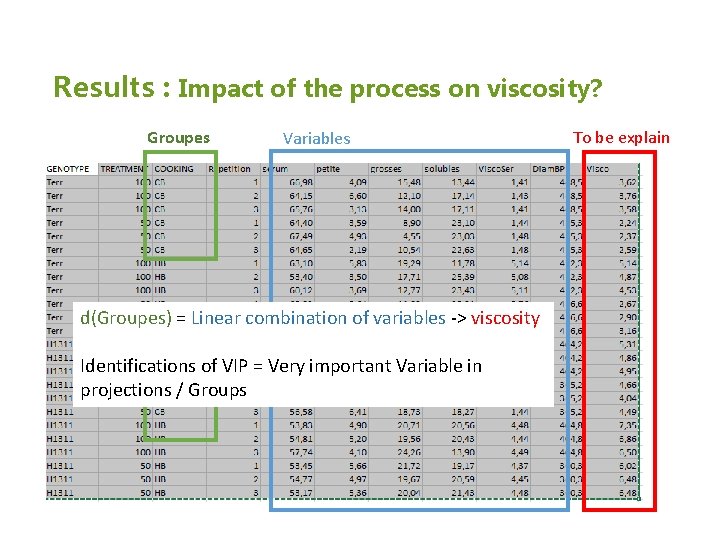
Results : Impact of the process on viscosity? Groupes Variables d(Groupes) = Linear combination of variables -> viscosity Identifications of VIP = Very important Variable in projections / Groups To be explain
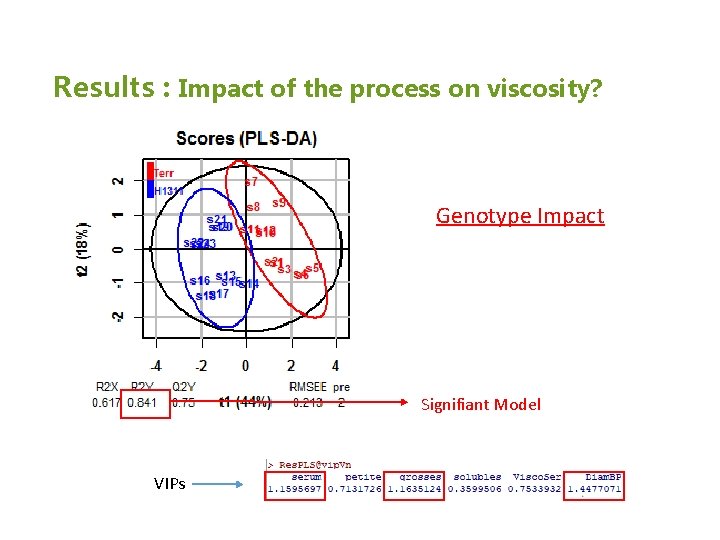
Results : Impact of the process on viscosity? Genotype Impact Signifiant Model VIPs
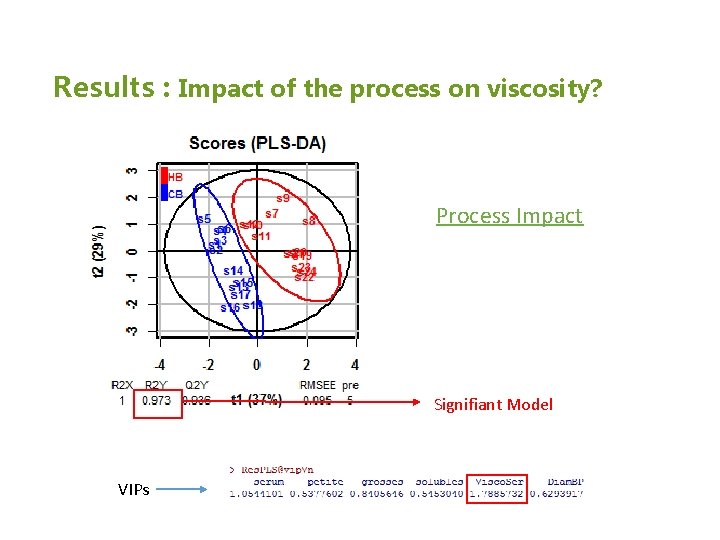
Results : Impact of the process on viscosity? Process Impact Signifiant Model VIPs
Conclusion and Perspectives - Genetic control for Viscosity is important, but can be useless without taking into account reactivity - « Quick and Dirty » methods has to be developed to reach industry needs - Going deeper into details help to identify the future trends for researches Mettre le focus sur visco David PAGE / Selecting tomato for quality and reactivity to the process 15 th ISHS Symposium on the Processing Tomato, June 11 th - 15 th, 2018, Greece 27 27
Acknowledgment Professional Alexandre Vilas-Boas Interprofessional Organization of French Farmers and Industry Tomato National Institute for Agronomical Research Technology Agronomists Emmah Climate & detection Research Technical center food processing and preservation R&D
- Slides: 28