
Selecting the Sweet Spot Sampling Strategies at Southwestern


- Slides: 29
Selecting the Sweet Spot: Sampling Strategies at Southwestern Melas Basin Joel M. Davis University College London Rebecca M. E. Williams, Catherine M. Weitz Planetary Science Institute Catherine Quantin-Nataf, Gilles Dromart Université de Lyon Peter M. Grindrod Birkbeck, University of London Lauren Edgar USGS, Flagstaff Third Landing Site Workshop for 2020 Rover February 8 -10, 2017 NOTE ADDED BY JPL WEBMASTER: This content has not been approved or adopted by, NASA, JPL, or the California Institute of Technology. This document is being made available for information purposes only, and any views and opinions
Presentation overview 1. 2. 3. 4. 5. 6. Site overview and background Ellipse and regions of interest Biosignature preservation potential at site Science objectives Sampling strategy Extended mission
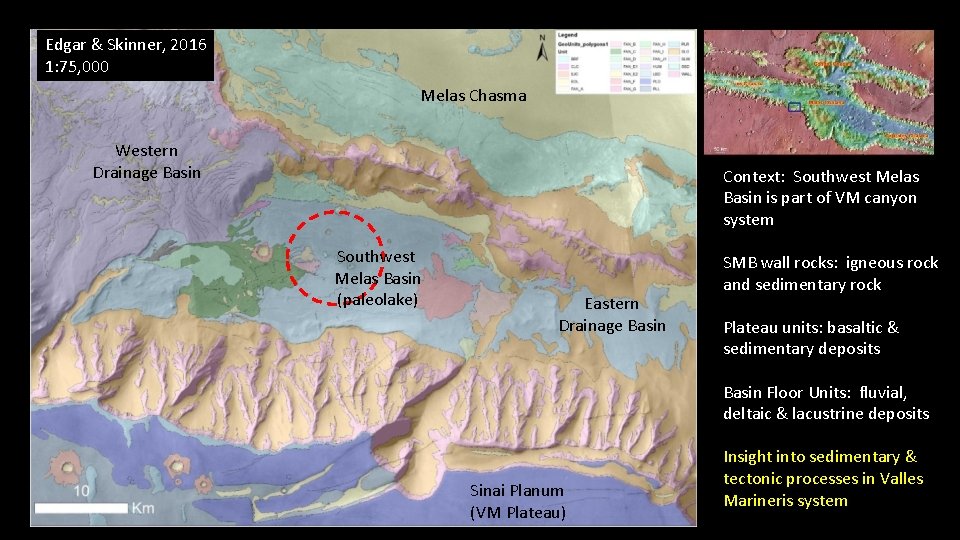
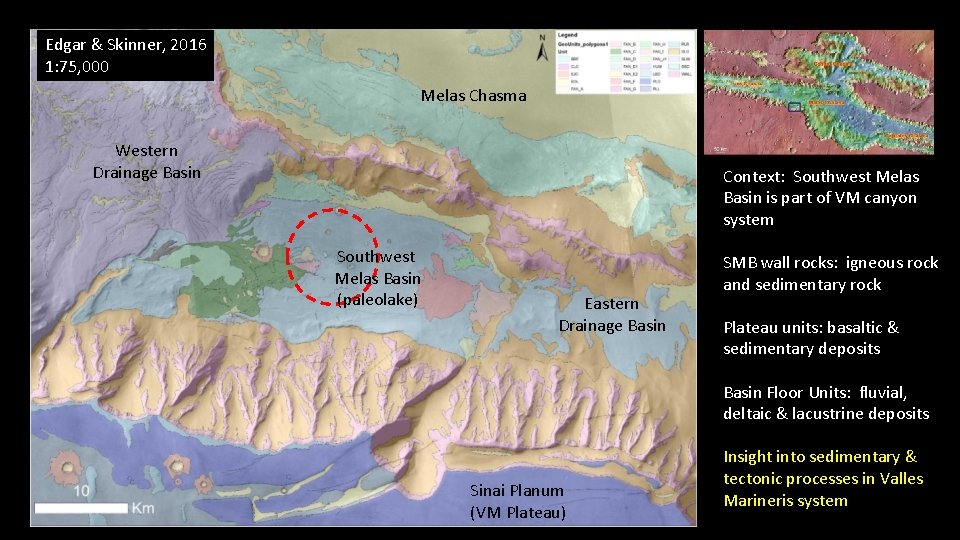
Edgar & Skinner, 2016 1: 75, 000 Melas Chasma Western Drainage Basin Context: Southwest Melas Basin is part of VM canyon system Southwest Melas Basin (paleolake) Eastern Drainage Basin SMB wall rocks: igneous rock and sedimentary rock Plateau units: basaltic & sedimentary deposits Basin Floor Units: fluvial, deltaic & lacustrine deposits Sinai Planum (VM Plateau) Insight into sedimentary & tectonic processes in Valles Marineris system
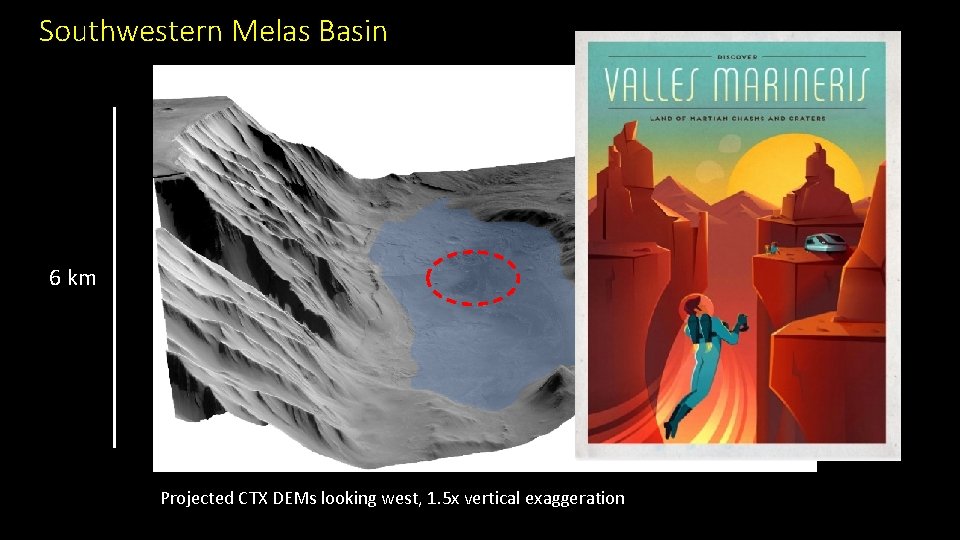
Southwestern Melas Basin 6 km Projected CTX DEMs looking west, 1. 5 x vertical exaggeration
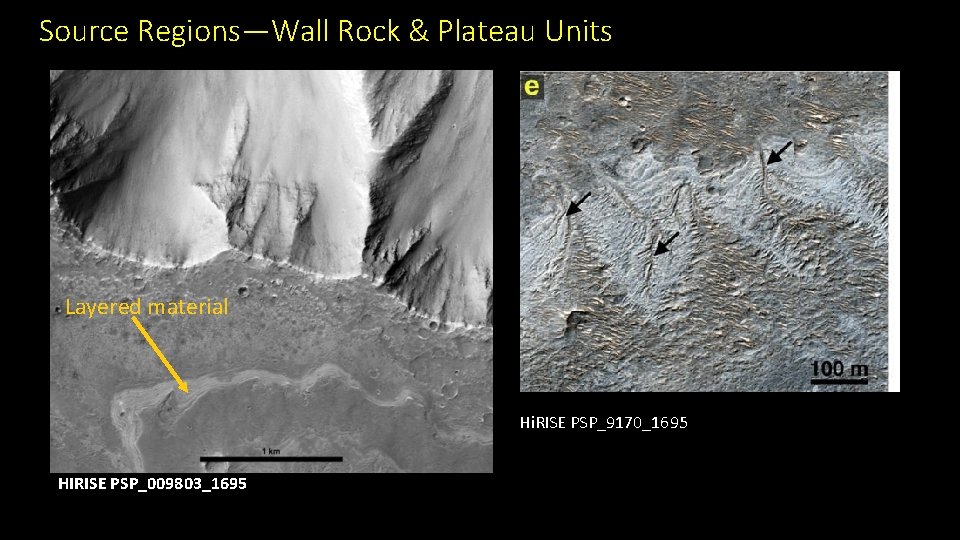
Source Regions—Wall Rock & Plateau Units Layered material Hi. RISE PSP_9170_1695 HIRISE PSP_009803_1695
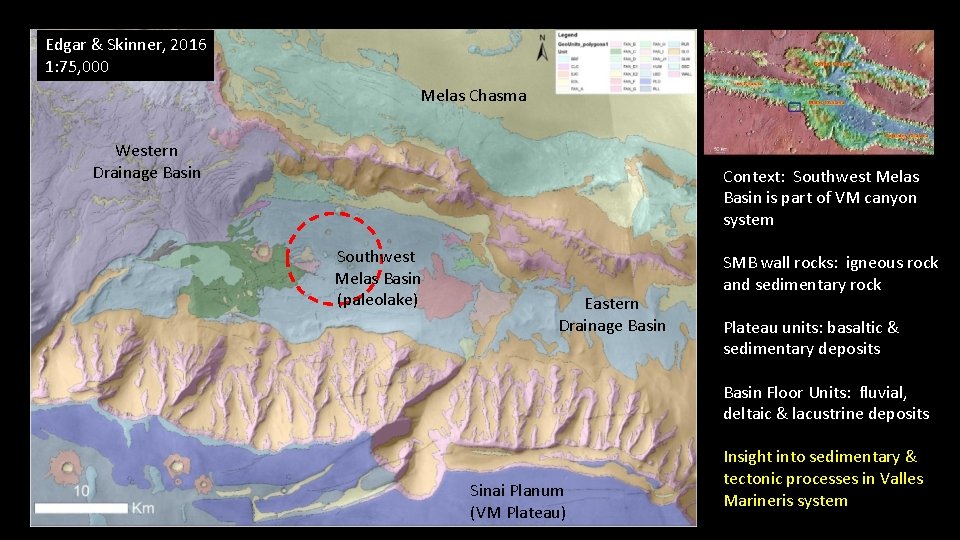
Edgar & Skinner, 2016 1: 75, 000 Melas Chasma Western Drainage Basin Context: Southwest Melas Basin is part of VM canyon system Southwest Melas Basin (paleolake) Eastern Drainage Basin SMB wall rocks: igneous rock and sedimentary rock Plateau units: basaltic & sedimentary deposits Basin Floor Units: fluvial, deltaic & lacustrine deposits Sinai Planum (VM Plateau) Insight into sedimentary & tectonic processes in Valles Marineris system
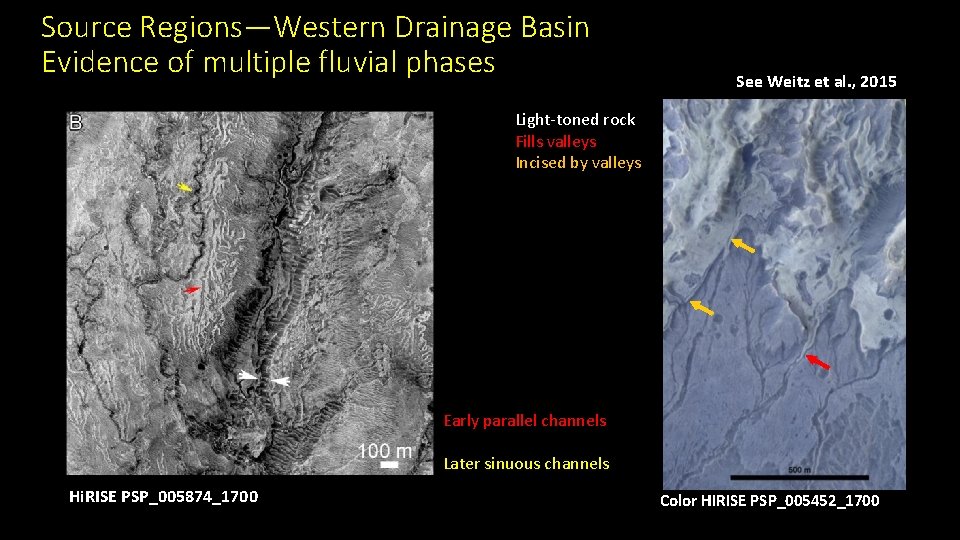
Source Regions—Western Drainage Basin Evidence of multiple fluvial phases See Weitz et al. , 2015 Light-toned rock Fills valleys Incised by valleys Early parallel channels Later sinuous channels Hi. RISE PSP_005874_1700 Color HIRISE PSP_005452_1700
Edgar & Skinner, 2016 1: 75, 000 Melas Chasma Western Drainage Basin Context: Southwest Melas Basin is part of VM canyon system Southwest Melas Basin (paleolake) Eastern Drainage Basin SMB wall rocks: igneous rock and sedimentary rock Plateau units: basaltic & sedimentary deposits Basin Floor Units: fluvial, deltaic & lacustrine deposits Sinai Planum (VM Plateau) Insight into sedimentary & tectonic processes in Valles Marineris system
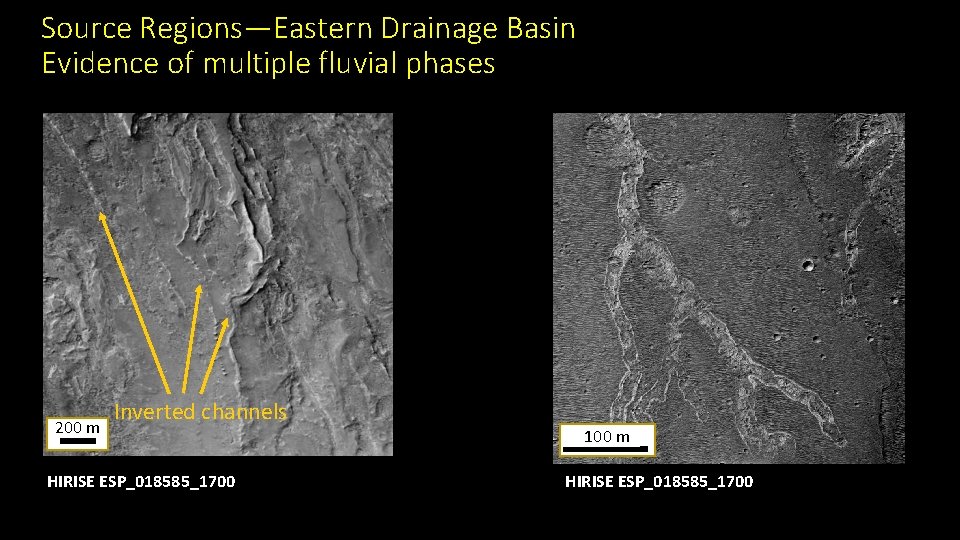
Source Regions—Eastern Drainage Basin Evidence of multiple fluvial phases 200 m Inverted channels HIRISE ESP_018585_1700 100 m HIRISE ESP_018585_1700
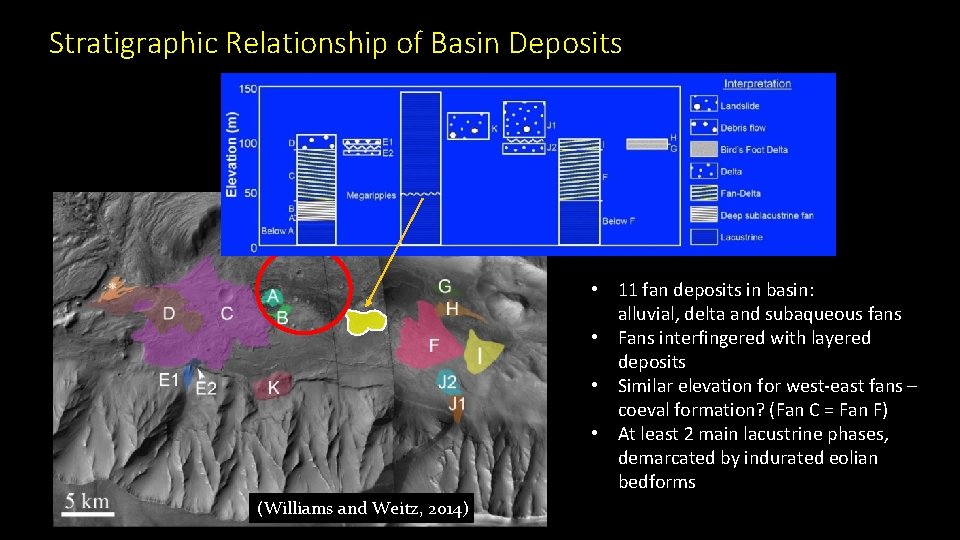
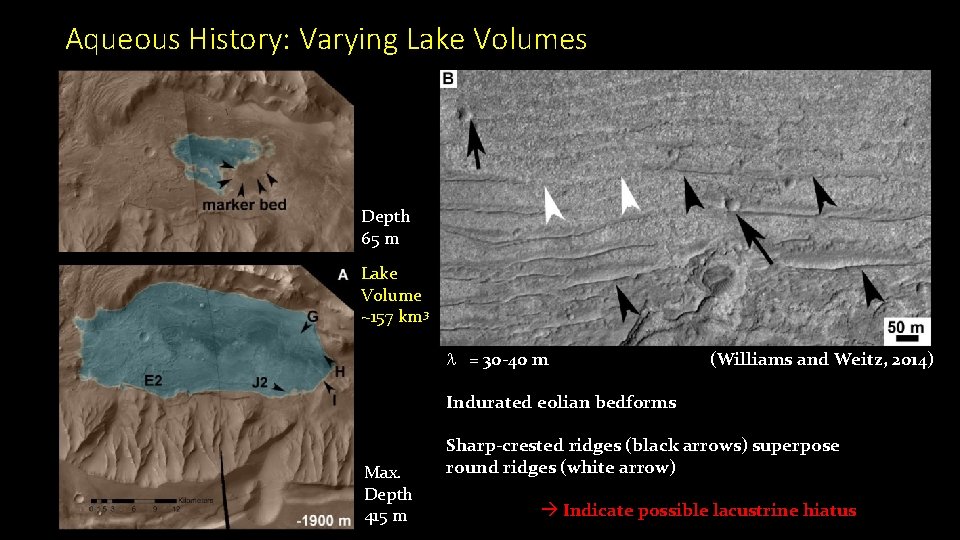
Stratigraphic Relationship of Basin Deposits • 11 fan deposits in basin: alluvial, delta and subaqueous fans • Fans interfingered with layered deposits • Similar elevation for west-east fans – coeval formation? (Fan C = Fan F) • At least 2 main lacustrine phases, demarcated by indurated eolian bedforms (Williams and Weitz, 2014)
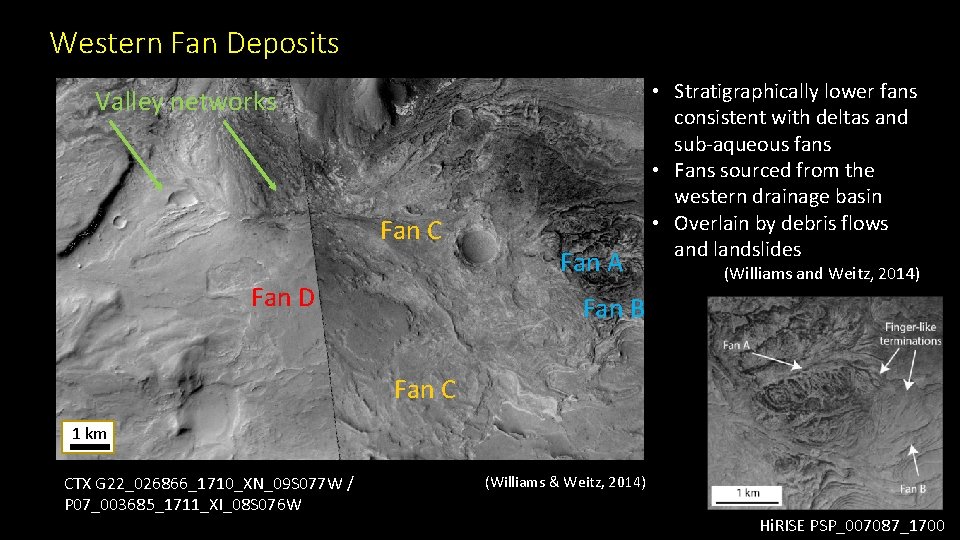
Western Fan Deposits Valley networks Fan C Fan D Fan A • Stratigraphically lower fans consistent with deltas and sub-aqueous fans • Fans sourced from the western drainage basin • Overlain by debris flows and landslides (Williams and Weitz, 2014) Fan B Fan C 1 km CTX G 22_026866_1710_XN_09 S 077 W / P 07_003685_1711_XI_08 S 076 W (Williams & Weitz, 2014) Hi. RISE PSP_007087_1700
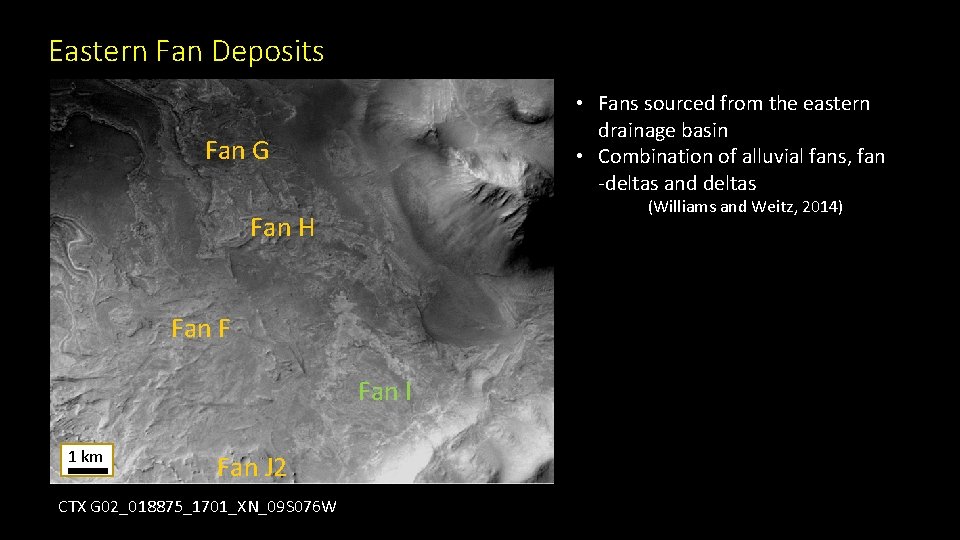
Eastern Fan Deposits • Fans sourced from the eastern drainage basin • Combination of alluvial fans, fan -deltas and deltas Fan G (Williams and Weitz, 2014) Fan H Fan F Fan I 1 km Fan J 2 CTX G 02_018875_1701_XN_09 S 076 W
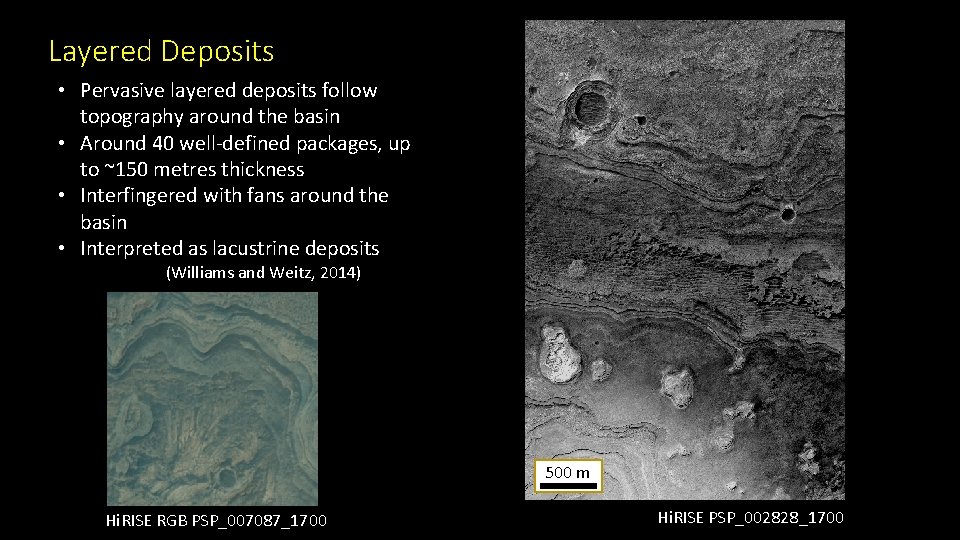
Layered Deposits • Pervasive layered deposits follow topography around the basin • Around 40 well-defined packages, up to ~150 metres thickness • Interfingered with fans around the basin • Interpreted as lacustrine deposits (Williams and Weitz, 2014) 500 m Hi. RISE RGB PSP_007087_1700 Hi. RISE PSP_002828_1700
Aqueous History: Varying Lake Volumes Depth 65 m Lake Volume ~157 km 3 l = 30 -40 m (Williams and Weitz, 2014) Indurated eolian bedforms Max. Depth 415 m Sharp-crested ridges (black arrows) superpose round ridges (white arrow) Indicate possible lacustrine hiatus
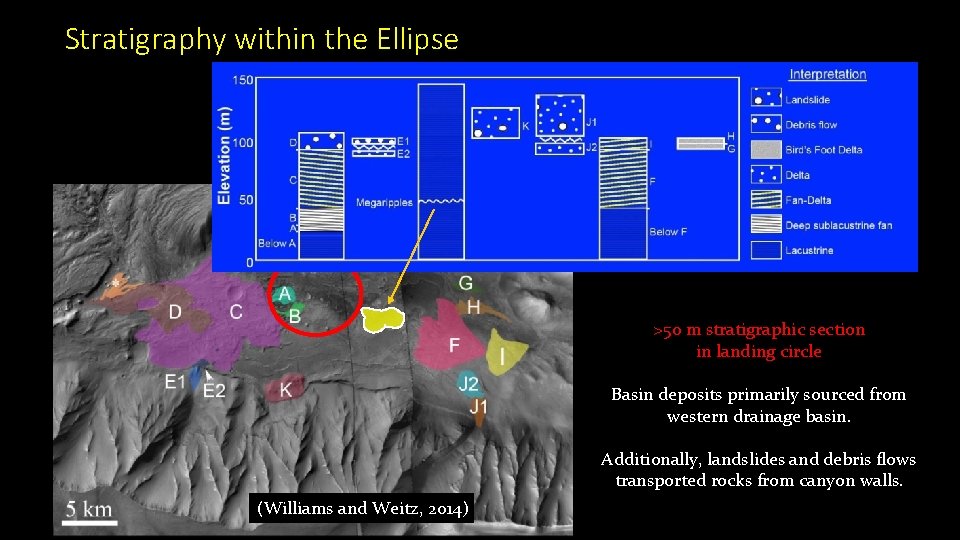
Stratigraphy within the Ellipse >50 m stratigraphic section in landing circle Basin deposits primarily sourced from western drainage basin. Additionally, landslides and debris flows transported rocks from canyon walls. (Williams and Weitz, 2014)
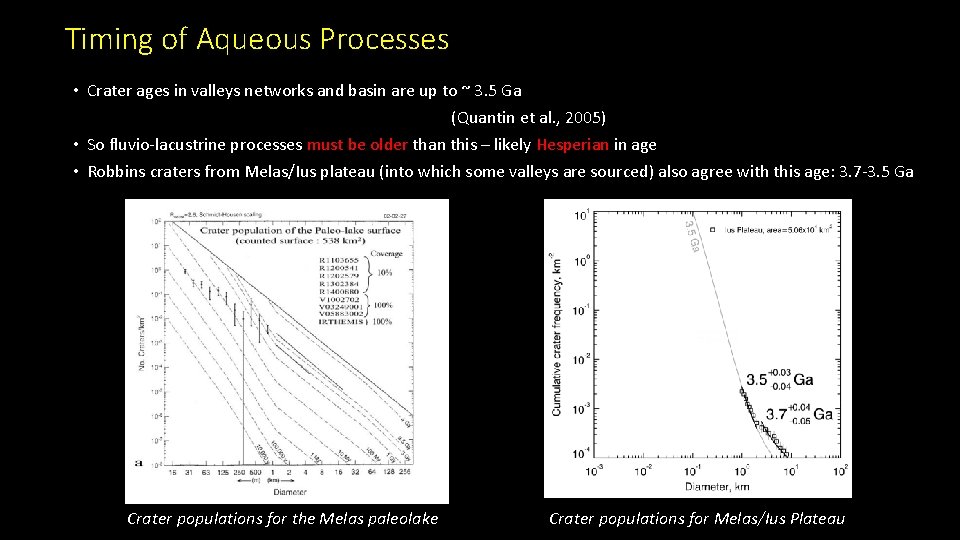
Timing of Aqueous Processes • Crater ages in valleys networks and basin are up to ~ 3. 5 Ga (Quantin et al. , 2005) • So fluvio-lacustrine processes must be older than this – likely Hesperian in age • Robbins craters from Melas/Ius plateau (into which some valleys are sourced) also agree with this age: 3. 7 -3. 5 Ga Crater populations for the Melas paleolake Crater populations for Melas/Ius Plateau
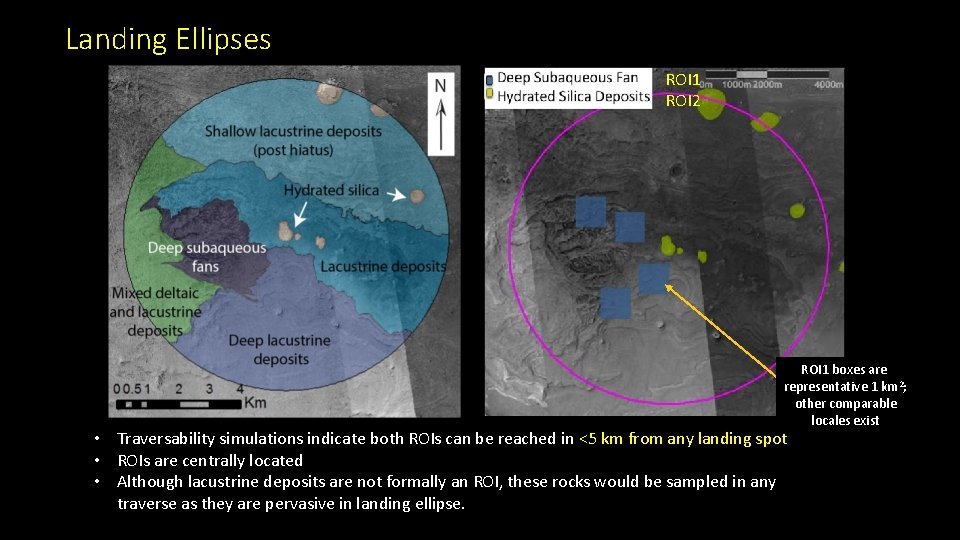
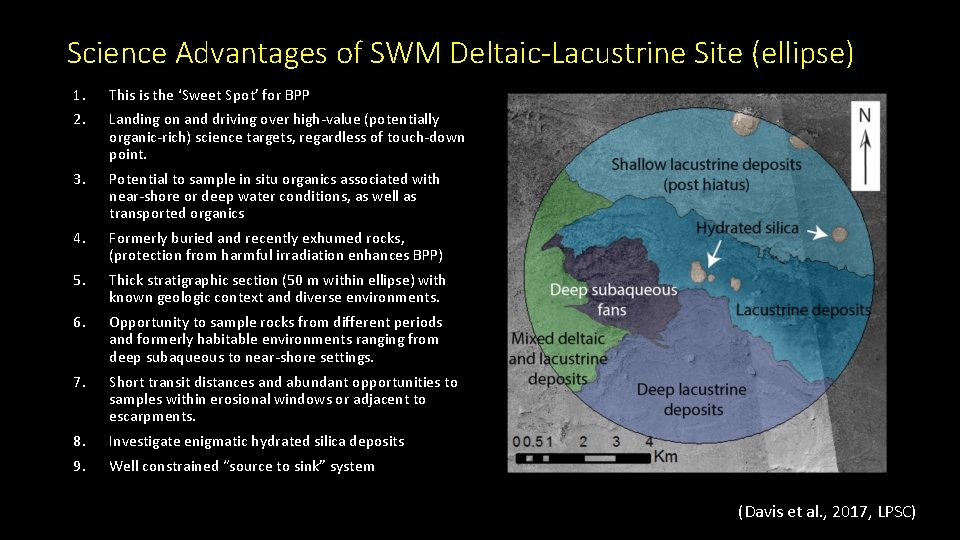
Landing Ellipses ROI 1 ROI 2 ROI 1 boxes are representative 1 km 2; other comparable locales exist • Traversability simulations indicate both ROIs can be reached in <5 km from any landing spot • ROIs are centrally located • Although lacustrine deposits are not formally an ROI, these rocks would be sampled in any traverse as they are pervasive in landing ellipse.
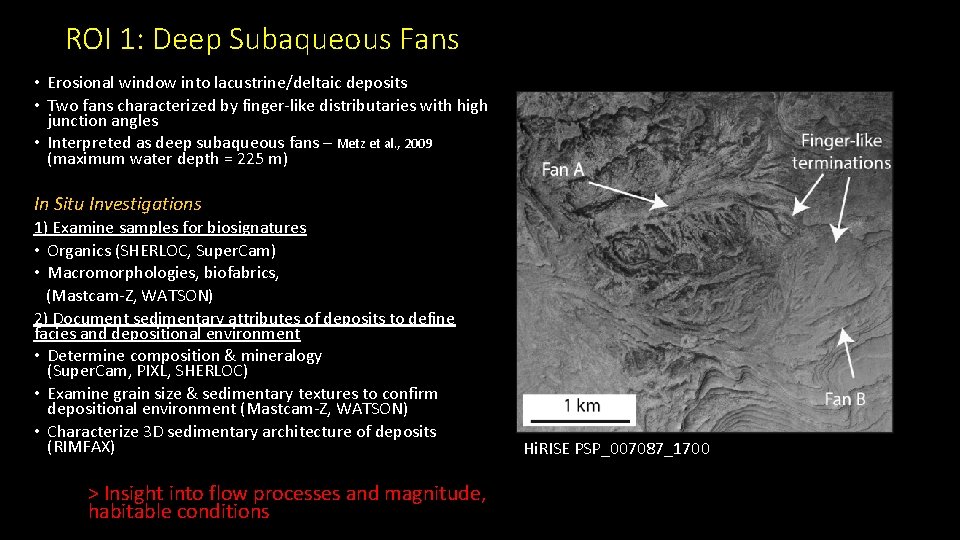
ROI 1: Deep Subaqueous Fans • Erosional window into lacustrine/deltaic deposits • Two fans characterized by finger-like distributaries with high junction angles • Interpreted as deep subaqueous fans – Metz et al. , 2009 (maximum water depth = 225 m) In Situ Investigations 1) Examine samples for biosignatures • Organics (SHERLOC, Super. Cam) • Macromorphologies, biofabrics, (Mastcam-Z, WATSON) 2) Document sedimentary attributes of deposits to define facies and depositional environment • Determine composition & mineralogy (Super. Cam, PIXL, SHERLOC) • Examine grain size & sedimentary textures to confirm depositional environment (Mastcam-Z, WATSON) • Characterize 3 D sedimentary architecture of deposits (RIMFAX) > Insight into flow processes and magnitude, habitable conditions Hi. RISE PSP_007087_1700
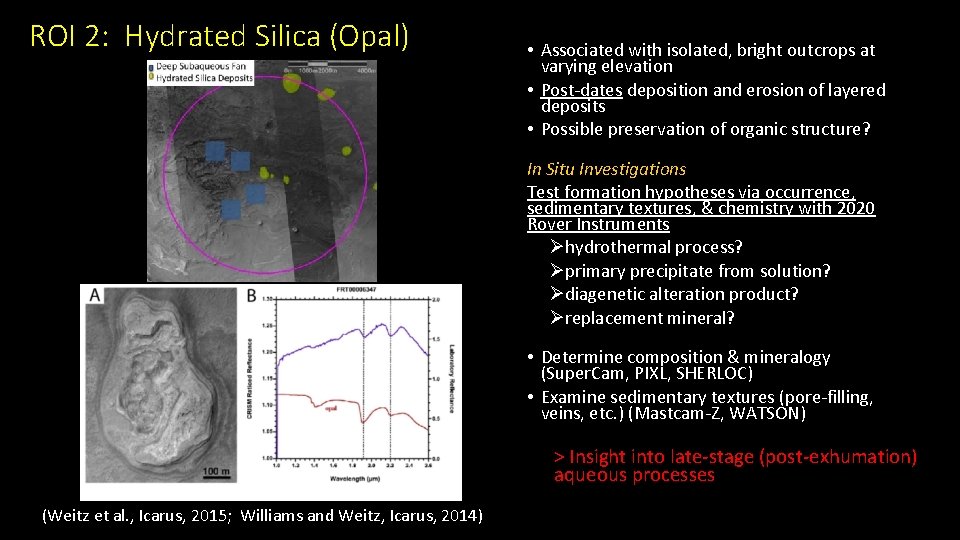
ROI 2: Hydrated Silica (Opal) • Associated with isolated, bright outcrops at varying elevation • Post-dates deposition and erosion of layered deposits • Possible preservation of organic structure? In Situ Investigations Test formation hypotheses via occurrence, sedimentary textures, & chemistry with 2020 Rover Instruments Øhydrothermal process? Øprimary precipitate from solution? Ødiagenetic alteration product? Øreplacement mineral? • Determine composition & mineralogy (Super. Cam, PIXL, SHERLOC) • Examine sedimentary textures (pore-filling, veins, etc. ) (Mastcam-Z, WATSON) > Insight into late-stage (post-exhumation) aqueous processes (Weitz et al. , Icarus, 2015; Williams and Weitz, Icarus, 2014)
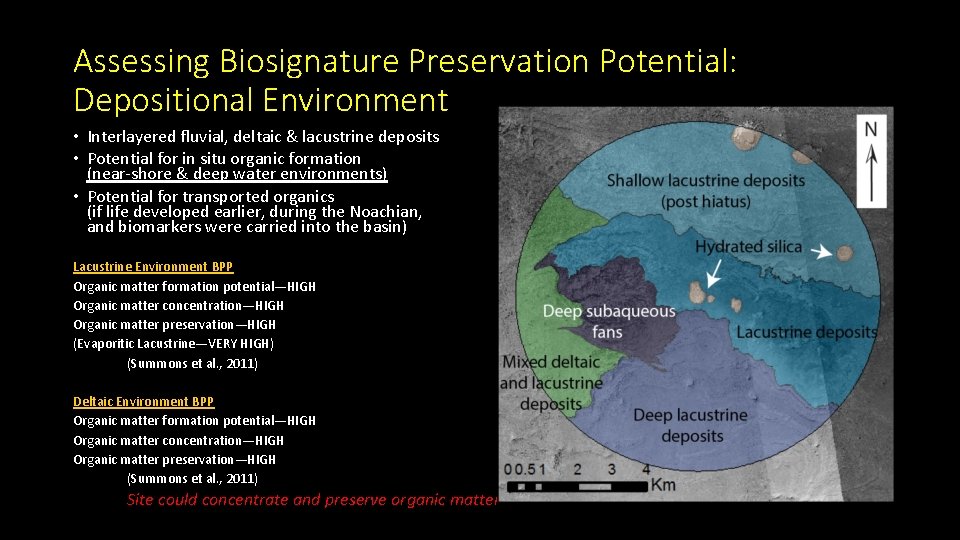
Assessing Biosignature Preservation Potential: Depositional Environment • Interlayered fluvial, deltaic & lacustrine deposits • Potential for in situ organic formation (near-shore & deep water environments) • Potential for transported organics (if life developed earlier, during the Noachian, and biomarkers were carried into the basin) Lacustrine Environment BPP Organic matter formation potential—HIGH Organic matter concentration—HIGH Organic matter preservation—HIGH (Evaporitic Lacustrine—VERY HIGH) (Summons et al. , 2011) Deltaic Environment BPP Organic matter formation potential—HIGH Organic matter concentration—HIGH Organic matter preservation—HIGH (Summons et al. , 2011) Site could concentrate and preserve organic matter
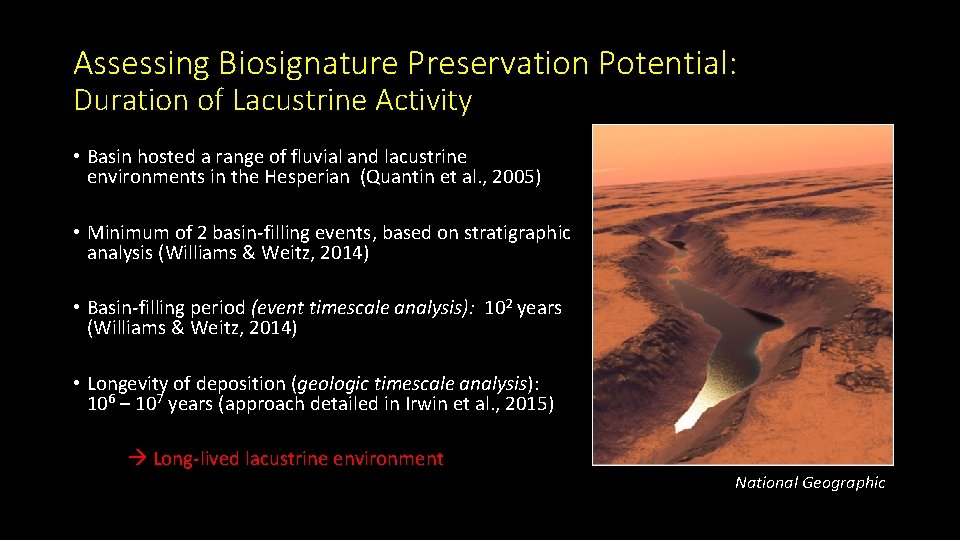
Assessing Biosignature Preservation Potential: Duration of Lacustrine Activity • Basin hosted a range of fluvial and lacustrine environments in the Hesperian (Quantin et al. , 2005) • Minimum of 2 basin-filling events, based on stratigraphic analysis (Williams & Weitz, 2014) • Basin-filling period (event timescale analysis): 102 years (Williams & Weitz, 2014) • Longevity of deposition (geologic timescale analysis): 106 – 107 years (approach detailed in Irwin et al. , 2015) Long-lived lacustrine environment National Geographic
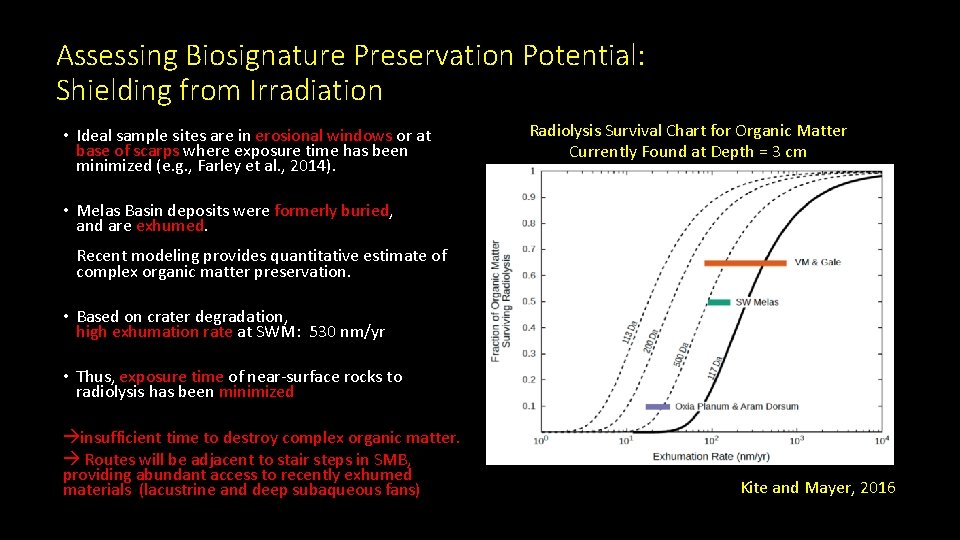
Assessing Biosignature Preservation Potential: Shielding from Irradiation • Ideal sample sites are in erosional windows or at base of scarps where exposure time has been minimized (e. g. , Farley et al. , 2014). Radiolysis Survival Chart for Organic Matter Currently Found at Depth = 3 cm • Melas Basin deposits were formerly buried, and are exhumed. Recent modeling provides quantitative estimate of complex organic matter preservation. • Based on crater degradation, high exhumation rate at SWM: 530 nm/yr • Thus, exposure time of near-surface rocks to radiolysis has been minimized insufficient time to destroy complex organic matter. Routes will be adjacent to stair steps in SMB, providing abundant access to recently exhumed materials (lacustrine and deep subaqueous fans) Kite and Mayer, 2016
Science Advantages of SWM Deltaic-Lacustrine Site (ellipse) 1. This is the ‘Sweet Spot’ for BPP 2. Landing on and driving over high-value (potentially organic-rich) science targets, regardless of touch-down point. 3. Potential to sample in situ organics associated with near-shore or deep water conditions, as well as transported organics 4. Formerly buried and recently exhumed rocks, (protection from harmful irradiation enhances BPP) 5. Thick stratigraphic section (50 m within ellipse) with known geologic context and diverse environments. 6. Opportunity to sample rocks from different periods and formerly habitable environments ranging from deep subaqueous to near-shore settings. 7. Short transit distances and abundant opportunities to samples within erosional windows or adjacent to escarpments. 8. Investigate enigmatic hydrated silica deposits 9. Well constrained “source to sink” system (Davis et al. , 2017, LPSC)
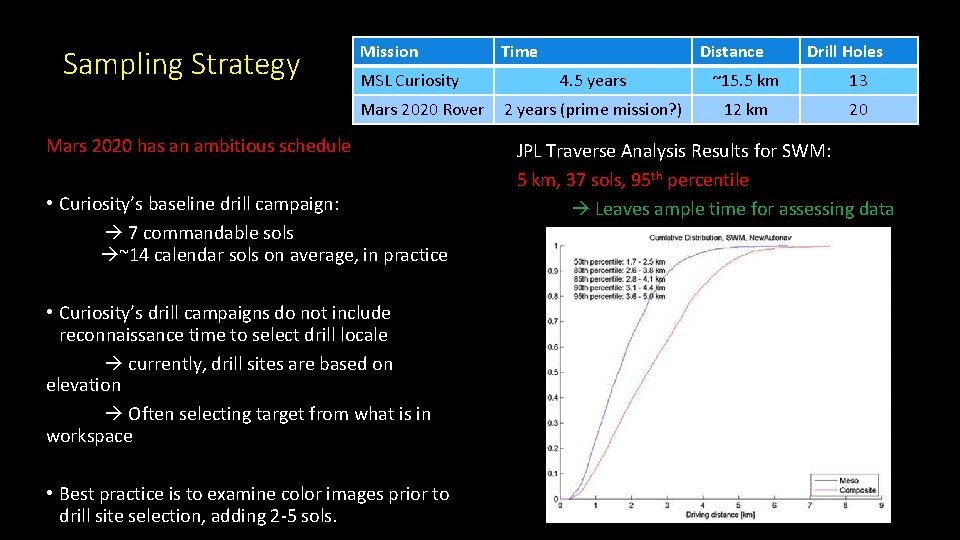
Sampling Strategy Mission MSL Curiosity Mars 2020 Rover Mars 2020 has an ambitious schedule • Curiosity’s baseline drill campaign: 7 commandable sols ~14 calendar sols on average, in practice • Curiosity’s drill campaigns do not include reconnaissance time to select drill locale currently, drill sites are based on elevation Often selecting target from what is in workspace • Best practice is to examine color images prior to drill site selection, adding 2 -5 sols. Time Distance Drill Holes 4. 5 years ~15. 5 km 13 2 years (prime mission? ) 12 km 20 JPL Traverse Analysis Results for SWM: 5 km, 37 sols, 95 th percentile Leaves ample time for assessing data
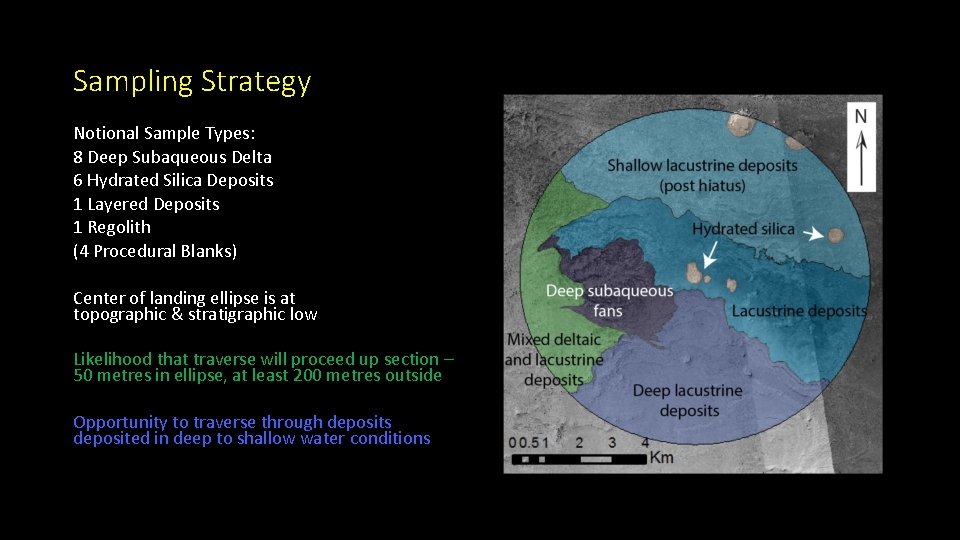
Sampling Strategy Notional Sample Types: 8 Deep Subaqueous Delta 6 Hydrated Silica Deposits 1 Layered Deposits 1 Regolith (4 Procedural Blanks) Center of landing ellipse is at topographic & stratigraphic low Likelihood that traverse will proceed up section – 50 metres in ellipse, at least 200 metres outside Opportunity to traverse through deposits deposited in deep to shallow water conditions
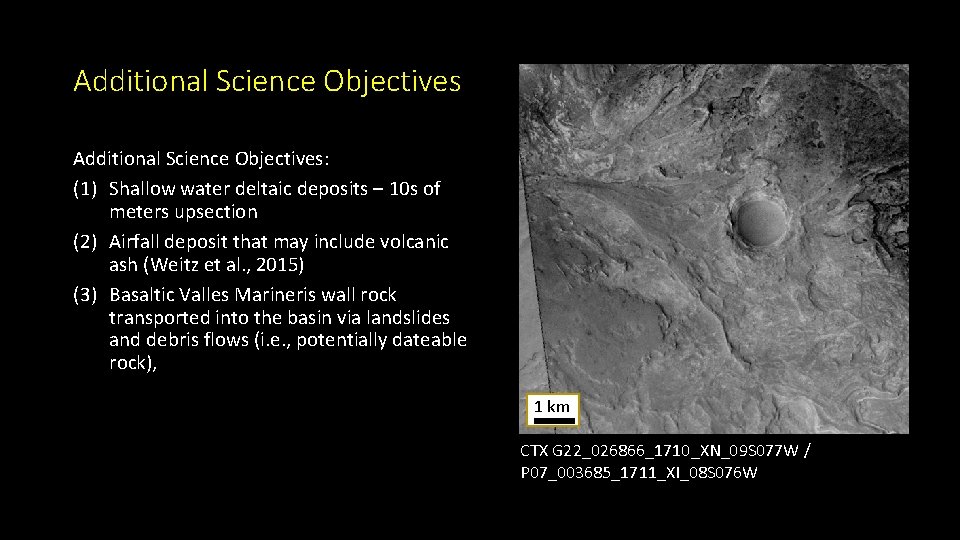
Additional Science Objectives: (1) Shallow water deltaic deposits – 10 s of meters upsection (2) Airfall deposit that may include volcanic ash (Weitz et al. , 2015) (3) Basaltic Valles Marineris wall rock transported into the basin via landslides and debris flows (i. e. , potentially dateable rock), 1 km CTX G 22_026866_1710_XN_09 S 077 W / P 07_003685_1711_XI_08 S 076 W
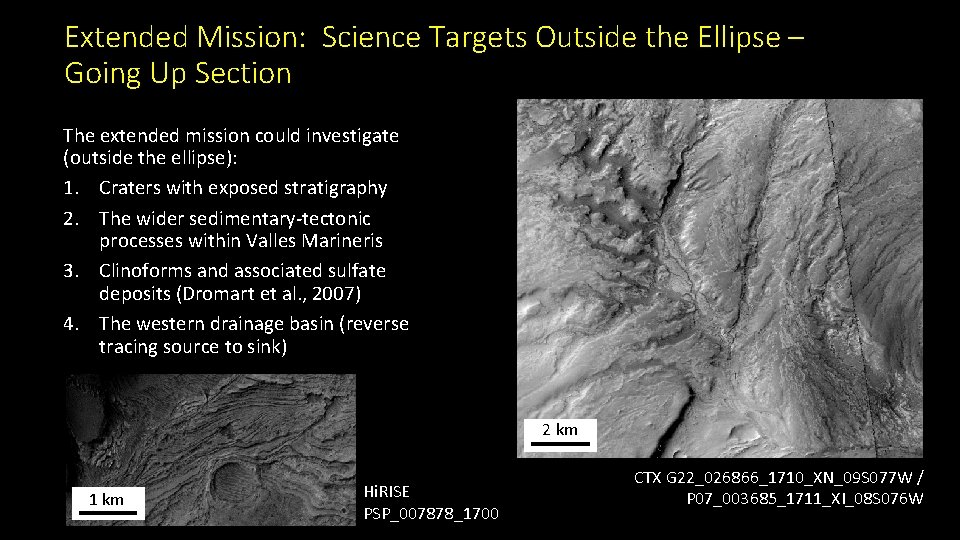
Extended Mission: Science Targets Outside the Ellipse – Going Up Section The extended mission could investigate (outside the ellipse): 1. Craters with exposed stratigraphy 2. The wider sedimentary-tectonic processes within Valles Marineris 3. Clinoforms and associated sulfate deposits (Dromart et al. , 2007) 4. The western drainage basin (reverse tracing source to sink) 2 km 1 km Hi. RISE PSP_007878_1700 CTX G 22_026866_1710_XN_09 S 077 W / P 07_003685_1711_XI_08 S 076 W
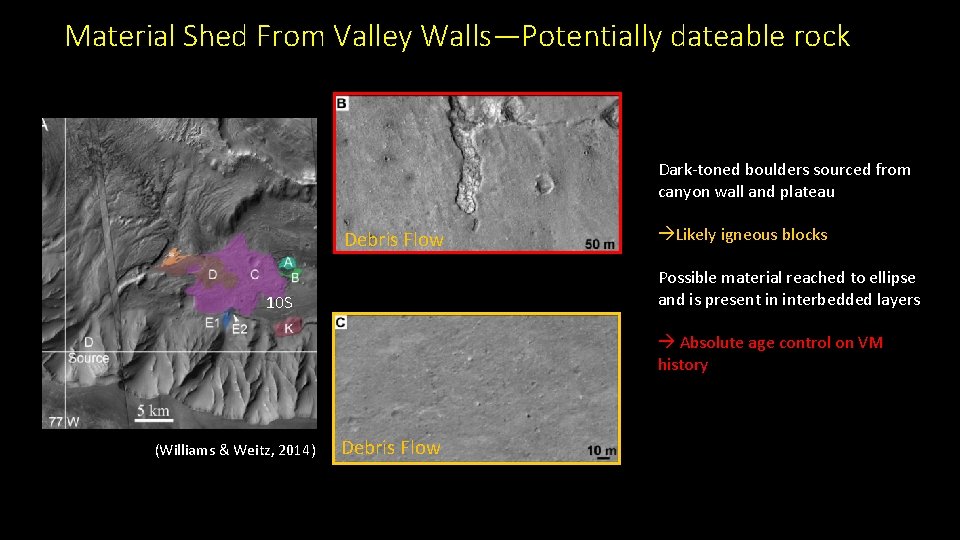
Material Shed From Valley Walls—Potentially dateable rock Dark-toned boulders sourced from canyon wall and plateau Debris Flow Likely igneous blocks Possible material reached to ellipse and is present in interbedded layers 10 S Absolute age control on VM history (Williams & Weitz, 2014) Debris Flow
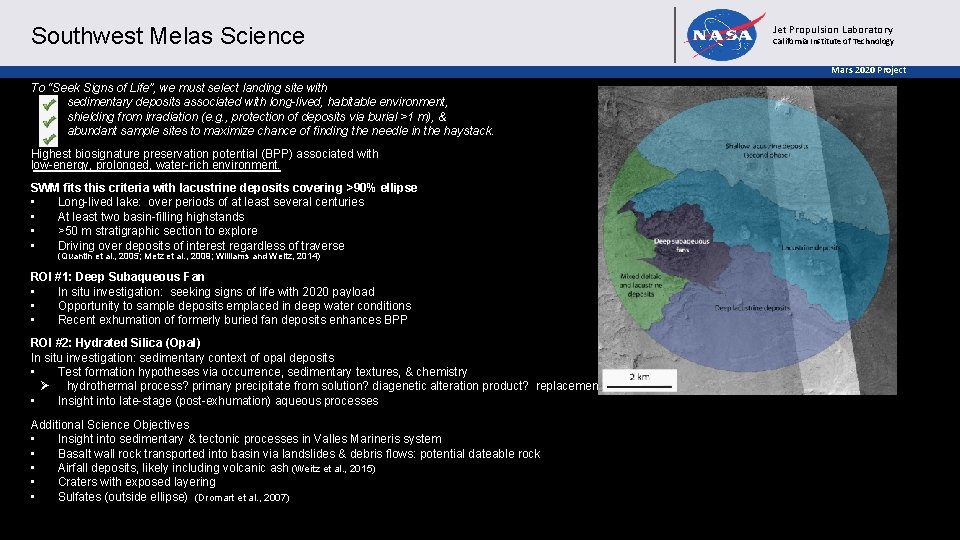
Southwest Melas Science Jet Propulsion Laboratory California Institute of Technology Mars 2020 Project To “Seek Signs of Life”, we must select landing site with sedimentary deposits associated with long-lived, habitable environment, shielding from irradiation (e. g. , protection of deposits via burial >1 m), & abundant sample sites to maximize chance of finding the needle in the haystack. Highest biosignature preservation potential (BPP) associated with low-energy, prolonged, water-rich environment. SWM fits this criteria with lacustrine deposits covering >90% ellipse • Long-lived lake: over periods of at least several centuries • At least two basin-filling highstands • >50 m stratigraphic section to explore • Driving over deposits of interest regardless of traverse (Quantin et al. , 2005; Metz et al. , 2009; Williams and Weitz, 2014) ROI #1: Deep Subaqueous Fan • In situ investigation: seeking signs of life with 2020 payload • Opportunity to sample deposits emplaced in deep water conditions • Recent exhumation of formerly buried fan deposits enhances BPP ROI #2: Hydrated Silica (Opal) In situ investigation: sedimentary context of opal deposits • Test formation hypotheses via occurrence, sedimentary textures, & chemistry Ø hydrothermal process? primary precipitate from solution? diagenetic alteration product? replacement mineral? • Insight into late-stage (post-exhumation) aqueous processes Additional Science Objectives • Insight into sedimentary & tectonic processes in Valles Marineris system • Basalt wall rock transported into basin via landslides & debris flows: potential dateable rock • Airfall deposits, likely including volcanic ash (Weitz et al. , 2015) • Craters with exposed layering • Sulfates (outside ellipse) (Dromart et al. , 2007) The technical data in this document are controlled under the U. S. Export Regulations. Release to foreign persons may require an export authorization. Pre-Decisional: For Planning and Discussion Purposes Only.