
Selecting the Ideal Disinfectant One Size does not

- Slides: 98
Selecting the Ideal Disinfectant One Size does not Fit All Jim Gauthier, MLT, CIC Senior Clinical Advisor Infection Prevention
Objectives Review the characteristics of the ‘ideal’ disinfectant Highlight important characteristics for disinfection selection Review procedures and validation that make up effective disinfection
Rutala WA, et al. ICHE 2014; 35(7): 855 65 3
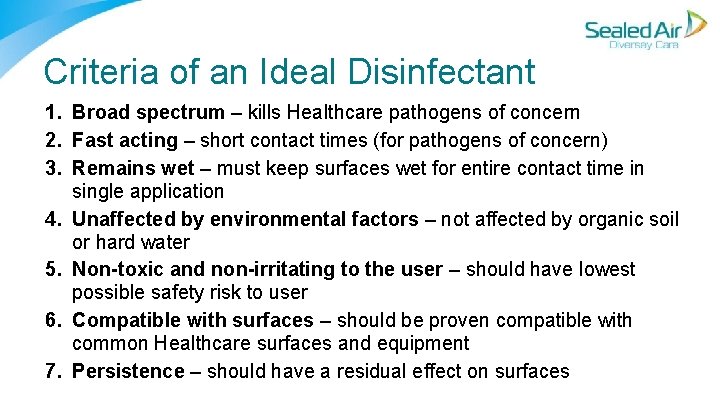
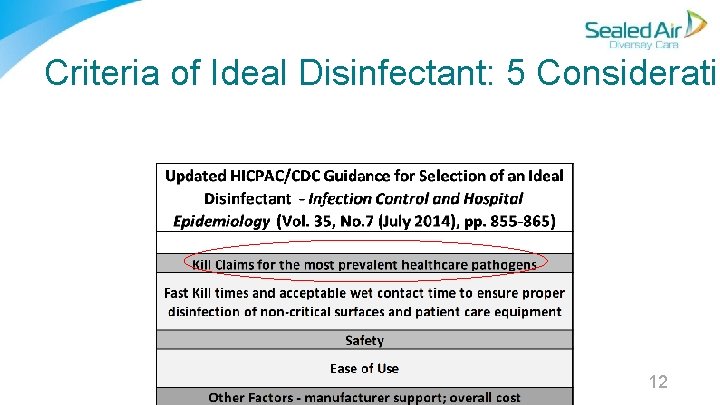
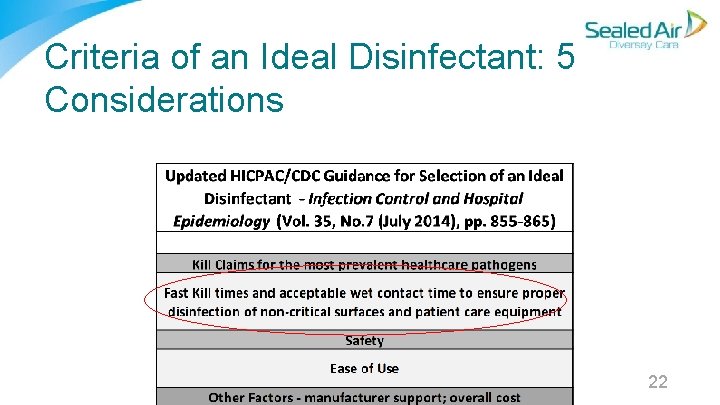
Criteria of an Ideal Disinfectant 1. Broad spectrum – kills Healthcare pathogens of concern 2. Fast acting – short contact times (for pathogens of concern) 3. Remains wet – must keep surfaces wet for entire contact time in single application 4. Unaffected by environmental factors – not affected by organic soil or hard water 5. Non-toxic and non-irritating to the user – should have lowest possible safety risk to user 6. Compatible with surfaces – should be proven compatible with common Healthcare surfaces and equipment 7. Persistence – should have a residual effect on surfaces
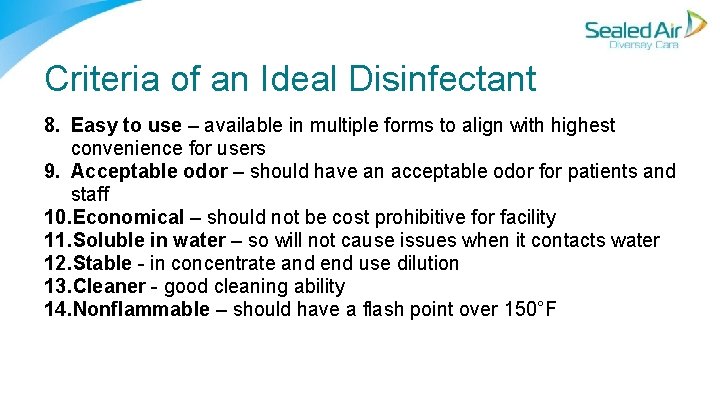
Criteria of an Ideal Disinfectant 8. Easy to use – available in multiple forms to align with highest convenience for users 9. Acceptable odor – should have an acceptable odor for patients and staff 10. Economical – should not be cost prohibitive for facility 11. Soluble in water – so will not cause issues when it contacts water 12. Stable in concentrate and end use dilution 13. Cleaner good cleaning ability 14. Nonflammable – should have a flash point over 150°F
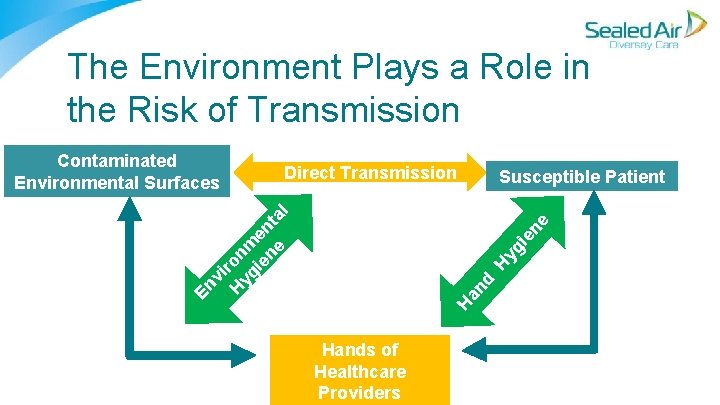
The Environment Plays a Role in the Risk of Transmission Direct Transmission Susceptible Patient Ha nd Hy gi en e En vi H ron yg m ie en ne ta l Contaminated Environmental Surfaces Hands of Healthcare Providers
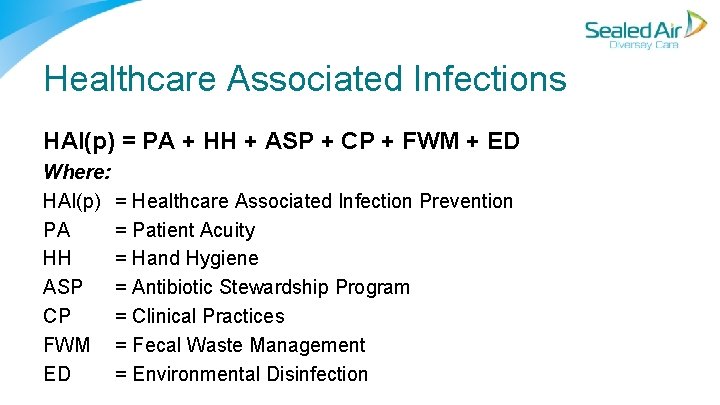
Healthcare Associated Infections HAI(p) = PA + HH + ASP + CP + FWM + ED Where: HAI(p) = Healthcare Associated Infection Prevention PA = Patient Acuity HH = Hand Hygiene ASP = Antibiotic Stewardship Program CP = Clinical Practices FWM = Fecal Waste Management ED = Environmental Disinfection
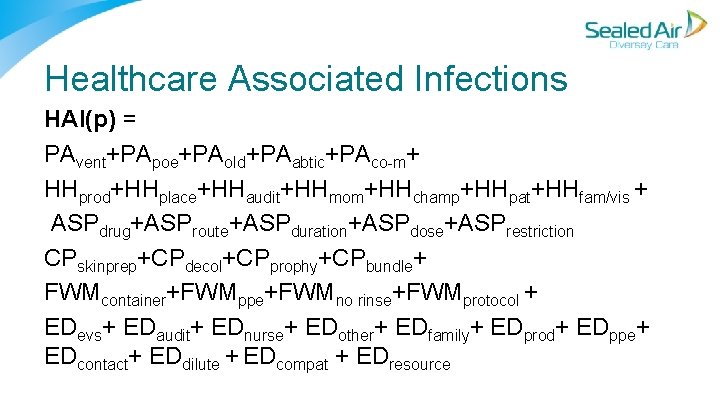
Healthcare Associated Infections HAI(p) = PAvent+PApoe+PAold+PAabtic+PAco m+ HHprod+HHplace+HHaudit+HHmom+HHchamp+HHpat+HHfam/vis + ASPdrug+ASProute+ASPduration+ASPdose+ASPrestriction CPskinprep+CPdecol+CPprophy+CPbundle+ FWMcontainer+FWMppe+FWMno rinse+FWMprotocol + EDevs+ EDaudit+ EDnurse+ EDother+ EDfamily+ EDprod+ EDppe+ EDcontact+ EDdilute + EDcompat + EDresource
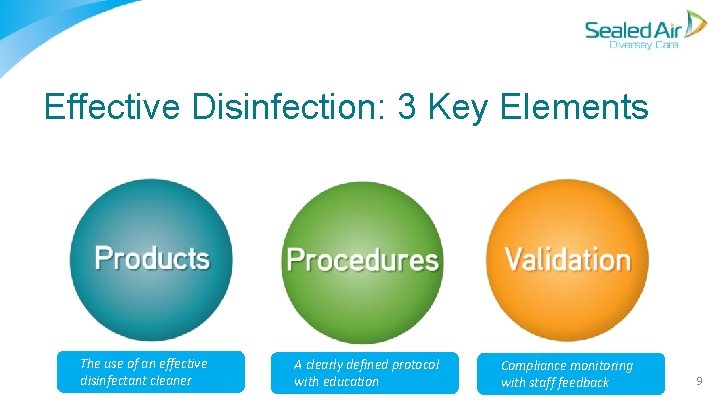
Effective Disinfection: 3 Key Elements The use of an effective disinfectant cleaner A clearly defined protocol with education Compliance monitoring with staff feedback 9
Key Considerations for Selecting the Optimal Disinfectant for Your Facility Rutala 2014(2)
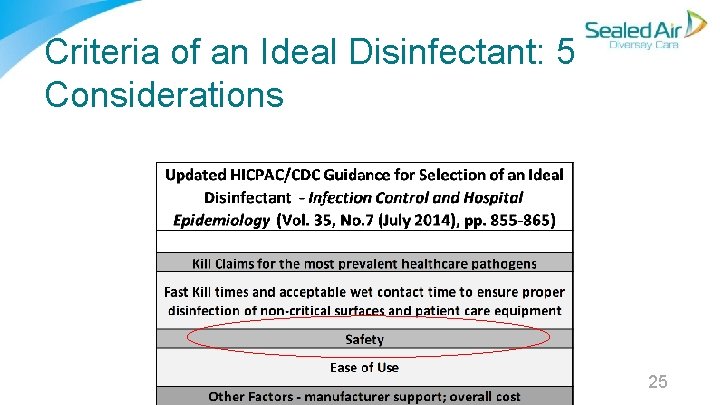
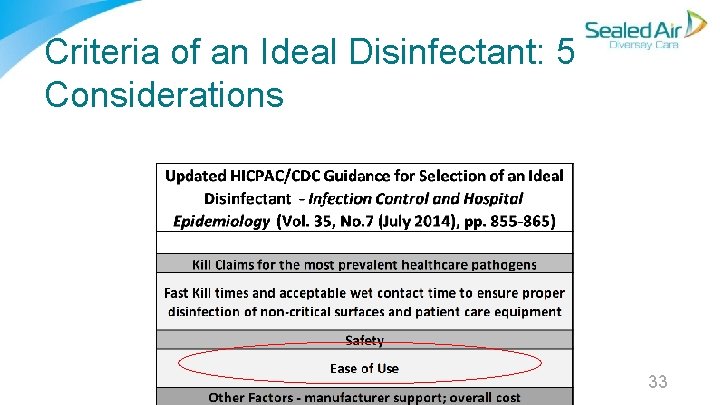
Criteria of Ideal Disinfectant: 5 Consideratio 12
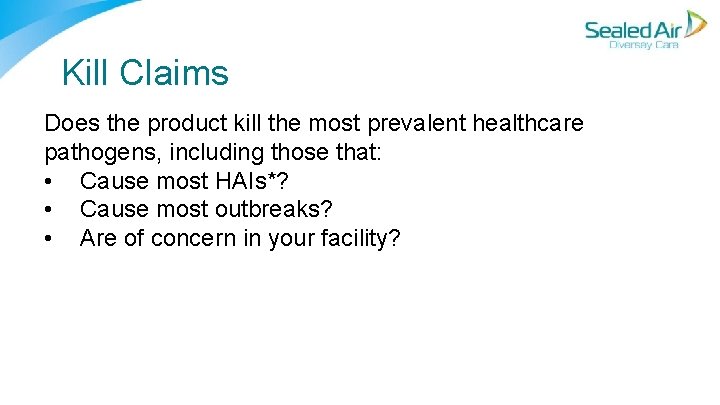
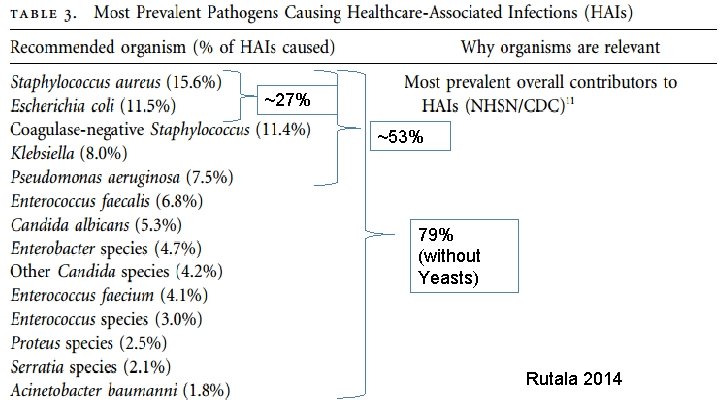
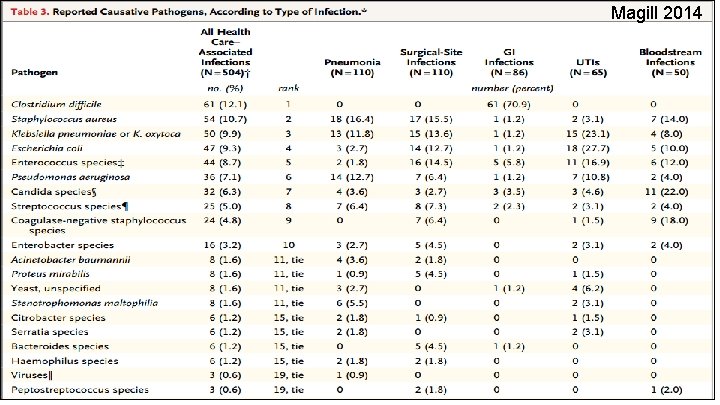
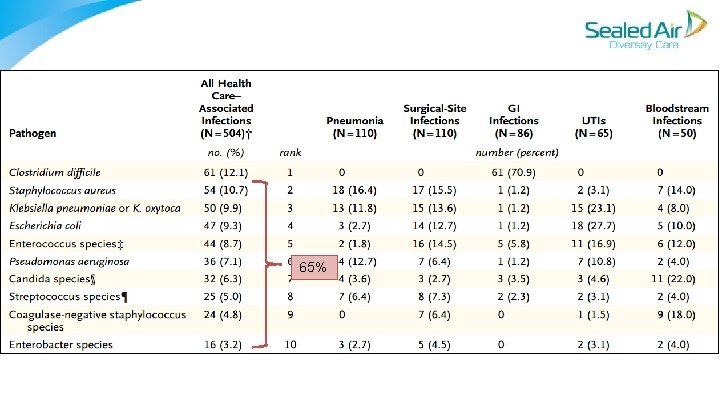
Kill Claims Does the product kill the most prevalent healthcare pathogens, including those that: • Cause most HAIs*? • Cause most outbreaks? • Are of concern in your facility?
+ ~27% ~53% 79% (without Yeasts) Rutala 2014
Magill 2014
65%
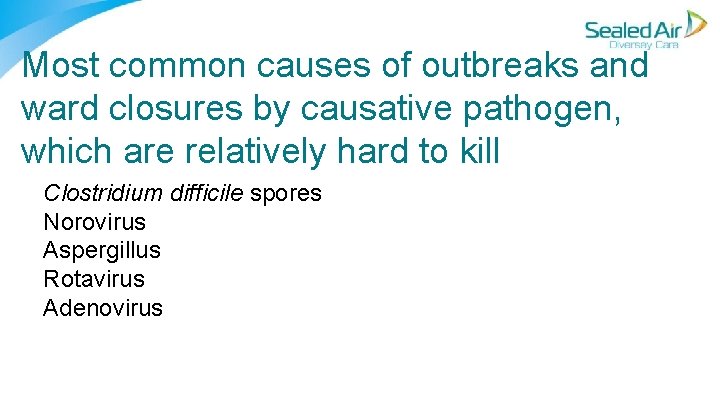
Most common causes of outbreaks and ward closures by causative pathogen, which are relatively hard to kill Clostridium difficile spores Norovirus Aspergillus Rotavirus Adenovirus
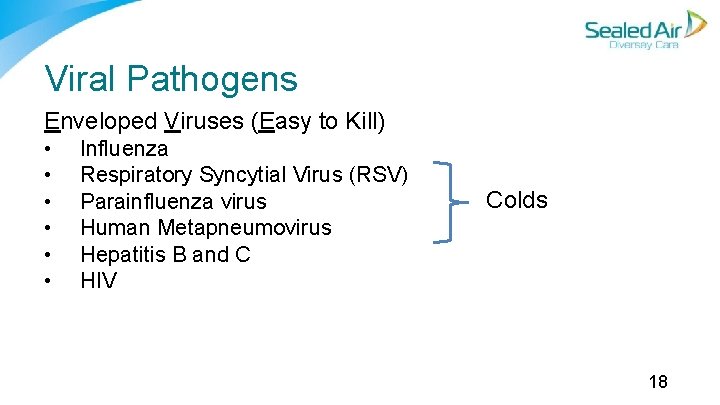
Viral Pathogens Enveloped Viruses (Easy to Kill) • • • Influenza Respiratory Syncytial Virus (RSV) Parainfluenza virus Human Metapneumovirus Hepatitis B and C HIV Colds 18
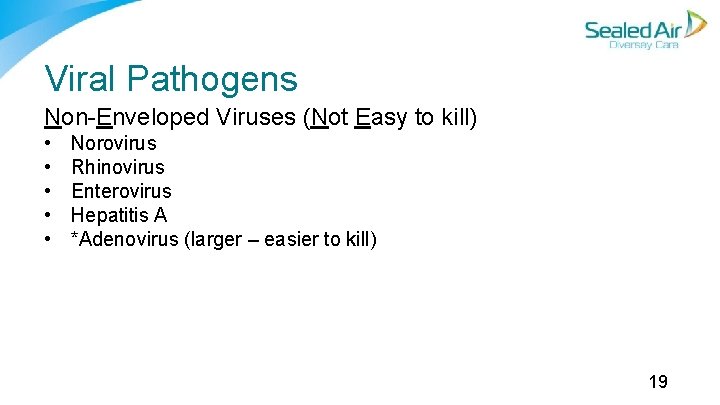
Viral Pathogens Non Enveloped Viruses (Not Easy to kill) • • • Norovirus Rhinovirus Enterovirus Hepatitis A *Adenovirus (larger – easier to kill) 19
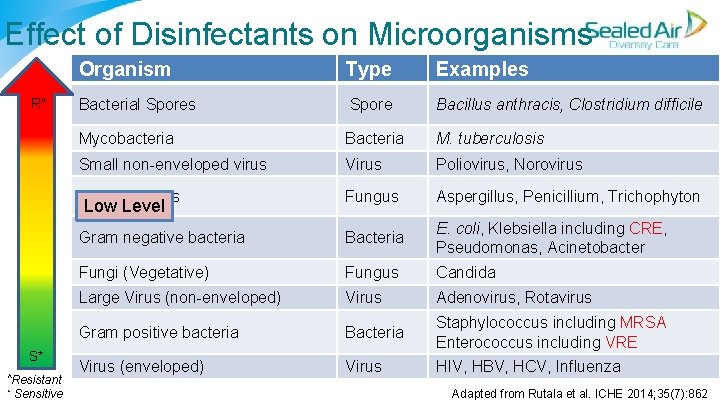
Effect of Disinfectants on Microorganisms R^ Organism Type Examples Bacterial Spores Spore Bacillus anthracis, Clostridium difficile Mycobacteria Bacteria M. tuberculosis Small non enveloped virus Virus Poliovirus, Norovirus Fungal spores Fungus Aspergillus, Penicillium, Trichophyton Gram negative bacteria Bacteria E. coli, Klebsiella including CRE, Pseudomonas, Acinetobacter Fungi (Vegetative) Fungus Candida Large Virus (non enveloped) Virus Adenovirus, Rotavirus Gram positive bacteria Bacteria Staphylococcus including MRSA Enterococcus including VRE Virus (enveloped) Virus HIV, HBV, HCV, Influenza Low Level S* ^Resistant * Sensitive Adapted from Rutala et al. ICHE 2014; 35(7): 862
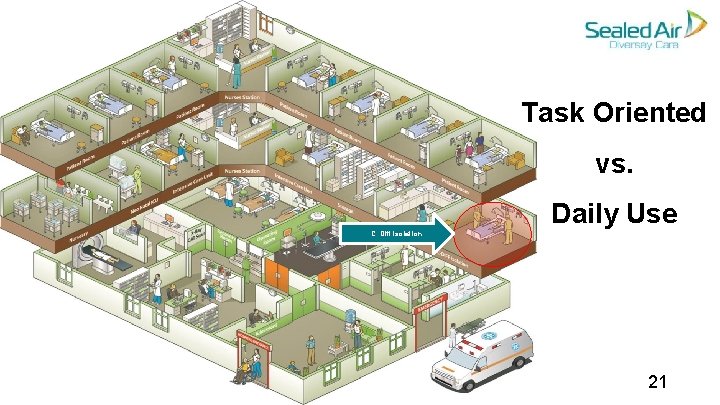
Task Oriented vs. Daily Use C. Diff isolation 21
Criteria of an Ideal Disinfectant: 5 Considerations 22
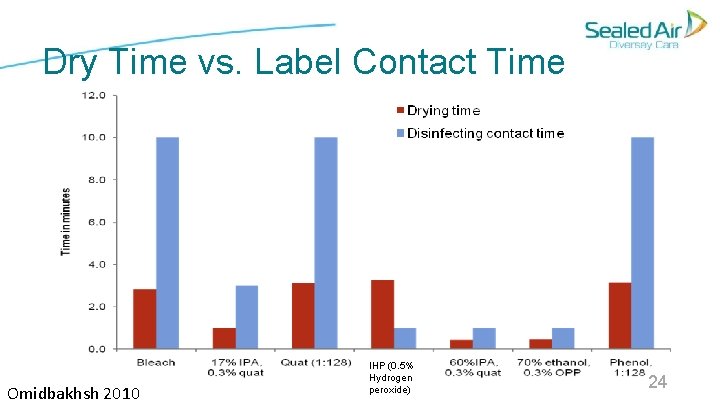
Kill Times and Wet Contact Time How quickly does the product kill the prevalent healthcare pathogens? Does the product keep surfaces visibly wet for the kill times listed on its label?
Dry Time vs. Label Contact Time Omidbakhsh 2010 IHP (0. 5% Hydrogen peroxide) 24
Criteria of an Ideal Disinfectant: 5 Considerations 25
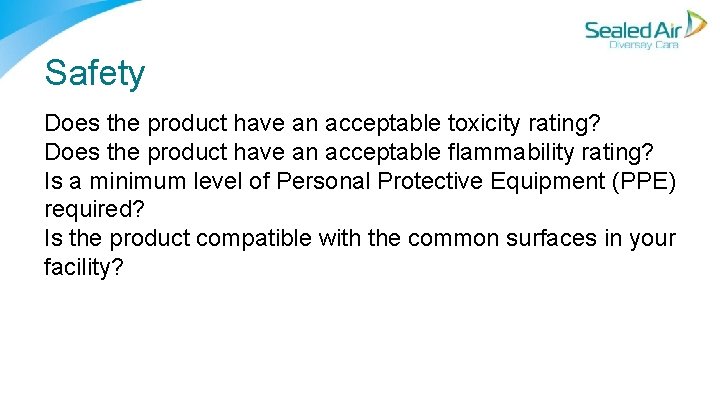
Safety Does the product have an acceptable toxicity rating? Does the product have an acceptable flammability rating? Is a minimum level of Personal Protective Equipment (PPE) required? Is the product compatible with the common surfaces in your facility?
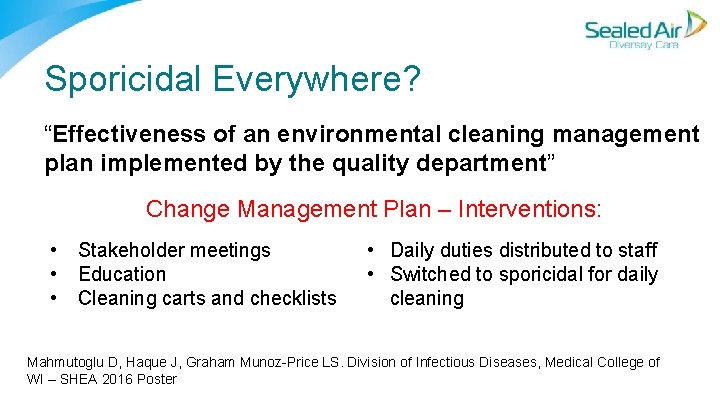
Sporicidal Everywhere? “Effectiveness of an environmental cleaning management plan implemented by the quality department” Change Management Plan – Interventions: • • • Stakeholder meetings Education Cleaning carts and checklists • Daily duties distributed to staff • Switched to sporicidal for daily cleaning Mahmutoglu D, Haque J, Graham Munoz Price LS. Division of Infectious Diseases, Medical College of WI – SHEA 2016 Poster
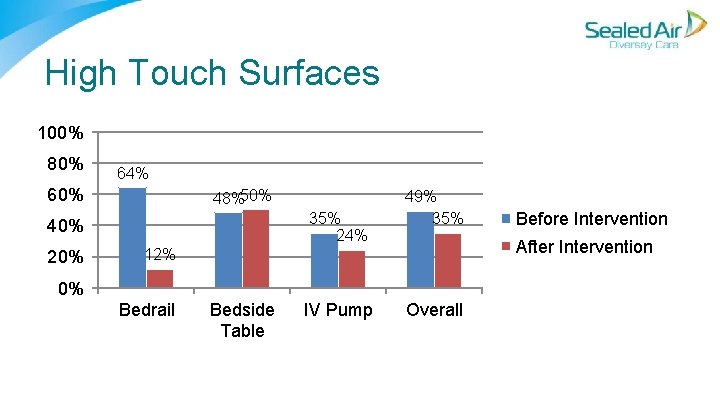
High Touch Surfaces 100% 80% 64% 60% 48%50% 35% 24% 40% 20% 49% 35% After Intervention 12% 0% Bedrail Bedside Table IV Pump Before Intervention Overall
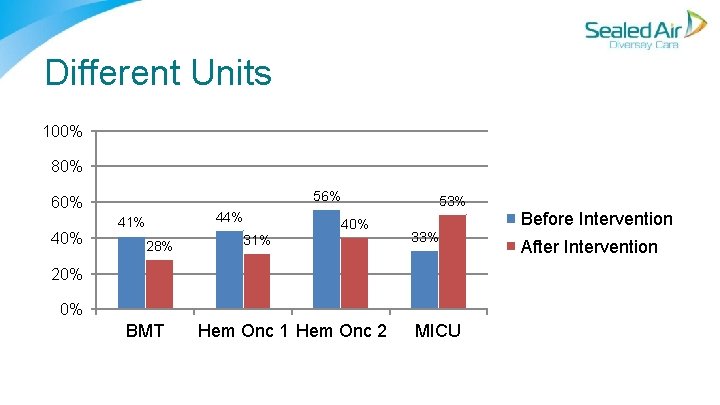
Different Units 100% 80% 56% 60% 41% 28% 44% 40% 31% 53% 33% 20% 0% BMT Hem Onc 1 Hem Onc 2 MICU Before Intervention After Intervention
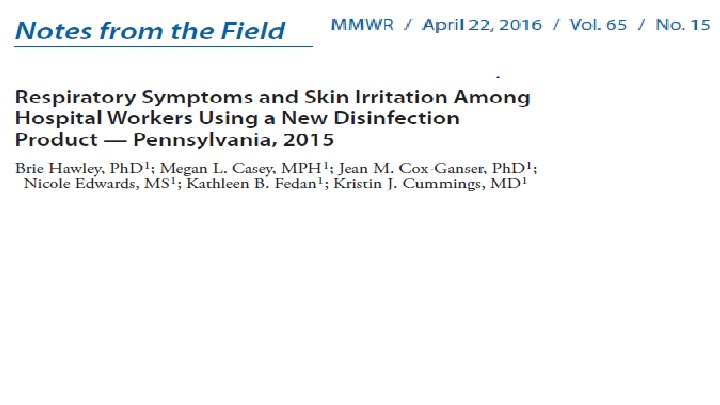
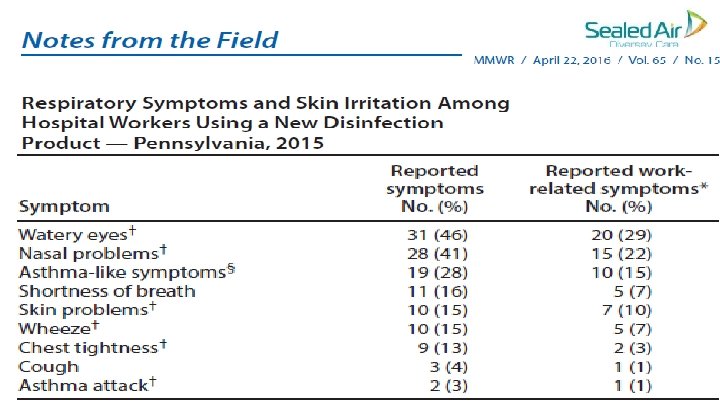
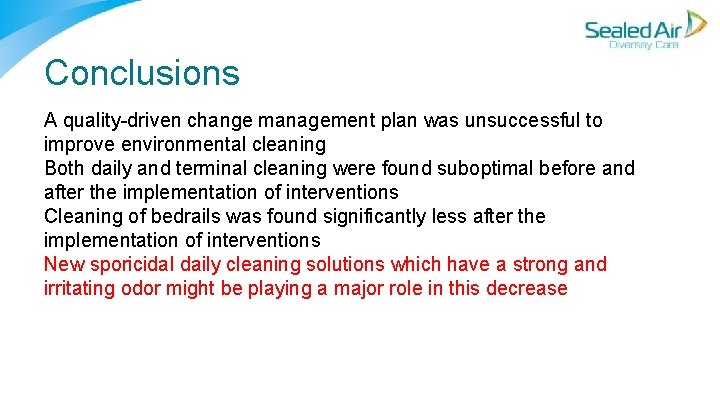
Conclusions A quality driven change management plan was unsuccessful to improve environmental cleaning Both daily and terminal cleaning were found suboptimal before and after the implementation of interventions Cleaning of bedrails was found significantly less after the implementation of interventions New sporicidal daily cleaning solutions which have a strong and irritating odor might be playing a major role in this decrease
Criteria of an Ideal Disinfectant: 5 Considerations 33
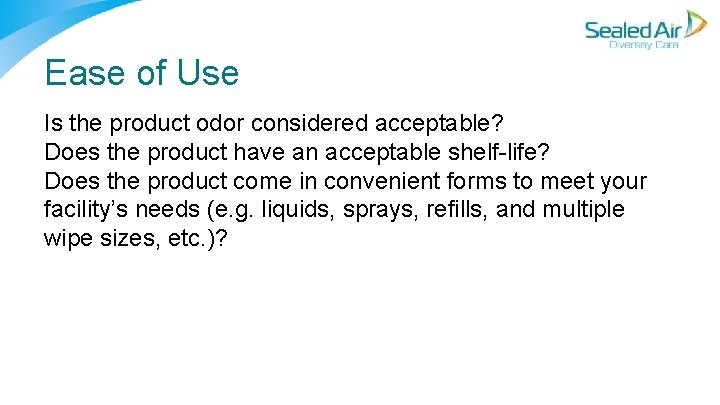
Ease of Use Is the product odor considered acceptable? Does the product have an acceptable shelf life? Does the product come in convenient forms to meet your facility’s needs (e. g. liquids, sprays, refills, and multiple wipe sizes, etc. )?
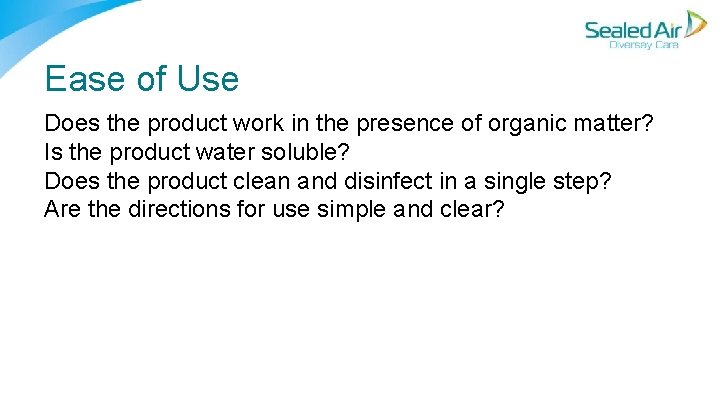
Ease of Use Does the product work in the presence of organic matter? Is the product water soluble? Does the product clean and disinfect in a single step? Are the directions for use simple and clear?
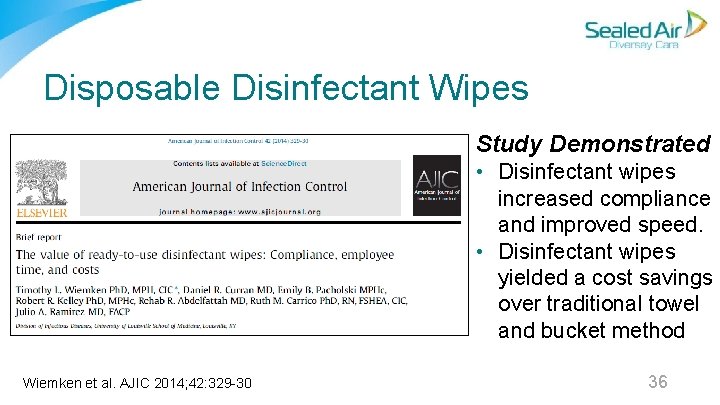
Disposable Disinfectant Wipes Study Demonstrated • Disinfectant wipes increased compliance and improved speed. • Disinfectant wipes yielded a cost savings over traditional towel and bucket method Wiemken et al. AJIC 2014; 42: 329 30 36
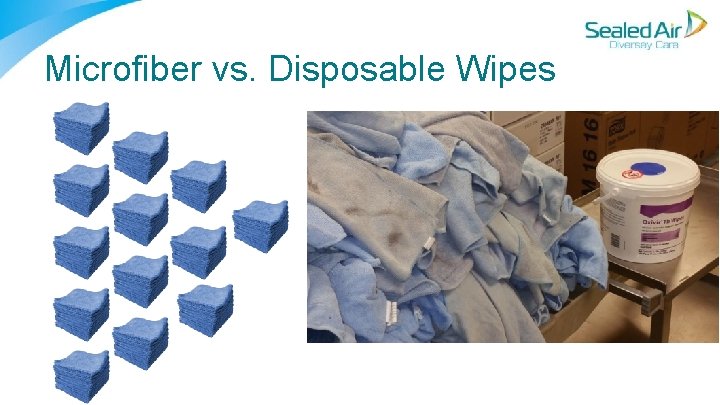
Microfiber vs. Disposable Wipes
Quat Binding Some cleaning tool fabrics, such as cotton and microfiber, are known to bind with quaternary ammonium compounds (“quats”). This is known as “quat binding” • Active ingredients (quat) have a tendency to become attracted to, and absorbed into, microfiber and cotton fabrics • Cotton fabrics and most microfibers are negatively charged or anionic
Quat Binding • Quats are positively charged, or cationic, and are attracted to the negatively charged fabric surfaces • Some non woven disposable wipes have no charge, and do not demonstrate binding with quats or other disinfectants CONSEQUENCE: A portion of the quat actives become unavailable to disinfect hard surfaces making the disinfection process ineffective! 39
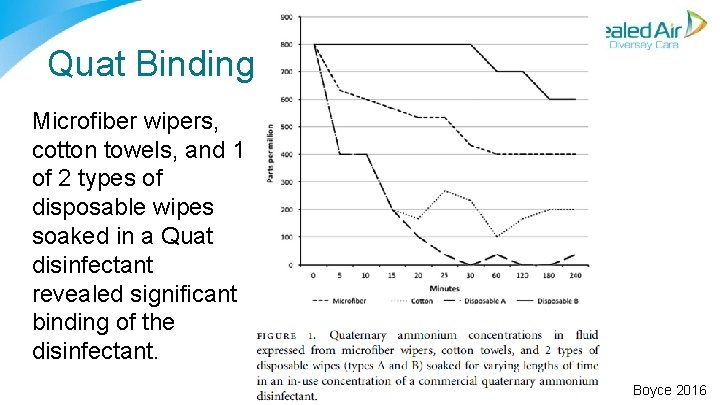
Quat Binding Microfiber wipers, cotton towels, and 1 of 2 types of disposable wipes soaked in a Quat disinfectant revealed significant binding of the disinfectant. Boyce 2016
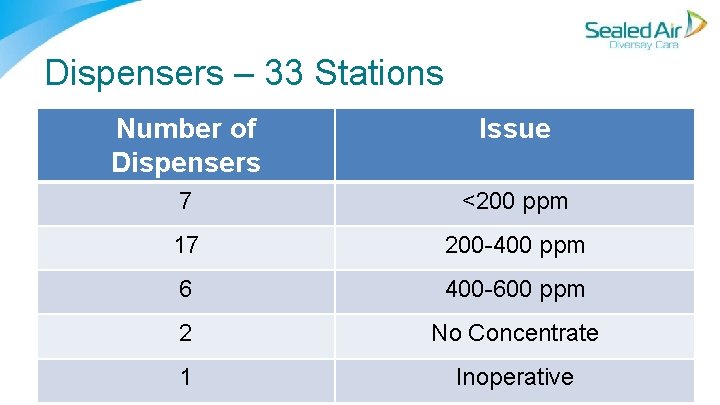
Dispensers – 33 Stations Number of Dispensers Issue 7 <200 ppm 17 200 400 ppm 6 400 600 ppm 2 No Concentrate 1 Inoperative
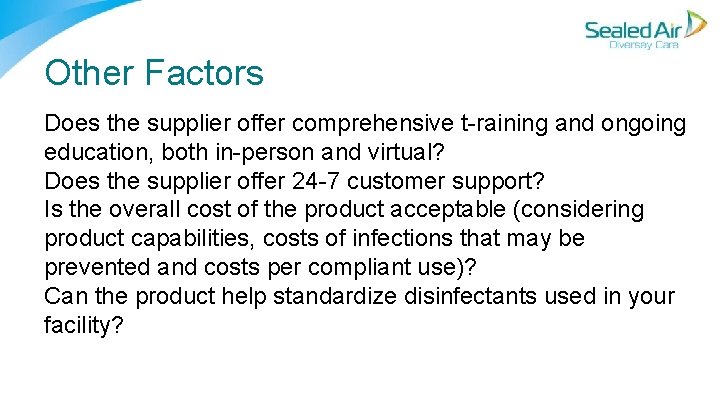
Other Factors Does the supplier offer comprehensive t raining and ongoing education, both in person and virtual? Does the supplier offer 24 7 customer support? Is the overall cost of the product acceptable (considering product capabilities, costs of infections that may be prevented and costs per compliant use)? Can the product help standardize disinfectants used in your facility?
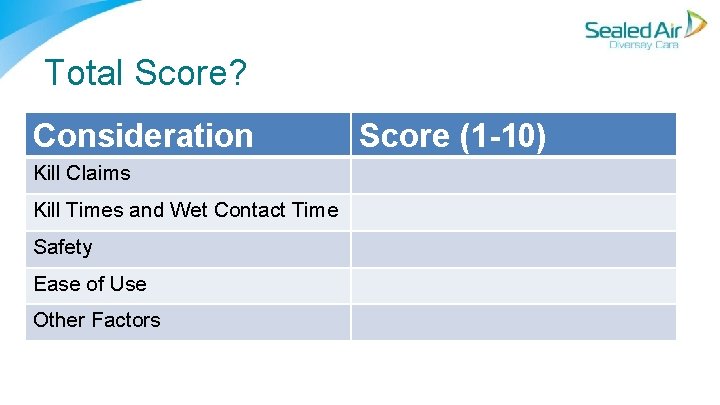
Total Score? Consideration Kill Claims Kill Times and Wet Contact Time Safety Ease of Use Other Factors Score (1 -10)
Procedures Integrating safe, and effective products and tools, into cleaning processes to deliver better outcomes • Understand current cleaning methods • Integrating the products, tools, and equipment to drive improved results and operational efficiency • Finding the comprehensive bundle for the specified needs
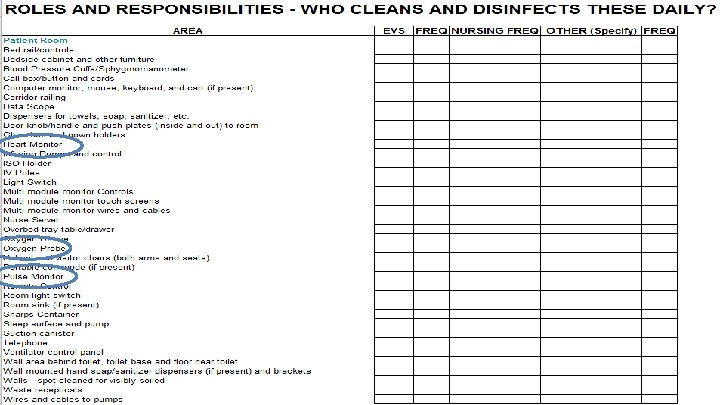
Roles and Responsibilities Define… • • • Who? When? What? Where? How? 46
Cleaning and Disinfection What surfaces/equipment need to be cleaned, how often, what product should be used, what cleaning tool, what dilution, amount needed, contact time? Is there product available where/when needed? Is the product being used properly, PPE donned correctly (if needed), right technique used, contact time achieved, feedback provided?
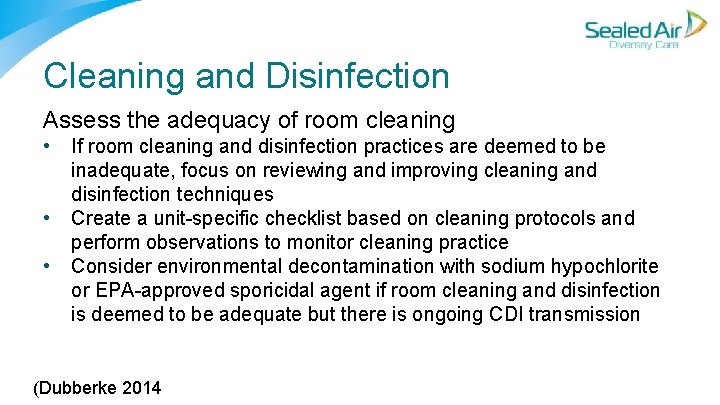
Cleaning and Disinfection Assess the adequacy of room cleaning • • • If room cleaning and disinfection practices are deemed to be inadequate, focus on reviewing and improving cleaning and disinfection techniques Create a unit specific checklist based on cleaning protocols and perform observations to monitor cleaning practice Consider environmental decontamination with sodium hypochlorite or EPA approved sporicidal agent if room cleaning and disinfection is deemed to be adequate but there is ongoing CDI transmission (Dubberke 2014
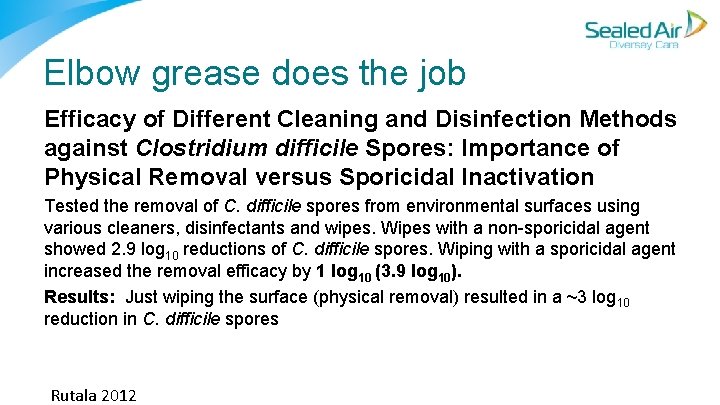
Elbow grease does the job Efficacy of Different Cleaning and Disinfection Methods against Clostridium difficile Spores: Importance of Physical Removal versus Sporicidal Inactivation Tested the removal of C. difficile spores from environmental surfaces using various cleaners, disinfectants and wipes. Wipes with a non sporicidal agent showed 2. 9 log 10 reductions of C. difficile spores. Wiping with a sporicidal agent increased the removal efficacy by 1 log 10 (3. 9 log 10). Results: Just wiping the surface (physical removal) resulted in a ~3 log 10 reduction in C. difficile spores Rutala 2012
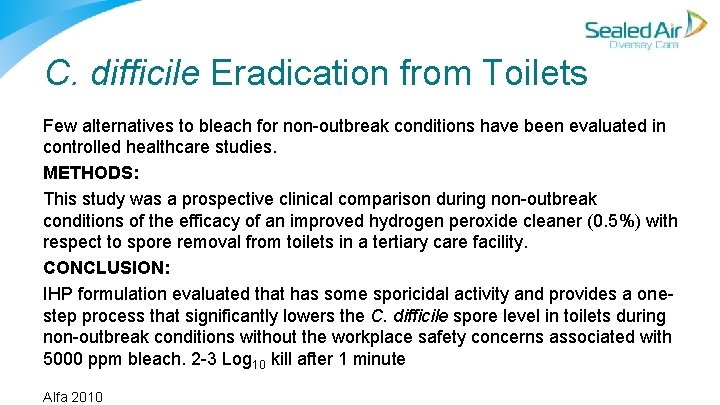
C. difficile Eradication from Toilets Few alternatives to bleach for non outbreak conditions have been evaluated in controlled healthcare studies. METHODS: This study was a prospective clinical comparison during non outbreak conditions of the efficacy of an improved hydrogen peroxide cleaner (0. 5%) with respect to spore removal from toilets in a tertiary care facility. CONCLUSION: IHP formulation evaluated that has some sporicidal activity and provides a one step process that significantly lowers the C. difficile spore level in toilets during non outbreak conditions without the workplace safety concerns associated with 5000 ppm bleach. 2 3 Log 10 kill after 1 minute Alfa 2010
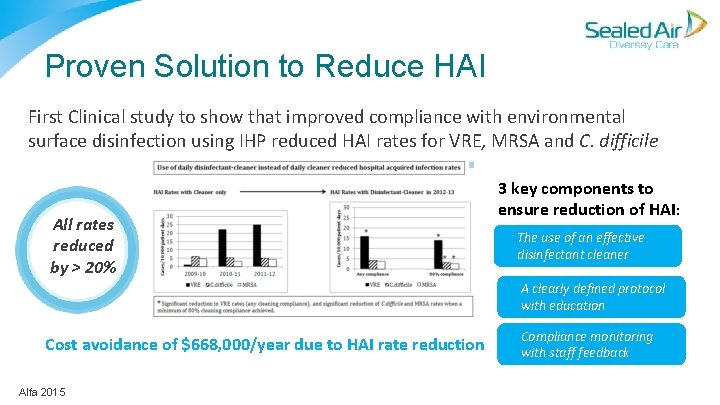
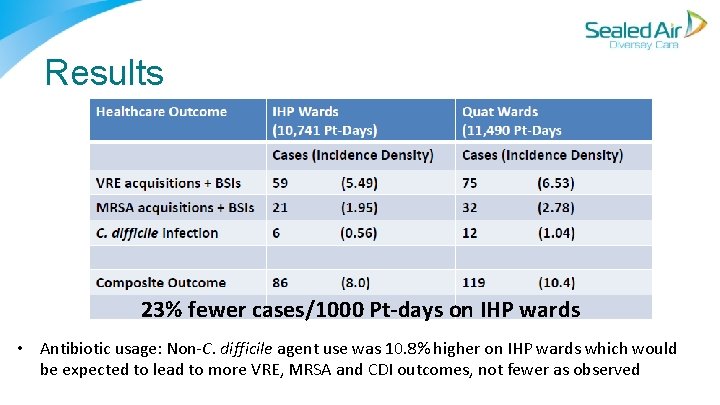
Proven Solution to Reduce HAI First Clinical study to show that improved compliance with environmental surface disinfection using IHP reduced HAI rates for VRE, MRSA and C. difficile All rates reduced by > 20% 3 key components to ensure reduction of HAI: The use of an effective disinfectant cleaner A clearly defined protocol with education Cost avoidance of $668, 000/year due to HAI rate reduction Alfa 2015 Compliance monitoring with staff feedback
Quat Binding Dr. Alfa’s study would be very applicable in this case!
A New Study with Improved Hydrogen peroxide (IHP) Presented at APIC 2016 AJIC 2016; 44(6)Suppl: S 16 John M. Boyce, MD
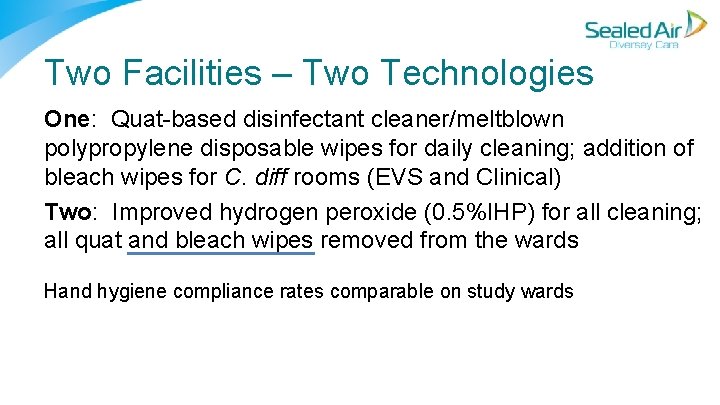
Study Design 12 month prospective trial with cross over design conducted on two campuses of a university affiliated hospital On each campus, 2 wards were randomized to have EVS perform routine daily cleaning/disinfection of surfaces: • IHP disinfectant wipes containing 0. 5% IHP • Quat disinfectant currently used in the hospital , applied using a disposable wipe made of meltblown polypropylene (same material as disposable wipe above)
Study Design The 4 study wards included: • An MICU and its step down unit on one campus • Two general medical wards on the other campus After the initial 6 months, ward assignments were changed
Two Facilities – Two Technologies One: Quat based disinfectant cleaner/meltblown polypropylene disposable wipes for daily cleaning; addition of bleach wipes for C. diff rooms (EVS and Clinical) Two: Improved hydrogen peroxide (0. 5%IHP) for all cleaning; all quat and bleach wipes removed from the wards Hand hygiene compliance rates comparable on study wards
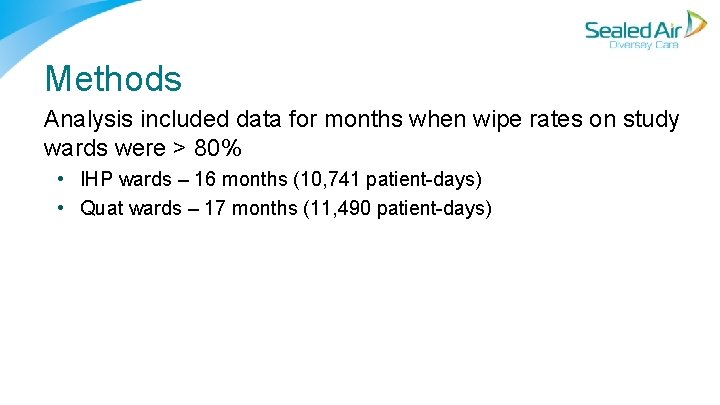
Methods Analysis included data for months when wipe rates on study wards were > 80% • IHP wards – 16 months (10, 741 patient days) • Quat wards – 17 months (11, 490 patient days)
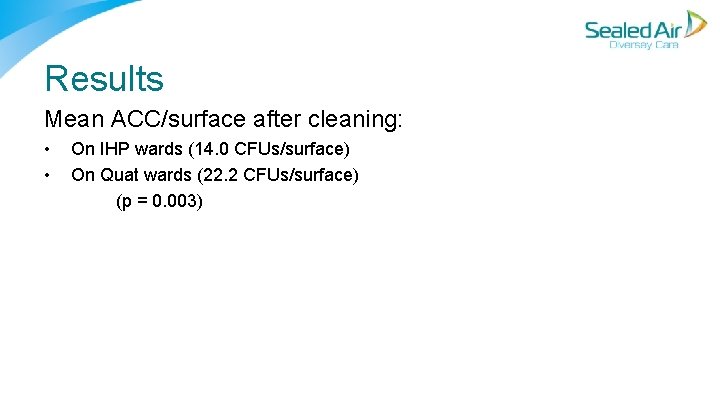
Results Mean ACC/surface after cleaning: • • On IHP wards (14. 0 CFUs/surface) On Quat wards (22. 2 CFUs/surface) (p = 0. 003)
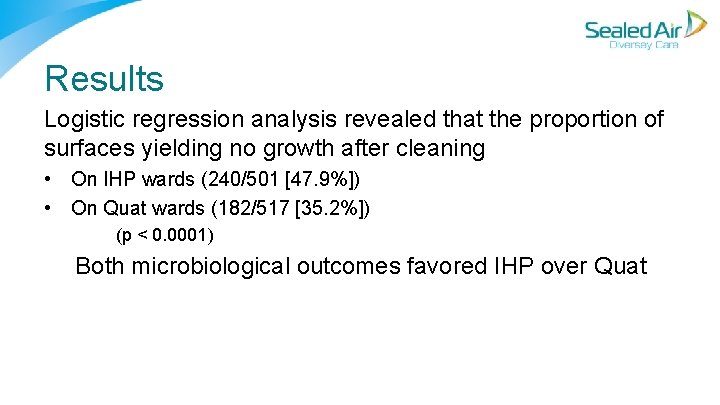
Results Logistic regression analysis revealed that the proportion of surfaces yielding no growth after cleaning • On IHP wards (240/501 [47. 9%]) • On Quat wards (182/517 [35. 2%]) (p < 0. 0001) Both microbiological outcomes favored IHP over Quat
Results 23% fewer cases/1000 Pt-days on IHP wards • Antibiotic usage: Non-C. difficile agent use was 10. 8% higher on IHP wards which would be expected to lead to more VRE, MRSA and CDI outcomes, not fewer as observed
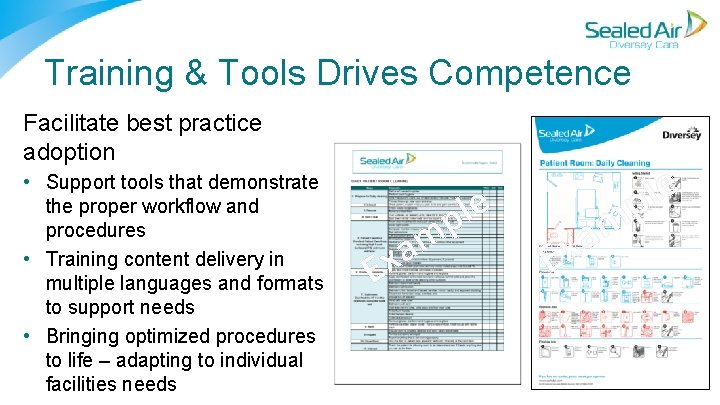
Training & Tools Drives Competence Facilitate best practice adoption • Support tools that demonstrate the proper workflow and procedures • Training content delivery in multiple languages and formats to support needs • Bringing optimized procedures to life – adapting to individual facilities needs E m a x e l p
Are we missing anything?
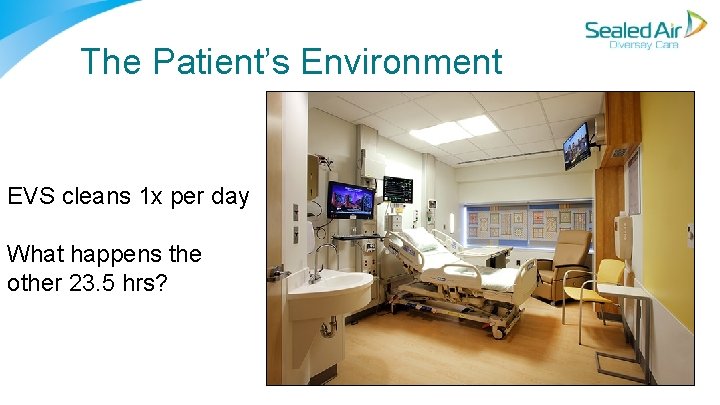
The Patient’s Environment EVS cleans 1 x per day What happens the other 23. 5 hrs?
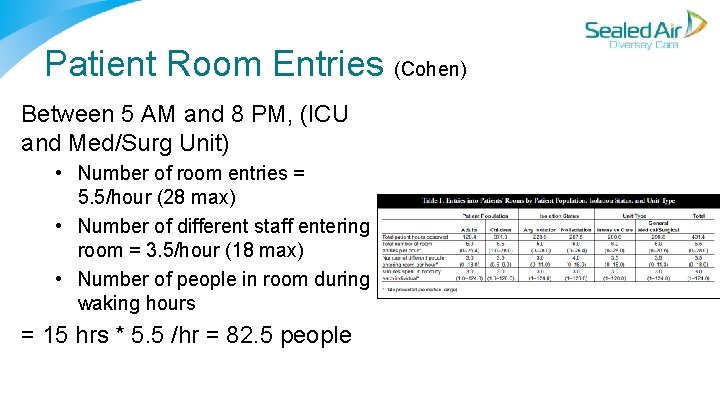
Patient Room Entries (Cohen) Between 5 AM and 8 PM, (ICU and Med/Surg Unit) • Number of room entries = 5. 5/hour (28 max) • Number of different staff entering room = 3. 5/hour (18 max) • Number of people in room during waking hours = 15 hrs * 5. 5 /hr = 82. 5 people
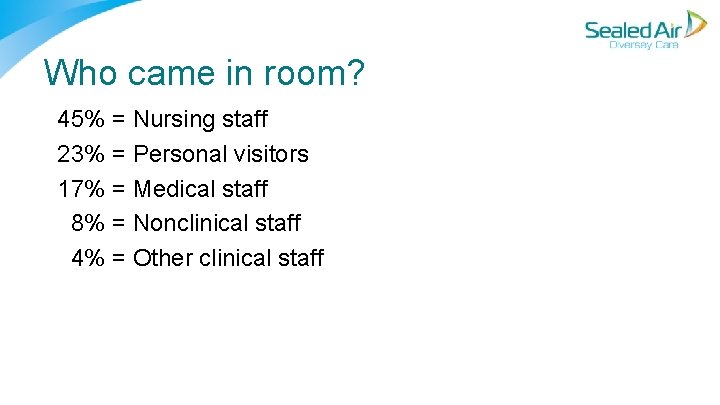
Who came in room? 45% = Nursing staff 23% = Personal visitors 17% = Medical staff 8% = Nonclinical staff 4% = Other clinical staff
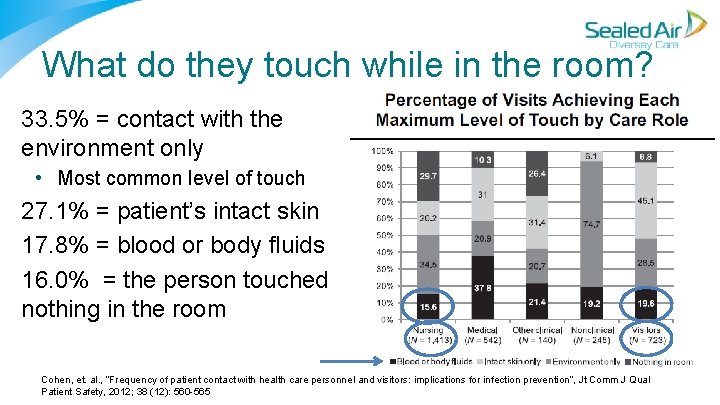
What do they touch while in the room? 33. 5% = contact with the environment only • Most common level of touch 27. 1% = patient’s intact skin 17. 8% = blood or body fluids 16. 0% = the person touched nothing in the room Cohen, et. al. , “Frequency of patient contact with health care personnel and visitors: implications for infection prevention”, Jt Comm J Qual Patient Safety, 2012; 38 (12): 560 565
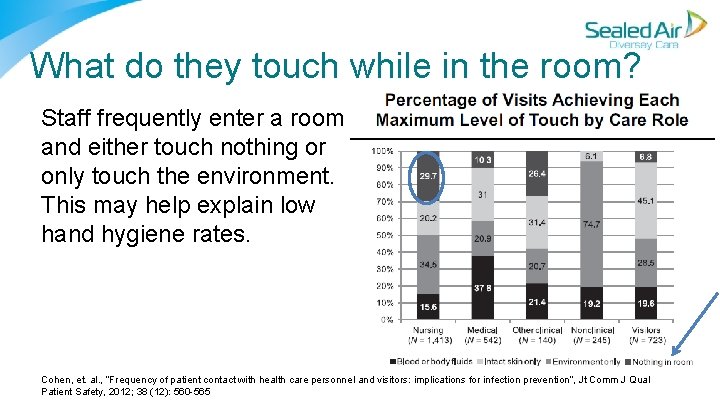
What do they touch while in the room? Staff frequently enter a room and either touch nothing or only touch the environment. This may help explain low hand hygiene rates. Cohen, et. al. , “Frequency of patient contact with health care personnel and visitors: implications for infection prevention”, Jt Comm J Qual Patient Safety, 2012; 38 (12): 560 565
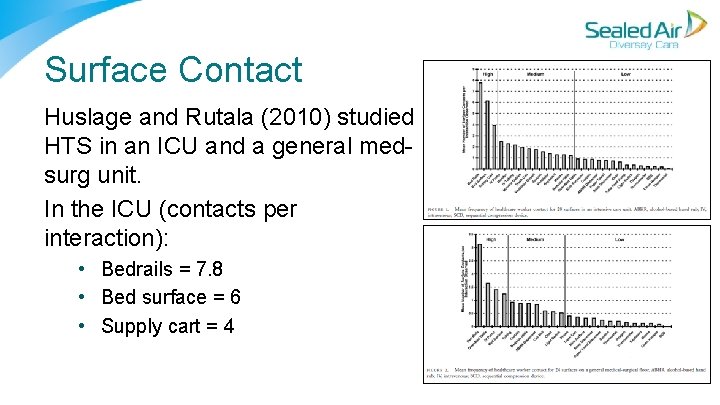
Surface Contact Huslage and Rutala (2010) studied HTS in an ICU and a general med surg unit. In the ICU (contacts per interaction): • Bedrails = 7. 8 • Bed surface = 6 • Supply cart = 4
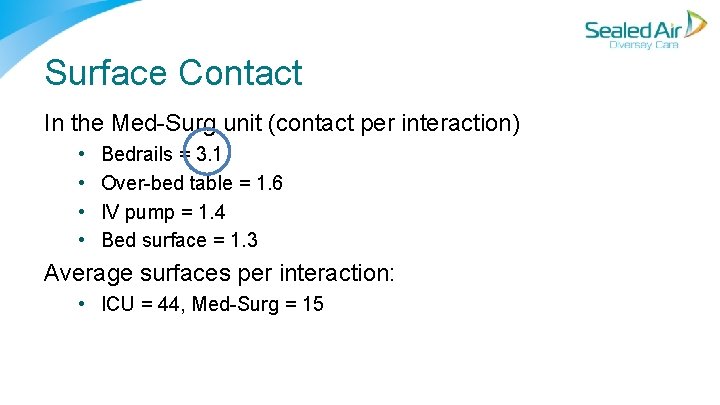
Surface Contact In the Med Surg unit (contact per interaction) • • Bedrails = 3. 1 Over bed table = 1. 6 IV pump = 1. 4 Bed surface = 1. 3 Average surfaces per interaction: • ICU = 44, Med Surg = 15
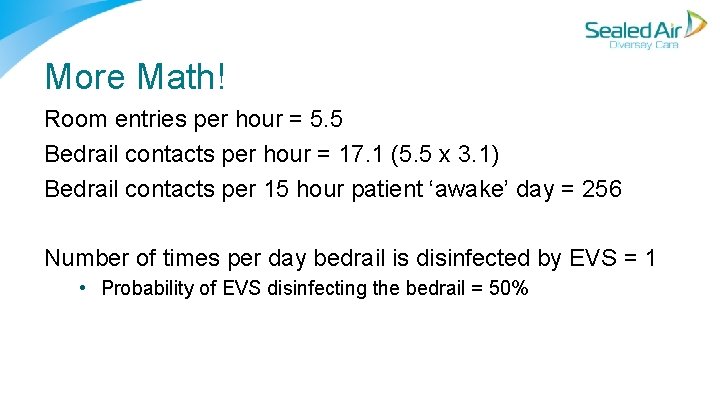
More Math! Room entries per hour = 5. 5 Bedrail contacts per hour = 17. 1 (5. 5 x 3. 1) Bedrail contacts per 15 hour patient ‘awake’ day = 256 Number of times per day bedrail is disinfected by EVS = 1 • Probability of EVS disinfecting the bedrail = 50%
? 255?
Math! Number of times per day bedrail is disinfected by the clinical staff = ? (probably zero) • Probability of Clinical staff performing hand hygiene = 40% We should not be surprised that surfaces in the patient zone contribute to infection risk given the frequency of contact and the limited disinfection
Environmental Disinfection (ED) Recognize that high touch surfaces are done every 24 hours • Subsets may be done 2 x per day Point of Care Prevention • Certain procedures need disinfection of surfaces
Point of Care Disinfection It is everyone’s job to disinfect, but it is not everyone’s job to disinfect everything Training cards for: • • • Clinician – workstation on wheels, bed rails Food servers – over bed table, sanitize patient hands CNAs – bedrails, other bed controls Blood lab tech – bedrail, bed controls Respiratory therapists – bedrail, bed controls
6 Moments of Surface Disinfection 1. Before placing a food tray on an over bed table 2. After any procedure involving feces (or body fluids) within the patient bed space 3. After any wound dressing change 4. After patient bathing (within bed space) 5. After assistance with productive cough or vomiting 6. Any time surfaces are visibly soiled
Point of Care Disinfection Disinfectant at point of care! 0/0/0 HMIS – can’t be flammable, can’t be caustic Fast contact time
Suggestion Family and Visitors Feel free to use our disinfectant wipe on hard surfaces around the patient (not a “baby wipe”) Dispose in the regular garbage Please do not flush!
Validation Are you Confident? • • The Job has been completed? All areas are in compliance? All surfaces are cleaned? Procedures are followed?
CDC Guidance • Based on strong evidence that transmission of HAPs is related to contamination of near patient surfaces and equipment • CDC issued a guidance document “Options for Evaluating Environmental Cleaning, ” December 2010 • Recommends that all hospitals develop programs to optimize thoroughness of high touch surface cleaning as part of terminal room cleaning http: //www. cdc. gov/HAI/toolkits/Evaluating-Environmental-Cleaning. html
Cleaning and Disinfection • Routinely assess adherence to protocols and adequacy of cleaning and disinfection • Assess the adequacy of cleaning and disinfection practices before changing to a new cleaning product (e. g. bleach) Dubberke 2014
Cleaning and Disinfection • Consider sporicidal if: • Cleaning and disinfection are deemed adequate, but still ongoing CDI transmission • For disinfection of the environment in outbreak or hyperendemic settings in conjunction with other IPC measures
Environmental Cleaning Evaluation Program – Level I Program • Cleaning responsibilities and frequencies clearly defined • Structured education of staff • Implementation of a monitoring system that measures staff competency and incorporates patient satisfaction survey results • Continuous monitoring of the program • Interventions to improve the quality of cleaning and disinfection • Consideration and documentation of feasibility of moving to a Level II program www. cdc. gov/HAI/pdfs/toolkits/Environ-Cleaning-Eval-Toolkit 12 -2 -2010. pdf
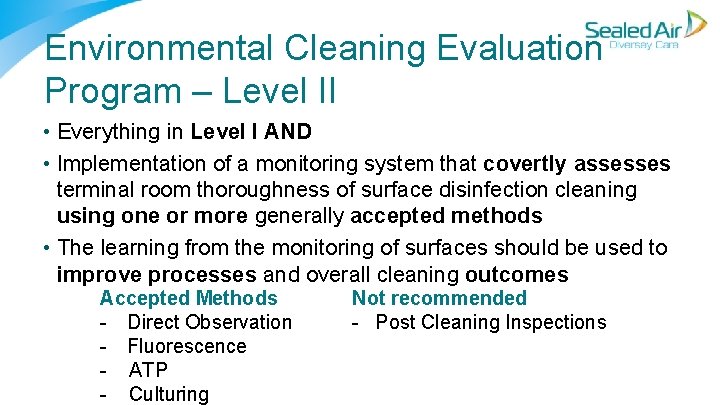
Environmental Cleaning Evaluation Program – Level II • Everything in Level I AND • Implementation of a monitoring system that covertly assesses terminal room thoroughness of surface disinfection cleaning using one or more generally accepted methods • The learning from the monitoring of surfaces should be used to improve processes and overall cleaning outcomes Accepted Methods Direct Observation Fluorescence ATP Culturing Not recommended Post Cleaning Inspections
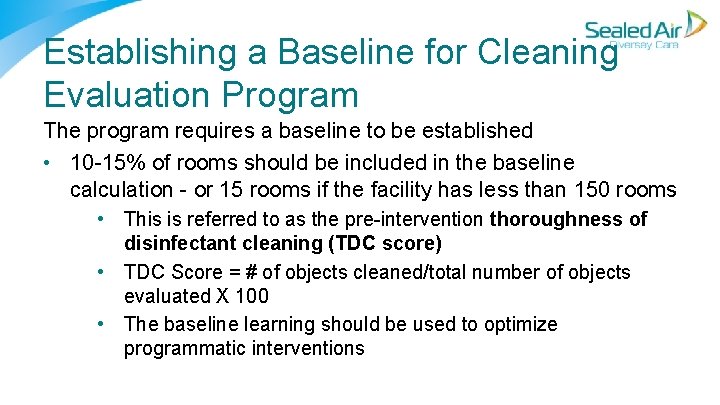
Establishing a Baseline for Cleaning Evaluation Program The program requires a baseline to be established • 10 15% of rooms should be included in the baseline calculation or 15 rooms if the facility has less than 150 rooms • This is referred to as the pre intervention thoroughness of disinfectant cleaning (TDC score) • TDC Score = # of objects cleaned/total number of objects evaluated X 100 • The baseline learning should be used to optimize programmatic interventions
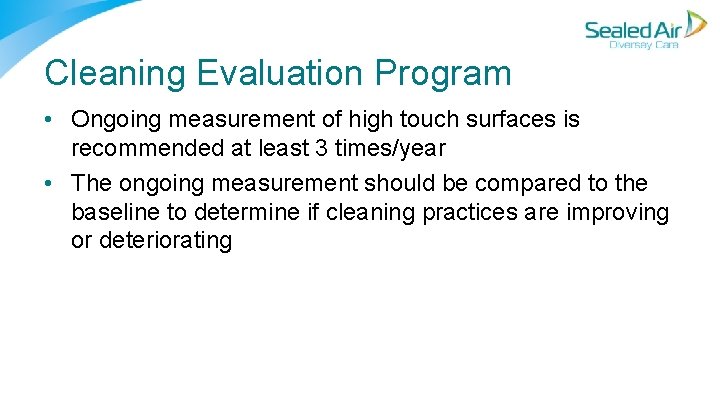
Cleaning Evaluation Program • Ongoing measurement of high touch surfaces is recommended at least 3 times/year • The ongoing measurement should be compared to the baseline to determine if cleaning practices are improving or deteriorating
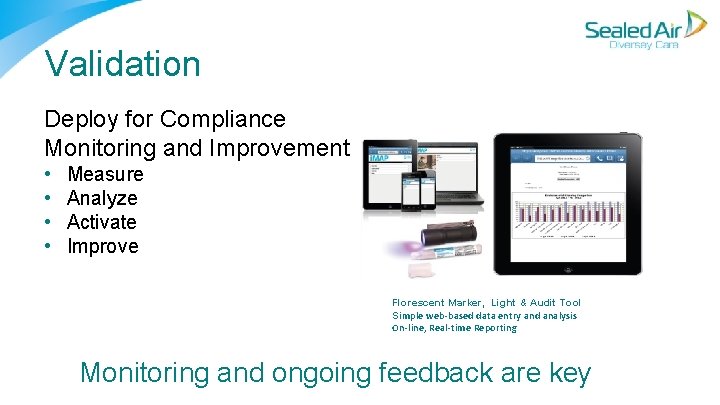
Validation Deploy for Compliance Monitoring and Improvement • • Measure Analyze Activate Improve Florescent Marker, Light & Audit Tool Simple web-based data entry and analysis On-line, Real-time Reporting Monitoring and ongoing feedback are key
Summary 89
Sporicide vs. Effective Cleaning and Disinfection Most of our pathogens are easy to kill If you have transmission of MRSA, VRE, ESBL or CRE – moving to a sporicide will not help! Find your ideal disinfectant Review the moments for environmental disinfection! 90
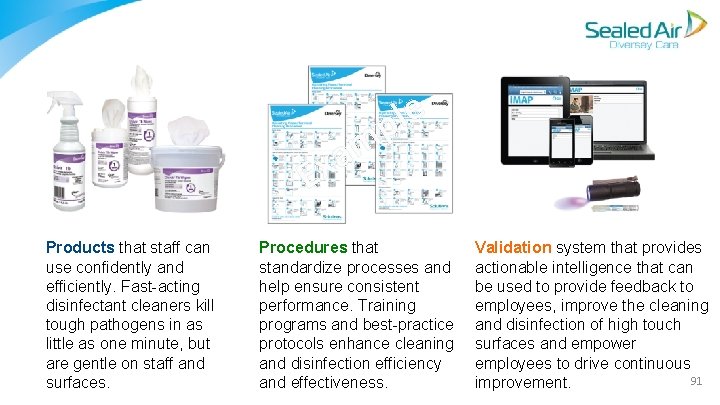
E Products that staff can use confidently and efficiently. Fast acting disinfectant cleaners kill tough pathogens in as little as one minute, but are gentle on staff and surfaces. m a x e l p Procedures that standardize processes and help ensure consistent performance. Training programs and best practice protocols enhance cleaning and disinfection efficiency and effectiveness. Validation system that provides actionable intelligence that can be used to provide feedback to employees, improve the cleaning and disinfection of high touch surfaces and empower employees to drive continuous 91 improvement.
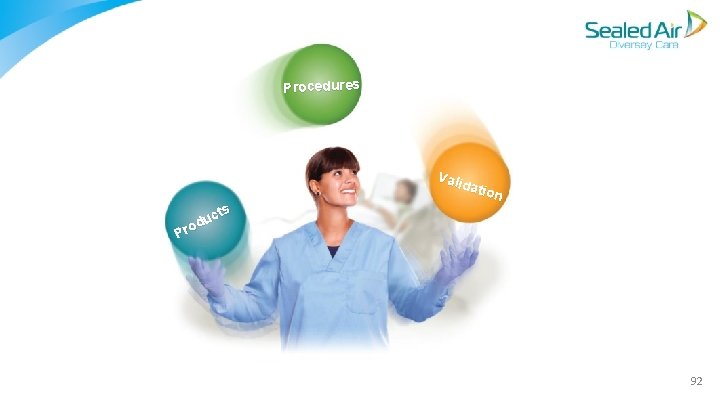
Procedures Vali dati on cts u d Pro 92
Questions?
References Alfa MJ et al. Improved eradication of Clostridium difficile spores from toilets of hospitalized patients using an accelerated hydrogen peroxide as the cleaning agent. BMC Infect Dis 2010: 268 76. http: //www. biomedcentral. com/1471 2334/10/268 Alfa MJ, et al. Use of a daily disinfectant cleaner instead of a daily cleaner reduced hospital acquired infection rates. AJIC 2015; 43: 141 6 Boyce JM, et al. Quaternary Ammonium Disinfectant Issues Encountered in an Environmental Services Department. ICHE 2016; 37(3): 340 2
References Cohen, et. al. , “Frequency of patient contact with health care personnel and visitors: implications for infection prevention”, Jt Comm J Qual Patient Safety, 2012; 38 (12): 560 565 Dubberke ER, et al. Strategies to prevent Clostridium difficile infections in acute care hospitals: 2014 Update. ICHE 2014; 35(6): 628 45 Hawley B, et al. Respiratory symptoms and skin irritation amoung hospital workers using a new disinfection product – Pennsylvania, 2015. MMWR 2005; 65(10): 400 1 Huslage K et al. A Quantitative approach to defining “high‐touch” surfaces in hospitals. ICHE 2010; 31(8): 850 3
References Kundrapu S, et al. Daily disinfection of high touch surfaces in isolation rooms to reduce contamination of healthcare workers’ hands. ICHE 2012; 33(10): 1039 42 Magill SS, et al. Multistate point prevalence survey of health care–associated infections. N Engl J Med 2014; 370: 1198 208. Omidbakhsh N. Theoretical and experimental aspects of microbicidal activities of hard surface disinfectants: are their label claims based on testing under field conditions? J AOAC Inter 2010; 93(6): 1 8 Rutala WA, et al. Efficacy of different cleaning and disinfection methods against spores: Clostridium difficile: importance of physical removal versus sporicidal inactivation ICHE 2012; 33(12): 1255 8
References Rutala WA, et al. Selection of the ideal disinfectant. ICHE 2014; 35(7): 855 65 Rutala 2014(2). Selection of the ideal disinfectant. Accessed 20160111 from: Disinfectionandsterilization. org Wiemken TL, et al. The value of ready to use disinfectant wipes: compliance, employee time, and costs. AJIC 2014; 42: 329 30
james. gauthier@sealedair. com kimberly. dwyer@sealedair. com