
Selecting the Correct Module l Practical Criteria Size
- Slides: 18
Selecting the Correct Module l Practical Criteria – – – Size Voltage Availability Warranty Mounting Characteristics Cost (per watt)
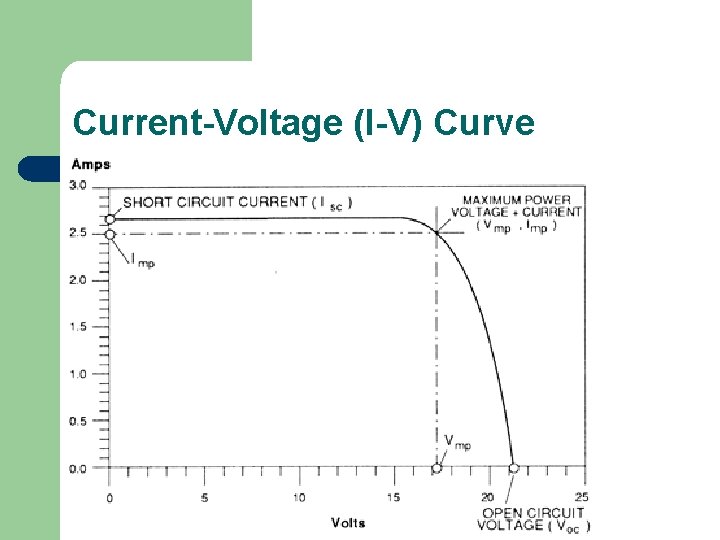
Current-Voltage (I-V) Curve
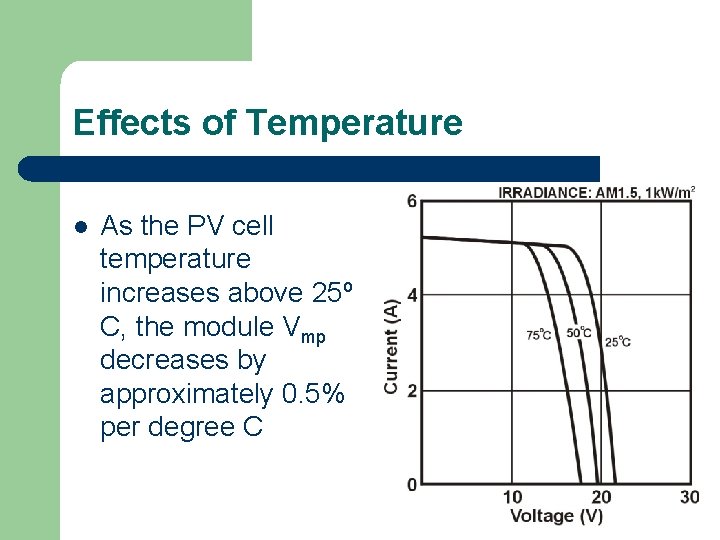
Effects of Temperature l As the PV cell temperature increases above 25º C, the module Vmp decreases by approximately 0. 5% per degree C
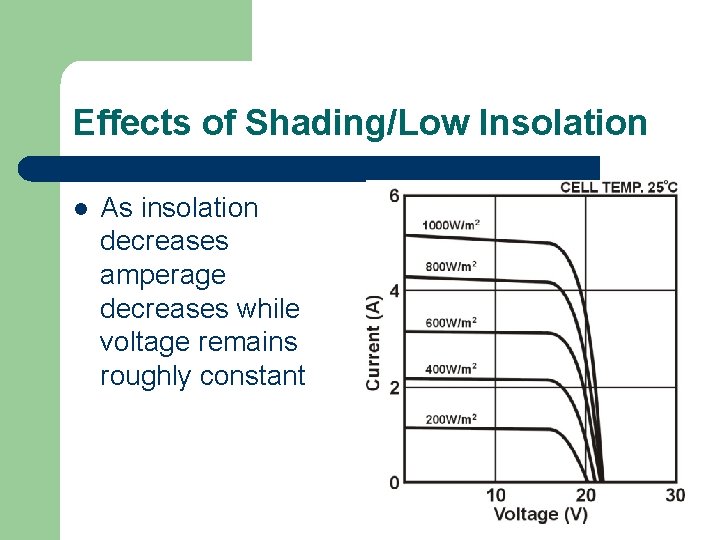
Effects of Shading/Low Insolation l As insolation decreases amperage decreases while voltage remains roughly constant
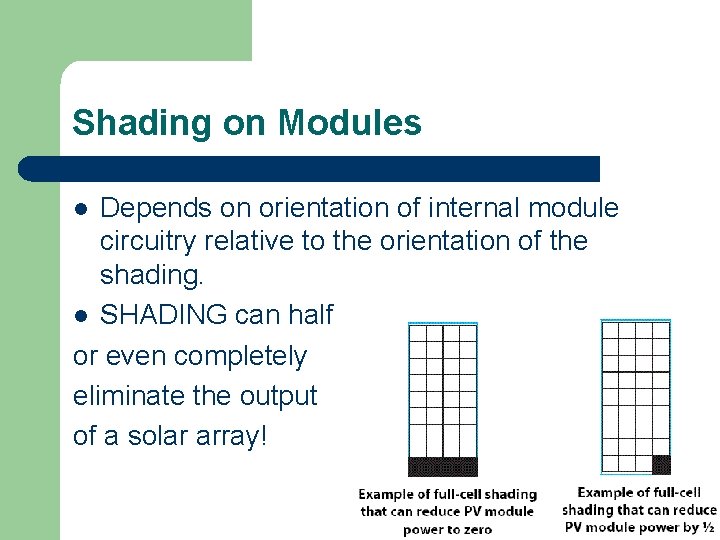
Shading on Modules Depends on orientation of internal module circuitry relative to the orientation of the shading. l SHADING can half or even completely eliminate the output of a solar array! l
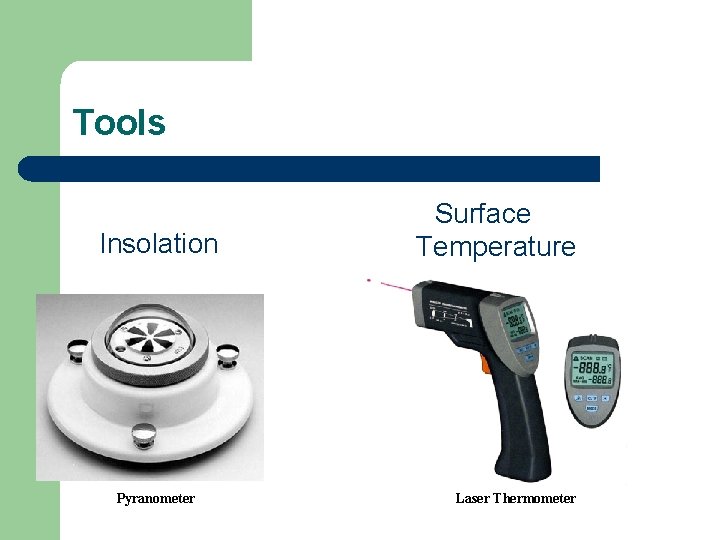
Tools Insolation Pyranometer Surface Temperature Laser Thermometer
PV Wiring
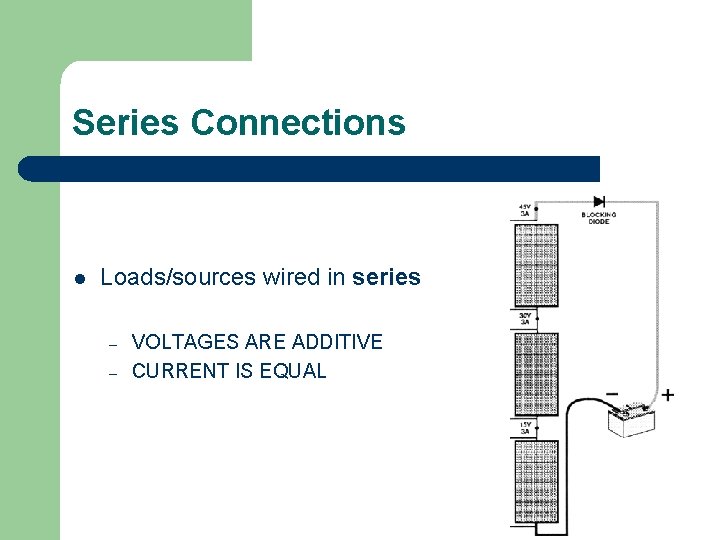
Series Connections l Loads/sources wired in series – – VOLTAGES ARE ADDITIVE CURRENT IS EQUAL
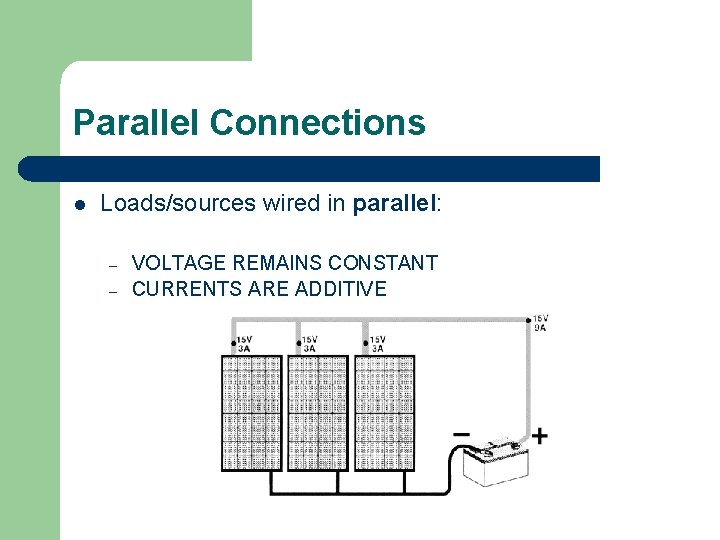
Parallel Connections l Loads/sources wired in parallel: – – VOLTAGE REMAINS CONSTANT CURRENTS ARE ADDITIVE
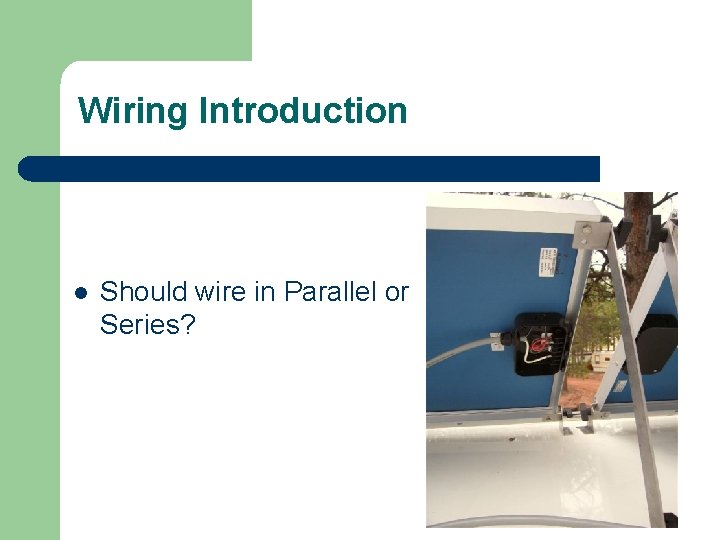
Wiring Introduction l Should wire in Parallel or Series?
Wire Components l l l Conductor material = copper (most common) Insulation material = thermoplastic (most common) Wire exposed to sunlight must be classed as sunlight resistant
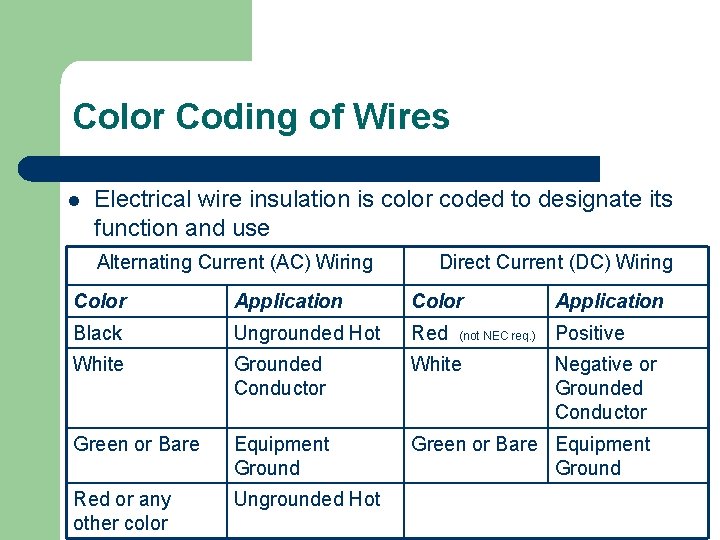
Color Coding of Wires l Electrical wire insulation is color coded to designate its function and use Alternating Current (AC) Wiring Direct Current (DC) Wiring Color Application Black Ungrounded Hot Red Positive White Grounded Conductor White Green or Bare Equipment Ground Red or any other color Ungrounded Hot (not NEC req. ) Negative or Grounded Conductor
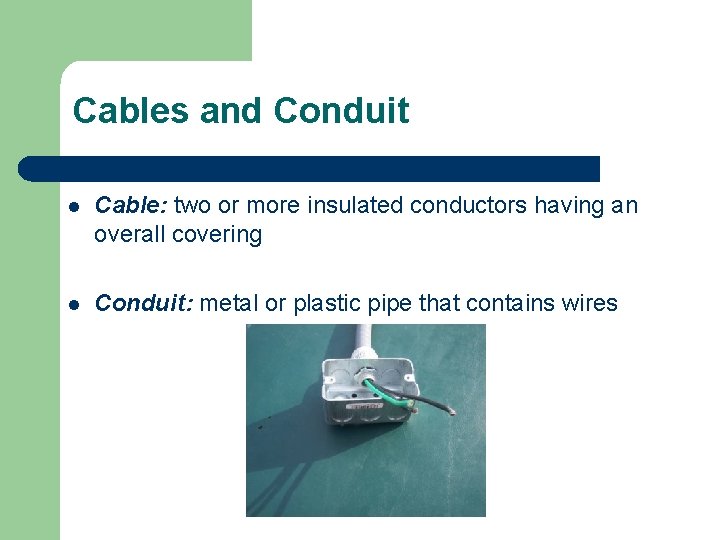
Cables and Conduit l Cable: two or more insulated conductors having an overall covering l Conduit: metal or plastic pipe that contains wires
Wire Size l Wire size selection based on two criteria: – – Ampacity Voltage drop l Ampacity - Current carrying ability of a wire l Voltage drop: the loss of voltage due to a wire’s resistance and length
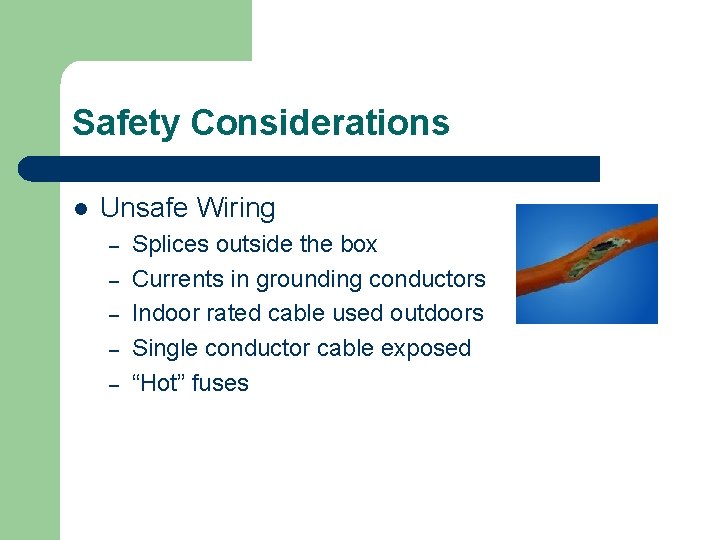
Safety Considerations l Unsafe Wiring – – – Splices outside the box Currents in grounding conductors Indoor rated cable used outdoors Single conductor cable exposed “Hot” fuses
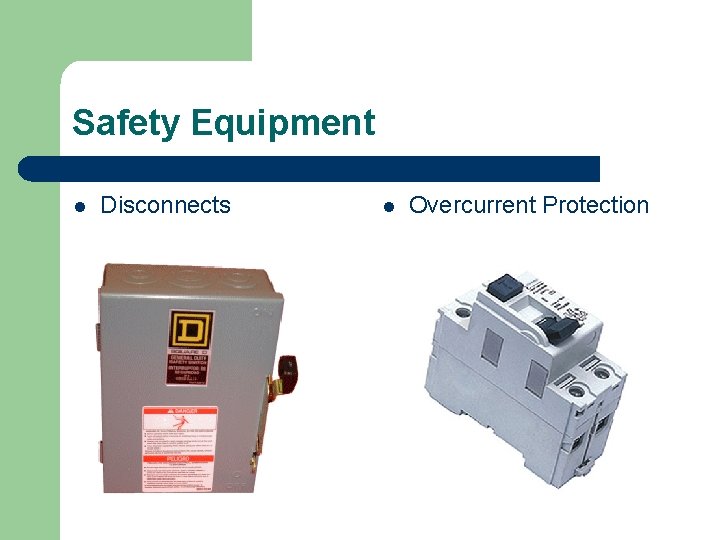
Safety Equipment l Disconnects l Overcurrent Protection
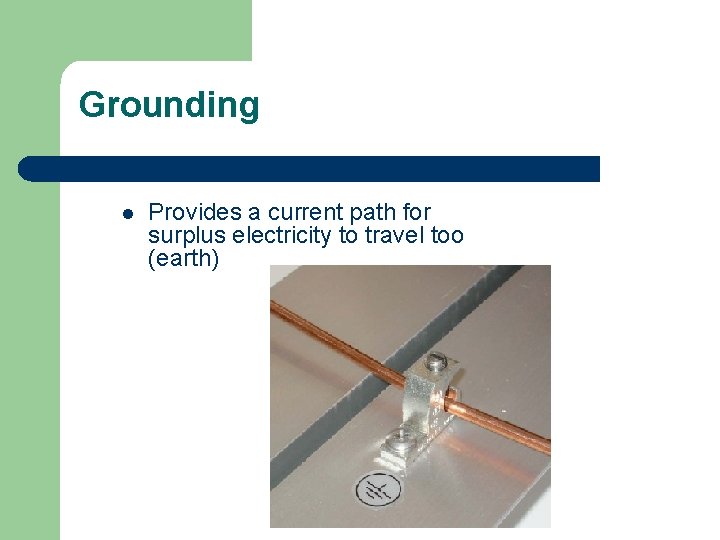
Grounding l Provides a current path for surplus electricity to travel too (earth)