
Selecting Research Participant 1 Sample Population A population
- Slides: 10
Selecting Research Participant 1
Sample & Population • A population is the entire set of individuals of interest to a researcher. • A sample is a set of individuals selected from a population and usually is intended to represent the population in a research study. 2
Some Terms • A biased sample is a sample with different characteristics from those of the population. • A representative sample is a sample with the same characteristics as the population. • Selection bias or sampling bias occurs when participants or subjects are selected in a manner that increases the probability of obtaining a unrepresentative sample. 3
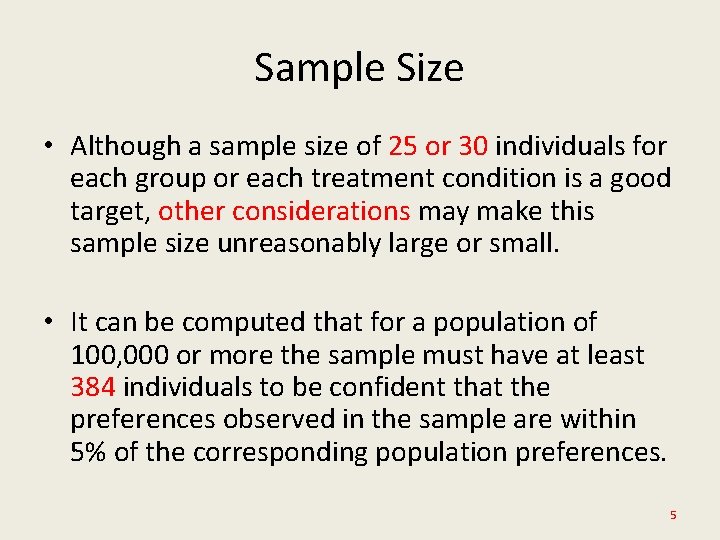
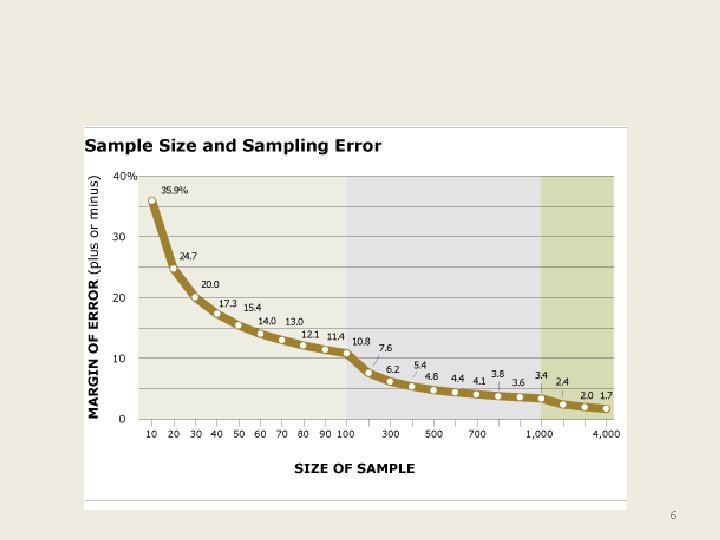
Sample Size The first principle is that a large sample is probably more representative than a small sample. Although large samples are good, there is also a practical limit to the number of individuals that is reasonable to use in a research study. 4
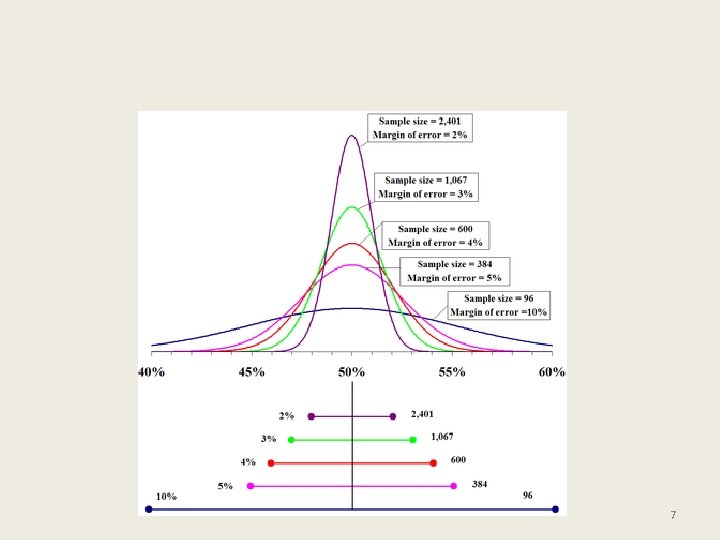
Sample Size • Although a sample size of 25 or 30 individuals for each group or each treatment condition is a good target, other considerations may make this sample size unreasonably large or small. • It can be computed that for a population of 100, 000 or more the sample must have at least 384 individuals to be confident that the preferences observed in the sample are within 5% of the corresponding population preferences. 5
6
7
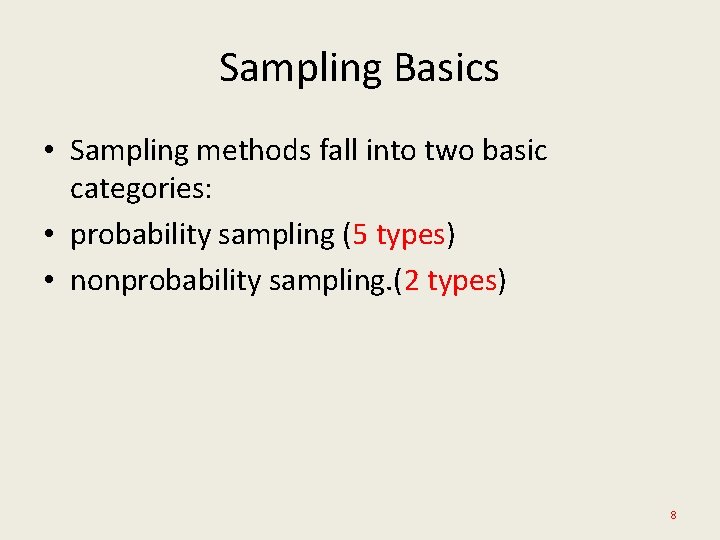
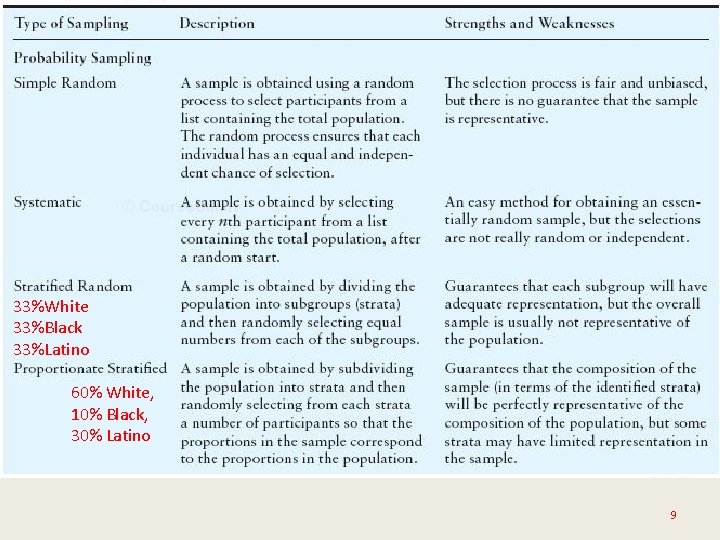
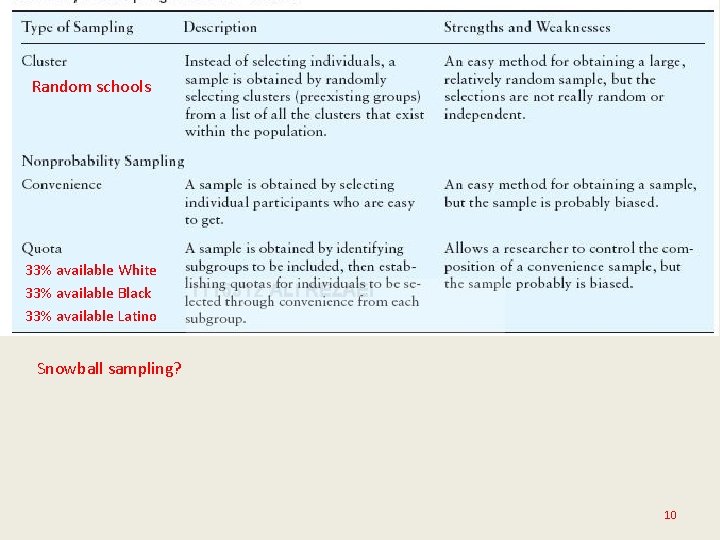
Sampling Basics • Sampling methods fall into two basic categories: • probability sampling (5 types) • nonprobability sampling. (2 types) 8
33%White 33%Black 33%Latino 60% White, 10% Black, 30% Latino 9
Random schools 33% available White 33% available Black 33% available Latino Snowball sampling? 10