
SELECTING PERFORMANCE GREASE Ten Crucial Questions Presented 4


- Slides: 43
SELECTING PERFORMANCE GREASE: Ten Crucial Questions Presented 4 -13 -2006 By Don Oldiges
Ten Crucial Questions Principles of Selection Manufacturer recommendations Manufacturers usually provide a list of lubricants that meet the operating requirements for their equipment. (note that the equipment manufacturer's recommendation should not necessarily be considered the best selection. Lubricant producer recommendations When manufacturers recommend lubricants for their products in terms of specifications or required qualities rather than particular brand names, lubricant producers should be consulted to obtain advice on products that comply with the required specifications. User selection The user should follow the manufacturer's specification ensure that applicable criteria are met regardless of who makes the lubricant selection.
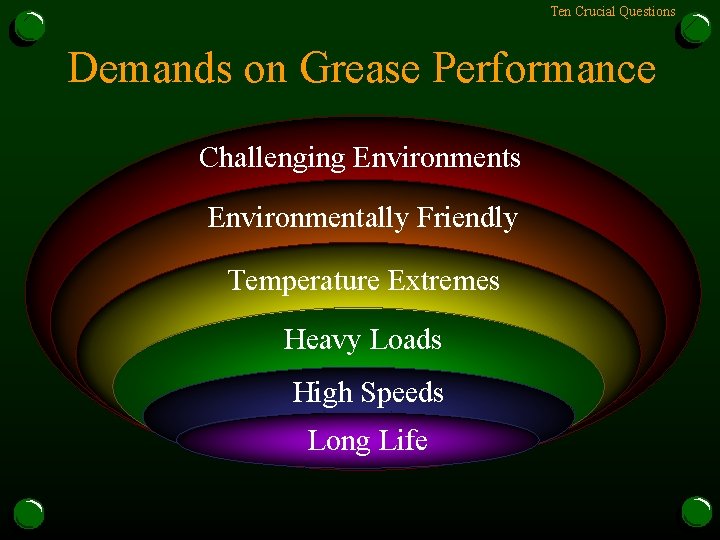
Ten Crucial Questions Demands on Grease Performance Challenging Environments Environmentally Friendly Temperature Extremes Heavy Loads High Speeds Long Life
Ten Crucial Questions Performance Objectives of Grease To remain in contact with moving surfaces and provide lubrication even under the stress of gravity, centrifugal action or pressure. To retain its properties under use conditions at all levels of shear and temperature. While performing the above, the grease must still be able to flow or be pumped where it is needed.
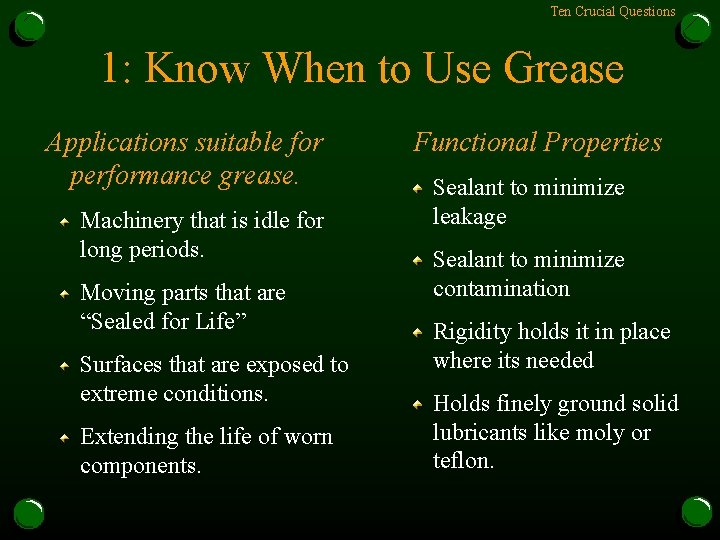
Ten Crucial Questions 1: Know When to Use Grease Applications suitable for performance grease. Machinery that is idle for long periods. Moving parts that are “Sealed for Life” Surfaces that are exposed to extreme conditions. Extending the life of worn components. Functional Properties Sealant to minimize leakage Sealant to minimize contamination Rigidity holds it in place where its needed Holds finely ground solid lubricants like moly or teflon.
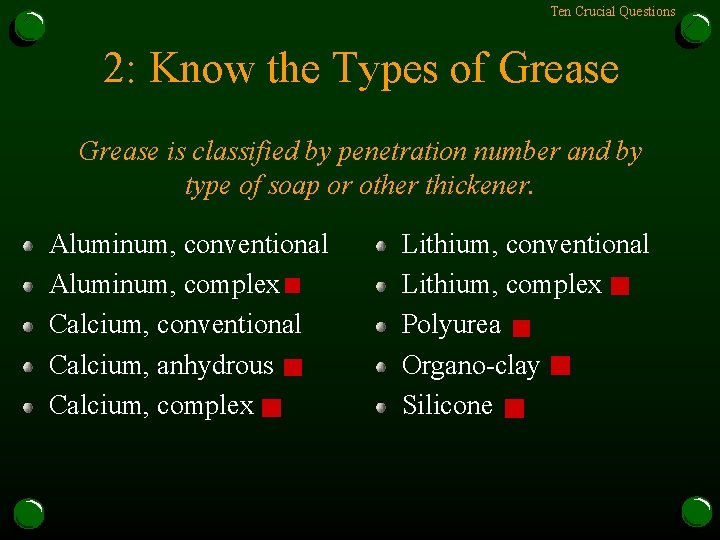
Ten Crucial Questions 2: Know the Types of Grease is classified by penetration number and by type of soap or other thickener. Aluminum, conventional Aluminum, complex Calcium, conventional Calcium, anhydrous Calcium, complex Lithium, conventional Lithium, complex Polyurea Organo-clay Silicone
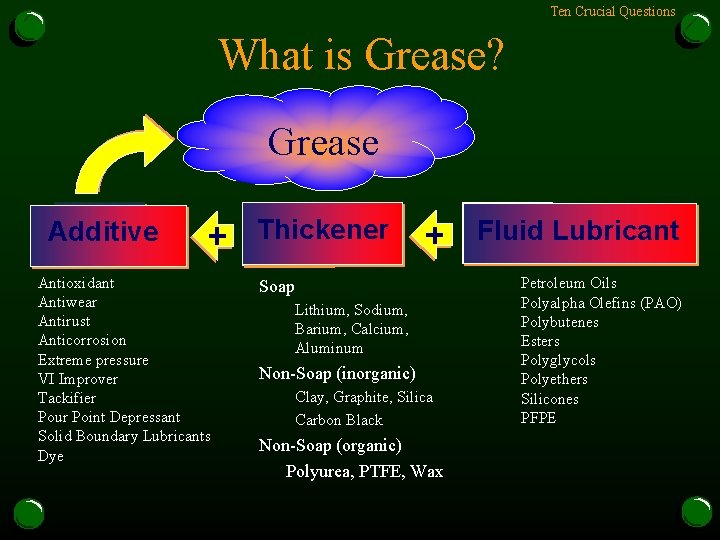
Ten Crucial Questions What is Grease? Grease Additive Buyer Antioxidant Antiwear Antirust Anticorrosion Extreme pressure VI Improver Tackifier Pour Point Depressant Solid Boundary Lubricants Dye Thickener Seller Soap Lithium, Sodium, Barium, Calcium, Aluminum Non-Soap (inorganic) Clay, Graphite, Silica Carbon Black Non-Soap (organic) Polyurea, PTFE, Wax Fluid Seller Lubricant Petroleum Oils Polyalpha Olefins (PAO) Polybutenes Esters Polyglycols Polyethers Silicones PFPE
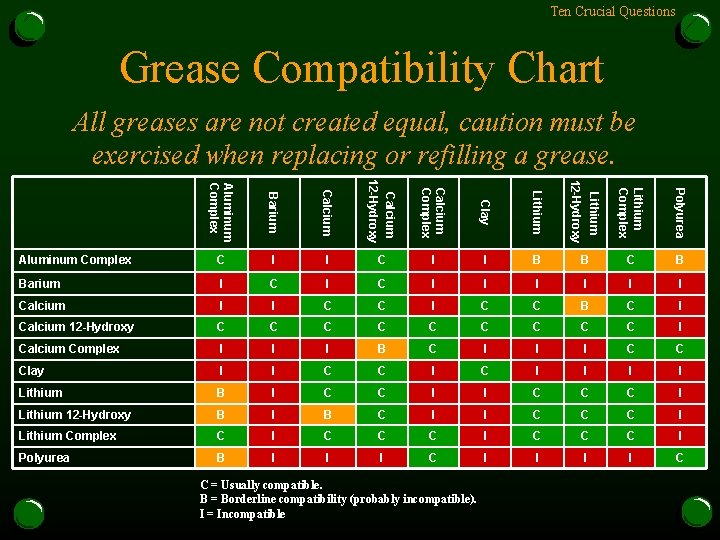
Ten Crucial Questions Grease Compatibility Chart All greases are not created equal, caution must be exercised when replacing or refilling a grease. Aluminum Complex Barium Calcium 12 -Hydroxy Calcium Complex Clay Lithium 12 -Hydroxy Lithium Complex Polyurea Aluminum Complex C I I B B C B Barium I C I I I Calcium I I C C B C I Calcium 12 -Hydroxy C C C C C I Calcium Complex I I I B C I I I C C Clay I I C C I I I I Lithium B I C C I I C C C I Lithium 12 -Hydroxy B I B C I I C C C I Lithium Complex C I C C C I Polyurea B I I I C C = Usually compatible. B = Borderline compatibility (probably incompatible). I = Incompatible
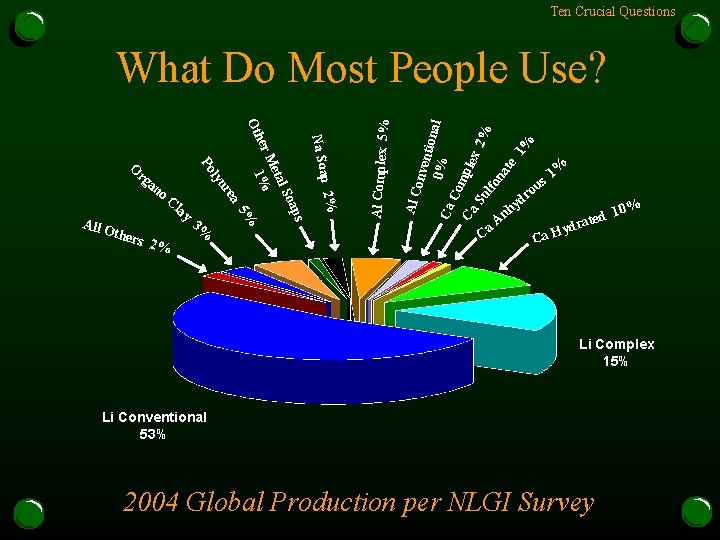
Ten Crucial Questions onve ntion al 0 % Ca Co mp Ca lex Su 2% lfo na te 1% C n A a us 1% o dr y h Al C ap 2% Na So s 2% aps ther 3% 5% All O Cl ay a re an o lyu rg l So eta er M 1% Oth Po O Al Complex 5 % What Do Most People Use? ted ydra 10% Ca H Li Complex 15% Li Conventional 53% 2004 Global Production per NLGI Survey
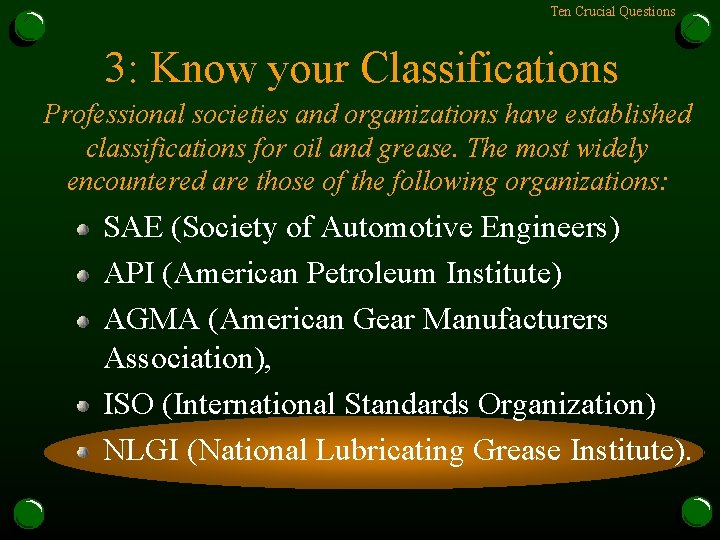
Ten Crucial Questions 3: Know your Classifications Professional societies and organizations have established classifications for oil and grease. The most widely encountered are those of the following organizations: SAE (Society of Automotive Engineers) API (American Petroleum Institute) AGMA (American Gear Manufacturers Association), ISO (International Standards Organization) NLGI (National Lubricating Grease Institute).
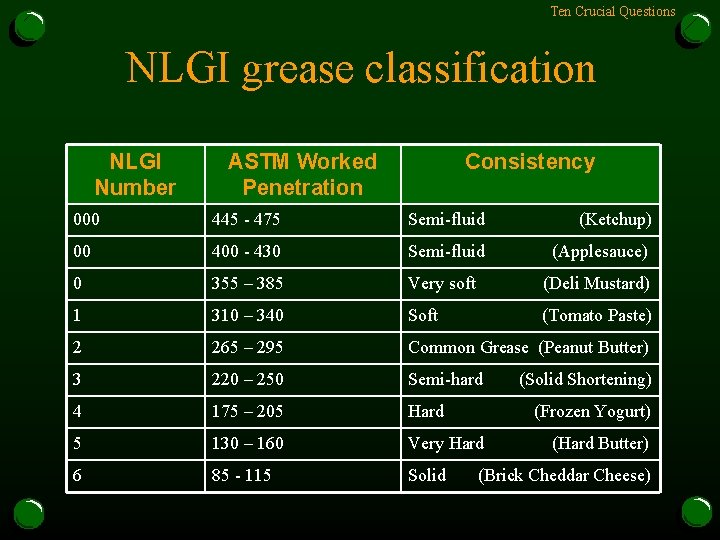
Ten Crucial Questions NLGI grease classification NLGI Number ASTM Worked Penetration Consistency 000 445 - 475 Semi-fluid (Ketchup) 00 400 - 430 Semi-fluid (Applesauce) 0 355 – 385 Very soft (Deli Mustard) 1 310 – 340 Soft (Tomato Paste) 2 265 – 295 Common Grease (Peanut Butter) 3 220 – 250 Semi-hard 4 175 – 205 Hard 5 130 – 160 Very Hard 6 85 - 115 Solid (Solid Shortening) (Frozen Yogurt) (Hard Butter) (Brick Cheddar Cheese)
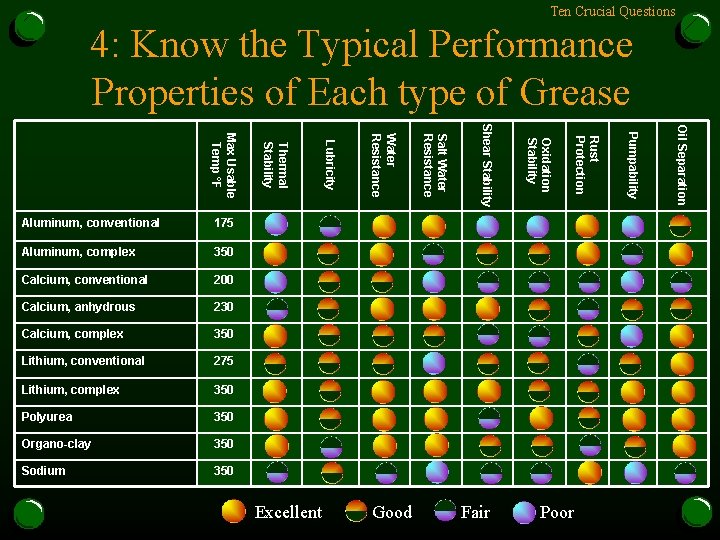
Ten Crucial Questions 4: Know the Typical Performance Properties of Each type of Grease 350 Lithium, conventional 275 Lithium, complex 350 Polyurea 350 Organo-clay 350 Sodium 350 Excellent Good Fair Poor Oil Separation Calcium, complex Pumpability 230 Rust Protection Calcium, anhydrous Oxidation Stability 200 Shear Stability Calcium, conventional Salt Water Resistance 350 Water Resistance Aluminum, complex Lubricity 175 Thermal Stability Max Usable Temp °F Aluminum, conventional
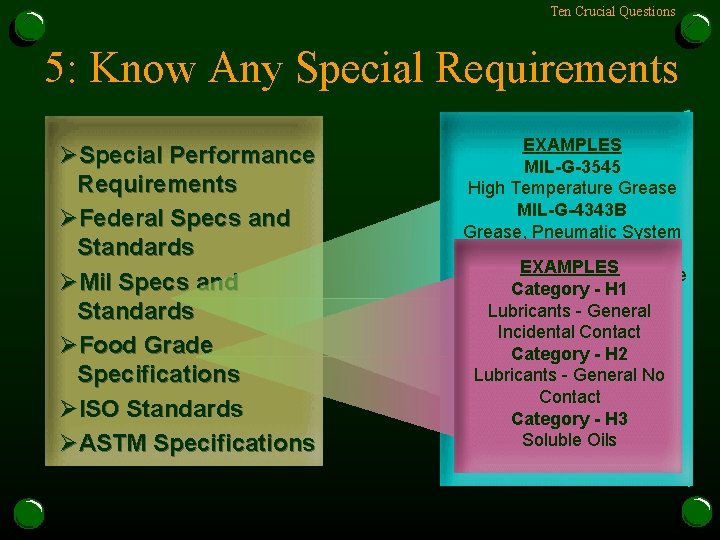
Ten Crucial Questions 5: Know Any Special Requirements ØSpecial Performance Requirements ØFederal Specs and Standards ØMil Specs and Standards ØFood Grade Specifications ØISO Standards ØASTM Specifications EXAMPLES MIL-G-3545 High Temperature Grease MIL-G-4343 B Grease, Pneumatic System MIL-G-7711 General. EXAMPLES Purpose EP Grease Category - H 1 MIL-G-18458 Lubricants Wire Rope- General Grease Incidental Contact MIL-G-21164 C Category - H 2 Grease, Moly Disulfide Lubricants - General No MIL-G-25760 Contact Synthetic Grease Category - H 3 MIL-G-46886 Soluble. Grease Oils Silicone
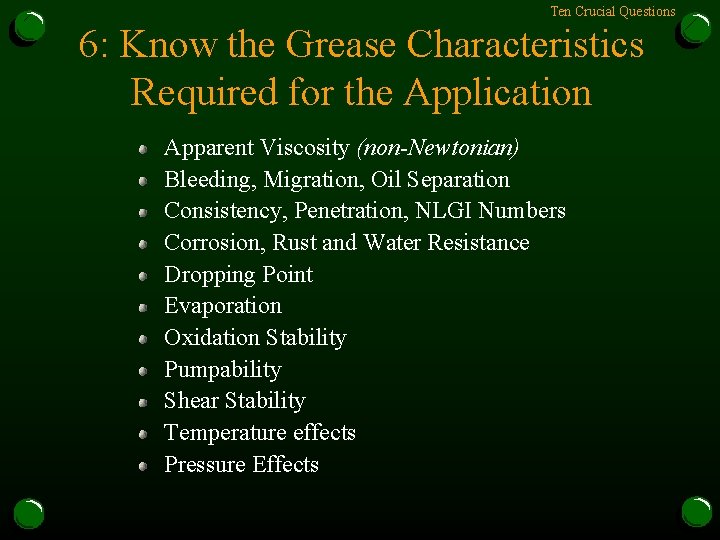
Ten Crucial Questions 6: Know the Grease Characteristics Required for the Application Apparent Viscosity (non-Newtonian) Bleeding, Migration, Oil Separation Consistency, Penetration, NLGI Numbers Corrosion, Rust and Water Resistance Dropping Point Evaporation Oxidation Stability Pumpability Shear Stability Temperature effects Pressure Effects
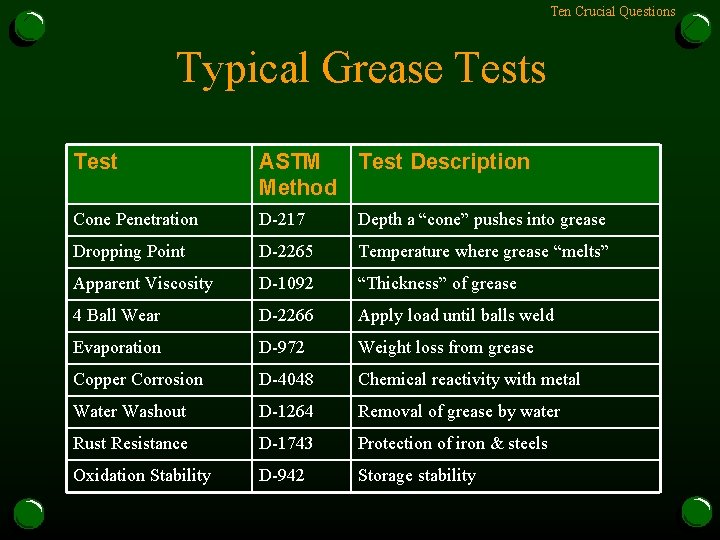
Ten Crucial Questions Typical Grease Tests Test ASTM Test Description Method Cone Penetration D-217 Depth a “cone” pushes into grease Dropping Point D-2265 Temperature where grease “melts” Apparent Viscosity D-1092 “Thickness” of grease 4 Ball Wear D-2266 Apply load until balls weld Evaporation D-972 Weight loss from grease Copper Corrosion D-4048 Chemical reactivity with metal Water Washout D-1264 Removal of grease by water Rust Resistance D-1743 Protection of iron & steels Oxidation Stability D-942 Storage stability
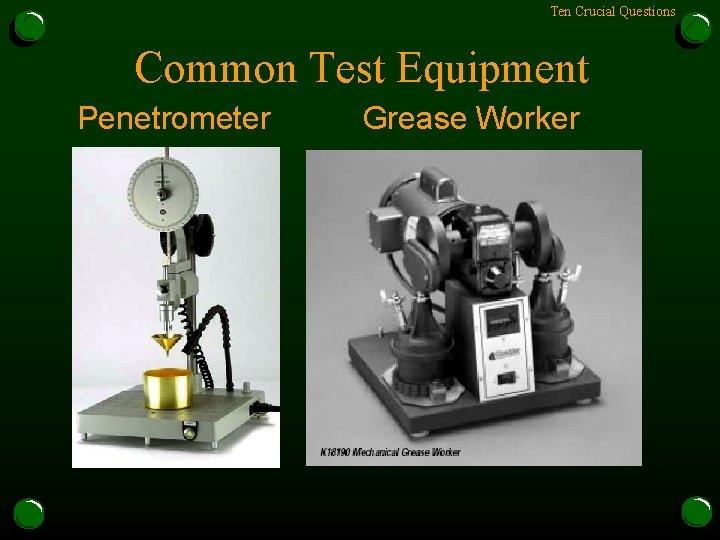
Ten Crucial Questions Common Test Equipment Penetrometer Grease Worker
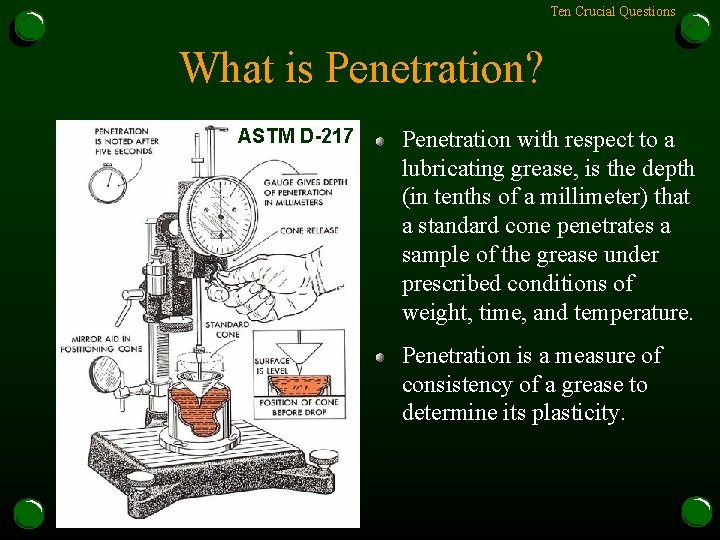
Ten Crucial Questions What is Penetration? ASTM D-217 Penetration with respect to a lubricating grease, is the depth (in tenths of a millimeter) that a standard cone penetrates a sample of the grease under prescribed conditions of weight, time, and temperature. Penetration is a measure of consistency of a grease to determine its plasticity.
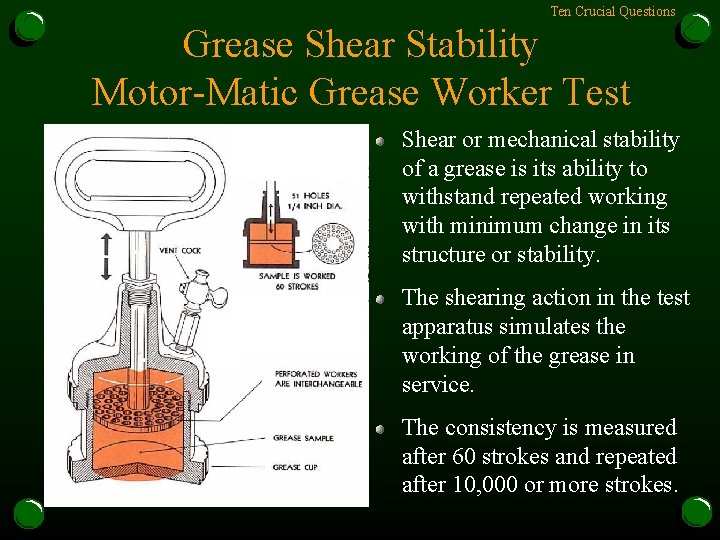
Ten Crucial Questions Grease Shear Stability Motor-Matic Grease Worker Test ASTM D-217 -A Shear or mechanical stability of a grease is its ability to withstand repeated working with minimum change in its structure or stability. The shearing action in the test apparatus simulates the working of the grease in service. The consistency is measured after 60 strokes and repeated after 10, 000 or more strokes.
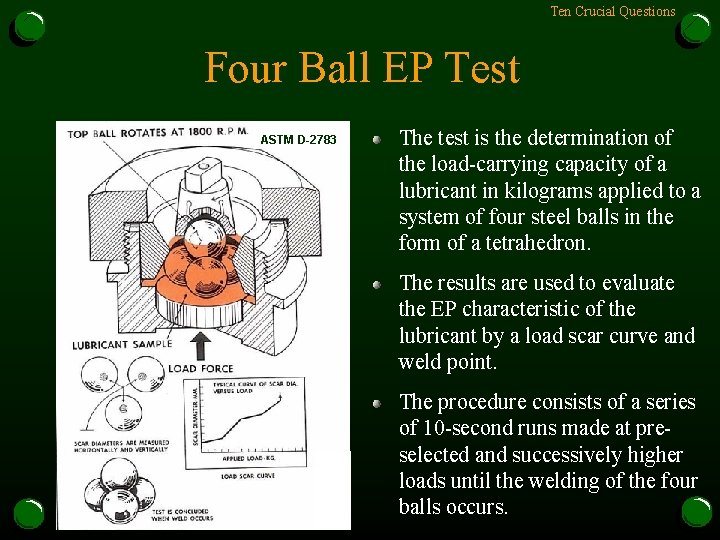
Ten Crucial Questions Four Ball EP Test ASTM D-2783 The test is the determination of the load-carrying capacity of a lubricant in kilograms applied to a system of four steel balls in the form of a tetrahedron. The results are used to evaluate the EP characteristic of the lubricant by a load scar curve and weld point. The procedure consists of a series of 10 -second runs made at preselected and successively higher loads until the welding of the four balls occurs.
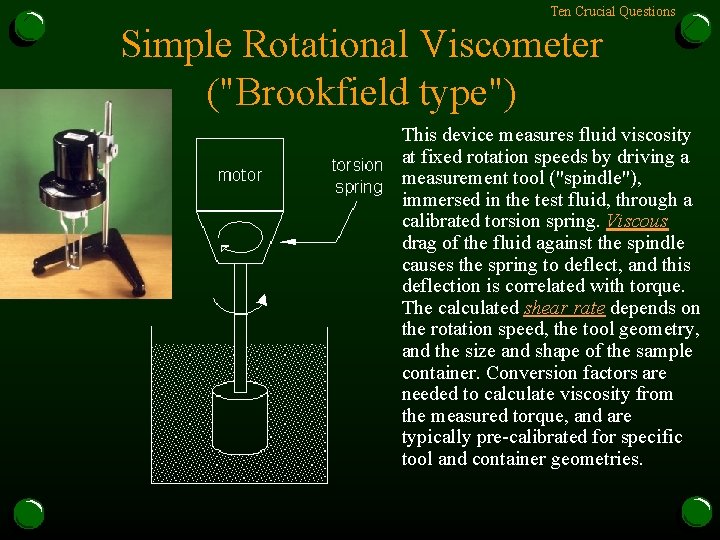
Ten Crucial Questions Simple Rotational Viscometer ("Brookfield type") This device measures fluid viscosity at fixed rotation speeds by driving a measurement tool ("spindle"), immersed in the test fluid, through a calibrated torsion spring. Viscous drag of the fluid against the spindle causes the spring to deflect, and this deflection is correlated with torque. The calculated shear rate depends on the rotation speed, the tool geometry, and the size and shape of the sample container. Conversion factors are needed to calculate viscosity from the measured torque, and are typically pre-calibrated for specific tool and container geometries.
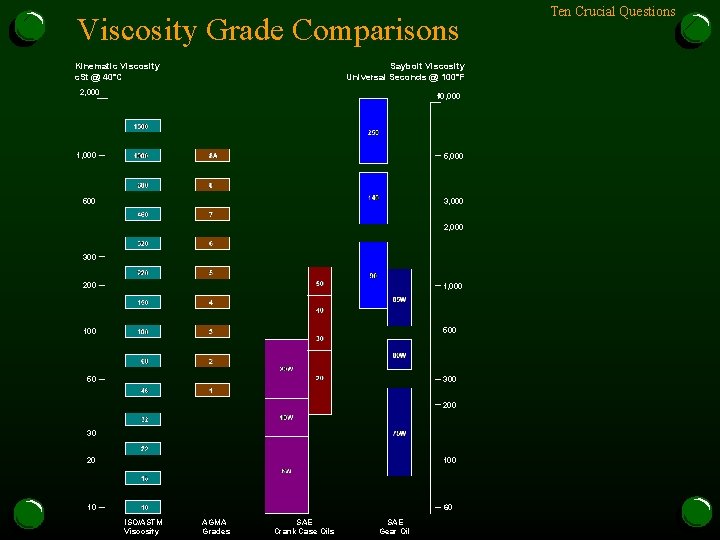
Viscosity Grade Comparisons Saybolt Viscosity Universal Seconds @ 100°F Kinematic Viscosity c. St @ 40°C 2, 000 10, 000 1, 000 500 3, 000 2, 000 300 200 1, 000 100 50 300 200 30 20 10 60 ISO/ASTM Viscosity AGMA Grades SAE Crank Case Oils SAE Gear Oil Ten Crucial Questions
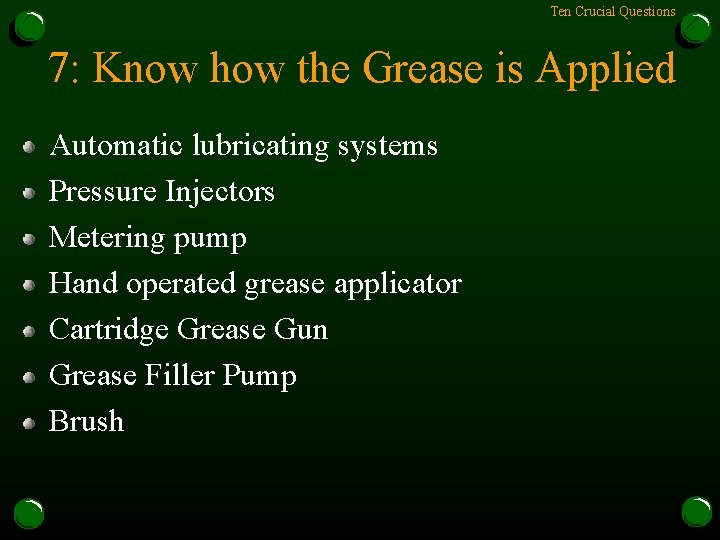
Ten Crucial Questions 7: Know how the Grease is Applied Automatic lubricating systems Pressure Injectors Metering pump Hand operated grease applicator Cartridge Grease Gun Grease Filler Pump Brush
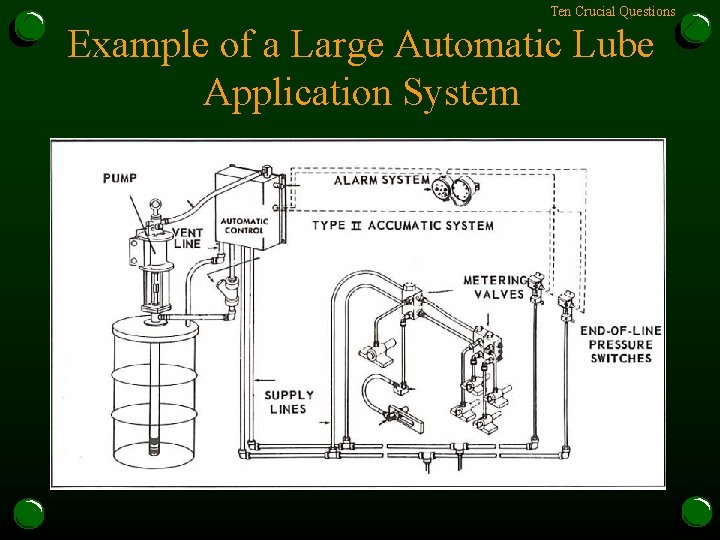
Ten Crucial Questions Example of a Large Automatic Lube Application System
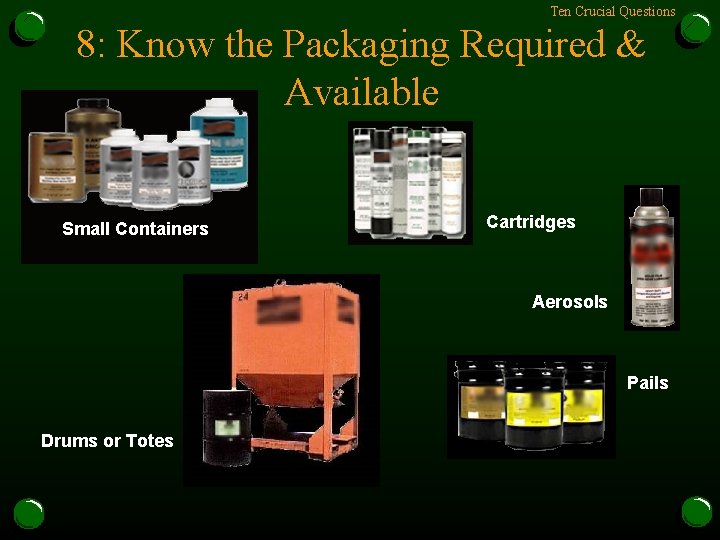
Ten Crucial Questions 8: Know the Packaging Required & Available Small Containers Cartridges Aerosols Pails Drums or Totes
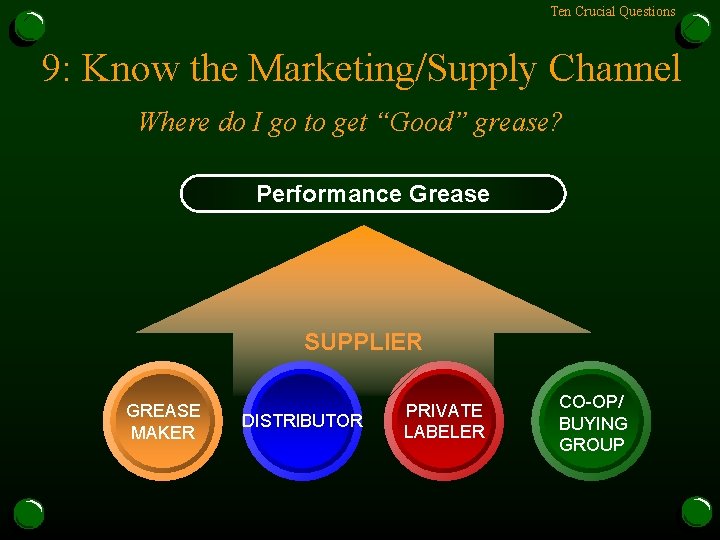
Ten Crucial Questions 9: Know the Marketing/Supply Channel Where do I go to get “Good” grease? Performance Grease SUPPLIER GREASE MAKER DISTRIBUTOR PRIVATE LABELER CO-OP/ BUYING GROUP
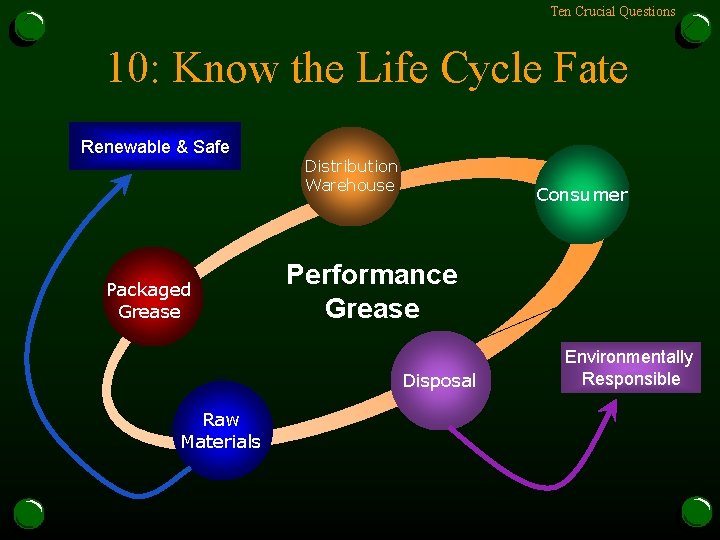
Ten Crucial Questions 10: Know the Life Cycle Fate Renewable & Safe Packaged Grease Distribution Warehouse Consumer Performance Grease Disposal Raw Materials Environmentally Responsible
Ten Crucial Questions QUESTIONS? ? ?
Ten Crucial Questions
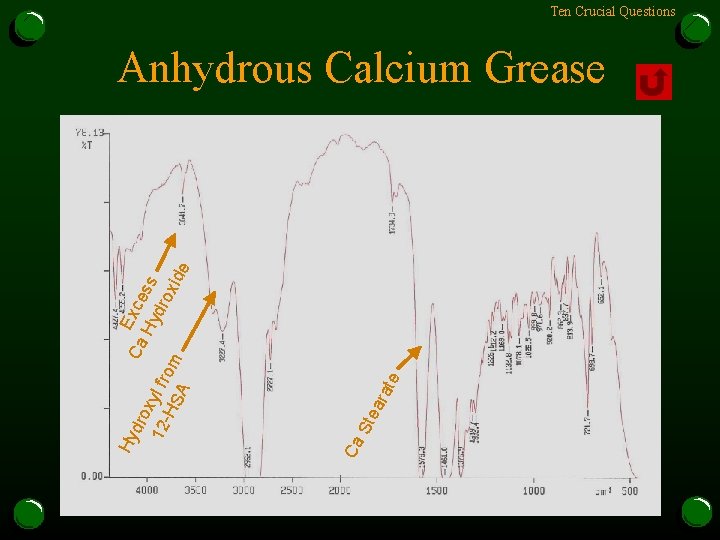
Ca Ste te ara Ca Exce dro Hy ss 12 xyl fr dro -H o xid m SA e Hy Ten Crucial Questions Anhydrous Calcium Grease
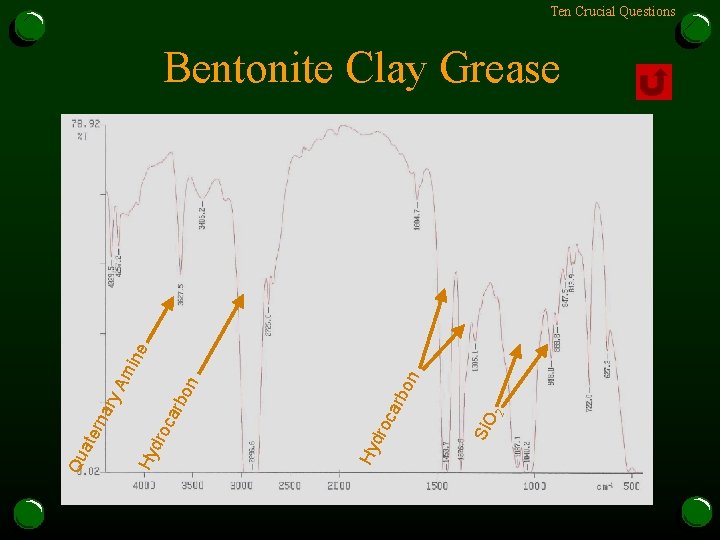
Ten Crucial Questions Si. O 2 n ca rbo dro Hy Qu ate rna ry Am ine Bentonite Clay Grease
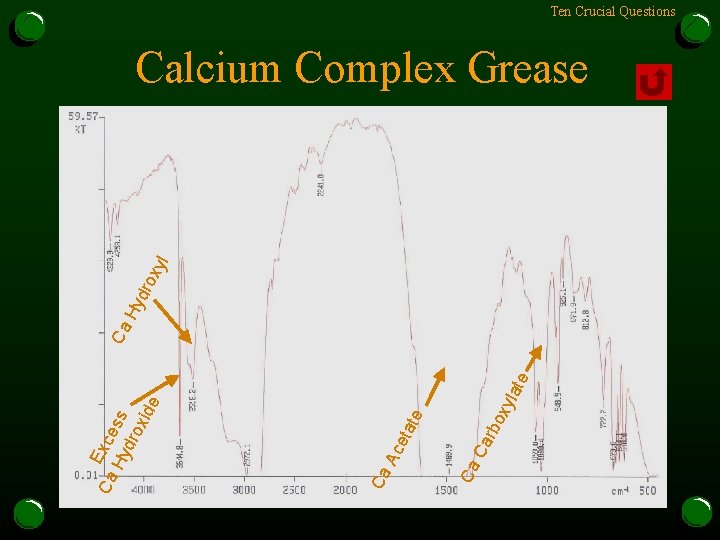
ate xyl rbo Ca te eta Ac Ca Ca Ca Exce Hy ss dro xid e Ca Hy xyl dro Ten Crucial Questions Calcium Complex Grease
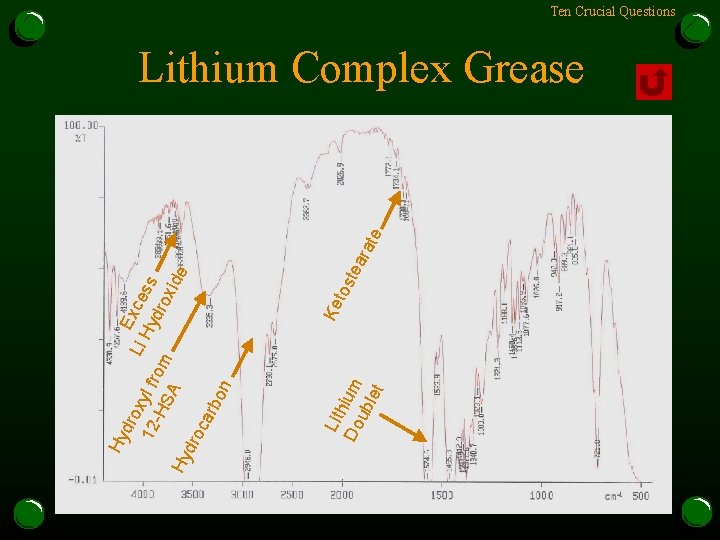
Lit h Do ium ub let tos Ke rat tea dro Ex L x i H cess 12 yl fr yd -H o rox m SA ide Hy dro ca rbo n Hy e Ten Crucial Questions Lithium Complex Grease
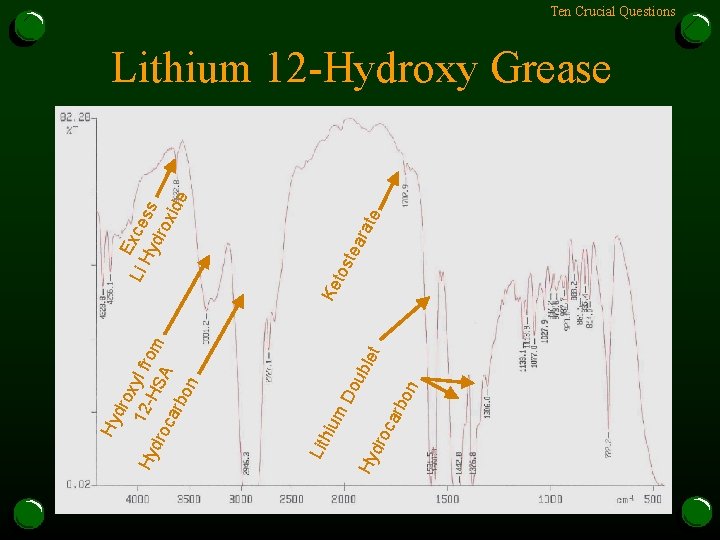
Hy n ub Do ca rbo dro m hiu Lit let dro xyl 1 fr 2 Hy dro -HSA om ca rbo n Hy rat tea e Ex Hy cess dro xid e tos Ke Li Ten Crucial Questions Lithium 12 -Hydroxy Grease
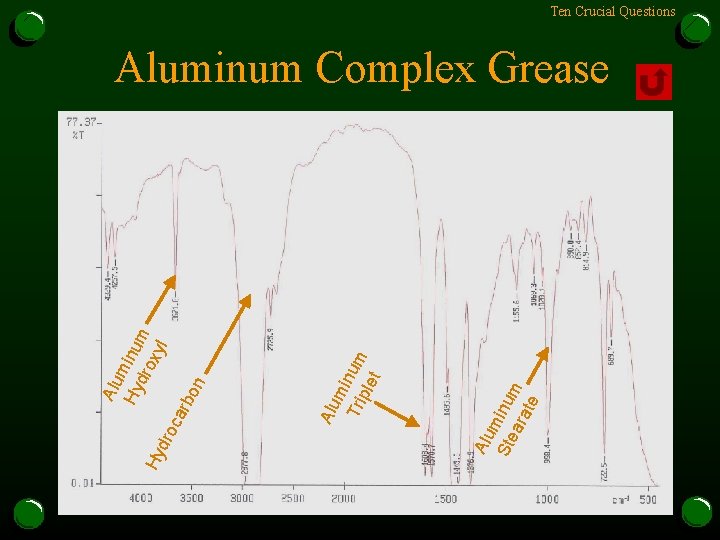
mi Tri num ple t Alu n ca rbo dro Alu m Ste inum ara te Hy Alu m Hy inum dro xyl Ten Crucial Questions Aluminum Complex Grease
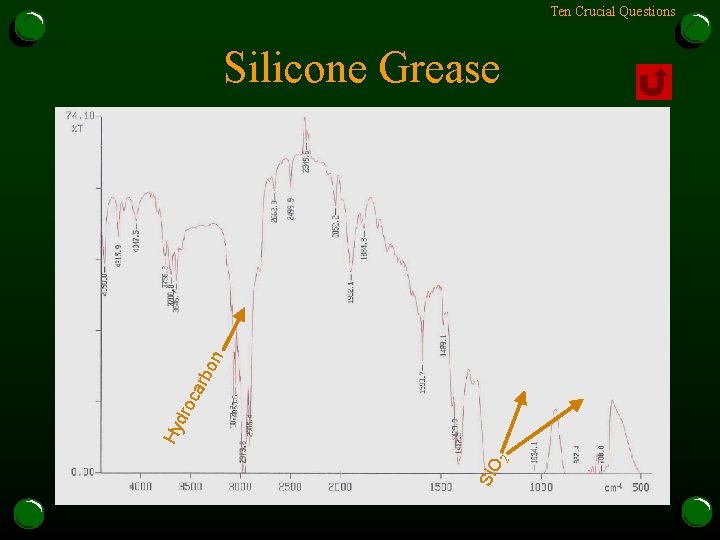
Ten Crucial Questions Si. O 2 Hy dro ca rbo n Silicone Grease
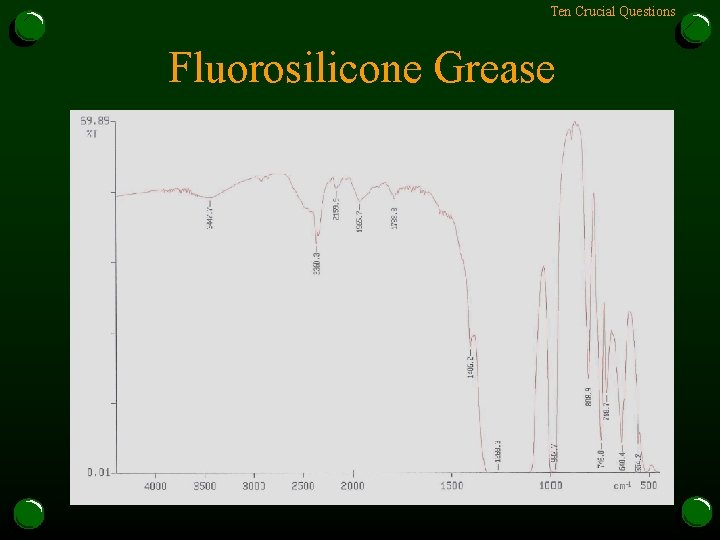
Ten Crucial Questions Fluorosilicone Grease
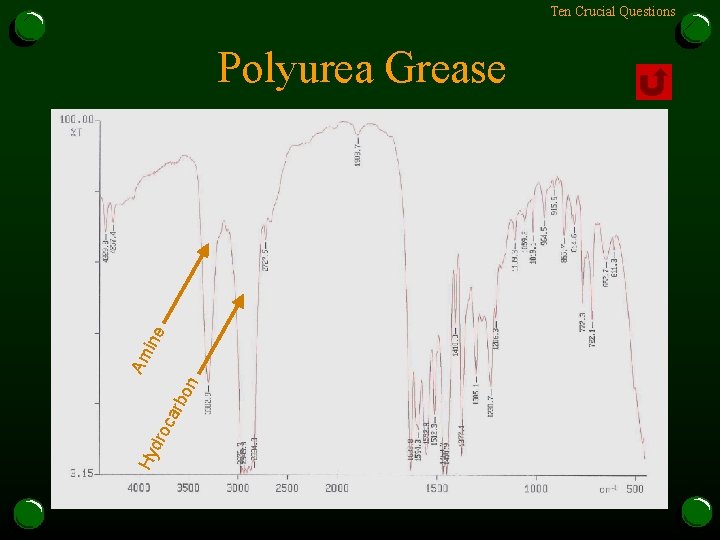
Ten Crucial Questions Hy dro ca rbo n Am ine Polyurea Grease
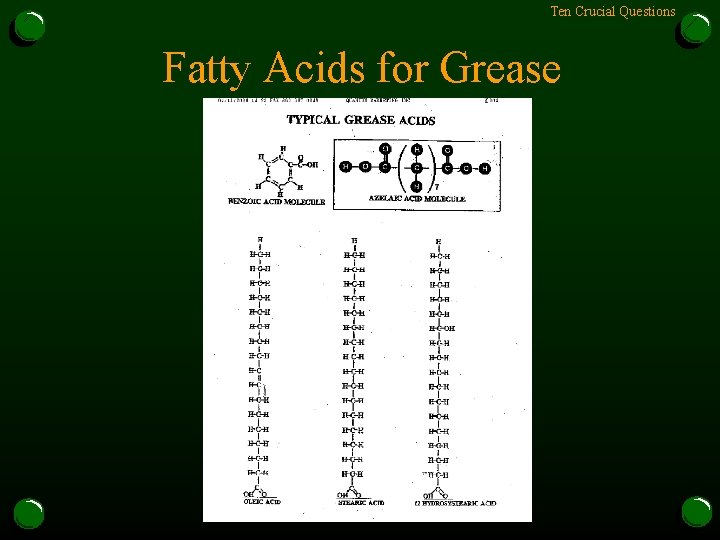
Ten Crucial Questions Fatty Acids for Grease
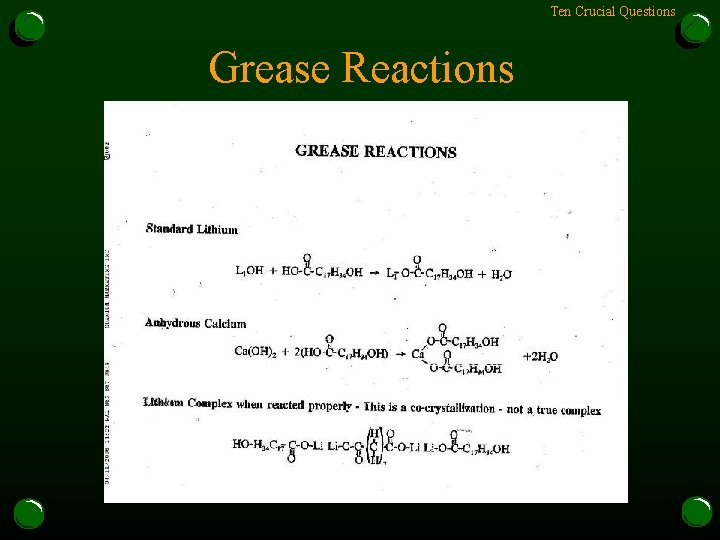
Ten Crucial Questions Grease Reactions
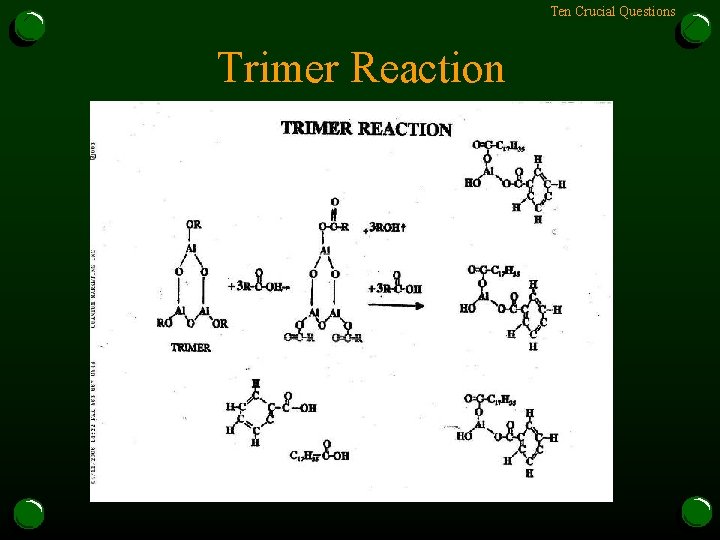
Ten Crucial Questions Trimer Reaction
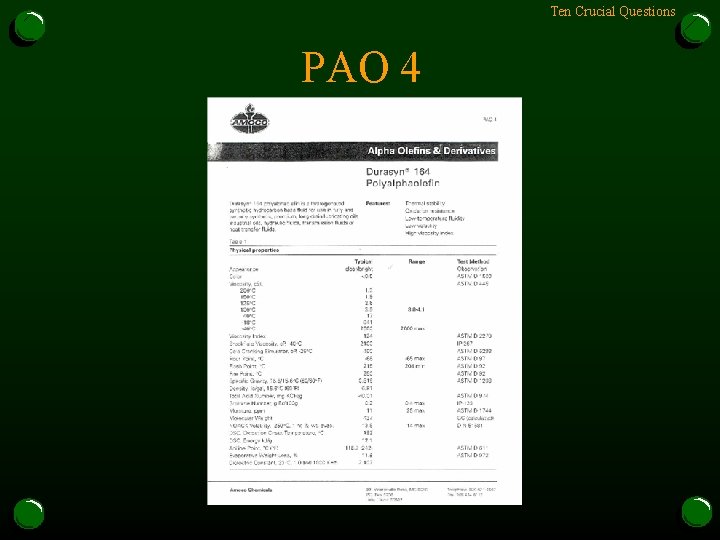
Ten Crucial Questions PAO 4
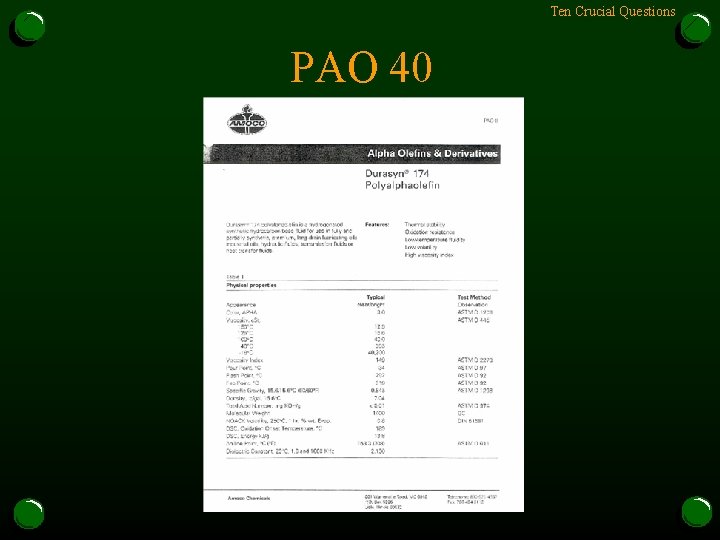
Ten Crucial Questions PAO 40
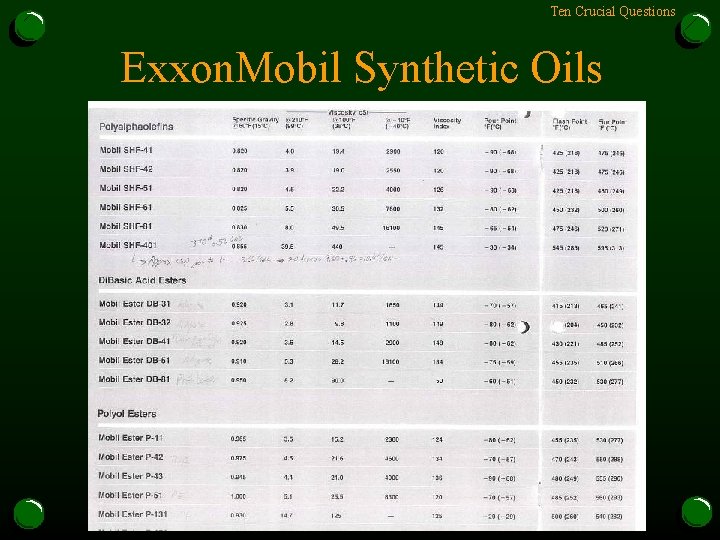
Ten Crucial Questions Exxon. Mobil Synthetic Oils