
Selecting and Storing Fruits and Vegetables All images
Selecting and Storing Fruits and Vegetables All images are available on www. google. com with a Creative Commons 0 License.

Selecting Fruits and Vegetables
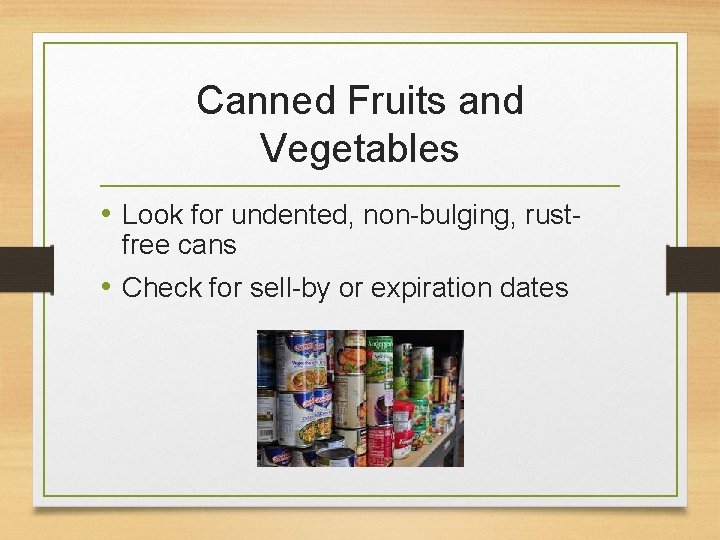
Canned Fruits and Vegetables • Look for undented, non-bulging, rustfree cans • Check for sell-by or expiration dates

Boxed/Packaged Food • May be dehydrated • Look for uncrushed, unopened containers • Check for sell by or expiration dates
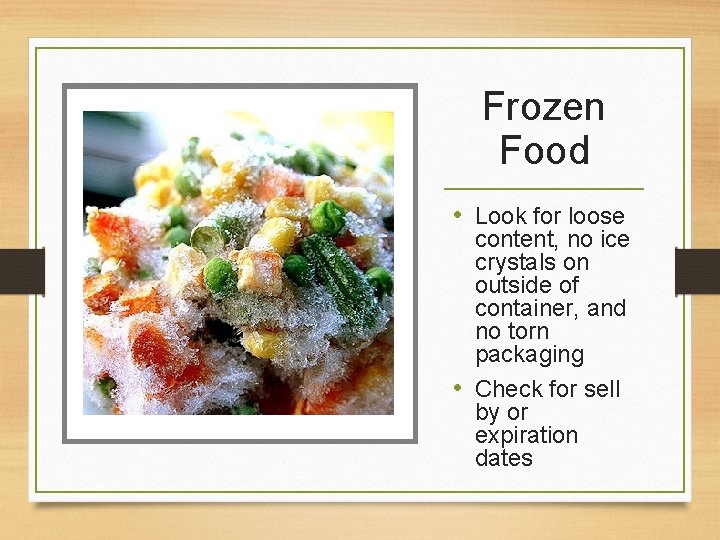
Frozen Food • Look for loose content, no ice crystals on outside of container, and no torn packaging • Check for sell by or expiration dates
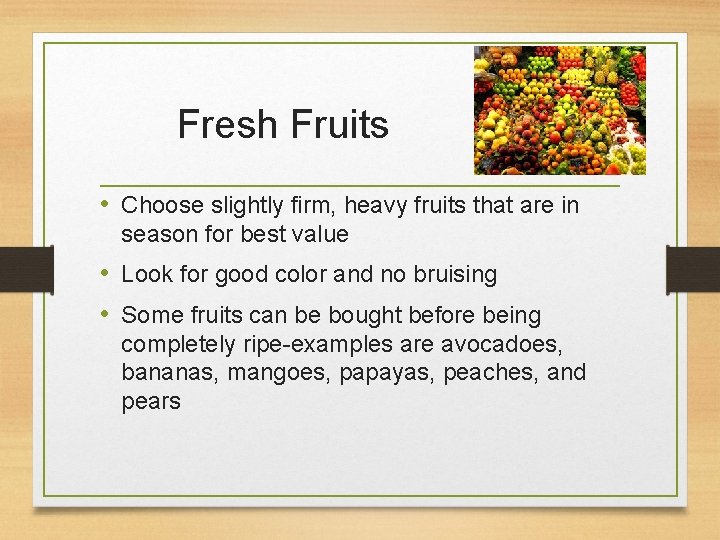
Fresh Fruits • Choose slightly firm, heavy fruits that are in season for best value • Look for good color and no bruising • Some fruits can be bought before being completely ripe-examples are avocadoes, bananas, mangoes, papayas, peaches, and pears
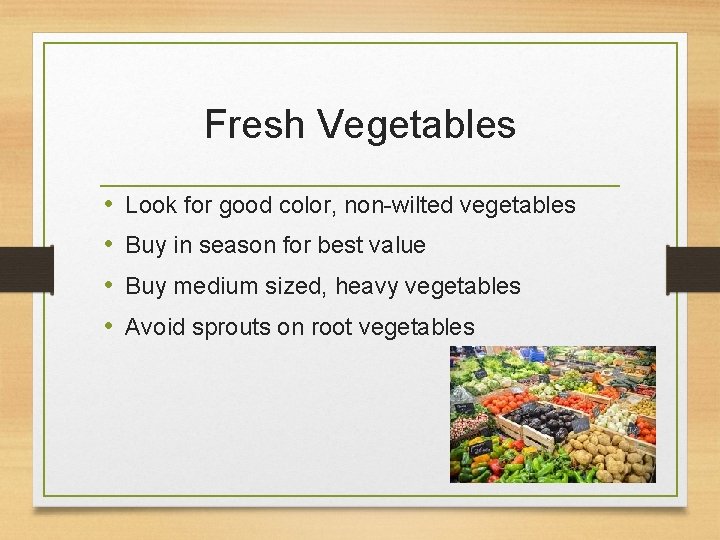
Fresh Vegetables • • Look for good color, non-wilted vegetables Buy in season for best value Buy medium sized, heavy vegetables Avoid sprouts on root vegetables
Storing Fruits and Vegetables
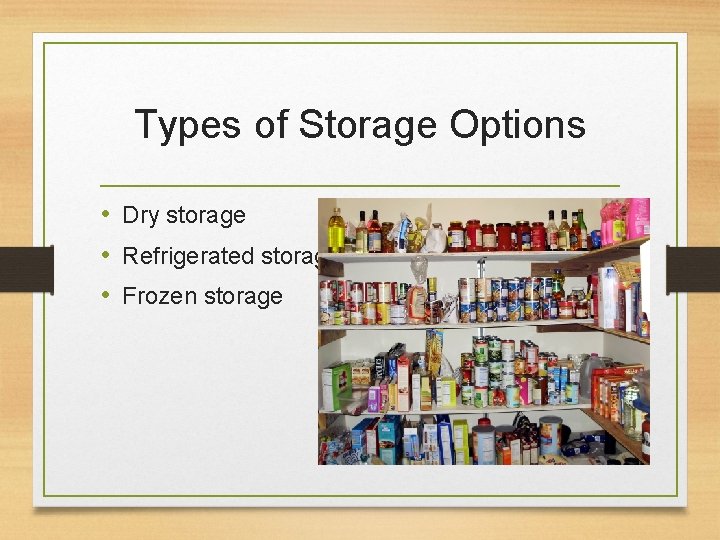
Types of Storage Options • Dry storage • Refrigerated storage • Frozen storage
Storing Dry Fruits and Vegetables • Pantry or Cupboard • Any cook, dry place that will not be moist and is away from: • Pet food • Cleaning supplies • Other hazards • Boxed/bagged foods not found in the refrigerated or frozen departments are safe to store in cupboards or pantries.
Storing Dry Fruits and Vegetables 1. Are boxed foods dry foods? 2. Are canned foods dry foods? 3. What other items need dry storage?
Storing Dry Fruits and Vegetables • Non-Opened, Canned • Fruit cocktail, mandarin oranges, pineapple • Pickles, relishes, and chutneys • Jams and jellies • Canned beans, tomato products, and other veggies • Dried (i. e. - raisins, apricots, dates) • Dehydrated (i. e. - instant potatoes) How do I store dry foods after they have been opened, prepared, or cooked?
Storing Fresh Fruits and Vegetables • Some fresh foods are not actually refrigerated in the store. • What are examples of these types of fresh foods? • How should they be stored at home?
Storing Fresh Fruits and Vegetables • Bananas may be stored on the countertop. They will continue to ripen here. • Potatoes, onions, garlic should be stored in a cool, dry place away from the light. A pantry or cupboard works well.

Storing Fresh Fruits and Vegetables • Some fresh fruits and vegetables should be refrigerated for storage, for example: • Leaf vegetables • Stem vegetables • Berries • Citrus • Drupes
Storing Frozen Fruits and Vegetables • Examples • • • Frozen cut vegetables Frozen vegetable blends Frozen cut fruits Frozen fruit sauces/toppings Frozen fruit pops Frozen fruit juices
Storing Frozen Fruits and Vegetables • Shop for frozen foods last • Ensure they are solidly frozen without ice crystals on the outside • Loose-type foods like peas should still be loose
Storing Frozen Foods • Properly thawed foods may be refrozen in the packaging from the store. • Foods need to have been kept a 40°F or below to be food safe. • Partially thawed, very cold foods may be cooked and then frozen for later use. • If in doubt, throw it out!
- Slides: 18