
SELECT FROM Azure Cosmos DB Azure Cosmos DB
SELECT * FROM Azure Cosmos DB
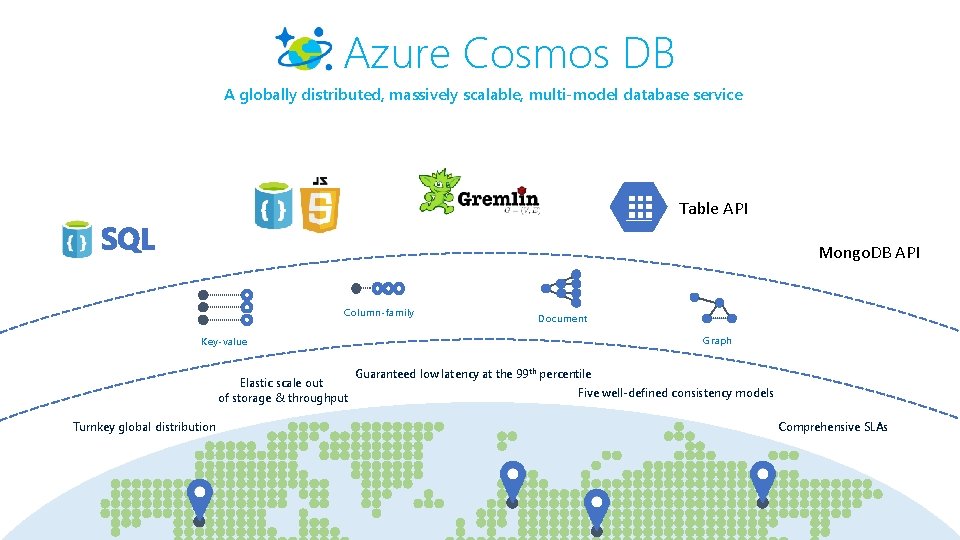
Azure Cosmos DB A globally distributed, massively scalable, multi-model database service Table API Mongo. DB API Column-family Document Graph Key-value Elastic scale out of storage & throughput Turnkey global distribution Guaranteed low latency at the 99 th percentile Five well-defined consistency models Comprehensive SLAs
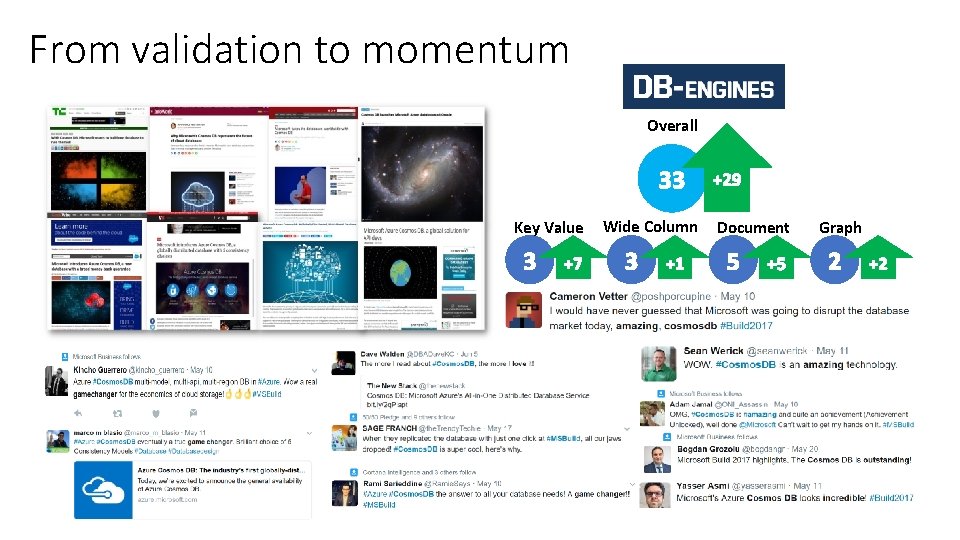
From validation to momentum Overall Key Value Wide Column Document Graph
Common Use Cases and Scenarios
Internet of Things – Telemetry & Sensor Data • Business Needs: • High scalability to ingest large # of events coming from many devices • Low latency queries and changes feeds for responding quickly to anomalies • Schema-agnostic storage and automatic indexing to support dynamic data coming from many different generations of devices • High availability across multiple data centers
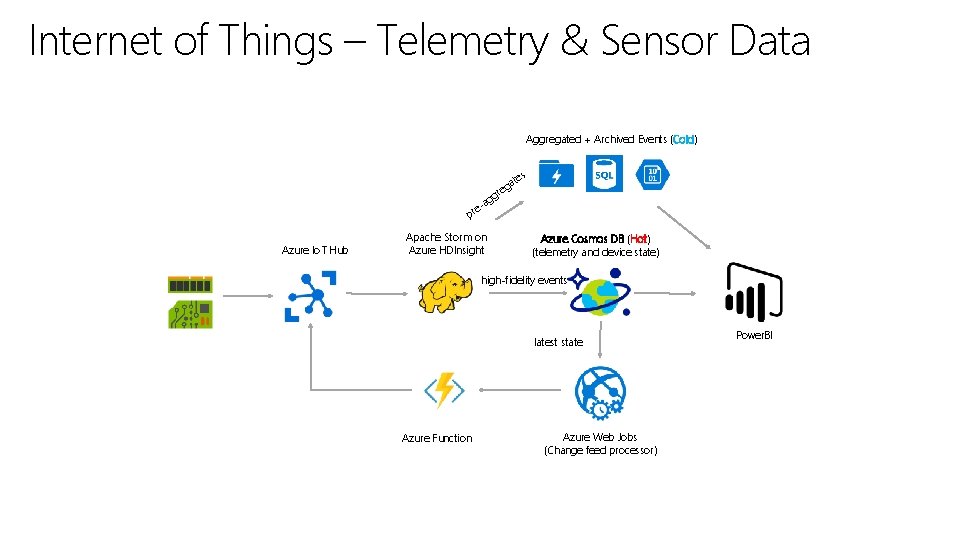
Internet of Things – Telemetry & Sensor Data Aggregated + Archived Events (Cold) tes a e- pr Azure Io. T Hub a eg r gg Apache Storm on Azure HDInsight Azure Cosmos DB (Hot) (telemetry and device state) high-fidelity events latest state Azure Function Azure Web Jobs (Change feed processor) Power. BI
Retail – Product Catalog & Order Processing • Business Needs: • Elastic scale to handle seasonal traffic (e. g. Black Friday) • Low-latency access across multiple geographies to support a global user-base and latency sensitive workloads (e. g. real-time personalization) • Schema-agnostic storage and automatic indexing to handle diverse product catalogs, orders, and events • High availability across multiple data centers
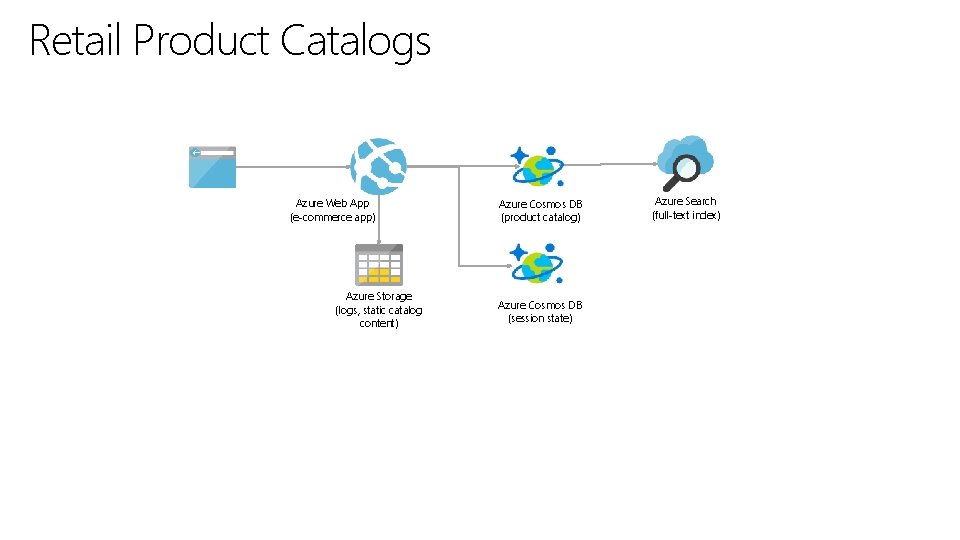
Retail Product Catalogs Azure Web App (e-commerce app) Azure Storage (logs, static catalog content) Azure Cosmos DB (product catalog) Azure Cosmos DB (session state) Azure Search (full-text index)
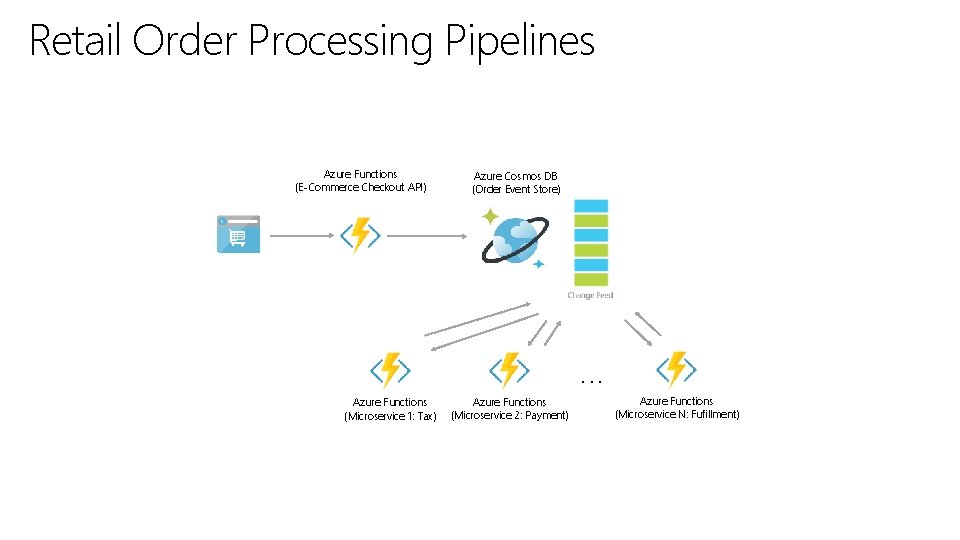
Retail Order Processing Pipelines Azure Functions (E-Commerce Checkout API) Azure Cosmos DB (Order Event Store) . . . Azure Functions (Microservice 1: Tax) Azure Functions (Microservice 2: Payment) Azure Functions (Microservice N: Fufillment)
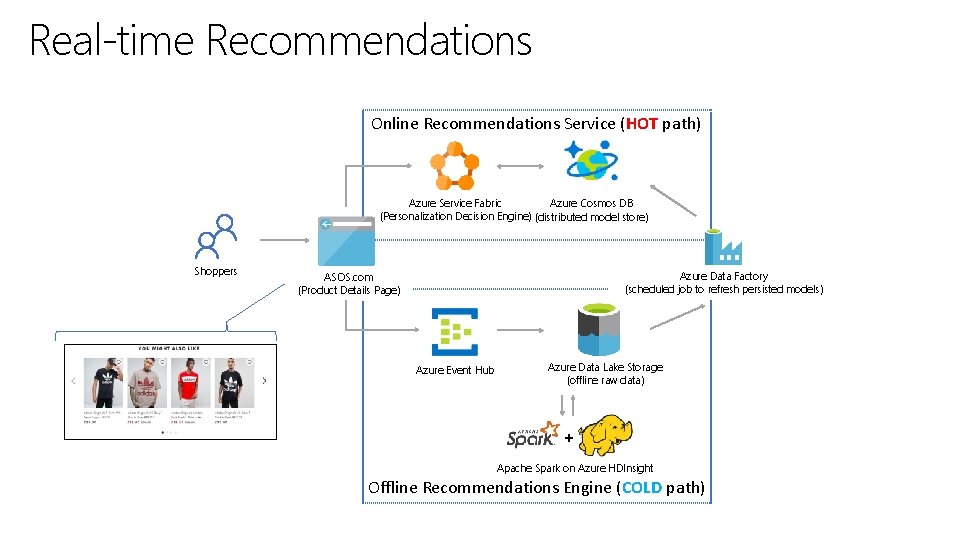
Real-time Recommendations Online Recommendations Service (HOT path) Azure Service Fabric Azure Cosmos DB (Personalization Decision Engine) (distributed model store) Shoppers Azure Data Factory (scheduled job to refresh persisted models) ASOS. com (Product Details Page) Azure Event Hub Azure Data Lake Storage (offline raw data) + Apache Spark on Azure HDInsight Offline Recommendations Engine (COLD path)
Multiplayer Gaming • Business Needs: • Elastic scale to handle bursty traffic on day • Low-latency queries to support responsive gameplay for a global user-base • Schema-agnostic storage and indexing allows teams to iterate quickly to fit a demanding ship schedule • Change-feeds to support leaderboards and social gameplay
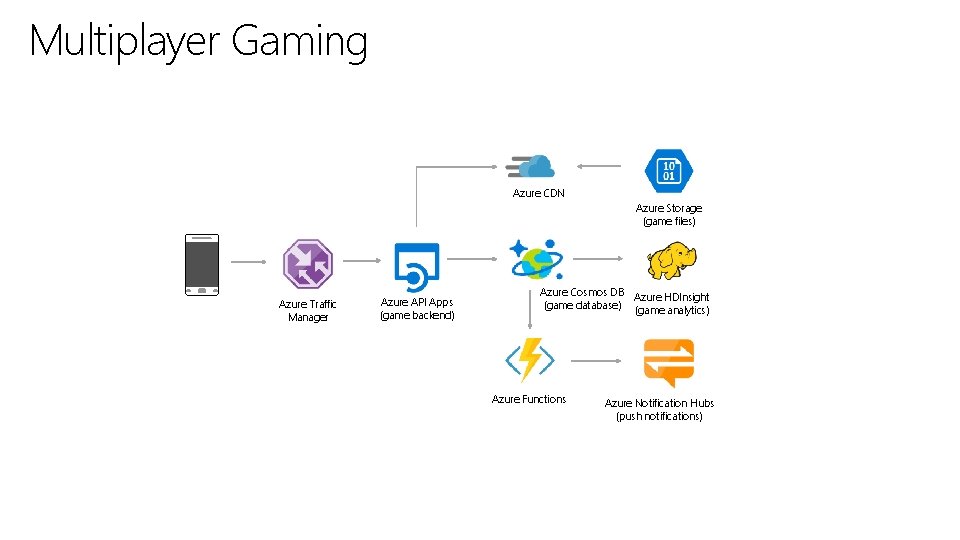
Multiplayer Gaming Azure CDN Azure Storage (game files) Azure Traffic Manager Azure API Apps (game backend) Azure Cosmos DB Azure HDInsight (game database) (game analytics) Azure Functions Azure Notification Hubs (push notifications)
Customer 360 + Social Analytics • Business Needs: • High scalability to handle large user base • Rich queries and automatic indexing over flexible schemas to consolidate data from a variety of sources • Built-in aggregates and efficient spark connector to analyze user behavior, drive insights, and build a single view of the customer.
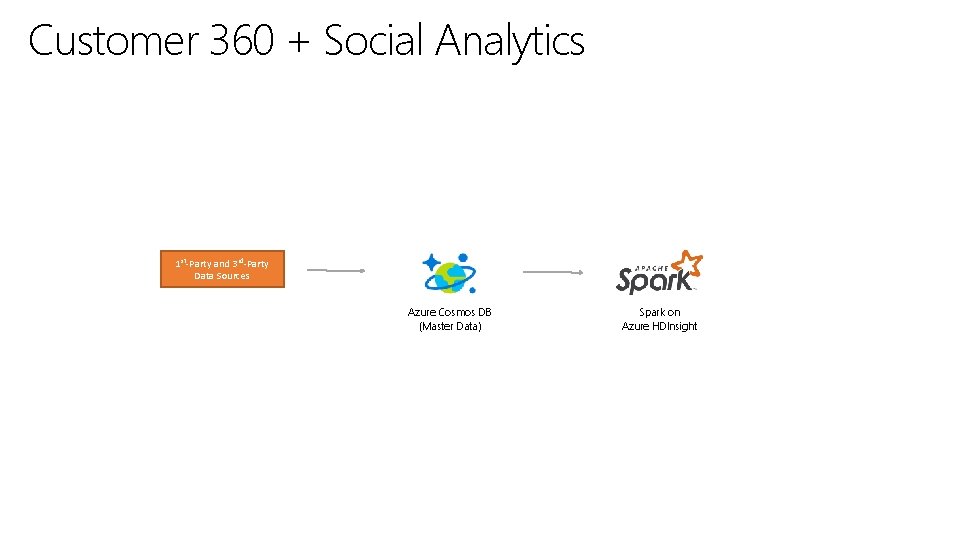
Customer 360 + Social Analytics 1 st-Party and 3 rd-Party Data Sources Azure Cosmos DB (Master Data) Spark on Azure HDInsight
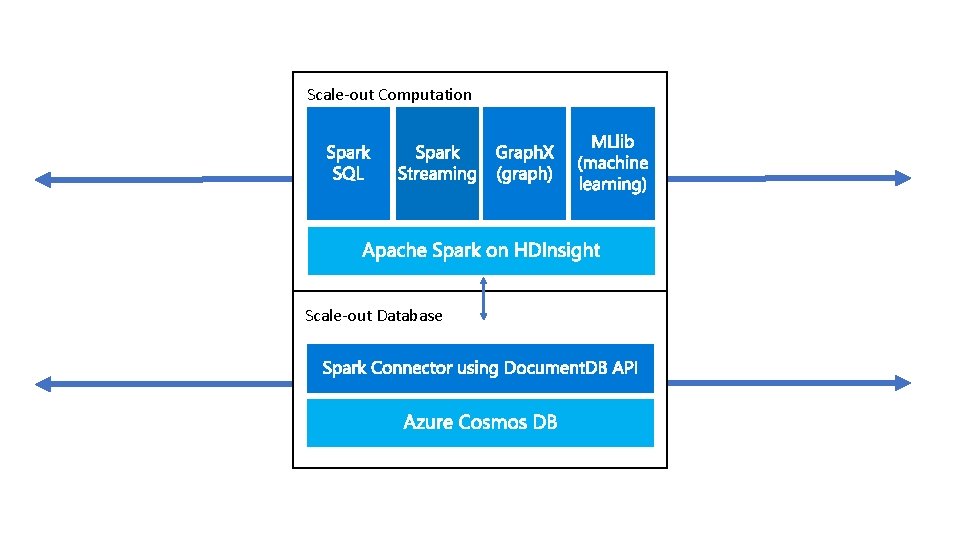
Scale-out Computation Scale-out Database
Messaging • Business Needs: • High scalability to ingest and store messages from a massive user base • Low latency access across multiple geographies to support global user-base • High availability across multiple data centers
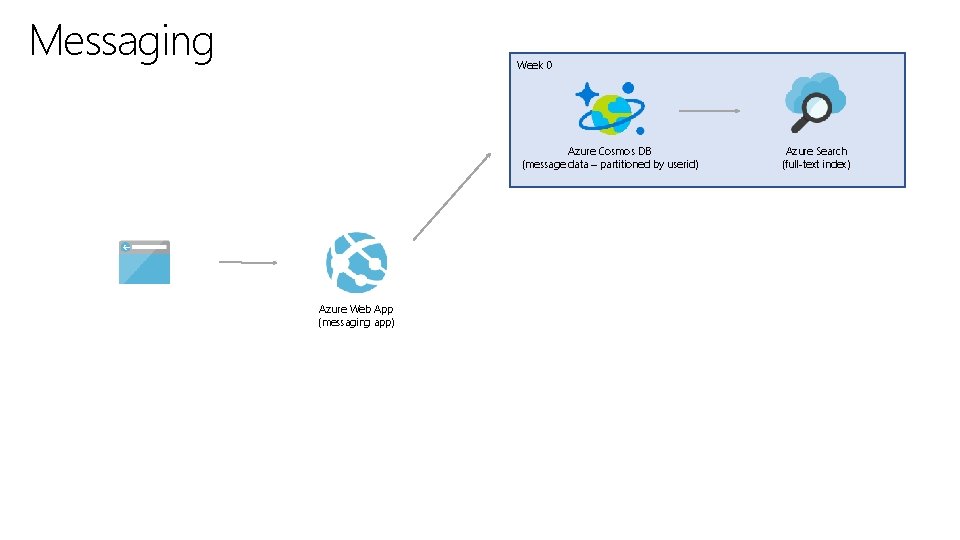
Messaging Week 0 Azure Cosmos DB (message data – partitioned by userid) Azure Web App (messaging app) Azure Search (full-text index)
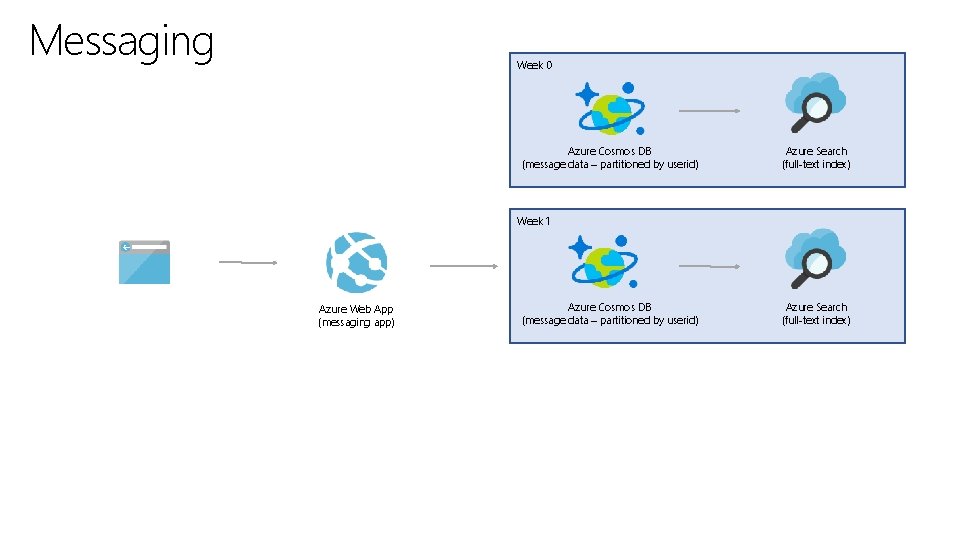
Messaging Week 0 Azure Cosmos DB (message data – partitioned by userid) Azure Search (full-text index) Week 1 Azure Web App (messaging app) Azure Cosmos DB (message data – partitioned by userid) Azure Search (full-text index)
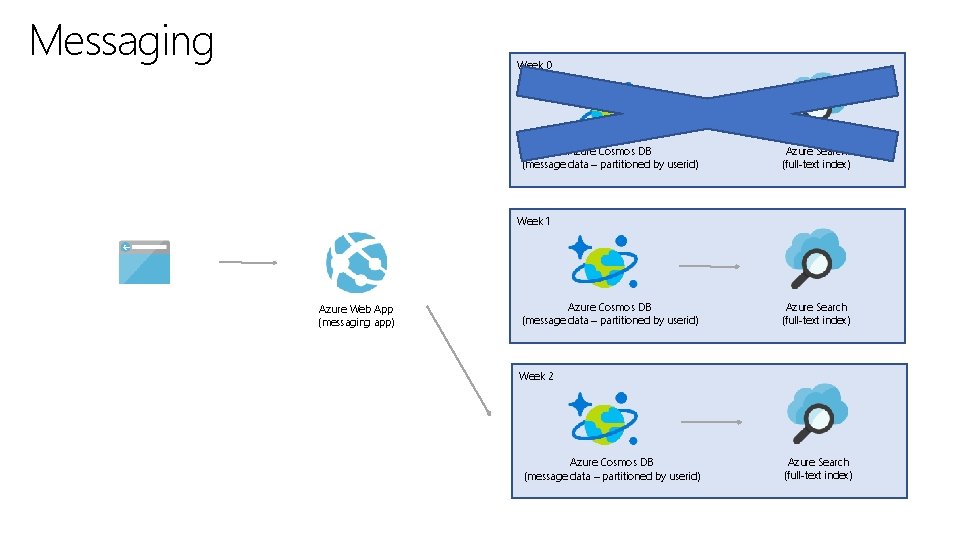
Messaging Week 0 Azure Cosmos DB (message data – partitioned by userid) Azure Search (full-text index) Week 1 Azure Web App (messaging app) Azure Cosmos DB (message data – partitioned by userid) Azure Search (full-text index) Week 2 Azure Cosmos DB (message data – partitioned by userid) Azure Search (full-text index)
Content Management Systems • Business Needs: • High scalability to support massive user base • Low latency access across multiple geographies to build highly responsive applications • Automatic indexing over flexible schemas to support rich queries over user-defined content (e. g. custom form builder) • High availability across multiple data centers
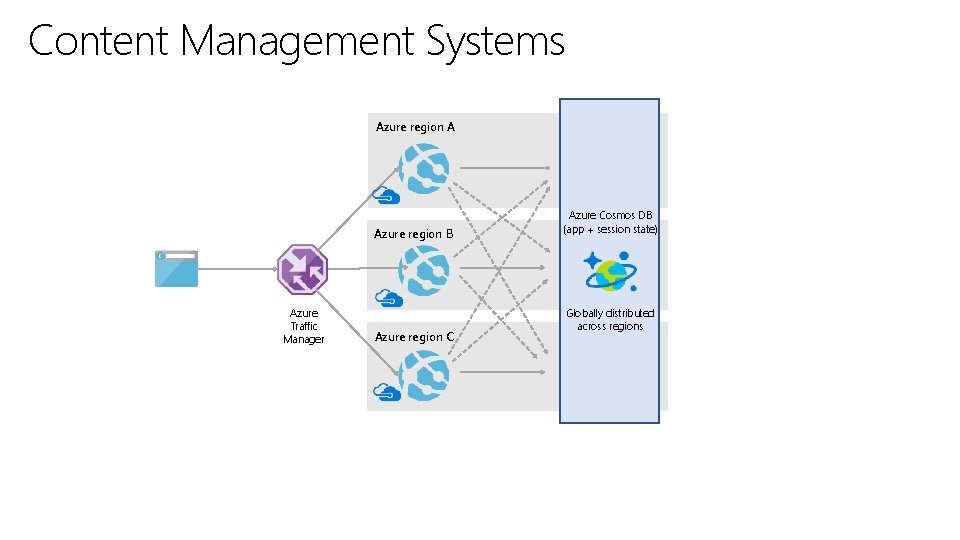
Content Management Systems Azure region A Azure region B Azure Traffic Manager Azure region C Azure Cosmos DB (app + session state) Globally distributed across regions
Let’s zoom in Azure Cosmos DB
Resource Model
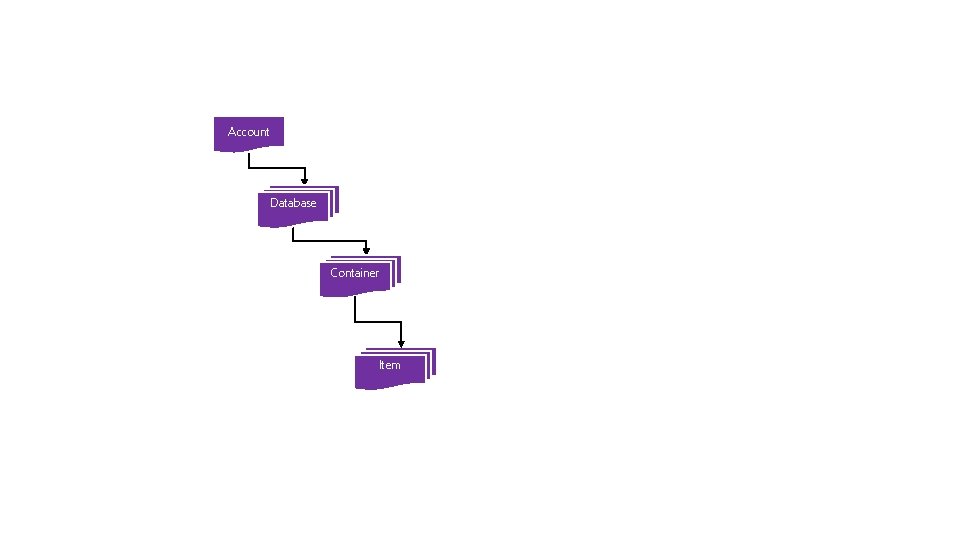
Account Database Container Item
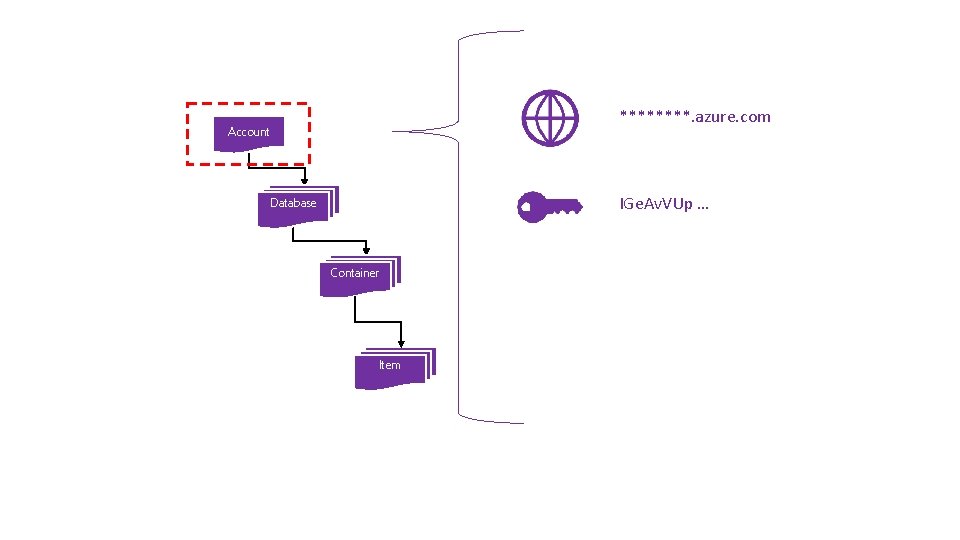
****. azure. com Account IGe. Av. VUp … Database Container Item
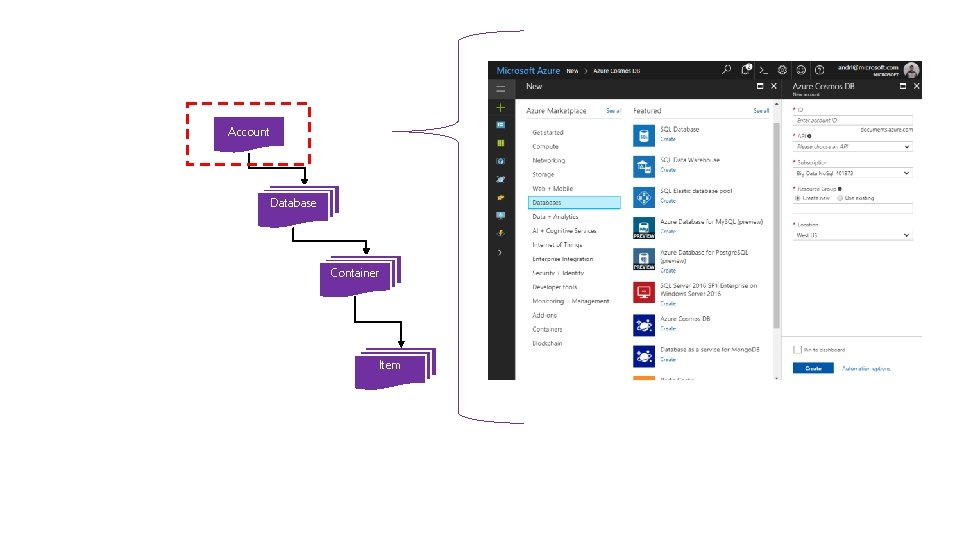
Account Database Container Item
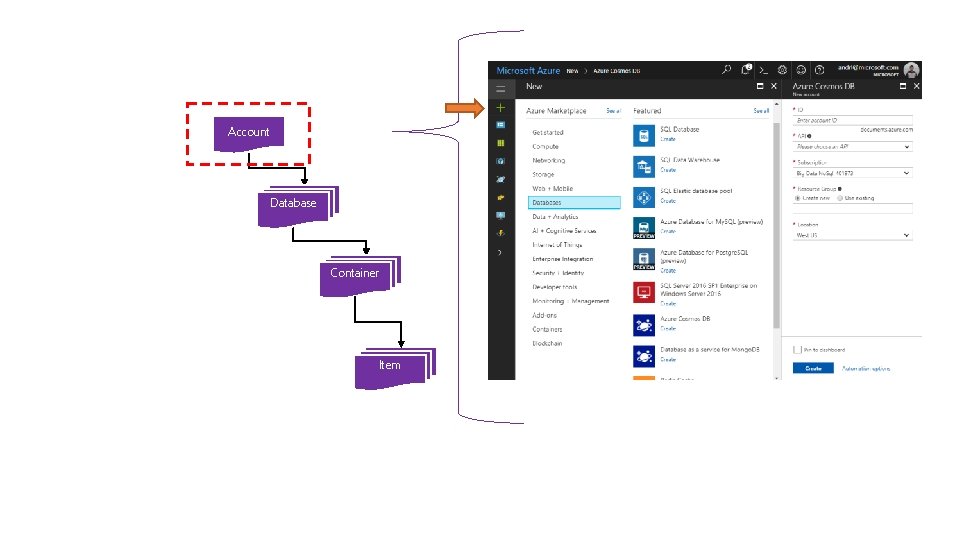
Account Database Container Item
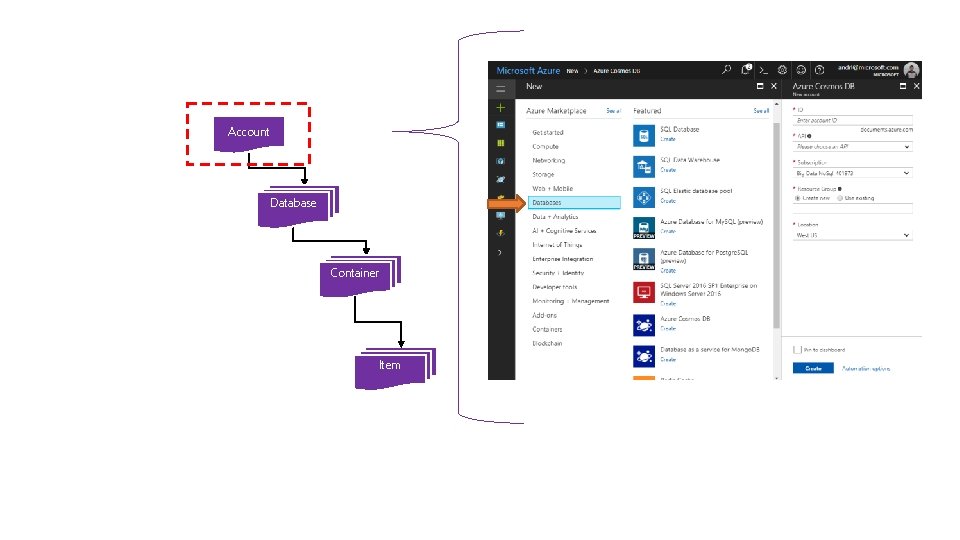
Account Database Container Item
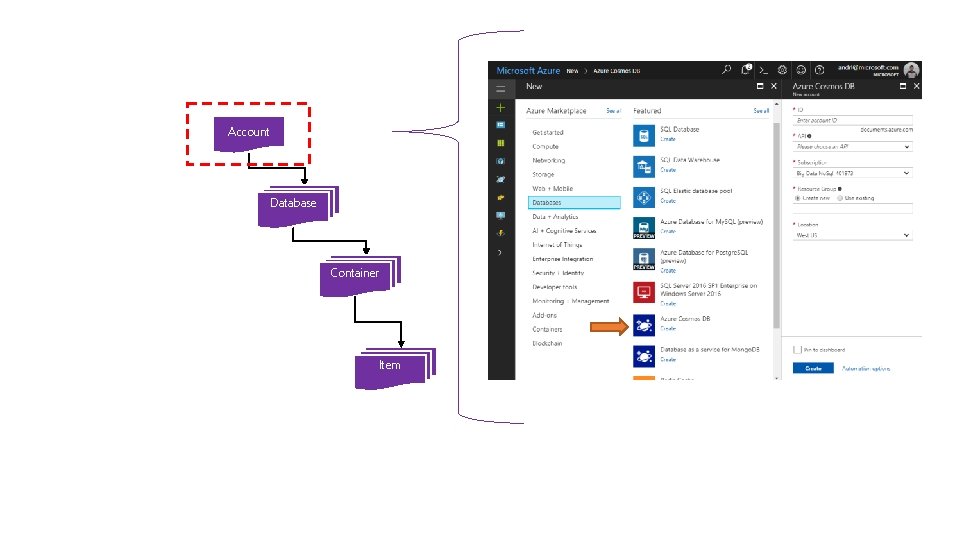
Account Database Container Item
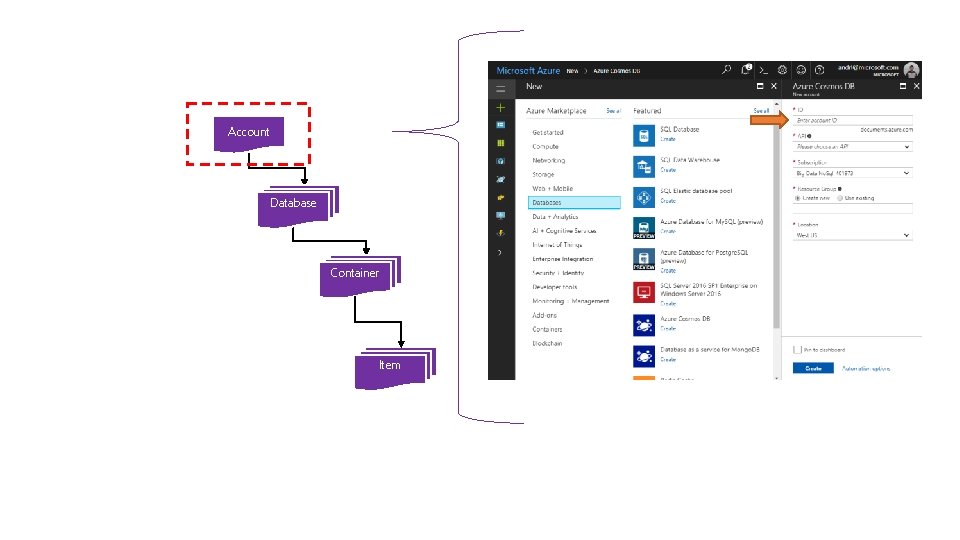
Account Database Container Item
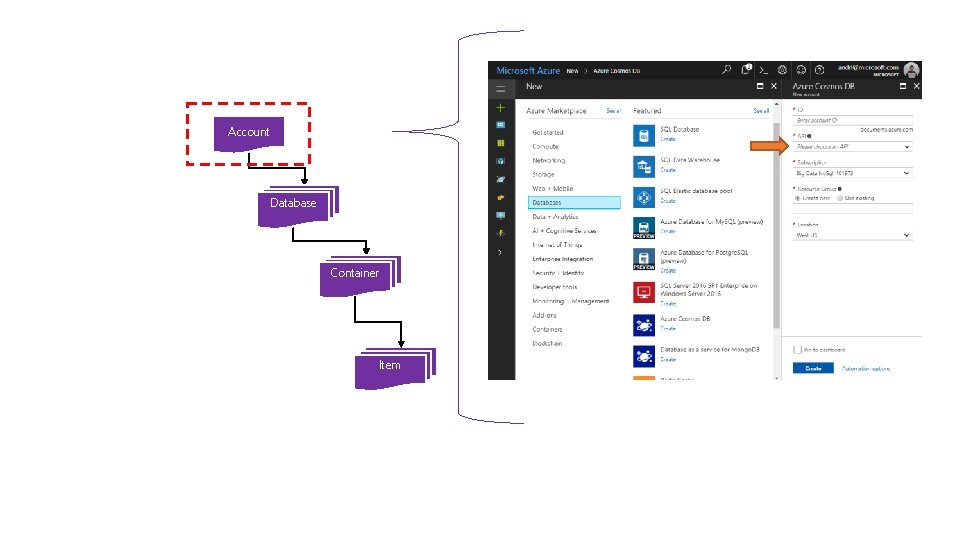
Account Database Container Item
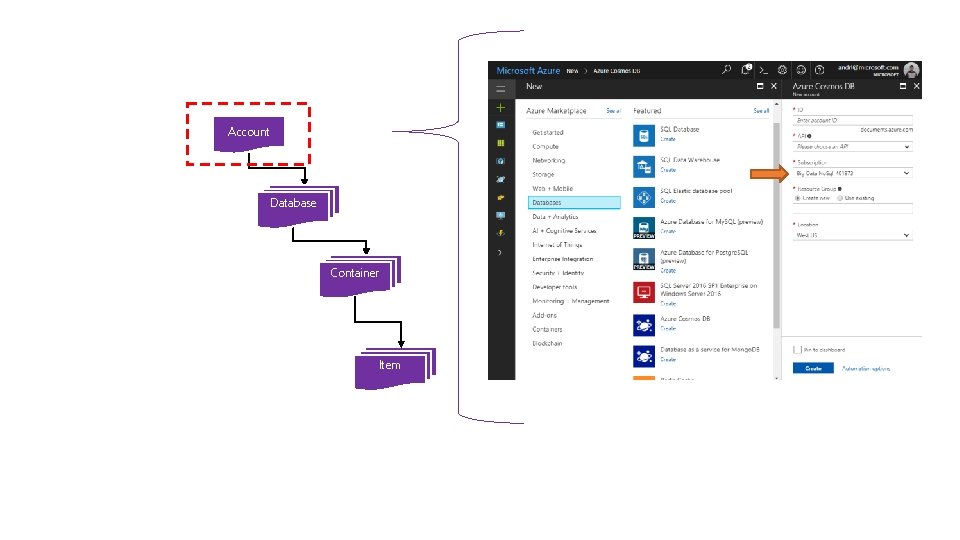
Account Database Container Item
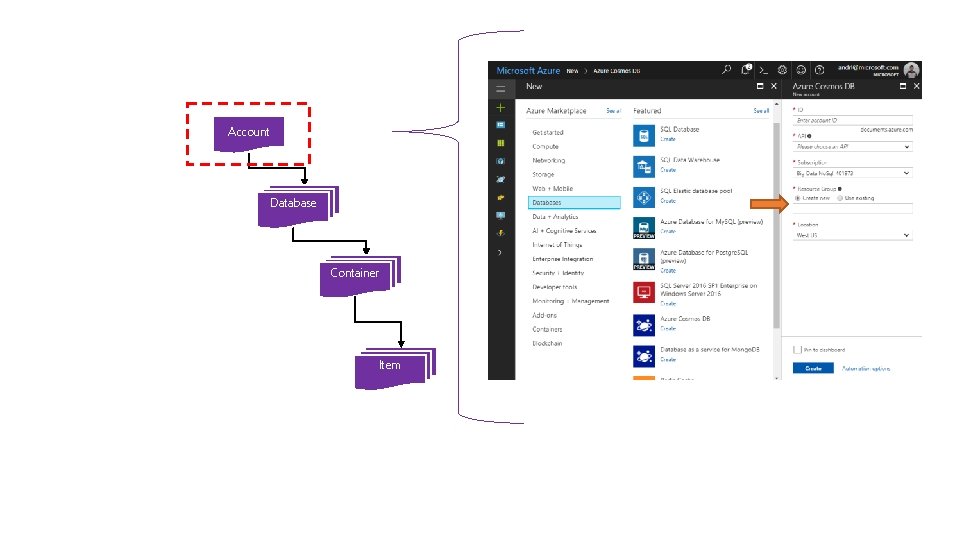
Account Database Container Item
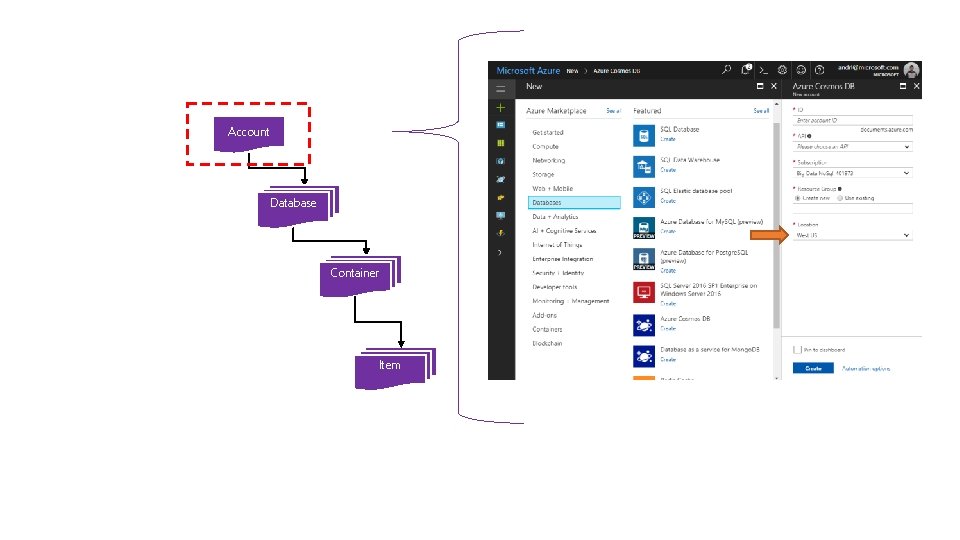
Account Database Container Item
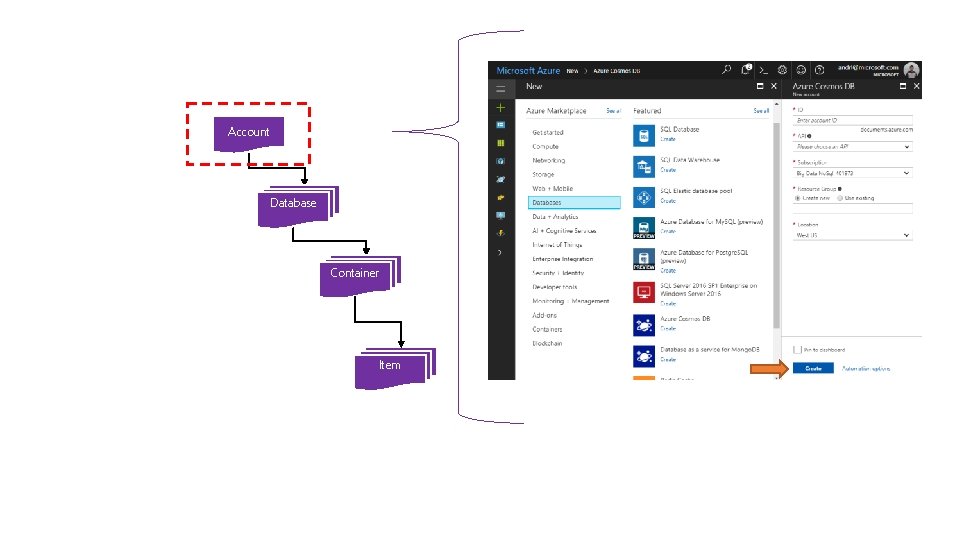
Account Database Container Item
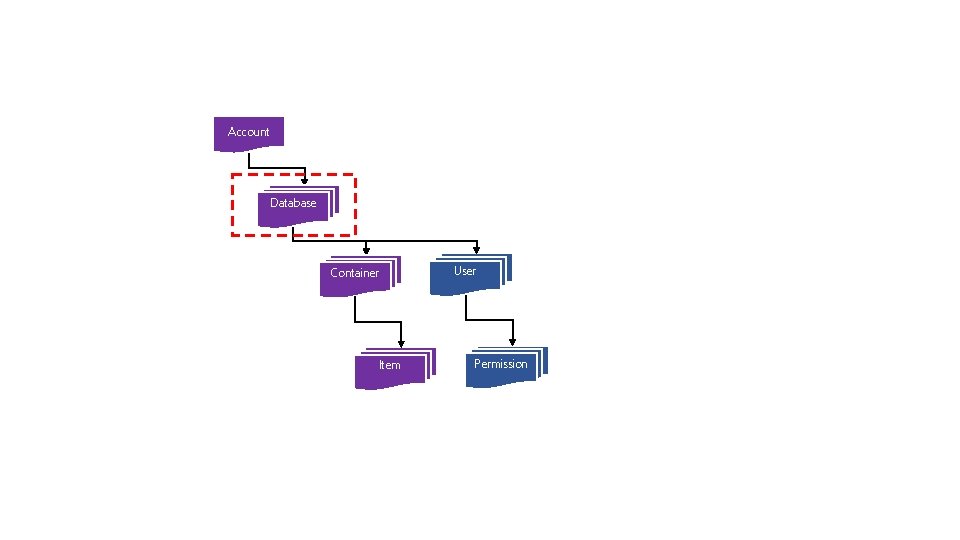
Account Database Container Item User Permission
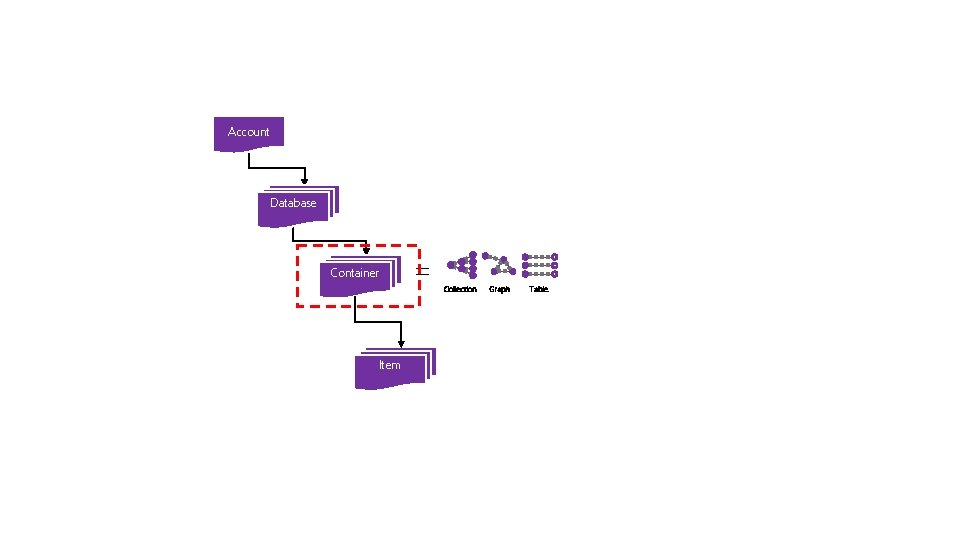
Account Database Container Item = Collection Graph Table
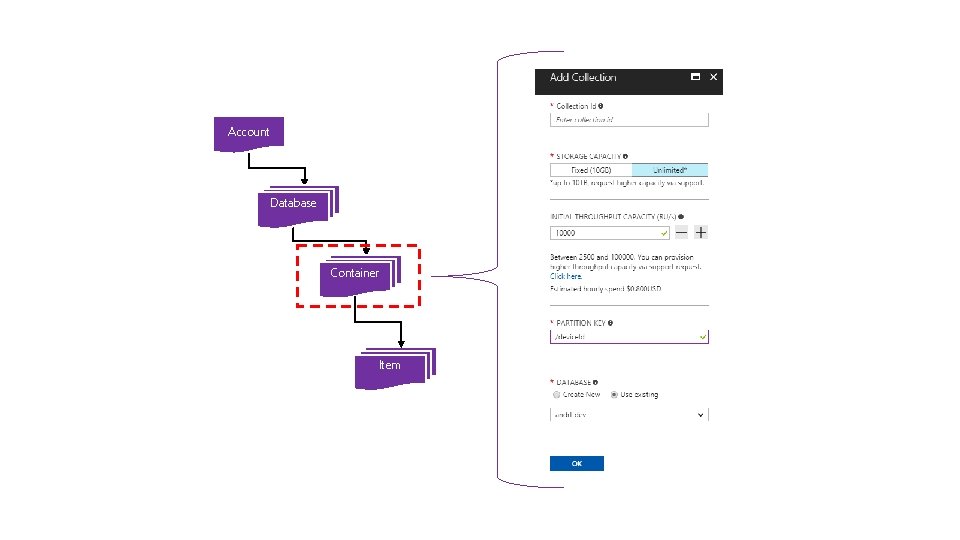
Account Database Container Item
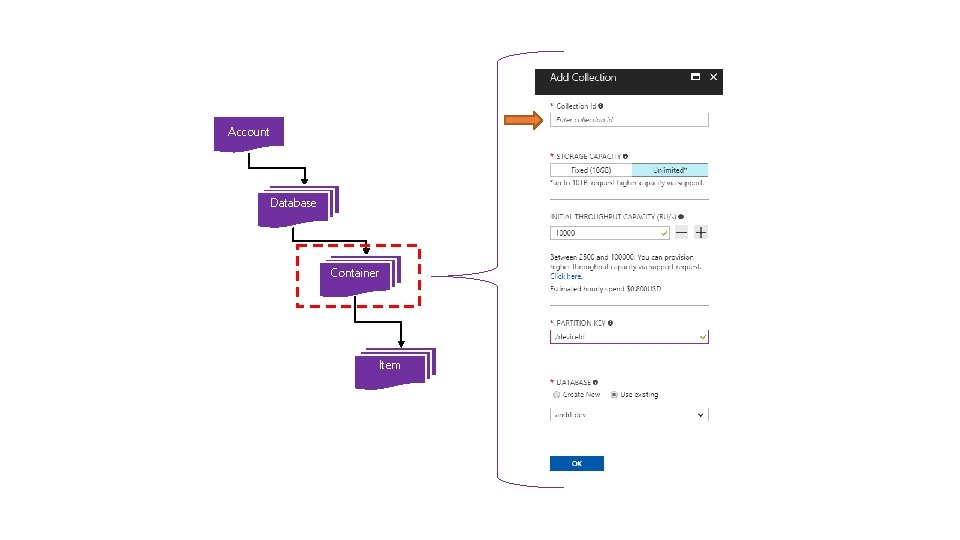
Account Database Container Item
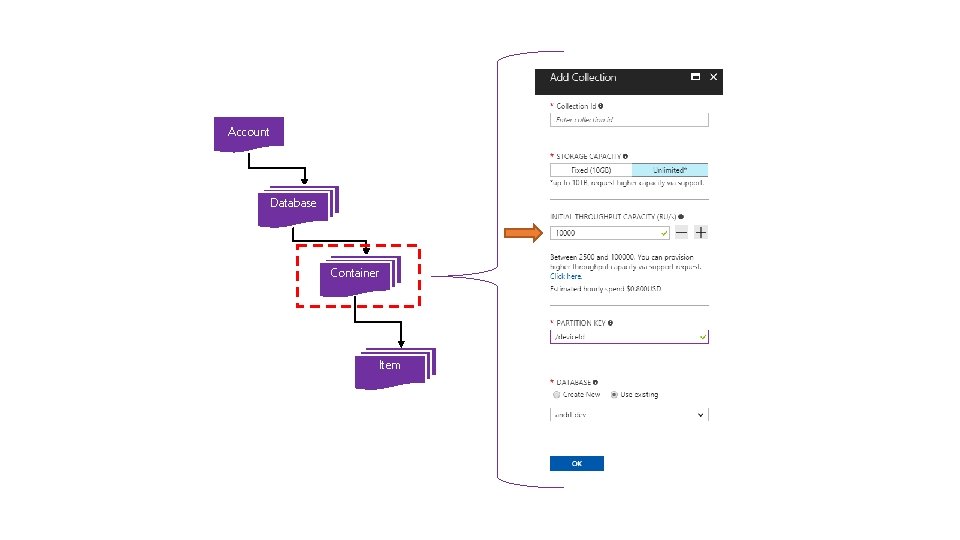
Account Database Container Item
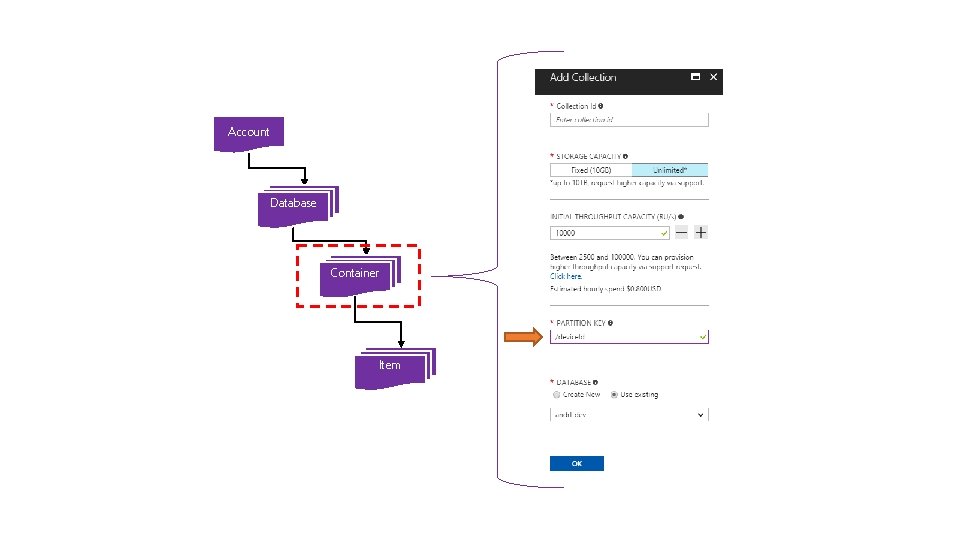
Account Database Container Item
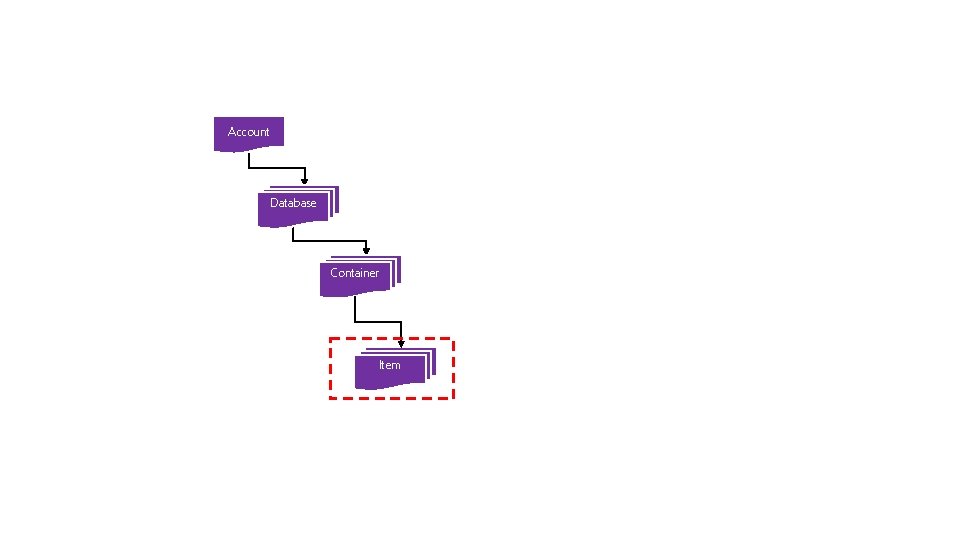
Account Database Container Item
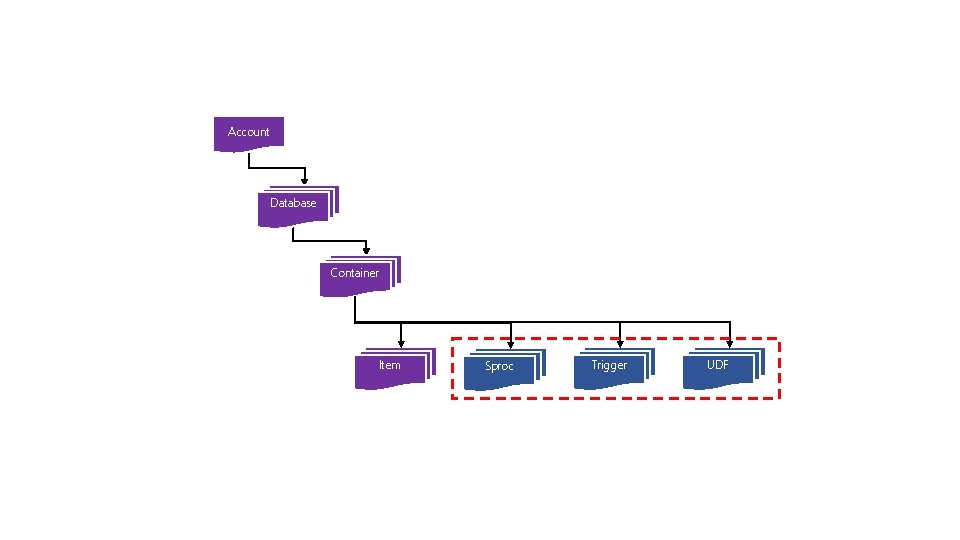
Account Database Container Item Sproc Trigger UDF
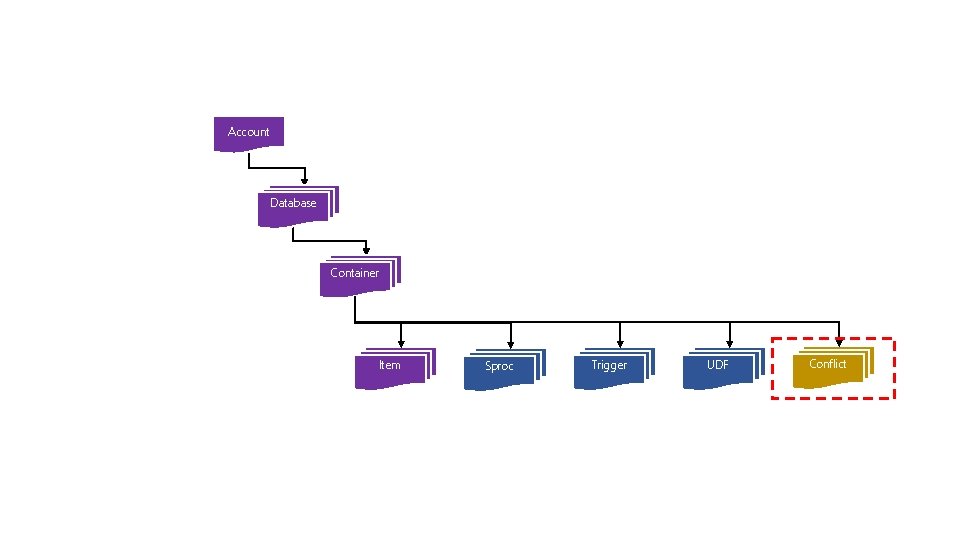
Account Database Container Item Sproc Trigger UDF Conflict
System Internals
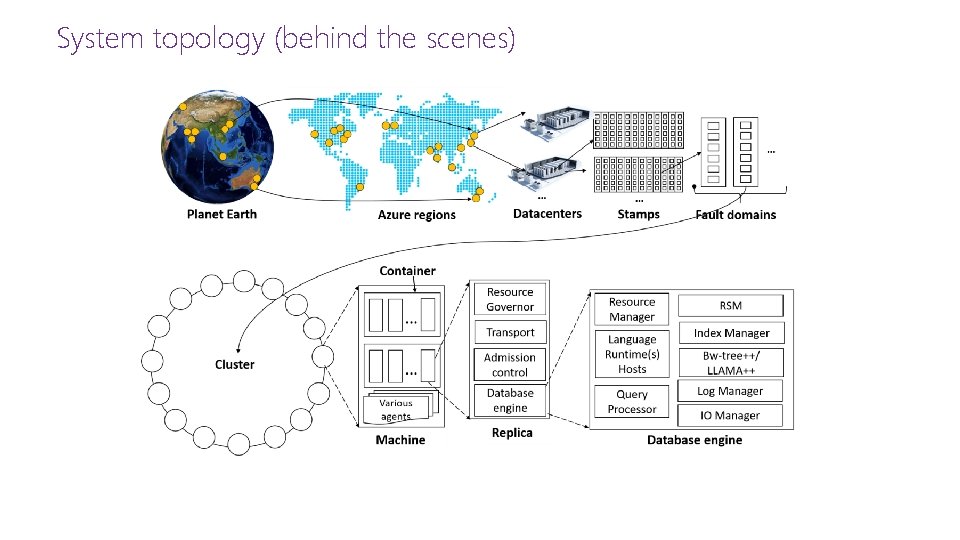
System topology (behind the scenes)
Request Units
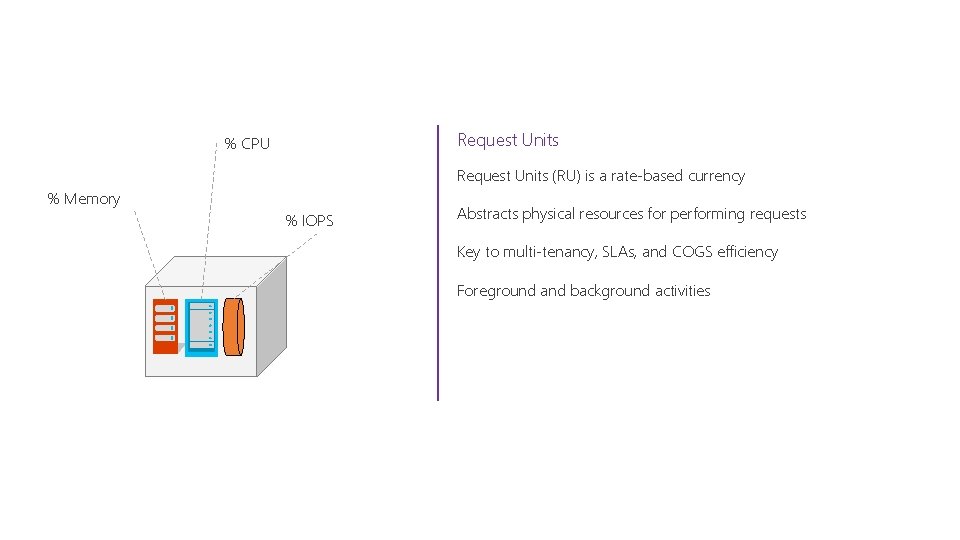
Request Units % CPU Request Units (RU) is a rate-based currency % Memory % IOPS Abstracts physical resources for performing requests Key to multi-tenancy, SLAs, and COGS efficiency Foreground and background activities
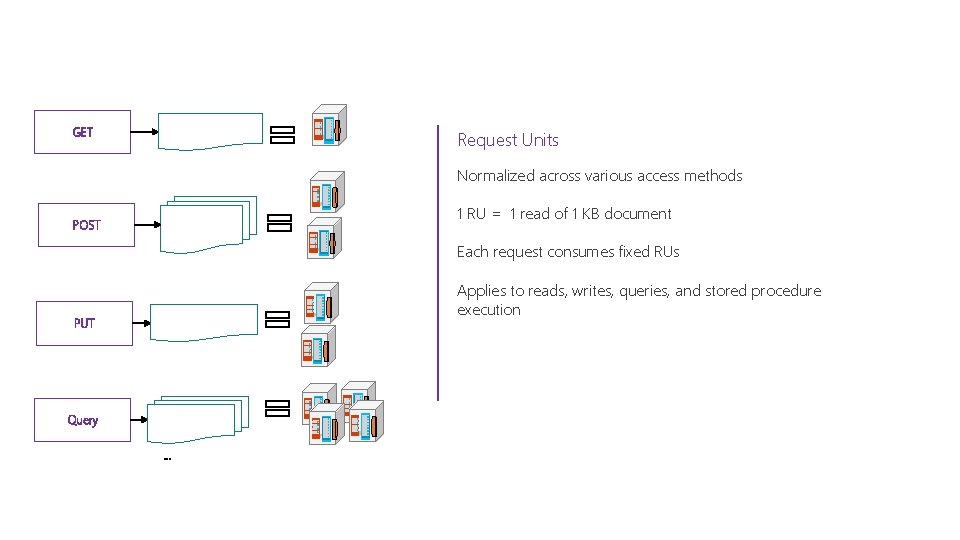
GET Request Units Normalized across various access methods POST 1 RU = 1 read of 1 KB document Each request consumes fixed RUs PUT Query Applies to reads, writes, queries, and stored procedure execution
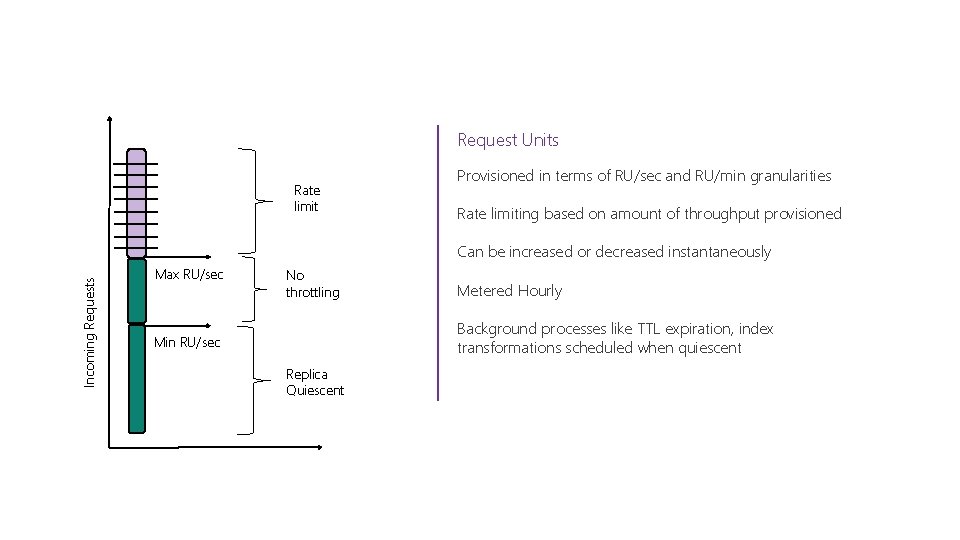
Request Units Rate limit Provisioned in terms of RU/sec and RU/min granularities Rate limiting based on amount of throughput provisioned Incoming Requests Can be increased or decreased instantaneously Max RU/sec No throttling Metered Hourly Background processes like TTL expiration, index transformations scheduled when quiescent Min RU/sec Replica Quiescent
Partitioning
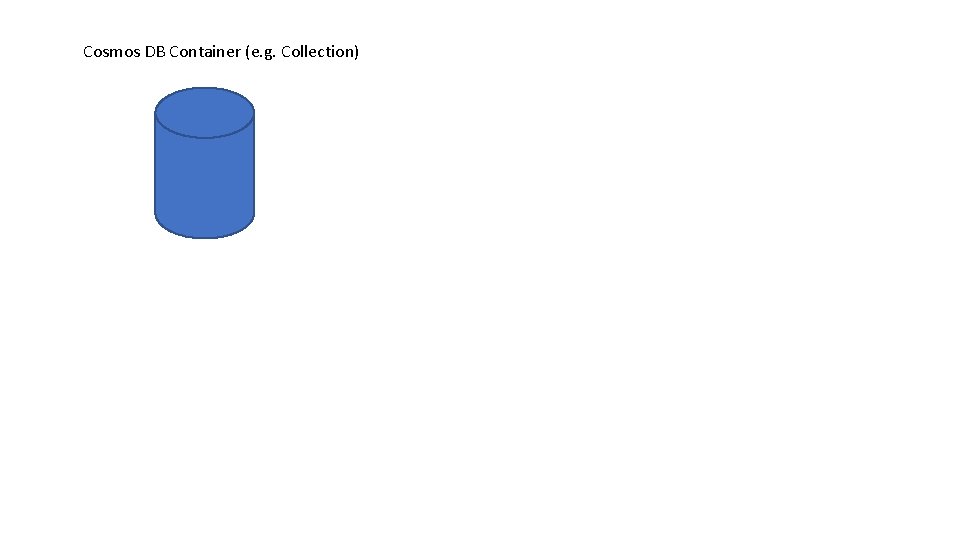
Cosmos DB Container (e. g. Collection)
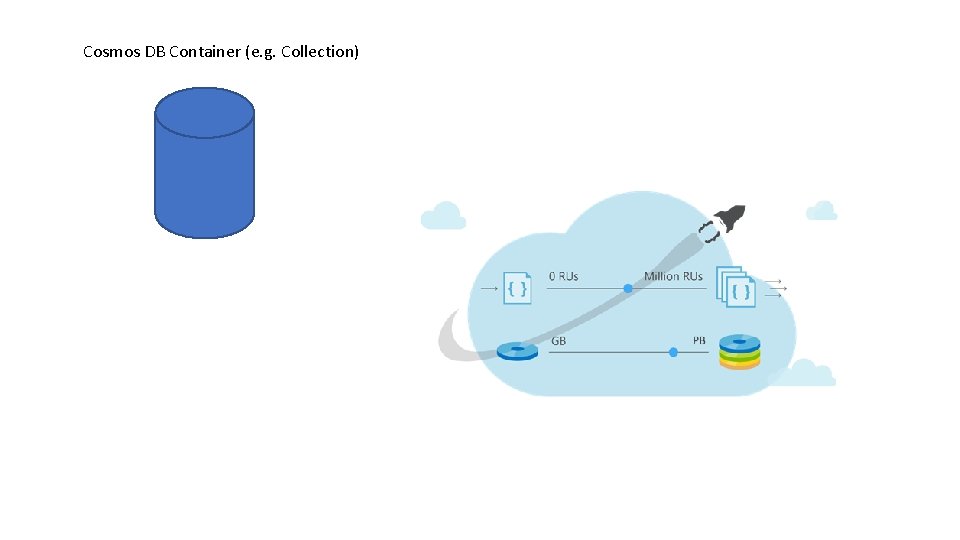
Cosmos DB Container (e. g. Collection)
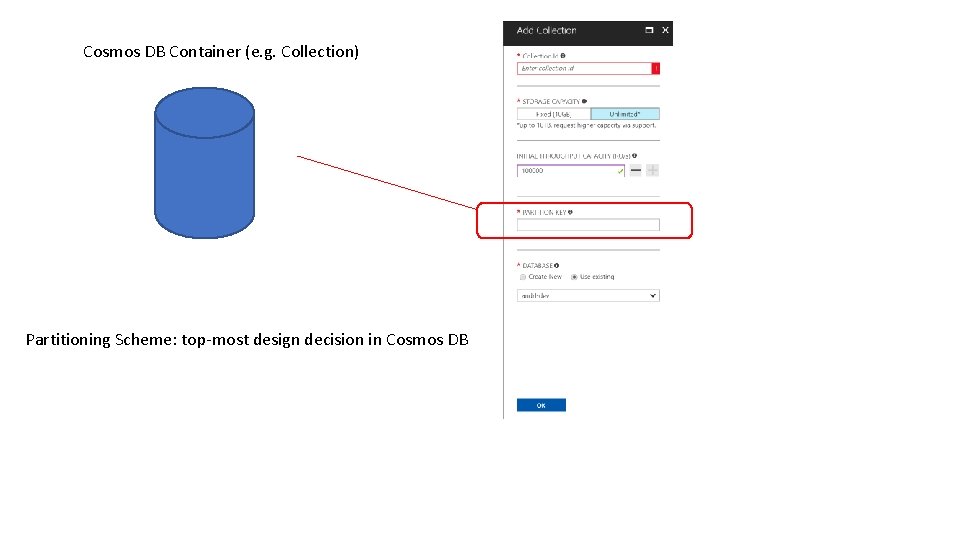
Cosmos DB Container (e. g. Collection) Partitioning Scheme: top-most design decision in Cosmos DB
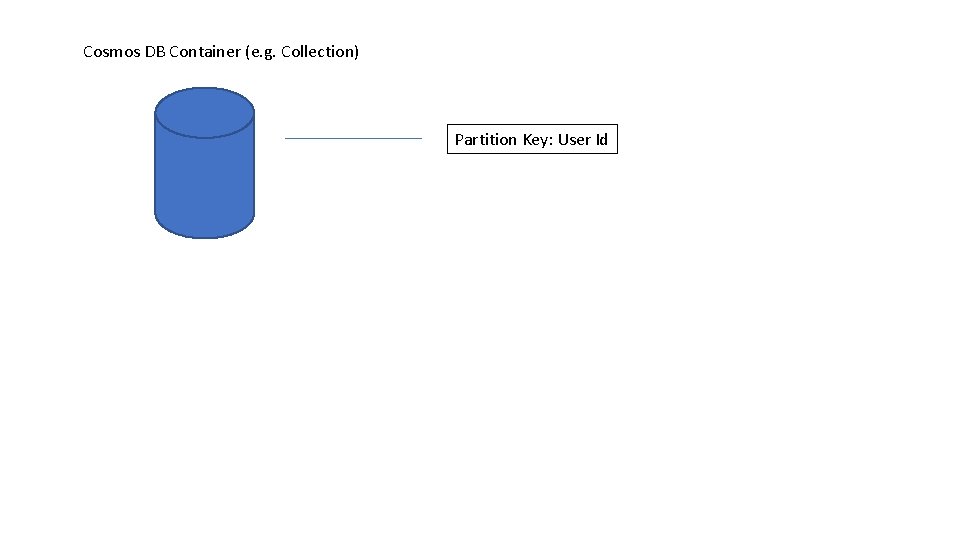
Cosmos DB Container (e. g. Collection) Partition Key: User Id
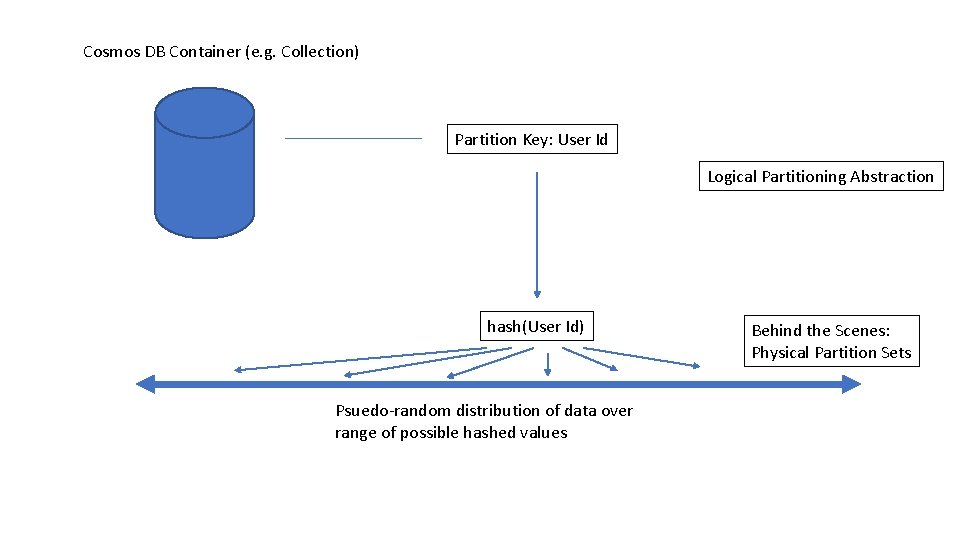
Cosmos DB Container (e. g. Collection) Partition Key: User Id Logical Partitioning Abstraction hash(User Id) Psuedo-random distribution of data over range of possible hashed values Behind the Scenes: Physical Partition Sets
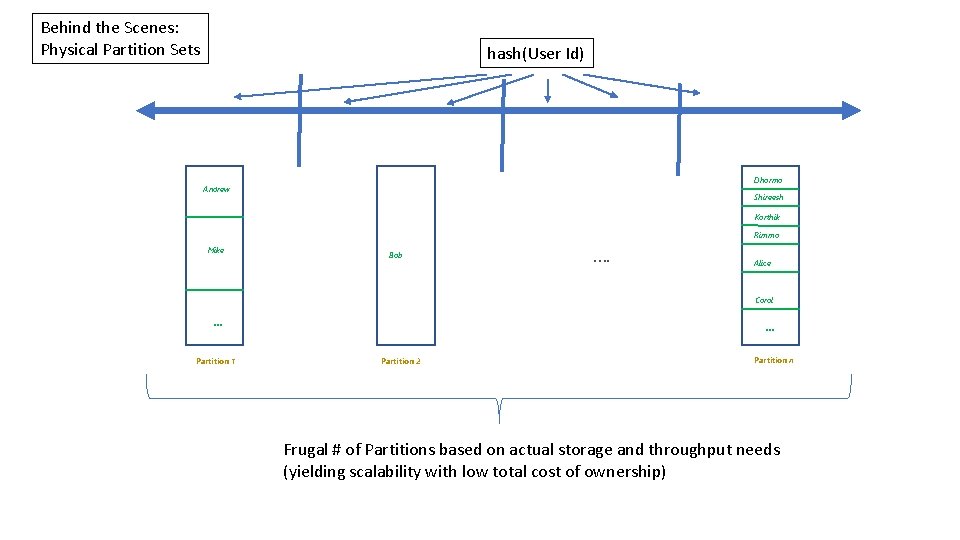
Behind the Scenes: Physical Partition Sets hash(User Id) Dharma Andrew Shireesh Karthik Rimma Mike Bob …. Alice Carol … Partition 1 … Partition 2 Partition n Frugal # of Partitions based on actual storage and throughput needs (yielding scalability with low total cost of ownership)
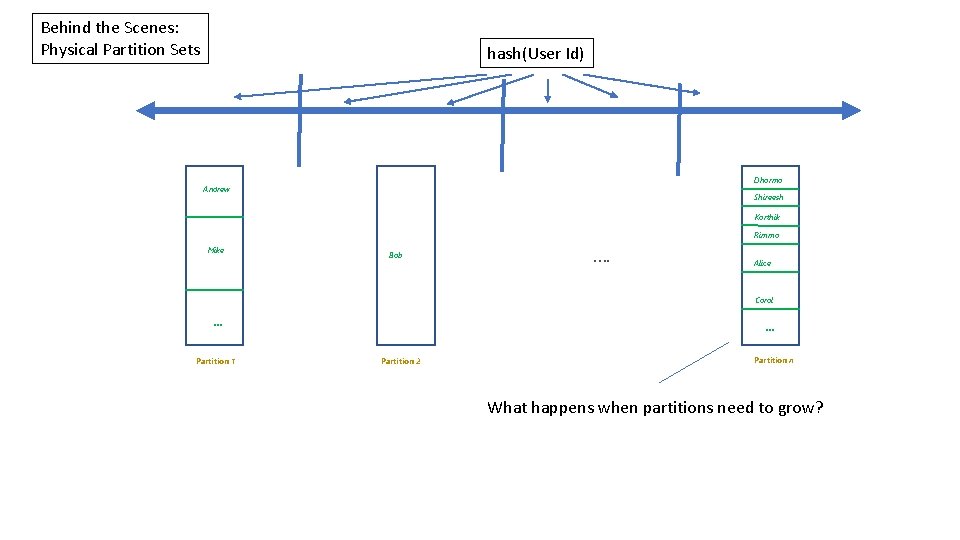
Behind the Scenes: Physical Partition Sets hash(User Id) Dharma Andrew Shireesh Karthik Rimma Mike Bob …. Alice Carol … Partition 1 … Partition 2 Partition n What happens when partitions need to grow?
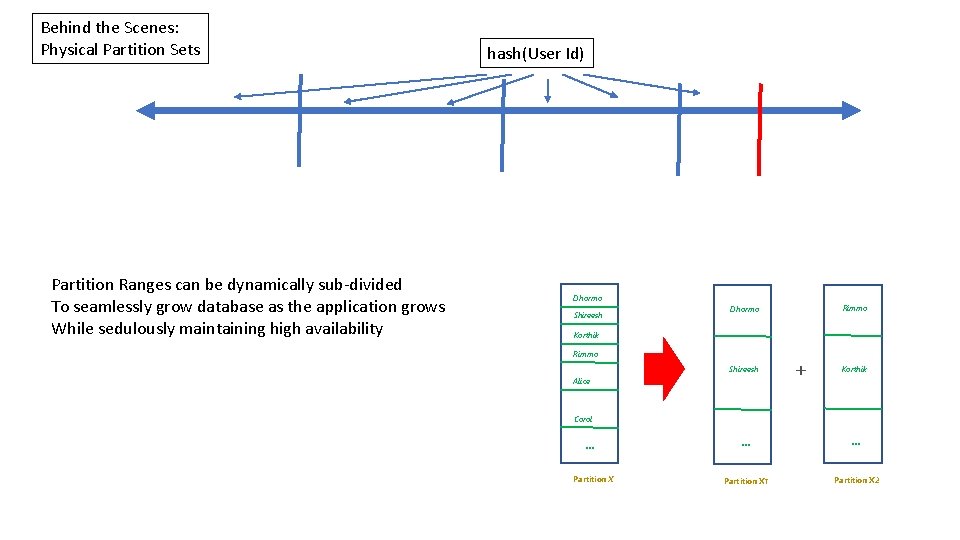
Behind the Scenes: Physical Partition Sets Partition Ranges can be dynamically sub-divided To seamlessly grow database as the application grows While sedulously maintaining high availability hash(User Id) Dharma Shireesh Rimma Dharma Karthik Rimma Shireesh Alice + Karthik Carol … Partition X … … Partition X 1 Partition X 2
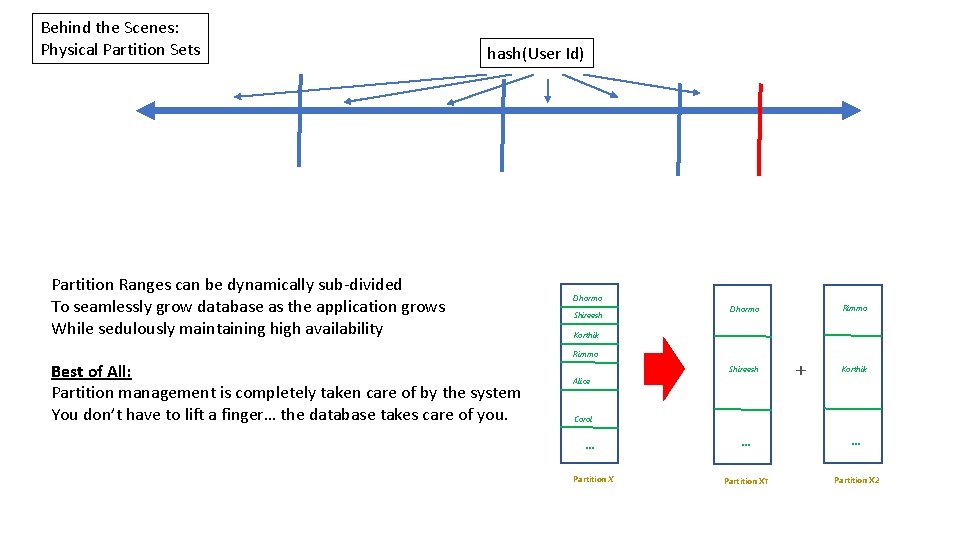
Behind the Scenes: Physical Partition Sets hash(User Id) Partition Ranges can be dynamically sub-divided To seamlessly grow database as the application grows While sedulously maintaining high availability Dharma Shireesh Karthik Rimma Best of All: Partition management is completely taken care of by the system You don’t have to lift a finger… the database takes care of you. Rimma Dharma Shireesh Alice + Karthik Carol … Partition X … … Partition X 1 Partition X 2
Cosmos DB Container (e. g. Collection) Best Practices: Design Goals for Choosing a Good Partition Key 1) Distribute the overall request + storage volume • Avoid “hot” partition keys 2) Avoid blind fan-outs for queries • Queries can be intelligently routed via partition key
Cosmos DB Container (e. g. Collection) Best Practices: Design Goals for Choosing a Good Partition Key 1) Distribute the overall request + storage volume • Avoid “hot” partition keys 2) Avoid blind fan-outs for queries • Queries can be intelligently routed via partition key Steps for Success 1. Ballpark scale needs (size/throughput) 2. Understand the workload 3. # of reads/sec vs writes per sec • Use 80/20 rule to help optimize bulk of workload • For reads – understand top X queries (look for common filters) • For writes – understand ratio of inserts vs updates
Cosmos DB Container (e. g. Collection) Best Practices: Design Goals for Choosing a Good Partition Key 1) Distribute the overall request + storage volume • Avoid “hot” partition keys 2) Avoid blind fan-outs for queries • Queries can be intelligently routed via partition key Steps for Success 1. Ballpark scale needs (size/throughput) 2. Understand the workload 3. # of reads/sec vs writes per sec • Use 80/20 rule to help optimize bulk of workload • For reads – understand top X queries (look for common filters) • For writes – understand ratio of inserts vs updates General Tips • Don’t be afraid of having too many partition keys • Partitions keys are logical • More partition keys => more scalability
Global Distribution
Demo using Azure Portal
Consistency
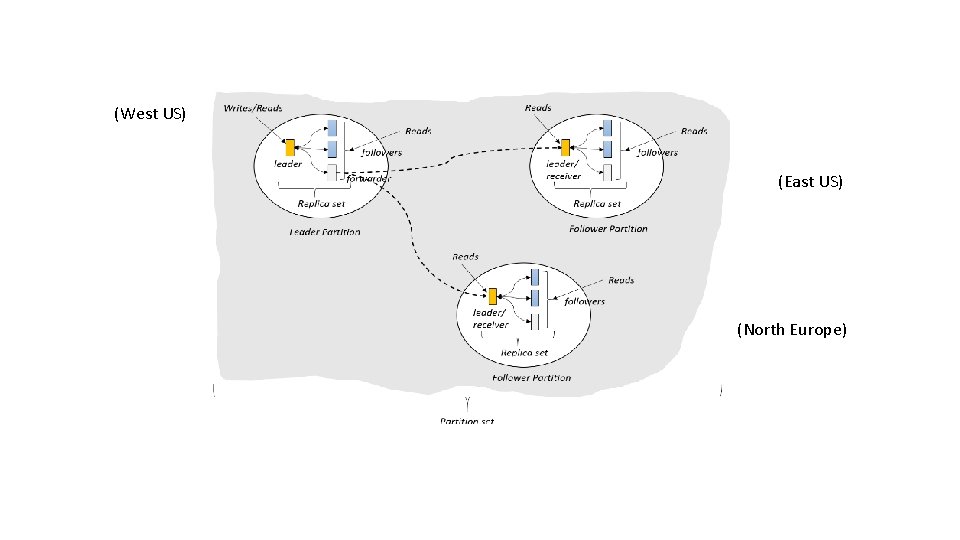
(West US) (East US) (North Europe)
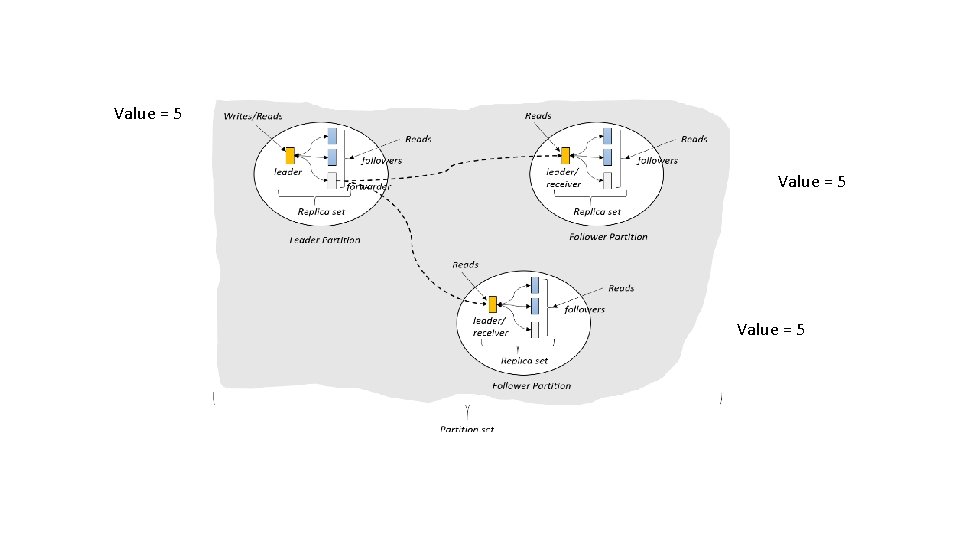
Value = 5
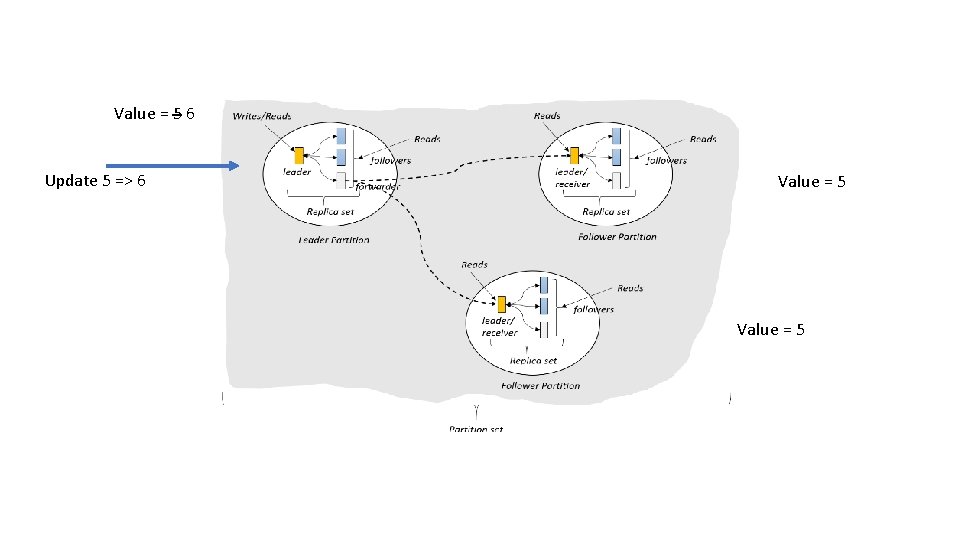
Value = 5 6 Update 5 => 6 Value = 5
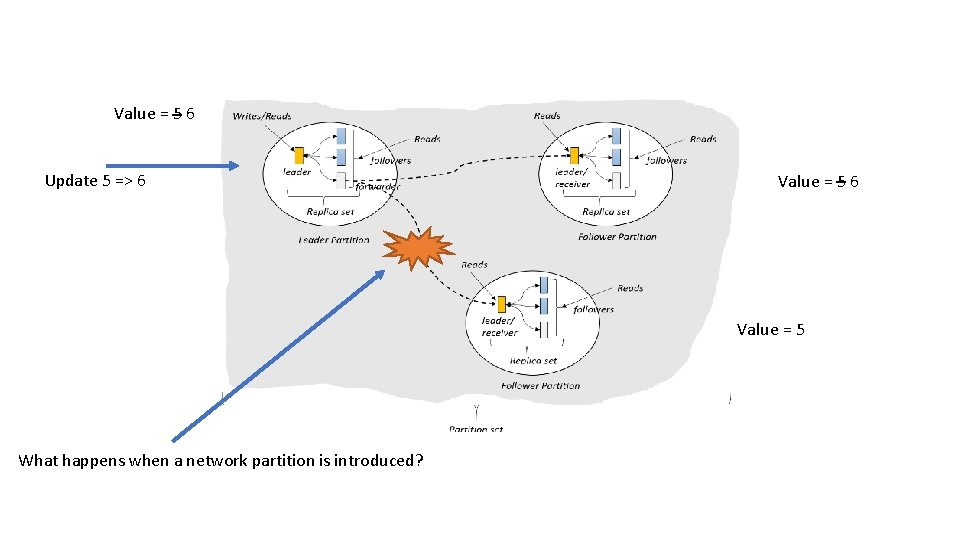
Value = 5 6 Update 5 => 6 Value = 5 What happens when a network partition is introduced?
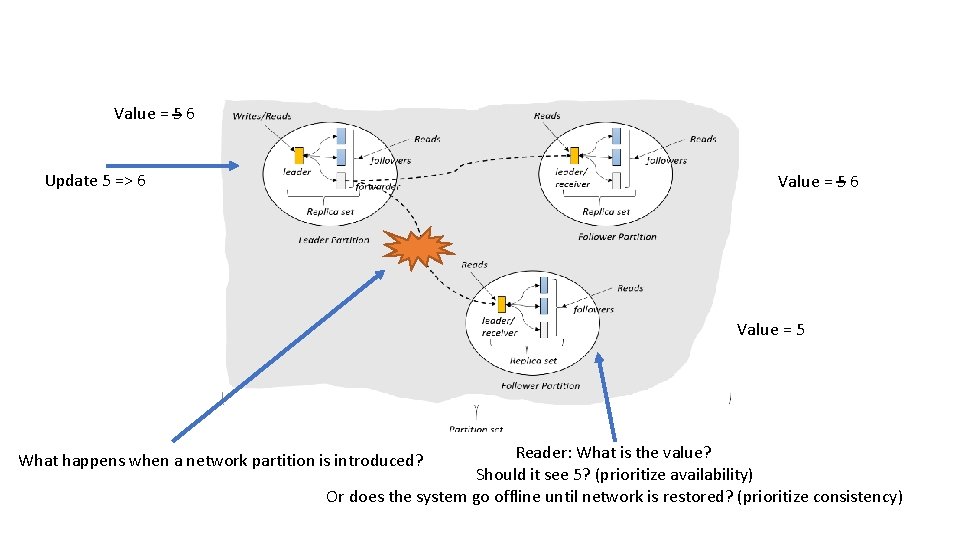
Value = 5 6 Update 5 => 6 Value = 5 Reader: What is the value? Should it see 5? (prioritize availability) Or does the system go offline until network is restored? (prioritize consistency) What happens when a network partition is introduced?
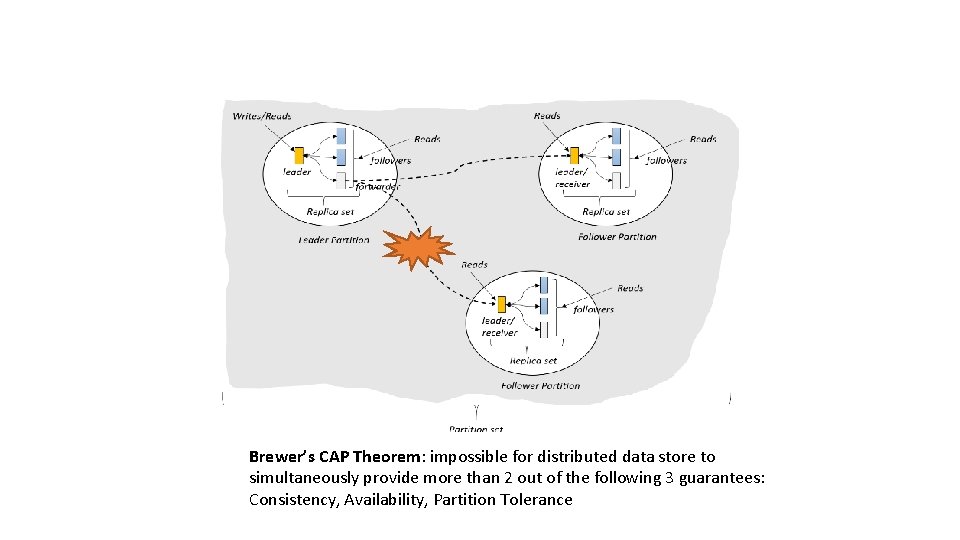
Brewer’s CAP Theorem: impossible for distributed data store to simultaneously provide more than 2 out of the following 3 guarantees: Consistency, Availability, Partition Tolerance
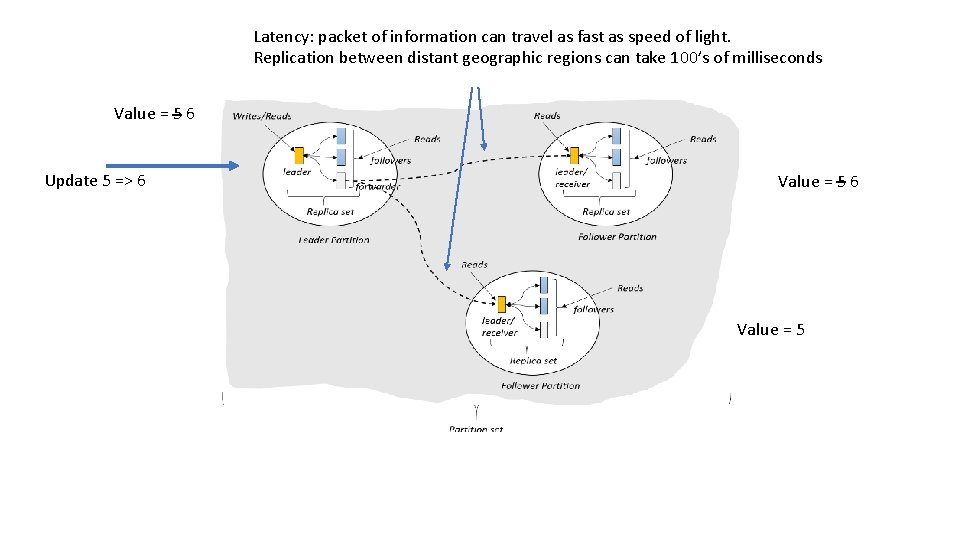
Latency: packet of information can travel as fast as speed of light. Replication between distant geographic regions can take 100’s of milliseconds Value = 5 6 Update 5 => 6 Value = 5
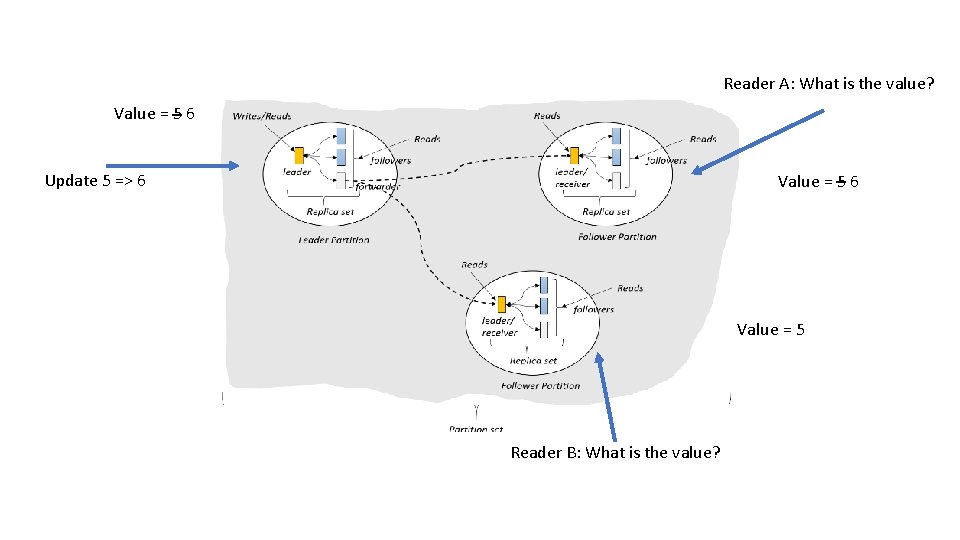
Reader A: What is the value? Value = 5 6 Update 5 => 6 Value = 5 Reader B: What is the value?
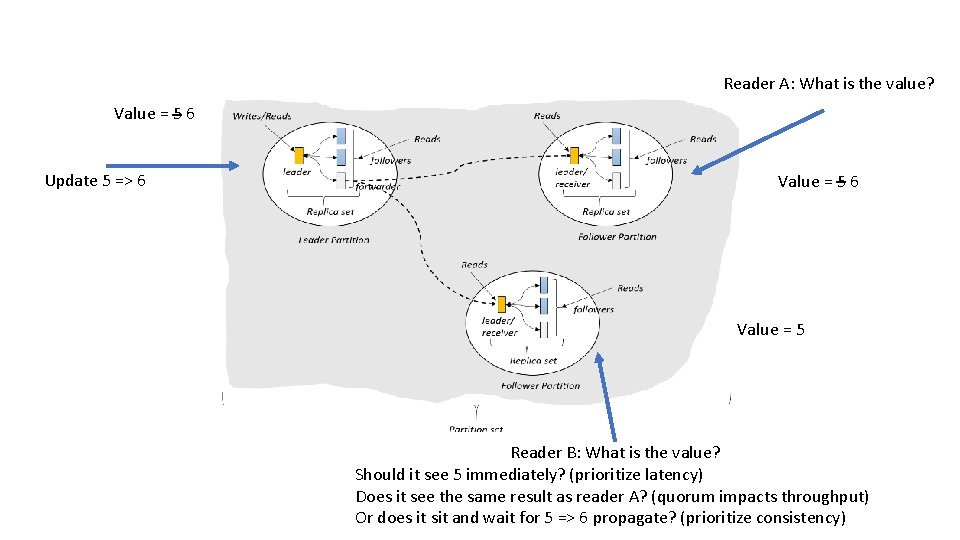
Reader A: What is the value? Value = 5 6 Update 5 => 6 Value = 5 Reader B: What is the value? Should it see 5 immediately? (prioritize latency) Does it see the same result as reader A? (quorum impacts throughput) Or does it sit and wait for 5 => 6 propagate? (prioritize consistency)
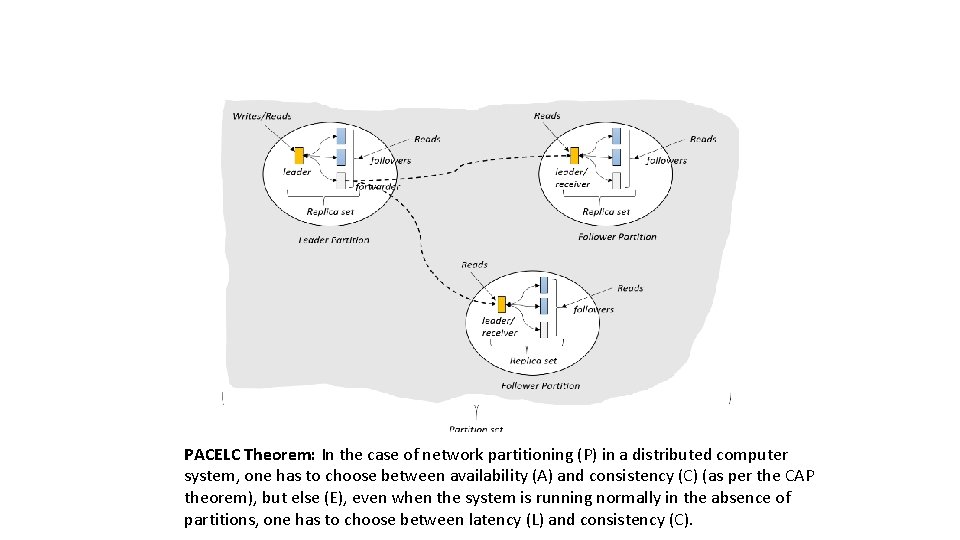
PACELC Theorem: In the case of network partitioning (P) in a distributed computer system, one has to choose between availability (A) and consistency (C) (as per the CAP theorem), but else (E), even when the system is running normally in the absence of partitions, one has to choose between latency (L) and consistency (C).
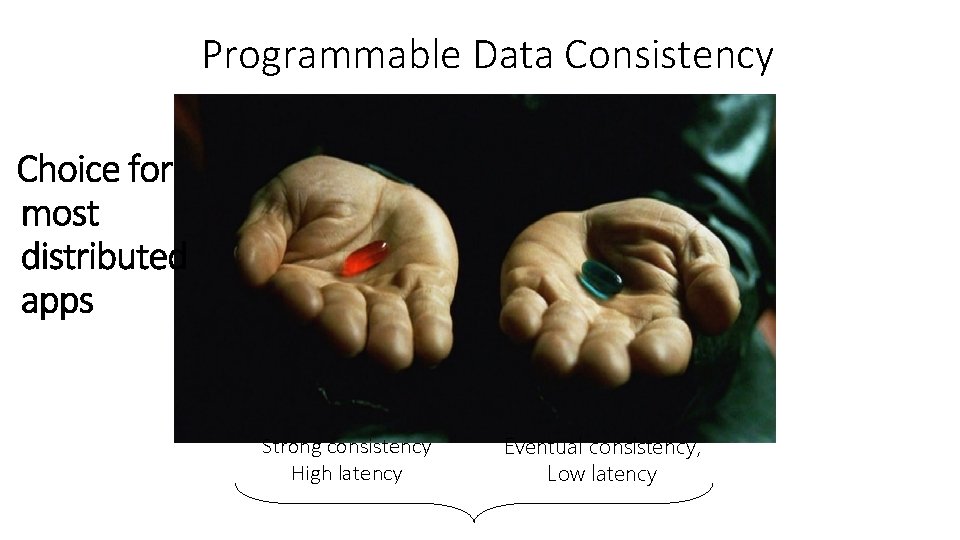
Programmable Data Consistency Strong consistency High latency Eventual consistency, Low latency
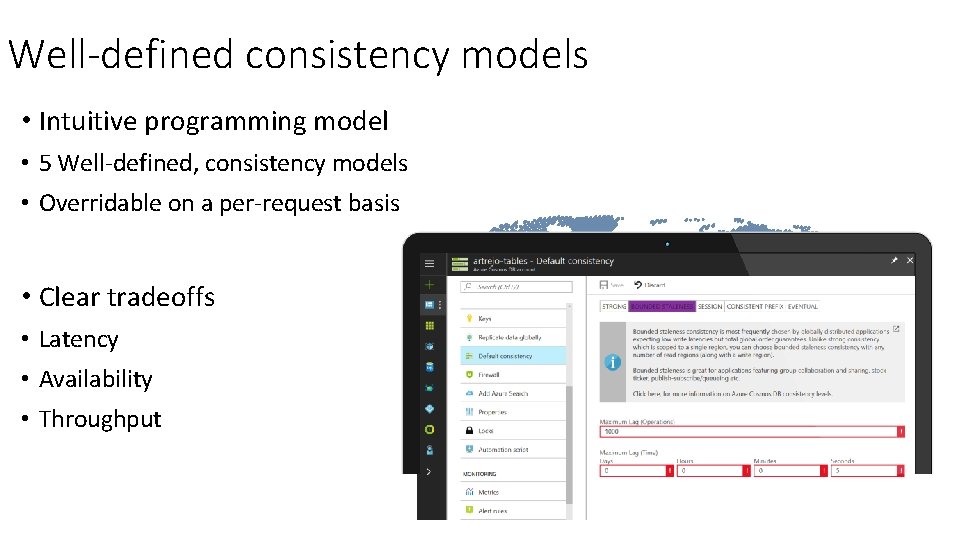
Well-defined consistency models • Intuitive programming model • 5 Well-defined, consistency models • Overridable on a per-request basis • Clear tradeoffs • Latency • Availability • Throughput
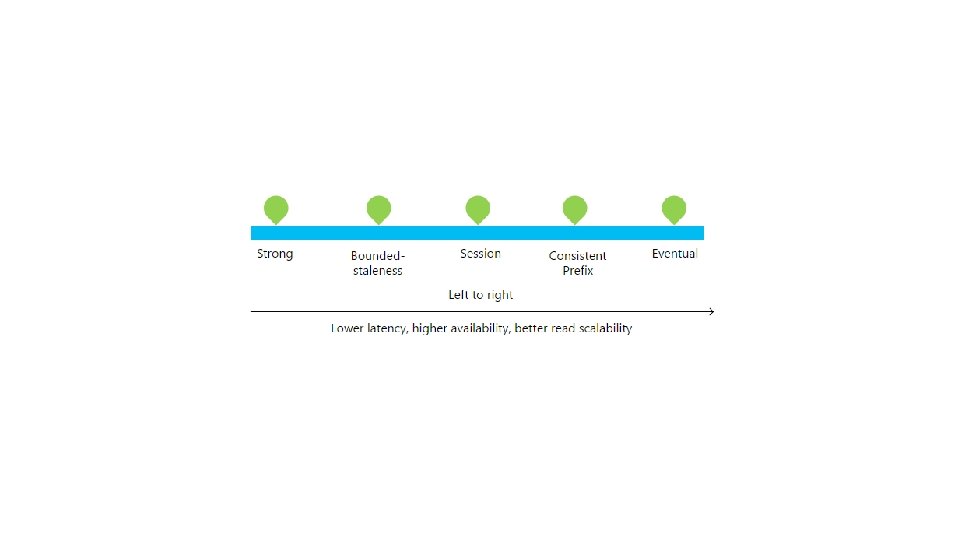
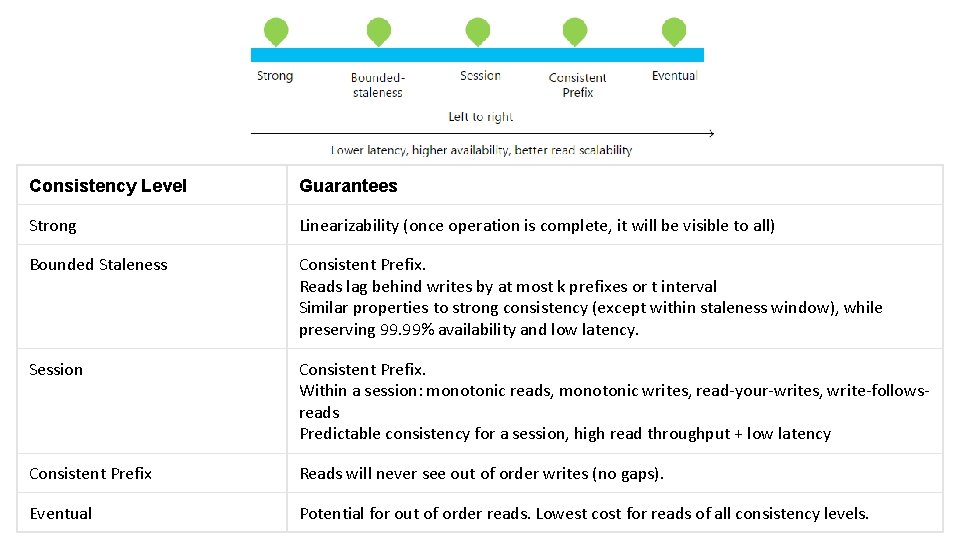
Consistency Level Guarantees Strong Linearizability (once operation is complete, it will be visible to all) Bounded Staleness Consistent Prefix. Reads lag behind writes by at most k prefixes or t interval Similar properties to strong consistency (except within staleness window), while preserving 99. 99% availability and low latency. Session Consistent Prefix. Within a session: monotonic reads, monotonic writes, read-your-writes, write-followsreads Predictable consistency for a session, high read throughput + low latency Consistent Prefix Reads will never see out of order writes (no gaps). Eventual Potential for out of order reads. Lowest cost for reads of all consistency levels.
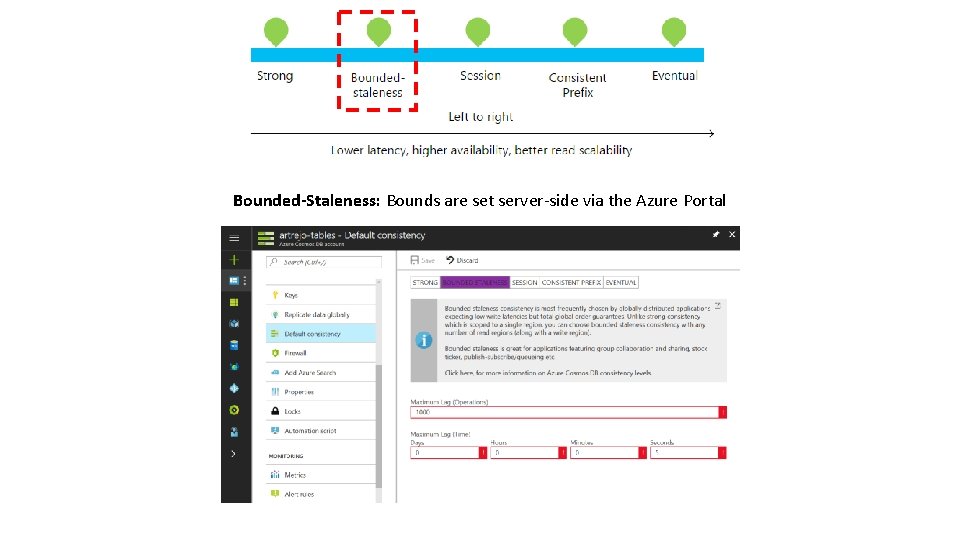
Bounded-Staleness: Bounds are set server-side via the Azure Portal
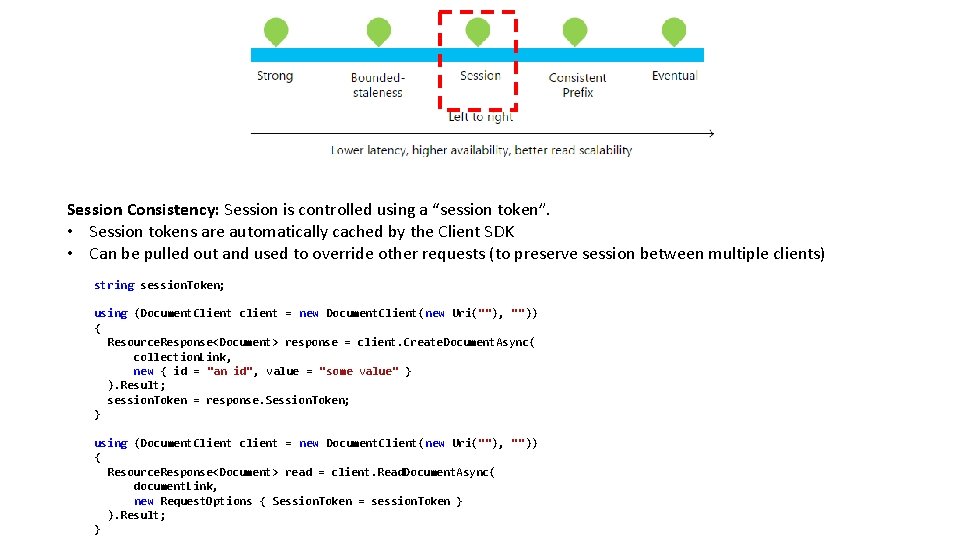
Session Consistency: Session is controlled using a “session token”. • Session tokens are automatically cached by the Client SDK • Can be pulled out and used to override other requests (to preserve session between multiple clients) string session. Token; using (Document. Client client = new Document. Client(new Uri(""), "")) { Resource. Response<Document> response = client. Create. Document. Async( collection. Link, new { id = "an id", value = "some value" } ). Result; session. Token = response. Session. Token; } using (Document. Client client = new Document. Client(new Uri(""), "")) { Resource. Response<Document> read = client. Read. Document. Async( document. Link, new Request. Options { Session. Token = session. Token } ). Result; }
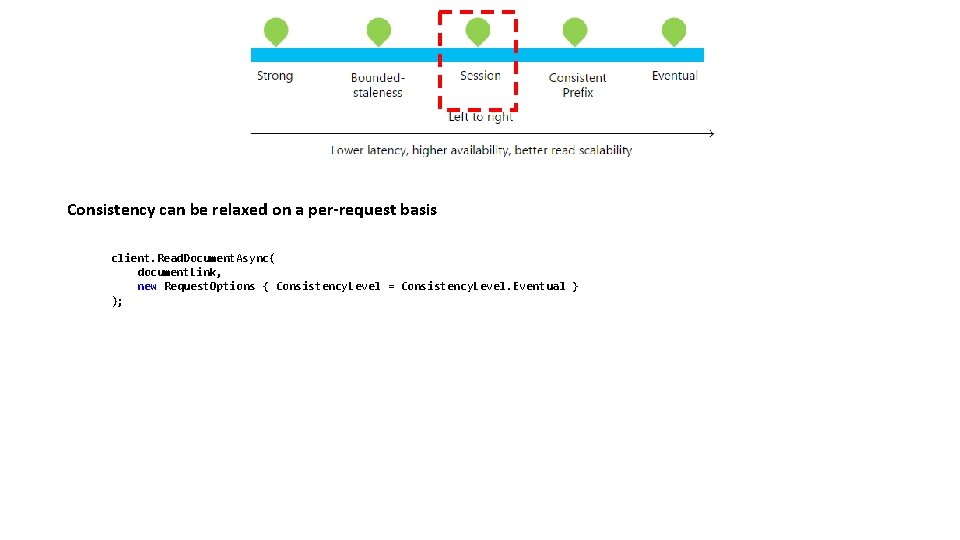
Consistency can be relaxed on a per-request basis client. Read. Document. Async( document. Link, new Request. Options { Consistency. Level = Consistency. Level. Eventual } );
Indexing
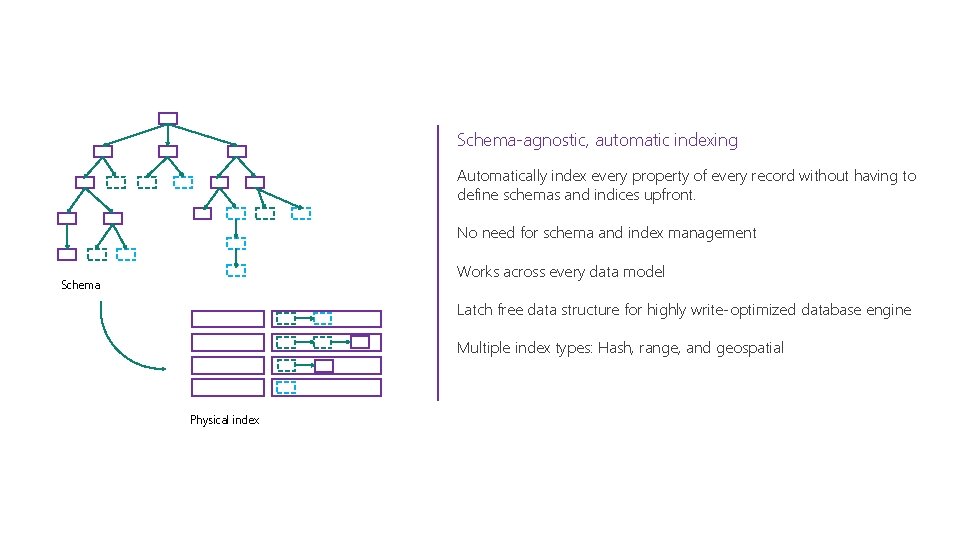
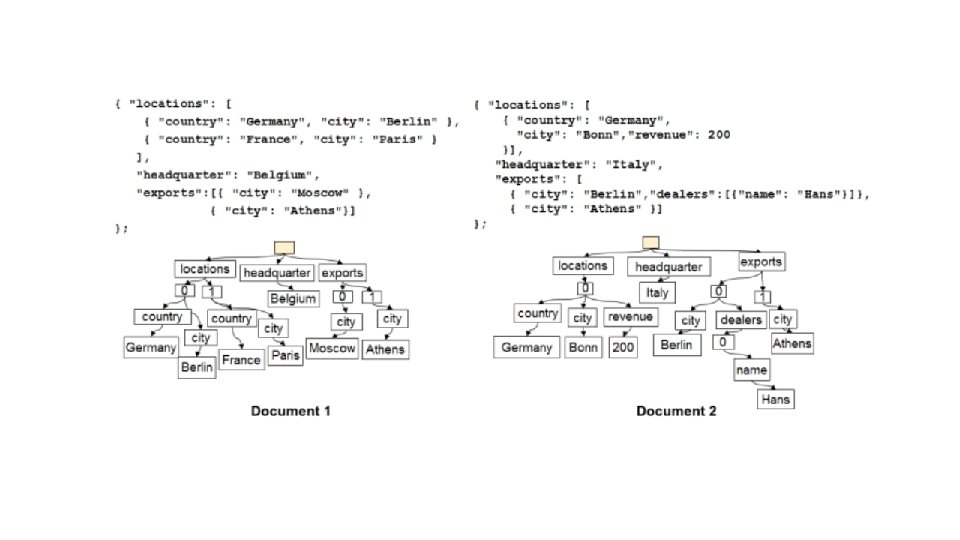
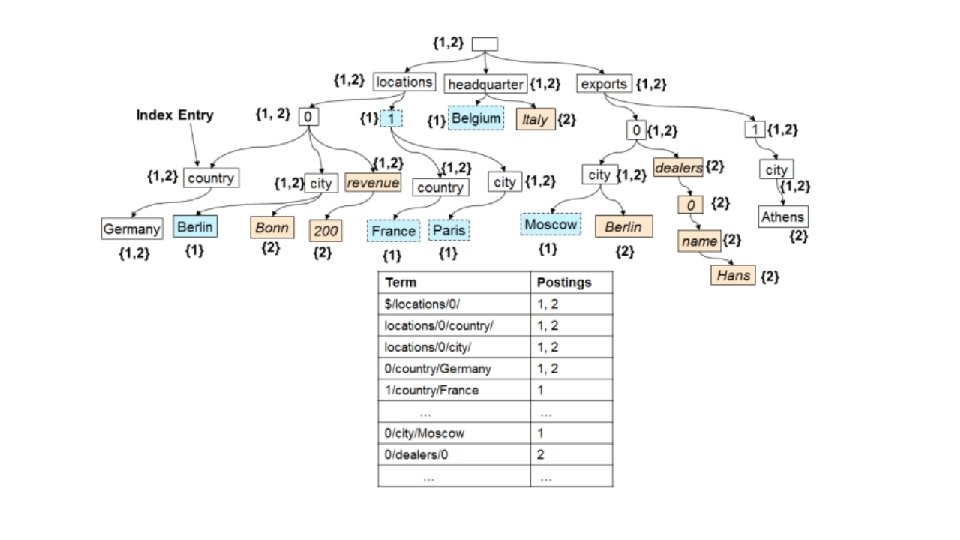
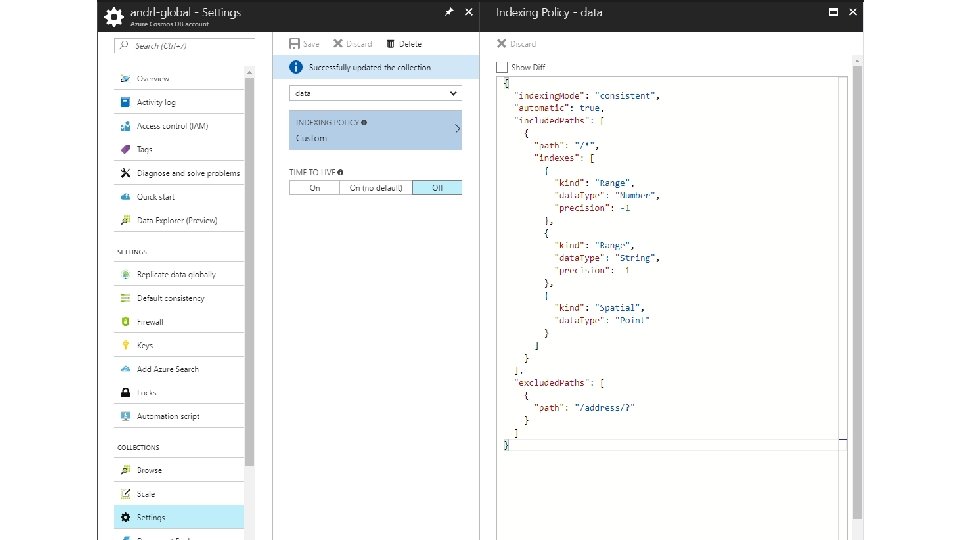
Schema-agnostic, automatic indexing Automatically index every property of every record without having to define schemas and indices upfront. No need for schema and index management Works across every data model Schema Latch free data structure for highly write-optimized database engine Multiple index types: Hash, range, and geospatial Physical index
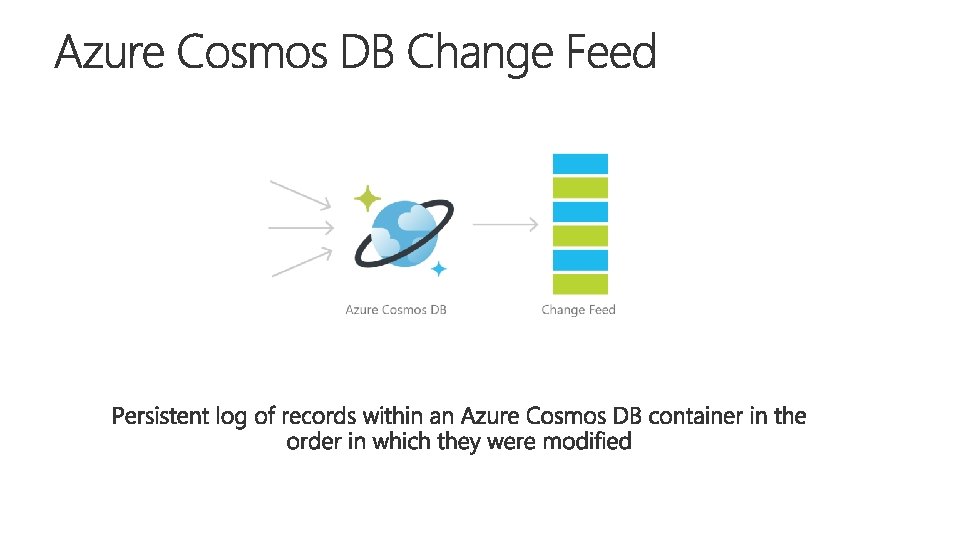
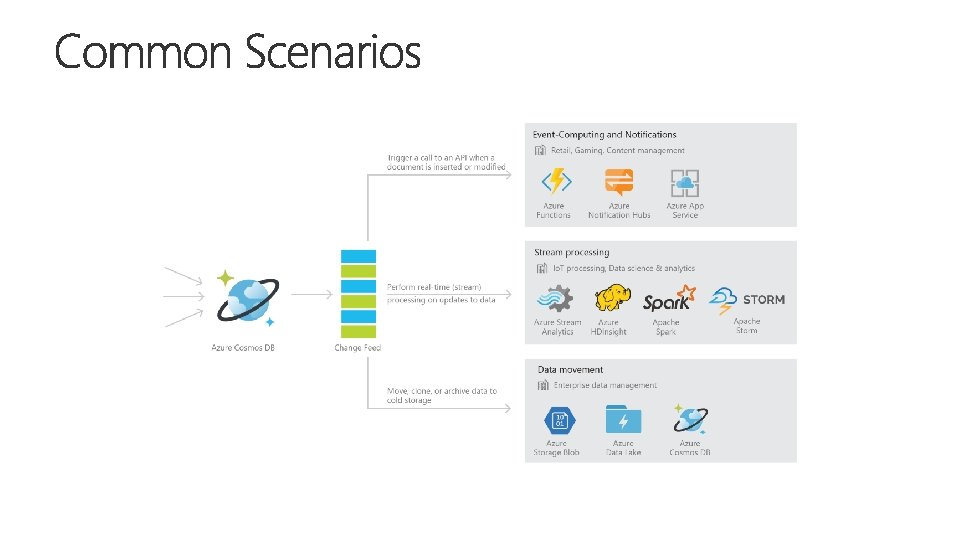
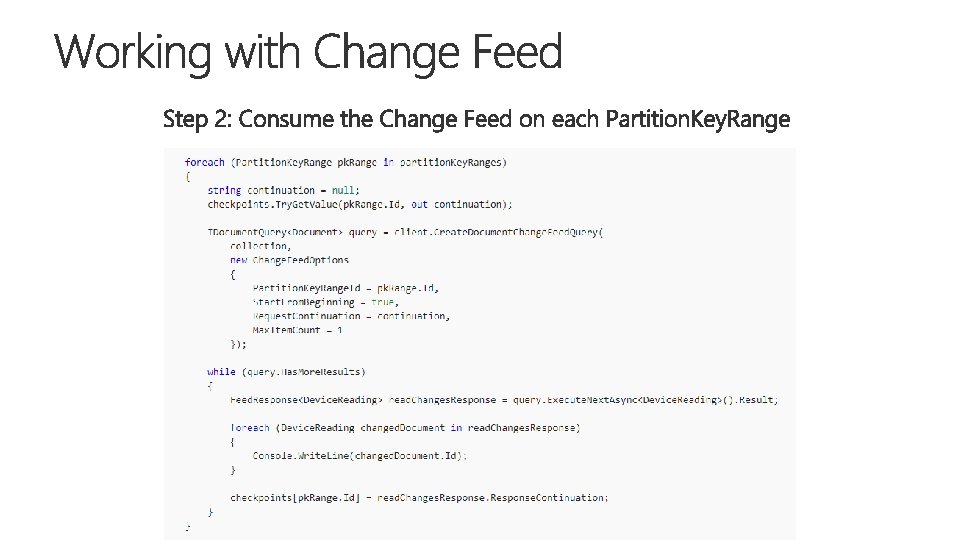
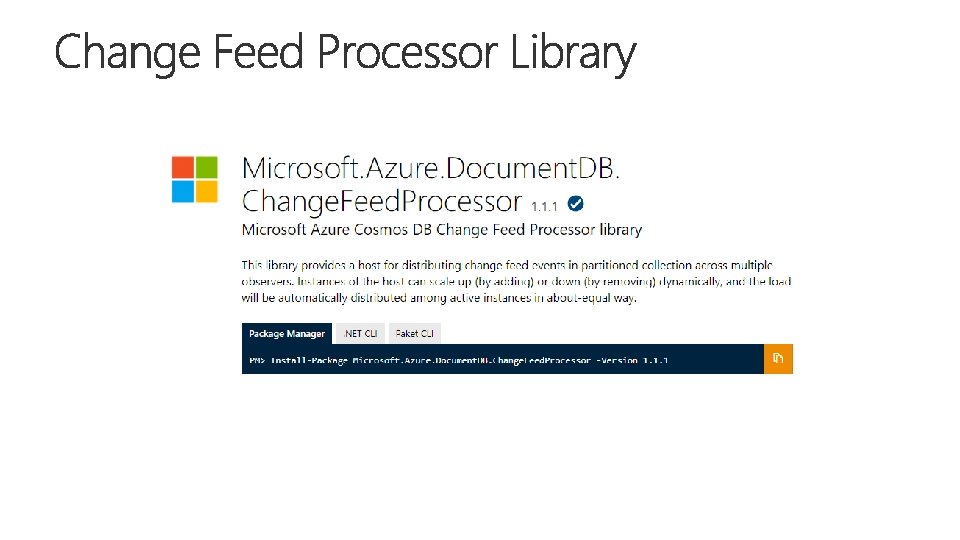
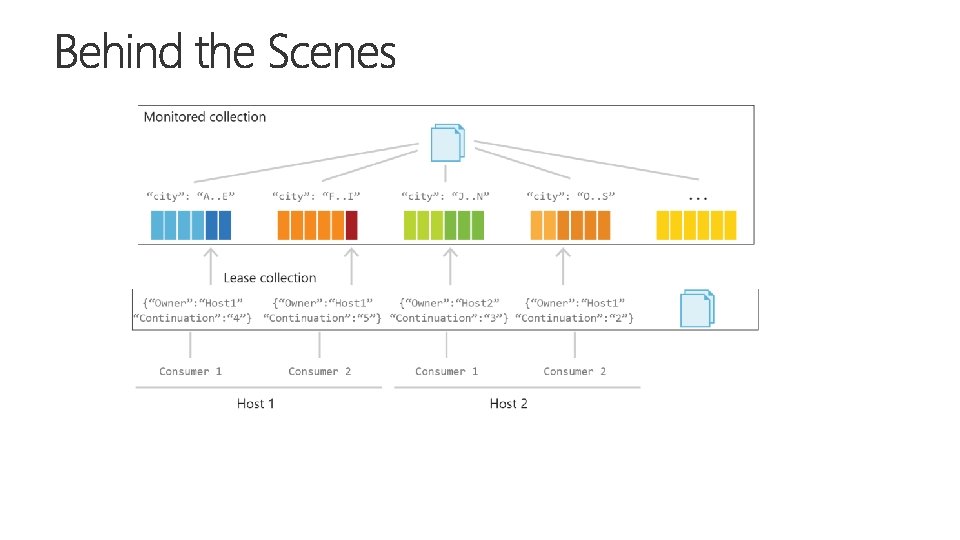
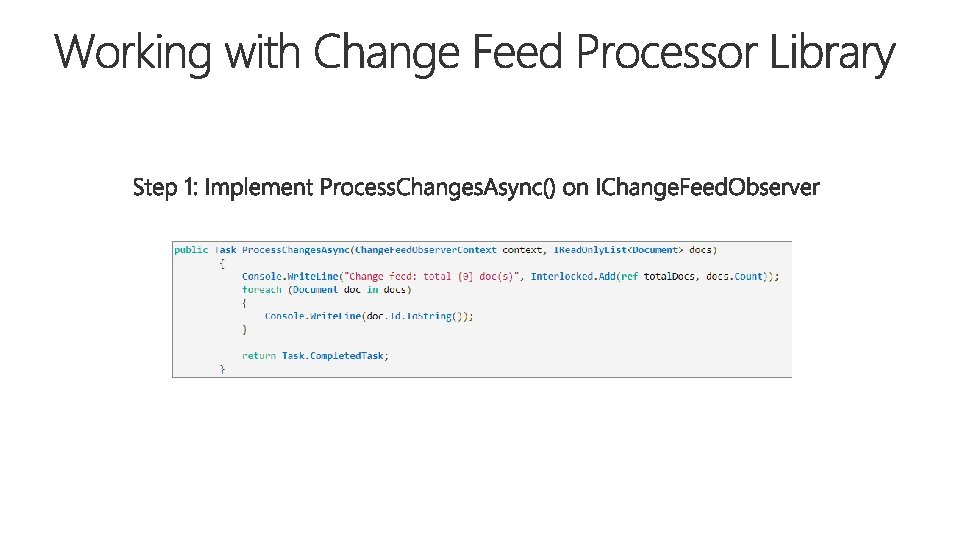
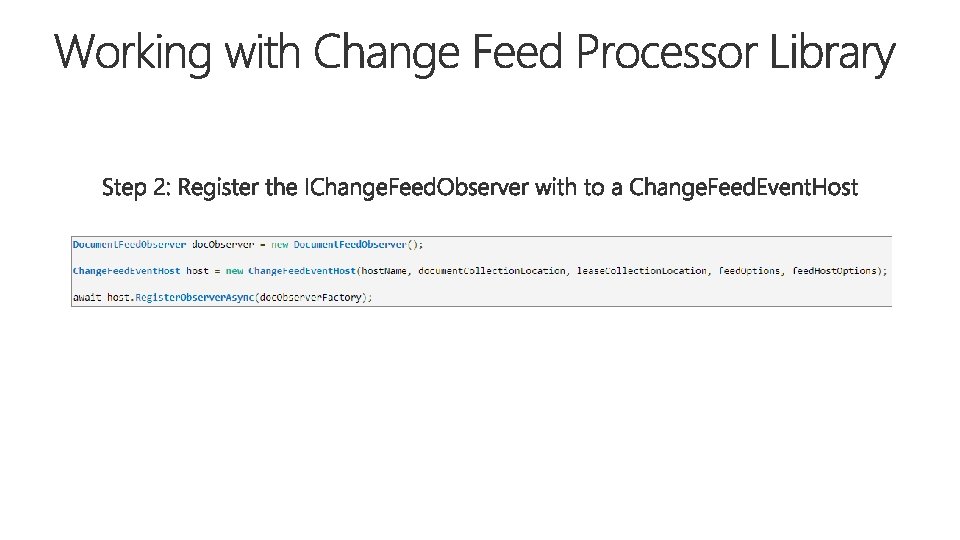
Change Feed
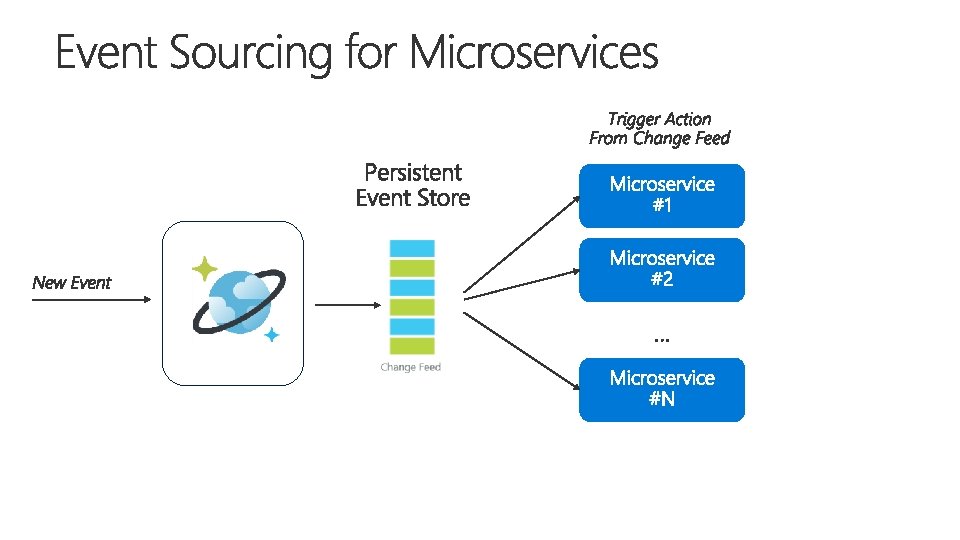
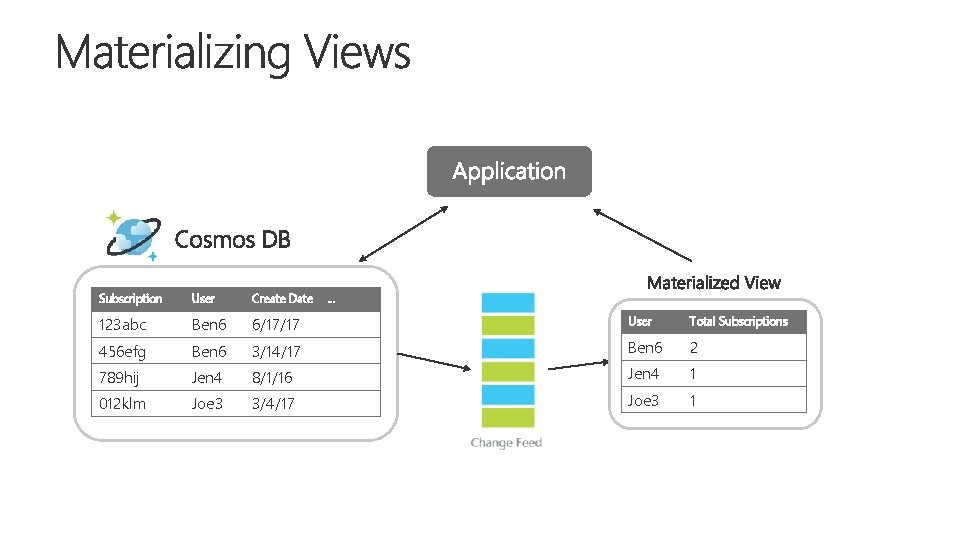
Subscription User Create Date … 123 abc Ben 6 6/17/17 User Total Subscriptions 456 efg Ben 6 3/14/17 Ben 6 2 789 hij Jen 4 8/1/16 Jen 4 1 012 klm Joe 3 3/4/17 Joe 3 1
Thank you and Q&A
- Slides: 102