
Seize the Day 1119 This political cartoon is

- Slides: 21
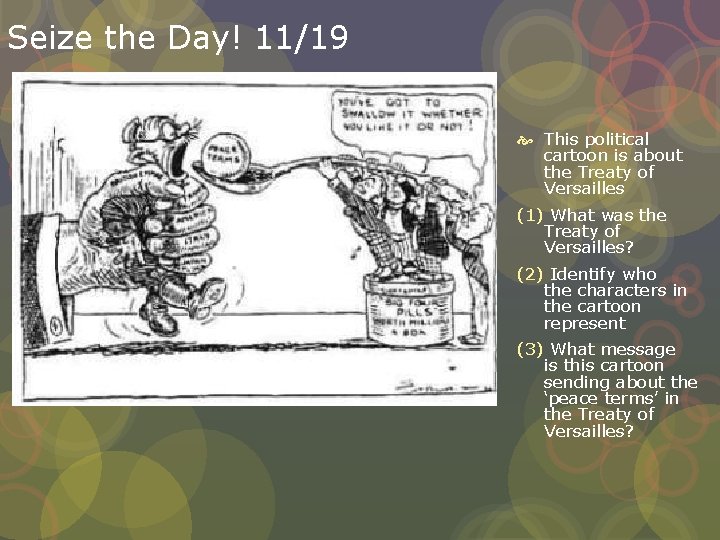
Seize the Day! 11/19 This political cartoon is about the Treaty of Versailles (1) What was the Treaty of Versailles? (2) Identify who the characters in the cartoon represent (3) What message is this cartoon sending about the ‘peace terms’ in the Treaty of Versailles?
Objective Spartan Historians Will… Evaluate global wars in terms of how they challenged political and economic power structures and gave rise to new balances of power
World War II (1939 -1945) Notes 5. 3
Notes 5. 3: World War II (1939 -1945) (1)What were the causes of World War II? (2)Who was involved in the war? (3)What were some major conflicts in the war? (4)How did WWII end in Europe? (5)How did WWII end in the Pacific?
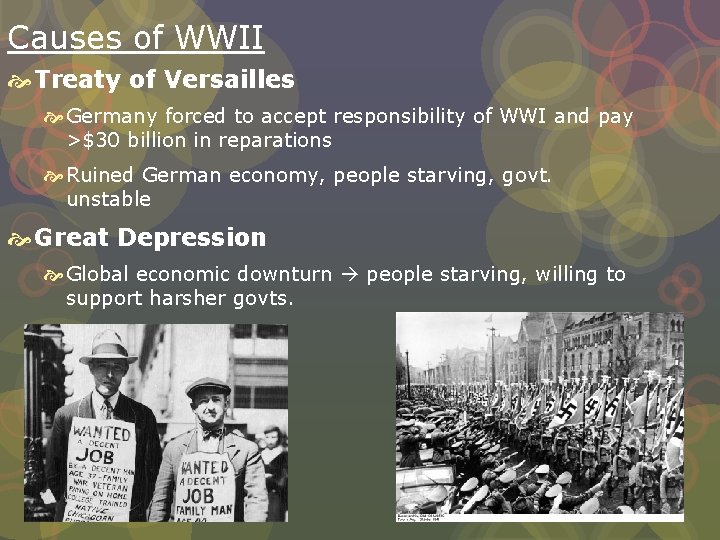
Causes of WWII Treaty of Versailles Germany forced to accept responsibility of WWI and pay >$30 billion in reparations Ruined German economy, people starving, govt. unstable Great Depression Global economic downturn people starving, willing to support harsher govts.
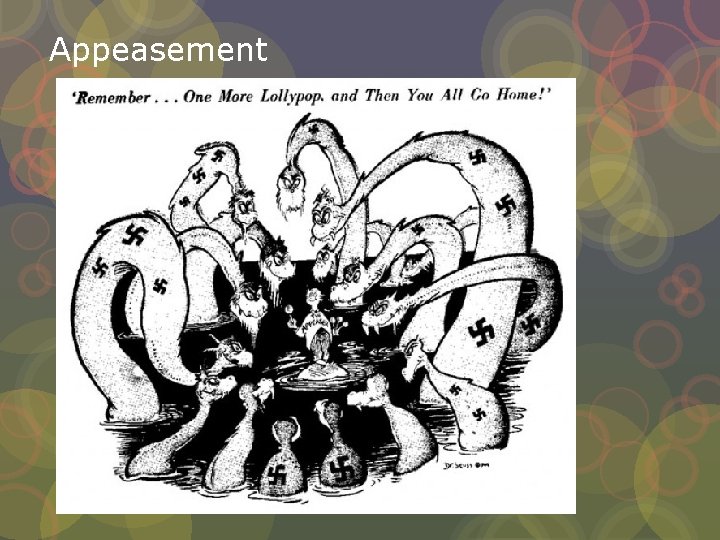
Causes of WWII Fascism and Totalitarianism Because of economic depression, people willing to follow leaders who promised help Spain, Italy, Germany, Russia all led by dictators who wanted total control Expansionism and Appeasement To combat depression and restore national pride, totalitarian countries began to take over more land League of Nations doesn’t want another war policy of APPEASEMENT = giving into demands in hopes of avoiding war
Appeasement
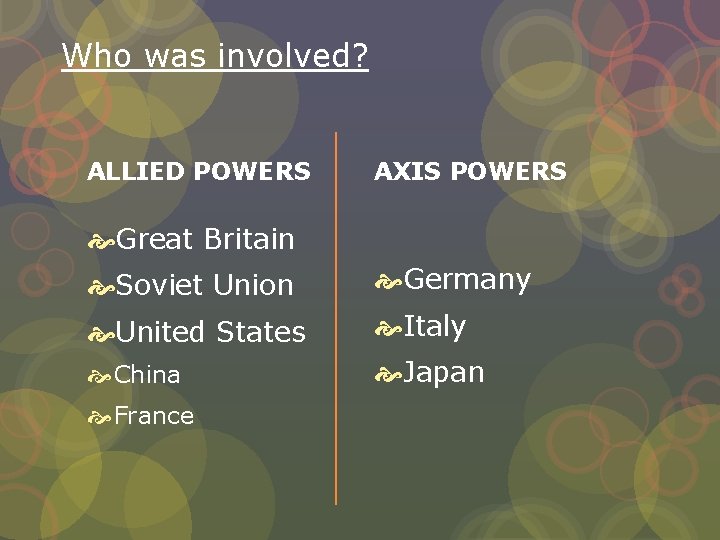
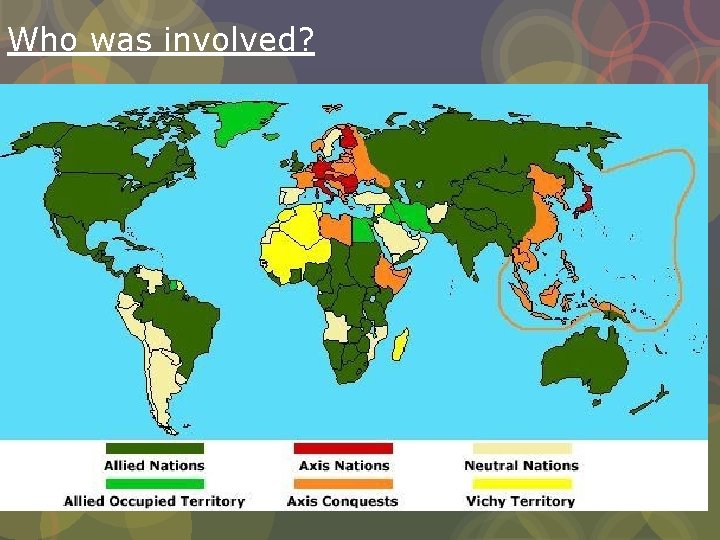
Who was involved? ALLIED POWERS AXIS POWERS Great Britain Soviet Union Germany United States Italy China Japan France
Who was involved?
WWII Webquest
Seize the Day! 11/20 Is it okay to kill one person to save someone else? Is it okay to kill one person to save 10 others? To save 1000 others? Explain Pass forward Seize the Days!
Notes 5. 3: World War II (1939 -1945) (1)What were the causes of World War II? (2)Who was involved in the war? (3)What were some major conflicts in the war? (4)How did WWII end in Europe? (5)How did WWII end in the Pacific?
Major Conflicts Blitzkrieg– “Lightning War” Used by Germany to destroy enemy forces in a specific area quickly Occupation of France (1940 -44) Germany invaded and controlled northern France w/in 6 weeks, weakening Allied power
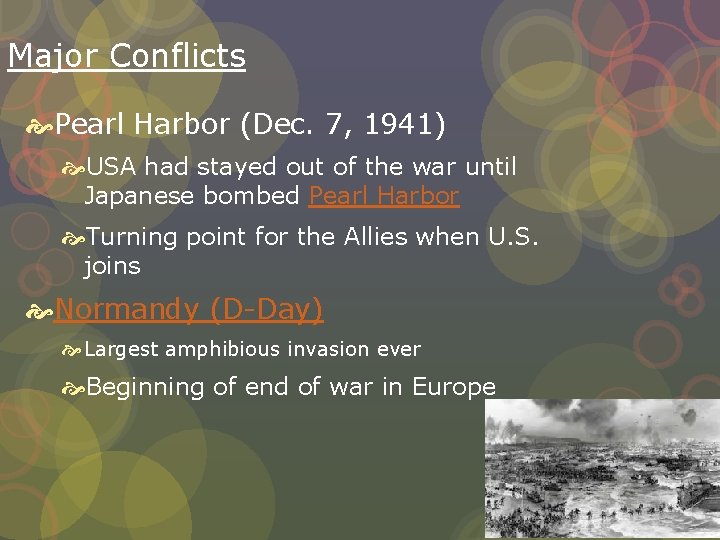
Major Conflicts Pearl Harbor (Dec. 7, 1941) USA had stayed out of the war until Japanese bombed Pearl Harbor Turning point for the Allies when U. S. joins Normandy (D-Day) Largest amphibious invasion ever Beginning of end of war in Europe
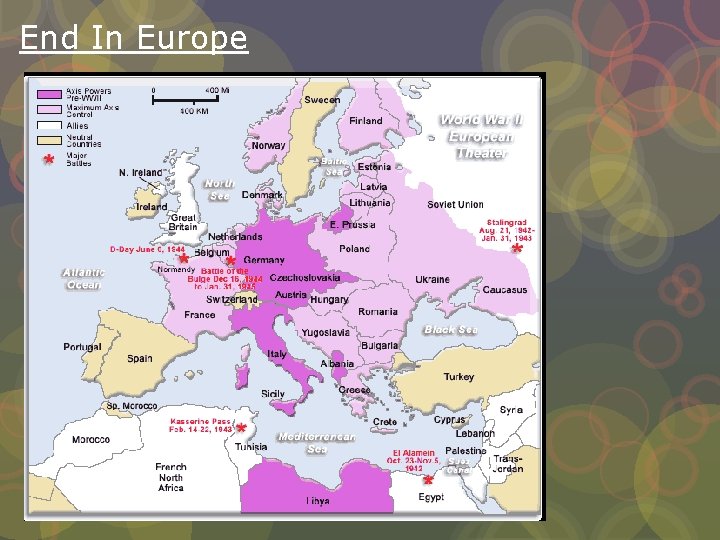
End In Europe World War II fought in two ‘theatres’ -- Europe and the Pacific War ended in Europe first 1942 Hitler tries to invade Russia but is defeated by cold WINTER
End In Europe Allies attack Italy b/c it is a weaker target than Germany June 1944 – invasion at Normandy forces Germany to retreat Berlin taken in 1945 Hitler commits suicide May 8 th – official surrender VICTORY IN EUROPE (V-E) DAY
End In Europe
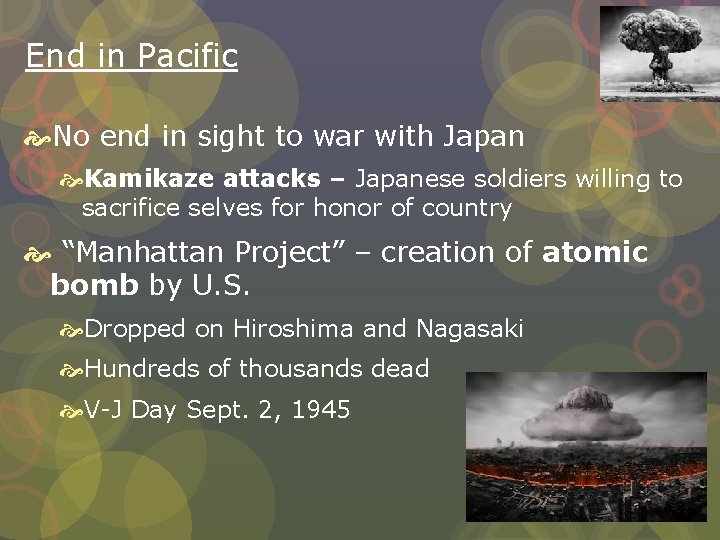
End in Pacific No end in sight to war with Japan Kamikaze attacks – Japanese soldiers willing to sacrifice selves for honor of country “Manhattan Project” – creation of atomic bomb by U. S. Dropped on Hiroshima and Nagasaki Hundreds of thousands dead V-J Day Sept. 2, 1945
Remembering the Atomic Bomb Guiding Questions 1. In 1 -2 sentences each, explain the two narratives (stories) about Hiroshima. 2. Which narrative do you agree with more? Why?
Remembering the Atomic Bomb HIROSHIMA AS VICTIMIZATION (Japanese Experience) Citation (from which docume nt) HIROSHIMA AS Citatio TRIUMPH (AMERICAN n EXPERIENCE) (from which docu ment)
Homework Anti-Jewish Laws before the Holocaust All make up work due 11/30!