
Seismology Wave Propagation Art Mc Garr Based on
Seismology: Wave Propagation Art Mc. Garr Based on lectures by James Mori and Dave Boore U. S. Department of the Interior U. S. Geological Survey
Contents ・ Rays Snell’s Law Structure of the Earth ・ Seismic Waves Near-Field Terms (Static Displacements) Far-Field Terms (P, S, Surface waves) ・ Normal modes Free oscillations of the Earth
Wave Propagation § As seismic waves travel through Earth, they interact with the internal structure of the planet and: F F F Refract – bend / change direction Reflect – bounce off of a boundary (echo) Disperse – spread out in time (seismogram gets longer) Attenuate – decay of wave amplitude Diffract – non-geometric “leaking” of wave energy Scatter – multiple bouncing around
What is a Wave ? § A wave is a disturbance that transfers energy. § Waves are common in nature: § § § Light is a wave Sound is a wave Waves are periodic in both space and time (they have wavelengths and periods)
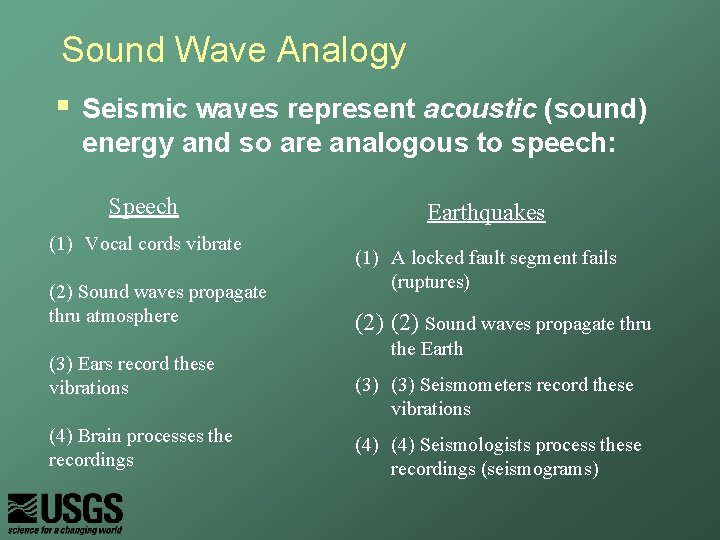
Sound Wave Analogy § Seismic waves represent acoustic (sound) energy and so are analogous to speech: Speech (1) Vocal cords vibrate (2) Sound waves propagate thru atmosphere (3) Ears record these vibrations (4) Brain processes the recordings Earthquakes (1) A locked fault segment fails (ruptures) (2) Sound waves propagate thru the Earth (3) Seismometers record these vibrations (4) Seismologists process these recordings (seismograms)
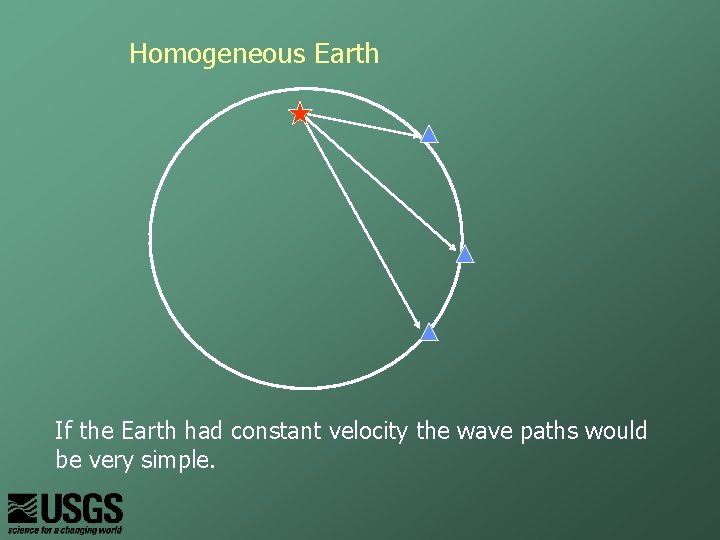
Homogeneous Earth If the Earth had constant velocity the wave paths would be very simple.
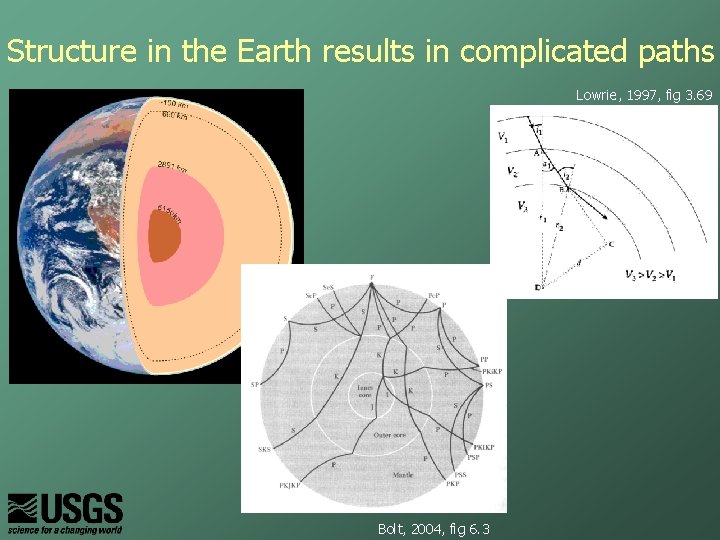
Structure in the Earth results in complicated paths Lowrie, 1997, fig 3. 69 Bolt, 2004, fig 6. 3
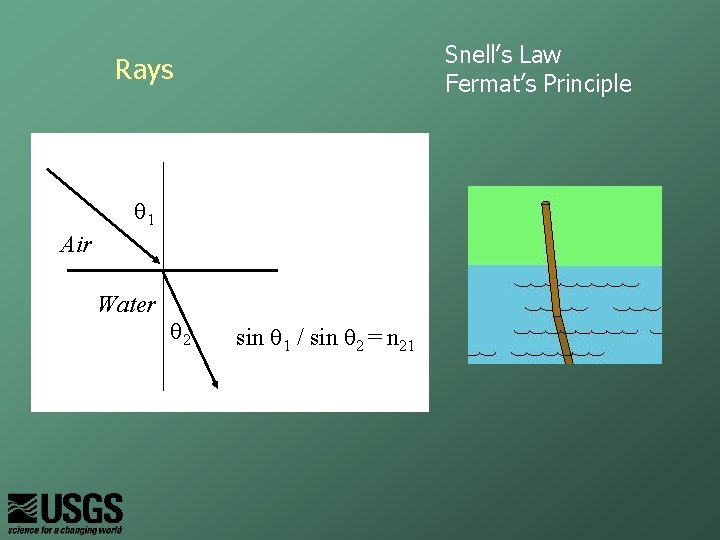
Snell’s Law Fermat’s Principle Rays q 1 Air Water q 2 sin q 1 / sin q 2 = n 21
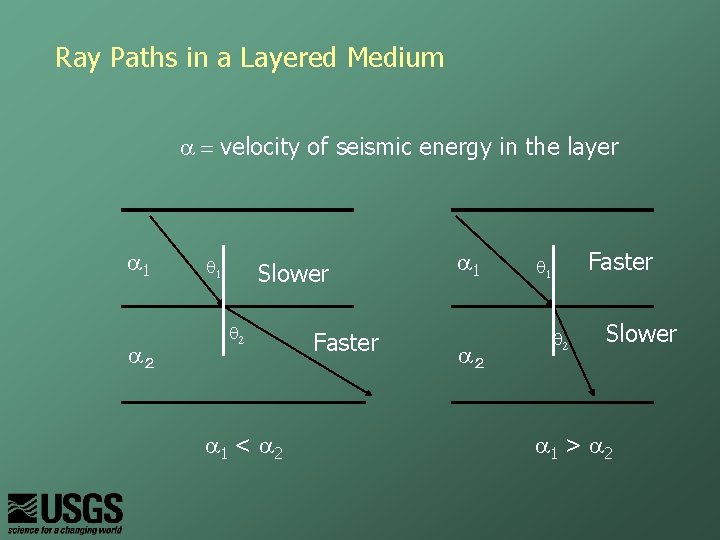
Ray Paths in a Layered Medium a = velocity of seismic energy in the layer a 1 a2 q 1 Slower q 2 a 1 < a 2 Faster a 1 a2 Faster q 1 q 2 Slower a 1 > a 2
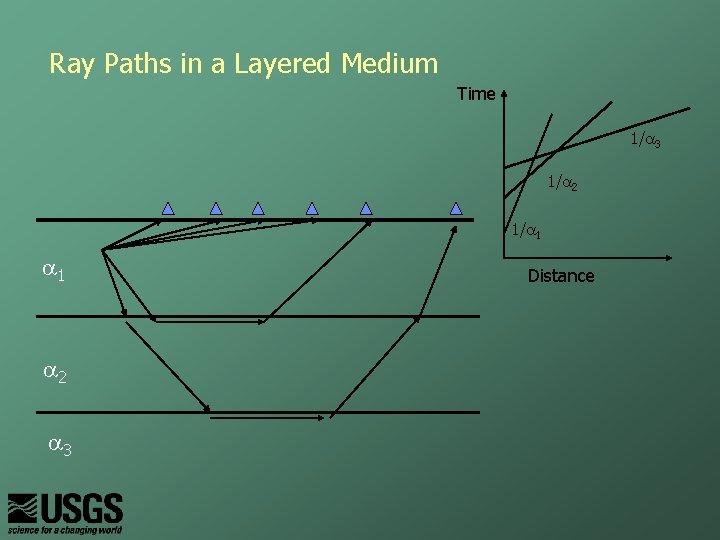
Ray Paths in a Layered Medium Time 1/a 3 1/a 2 1/a 1 a 2 a 3 Distance

The Moho Andrija Mohorovicic (1857 -1936) Found seismic discontinuity at 30 km depth in the Kupa Valley (Croatia). Mohorovicic discontinuity or ‘Moho’ Boundary between crust and mantle The Moho Copywrite Tasa Graphic Arts
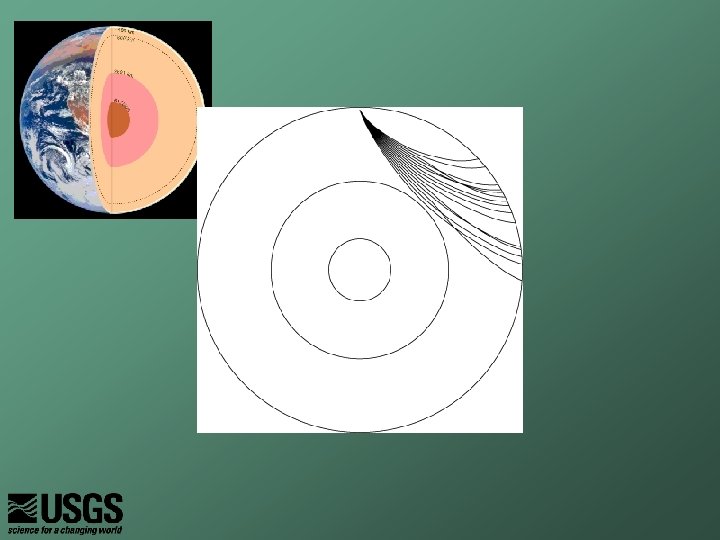
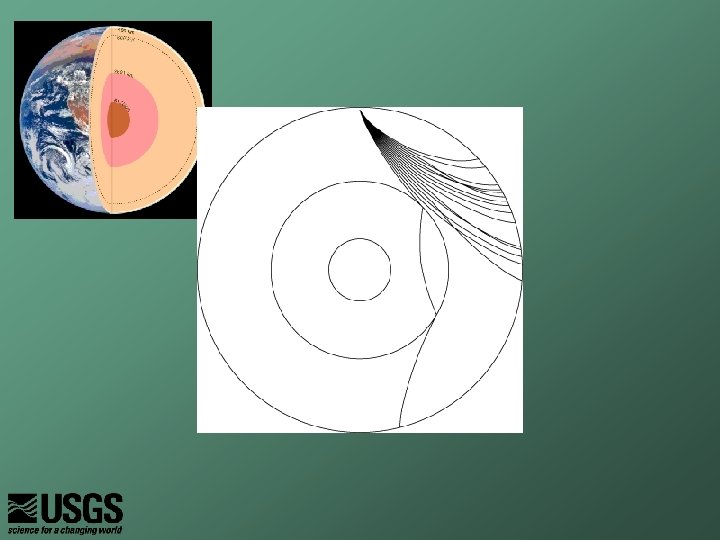
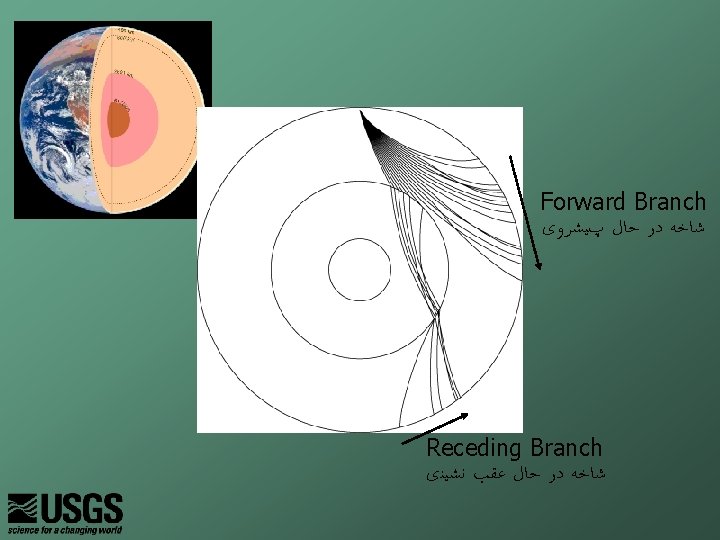
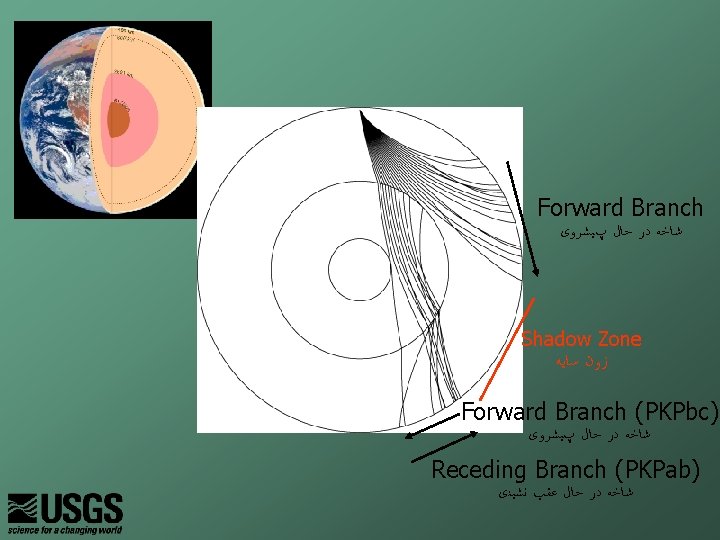
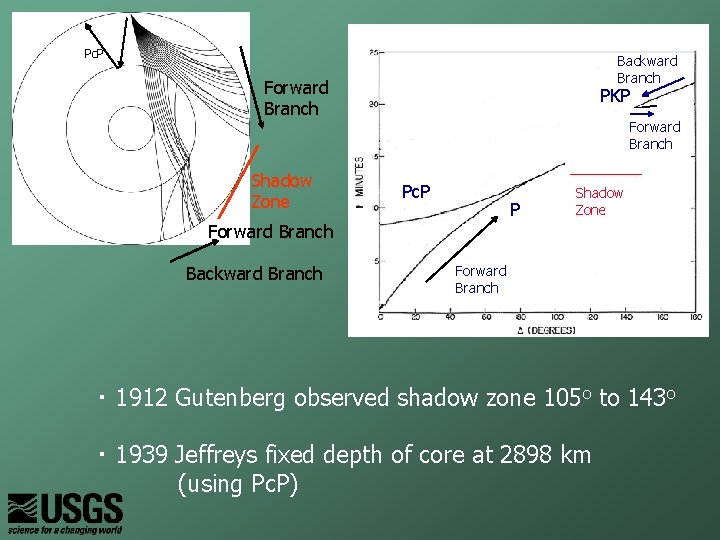
Pc. P Backward Branch Forward Branch Shadow Zone PKP Forward Branch Pc. P P Shadow Zone Forward Branch Backward Branch Forward Branch ・ 1912 Gutenberg observed shadow zone 105 o to 143 o ・ 1939 Jeffreys fixed depth of core at 2898 km (using Pc. P)
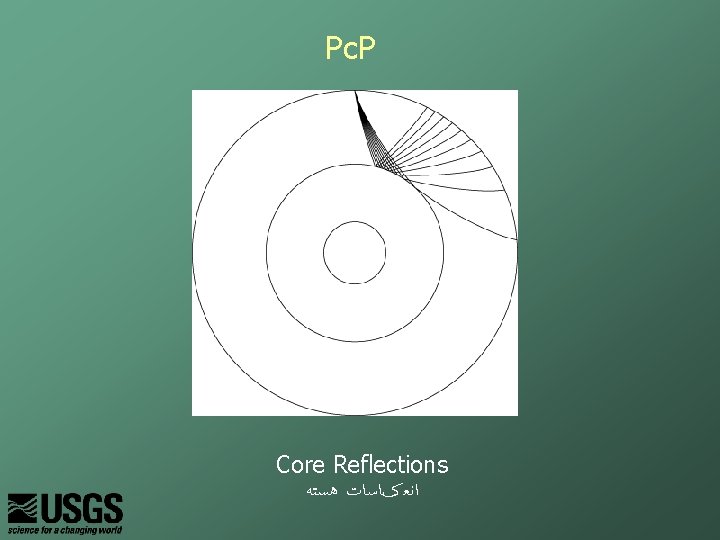
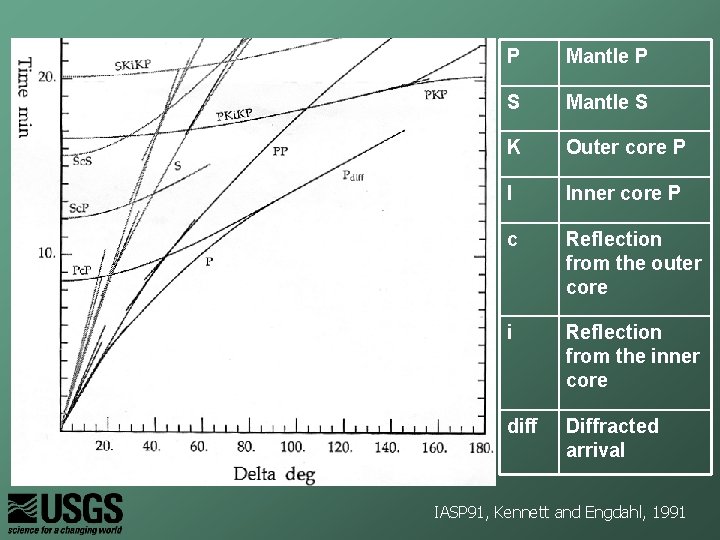
P Mantle P S Mantle S K Outer core P I Inner core P c Reflection from the outer core i Reflection from the inner core diff Diffracted arrival IASP 91, Kennett and Engdahl, 1991
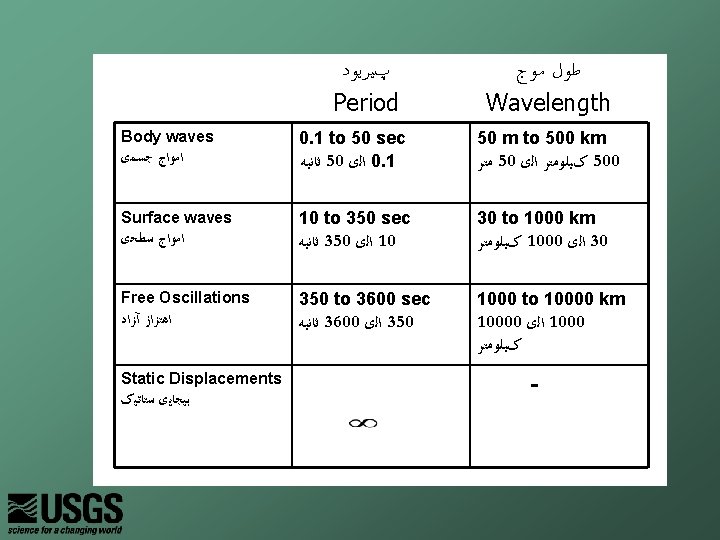
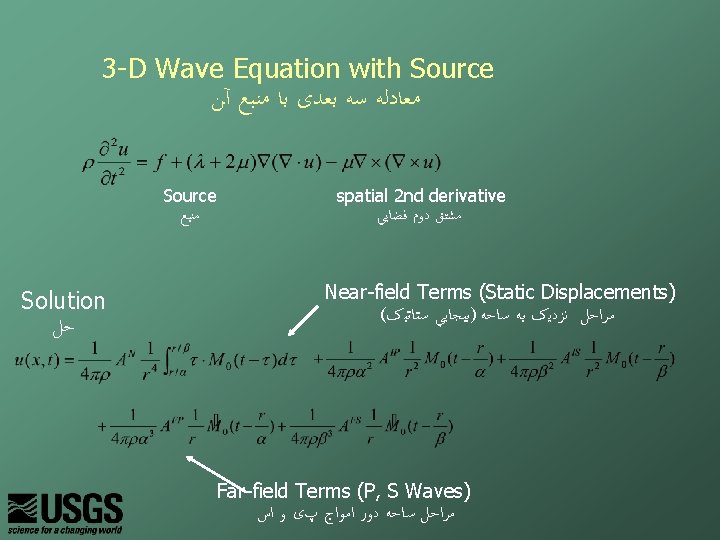
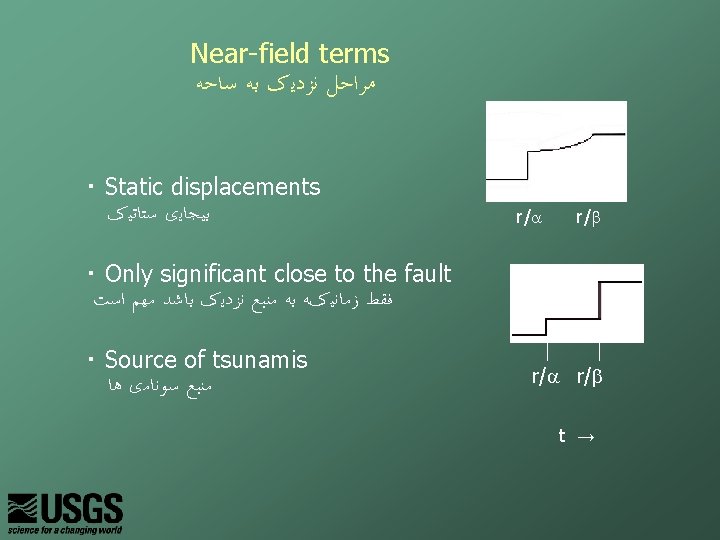
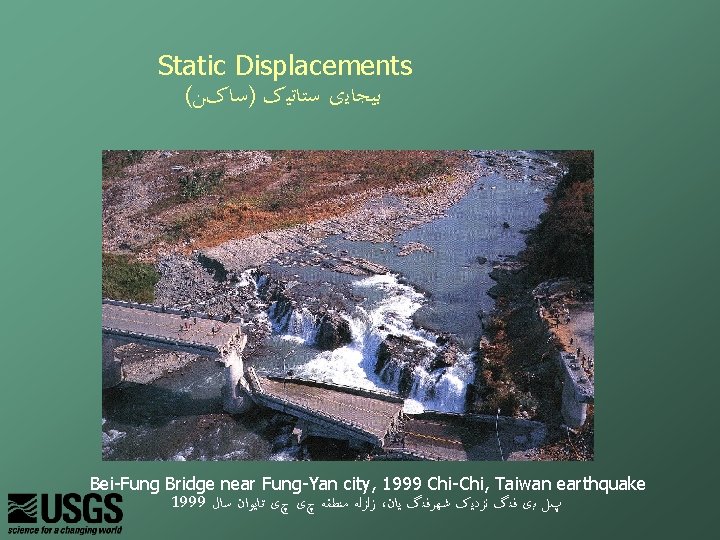
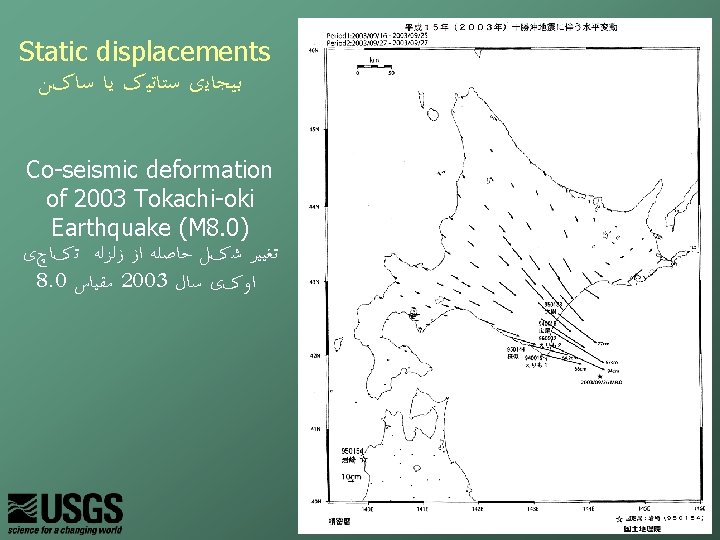
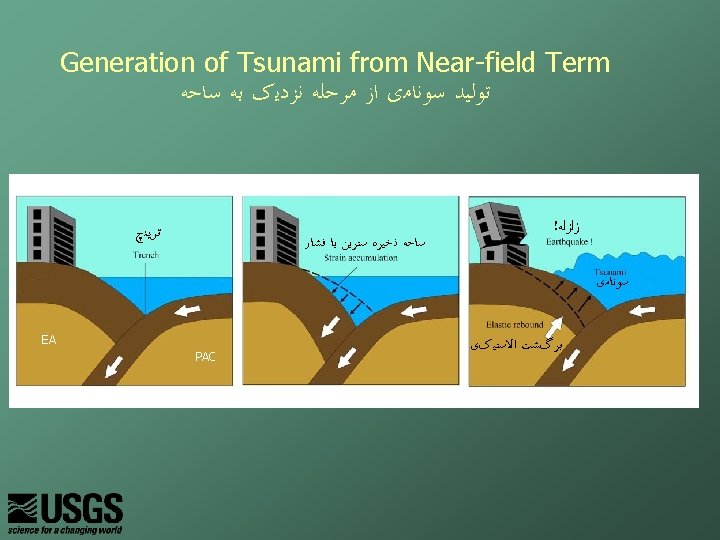
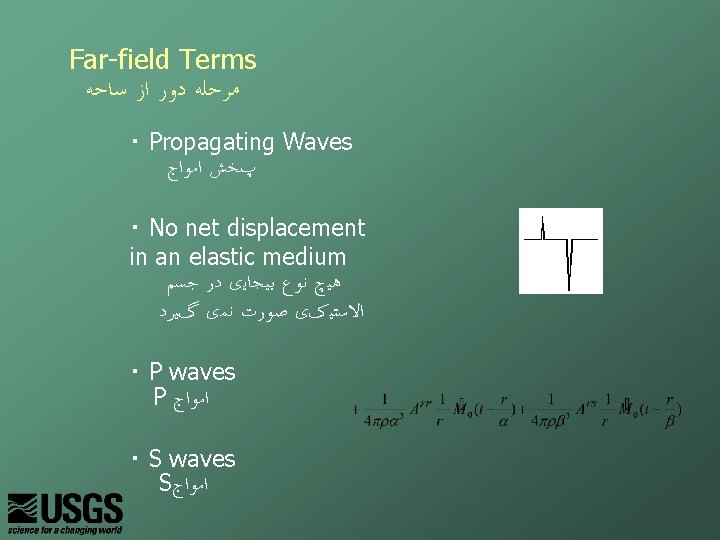
Seismic Waves ・ ・ Different types of waves (Body, Surface) Wave Equation Static Displacements Frequency content
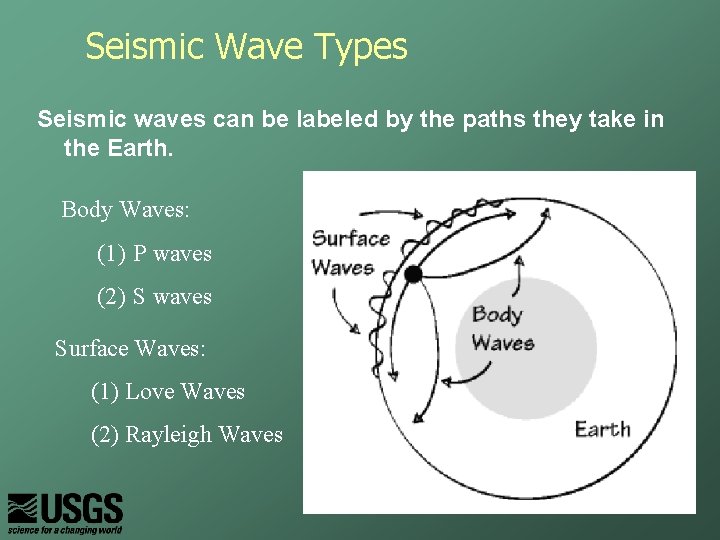
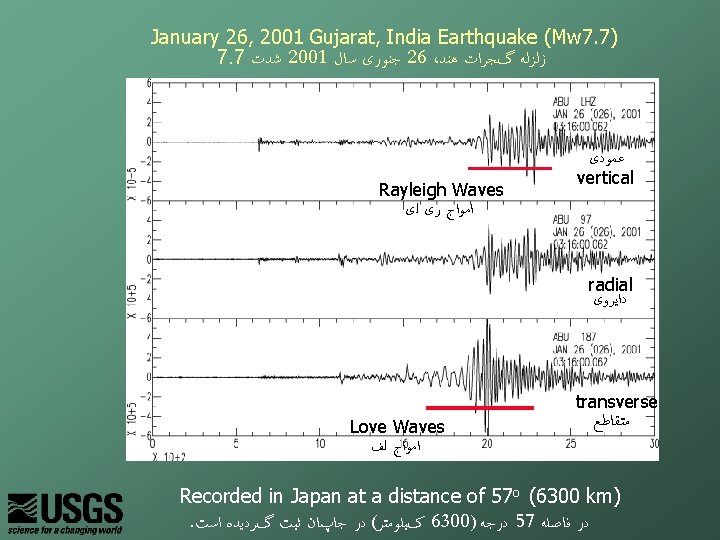
Seismic Wave Types Seismic waves can be labeled by the paths they take in the Earth. Body Waves: (1) P waves (2) S waves Surface Waves: (1) Love Waves (2) Rayleigh Waves

Body Waves
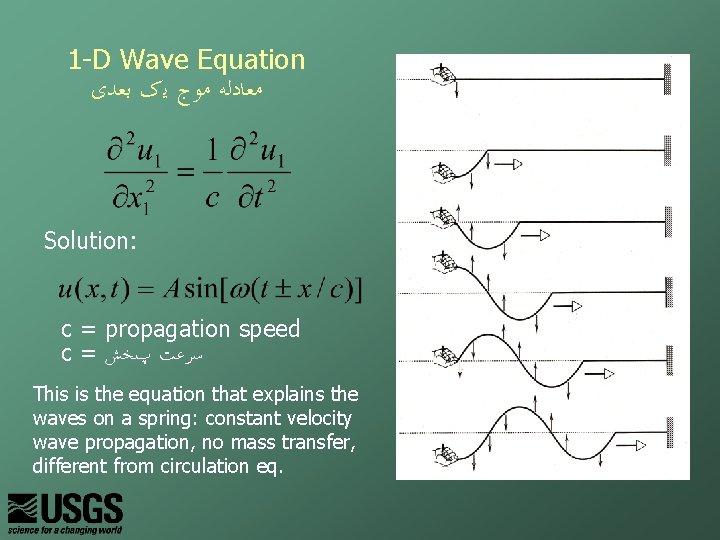
1 -D Wave Equation ﻣﻌﺎﺩﻟﻪ ﻣﻮﺝ ﻳک ﺑﻌﺪی Solution: c = propagation speed c = ﺳﺮﻋﺖ پﺨﺶ This is the equation that explains the waves on a spring: constant velocity wave propagation, no mass transfer, different from circulation eq.
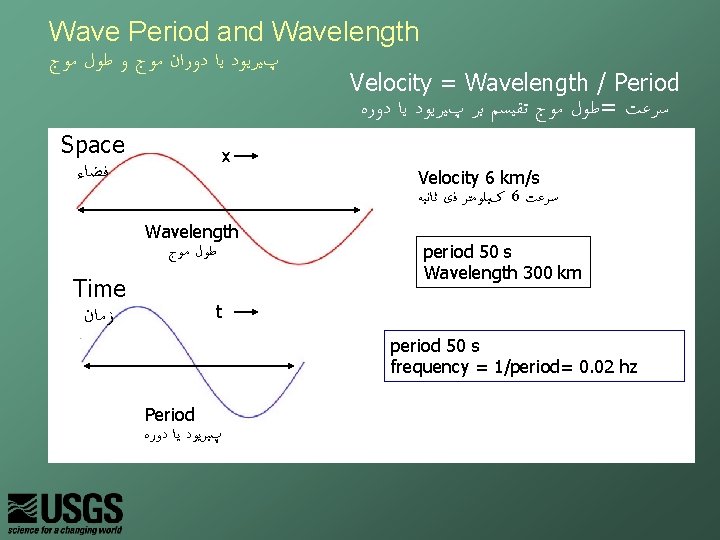
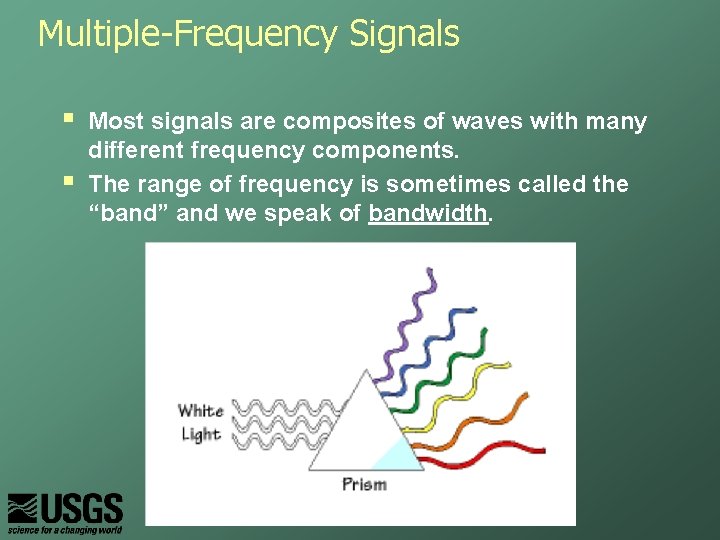
Multiple-Frequency Signals § § Most signals are composites of waves with many different frequency components. The range of frequency is sometimes called the “band” and we speak of bandwidth.
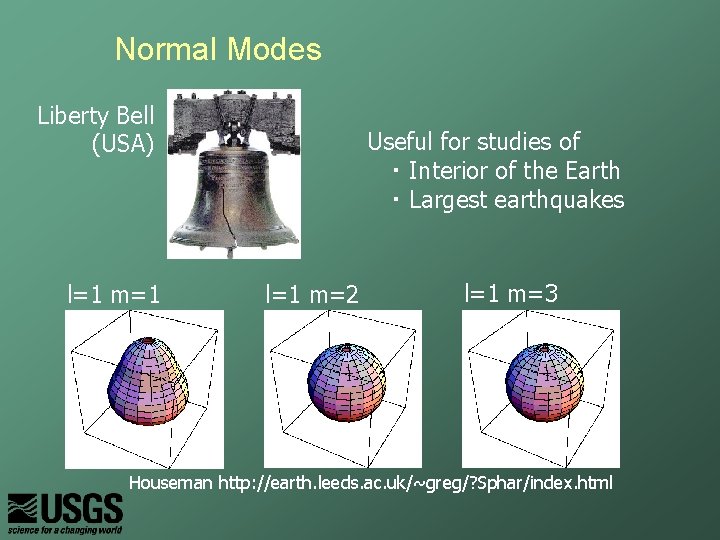
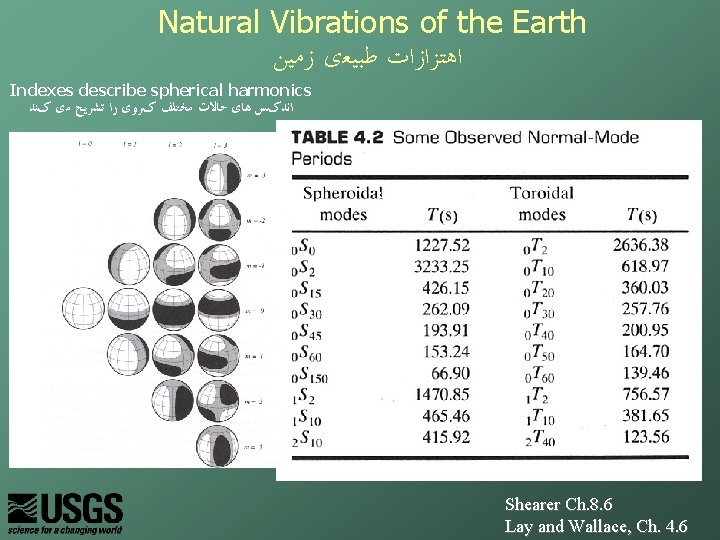
Normal Modes Liberty Bell (USA) l=1 m=1 Useful for studies of ・ Interior of the Earth ・ Largest earthquakes l=1 m=2 l=1 m=3 Houseman http: //earth. leeds. ac. uk/~greg/? Sphar/index. html
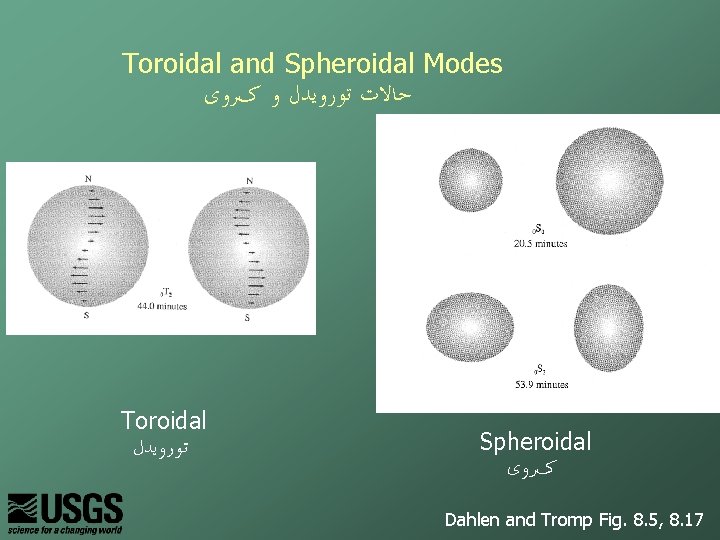
Toroidal and Spheroidal Modes ﺣﺎﻻﺕ ﺗﻮﺭﻭﻳﺪﻝ ﻭ کﺮﻭی Toroidal ﺗﻮﺭﻭﻳﺪﻝ Spheroidal کﺮﻭی Dahlen and Tromp Fig. 8. 5, 8. 17
- Slides: 37