
Seismicity in subduction zones Significant variation in seismicity
Seismicity in subduction zones • Significant variation in seismicity patterns related to: • • Updip edge of seismicity Downdip edge of seismicity Amount of seismicity (possible) Non-volcanic tremor • Temperature is thought to have an important effect on the seismicity distribution • Does this manifest through variations in fluid content?
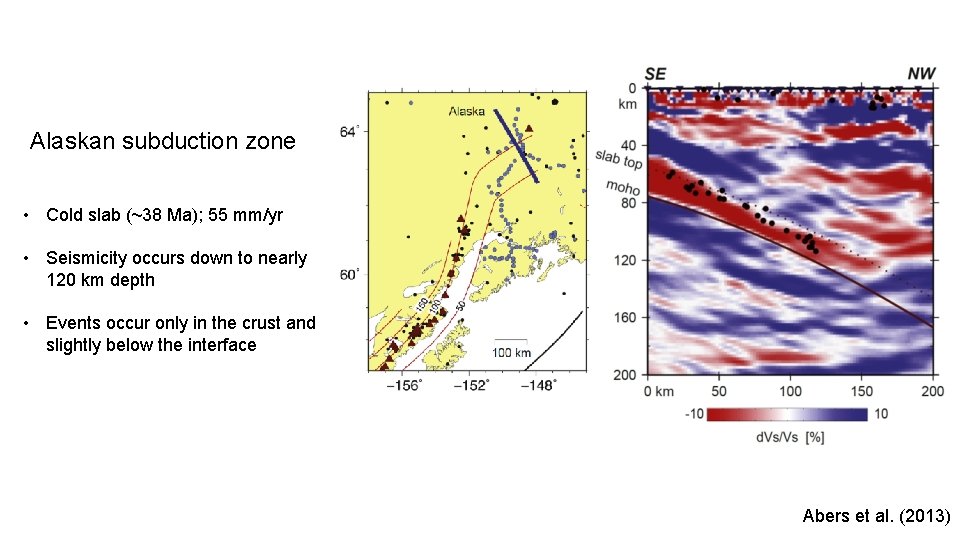
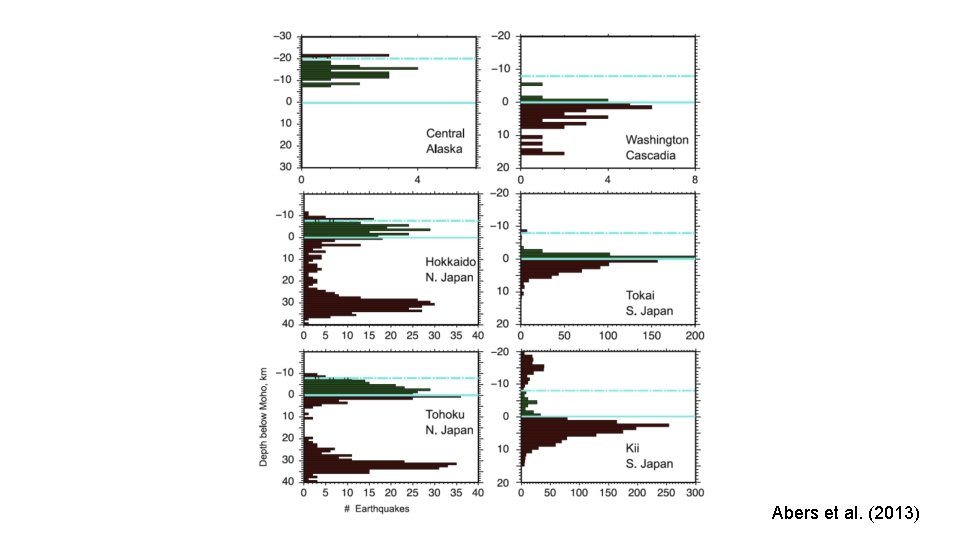
Alaskan subduction zone • Cold slab (~38 Ma); 55 mm/yr • Seismicity occurs down to nearly 120 km depth • Events occur only in the crust and slightly below the interface Abers et al. (2013)
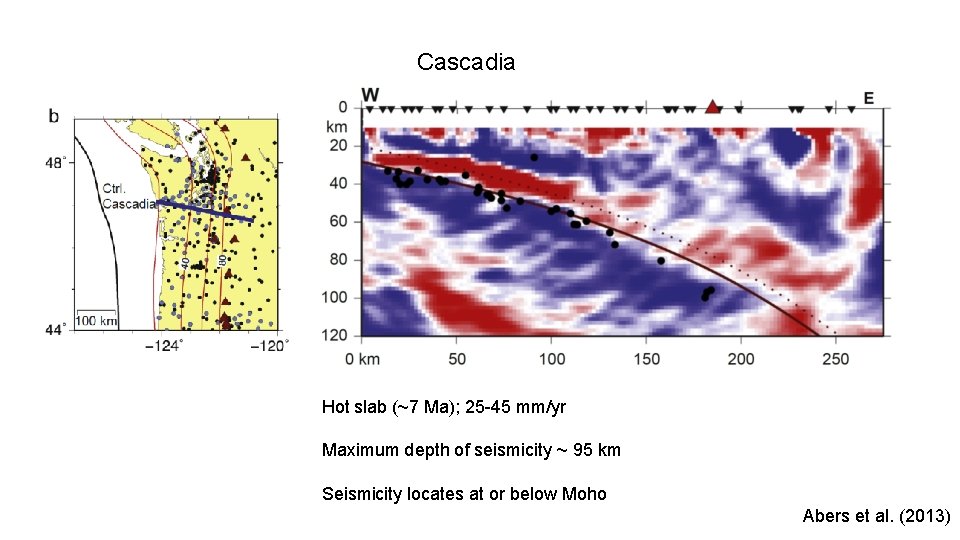
Cascadia Hot slab (~7 Ma); 25 -45 mm/yr Maximum depth of seismicity ~ 95 km Seismicity locates at or below Moho Abers et al. (2013)

Northeast Japan Cold slab (~120 Ma); 80 mm/yr Double Benioff zones Seismicity ranges from ~40 km to 150 km Events occur primarily in the crust for upper Benioff zone Yamasaki and Seno (2003) Abers et al. (2013)

Southwest Japan Hot slab (~20 Ma); 30 -60 mm/yr Events occur mostly below the Moho Maximum depth of seismicity ~60 km Low frequency earthquakes on plate interface Abers et al. (2013)
Abers et al. (2013)
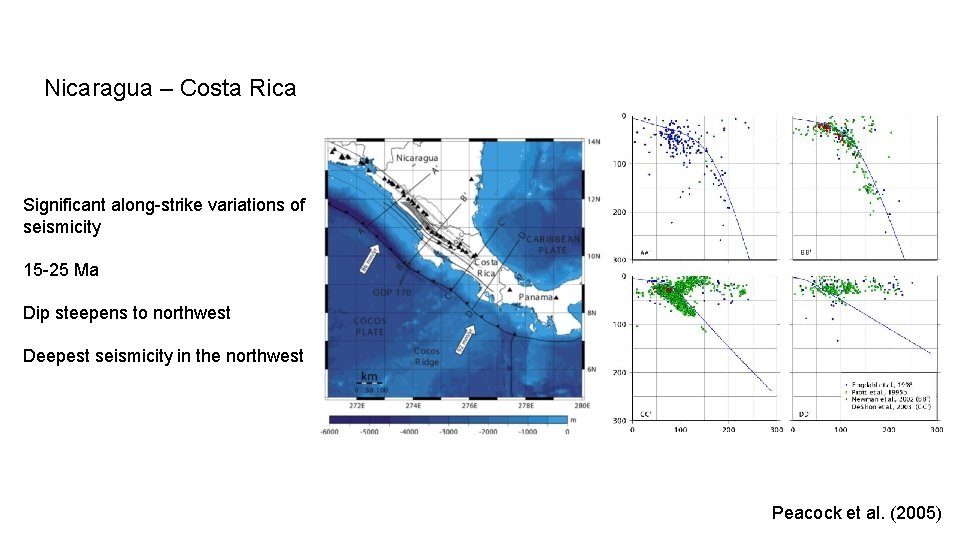
Nicaragua – Costa Rica Significant along-strike variations of seismicity 15 -25 Ma Dip steepens to northwest Deepest seismicity in the northwest Peacock et al. (2005)
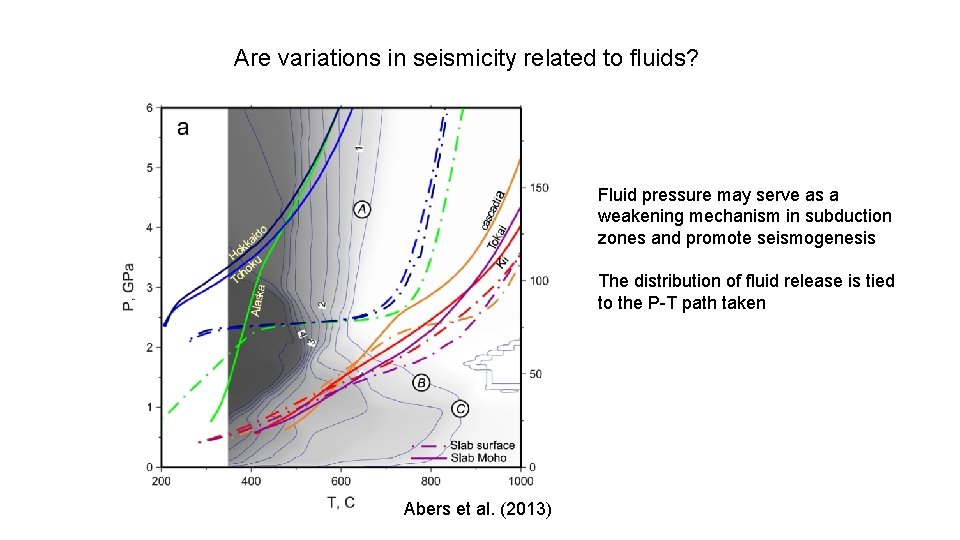
Are variations in seismicity related to fluids? Fluid pressure may serve as a weakening mechanism in subduction zones and promote seismogenesis The distribution of fluid release is tied to the P-T path taken Abers et al. (2013)
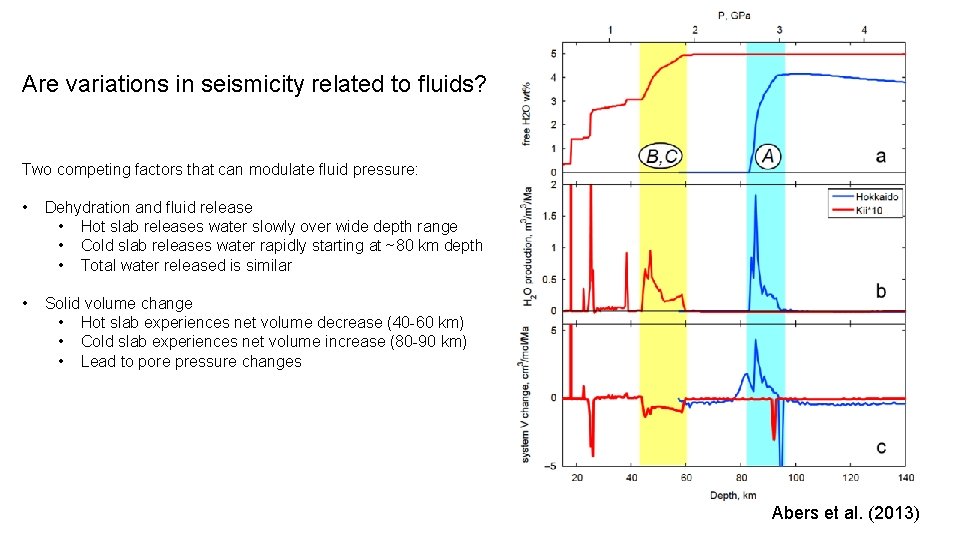
Are variations in seismicity related to fluids? Two competing factors that can modulate fluid pressure: • Dehydration and fluid release • Hot slab releases water slowly over wide depth range • Cold slab releases water rapidly starting at ~80 km depth • Total water released is similar • Solid volume change • Hot slab experiences net volume decrease (40 -60 km) • Cold slab experiences net volume increase (80 -90 km) • Lead to pore pressure changes Abers et al. (2013)
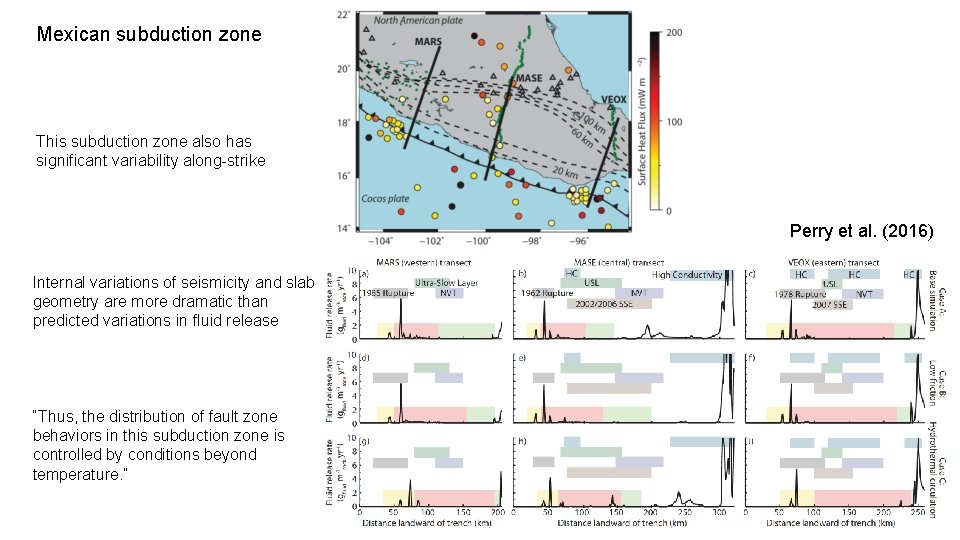
Mexican subduction zone This subduction zone also has significant variability along-strike Perry et al. (2016) Internal variations of seismicity and slab geometry are more dramatic than predicted variations in fluid release “Thus, the distribution of fault zone behaviors in this subduction zone is controlled by conditions beyond temperature. ”
- Slides: 10