
Seismic tomography Art or science Frederik J Simons

- Slides: 47
Seismic tomography: Art or science? Frederik J Simons Princeton University
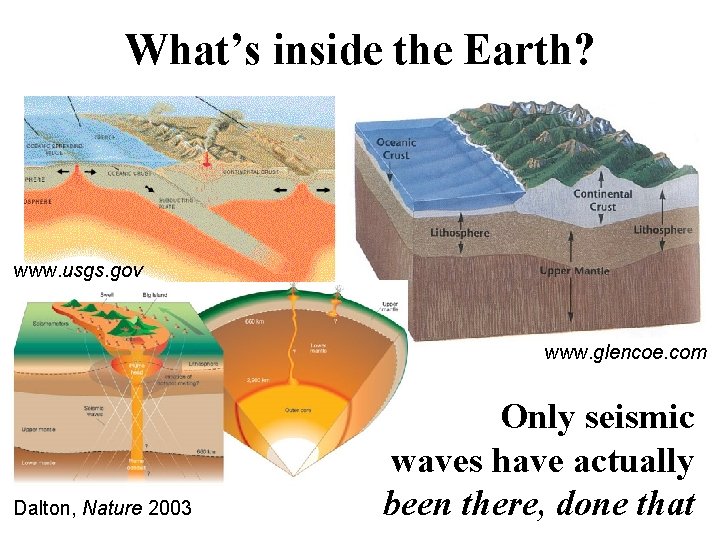
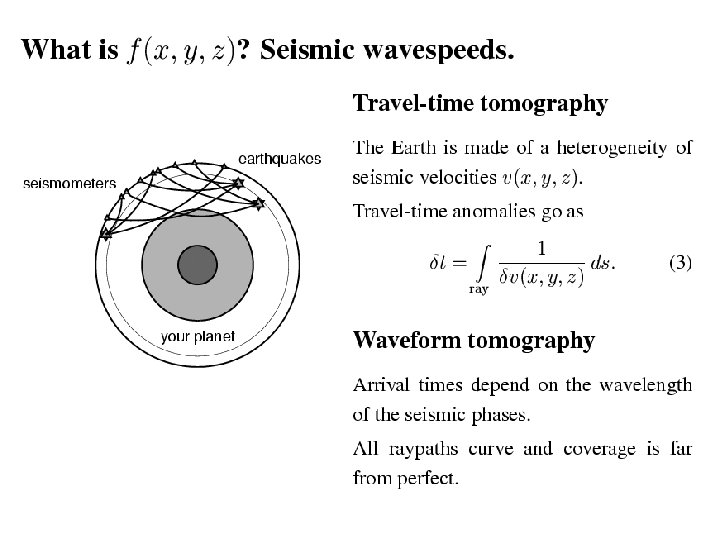
What’s inside the Earth? www. usgs. gov www. glencoe. com Dalton, Nature 2003 Only seismic waves have actually been there, done that
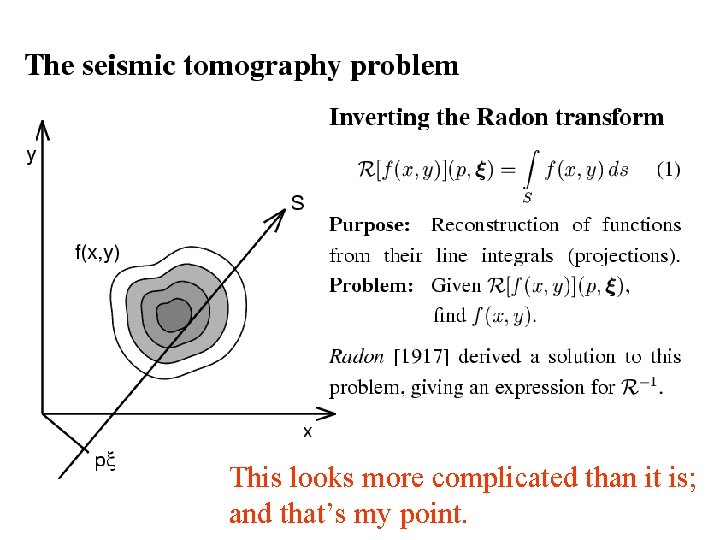
This looks more complicated than it is; and that’s my point.
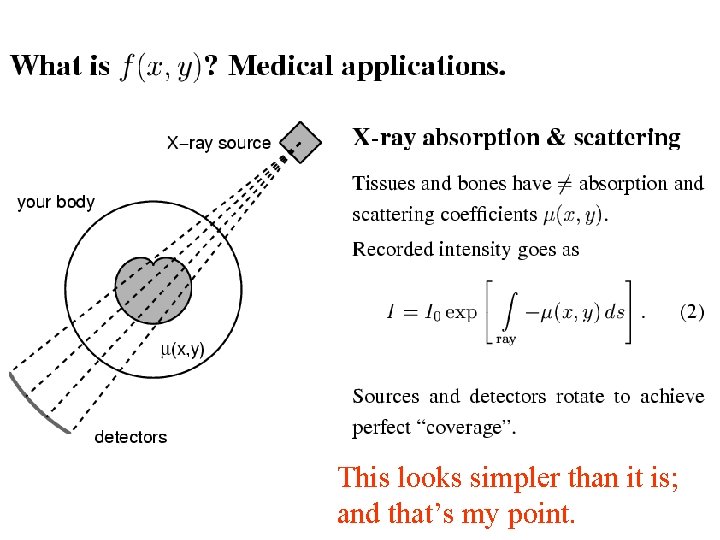
This looks simpler than it is; and that’s my point.
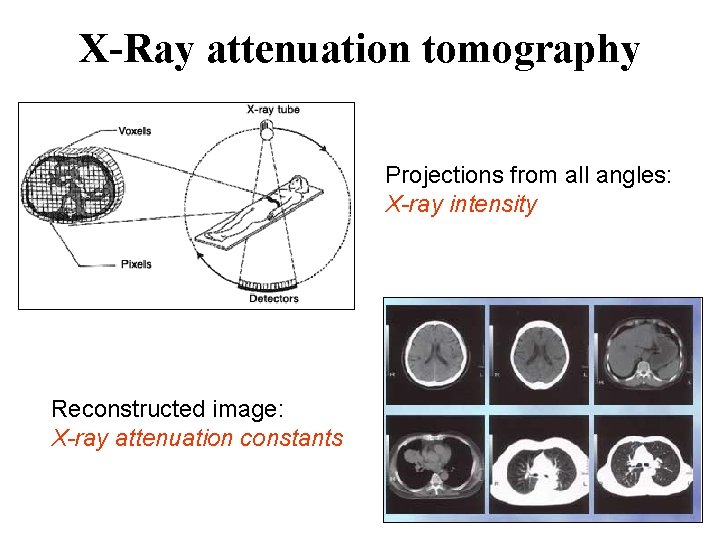
X-Ray attenuation tomography Projections from all angles: X-ray intensity Reconstructed image: X-ray attenuation constants
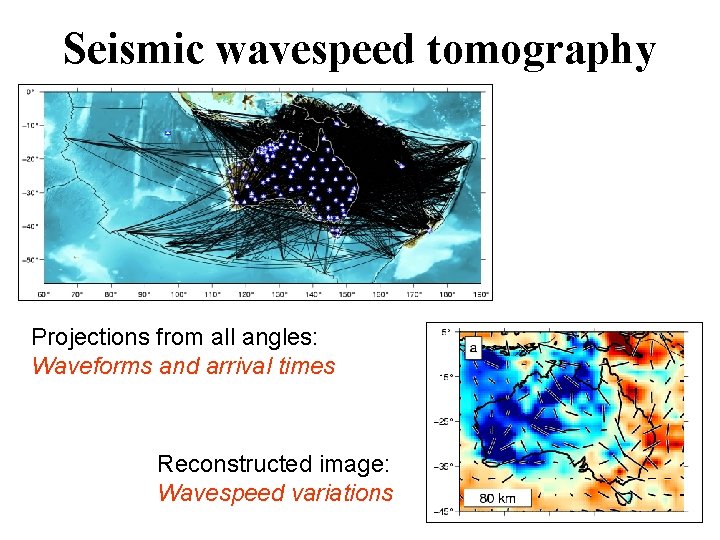
Seismic wavespeed tomography Projections from all angles: Waveforms and arrival times Reconstructed image: Wavespeed variations
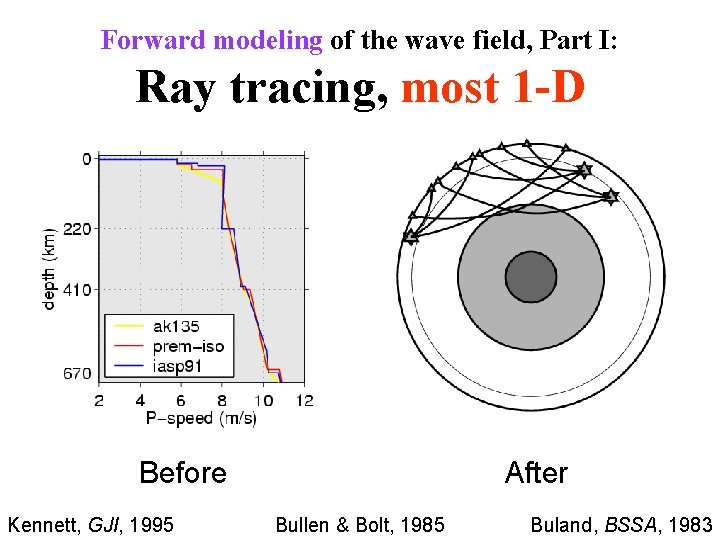
Forward modeling of the wave field, Part I: Ray tracing, most 1 -D Before Kennett, GJI, 1995 After Bullen & Bolt, 1985 Buland, BSSA, 1983
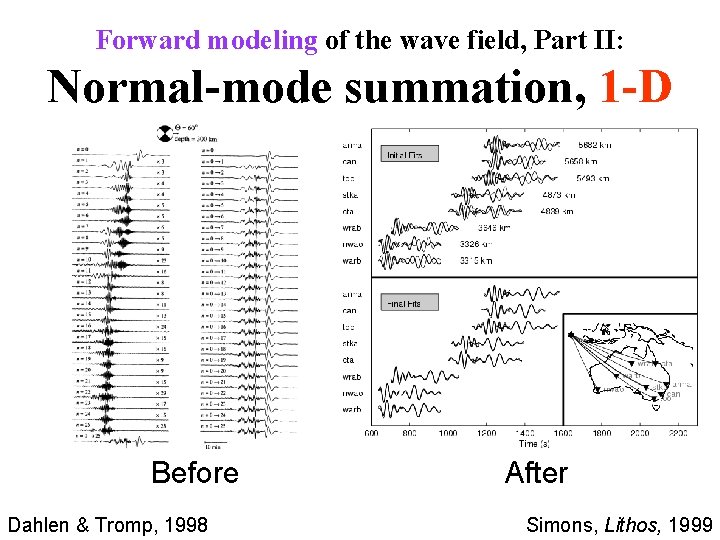
Forward modeling of the wave field, Part II: Normal-mode summation, 1 -D Before Dahlen & Tromp, 1998 After Simons, Lithos, 1999
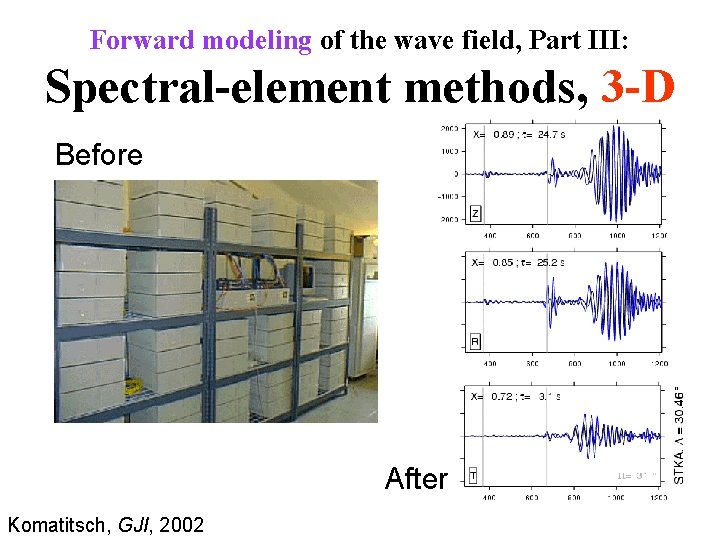
Forward modeling of the wave field, Part III: Spectral-element methods, 3 -D Before After Komatitsch, GJI, 2002
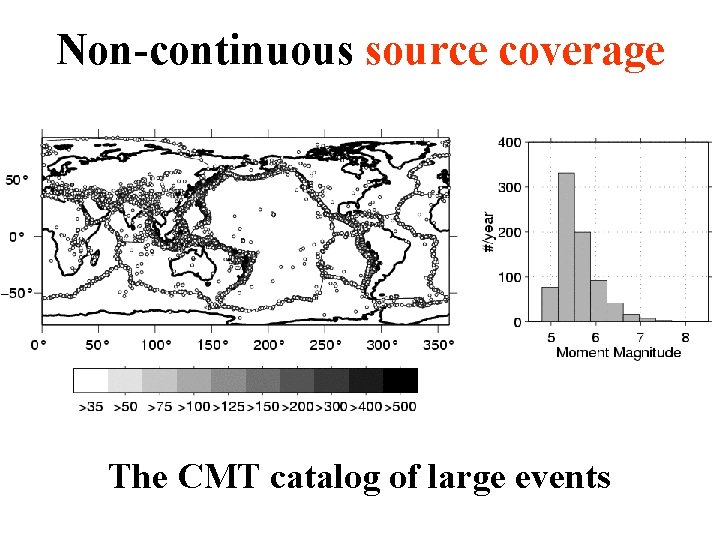
Non-continuous source coverage The CMT catalog of large events
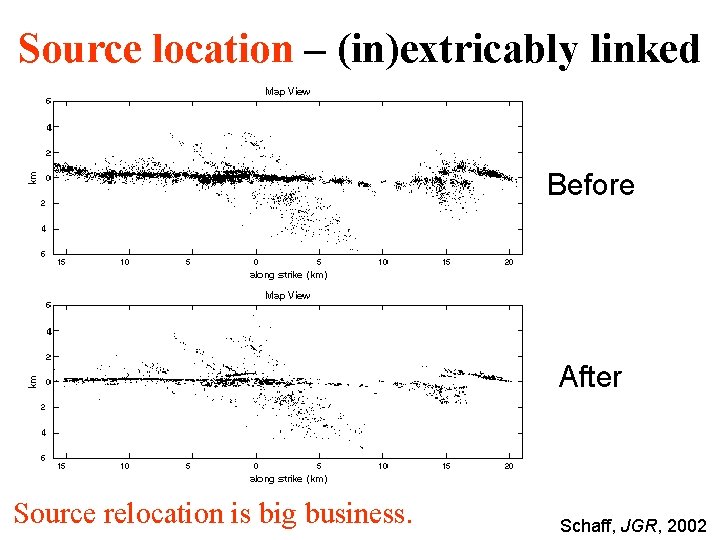
Source location – (in)extricably linked Before After Source relocation is big business. Schaff, JGR, 2002
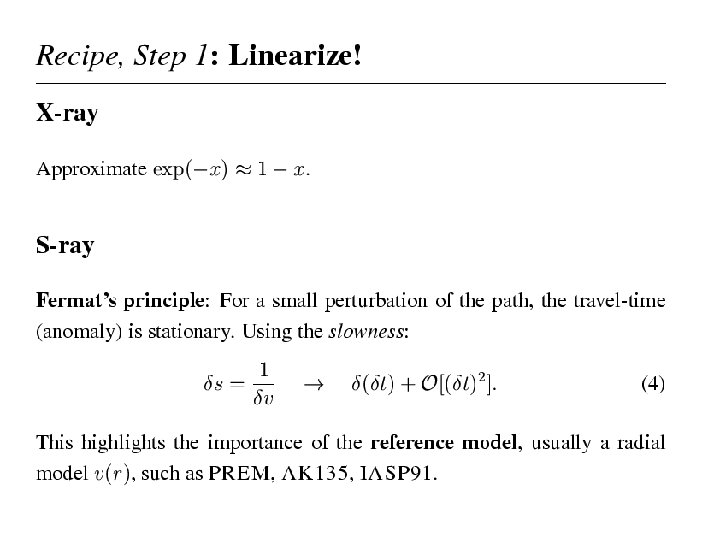
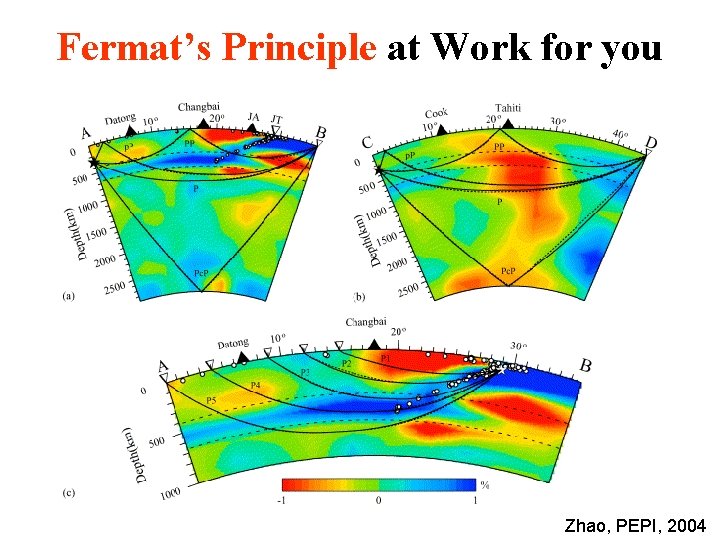
Fermat’s Principle at Work for you Zhao, PEPI, 2004
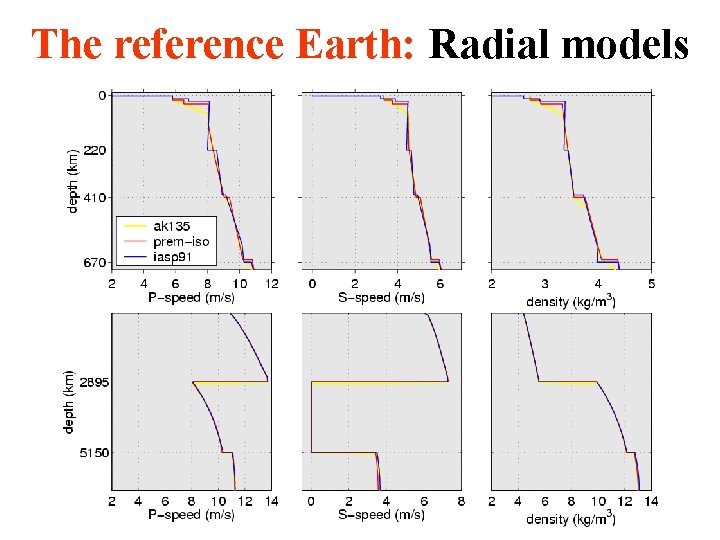
The reference Earth: Radial models
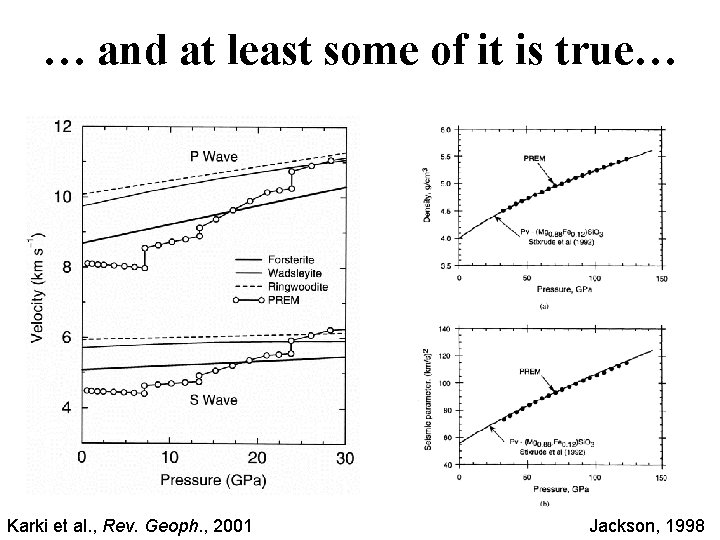
… and at least some of it is true… Karki et al. , Rev. Geoph. , 2001 Jackson, 1998
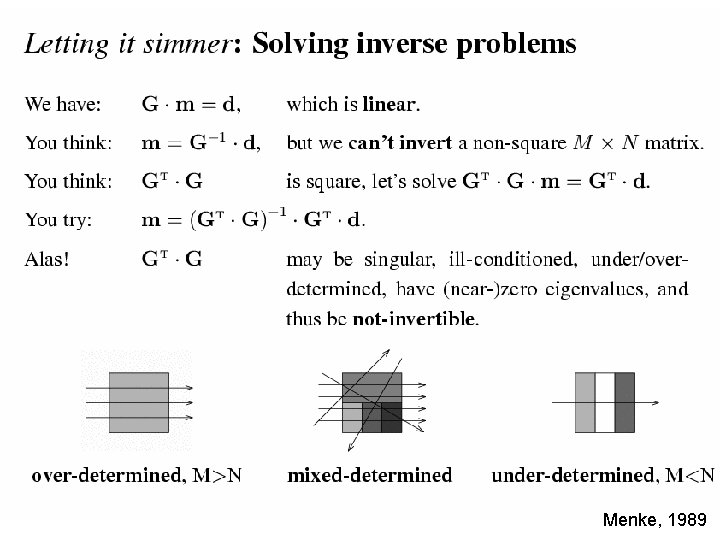
Menke, 1989
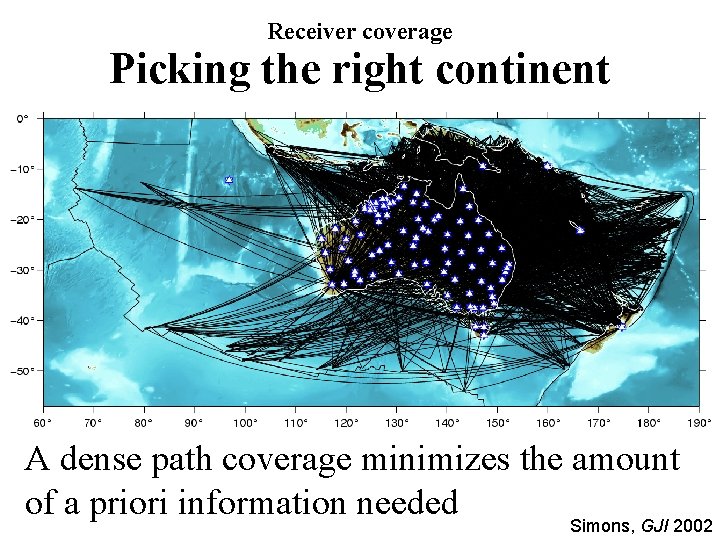
Receiver coverage Picking the right continent A dense path coverage minimizes the amount of a priori information needed Simons, GJI 2002
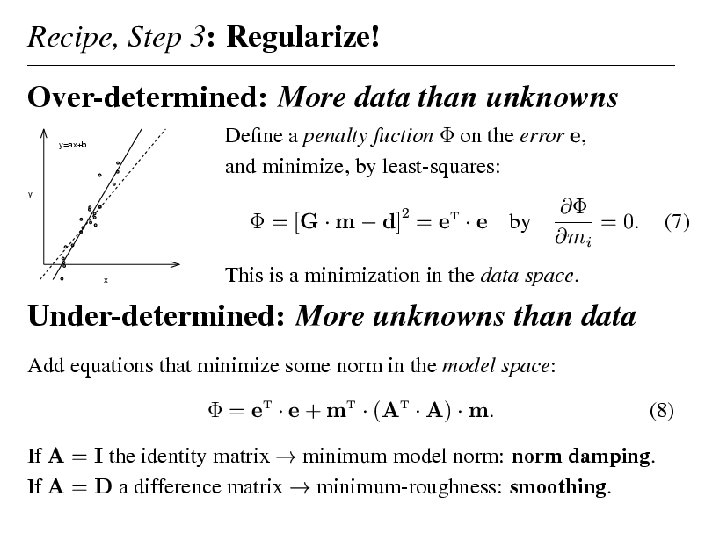
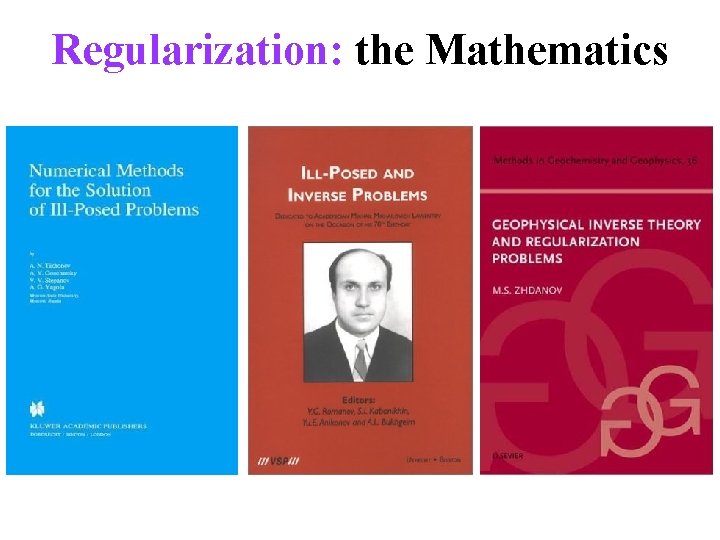
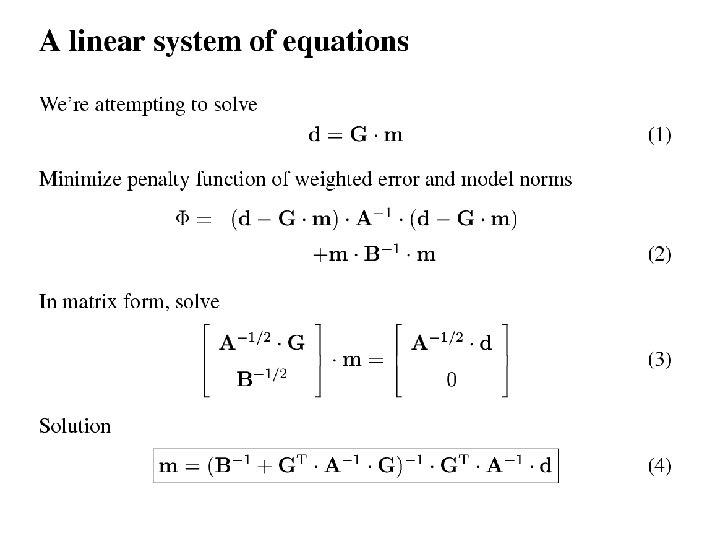
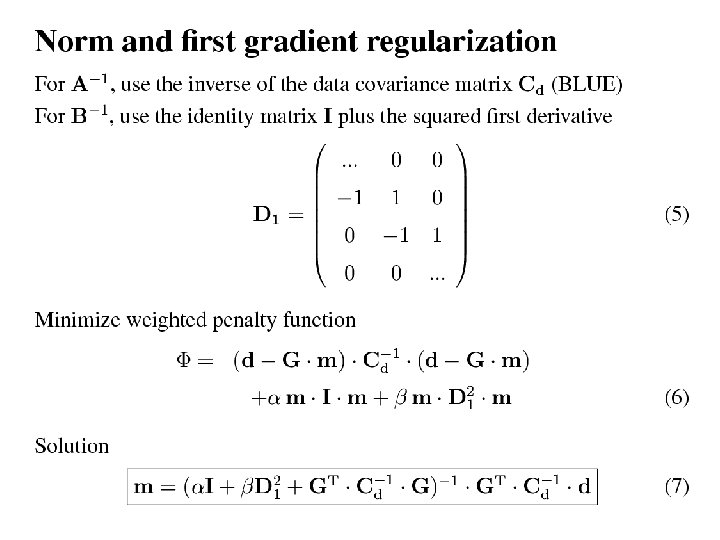
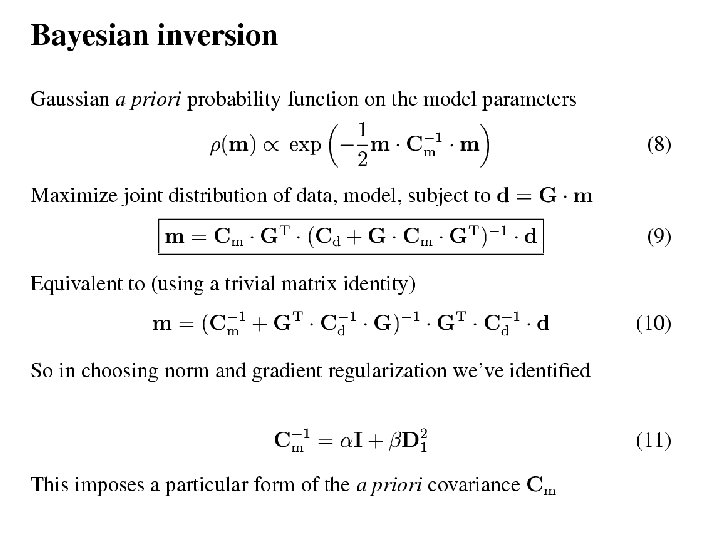
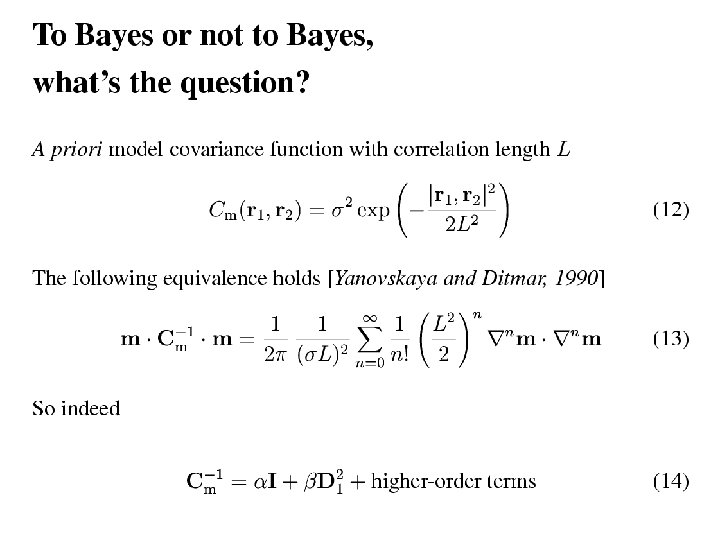
Regularization: the Mathematics
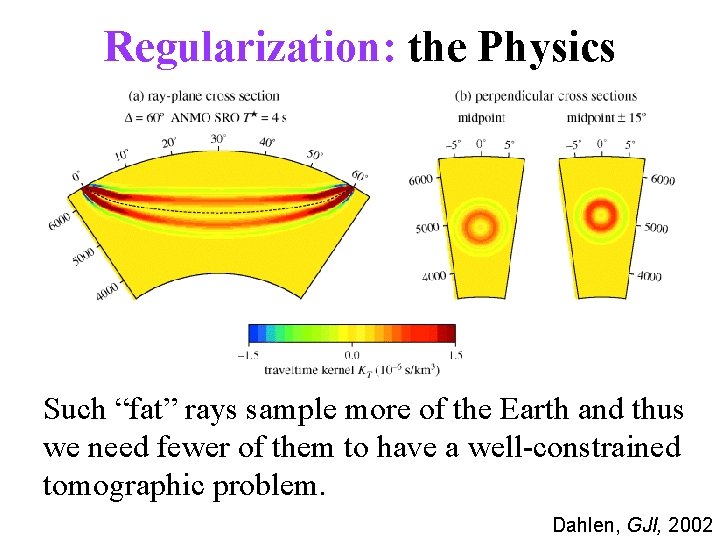
Regularization: the Physics Such “fat” rays sample more of the Earth and thus we need fewer of them to have a well-constrained tomographic problem. Dahlen, GJI, 2002
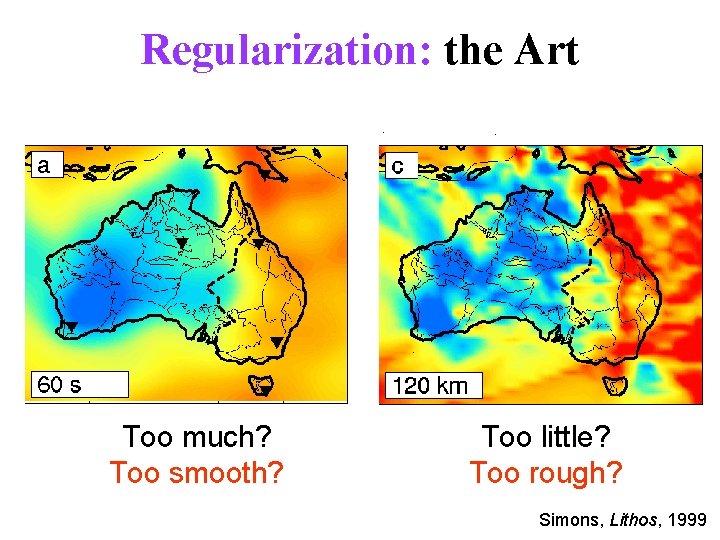
Regularization: the Art Too much? Too smooth? Too little? Too rough? Simons, Lithos, 1999
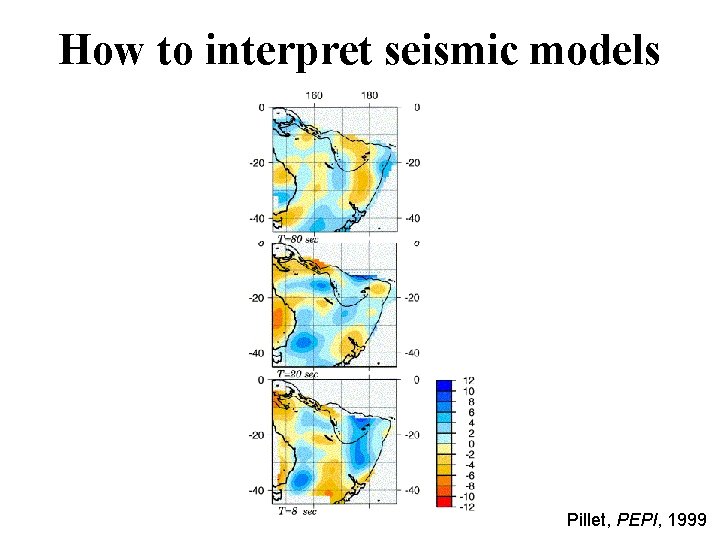
How to interpret seismic models Pillet, PEPI, 1999
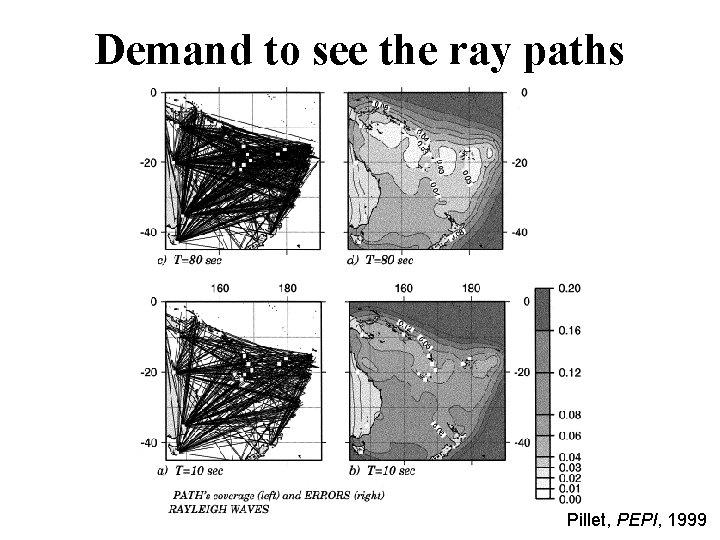
Demand to see the ray paths Pillet, PEPI, 1999
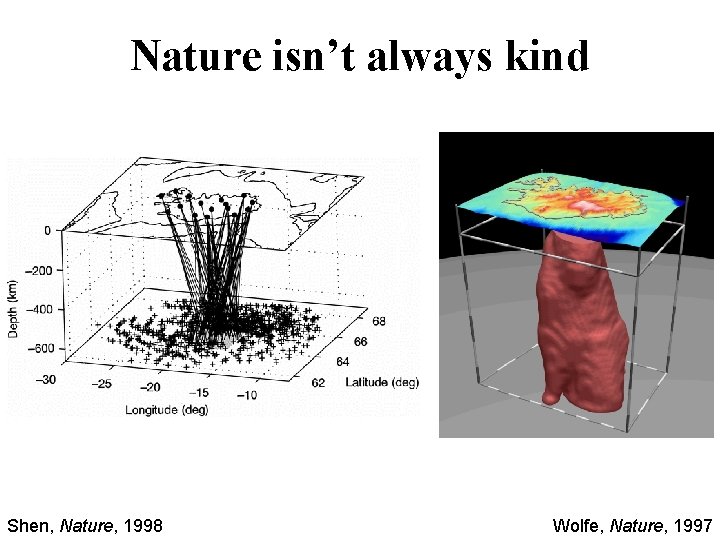
Nature isn’t always kind Shen, Nature, 1998 Wolfe, Nature, 1997
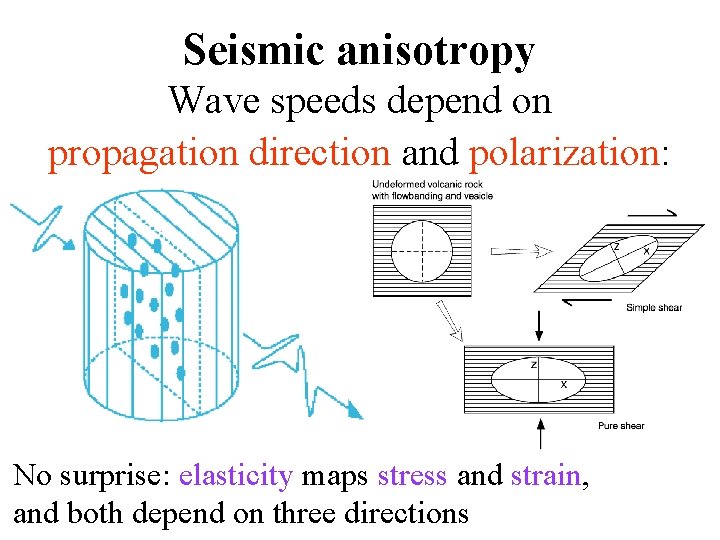
Seismic anisotropy Wave speeds depend on propagation direction and polarization: No surprise: elasticity maps stress and strain, and both depend on three directions
Polarization anisotropy • The particles of Love and Raleigh surface waves move in orthogonal directions • SH and SV body waves sometimes exhibit clear splitting Azimuthal anisotropy • It’s usually very hard to separate whether the time difference arises from an anisotropic direction or an isotropic wave speed difference (aka heterogeneity)
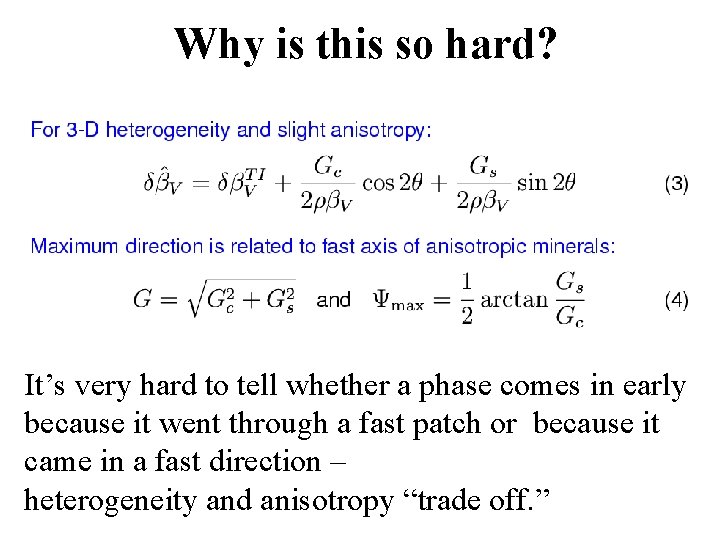
Why is this so hard? It’s very hard to tell whether a phase comes in early because it went through a fast patch or because it came in a fast direction – heterogeneity and anisotropy “trade off. ”
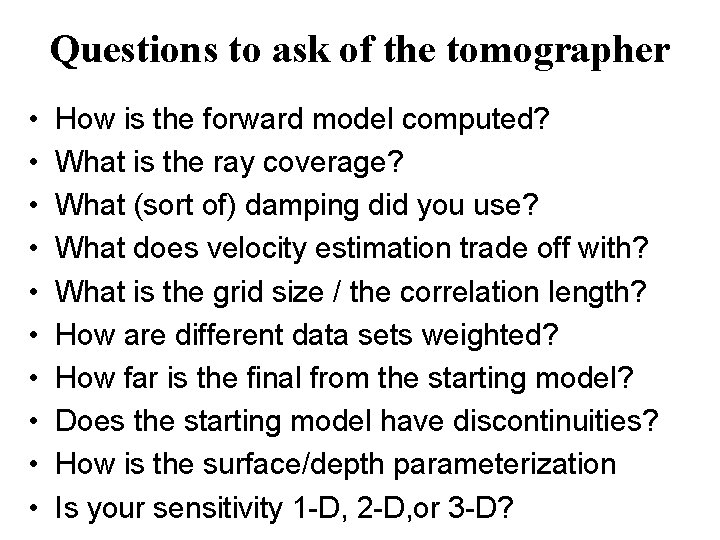
Questions to ask of the tomographer • • • How is the forward model computed? What is the ray coverage? What (sort of) damping did you use? What does velocity estimation trade off with? What is the grid size / the correlation length? How are different data sets weighted? How far is the final from the starting model? Does the starting model have discontinuities? How is the surface/depth parameterization Is your sensitivity 1 -D, 2 -D, or 3 -D?
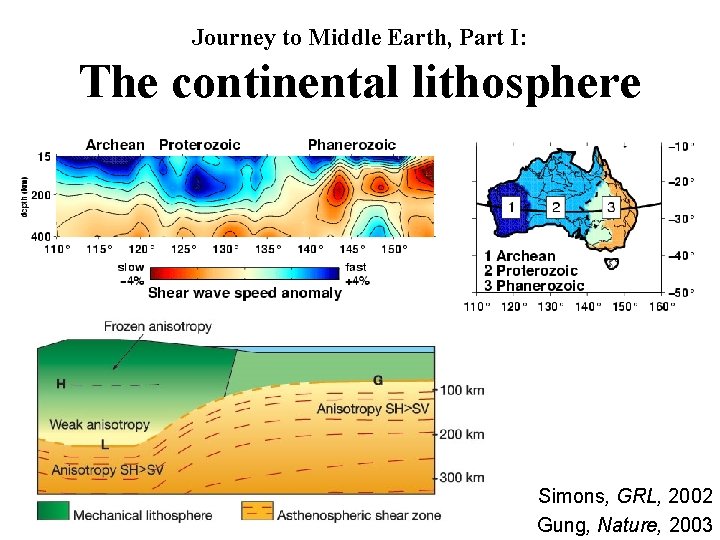
Journey to Middle Earth, Part I: The continental lithosphere Simons, GRL, 2002 Gung, Nature, 2003
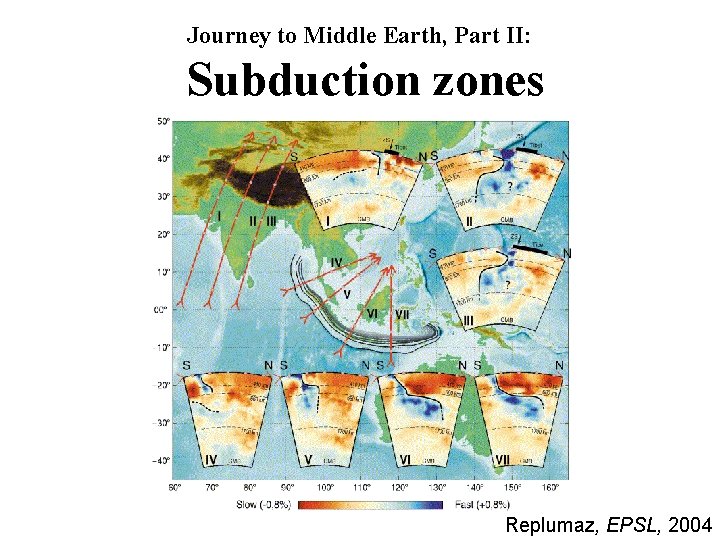
Journey to Middle Earth, Part II: Subduction zones Replumaz, EPSL, 2004
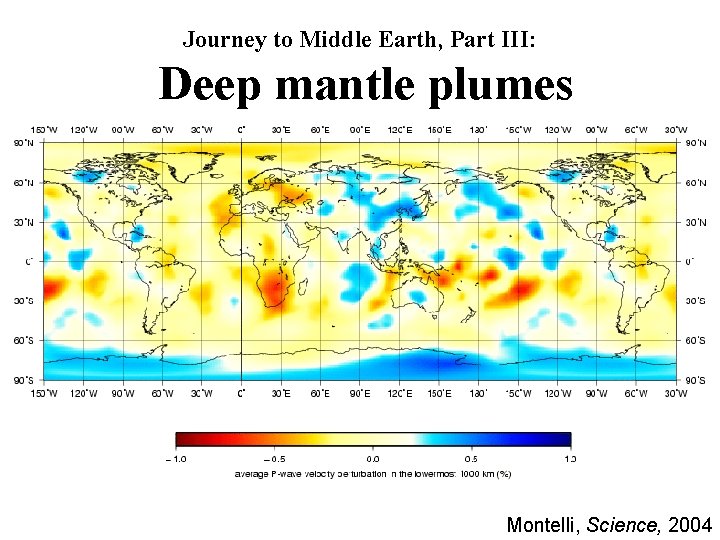
Journey to Middle Earth, Part III: Deep mantle plumes Montelli, Science, 2004
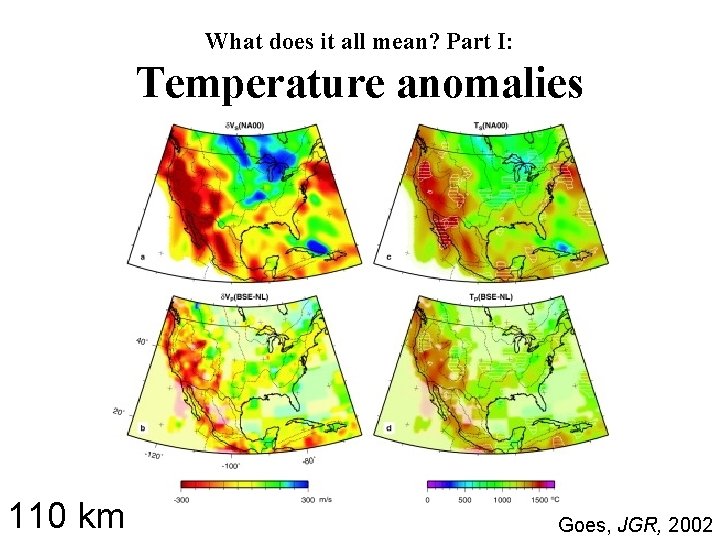
What does it all mean? Part I: Temperature anomalies 110 km Goes, JGR, 2002
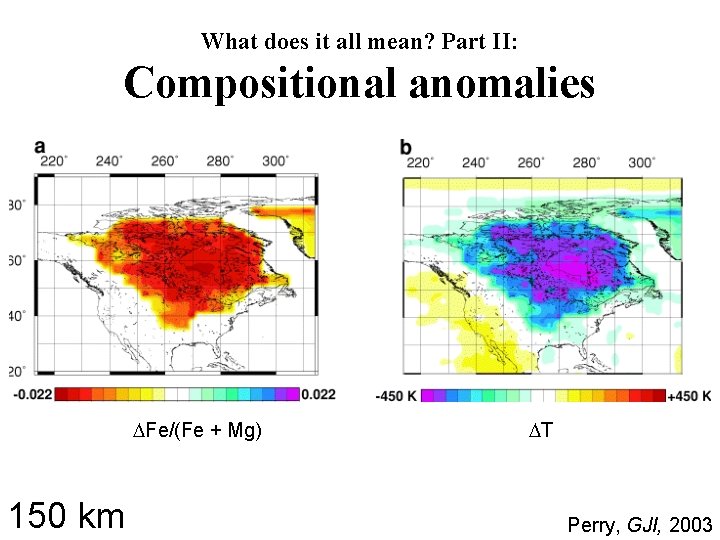
What does it all mean? Part II: Compositional anomalies Fe/(Fe + Mg) 150 km T Perry, GJI, 2003
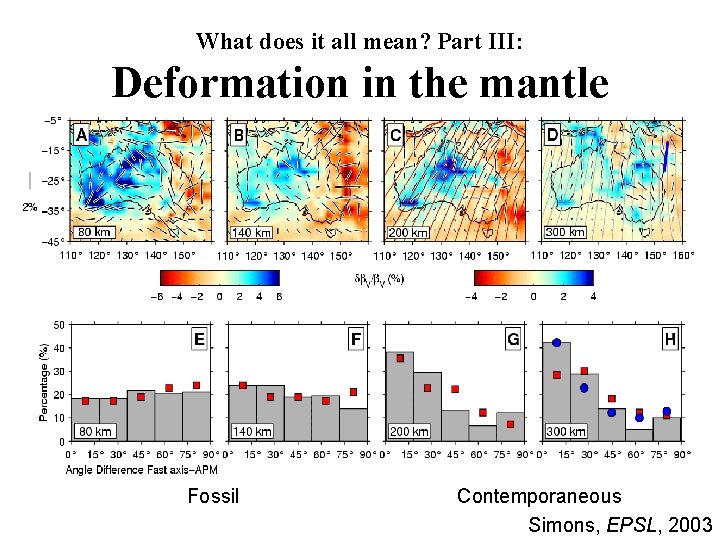
What does it all mean? Part III: Deformation in the mantle Fossil Contemporaneous Simons, EPSL, 2003
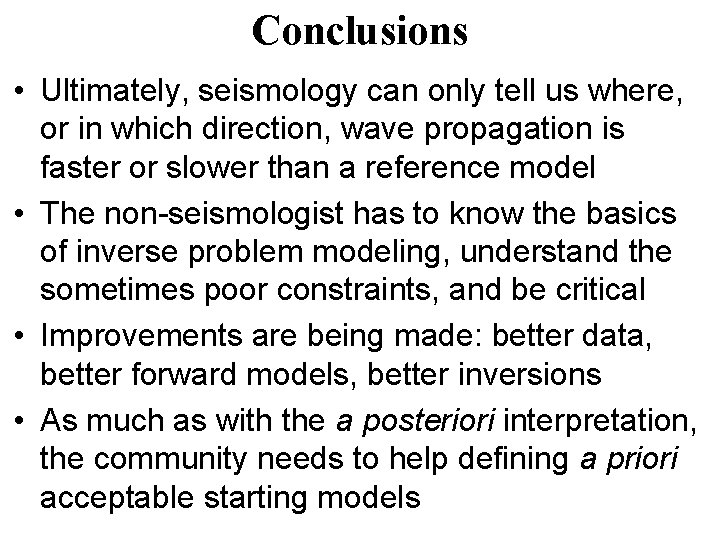
Conclusions • Ultimately, seismology can only tell us where, or in which direction, wave propagation is faster or slower than a reference model • The non-seismologist has to know the basics of inverse problem modeling, understand the sometimes poor constraints, and be critical • Improvements are being made: better data, better forward models, better inversions • As much as with the a posteriori interpretation, the community needs to help defining a priori acceptable starting models
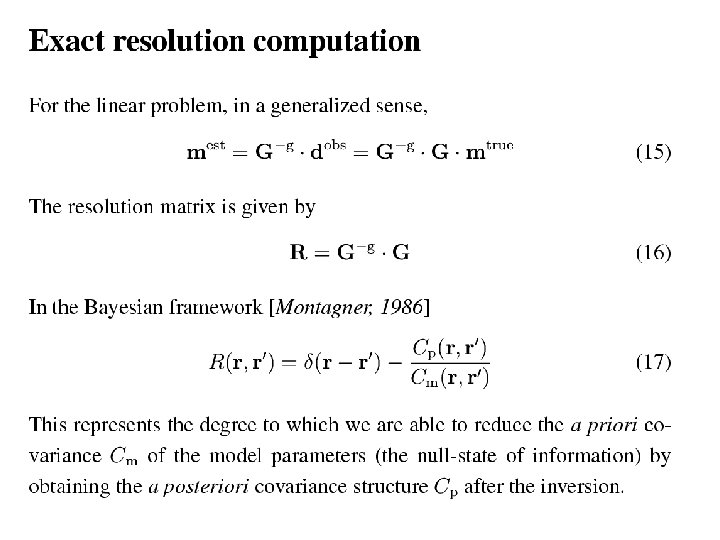
More equations, for completeness