
Seismic Risk An Introduction Prof Ravi Sinha Special



- Slides: 50
Seismic Risk: An Introduction Prof. Ravi Sinha Special Lecture: Introduction to Civil Engineering (CE-152) February 1, 2006
Introduction • Earthquake engineering is a superspecialisation of structural engineering • Earthquake engineering deals with understanding earthquakes, their causes, their consequences, and designing structures to withstand earthquake forces • The field of study is highly multidisciplinary with lead taken by structural engineers 2 IIT Bombay
Background • Earthquakes are one of the most devastating forces in nature • Earthquakes disasters have been known since ancient times • Earthquakes have been instrumental in changing the course of history • Some of the most significant disasters in the last hundred years have been caused by earthquakes 3 IIT Bombay
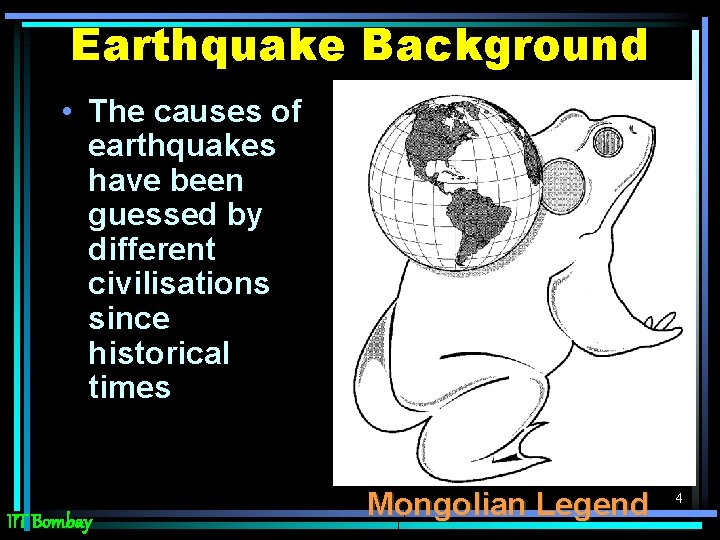
Earthquake Background • The causes of earthquakes have been guessed by different civilisations since historical times IIT Bombay Mongolian Legend 4
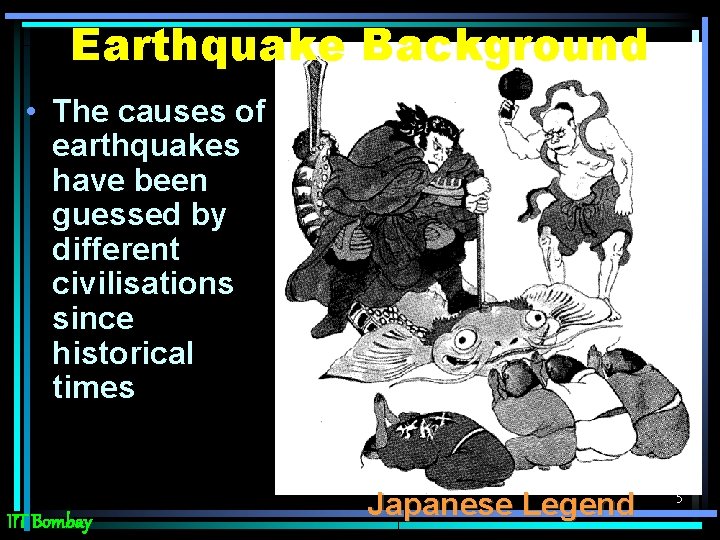
Earthquake Background • The causes of earthquakes have been guessed by different civilisations since historical times IIT Bombay Japanese Legend 5
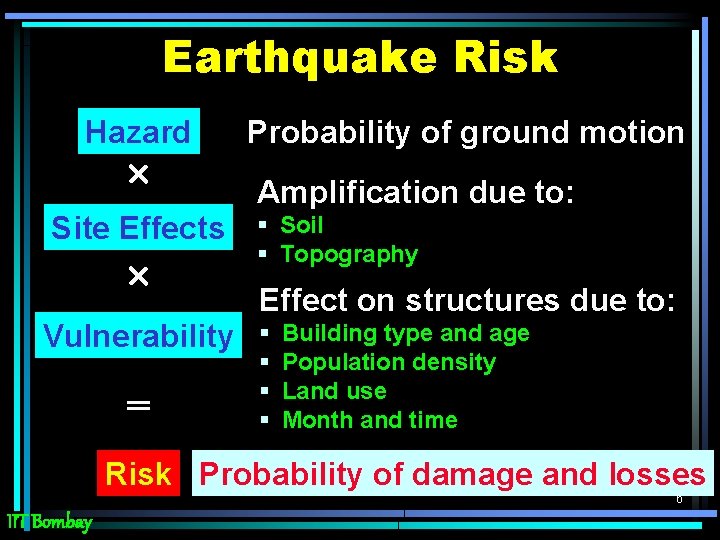
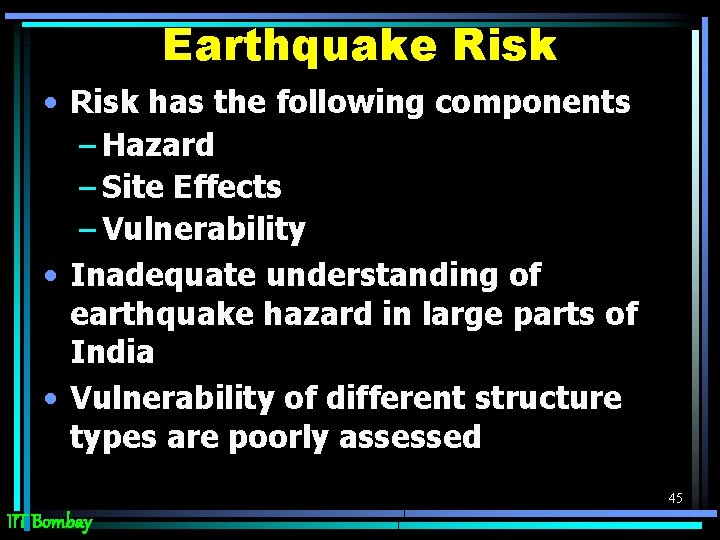
Earthquake Risk Hazard Probability of ground motion Amplification due to: Site Effects § Soil § Topography Effect on structures due to: Vulnerability § § Building type and age Population density Land use Month and time Risk Probability of damage and losses 6 IIT Bombay
Seismic Hazard Assessment 7 IIT Bombay
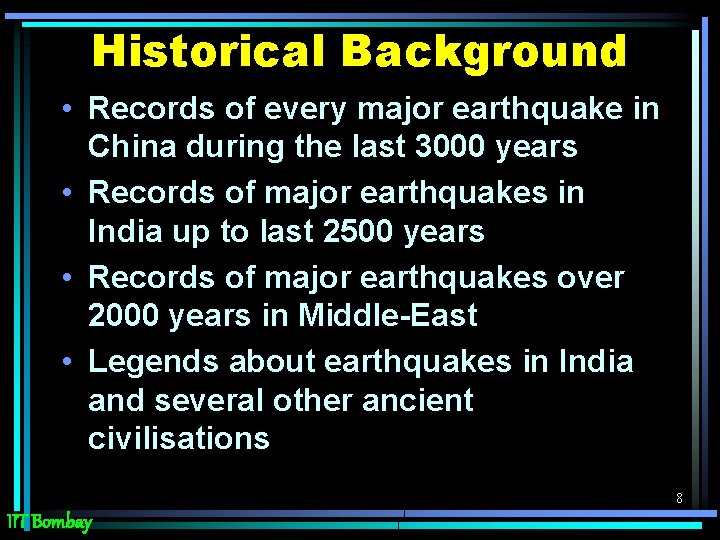
Historical Background • Records of every major earthquake in China during the last 3000 years • Records of major earthquakes in India up to last 2500 years • Records of major earthquakes over 2000 years in Middle-East • Legends about earthquakes in India and several other ancient civilisations 8 IIT Bombay
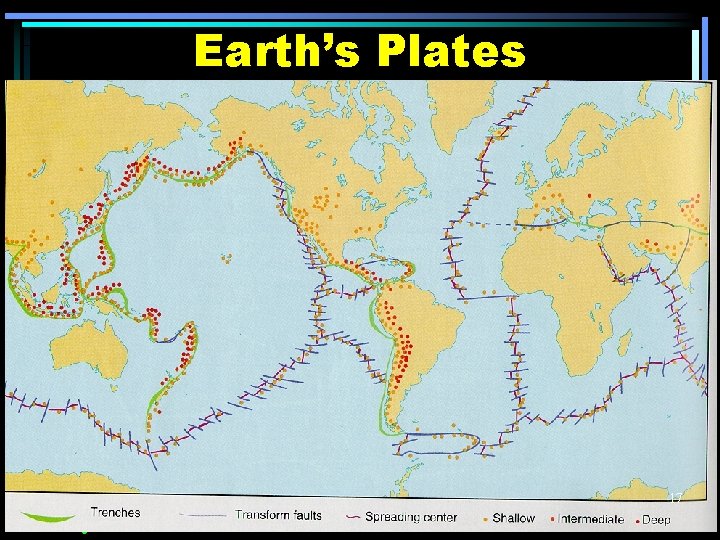
Modern Studies • Modern study of seismology has been carried out over the last 45 -50 years only • Most useful data has been collected using a world-wide network of seismological stations • Records show that earthquakes are not uniformally distributed but concentrated along well defined lines 9 IIT Bombay
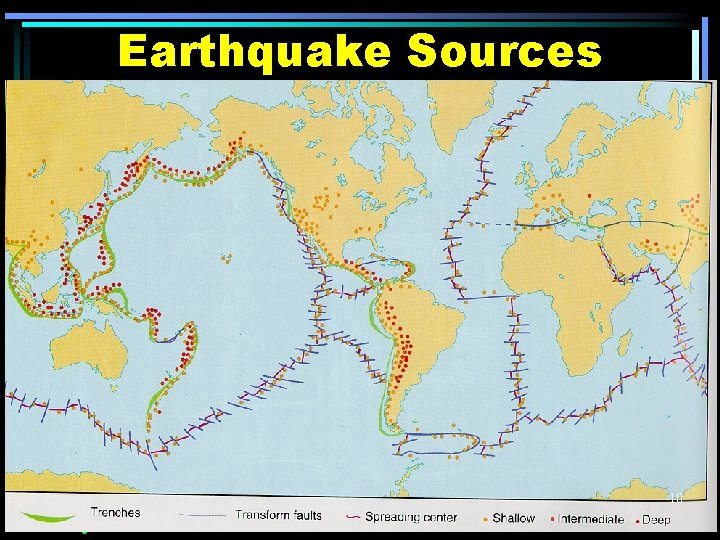
Earthquake Sources 10 IIT Bombay
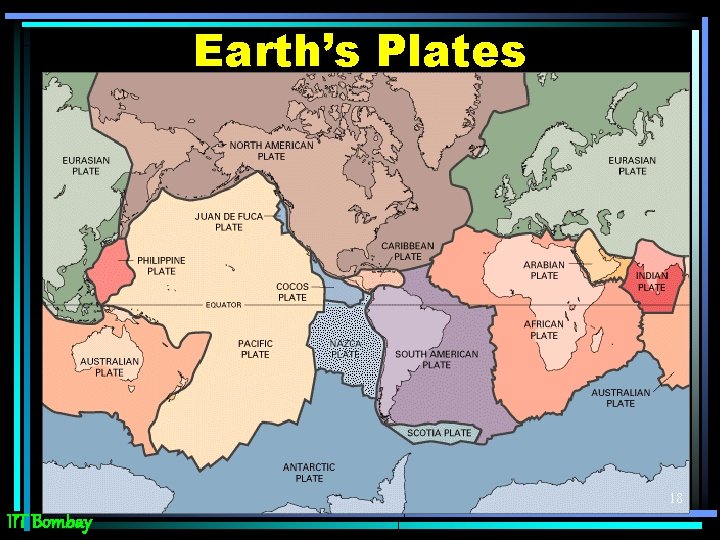
Earthquake Sources Most earthquakes are concentrated along boundaries of earth’s plates Some earthquakes also occur away from plate boundaries Earthquakes in many places are also associated with volcanic activities In recent times, earthquakes may have been triggered by human structures and activities (dams, mining etc. ) 11 IIT Bombay
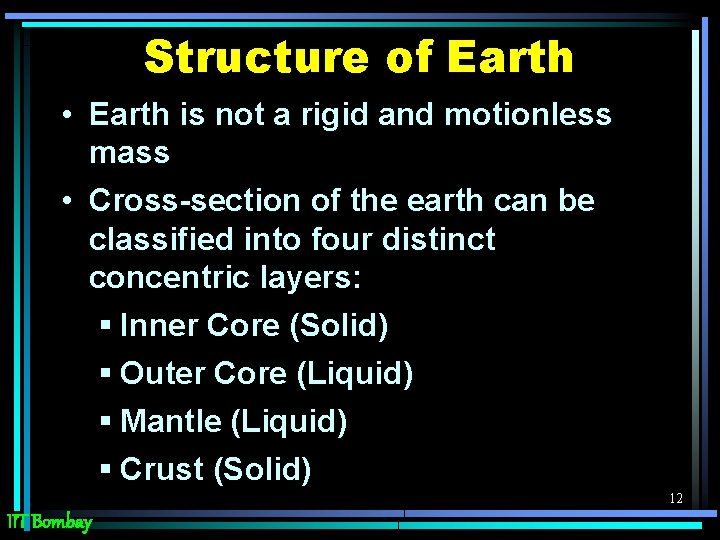
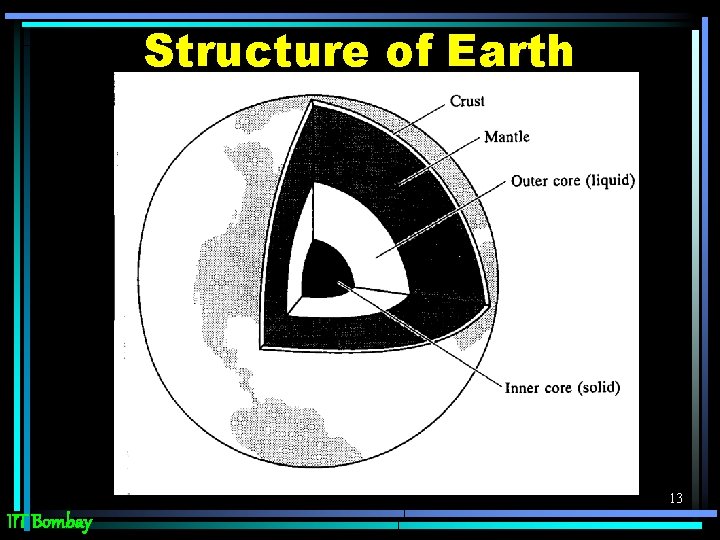
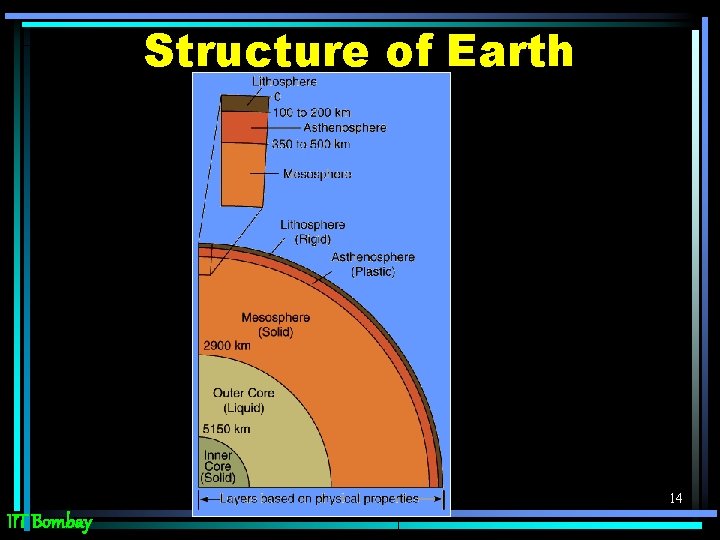
Structure of Earth • Earth is not a rigid and motionless mass • Cross-section of the earth can be classified into four distinct concentric layers: § Inner Core (Solid) § Outer Core (Liquid) § Mantle (Liquid) § Crust (Solid) 12 IIT Bombay
Structure of Earth 13 IIT Bombay
Structure of Earth 14 IIT Bombay
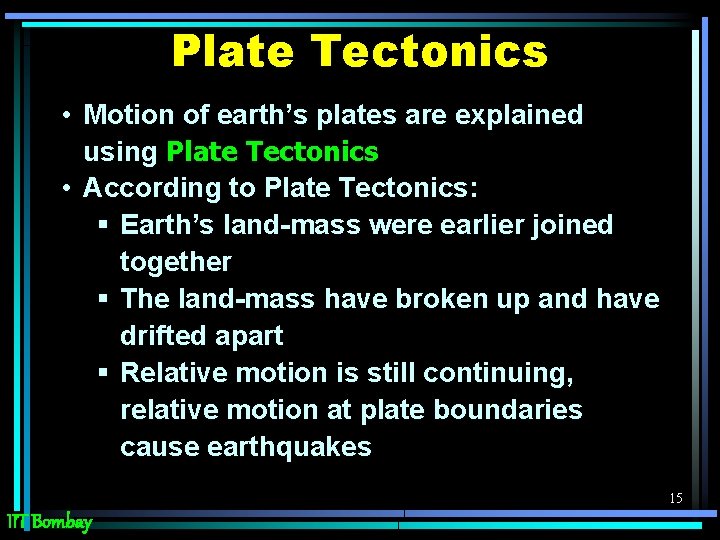
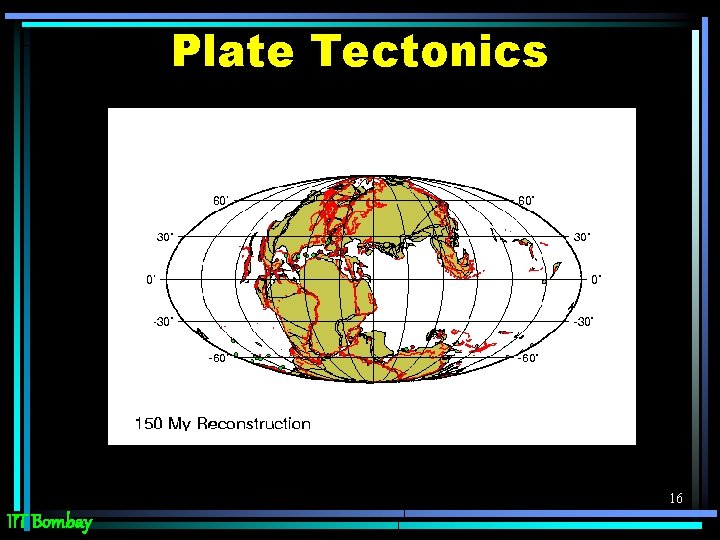
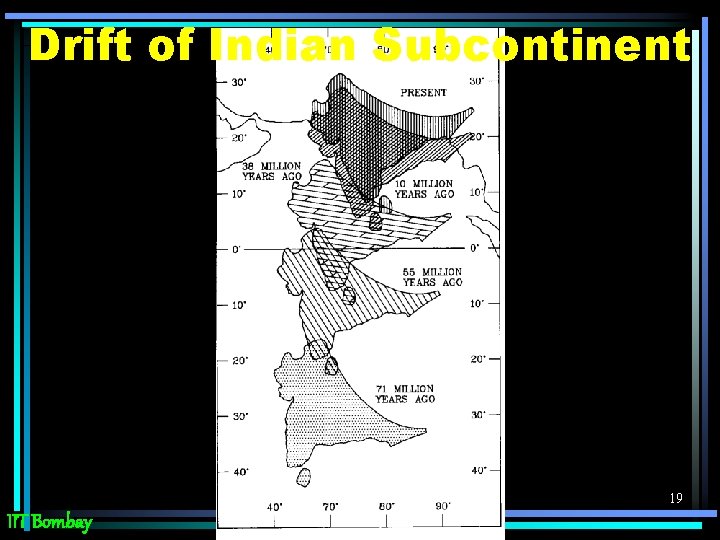
Plate Tectonics • Motion of earth’s plates are explained using Plate Tectonics • According to Plate Tectonics: § Earth’s land-mass were earlier joined together § The land-mass have broken up and have drifted apart § Relative motion is still continuing, relative motion at plate boundaries cause earthquakes 15 IIT Bombay
Plate Tectonics 16 IIT Bombay
Earth’s Plates 17 IIT Bombay
Earth’s Plates 18 IIT Bombay
Drift of Indian Subcontinent 19 IIT Bombay
Plate Tectonics • Considerable evidence now exist to support Plate Tectonics • Types of evidence: ¨ Geological and geomorphological similar rock formations ¨ Anthropological - similar vegetation and animal life ¨ Geomagnetic - magnetic anomalies support drifting away of land mass from Atlantic ridge and other places 20 IIT Bombay
Prehistoric Flora and Fauna 21 IIT Bombay
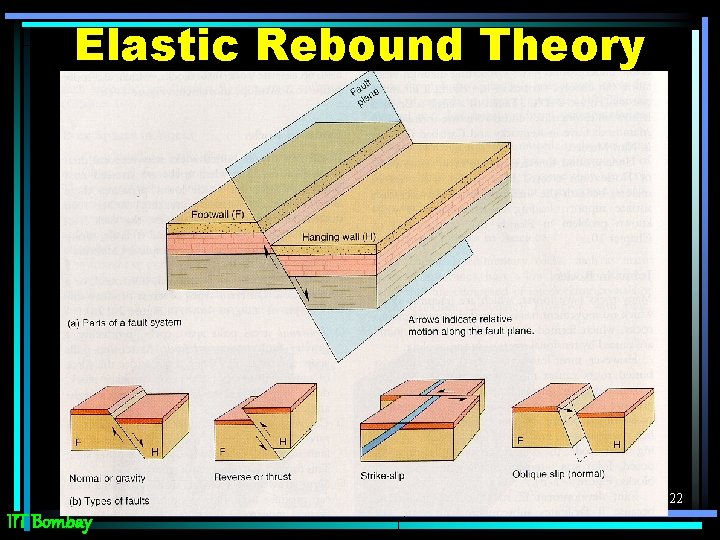
Elastic Rebound Theory 22 IIT Bombay
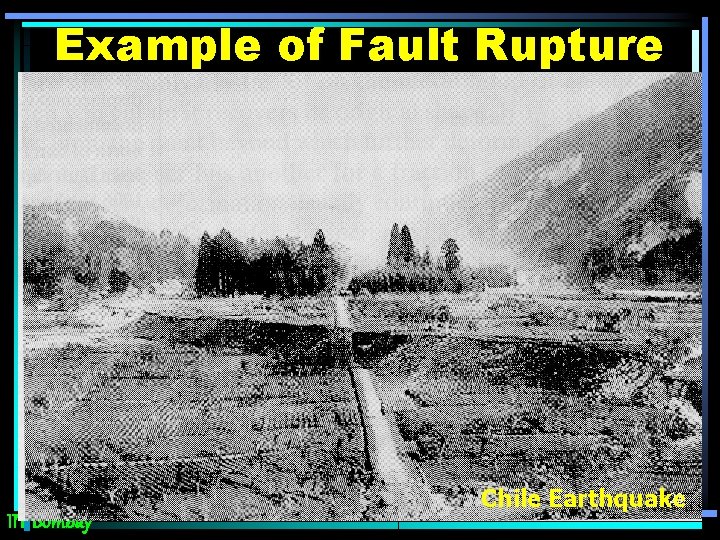
Example of Fault Rupture IIT Bombay 23 Chile Earthquake
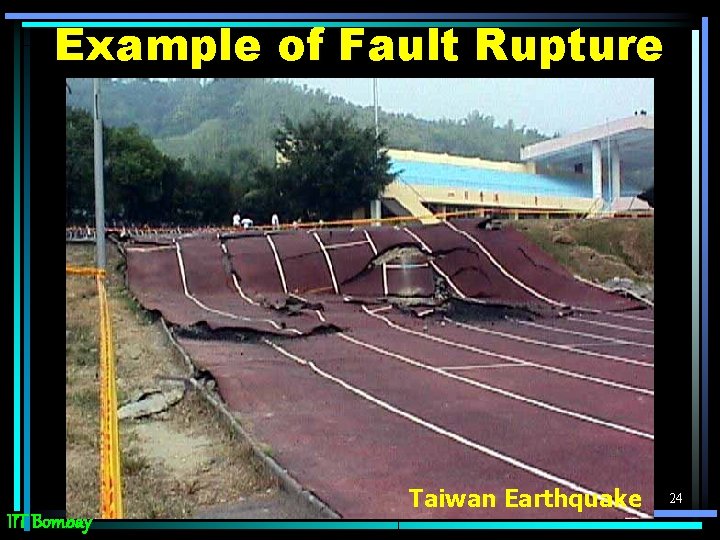
Example of Fault Rupture IIT Bombay Taiwan Earthquake 24
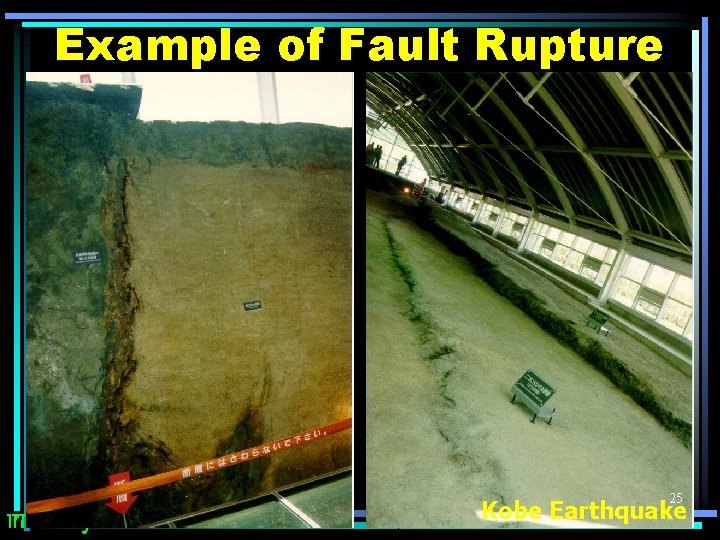
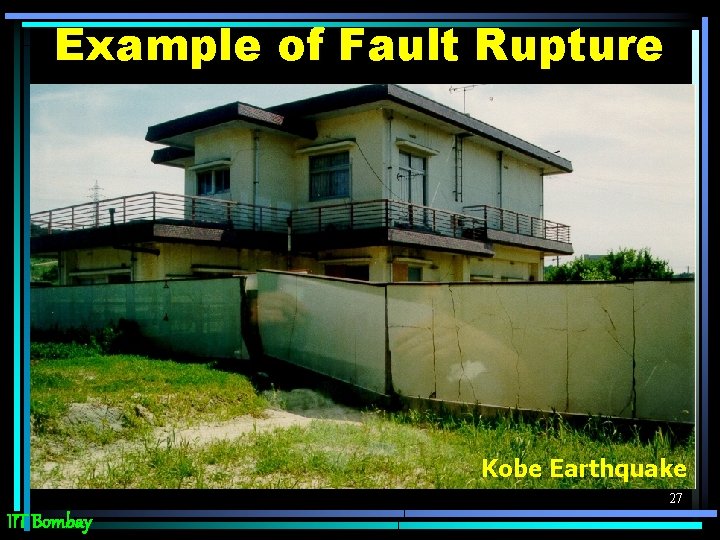
Example of Fault Rupture 25 IIT Bombay Kobe Earthquake
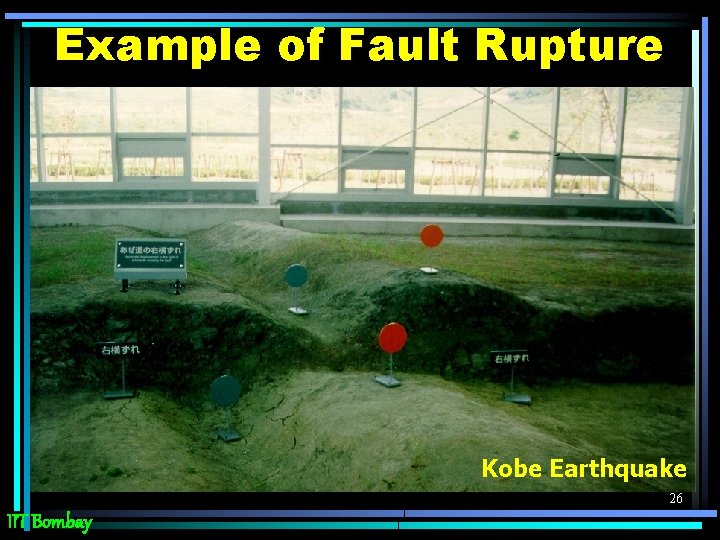
Example of Fault Rupture Kobe Earthquake 26 IIT Bombay
Example of Fault Rupture Kobe Earthquake 27 IIT Bombay
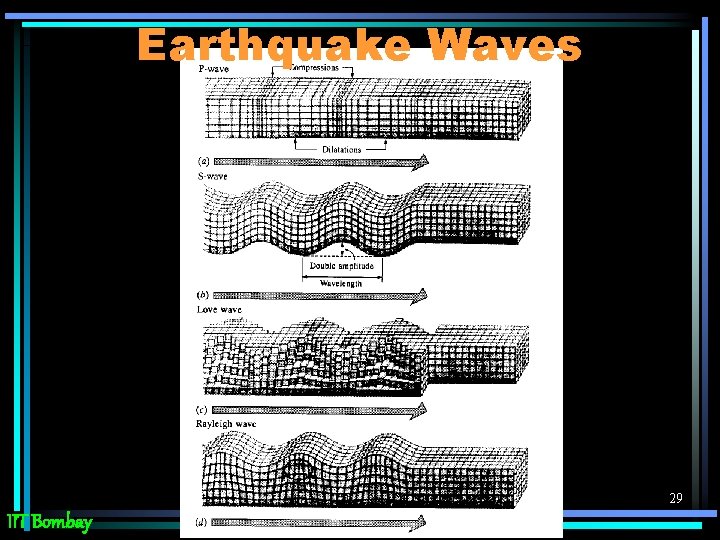
Earthquake Waves • Elastic rebound produces waves from the point of rupture • The rupture may be localised at a point, along a slip line or a slip surface • Earthquake waves have clearly identifiable components ¨ Primary wave (refractory) ¨ Secondary or shear wave (transverse) ¨ Raleigh wave (refractory) ¨ Love wave (transverse) 28 IIT Bombay
Earthquake Waves 29 IIT Bombay
Earthquake Magnitude • Earthquake magnitude is most commonly defined in Richter magnitude § It is logarithm of the maximum displacement (in µm) recorded on a particular type of seismograph 100 km from the epicentre § Richter magnitude is open-ended and has no maximum value • Scientifically more useful measure is based on seismic moment and measures the total energy that is released § Both magnitudes give similar value for moderate earthquakes (M 5. 0 - M 7. 5) 30 IIT Bombay
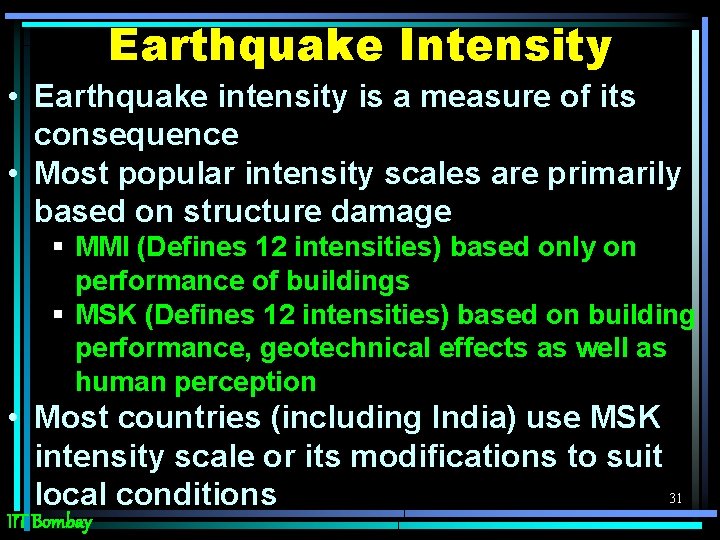
Earthquake Intensity • Earthquake intensity is a measure of its consequence • Most popular intensity scales are primarily based on structure damage § MMI (Defines 12 intensities) based only on performance of buildings § MSK (Defines 12 intensities) based on building performance, geotechnical effects as well as human perception • Most countries (including India) use MSK intensity scale or its modifications to suit 31 local conditions IIT Bombay
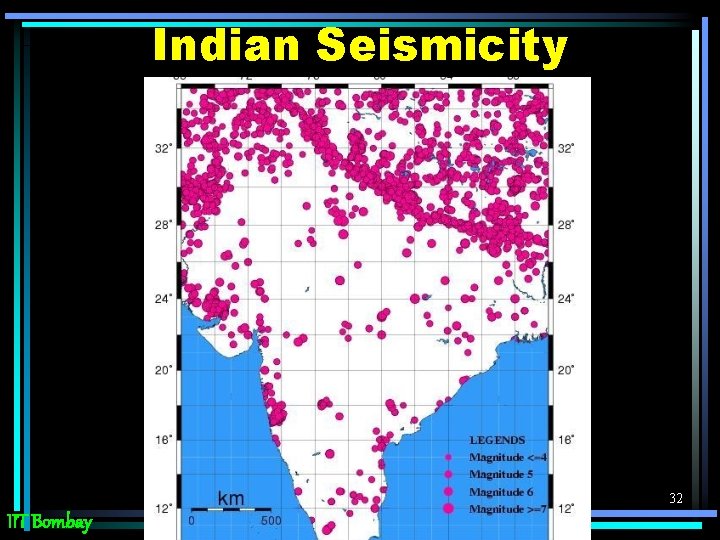
Indian Seismicity 32 IIT Bombay
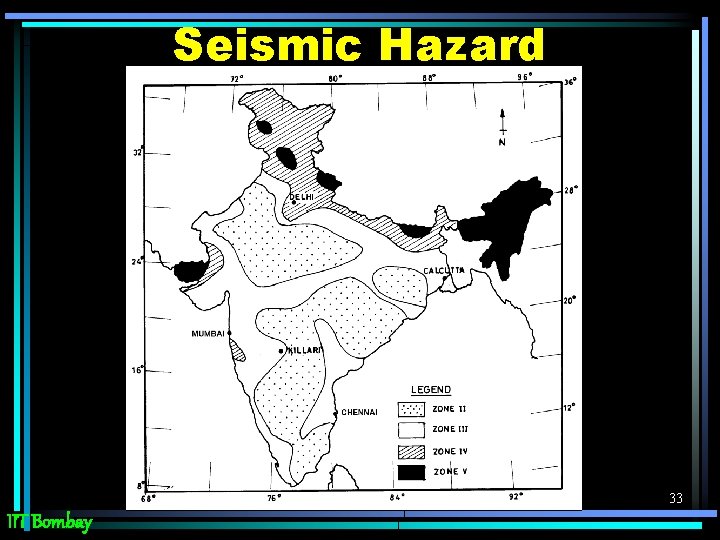
Seismic Hazard 33 IIT Bombay
Assessment of Site Effects 34 IIT Bombay
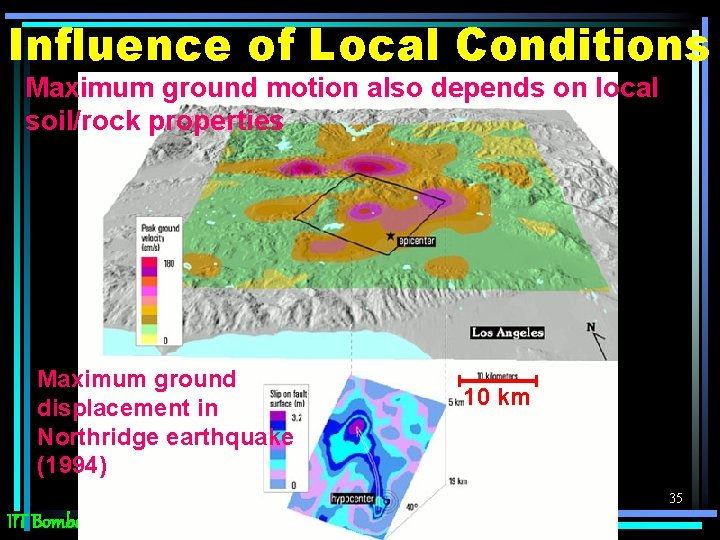
Influence of Local Conditions Maximum ground motion also depends on local soil/rock properties Maximum ground displacement in Northridge earthquake (1994) 10 km 35 IIT Bombay
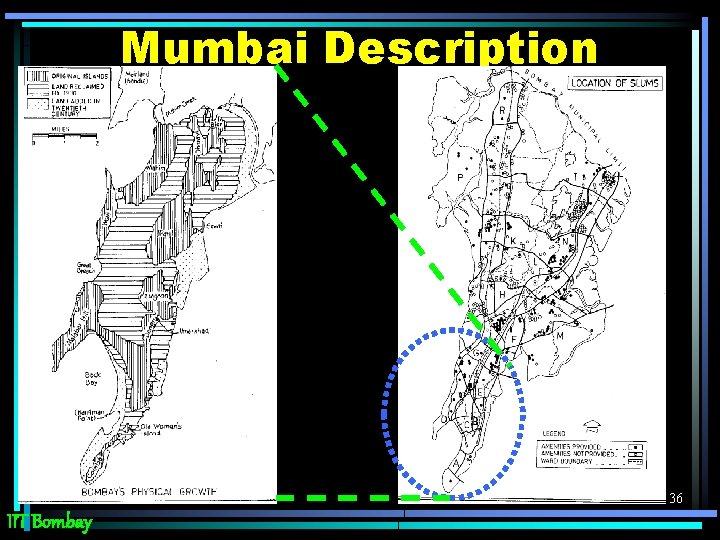
Mumbai Description 36 IIT Bombay
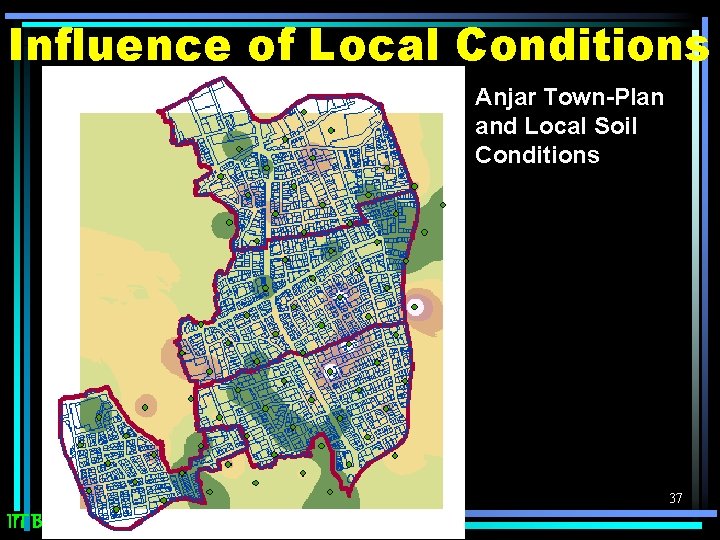
Influence of Local Conditions Anjar Town-Plan and Local Soil Conditions 37 IIT Bombay
Seismic Hazard Challenges in Hazard Assessment • Location of seismogenic features • Fault size, movement rate, return period • Inadequate historical earthquake data • Information on local soil conditions These require significant additional scientific studies to provide reliable information 38 IIT Bombay
Seismic Vulnerability Assessment 39 IIT Bombay
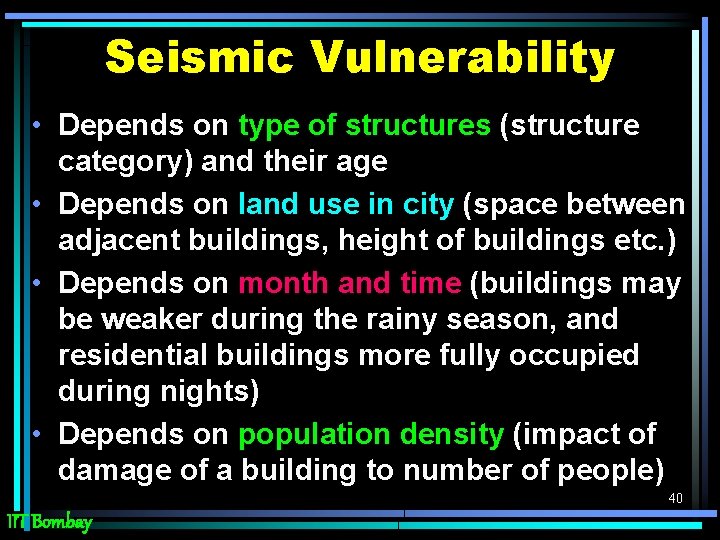
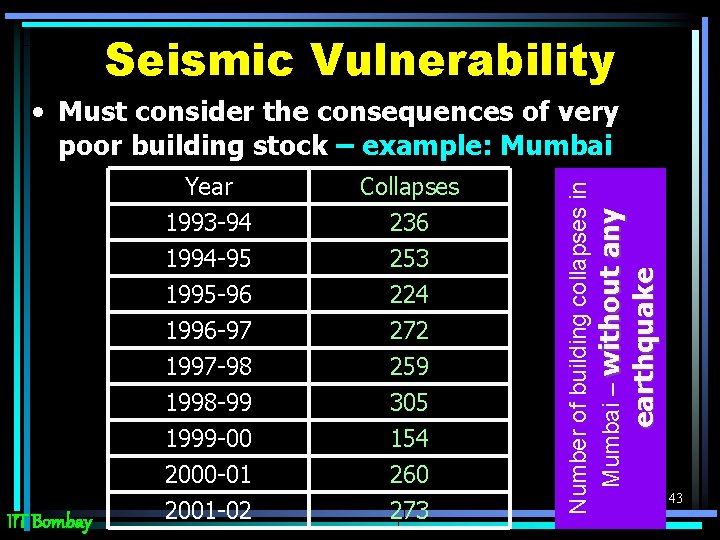
Seismic Vulnerability • Depends on type of structures (structure category) and their age • Depends on land use in city (space between adjacent buildings, height of buildings etc. ) • Depends on month and time (buildings may be weaker during the rainy season, and residential buildings more fully occupied during nights) • Depends on population density (impact of damage of a building to number of people) 40 IIT Bombay
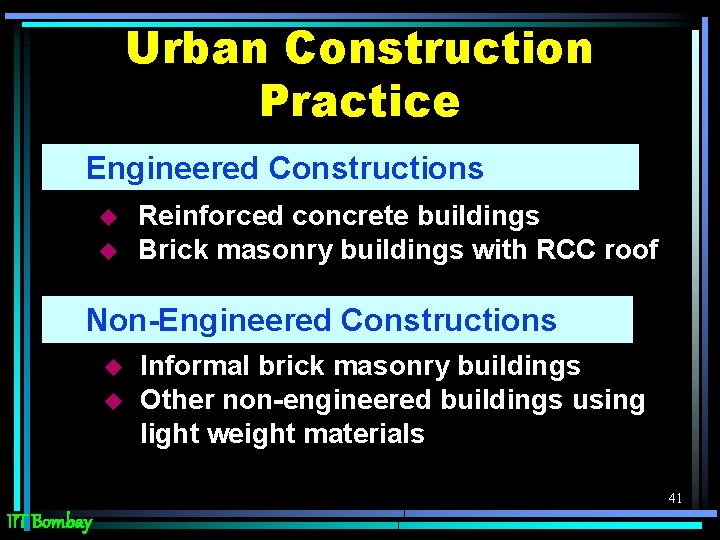
Urban Construction Practice Engineered Constructions u u Reinforced concrete buildings Brick masonry buildings with RCC roof Non-Engineered Constructions u u Informal brick masonry buildings Other non-engineered buildings using light weight materials 41 IIT Bombay
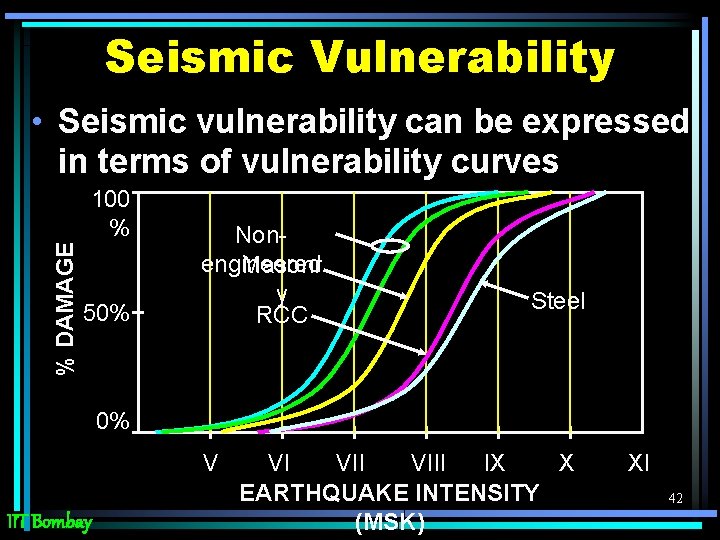
Seismic Vulnerability • Seismic vulnerability can be expressed in terms of vulnerability curves % DAMAGE 100 % 50% Nonengineered Masonr y RCC Steel 0% V IIT Bombay VI VIII IX X EARTHQUAKE INTENSITY (MSK) XI 42
Seismic Vulnerability IIT Bombay Collapses 236 253 224 1996 -97 1997 -98 1998 -99 1999 -00 2000 -01 272 259 305 154 260 2001 -02 273 e a r t hq ua k e Year 1993 -94 1994 -95 1995 -96 Number of building collapses in Mumbai – without any • Must consider the consequences of very poor building stock – example: Mumbai 43
Seismic Risk 44 IIT Bombay
Earthquake Risk • Risk has the following components – Hazard – Site Effects – Vulnerability • Inadequate understanding of earthquake hazard in large parts of India • Vulnerability of different structure types are poorly assessed 45 IIT Bombay
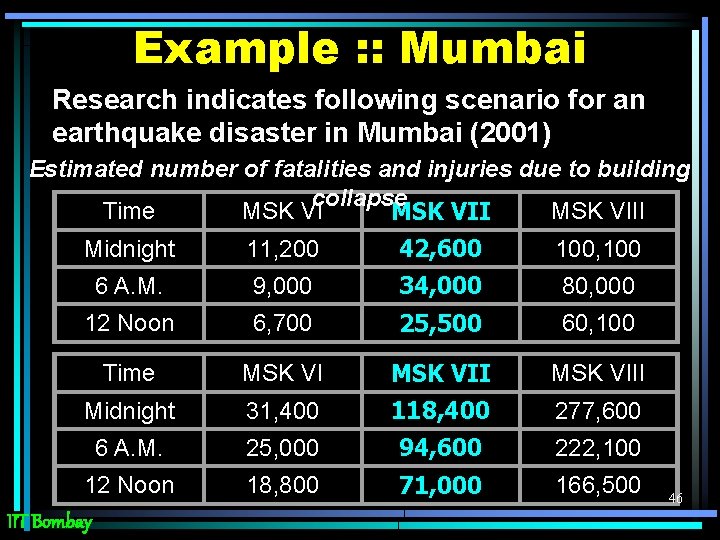
Example : : Mumbai Research indicates following scenario for an earthquake disaster in Mumbai (2001) Estimated number of fatalities and injuries due to building collapse Time MSK VIII MSK VII Midnight 11, 200 42, 600 100, 100 6 A. M. 9, 000 34, 000 80, 000 12 Noon 6, 700 25, 500 60, 100 Time MSK VIII Midnight 31, 400 118, 400 277, 600 6 A. M. 25, 000 94, 600 222, 100 18, 800 71, 000 166, 500 12 Noon IIT Bombay 46
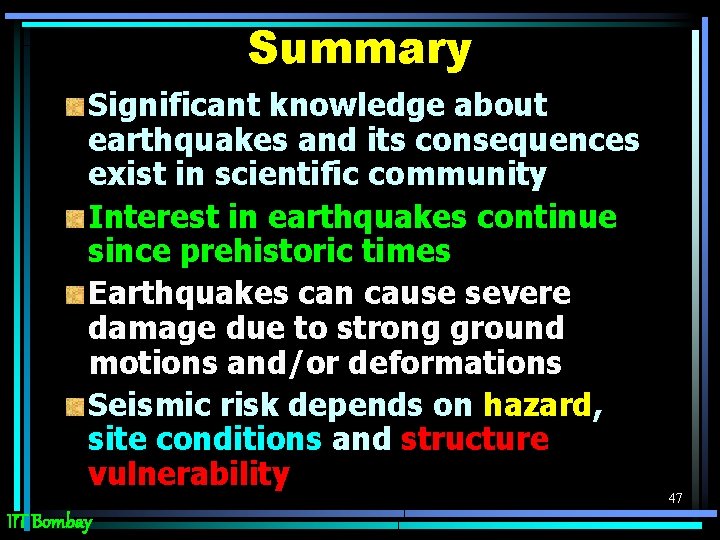
Summary Significant knowledge about earthquakes and its consequences exist in scientific community Interest in earthquakes continue since prehistoric times Earthquakes can cause severe damage due to strong ground motions and/or deformations Seismic risk depends on hazard, site conditions and structure vulnerability IIT Bombay 47
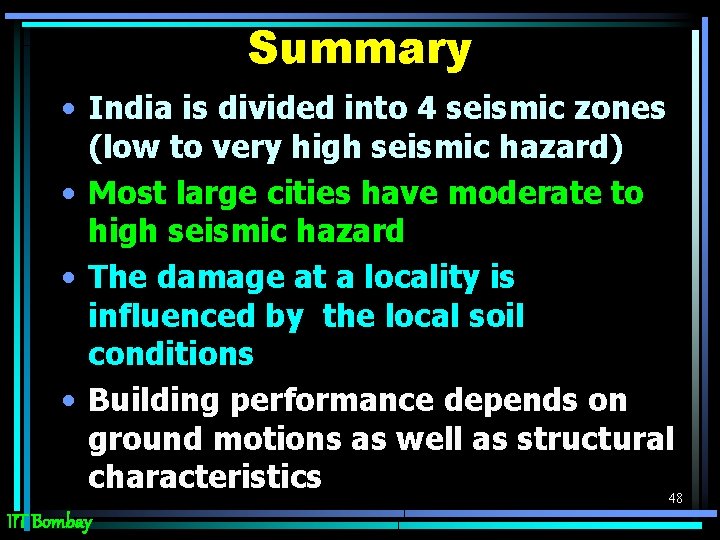
Summary • India is divided into 4 seismic zones (low to very high seismic hazard) • Most large cities have moderate to high seismic hazard • The damage at a locality is influenced by the local soil conditions • Building performance depends on ground motions as well as structural characteristics 48 IIT Bombay
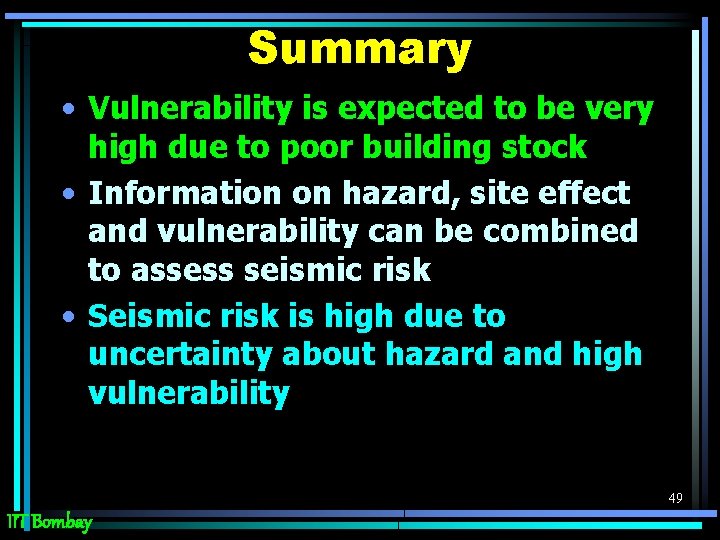
Summary • Vulnerability is expected to be very high due to poor building stock • Information on hazard, site effect and vulnerability can be combined to assess seismic risk • Seismic risk is high due to uncertainty about hazard and high vulnerability 49 IIT Bombay
50 IIT Bombay