
Seismic Design of Bridges Lucero E Mesa P
Seismic Design of Bridges Lucero E. Mesa, P. E. 1
SCDOT Seismic Design Of Bridges Overview • • AASHTO - Division IA Draft Specifications, 1996 SCDOT 2001 Seismic Design Specifications Comparison Between LRFD & SCDOT Specs. SCDOT Seismic Hazard Maps Training and Implementation Conclusions 2

AASHTO Div IA • • • USGS 1988 Seismic Hazard Maps Force based design Soil Classification I-IV No explicit Performance Criteria Classification based only on acceleration coefficient 3
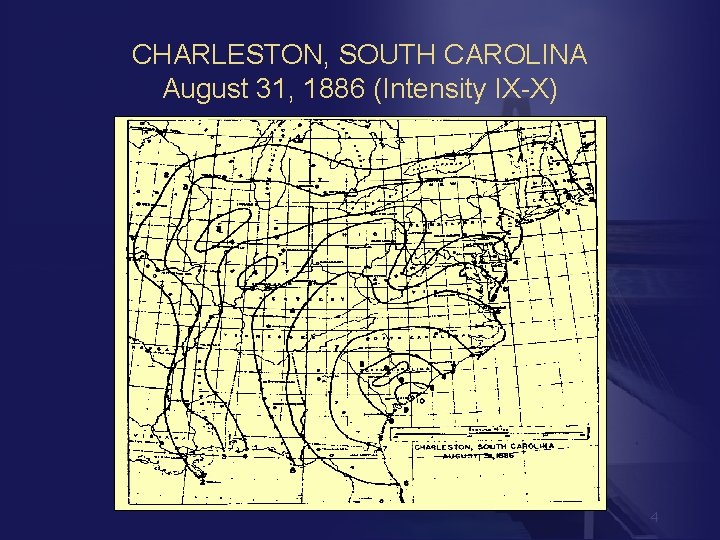
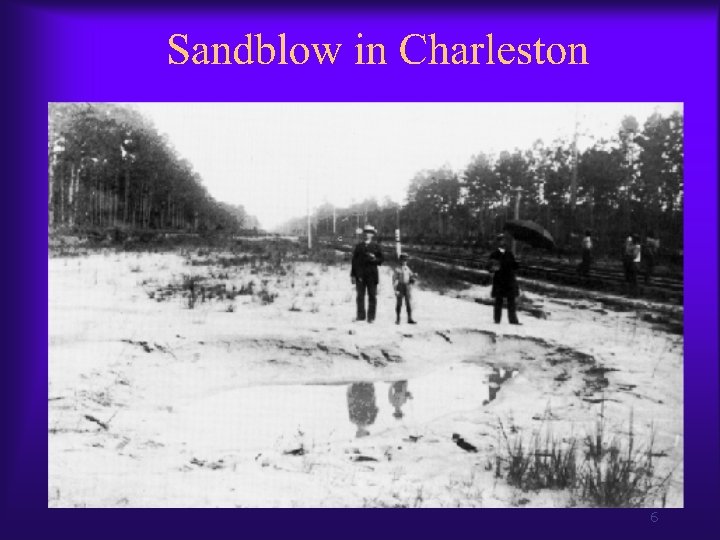
CHARLESTON, SOUTH CAROLINA August 31, 1886 (Intensity IX-X) 4
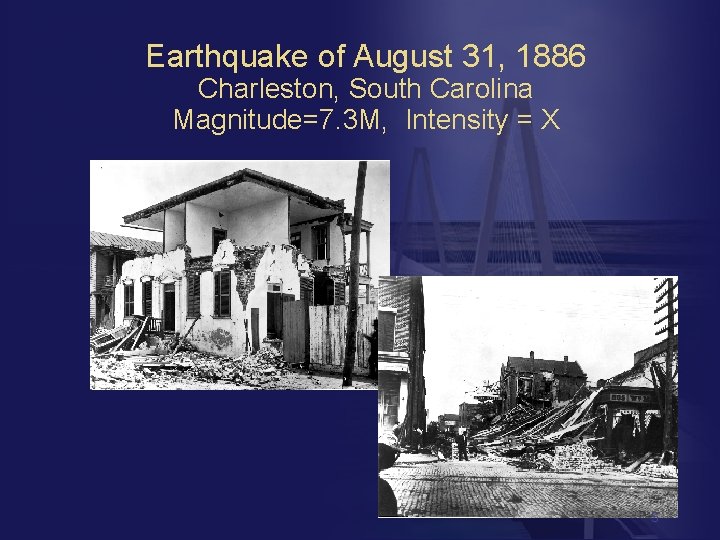
Earthquake of August 31, 1886 Charleston, South Carolina Magnitude=7. 3 M, Intensity = X 5
6
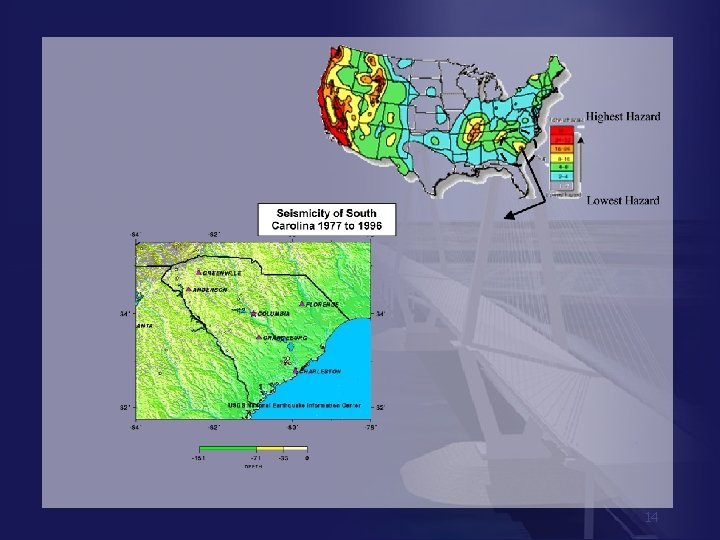
Draft Specifications • 1996 USGS Seismic Hazard Maps • Difference in spectral acceleration between South Carolina and California • Normal Bridges : 2/3 of the 2% in 50 yr. Event • Essential Bridges: Two-Level Analysis 7
Draft Specifications • • Force based specifications N (seat width) Soil classification: I – IV Draft Specifications Version of 1999 8
Site Specific Studies • Maybank Bridge over the Stono River • Carolina Bays Parkway • Broad and Chechessee River Bridges • New Cooper River Bridge • Bobby Jones Expressway 9
SEISMIC DESIGN TRIAL EXAMPLES • SC-38 over I-95 - Dillon County • Maybank Highway Bridge over the Stono River - Charleston County 10
SC-38 over I-95 Description of Project • Conventional bridge structure • Two 106. 5 ft. spans with a composite reinforced concrete deck, supported by 13 steel plate girders and integral abutments • The abutments and the interior bents rest on deep foundations 11
SC-38 over I-95 Original Seismic Design Trial Design Example • SCDOT version of Div-IA AASHTO (Draft) • 2/3 of 2% in 50 yr • 1996 USGS maps used • PGA of 0. 15 g, low potential for liquefaction • Response Spectrum Analysis • Proposed LRFD Seismic Guidelines • MCE – 3% PE in 75 yr. • Expected Earthquake – 50% PE in 75 yr. • 2000 USGS maps • PGA of 0. 33 g, at MCE, further evaluation for liquefaction is needed. • Response Spectrum Analysis 12

Maybank Highway Bridge over the Stono River 13
14
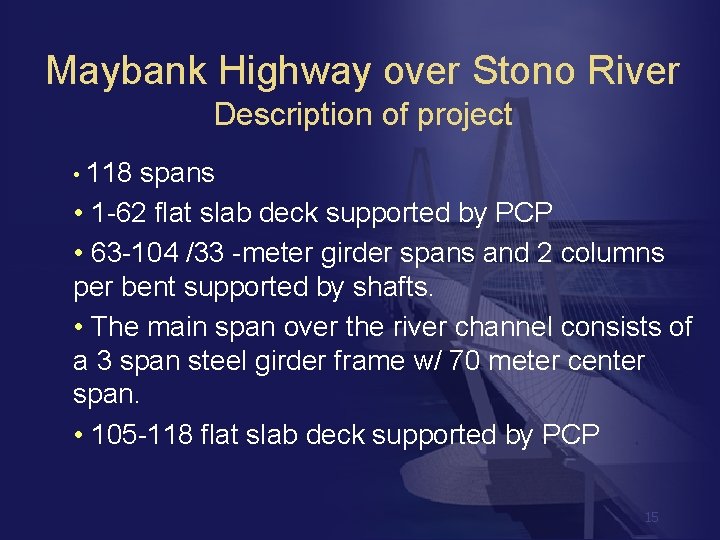
Maybank Highway over Stono River Description of project • 118 spans • 1 -62 flat slab deck supported by PCP • 63 -104 /33 -meter girder spans and 2 columns per bent supported by shafts. • The main span over the river channel consists of a 3 span steel girder frame w/ 70 meter center span. • 105 -118 flat slab deck supported by PCP 15
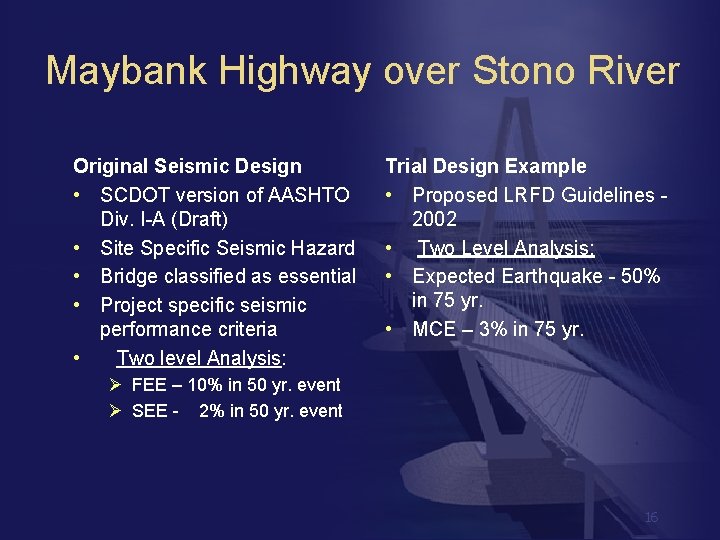
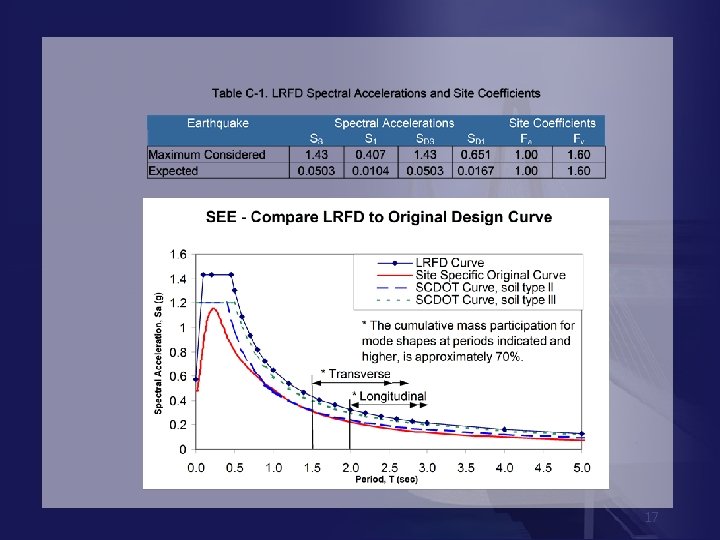
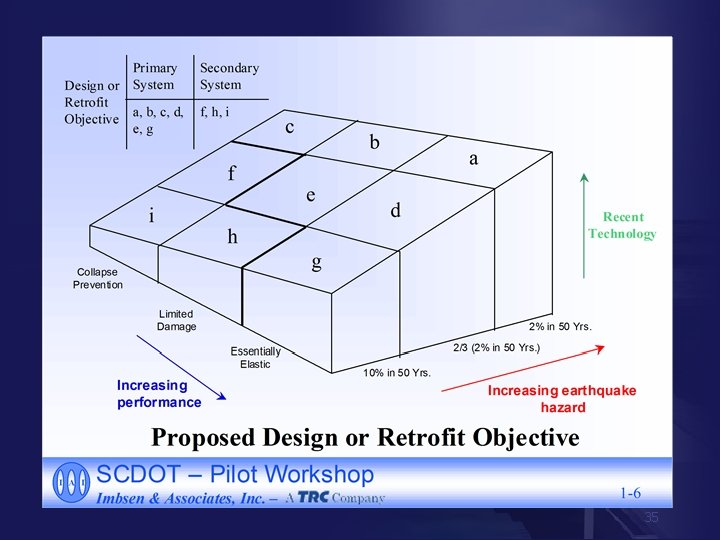
Maybank Highway over Stono River Original Seismic Design • SCDOT version of AASHTO Div. I-A (Draft) • Site Specific Seismic Hazard • Bridge classified as essential • Project specific seismic performance criteria • Two level Analysis: Trial Design Example • Proposed LRFD Guidelines 2002 • Two Level Analysis: • Expected Earthquake - 50% in 75 yr. • MCE – 3% in 75 yr. Ø FEE – 10% in 50 yr. event Ø SEE - 2% in 50 yr. event 16
17
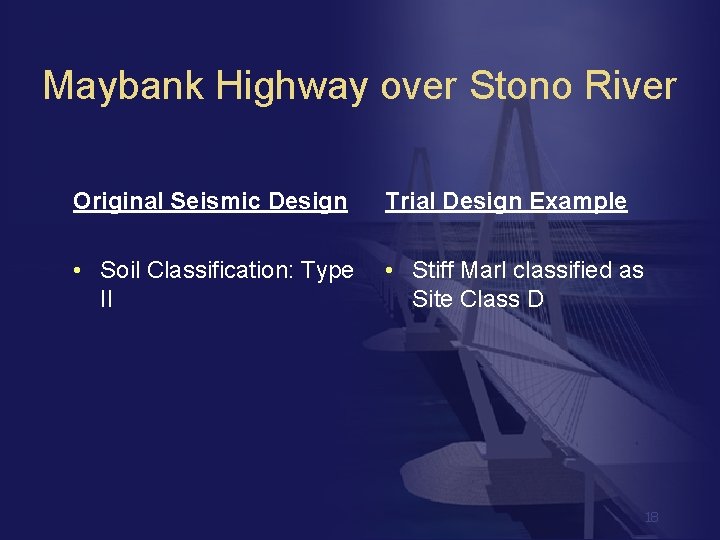
Maybank Highway over Stono River Original Seismic Design Trial Design Example • Soil Classification: Type II • Stiff Marl classified as Site Class D 18
• The SCDOT 's new specifications adopted the NCHRP soil site classification and the Design Spectra described on LRFD 3. 4. 1 • If this structure were designed using the new SCDOT Seismic Design Specifications, October 2001, the demand forces would be closer if not the same to those found using the Proposed LRFD Guideline 2002. 19
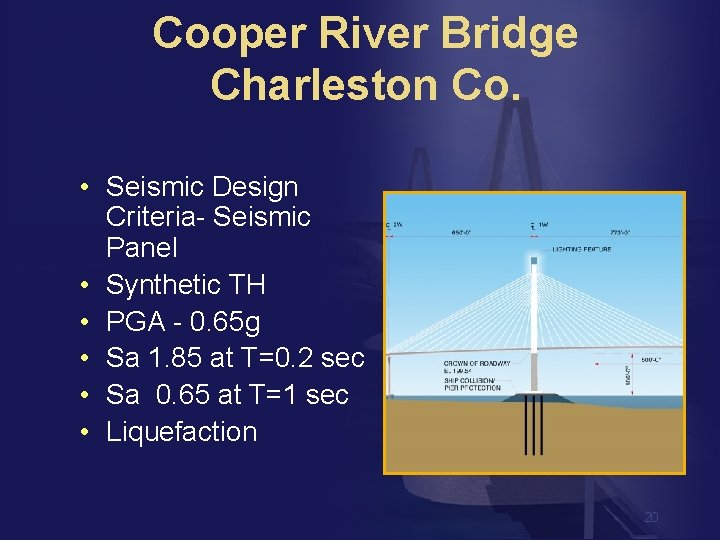
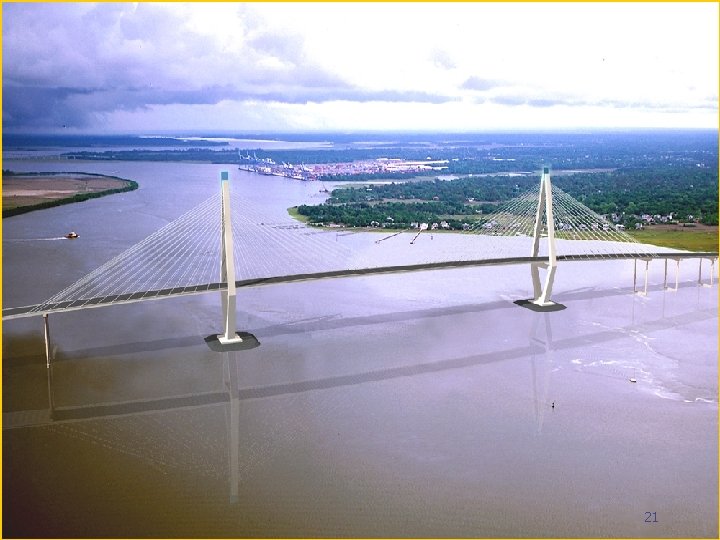
Cooper River Bridge Charleston Co. • Seismic Design Criteria- Seismic Panel • Synthetic TH • PGA - 0. 65 g • Sa 1. 85 at T=0. 2 sec • Sa 0. 65 at T=1 sec • Liquefaction 20
21
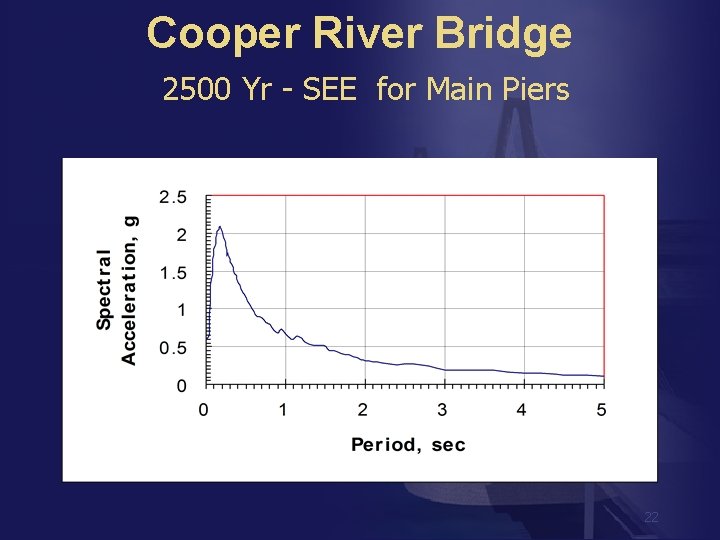
Cooper River Bridge 2500 Yr - SEE for Main Piers 22
Need for: • New Specifications • South Carolina Seismic Hazard Maps 23
24
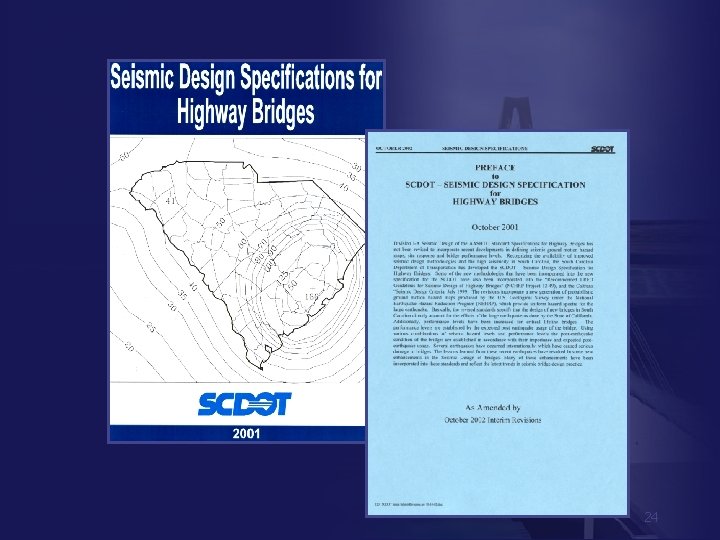
SCDOT Seismic Design Specifications October 2001 • The new SCDOT specifications establish design and construction provisions for bridges in South Carolina to minimize their susceptibility to damage from large earthquakes. 25
PURPOSE & PHILOSOPHY (1. 1) • SCDOT Seismic Design Specifications replace AASHTO Division I-A SCDOT Draft • Principles used for the development Ø Small to moderate earthquakes, FEE, resisted within the essentially elastic range. Ø State-of-Practice ground motion intensities are used. Ø Large earthquakes, SEE, should not cause collapse. • Four Seismic Performance Categories (SPC) are defined to cover the variation in seismic hazard of very small to high within the State of South Carolina. 26
New Concepts and Enhancements • • • New Design Level Earthquakes New Performance Objectives New Soil Factors Displacement Based Design Expanded Design Criteria for Bridges 27
SCDOT Seismic Design Specifications Background (1. 2) • New USGS • New Soil Factors Probabilistic Seismic • Displacement Based Hazard Maps Design • New Design Level • Caltrans (SDC) new Earthquakes provisions included • New Performance Objectives • A 706 Reinf. Steel 30
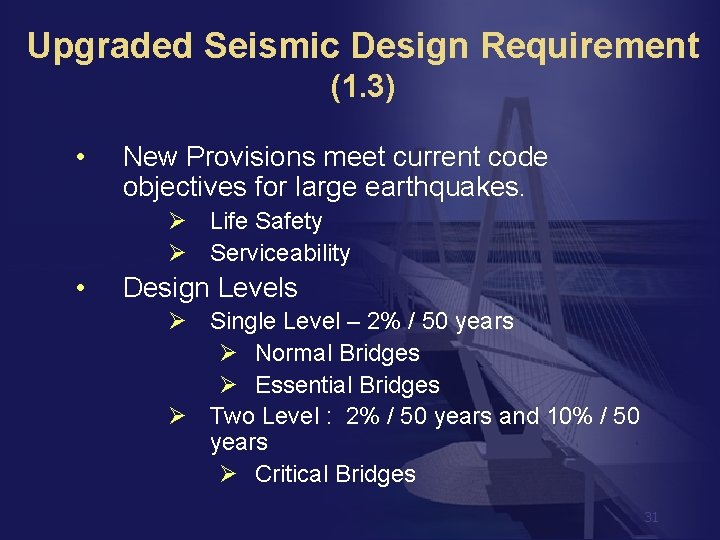
Upgraded Seismic Design Requirement (1. 3) • New Provisions meet current code objectives for large earthquakes. Ø Life Safety Ø Serviceability • Design Levels Ø Single Level – 2% / 50 years Ø Normal Bridges Ø Essential Bridges Ø Two Level : 2% / 50 years and 10% / 50 years Ø Critical Bridges 31
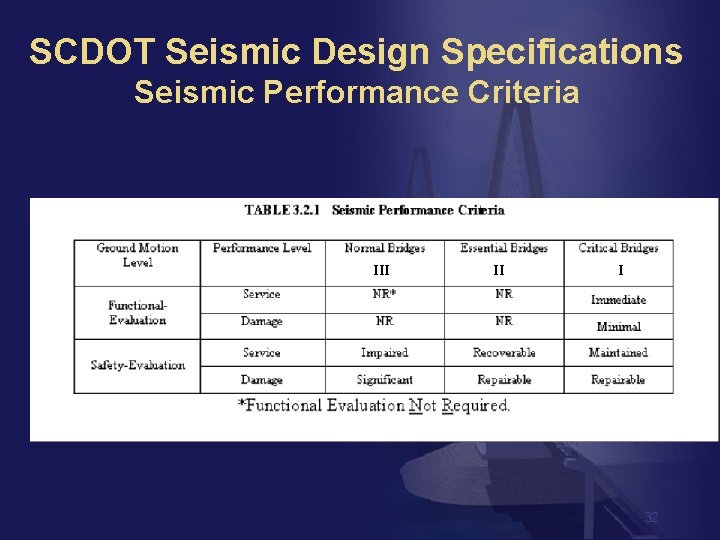
SCDOT Seismic Design Specifications Seismic Performance Criteria III II I 32
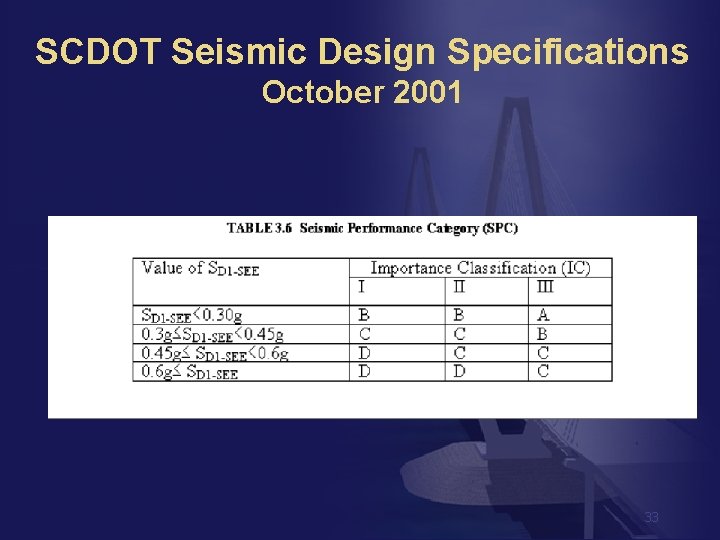
SCDOT Seismic Design Specifications October 2001 33
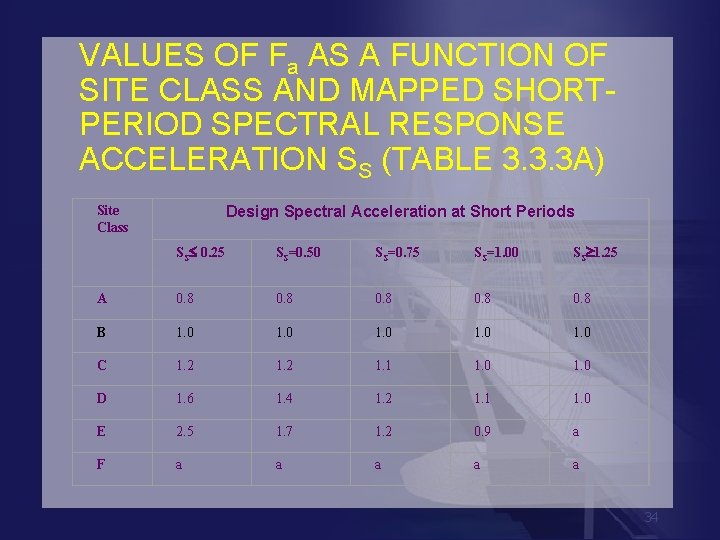
VALUES OF Fa AS A FUNCTION OF SITE CLASS AND MAPPED SHORTPERIOD SPECTRAL RESPONSE ACCELERATION SS (TABLE 3. 3. 3 A) Site Class Design Spectral Acceleration at Short Periods SS 0. 25 SS=0. 50 SS=0. 75 SS=1. 00 SS 1. 25 A 0. 8 0. 8 B 1. 0 1. 0 C 1. 2 1. 1 1. 0 D 1. 6 1. 4 1. 2 1. 1 1. 0 E 2. 5 1. 7 1. 2 0. 9 a F a a a 34
35
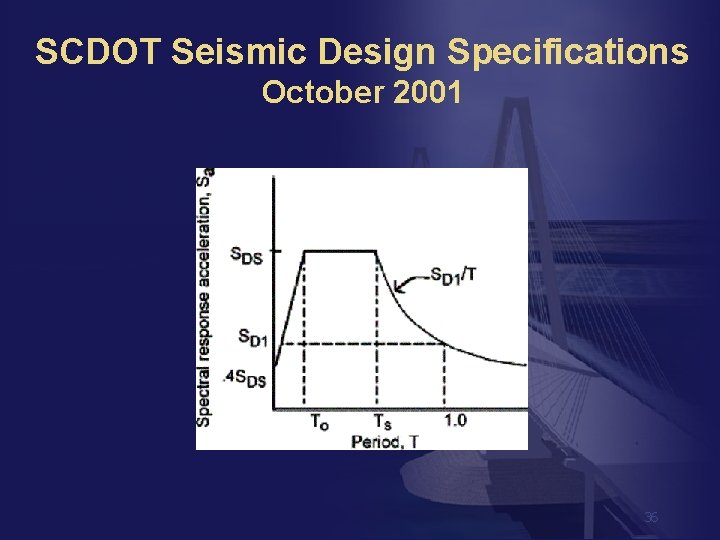
SCDOT Seismic Design Specifications October 2001 36
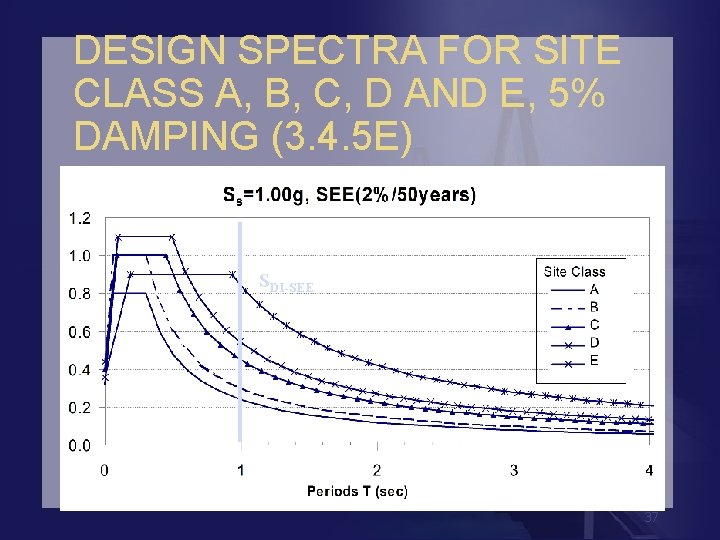
DESIGN SPECTRA FOR SITE CLASS A, B, C, D AND E, 5% DAMPING (3. 4. 5 E) SDI-SEE 37
APPLICABILITY (3. 1) • New Bridges • Bridge Types Ø Slab Ø Beam Girder Ø Box Girder • Spans less than 500 feet • Minimum Requirements • Additional Provisions are needed to achieve higher performance for essential or critical bridges 38
DESIGN PHILOSOPHY AND STRATEGIES • Specifications can be used in conjunction with rehabilitation, widening, or retrofit • SPC B demands are compared implicitly against capacities • Criteria is focused on member/component deformability as well as global ductility • Inherent member capacities are used to resist higher earthquake intensities • Using this approach required performance levels can be achieved in the Eastern US 39
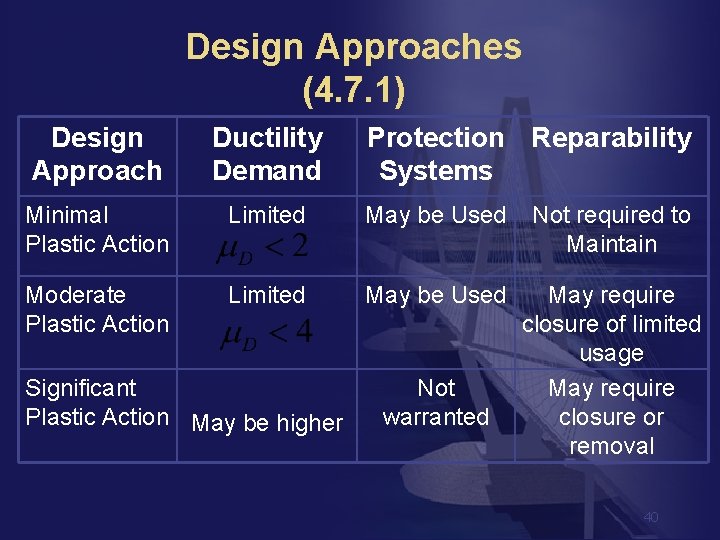
Design Approaches (4. 7. 1) Design Approach Ductility Demand Minimal Plastic Action Limited May be Used Not required to Maintain Moderate Plastic Action Limited May be Used May require closure of limited usage May require closure or removal Significant Plastic Action May be higher Protection Reparability Systems Not warranted 40
Other New Concepts and Improvements • Plastic Hinge Region Lpr (4. 7. 7) • Plastic Hinge Length (4. 7. 7) • Seat Width SPC A and B, C, D (4. 8. 2) • Detailing Restrainers (4. 9. 3) • Butt Welded Hoops • Superstructrure Shear Keys (4. 10) 41
Thanks Seismic Design of Bridges Lucero E. Mesa, P. E. 42
- Slides: 40