
Seismic Design and Detailing of Reinforced Concrete Structures





- Slides: 146
Seismic Design and Detailing of Reinforced Concrete Structures Based on CSA A 23. 3 - 2004 Murat Saatcioglu Ph. D, P. Eng. Professor and University Research Chair Department of Civil Engineering The University of Ottawa, ON
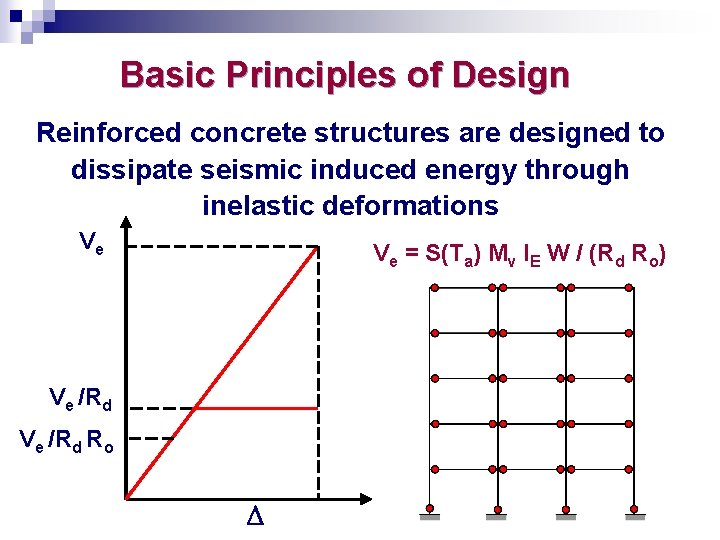
Basic Principles of Design Reinforced concrete structures are designed to dissipate seismic induced energy through inelastic deformations Ve Ve = S(Ta) Mv IE W / (Rd Ro) Ve /Rd Ro D
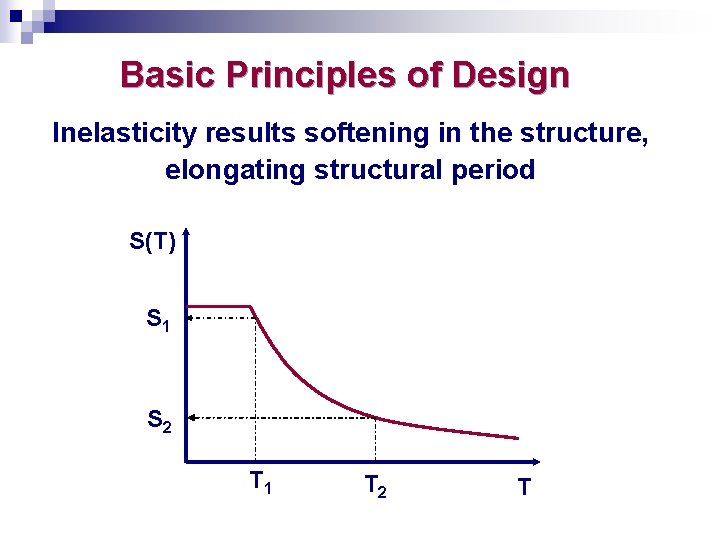
Basic Principles of Design Inelasticity results softening in the structure, elongating structural period S(T) S 1 S 2 T 1 T 2 T
Basic Principles of Design Capacity Demand It is a good practice to reduce seismic demands, to the extent possible…. This can be done at the conceptual stage by selecting a suitable structural system.
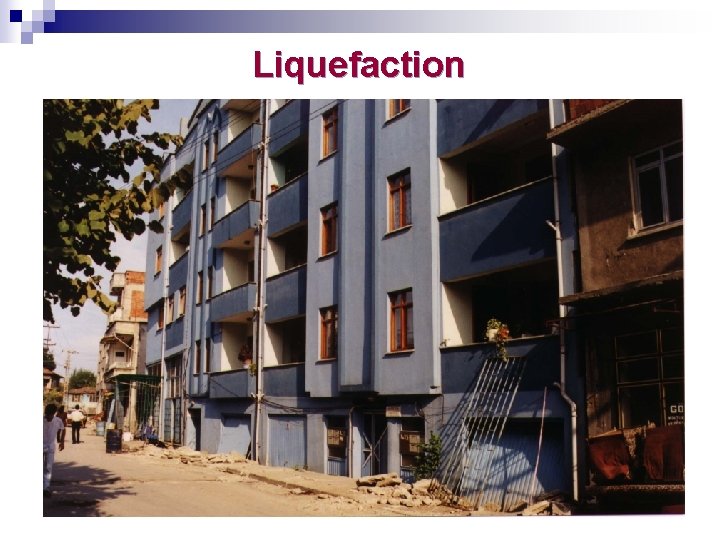
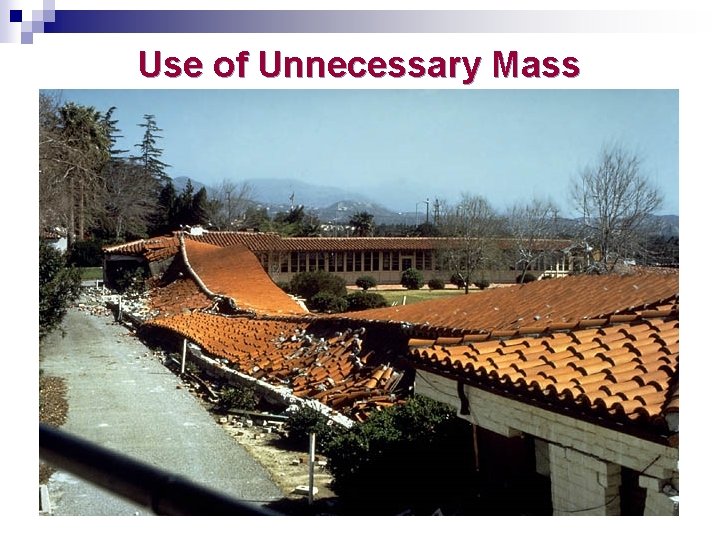
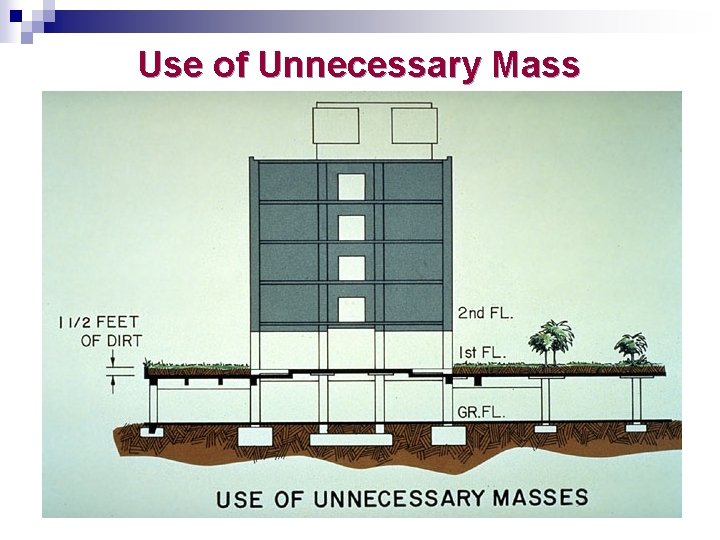
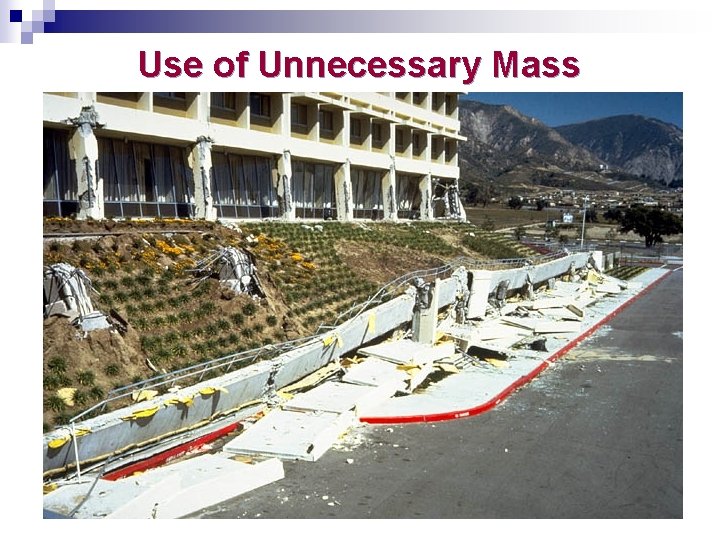
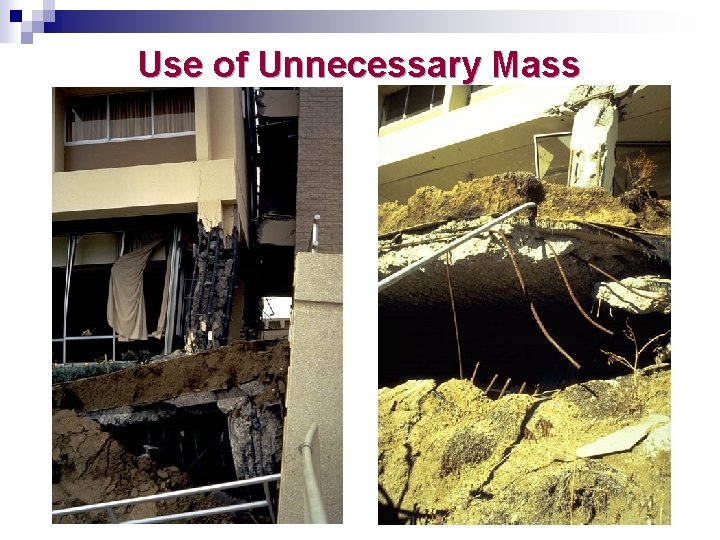
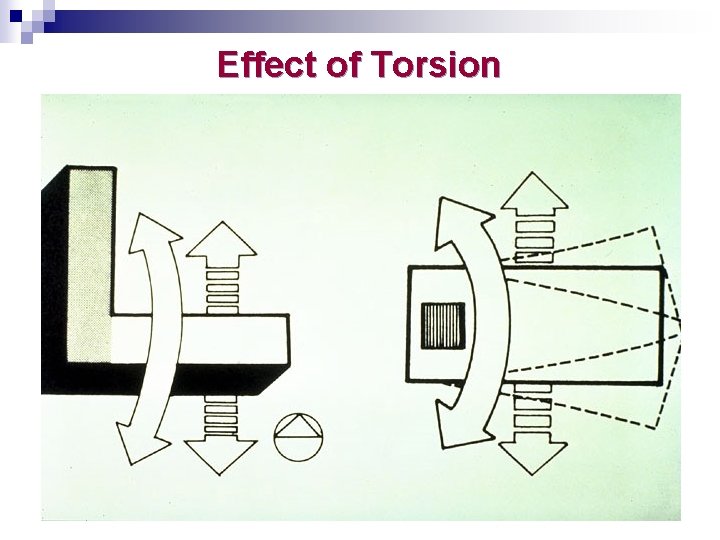
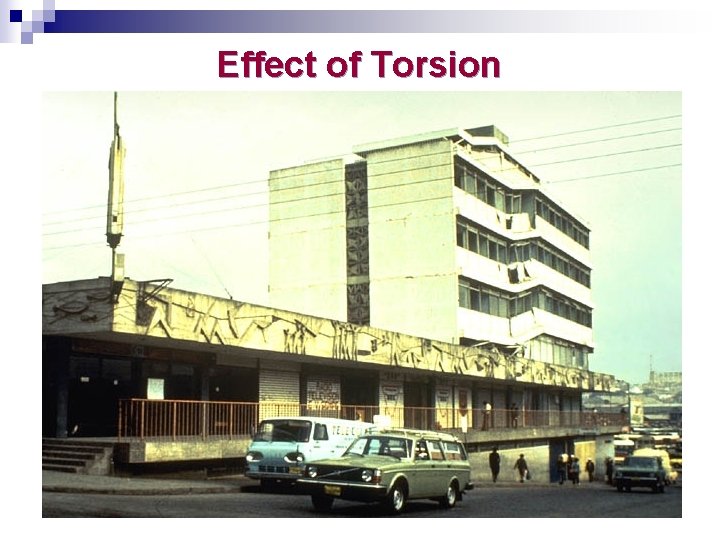
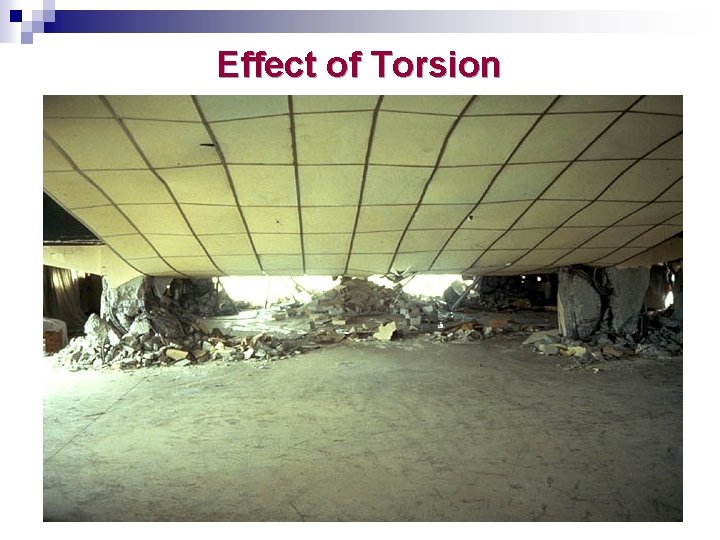
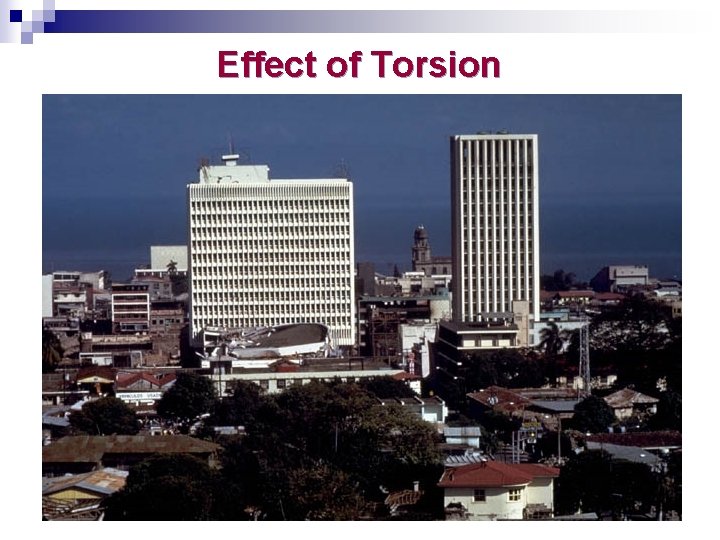
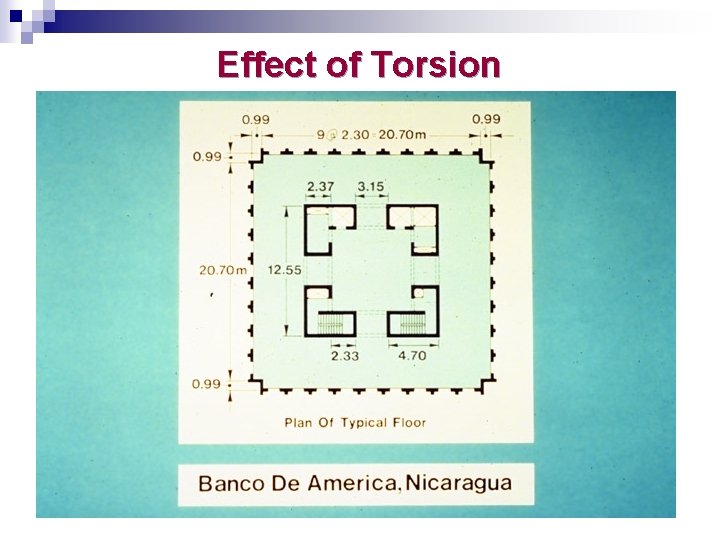
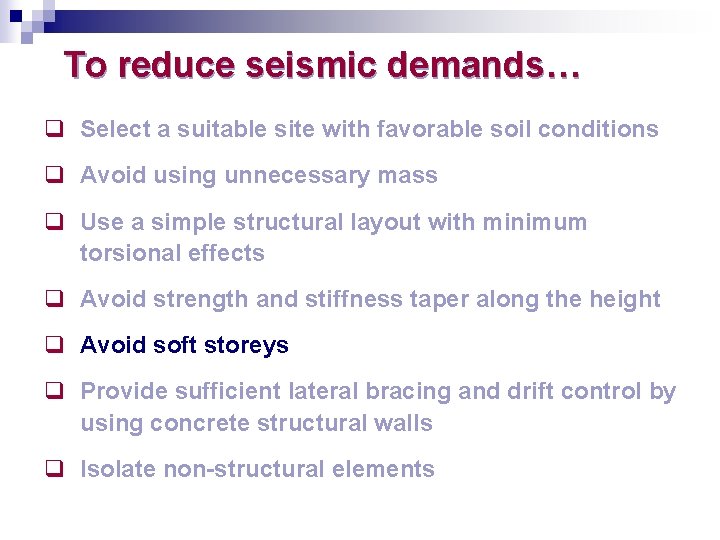
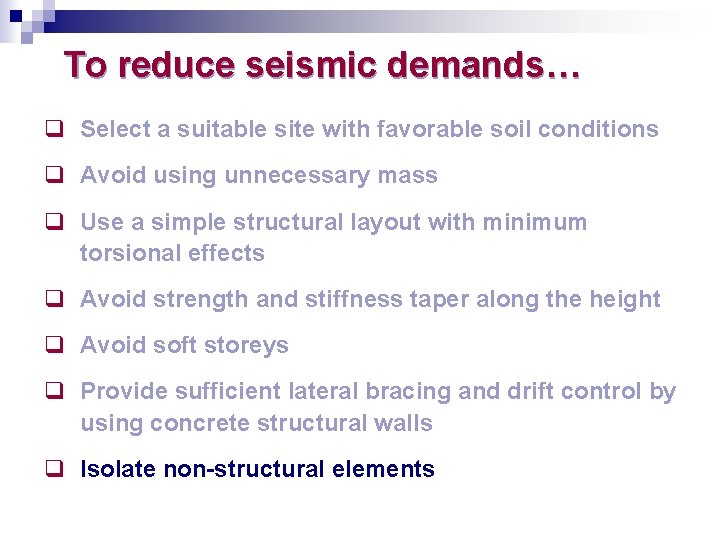
To reduce seismic demands… q Select a suitable site with favorable soil conditions q Avoid using unnecessary mass q Use a simple structural layout with minimum torsional effects q Avoid strength and stiffness taper along the height q Avoid soft storeys q Provide sufficient lateral bracing and drift control by using concrete structural walls q Isolate non-structural elements
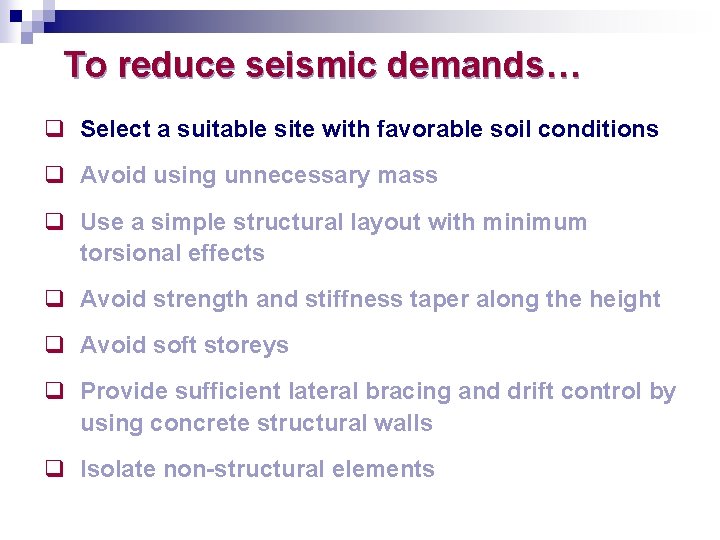
Seismic Amplification due to Soft Soil
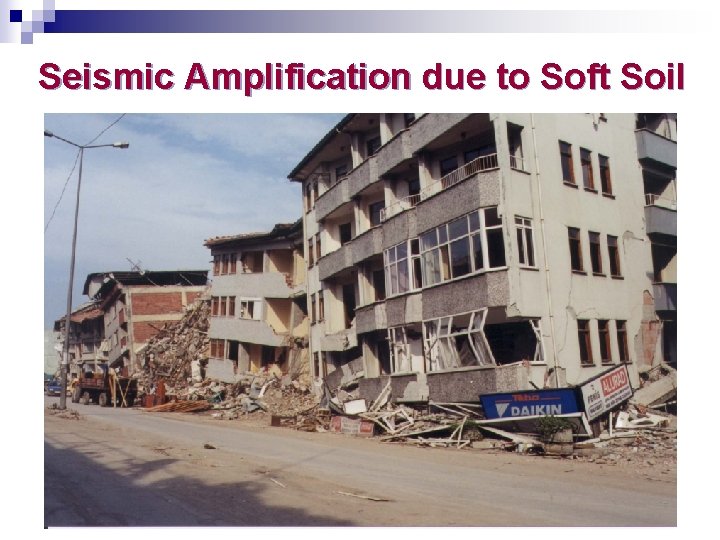
Liquefaction
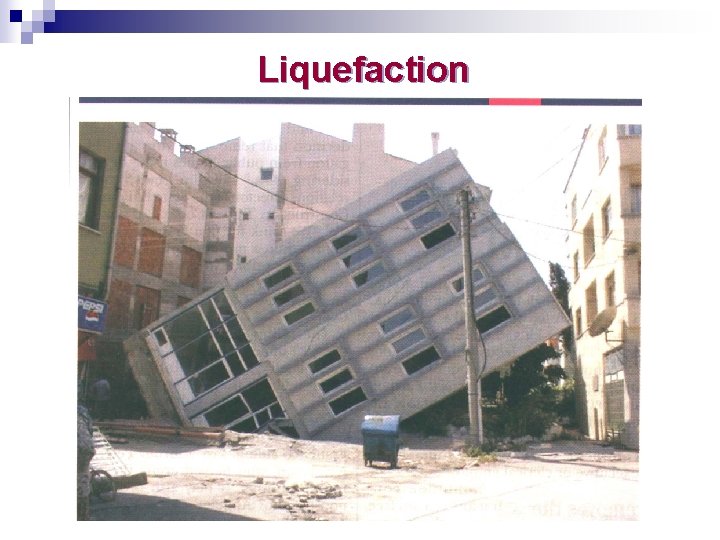
Liquefaction
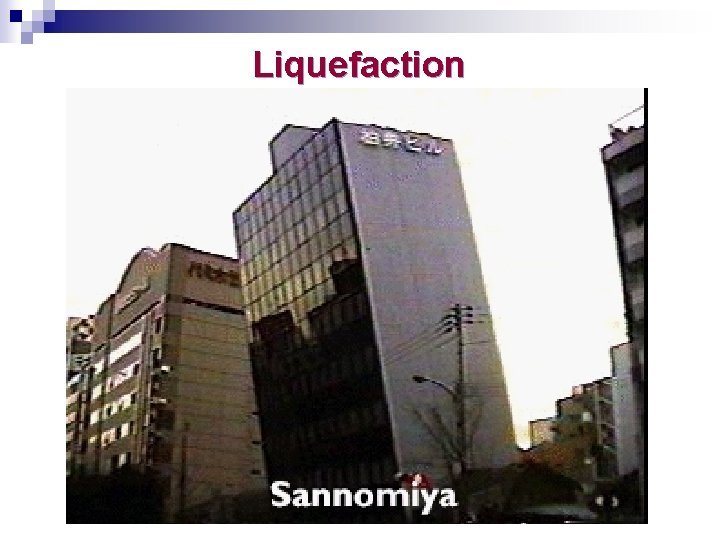
Liquefaction
To reduce seismic demands… q Select a suitable site with favorable soil conditions q Avoid using unnecessary mass q Use a simple structural layout with minimum torsional effects q Avoid strength and stiffness taper along the height q Avoid soft storeys q Provide sufficient lateral bracing and drift control by using concrete structural walls q Isolate non-structural elements
Use of Unnecessary Mass
Use of Unnecessary Mass
Use of Unnecessary Mass
Use of Unnecessary Mass
To reduce seismic demands… q Select a suitable site with favorable soil conditions q Avoid using unnecessary mass q Use a simple structural layout with minimum torsional effects q Avoid strength and stiffness taper along the height q Avoid soft storeys q Provide sufficient lateral bracing and drift control by using concrete structural walls q Isolate non-structural elements
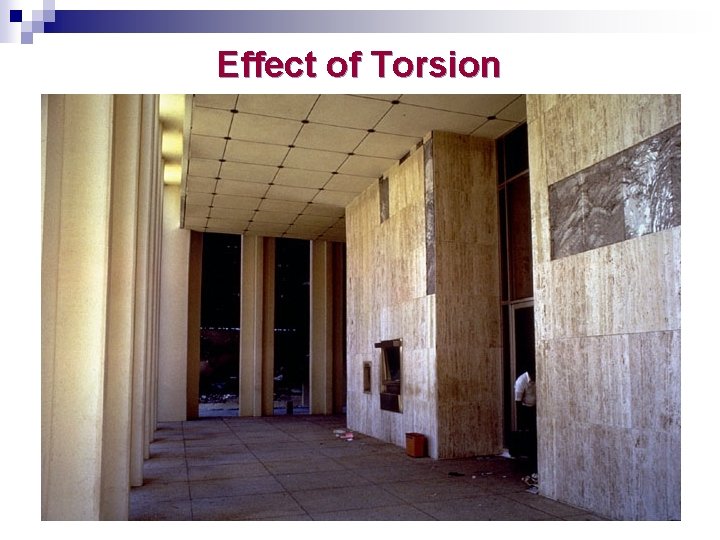
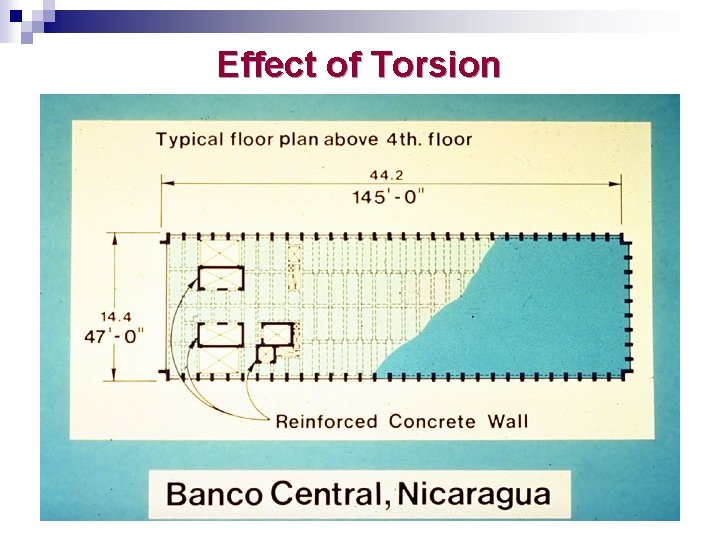
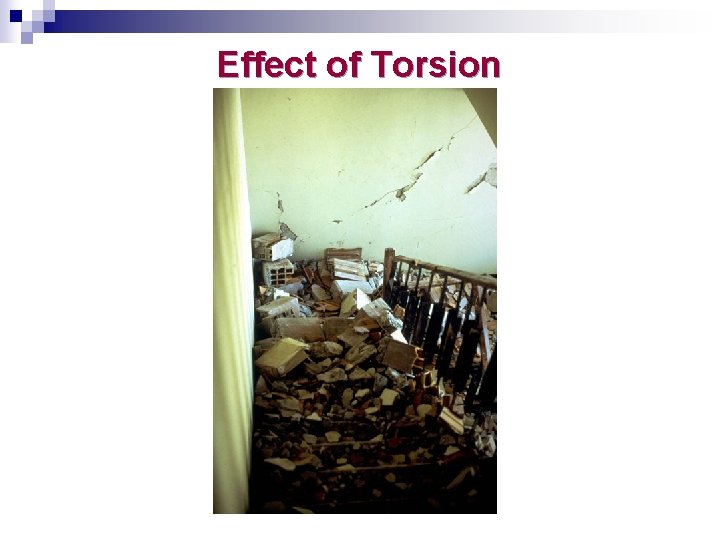
Effect of Torsion
Effect of Torsion
Effect of Torsion
Effect of Torsion
Effect of Torsion
Effect of Torsion
Effect of Torsion
Effect of Torsion
To reduce seismic demands… q Select a suitable site with favorable soil conditions q Avoid using unnecessary mass q Use a simple structural layout with minimum torsional effects q Avoid strength and stiffness taper along the height q Avoid soft storeys q Provide sufficient lateral bracing and drift control by using concrete structural walls q Isolate non-structural elements
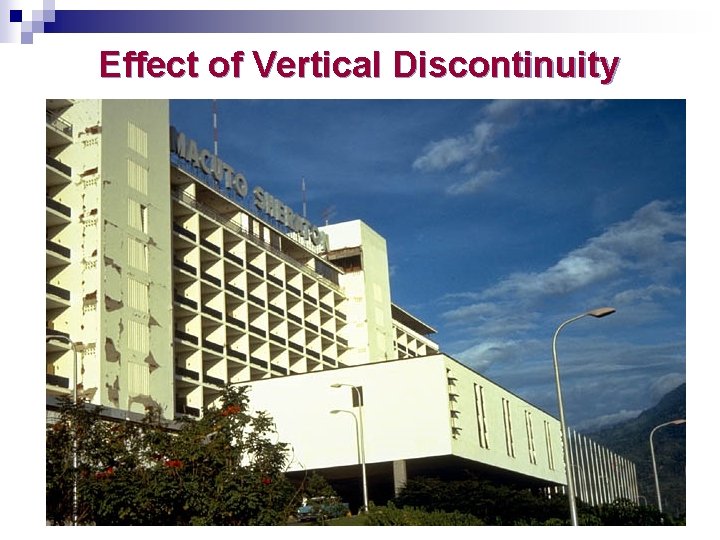
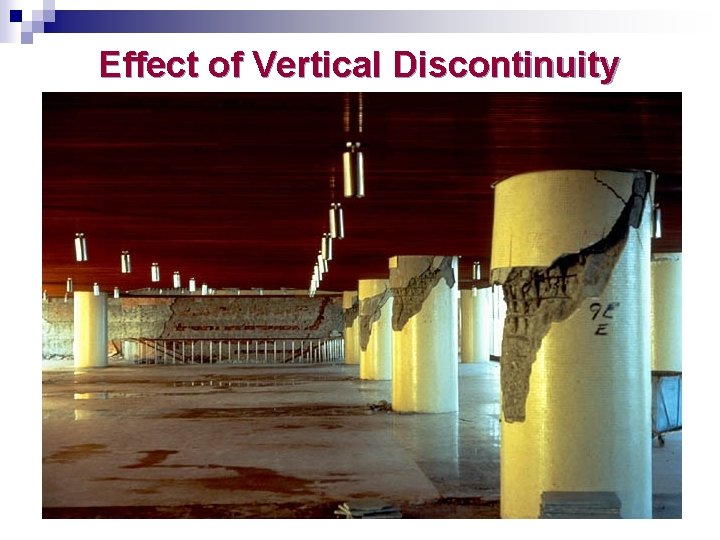
Effect of Vertical Discontinuity
Effect of Vertical Discontinuity
To reduce seismic demands… q Select a suitable site with favorable soil conditions q Avoid using unnecessary mass q Use a simple structural layout with minimum torsional effects q Avoid strength and stiffness taper along the height q Avoid soft storeys q Provide sufficient lateral bracing and drift control by using concrete structural walls q Isolate non-structural elements
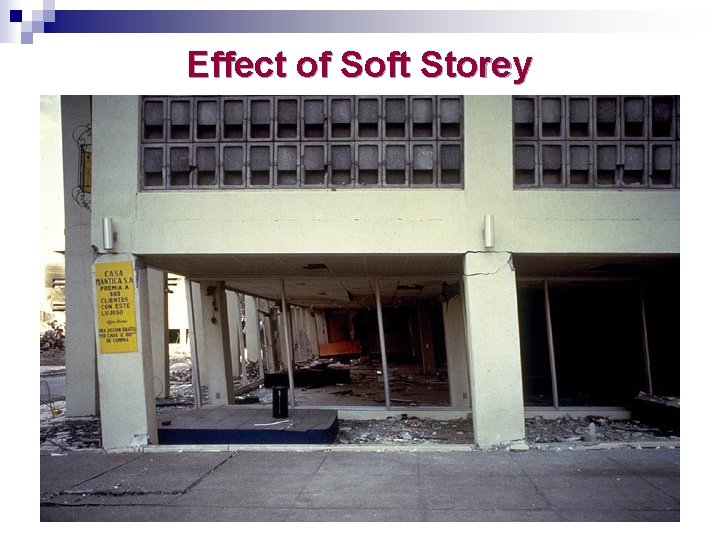
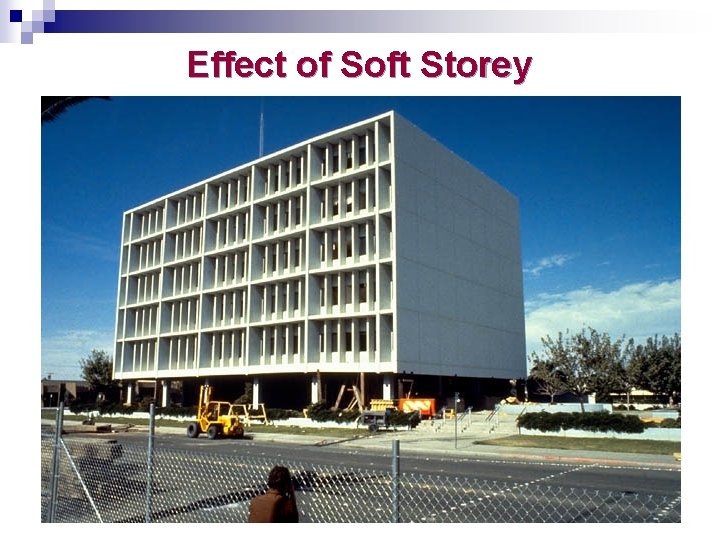
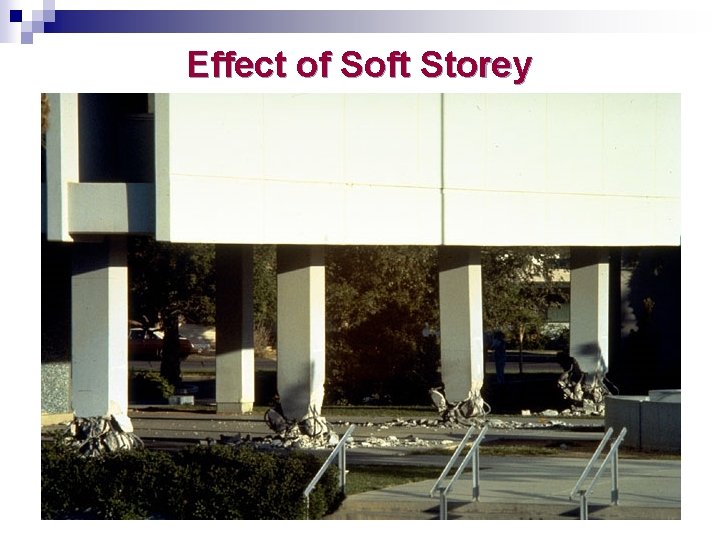
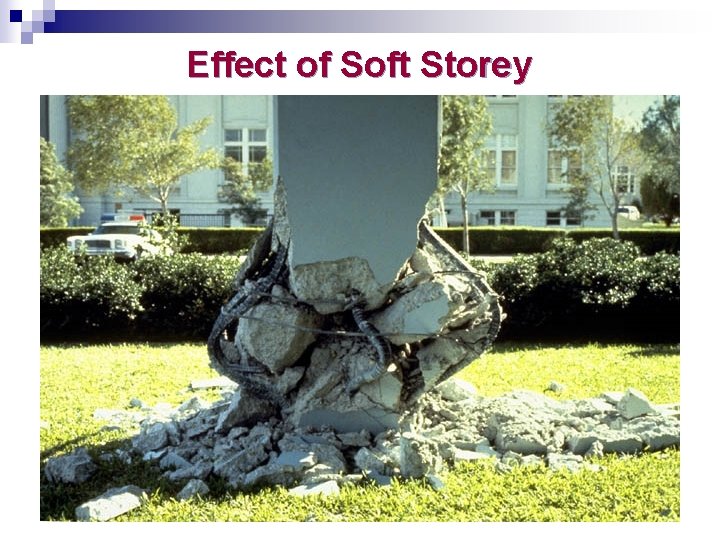
Effect of Soft Storey
Effect of Soft Storey
Effect of Soft Storey
Effect of Soft Storey
To reduce seismic demands… q Select a suitable site with favorable soil conditions q Avoid using unnecessary mass q Use a simple structural layout with minimum torsional effects q Avoid strength and stiffness taper along the height q Avoid soft storeys q Provide sufficient lateral bracing and drift control by using concrete structural walls q Isolate non-structural elements
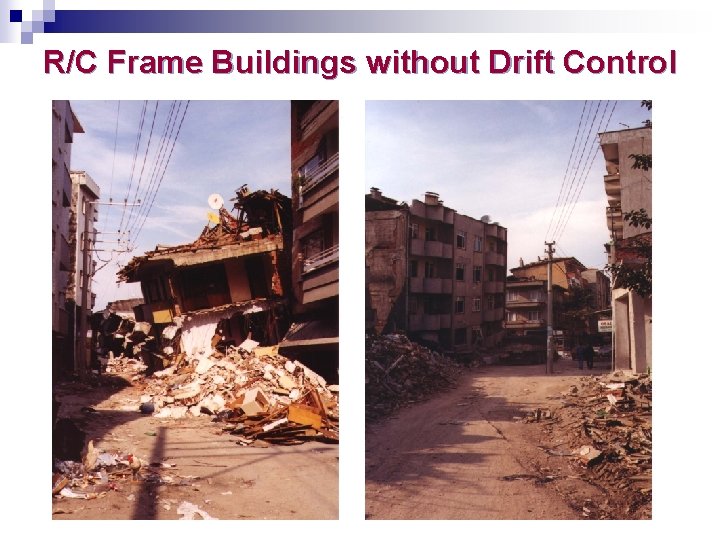
R/C Frame Buildings without Drift Control
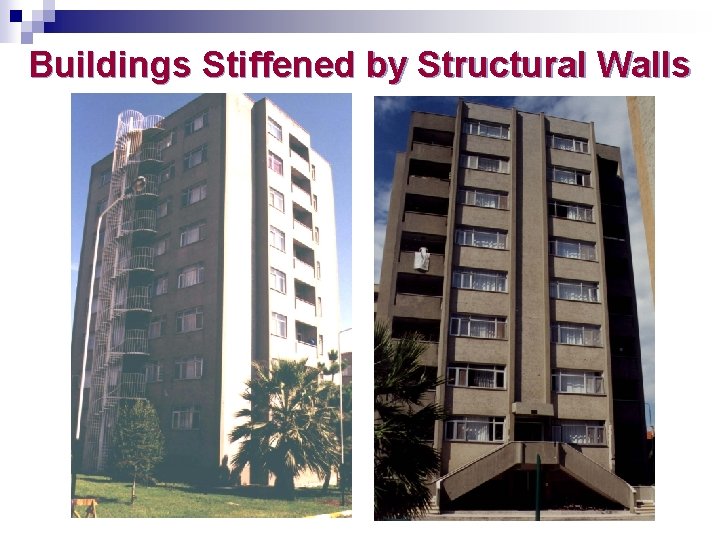
Buildings Stiffened by Structural Walls
To reduce seismic demands… q Select a suitable site with favorable soil conditions q Avoid using unnecessary mass q Use a simple structural layout with minimum torsional effects q Avoid strength and stiffness taper along the height q Avoid soft storeys q Provide sufficient lateral bracing and drift control by using concrete structural walls q Isolate non-structural elements
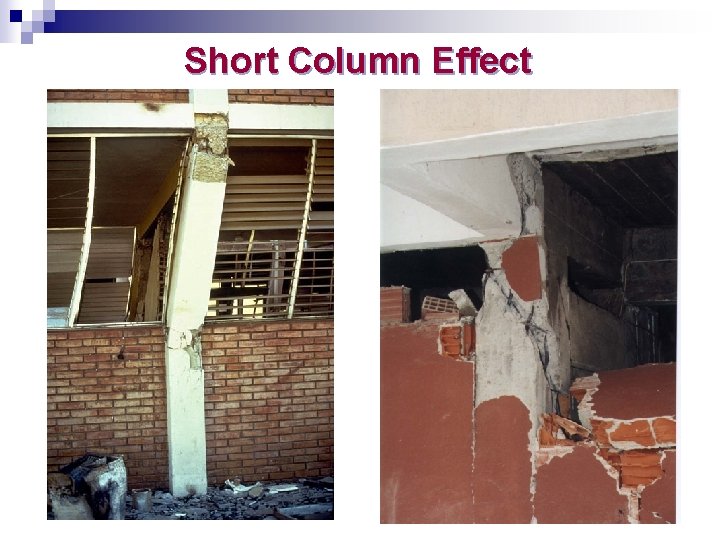
Short Column Effect
Short Column Effect
Seismic Design Requirements of CSA A 23. 3 - 2004 Capacity design is employed…. . Selected elements are designed to yield while critical elements remain elastic Design for Strength and Deformability
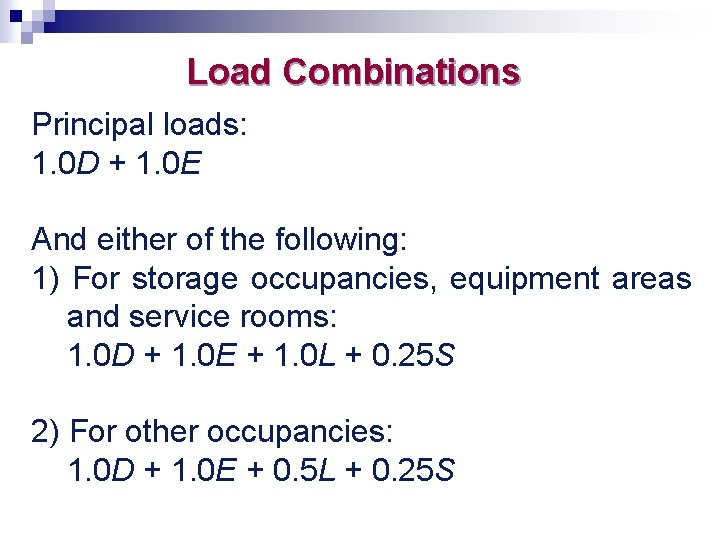
Load Combinations Principal loads: 1. 0 D + 1. 0 E And either of the following: 1) For storage occupancies, equipment areas and service rooms: 1. 0 D + 1. 0 E + 1. 0 L + 0. 25 S 2) For other occupancies: 1. 0 D + 1. 0 E + 0. 5 L + 0. 25 S
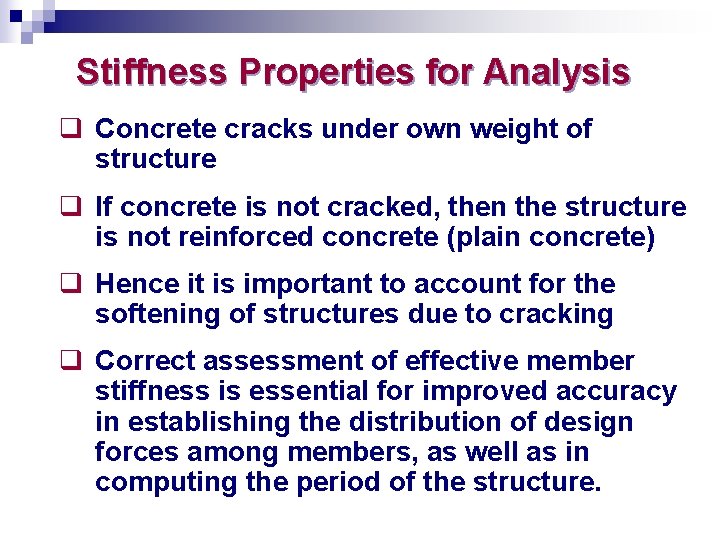
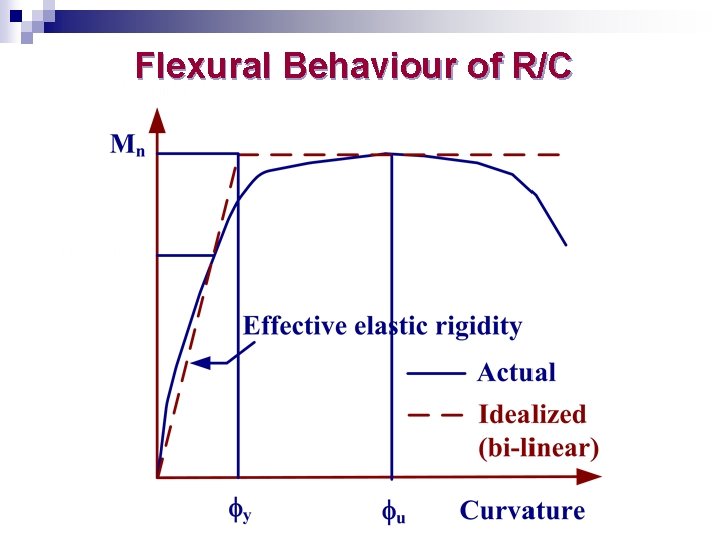
Stiffness Properties for Analysis q Concrete cracks under own weight of structure q If concrete is not cracked, then the structure is not reinforced concrete (plain concrete) q Hence it is important to account for the softening of structures due to cracking q Correct assessment of effective member stiffness is essential for improved accuracy in establishing the distribution of design forces among members, as well as in computing the period of the structure.
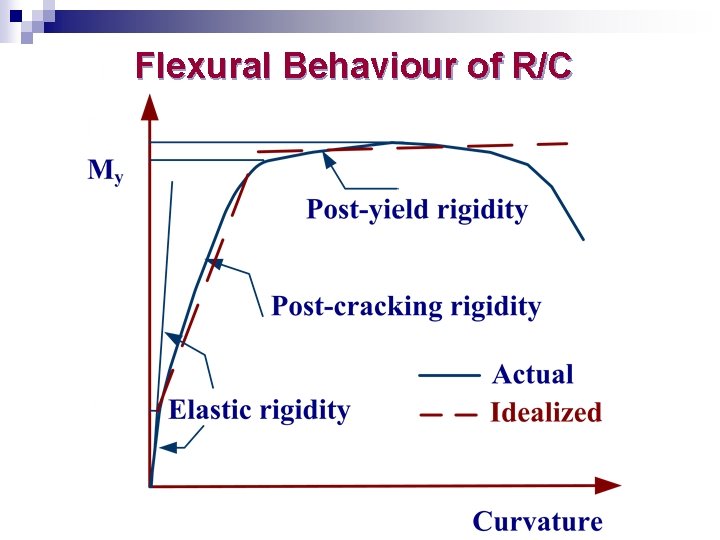
Flexural Behaviour of R/C
Flexural Behaviour of R/C
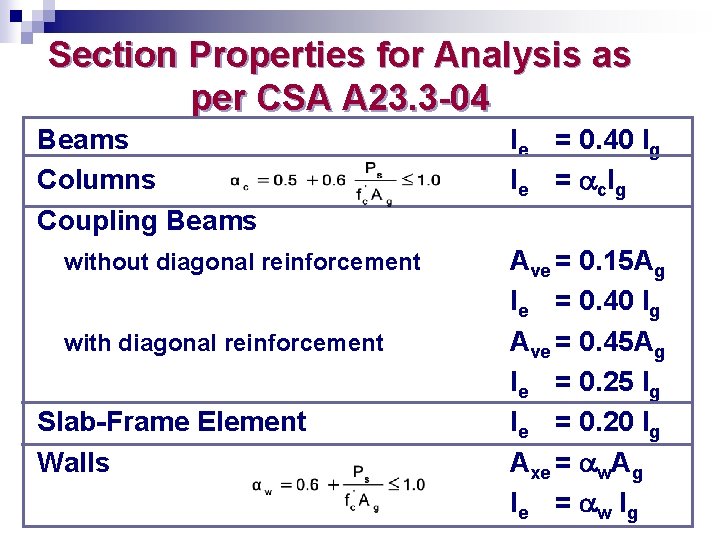
Section Properties for Analysis as per CSA A 23. 3 -04 Beams Columns Coupling Beams without diagonal reinforcement with diagonal reinforcement Slab-Frame Element Walls Ie = 0. 40 Ig I e = a c. I g Ave = 0. 15 Ag Ie = 0. 40 Ig Ave = 0. 45 Ag Ie = 0. 25 Ig Ie = 0. 20 Ig Axe = aw. Ag Ie = aw Ig
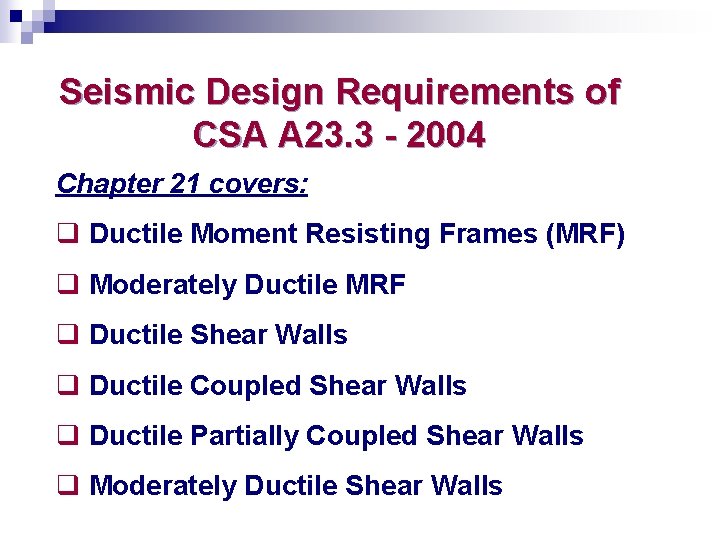
Seismic Design Requirements of CSA A 23. 3 - 2004 Chapter 21 covers: q Ductile Moment Resisting Frames (MRF) q Moderately Ductile MRF q Ductile Shear Walls q Ductile Coupled Shear Walls q Ductile Partially Coupled Shear Walls q Moderately Ductile Shear Walls
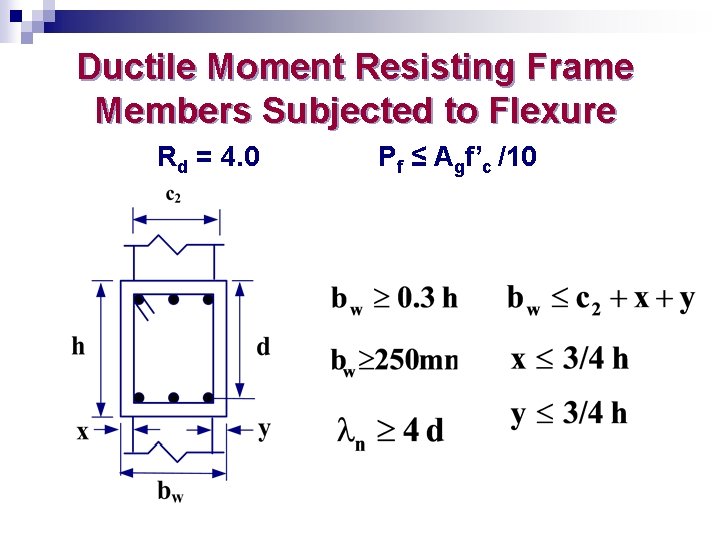
Ductile Moment Resisting Frame Members Subjected to Flexure Rd = 4. 0 Pf ≤ Agf’c /10
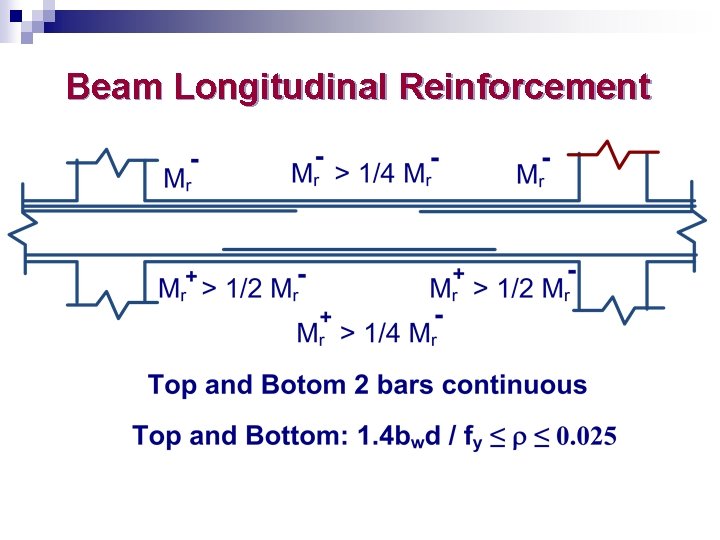
Beam Longitudinal Reinforcement
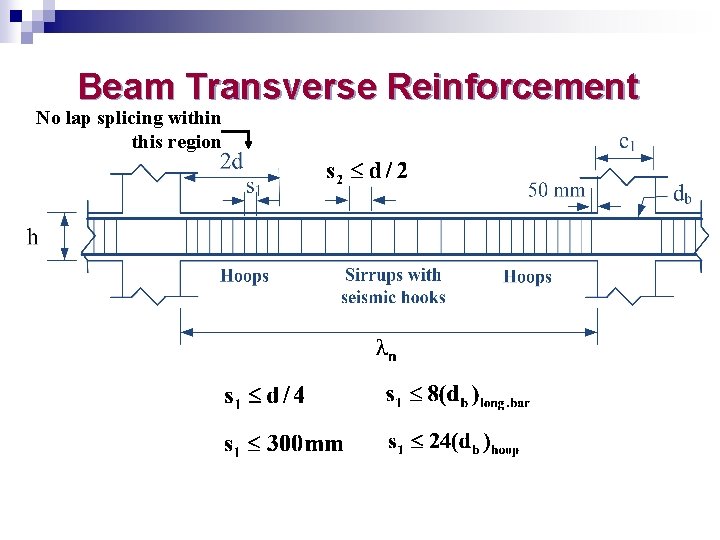
Beam Transverse Reinforcement No lap splicing within this region
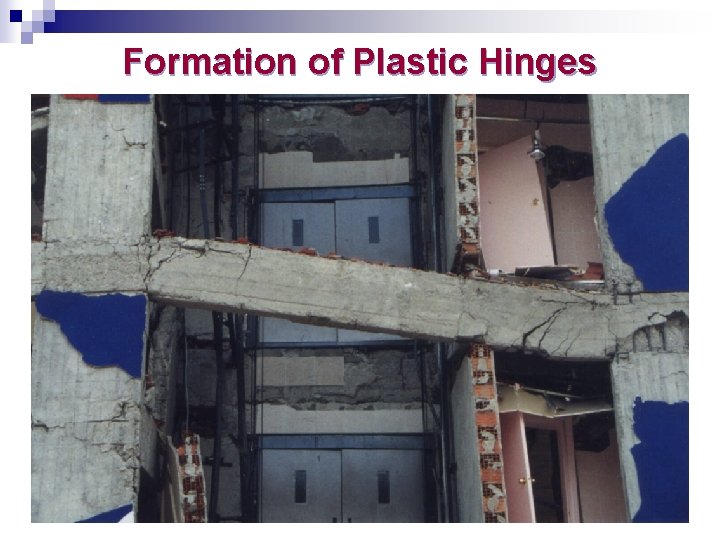
Formation of Plastic Hinges
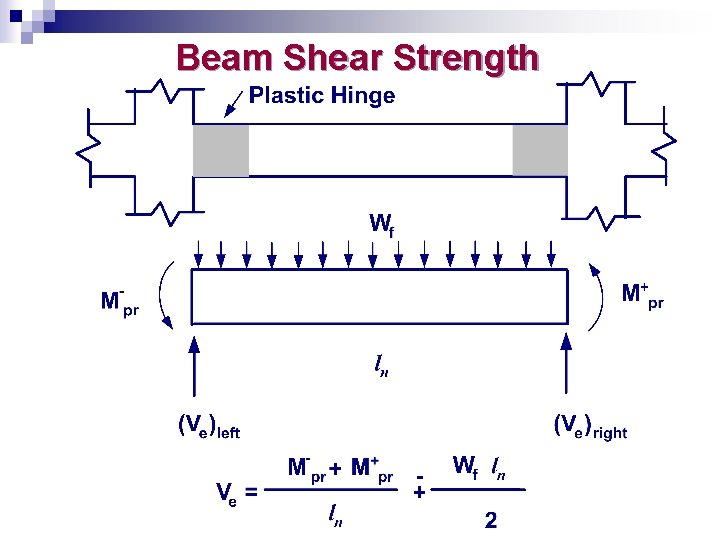
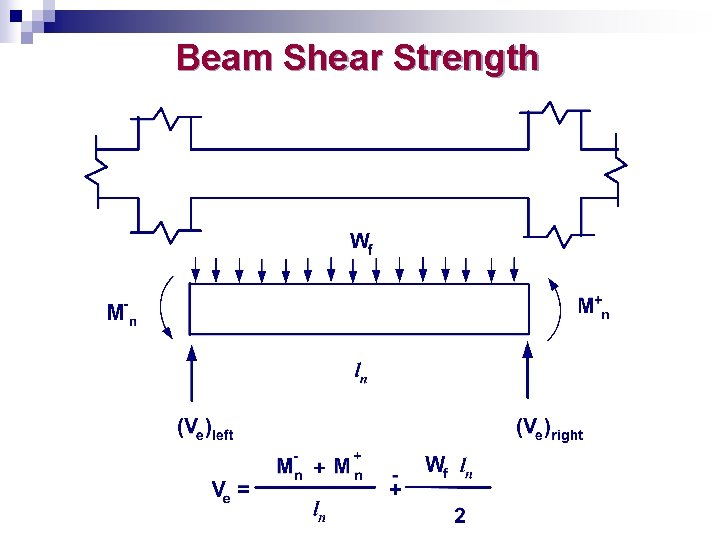
Beam Shear Strength
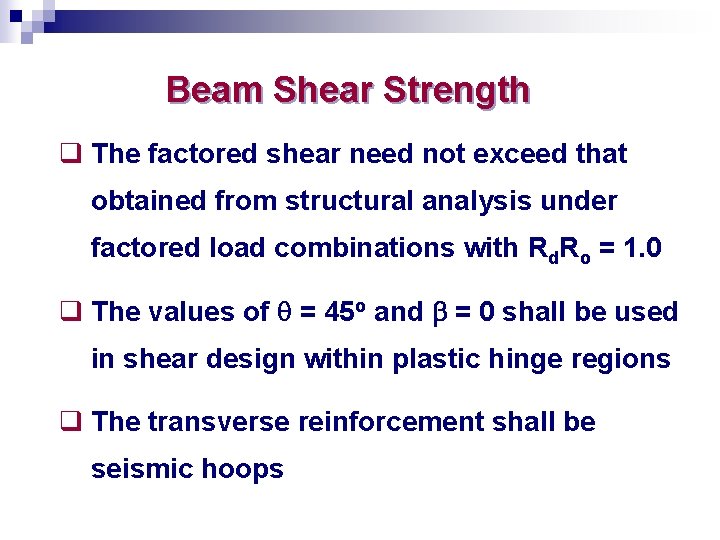
Beam Shear Strength q The factored shear need not exceed that obtained from structural analysis under factored load combinations with Rd. Ro = 1. 0 q The values of q = 45 o and b = 0 shall be used in shear design within plastic hinge regions q The transverse reinforcement shall be seismic hoops
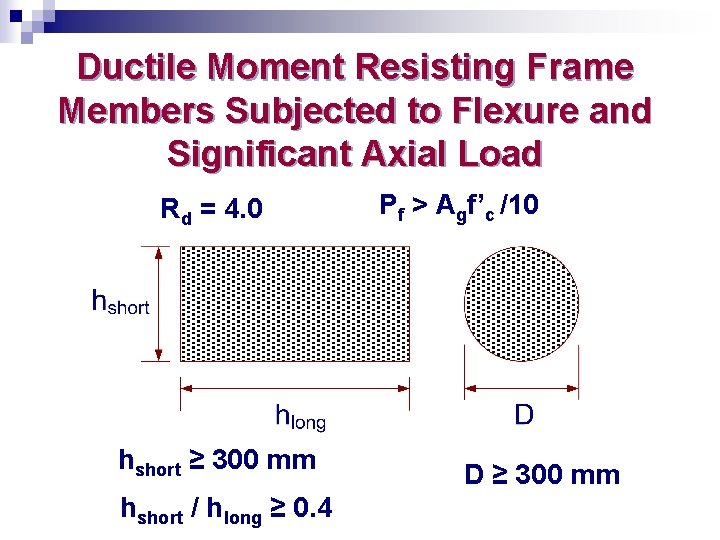
Ductile Moment Resisting Frame Members Subjected to Flexure and Significant Axial Load Rd = 4. 0 hshort ≥ 300 mm hshort / hlong ≥ 0. 4 Pf > Agf’c /10 D ≥ 300 mm
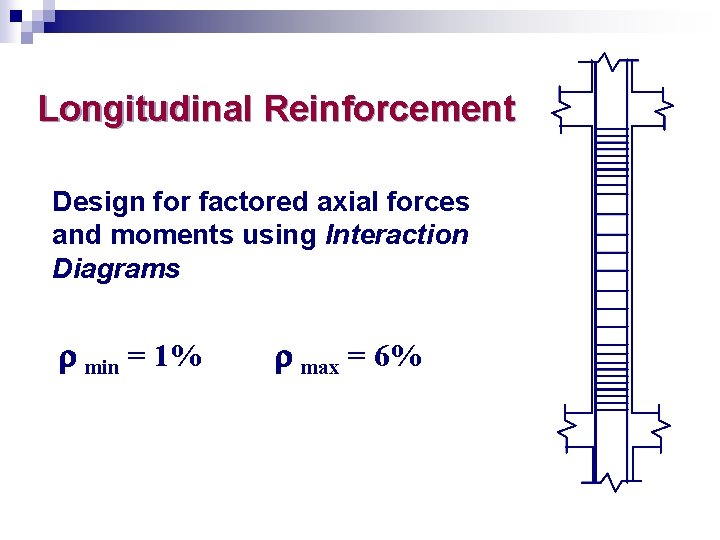
Longitudinal Reinforcement Design for factored axial forces and moments using Interaction Diagrams r min = 1% r max = 6%
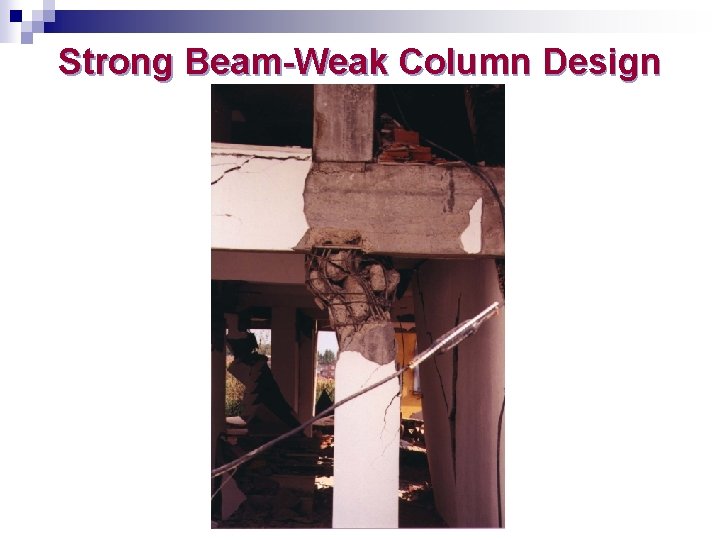
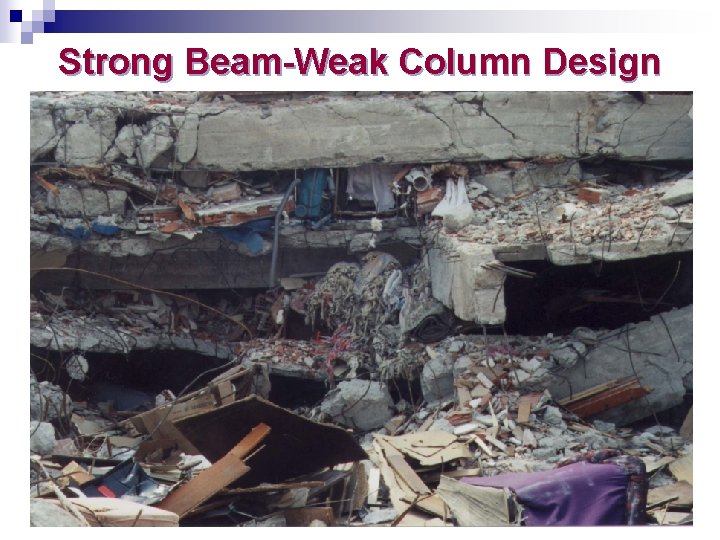
Strong Beam-Weak Column Design
Strong Beam-Weak Column Design
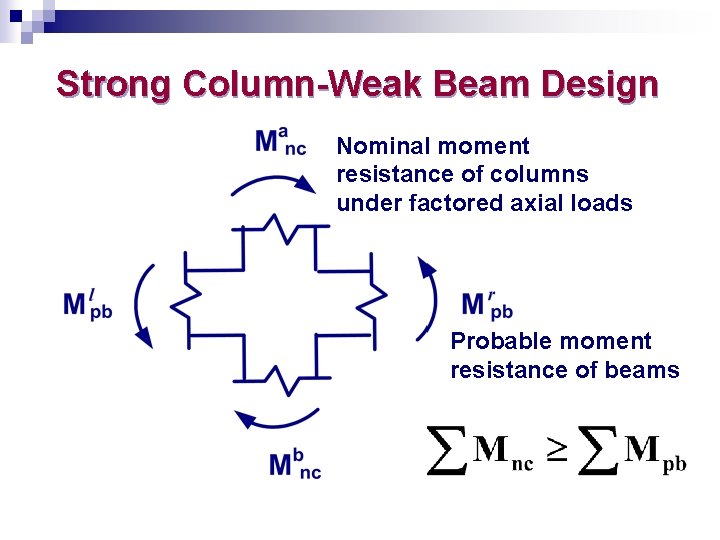
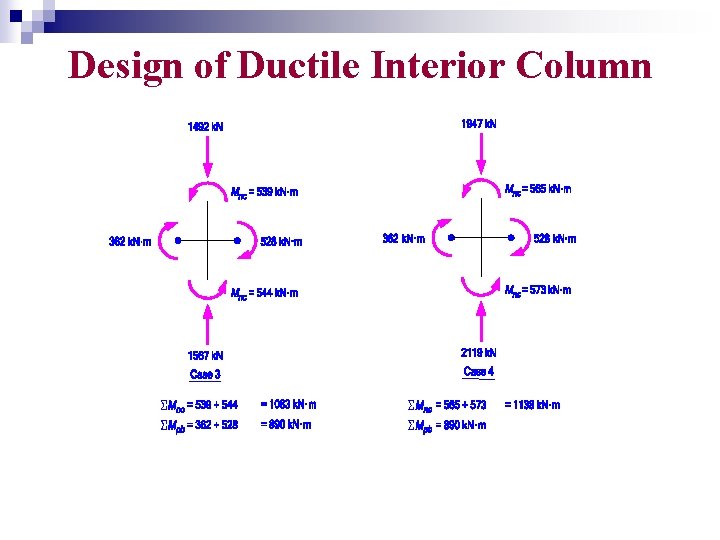
Strong Column-Weak Beam Design Nominal moment resistance of columns under factored axial loads Probable moment resistance of beams
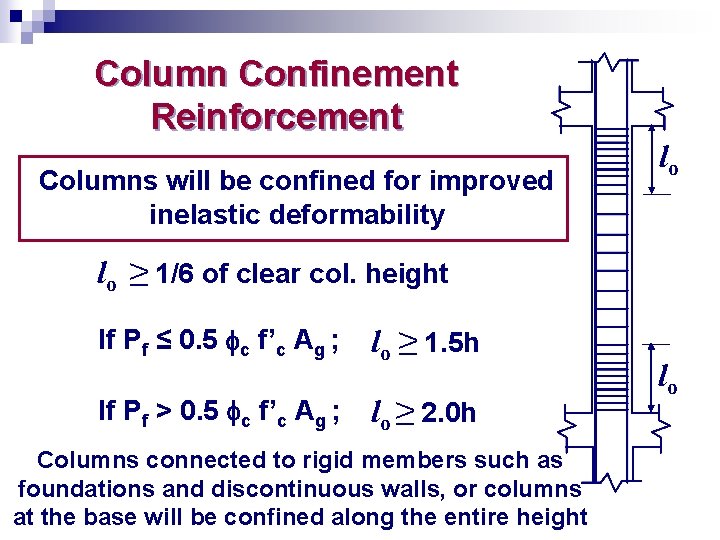
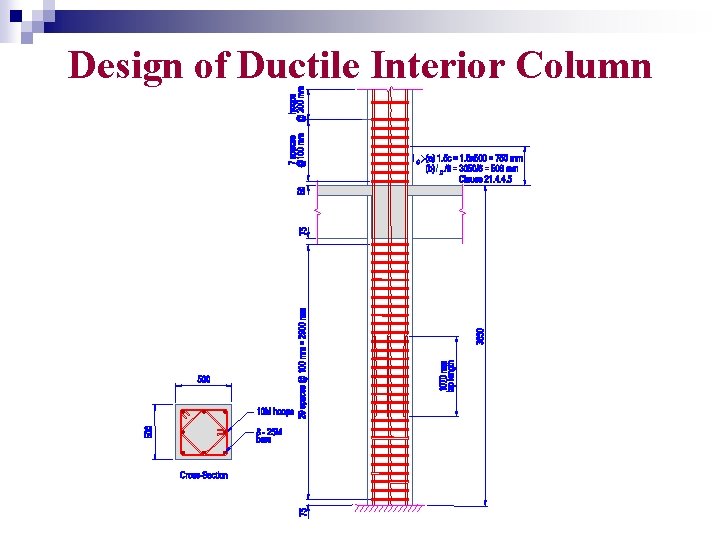
Column Confinement Reinforcement Columns will be confined for improved inelastic deformability lo lo ≥ 1/6 of clear col. height If Pf ≤ 0. 5 fc f’c Ag ; lo ≥ 1. 5 h If Pf > 0. 5 fc f’c Ag ; lo ≥ 2. 0 h Columns connected to rigid members such as foundations and discontinuous walls, or columns at the base will be confined along the entire height lo
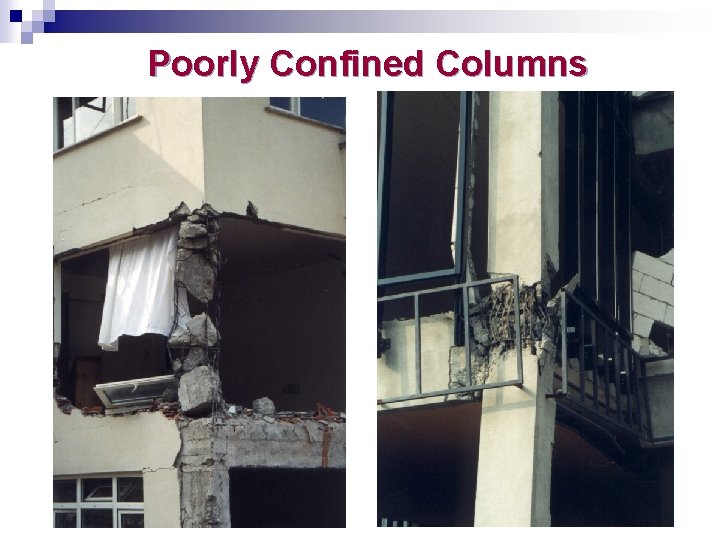
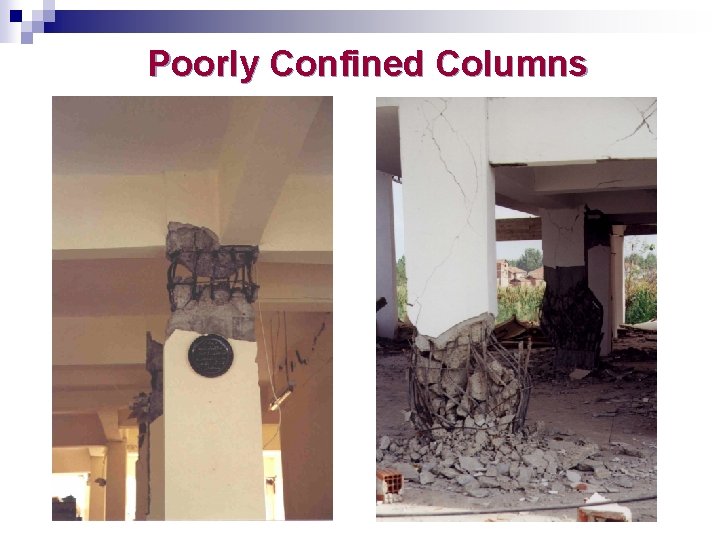
Poorly Confined Columns
Poorly Confined Columns
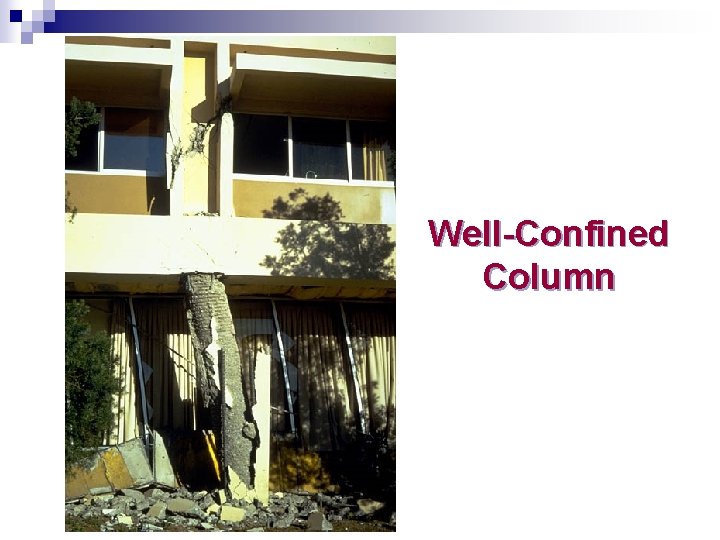
Well-Confined Column
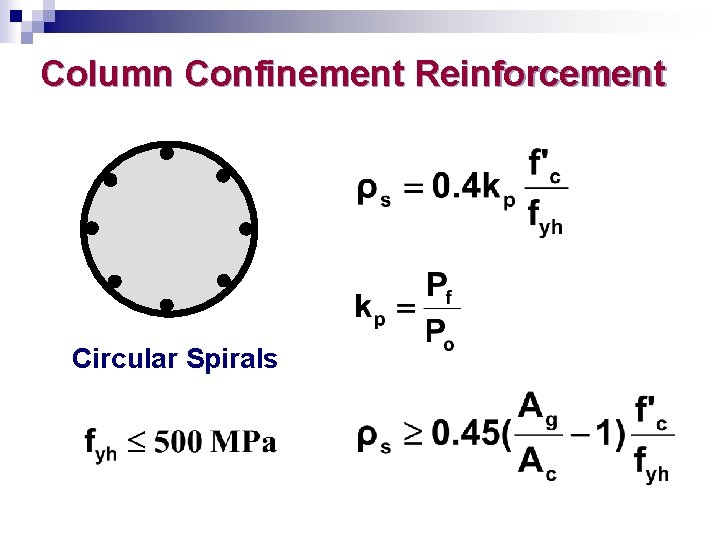
Column Confinement Reinforcement Circular Spirals
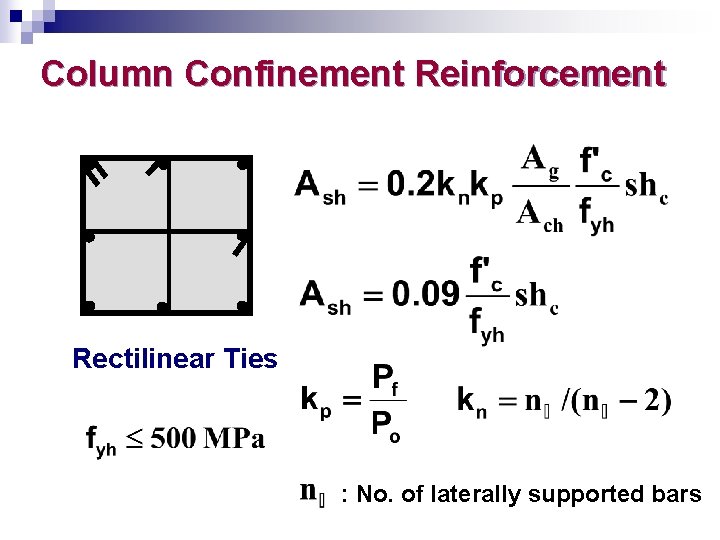
Column Confinement Reinforcement Rectilinear Ties : No. of laterally supported bars
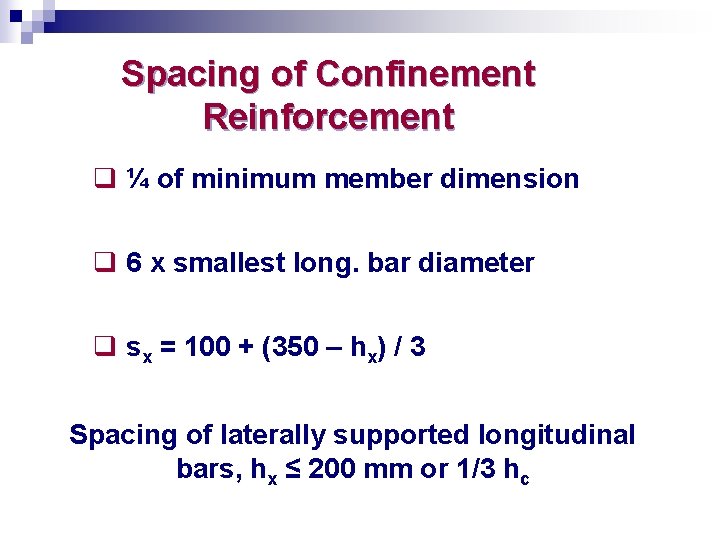
Spacing of Confinement Reinforcement q ¼ of minimum member dimension q 6 x smallest long. bar diameter q sx = 100 + (350 – hx) / 3 Spacing of laterally supported longitudinal bars, hx ≤ 200 mm or 1/3 hc
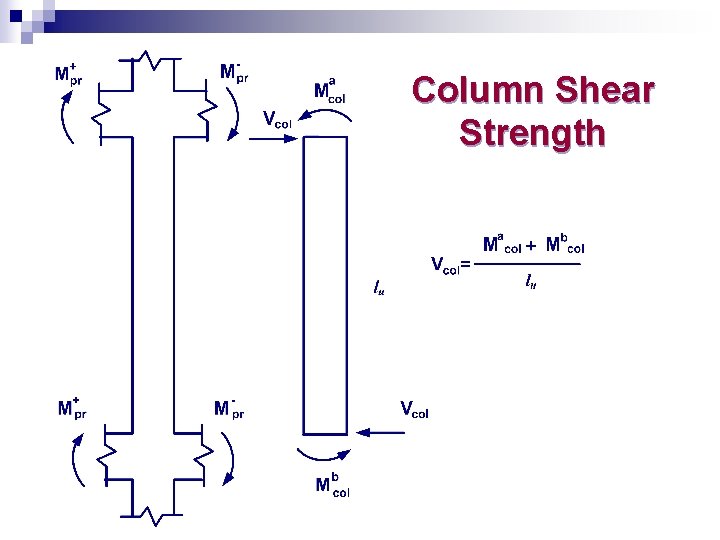
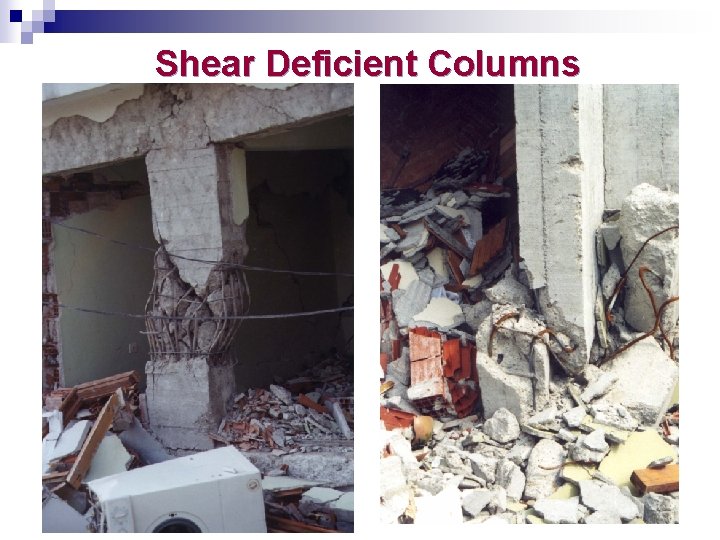
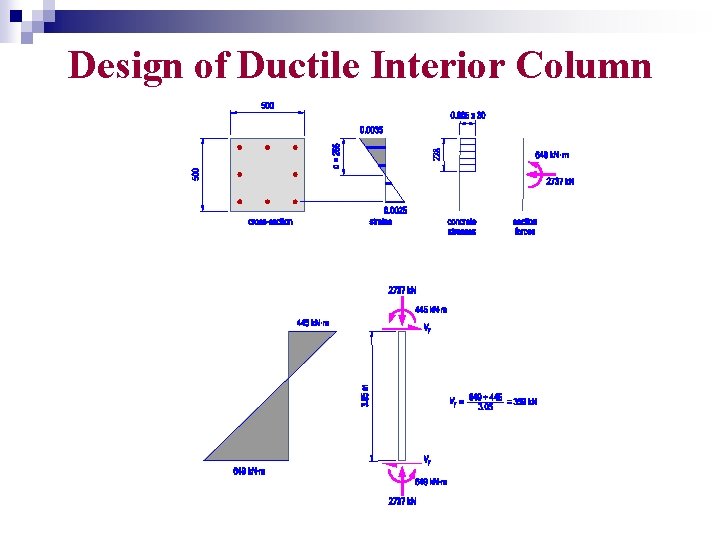
Column Shear Strength
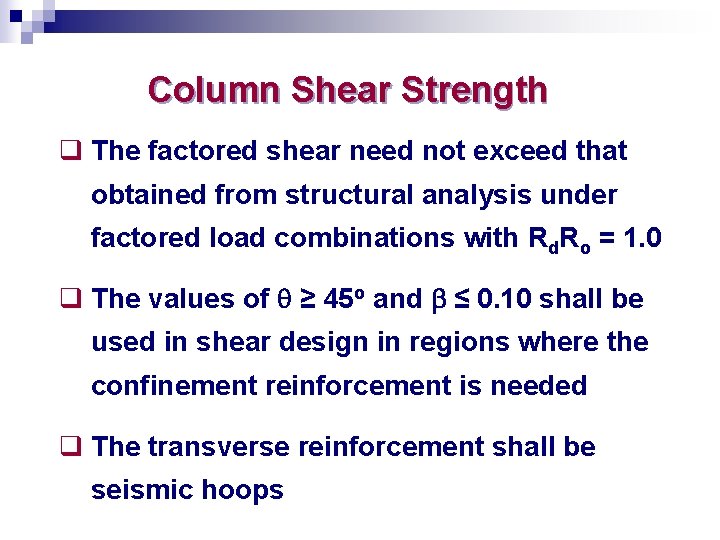
Column Shear Strength q The factored shear need not exceed that obtained from structural analysis under factored load combinations with Rd. Ro = 1. 0 q The values of q ≥ 45 o and b ≤ 0. 10 shall be used in shear design in regions where the confinement reinforcement is needed q The transverse reinforcement shall be seismic hoops
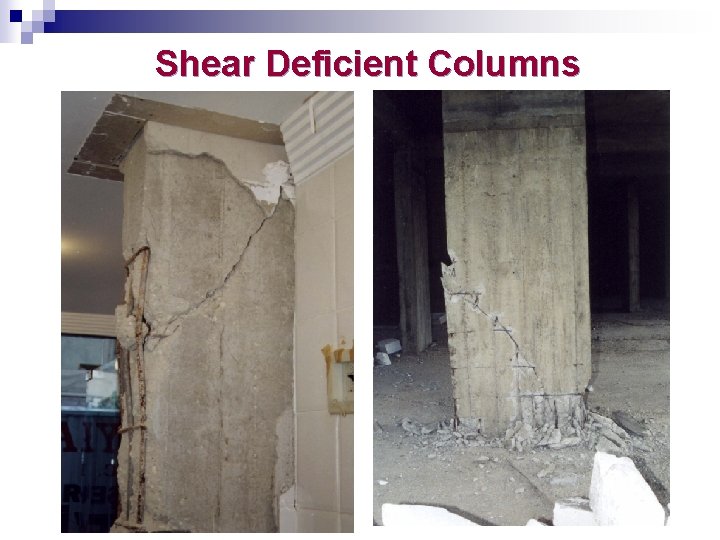
Shear Deficient Columns
Shear Deficient Columns
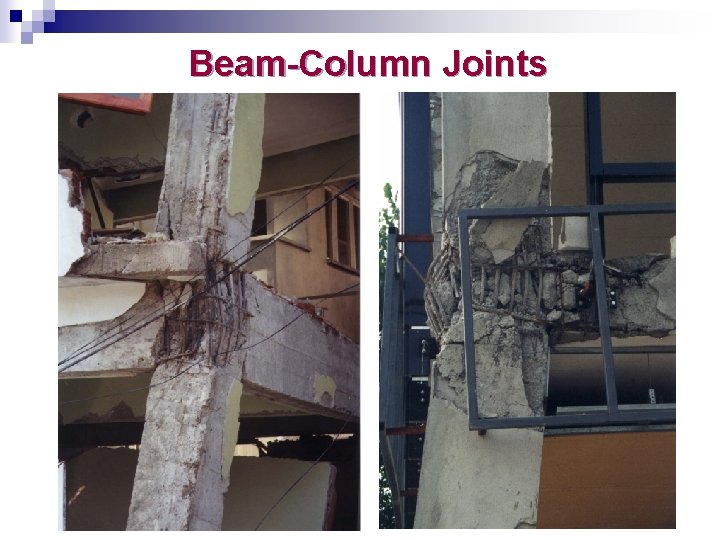
Beam-Column Joints
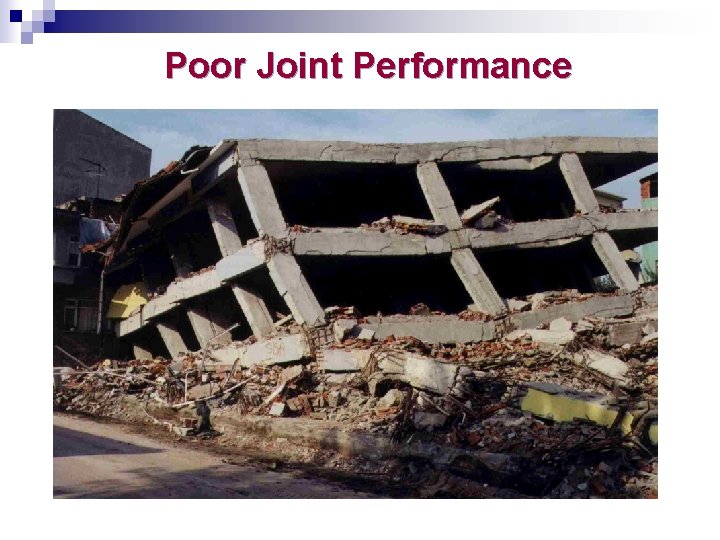
Poor Joint Performance
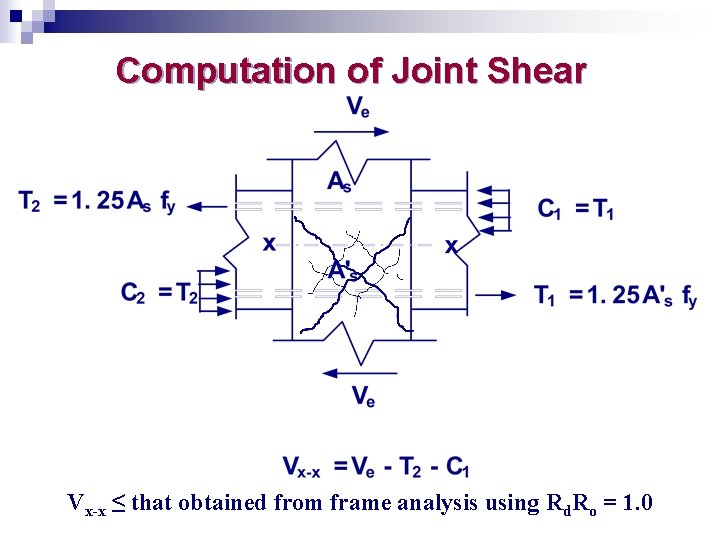
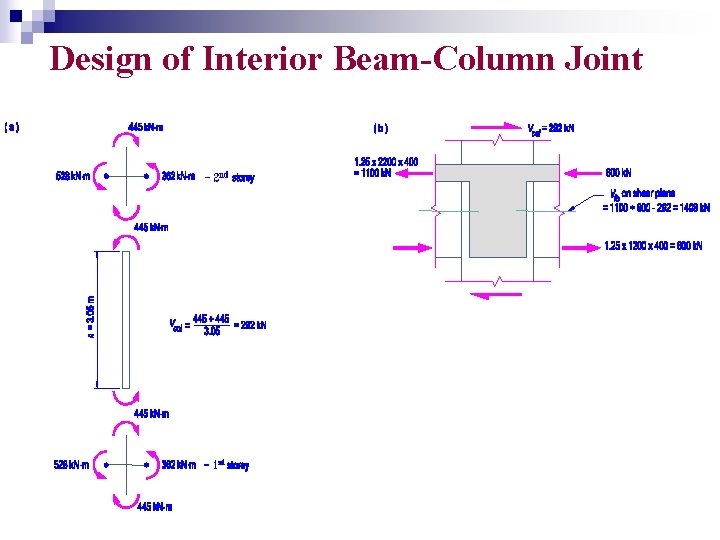
Computation of Joint Shear Vx-x ≤ that obtained from frame analysis using Rd. Ro = 1. 0
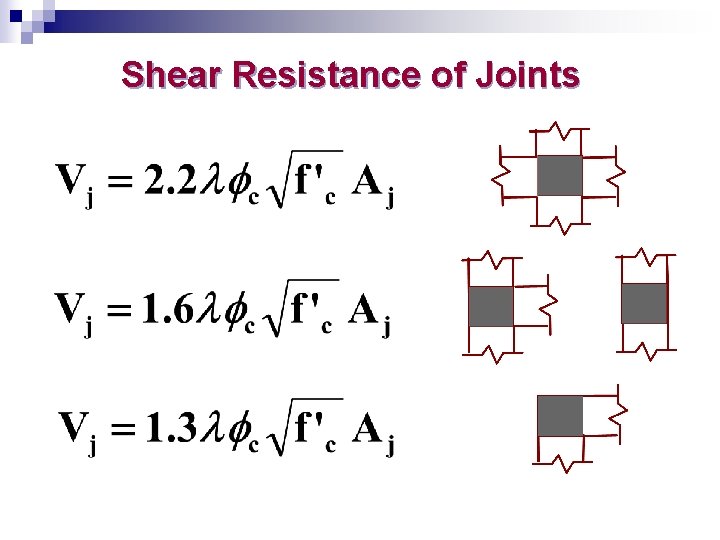
Shear Resistance of Joints
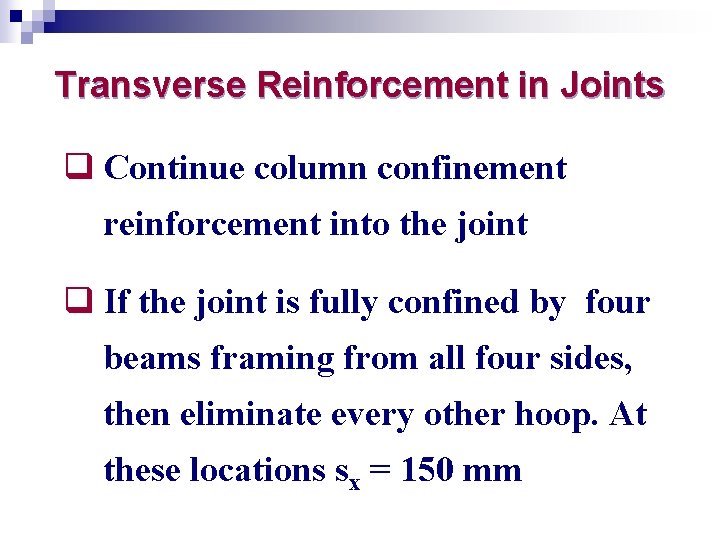
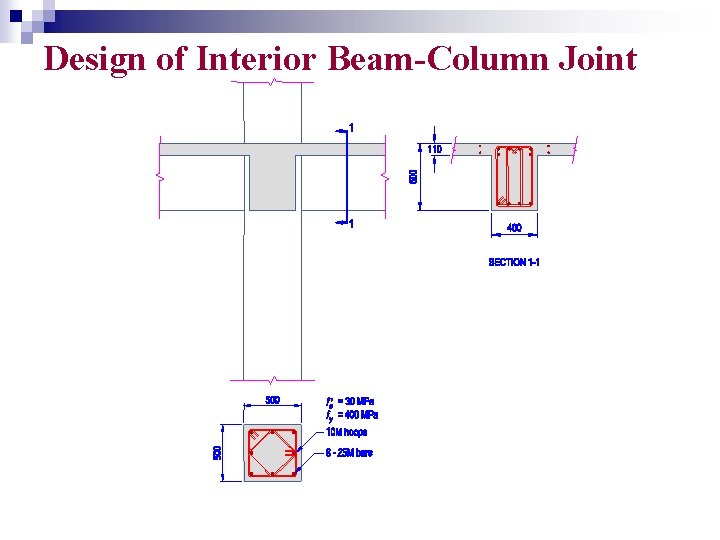
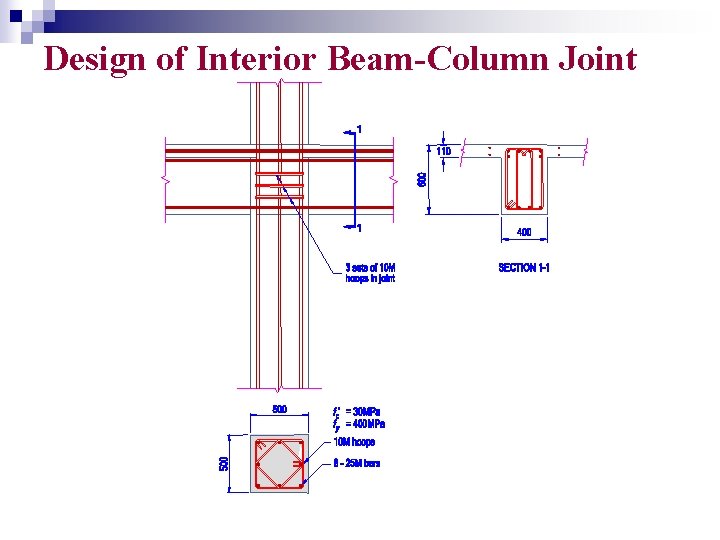
Transverse Reinforcement in Joints q Continue column confinement reinforcement into the joint q If the joint is fully confined by four beams framing from all four sides, then eliminate every other hoop. At these locations sx = 150 mm
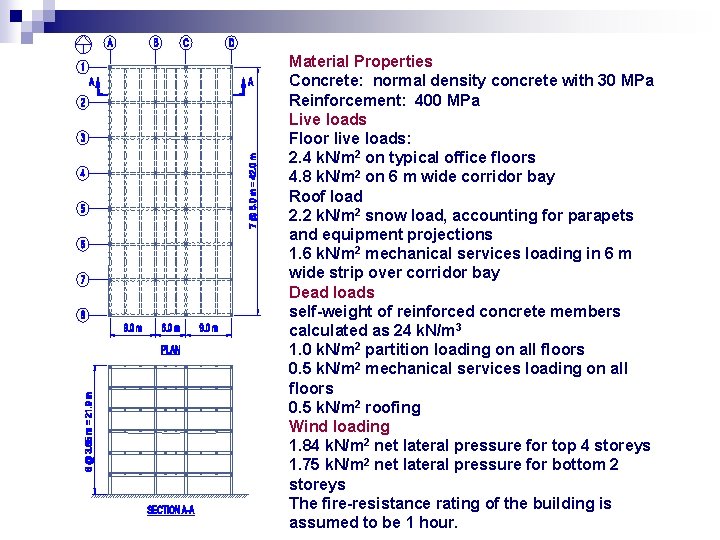
Design Example Six-Storey Ductile Moment Resisting Frame in Vancouver Chapter 11 By D. Mitchell and P. Paultre
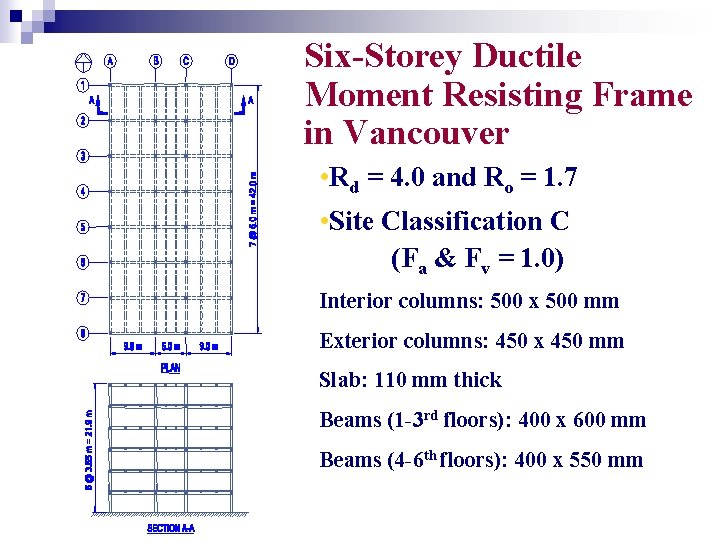
Six-Storey Ductile Moment Resisting Frame in Vancouver • Rd = 4. 0 and Ro = 1. 7 • Site Classification C (Fa & Fv = 1. 0) Interior columns: 500 x 500 mm Exterior columns: 450 x 450 mm Slab: 110 mm thick Beams (1 -3 rd floors): 400 x 600 mm Beams (4 -6 th floors): 400 x 550 mm
Material Properties Concrete: normal density concrete with 30 MPa Reinforcement: 400 MPa Live loads Floor live loads: 2. 4 k. N/m 2 on typical office floors 4. 8 k. N/m 2 on 6 m wide corridor bay Roof load 2. 2 k. N/m 2 snow load, accounting for parapets and equipment projections 1. 6 k. N/m 2 mechanical services loading in 6 m wide strip over corridor bay Dead loads self-weight of reinforced concrete members calculated as 24 k. N/m 3 1. 0 k. N/m 2 partition loading on all floors 0. 5 k. N/m 2 mechanical services loading on all floors 0. 5 k. N/m 2 roofing Wind loading 1. 84 k. N/m 2 net lateral pressure for top 4 storeys 1. 75 k. N/m 2 net lateral pressure for bottom 2 storeys The fire-resistance rating of the building is assumed to be 1 hour.
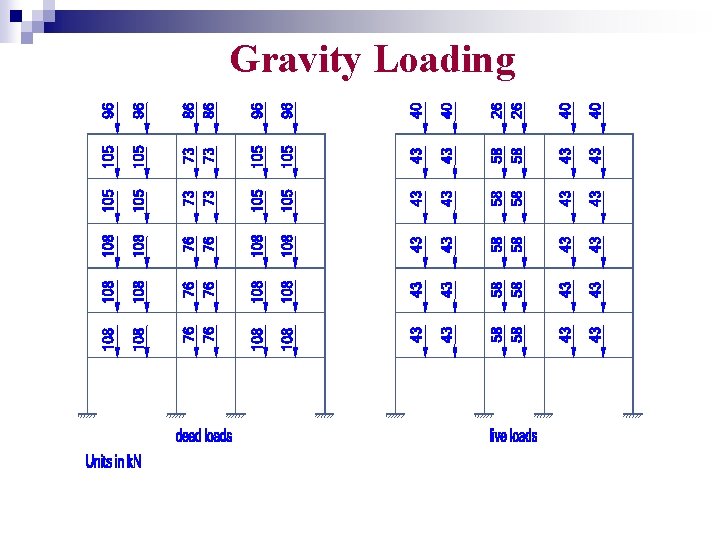
Gravity Loading
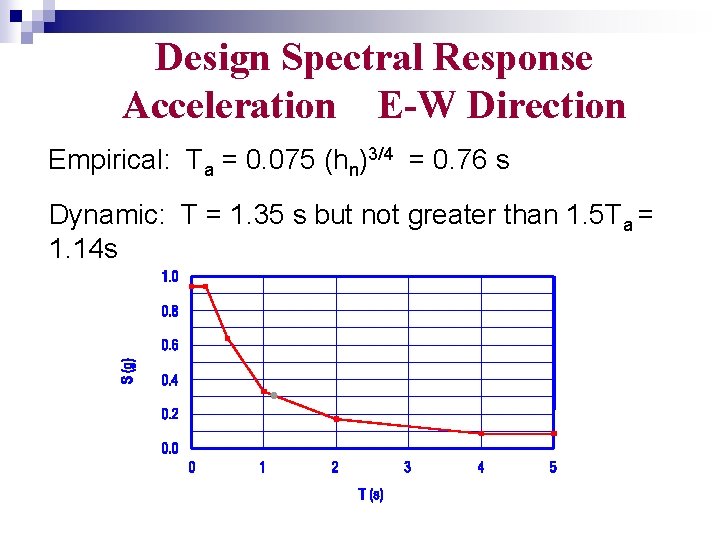
Design Spectral Response Acceleration E-W Direction Empirical: Ta = 0. 075 (hn)3/4 = 0. 76 s Dynamic: T = 1. 35 s but not greater than 1. 5 Ta = 1. 14 s
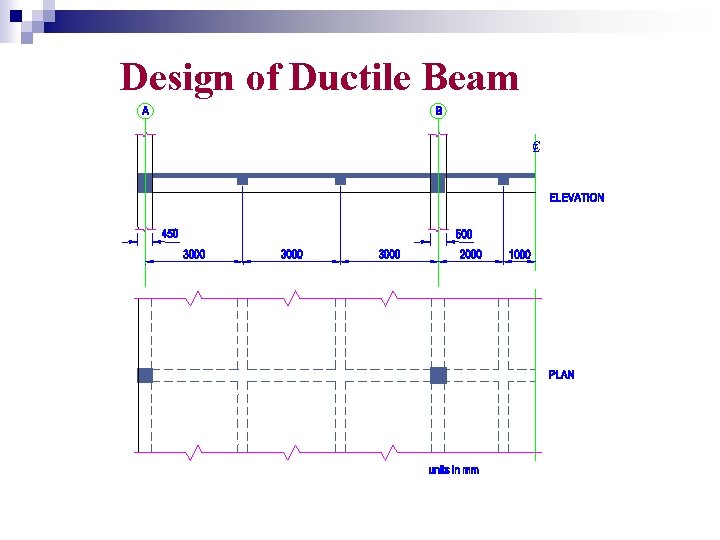
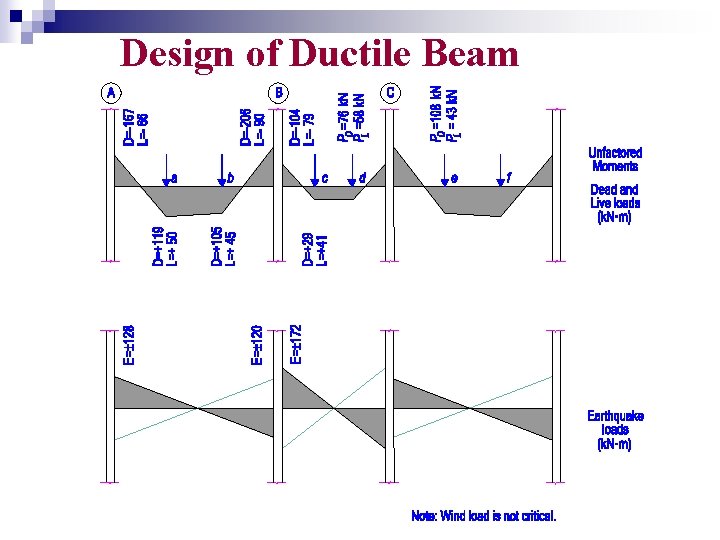
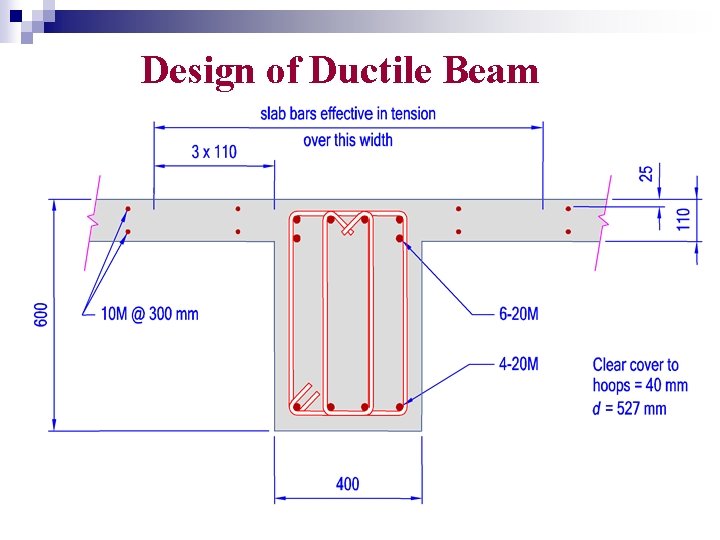
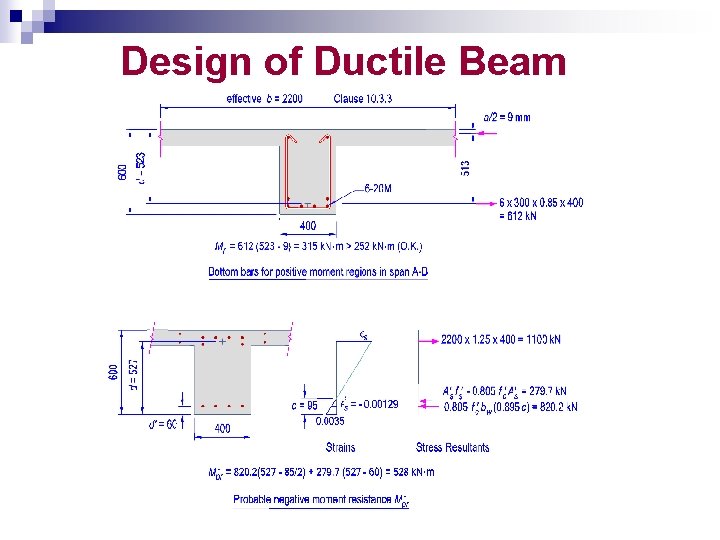
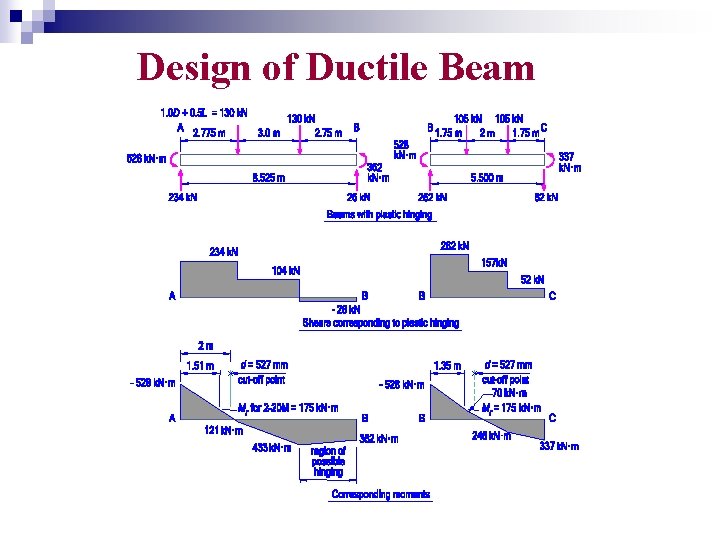
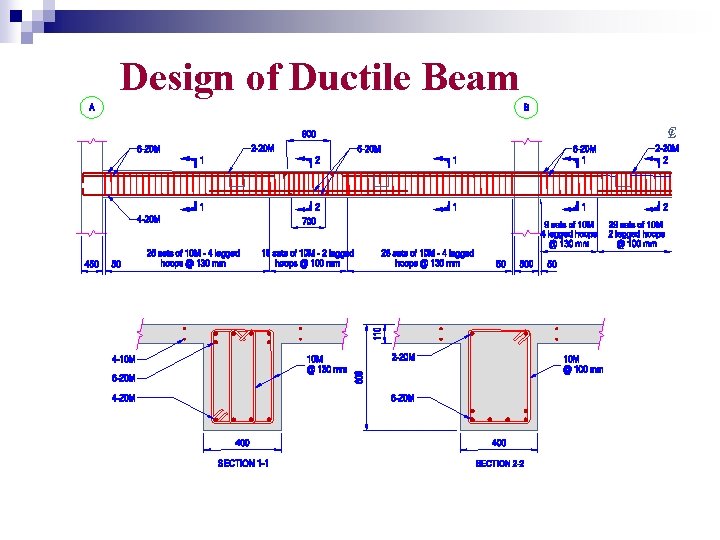
Design of Ductile Beam
Design of Ductile Beam
Design of Ductile Beam
Design of Ductile Beam
Design of Ductile Beam
Design of Ductile Beam
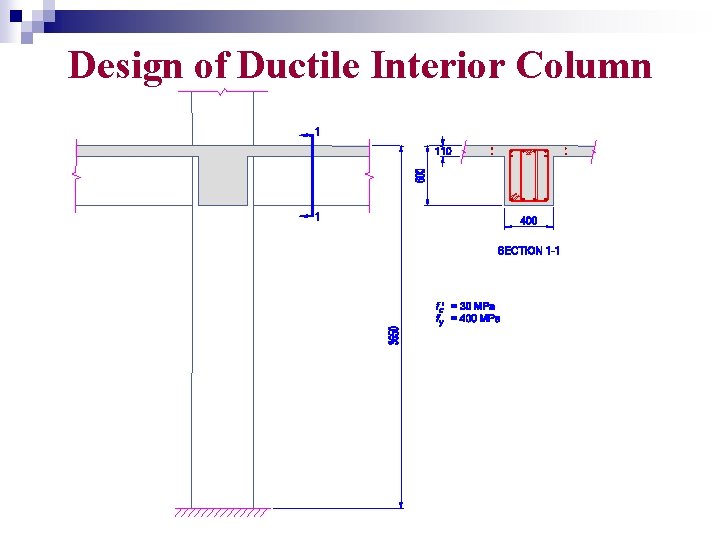
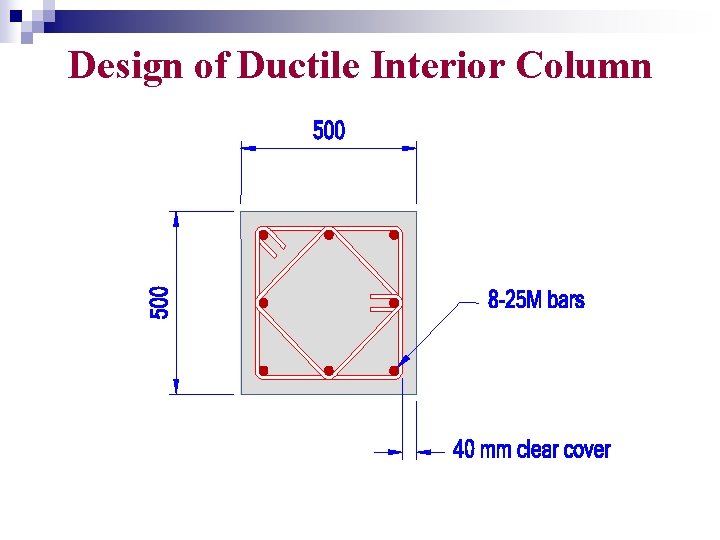
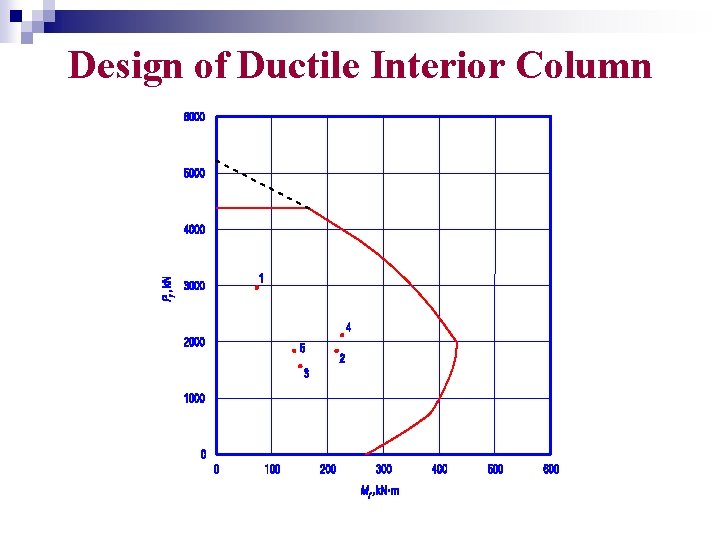
Design of Ductile Interior Column
Design of Ductile Interior Column
Design of Ductile Interior Column
Design of Ductile Interior Column
Design of Ductile Interior Column
Design of Ductile Interior Column
Design of Interior Beam-Column Joint
Design of Interior Beam-Column Joint
Design of Interior Beam-Column Joint
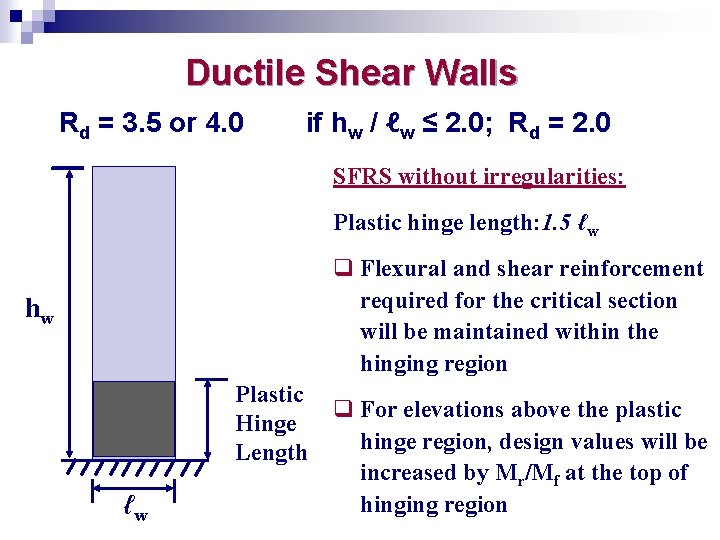
Ductile Shear Walls Rd = 3. 5 or 4. 0 if hw / ℓw ≤ 2. 0; Rd = 2. 0 SFRS without irregularities: Plastic hinge length: 1. 5 ℓw q Flexural and shear reinforcement required for the critical section will be maintained within the hinging region hw Plastic Hinge Length ℓw q For elevations above the plastic hinge region, design values will be increased by Mr/Mf at the top of hinging region
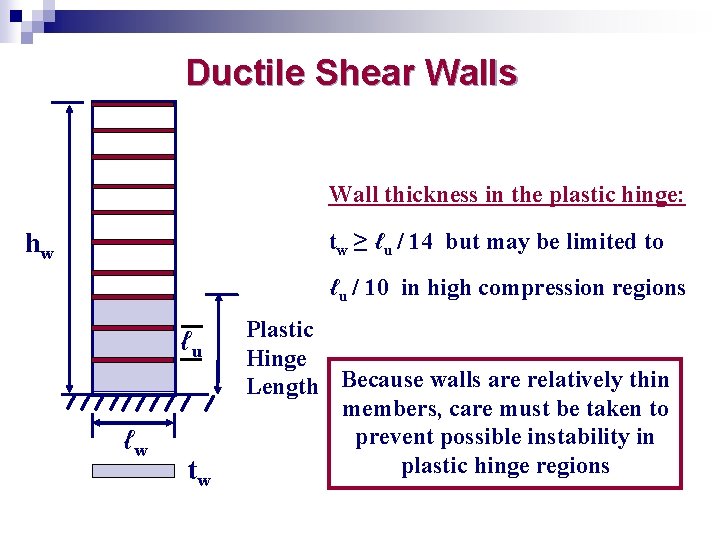
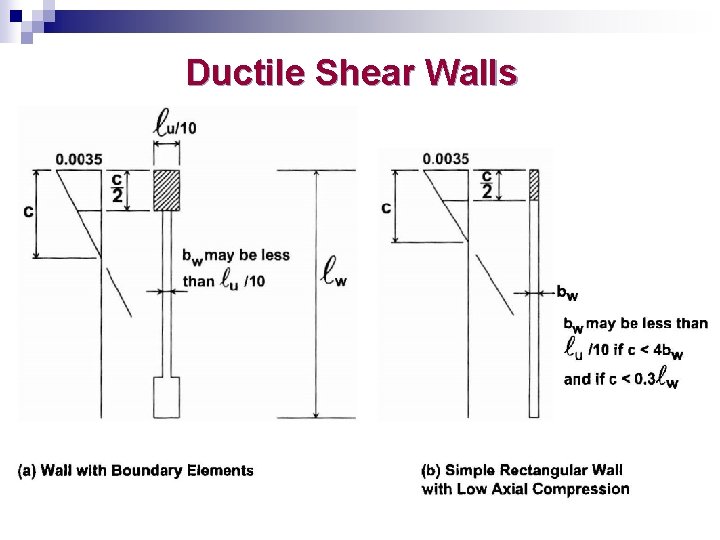
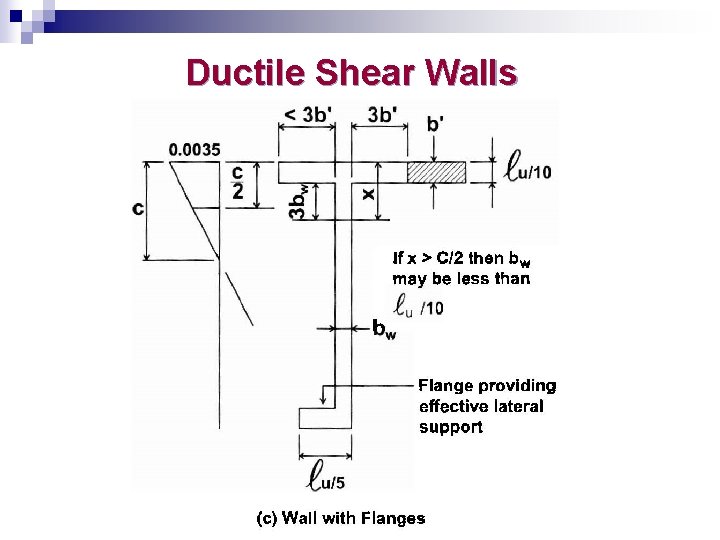
Ductile Shear Walls Wall thickness in the plastic hinge: tw ≥ ℓu / 14 but may be limited to hw ℓu / 10 in high compression regions ℓu ℓw tw Plastic Hinge Length Because walls are relatively thin members, care must be taken to prevent possible instability in plastic hinge regions
Ductile Shear Walls
Ductile Shear Walls
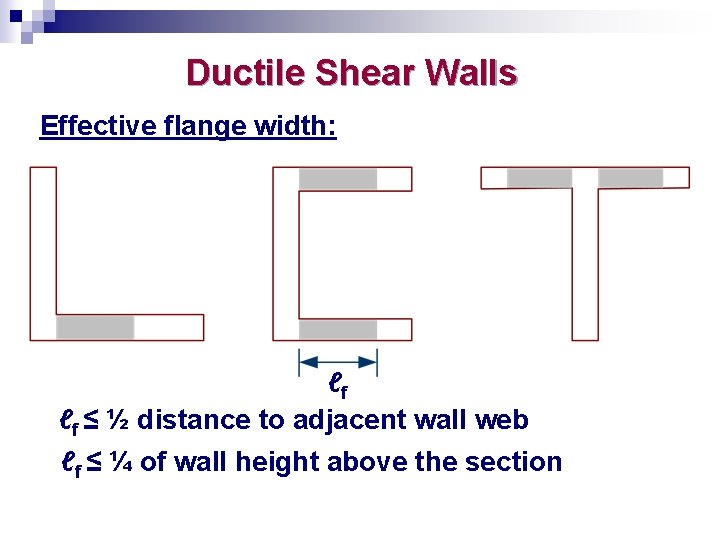
Ductile Shear Walls Effective flange width: ℓf ℓf ≤ ½ distance to adjacent wall web ℓf ≤ ¼ of wall height above the section
Wall Reinforcement
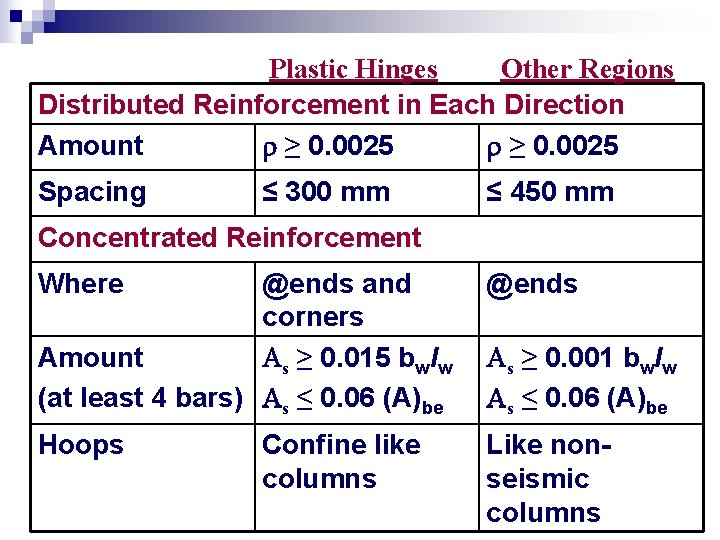
Plastic Hinges Other Regions Distributed Reinforcement in Each Direction r ≥ 0. 0025 Amount Spacing ≤ 300 mm ≤ 450 mm Concentrated Reinforcement Where @ends and corners As ≥ 0. 015 bwlw Amount (at least 4 bars) As ≤ 0. 06 (A)be @ends Hoops Like nonseismic columns Confine like columns As ≥ 0. 001 bwlw As ≤ 0. 06 (A)be
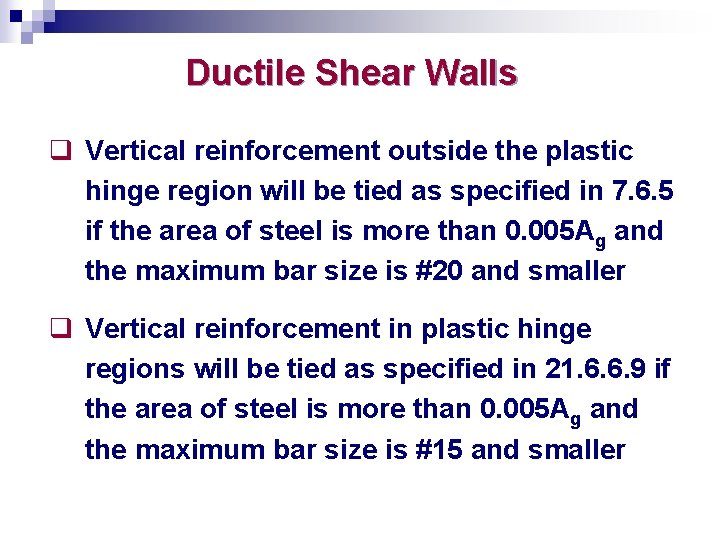
Ductile Shear Walls q Vertical reinforcement outside the plastic hinge region will be tied as specified in 7. 6. 5 if the area of steel is more than 0. 005 Ag and the maximum bar size is #20 and smaller q Vertical reinforcement in plastic hinge regions will be tied as specified in 21. 6. 6. 9 if the area of steel is more than 0. 005 Ag and the maximum bar size is #15 and smaller
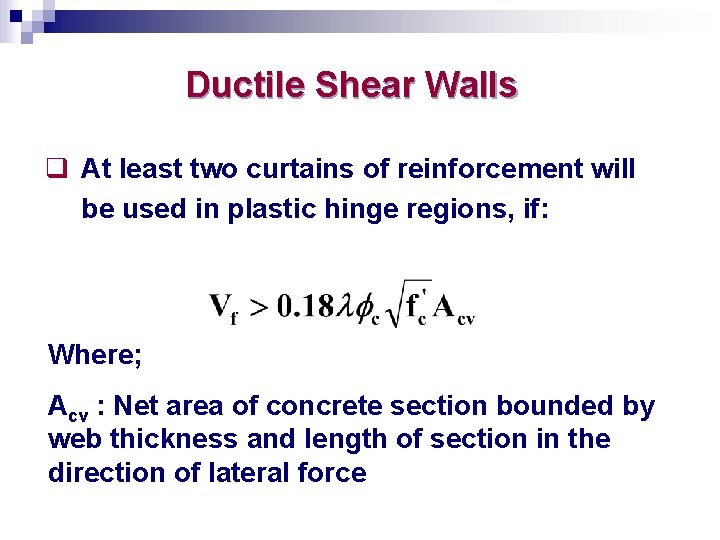
Ductile Shear Walls q At least two curtains of reinforcement will be used in plastic hinge regions, if: Where; Acv : Net area of concrete section bounded by web thickness and length of section in the direction of lateral force
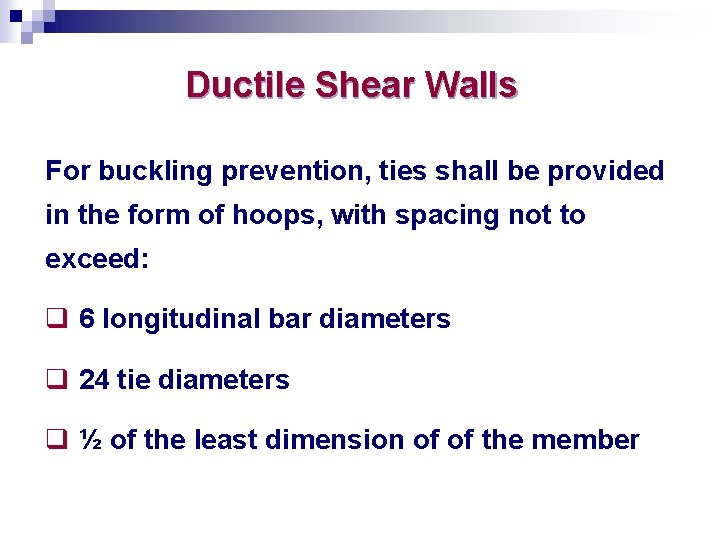
Ductile Shear Walls For buckling prevention, ties shall be provided in the form of hoops, with spacing not to exceed: q 6 longitudinal bar diameters q 24 tie diameters q ½ of the least dimension of of the member
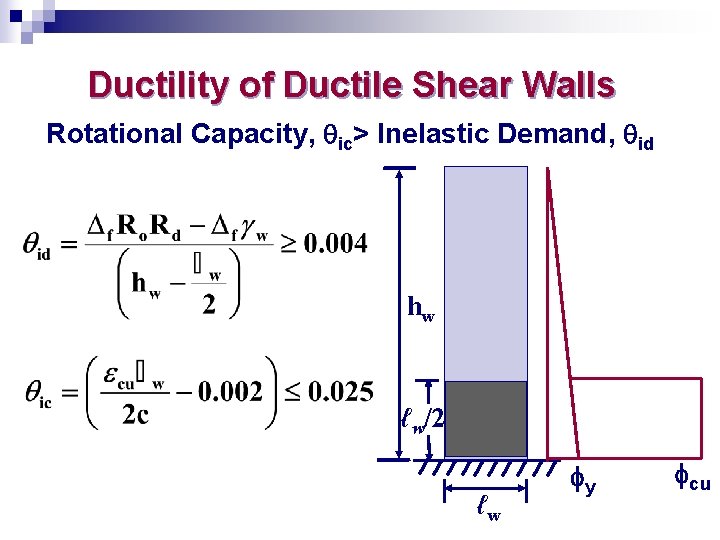
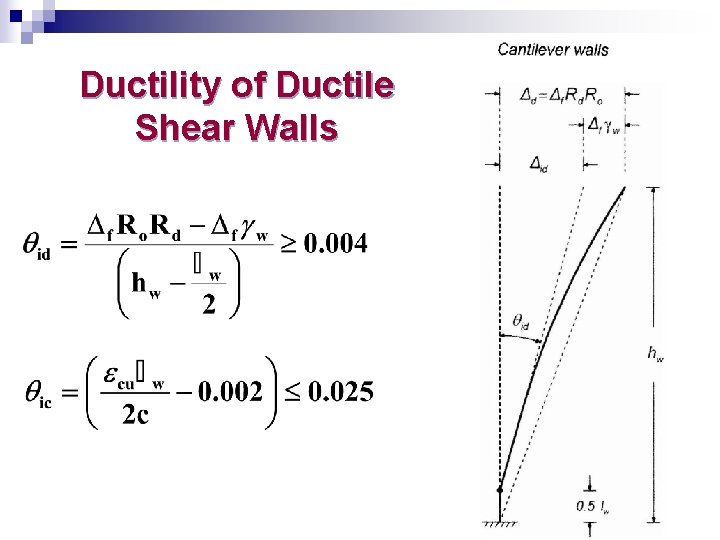
Ductility of Ductile Shear Walls Rotational Capacity, qic> Inelastic Demand, qid hw ℓw/2 ℓw fy fcu
Ductility of Ductile Shear Walls
Ductility of Ductile Shear Walls
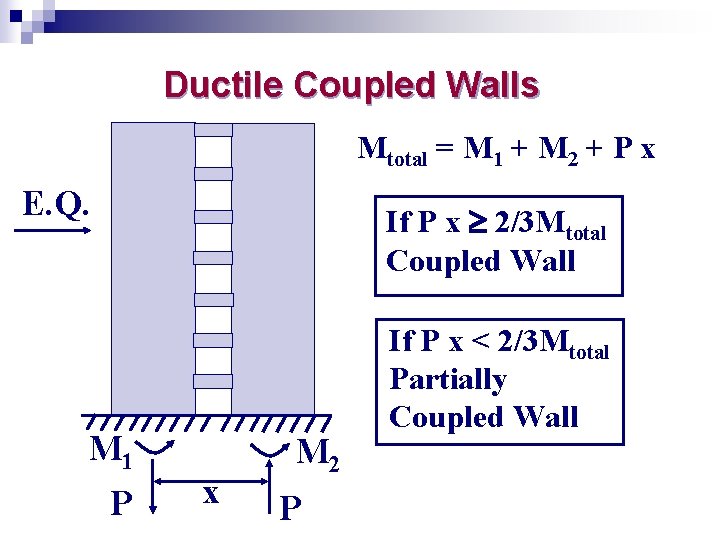
Ductile Coupled Walls Mtotal = M 1 + M 2 + P x E. Q. If P x 2/3 Mtotal Coupled Wall M 1 P x M 2 P If P x < 2/3 Mtotal Partially Coupled Wall
Ductility of Ductile Coupled Walls Rotational Capacity, qic> Inelastic Demand, qid ℓw: Length of the coupled wall system ℓw: Lengths of the individual wall segments for partially coupled walls
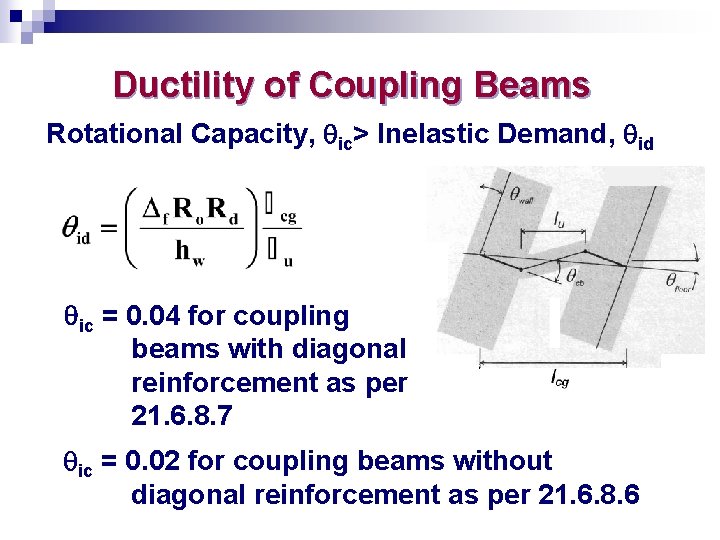
Ductility of Coupling Beams Rotational Capacity, qic> Inelastic Demand, qid qic = 0. 04 for coupling beams with diagonal reinforcement as per 21. 6. 8. 7 qic = 0. 02 for coupling beams without diagonal reinforcement as per 21. 6. 8. 6
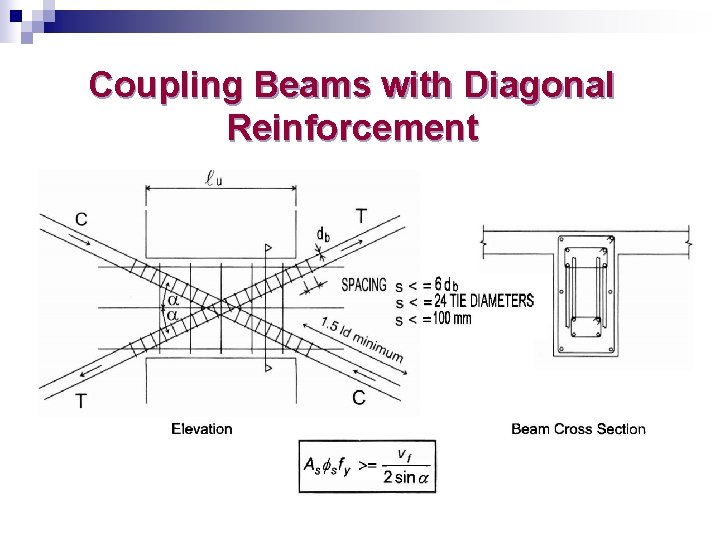
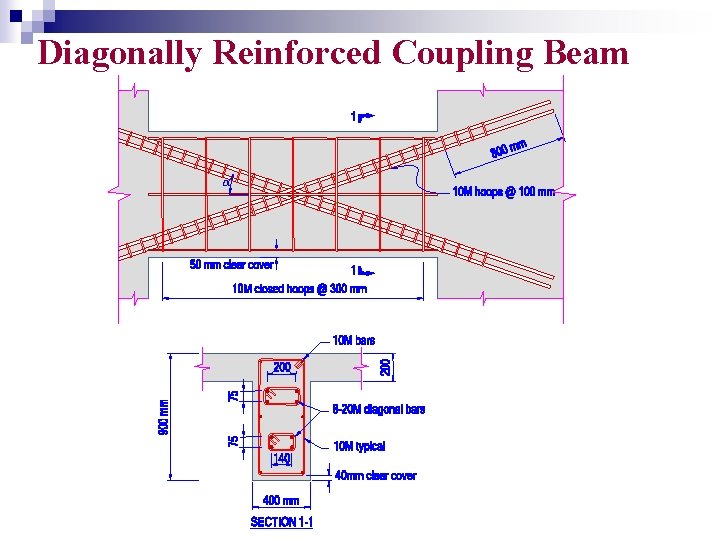
Coupling Beams with Diagonal Reinforcement
Wall Capacity @ Ends of Coupling Beams q Walls at each end of a coupling beam shall be designed so that the factored wall moment resistance at wall centroid exceeds the moment resulting from the nominal moment resistance of the coupling beam. q If the above can not be achieved, the walls develop plastic hinges at beam levels. This requires design and detailing of walls at coupling beam locations as plastic hinge regions.
Shear Design of Ductile Walls Design shear forces shall not be less than; q Shear corresponding to the development of probable moment capacity of the wall or the wall system q Shear resulting from design load combinations with Rd. Ro = 1. 0 q Shear associated with higher mode effects
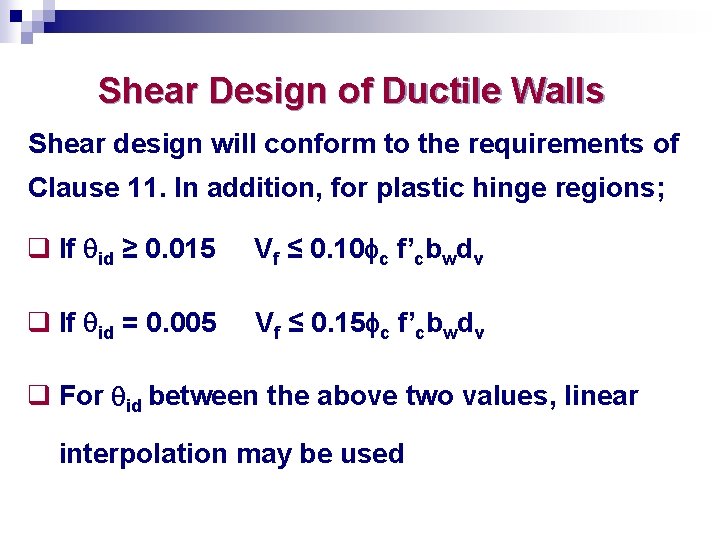
Shear Design of Ductile Walls Shear design will conform to the requirements of Clause 11. In addition, for plastic hinge regions; q If qid ≥ 0. 015 Vf ≤ 0. 10 fc f’cbwdv q If qid = 0. 005 Vf ≤ 0. 15 fc f’cbwdv q For qid between the above two values, linear interpolation may be used
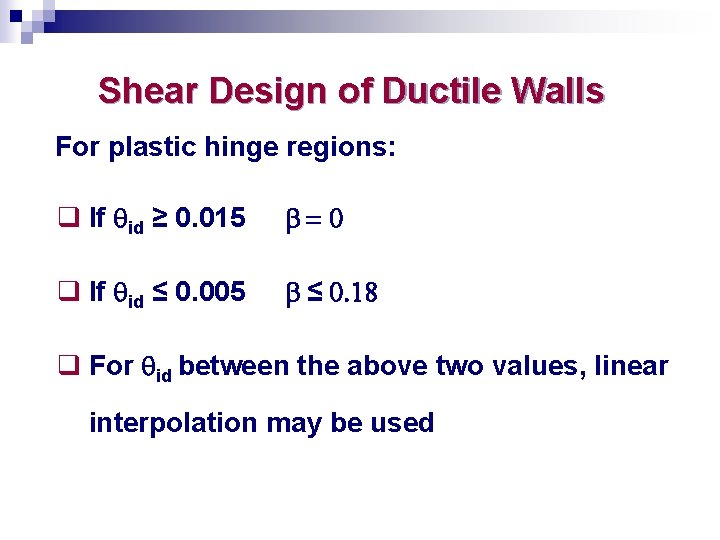
Shear Design of Ductile Walls For plastic hinge regions: q If qid ≥ 0. 015 b=0 q If qid ≤ 0. 005 b ≤ 0. 18 q For qid between the above two values, linear interpolation may be used
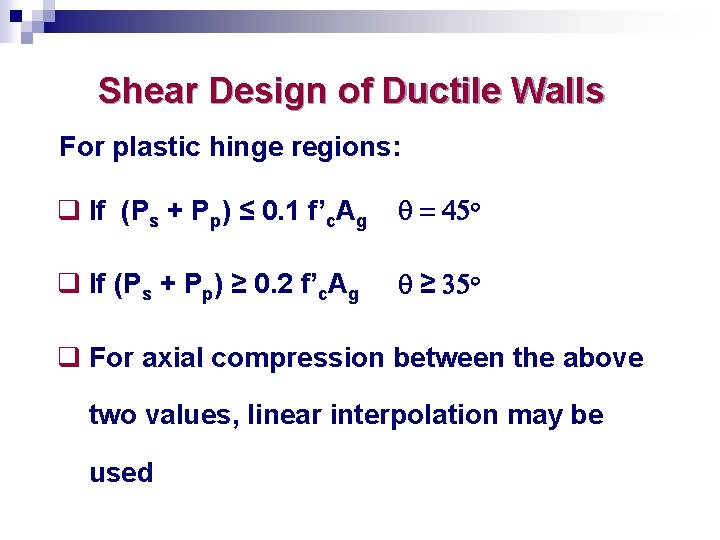
Shear Design of Ductile Walls For plastic hinge regions: q If (Ps + Pp) ≤ 0. 1 f’c. Ag q = 45 o q If (Ps + Pp) ≥ 0. 2 f’c. Ag q ≥ 35 o q For axial compression between the above two values, linear interpolation may be used
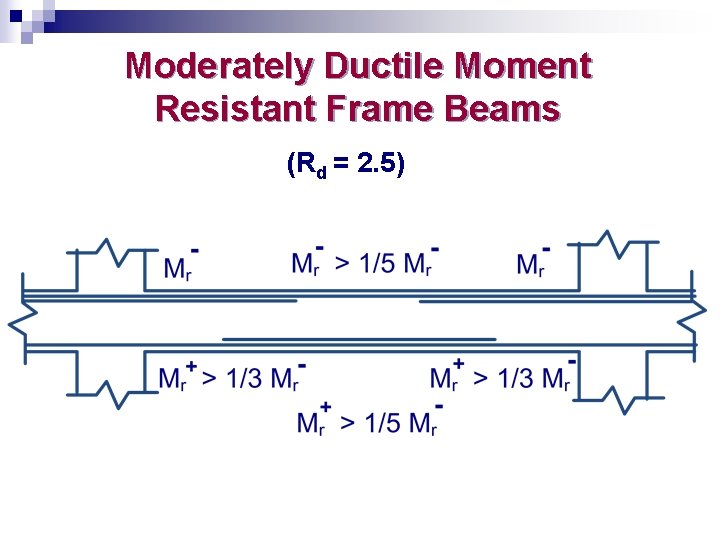
Moderately Ductile Moment Resistant Frame Beams (Rd = 2. 5)
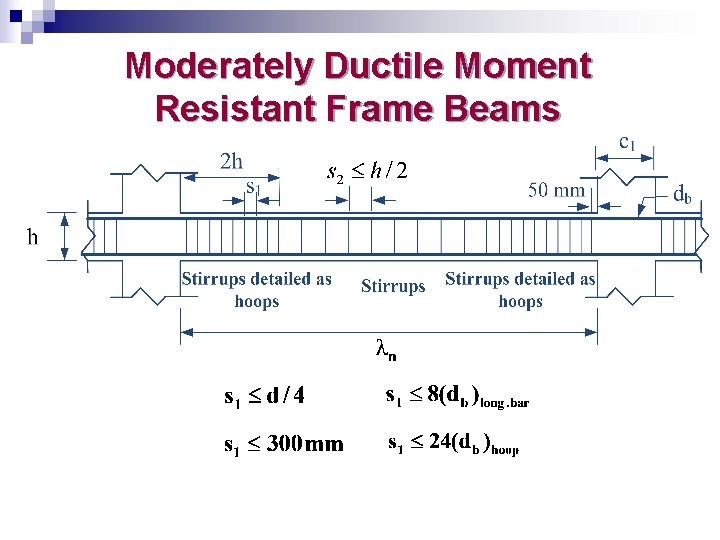
Moderately Ductile Moment Resistant Frame Beams
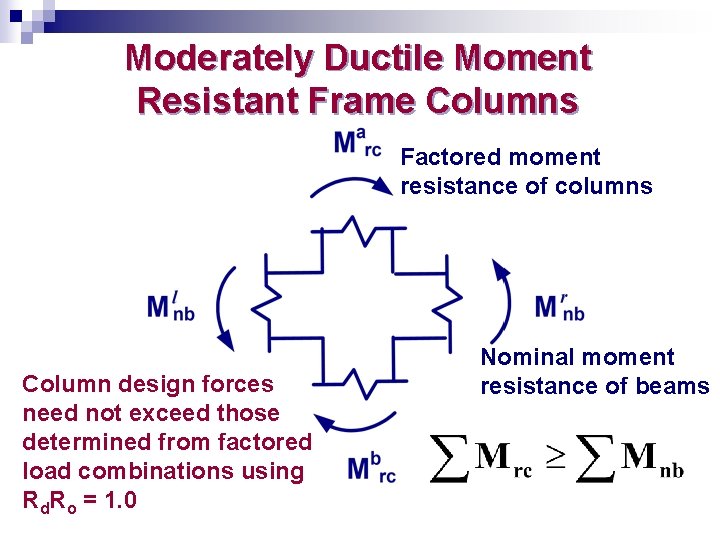
Moderately Ductile Moment Resistant Frame Columns Factored moment resistance of columns Column design forces need not exceed those determined from factored load combinations using Rd. Ro = 1. 0 Nominal moment resistance of beams
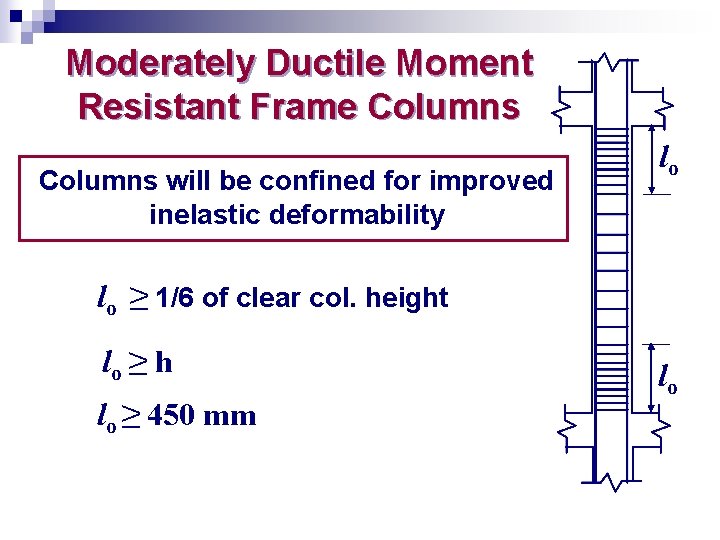
Moderately Ductile Moment Resistant Frame Columns will be confined for improved inelastic deformability lo lo ≥ 1/6 of clear col. height lo ≥ h lo ≥ 450 mm lo
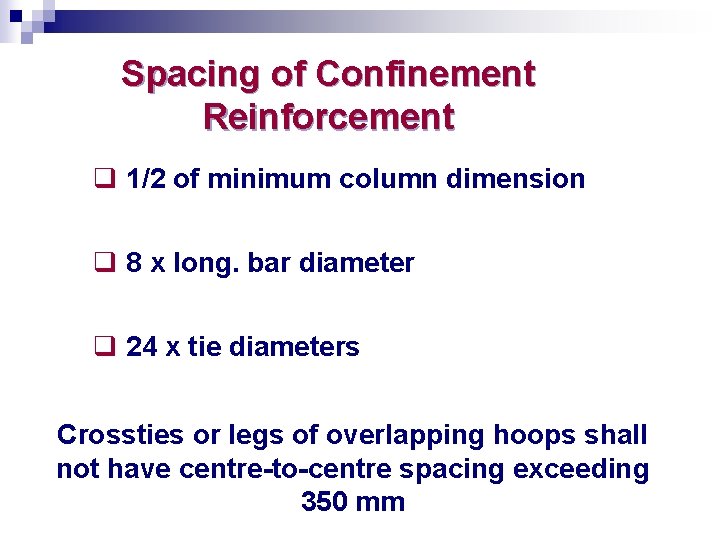
Spacing of Confinement Reinforcement q 1/2 of minimum column dimension q 8 x long. bar diameter q 24 x tie diameters Crossties or legs of overlapping hoops shall not have centre-to-centre spacing exceeding 350 mm
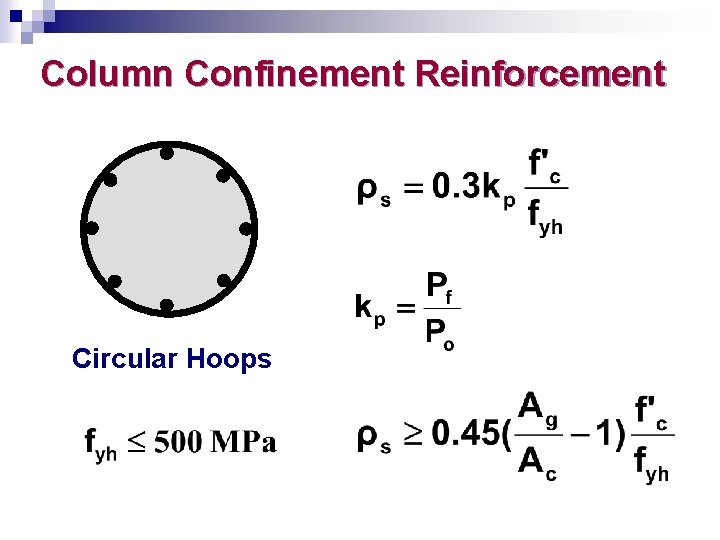
Column Confinement Reinforcement Circular Hoops
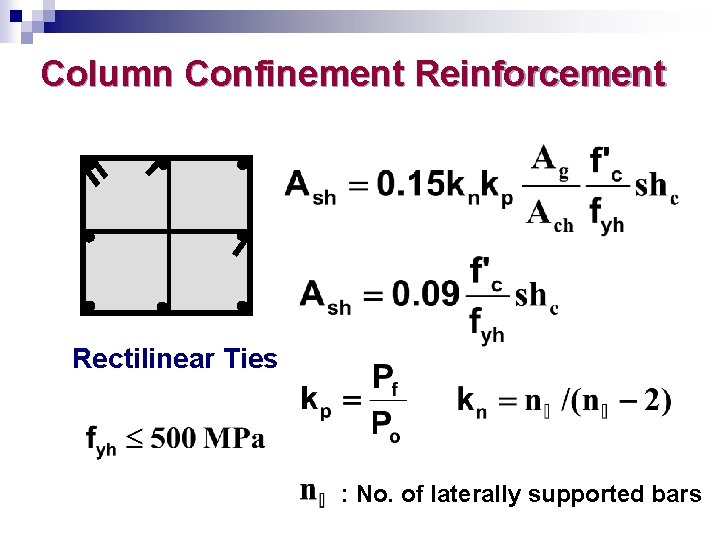
Column Confinement Reinforcement Rectilinear Ties : No. of laterally supported bars
Beam Shear Strength
Beam Shear Strength The factored shear need not exceed that obtained from structural analysis under factored load combinations with Rd. Ro = 1. 0
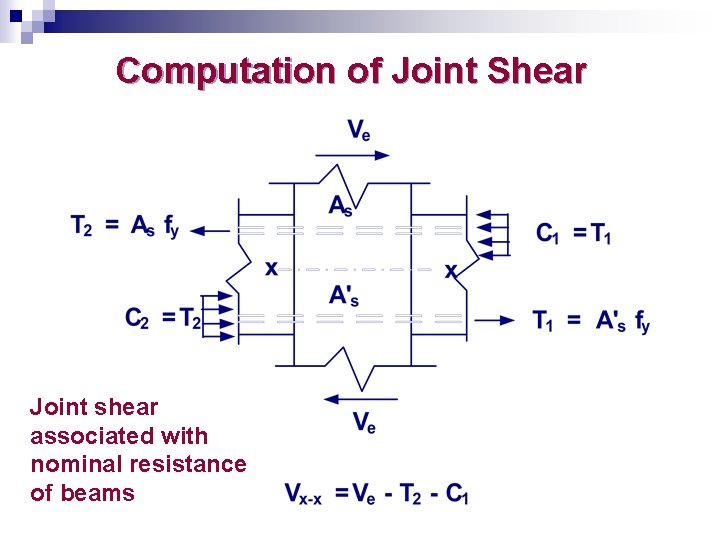
Computation of Joint Shear Joint shear associated with nominal resistance of beams
Joint Shear q. Joint shear associated with nominal resistances of the beams and the columns will be computed and the smaller of the two values will be used q. The joint shear need not exceed that obtained from structural analysis under factored load combinations with Rd. Ro = 1. 0
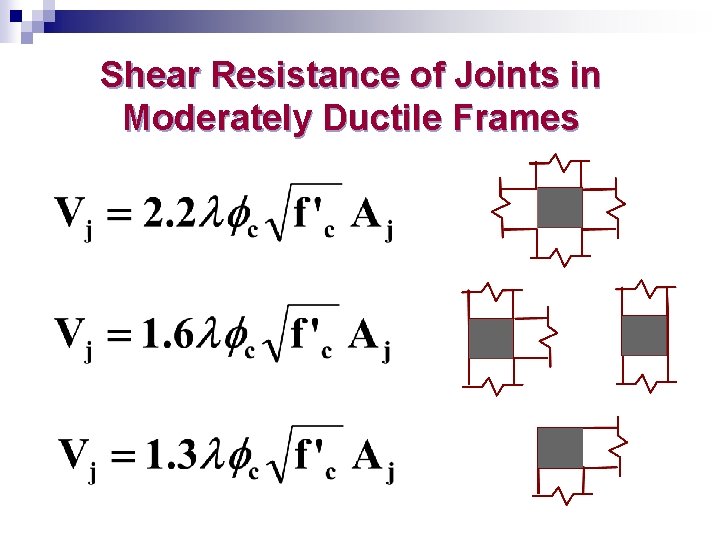
Shear Resistance of Joints in Moderately Ductile Frames
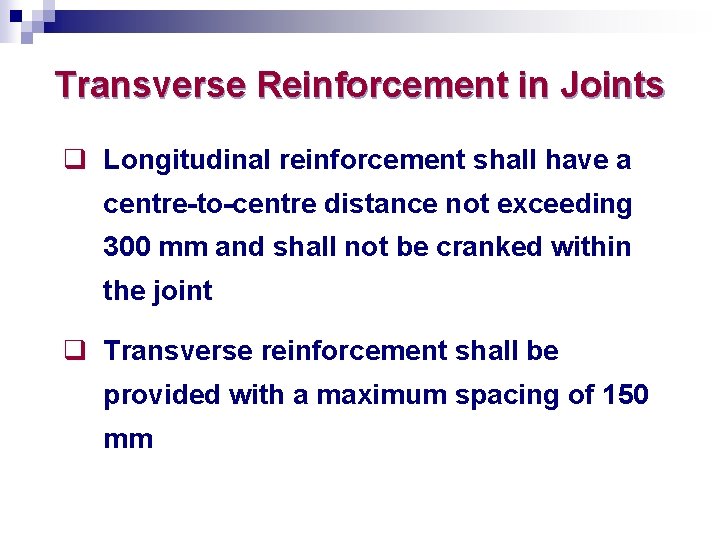
Transverse Reinforcement in Joints q Longitudinal reinforcement shall have a centre-to-centre distance not exceeding 300 mm and shall not be cranked within the joint q Transverse reinforcement shall be provided with a maximum spacing of 150 mm
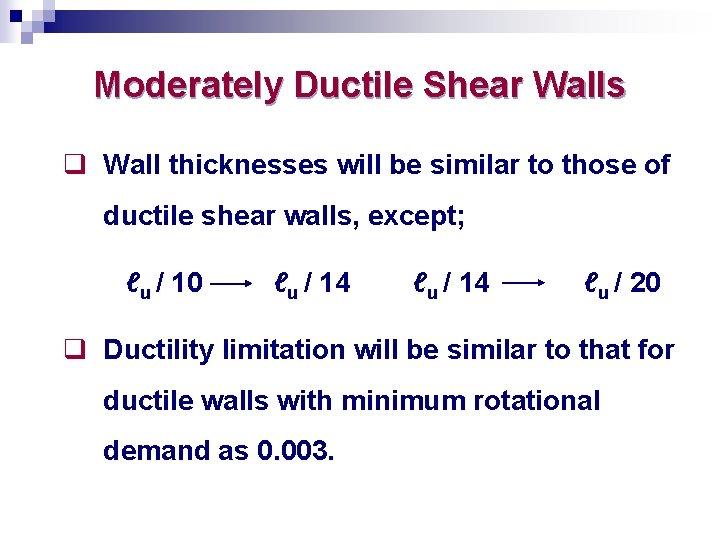
Moderately Ductile Shear Walls q Wall thicknesses will be similar to those of ductile shear walls, except; ℓu / 10 ℓu / 14 ℓu / 20 q Ductility limitation will be similar to that for ductile walls with minimum rotational demand as 0. 003.
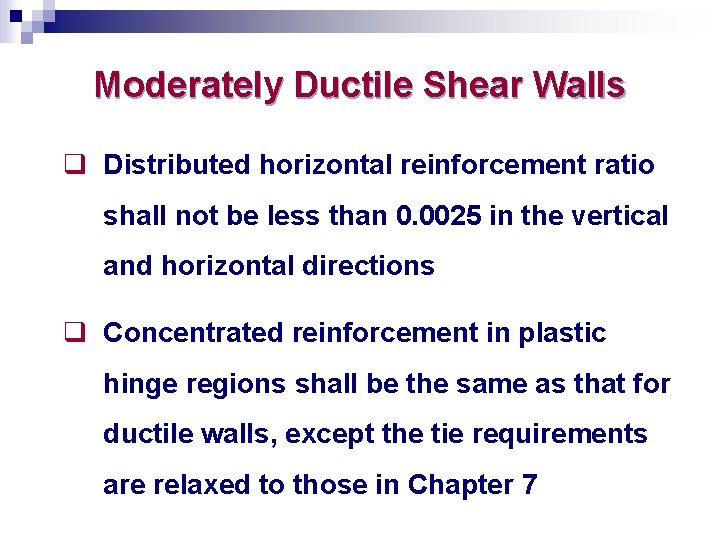
Moderately Ductile Shear Walls q Distributed horizontal reinforcement ratio shall not be less than 0. 0025 in the vertical and horizontal directions q Concentrated reinforcement in plastic hinge regions shall be the same as that for ductile walls, except the tie requirements are relaxed to those in Chapter 7
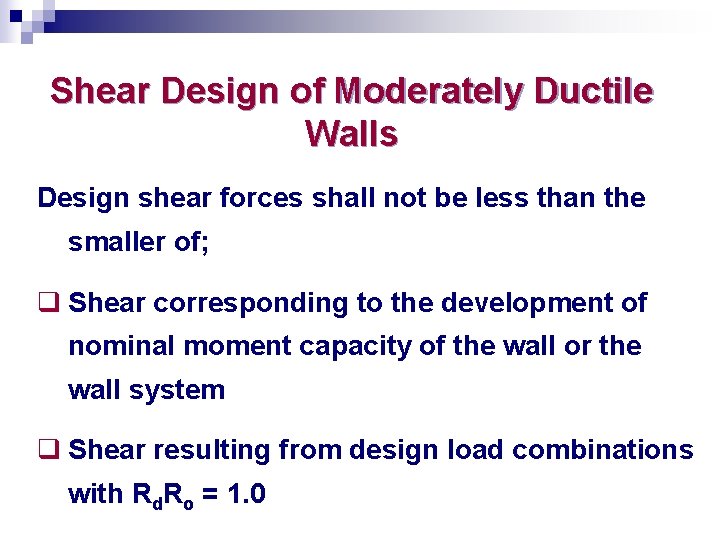
Shear Design of Moderately Ductile Walls Design shear forces shall not be less than the smaller of; q Shear corresponding to the development of nominal moment capacity of the wall or the wall system q Shear resulting from design load combinations with Rd. Ro = 1. 0
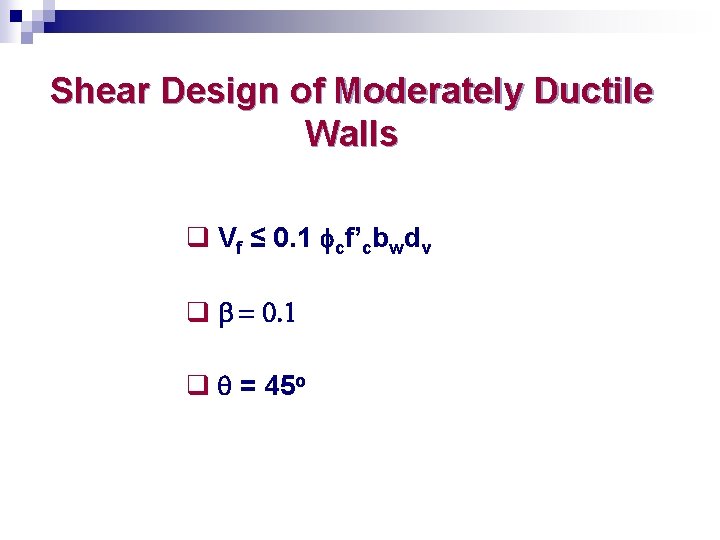
Shear Design of Moderately Ductile Walls q Vf ≤ 0. 1 fcf’cbwdv q b = 0. 1 q q = 45 o
Design Example Ductile Core-Wall Structure in Montreal Chapter 11 By D. Mitchell and P. Paultre
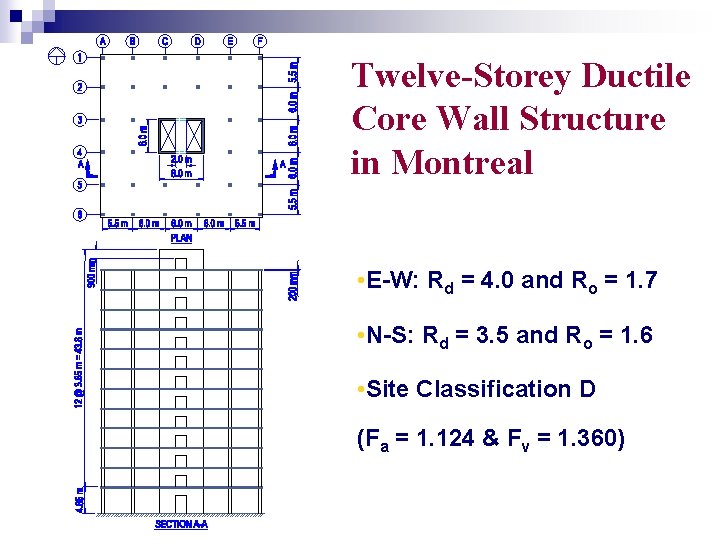
Twelve-Storey Ductile Core Wall Structure in Montreal • E-W: Rd = 4. 0 and Ro = 1. 7 • N-S: Rd = 3. 5 and Ro = 1. 6 • Site Classification D (Fa = 1. 124 & Fv = 1. 360)
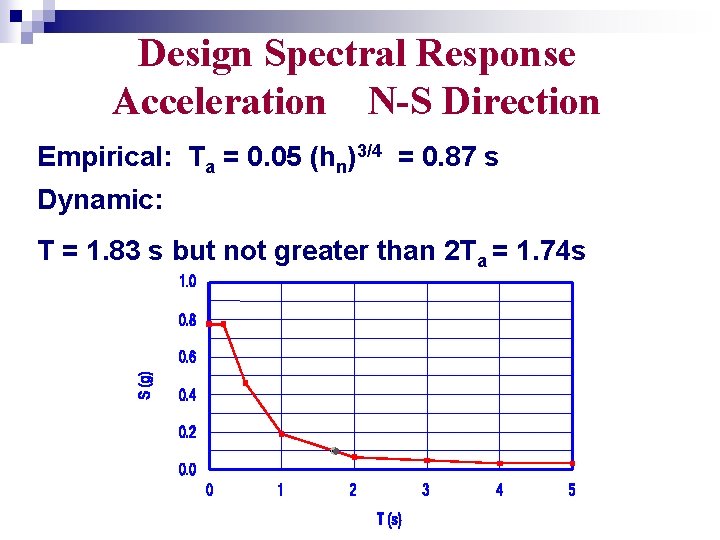
Design Spectral Response Acceleration N-S Direction Empirical: Ta = 0. 05 (hn)3/4 = 0. 87 s Dynamic: T = 1. 83 s but not greater than 2 Ta = 1. 74 s
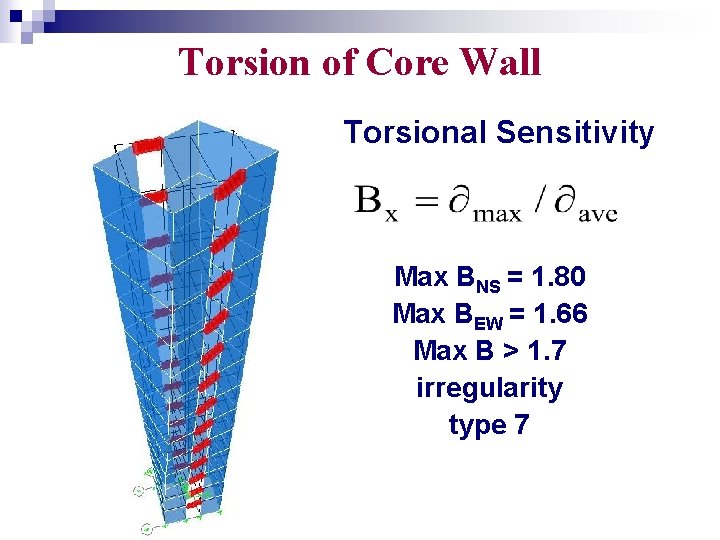
Torsion of Core Wall Torsional Sensitivity Max BNS = 1. 80 Max BEW = 1. 66 Max B > 1. 7 irregularity type 7
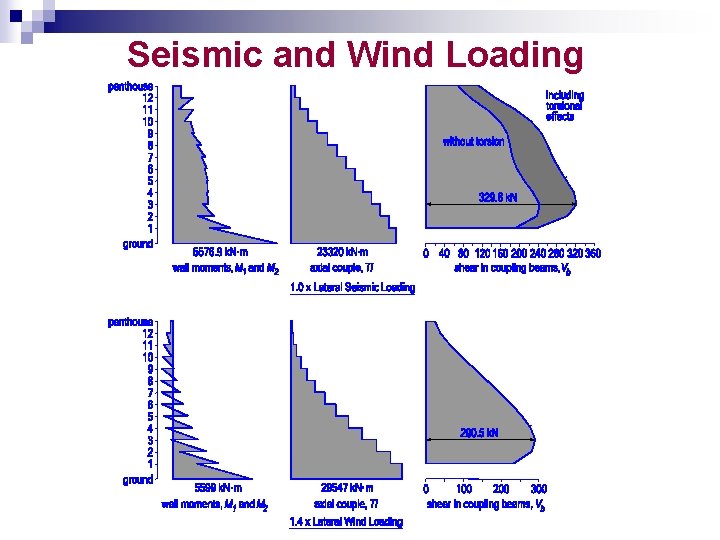
Seismic and Wind Loading
Diagonally Reinforced Coupling Beam
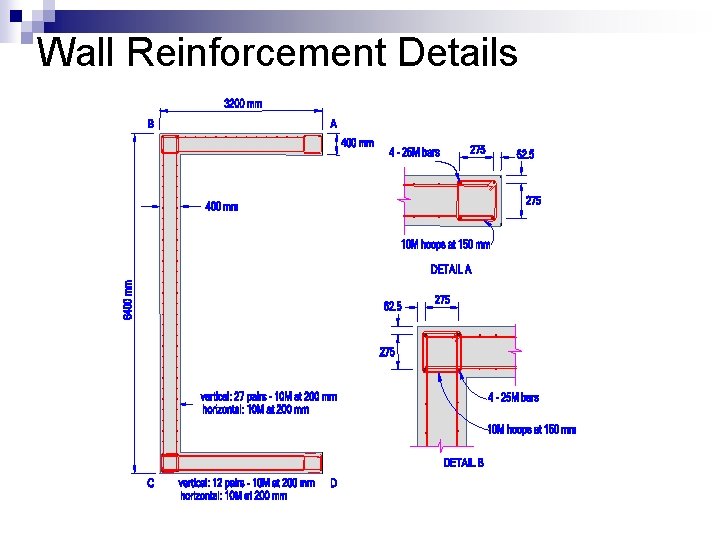
Wall Reinforcement Details
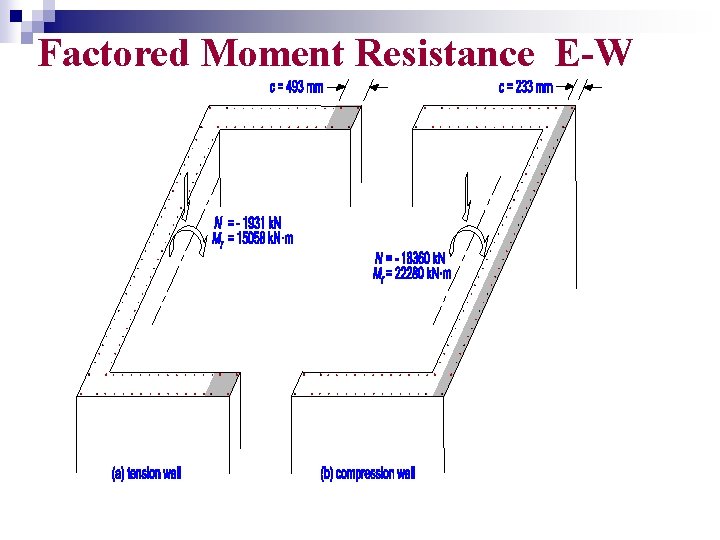
Factored Moment Resistance E-W
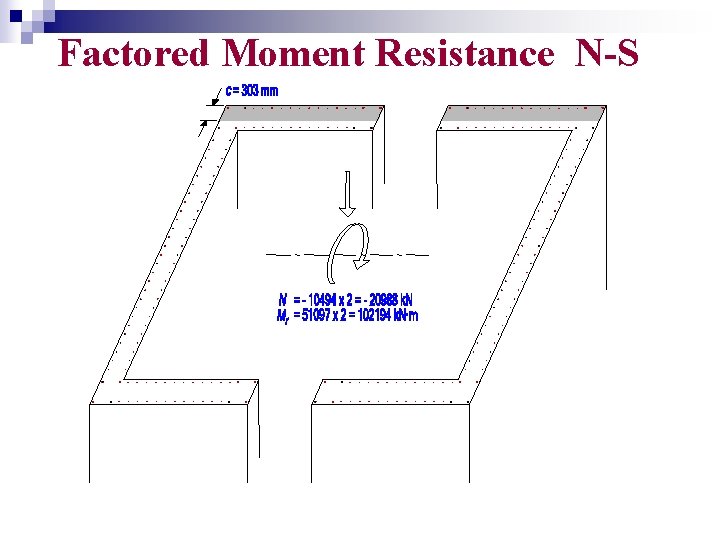
Factored Moment Resistance N-S
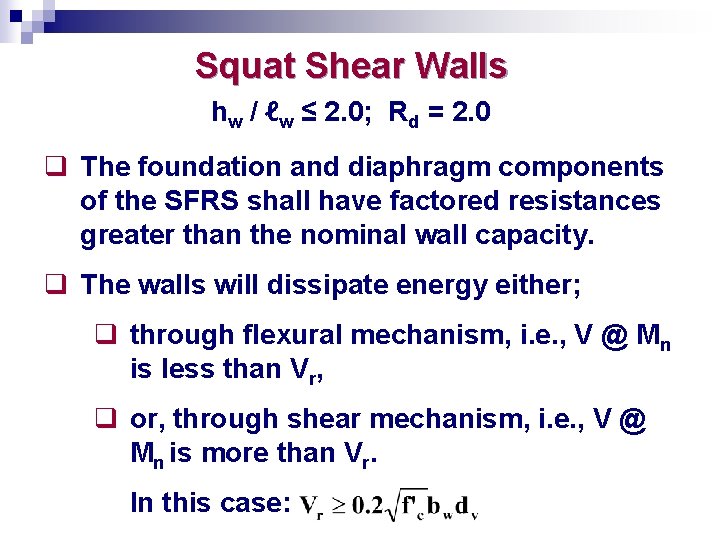
Squat Shear Walls hw / ℓw ≤ 2. 0; Rd = 2. 0 q The foundation and diaphragm components of the SFRS shall have factored resistances greater than the nominal wall capacity. q The walls will dissipate energy either; q through flexural mechanism, i. e. , V @ Mn is less than Vr, q or, through shear mechanism, i. e. , V @ Mn is more than Vr. In this case:
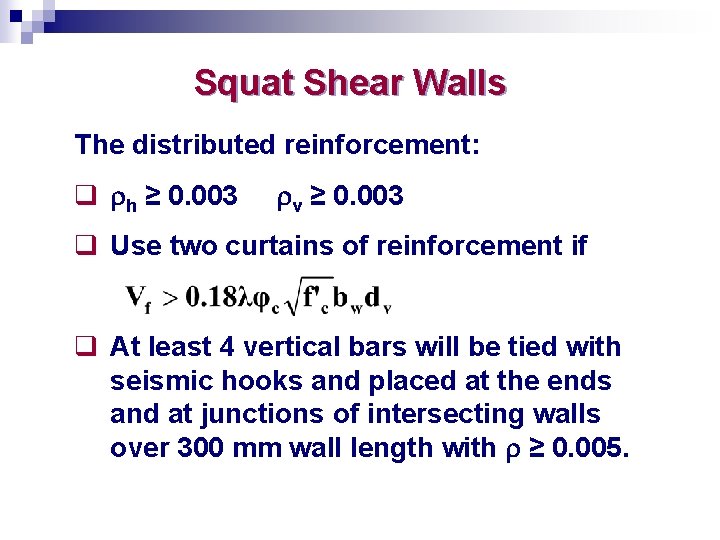
Squat Shear Walls The distributed reinforcement: q rh ≥ 0. 003 rv ≥ 0. 003 q Use two curtains of reinforcement if q At least 4 vertical bars will be tied with seismic hooks and placed at the ends and at junctions of intersecting walls over 300 mm wall length with r ≥ 0. 005.
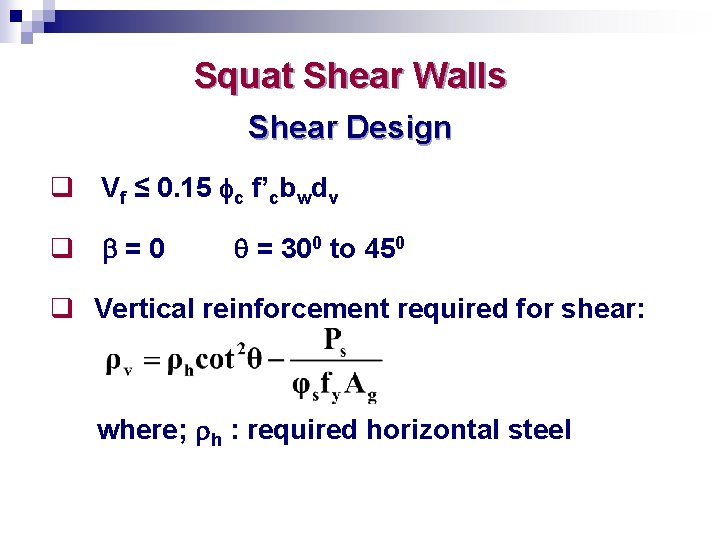
Squat Shear Walls Shear Design q Vf ≤ 0. 15 fc f’cbwdv q b=0 q = 300 to 450 q Vertical reinforcement required for shear: where; rh : required horizontal steel
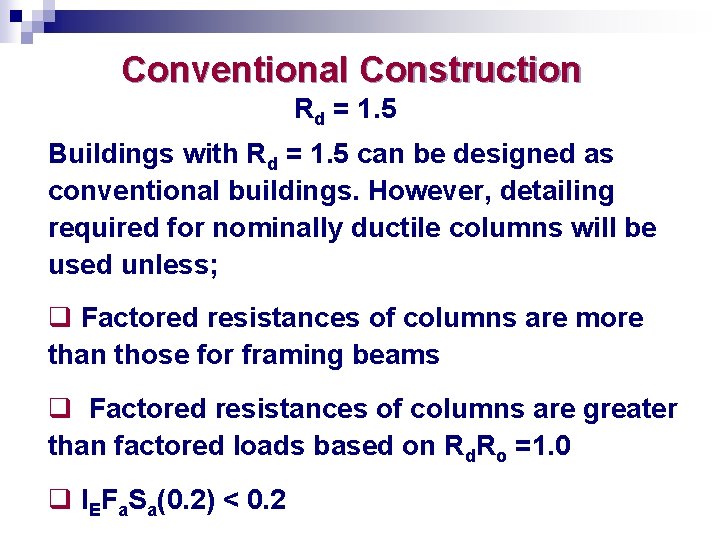
Conventional Construction Rd = 1. 5 Buildings with Rd = 1. 5 can be designed as conventional buildings. However, detailing required for nominally ductile columns will be used unless; q Factored resistances of columns are more than those for framing beams q Factored resistances of columns are greater than factored loads based on Rd. Ro =1. 0 q IEFa. Sa(0. 2) < 0. 2
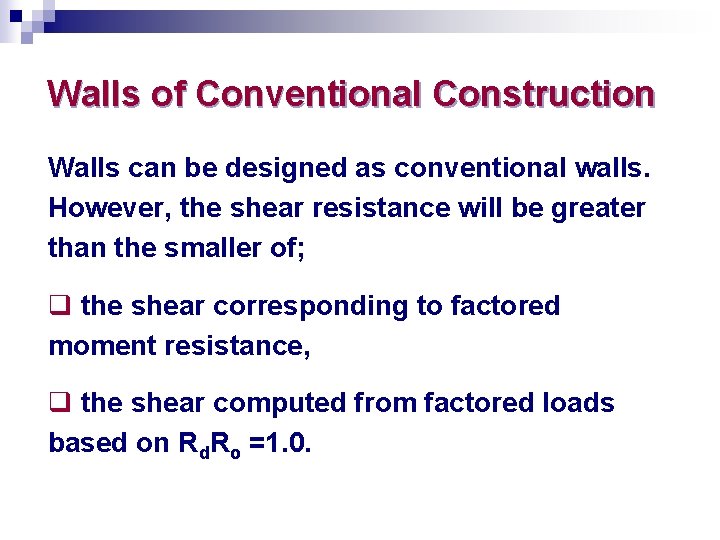
Walls of Conventional Construction Walls can be designed as conventional walls. However, the shear resistance will be greater than the smaller of; q the shear corresponding to factored moment resistance, q the shear computed from factored loads based on Rd. Ro =1. 0.
Frame Members not Considered Part of the SFRS Frames that are not part of SFRS, but “go for the ride” during an earthquake shall be designed to accommodate forces and deformations resulting from seismic deformations.
Thank You…. . Questions or Comments?