
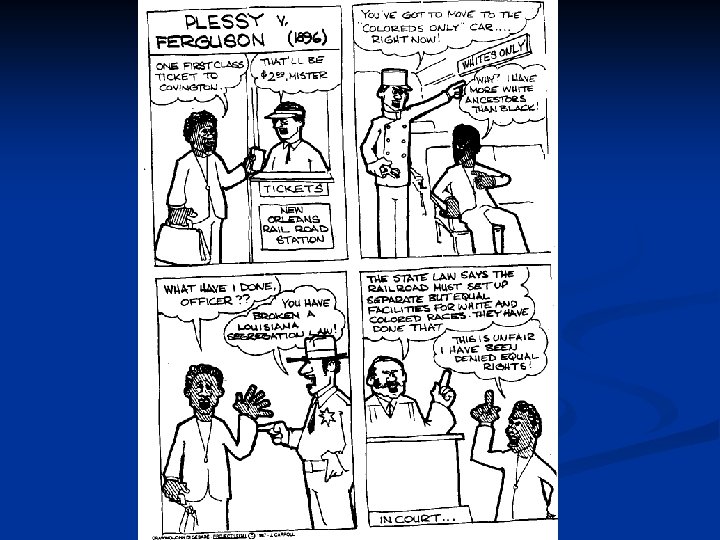
SEGREGATION n Legislation known as Jim Crow laws


- Slides: 13
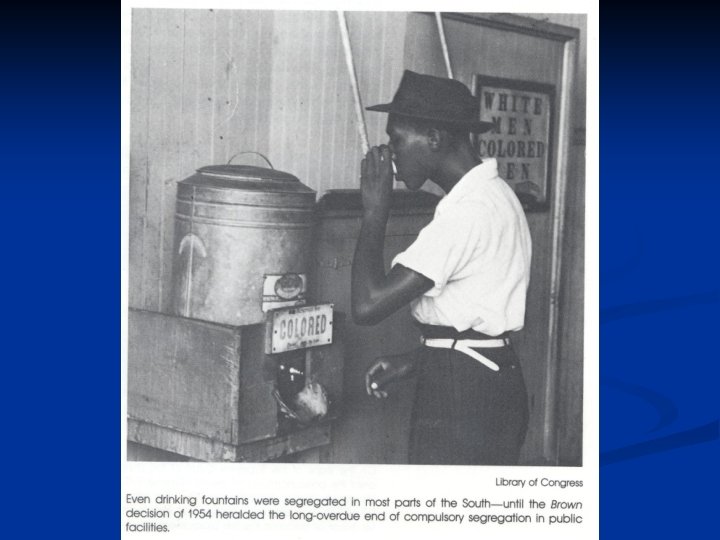
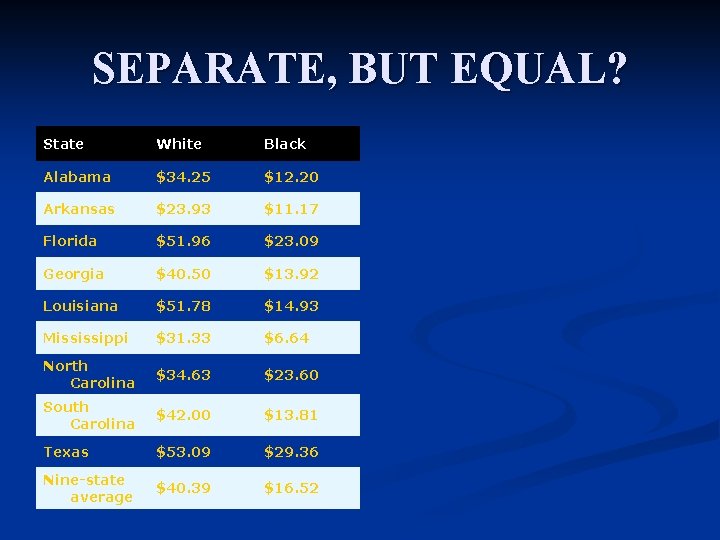
SEGREGATION n Legislation known as Jim Crow laws separated people of color from whites in schools, housing, jobs, and public gathering places. n In 1954 17 of 48 states had laws that required racial segregation. n In the 1949 -50 school year, for every dollar spent on a white child only 24 cents was allotted for a black student. (Courtesy of South Carolina Department of Archives and History)
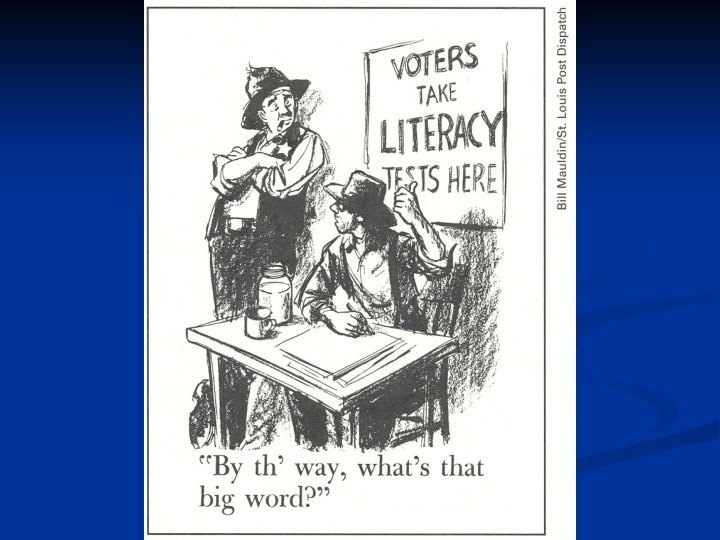
Taking away the vote n southern states enacted literacy tests poll taxes elaborate registration systems Grandfather Clauses
Taking away the vote n The laws proved very effective. n In Mississippi, fewer than 9, 000 of the 147, 000 voting-age African Americans were registered after 1890. n In Louisiana, where more than 130, 000 black voters had been registered in 1896, the number had plummeted to 1, 342 by 1904.
Voter Purges n 1961 -1963 n Louisiana “purged” unqualified voters. n 90% of registered blacks removed from files. n Loss of jobs, beaten and threatened. n Mississippi retaliated for voter registration drive, surplus food cut off.
Voter Purges n Mississippi = 24, 000 black registered voters out of 400, 000 voting age blacks and only 5% of black voters actually voted. n Selma, Alabama – 156/15, 000 voting age blacks were on the voter rolls.
SEPARATE, BUT EQUAL? State White Black Alabama $34. 25 $12. 20 Arkansas $23. 93 $11. 17 Florida $51. 96 $23. 09 Georgia $40. 50 $13. 92 Louisiana $51. 78 $14. 93 Mississippi $31. 33 $6. 64 North Carolina $34. 63 $23. 60 South Carolina $42. 00 $13. 81 Texas $53. 09 $29. 36 Nine-state average $40. 39 $16. 52
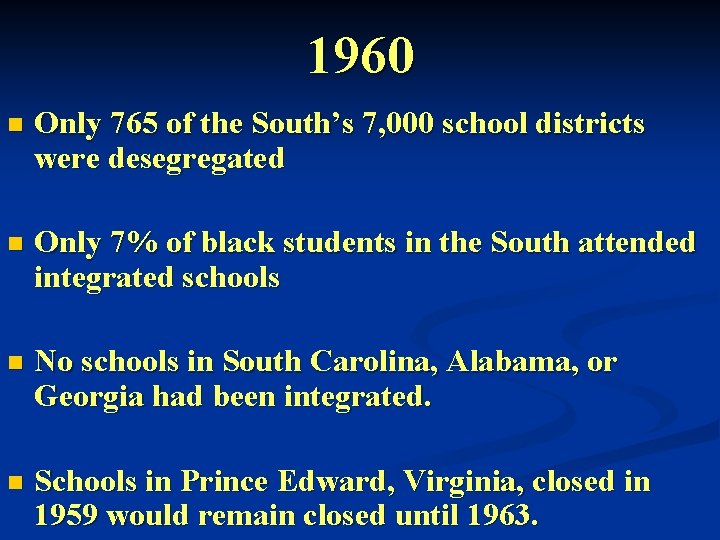
1960 n Only 765 of the South’s 7, 000 school districts were desegregated n Only 7% of black students in the South attended integrated schools n No schools in South Carolina, Alabama, or Georgia had been integrated. n Schools in Prince Edward, Virginia, closed in 1959 would remain closed until 1963.
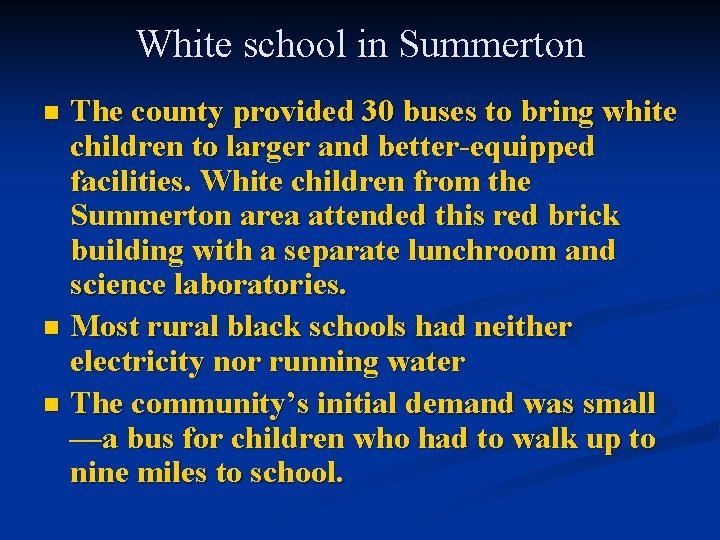
White school in Summerton The county provided 30 buses to bring white children to larger and better-equipped facilities. White children from the Summerton area attended this red brick building with a separate lunchroom and science laboratories. n Most rural black schools had neither electricity nor running water n The community’s initial demand was small —a bus for children who had to walk up to nine miles to school. n
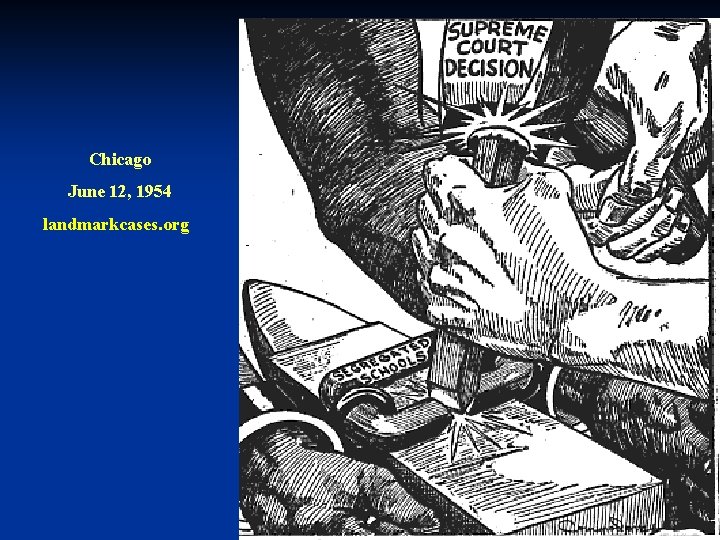
Chicago June 12, 1954 landmarkcases. org
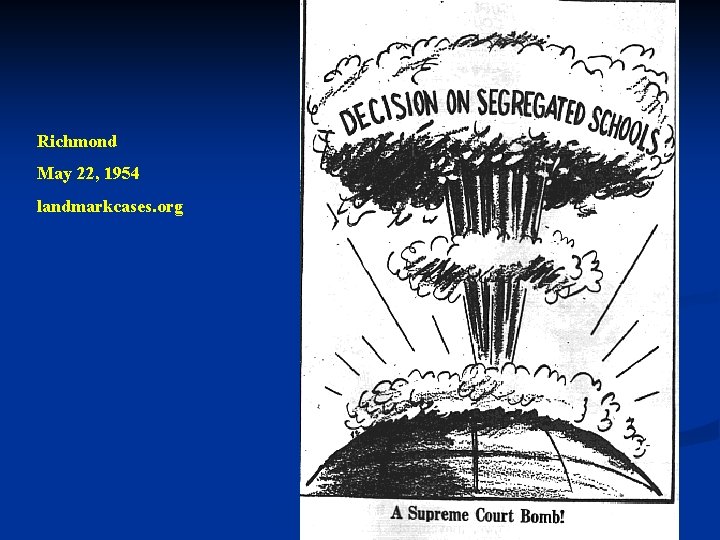
Richmond May 22, 1954 landmarkcases. org