
Segregation Ending Segregation The Montgomery Bus Boycott Gains
Segregation, Ending Segregation, The Montgomery Bus Boycott, Gains and losses • In what way did the Civil Rights movement change the lives of Americans? • How was Civil Rights movement influenced by people’s beliefs and ideals? • How did the conflict of the Montgomery Bus Boycott create change? • How did the March on Washington create positive change in America?
Segregation **Laws had separated the races in the US sense the 1800 s. African Americans developed neighborhoods, churches, colleges, ran businesses, and theaters across the nation. It might have seemed that the system was working, but the social isolation created a serious problem.
**African American entertainers such as Ethel Waters, Duke Ellington, Mahalia Jackson, and Dinah Washington became more popular. However, none of these stars could walk in the front door of certain hotels or preform there. African Americans who were not famous were less educated or poor.
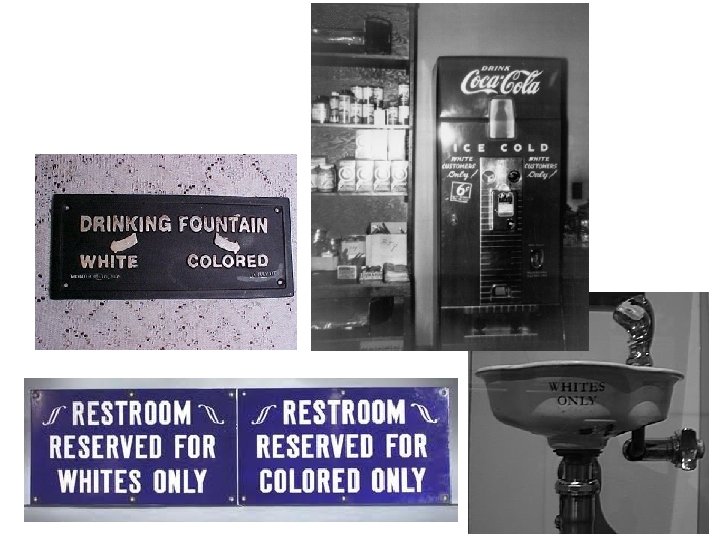
**The issue of social isolation became increasingly important as African Americans became more educated and successful. African Americans wanted equality.
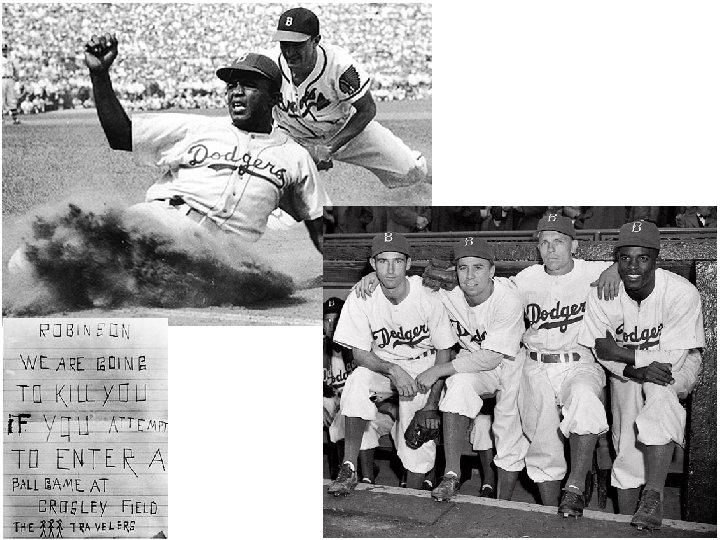
FDR ordered an end to all segregation in all defense industries. After WWII more people joined the fight for Civil Rights. President Truman ordered an end to segregation in the US military. Jackie Robinson was the first African American to break the color barrier in major league baseball.
Robinson was a talented athlete who excelled in baseball, football, basketball, and track. The Brooklyn Dodgers asked him to join their team, even though he would face insults and hostility from some players and fans. Robinson helped lead the Dodgers to six National League titles. Soon, other white teams were hiring other African American players.
Education was another area where blacks and whites were kept apart. States spent much less money on buildings, teachers, and books for African American students. Many states prohibited segregation, but little was being done to put students together.
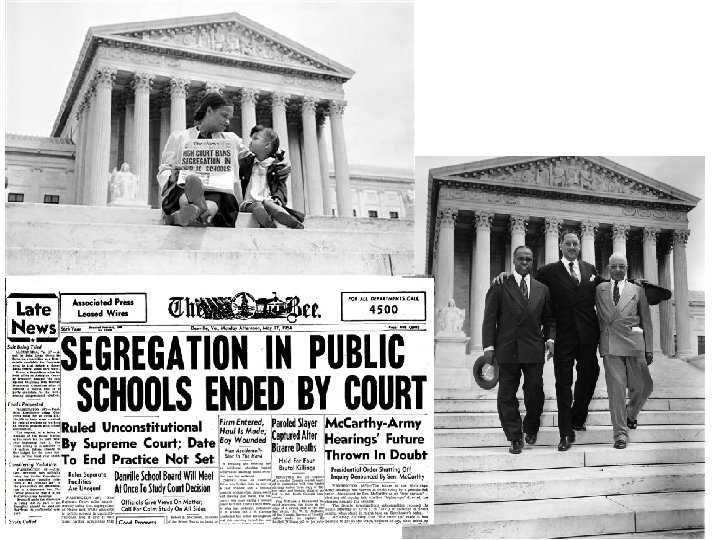
The NAACP decided to end segregation in public schools. Thurgood Marshall knew that the Supreme Court would have to declare segregation illegal under the Constitution. Marshall got his chance during the Brown v. the Board of Education in Topeka, Kansas.
The Supreme Court ruled that segregation of public schools was illegal under the Constitution. The cause of civil rights, which was becoming a mass movement, had won a major victory.
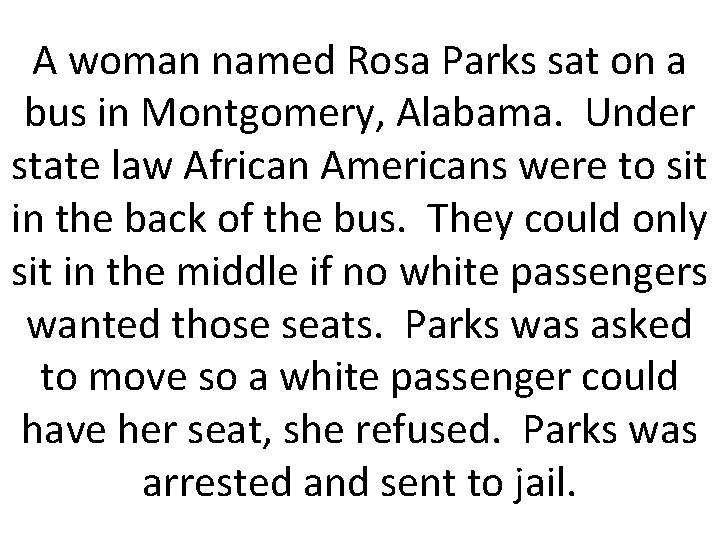
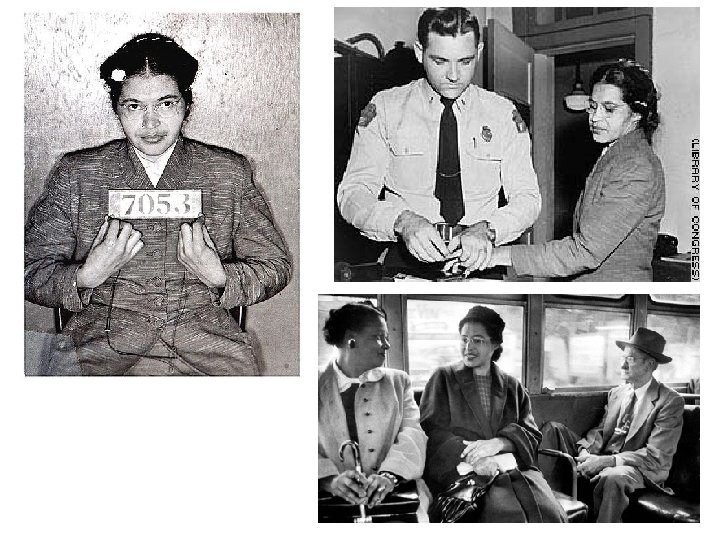
A woman named Rosa Parks sat on a bus in Montgomery, Alabama. Under state law African Americans were to sit in the back of the bus. They could only sit in the middle if no white passengers wanted those seats. Parks was asked to move so a white passenger could have her seat, she refused. Parks was arrested and sent to jail.
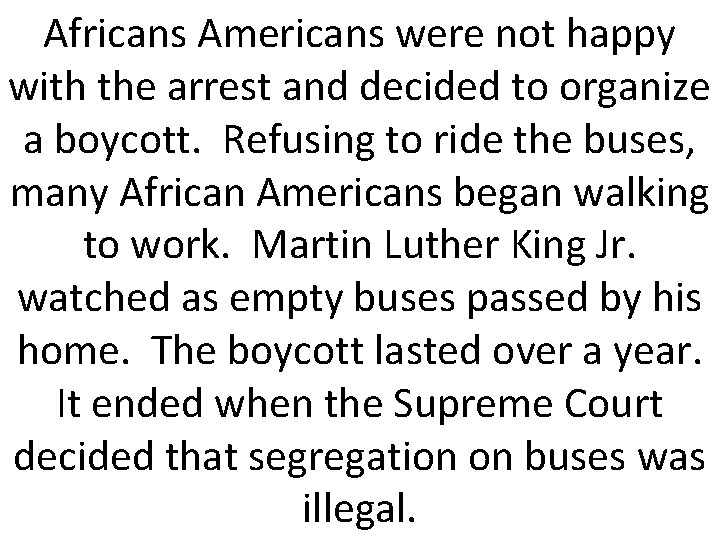
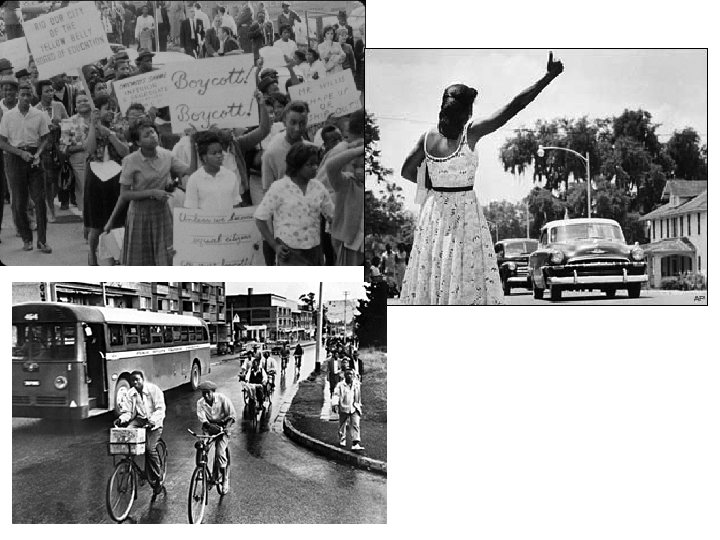
Africans Americans were not happy with the arrest and decided to organize a boycott. Refusing to ride the buses, many African Americans began walking to work. Martin Luther King Jr. watched as empty buses passed by his home. The boycott lasted over a year. It ended when the Supreme Court decided that segregation on buses was illegal.
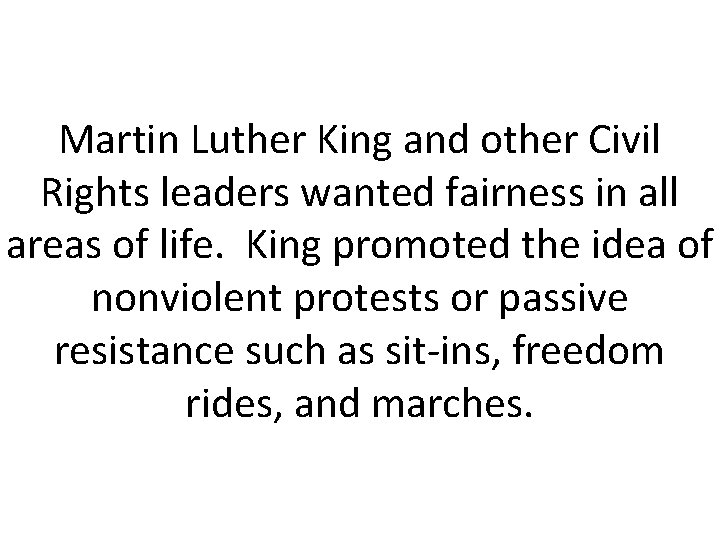
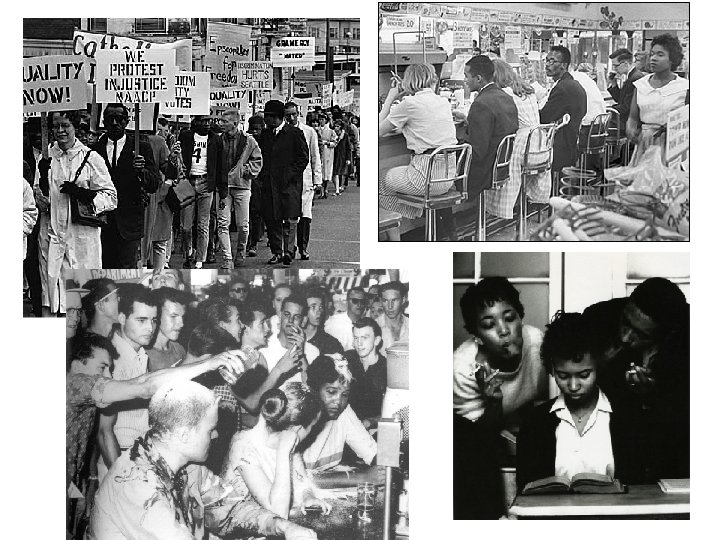
Martin Luther King and other Civil Rights leaders wanted fairness in all areas of life. King promoted the idea of nonviolent protests or passive resistance such as sit-ins, freedom rides, and marches.
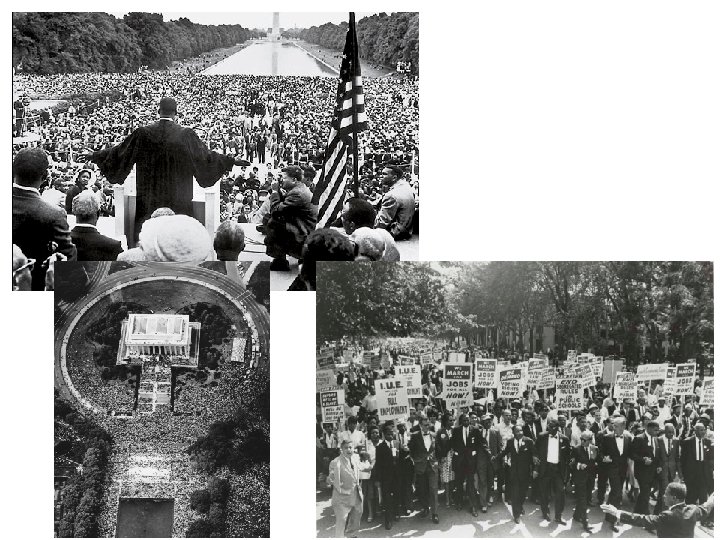
King and other leaders planned a massive march in Washington D. C. They wanted to help convince Congress to pass a Civil Rights bill proposed by President John F. Kennedy. Standing before the Lincoln Memorial, King called for an end to prejudice in the US.
Due to the death of President Kennedy, President Lyndon B. Johnson urged Congress to pass the bill. The Civil Rights bill banned all segregation in all public places in the US. Later, Congress passed the Voting Rights Act. Often African Americans were prevented from voting in some parts of the south. The Voting Rights Act protected their right to vote.
Martin Luther King would never see the changes he worked towards. His death inspired others to lead the fight for Civil Rights.
- Slides: 22