
SEGREGATION AND MASS CULTURE SEGREGATION AND DISCRIMINATION With

- Slides: 18
SEGREGATION AND MASS CULTURE
SEGREGATION AND DISCRIMINATION With African Americans earning news rights soon after the Civil War, many people would develop laws that restricted their social advancement. Restriction on voting rights Some limited voting rights to those who could read and pass a literacy test. African Americans who were trying to vote would be asked more difficult questions and if applicants could not pass the test, the officials could fail whoever they wanted.
SEGREGATION AND DISCRIMINATION Another method of limiting African Americans was by implementing the poll tax. Poll tax was an annual tax that had to be paid before a person was qualified to vote. Grandfather Clause: If an African American, his father, or his grandfather had been eligible to vote before January 1, 1867, he could still vote even if he did not pass the literacy test or pay the poll tax.
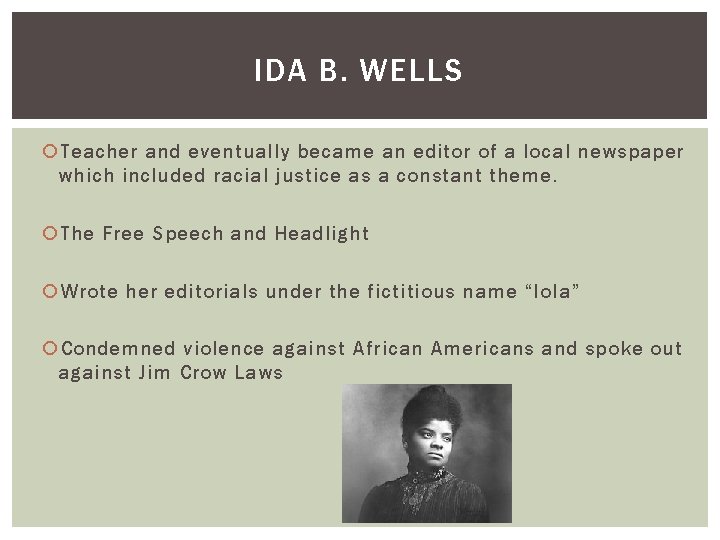
IDA B. WELLS Teacher and eventually became an editor of a local newspaper which included racial justice as a constant theme. The Free Speech and Headlight Wrote her editorials under the fictitious name “Iola” Condemned violence against African Americans and spoke out against Jim Crow Laws
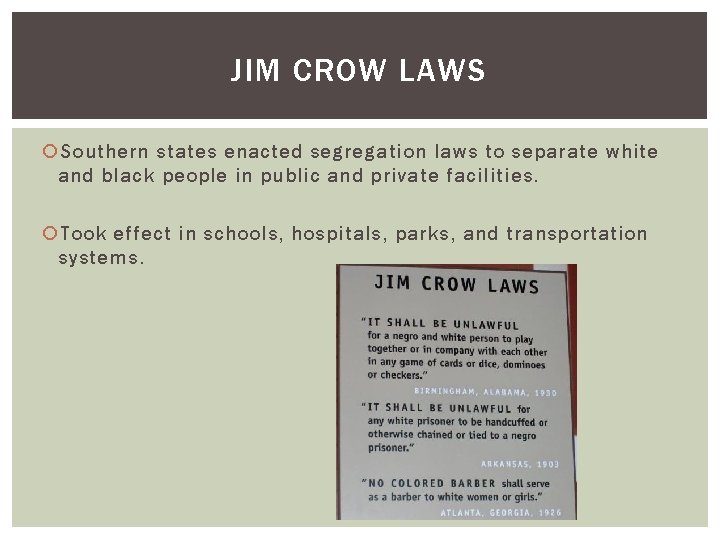
JIM CROW LAWS Southern states enacted segregation laws to separate white and black people in public and private facilities. Took effect in schools, hospitals, parks, and transportation systems.
PLESSY V. FERGUSON Legal case made against segregation in 1896 Homer Plessy was an African American who attempted to sit in an all-white railroad car and was arrested. (Louisiana) Supreme Court ruled that the separation of races did not violate the 14 t h Amendment. Established the doctrine of “separate but equal”
PLESSY V. FERGUSON https: //www. youtube. com/watch? v=Fg. G 6 LPnkfto
MOVEMENT NORTH Many African Americans sought to flee the discrimination that they faced by moving to the North. Better paying jobs Segregation was also prevalent in the North.
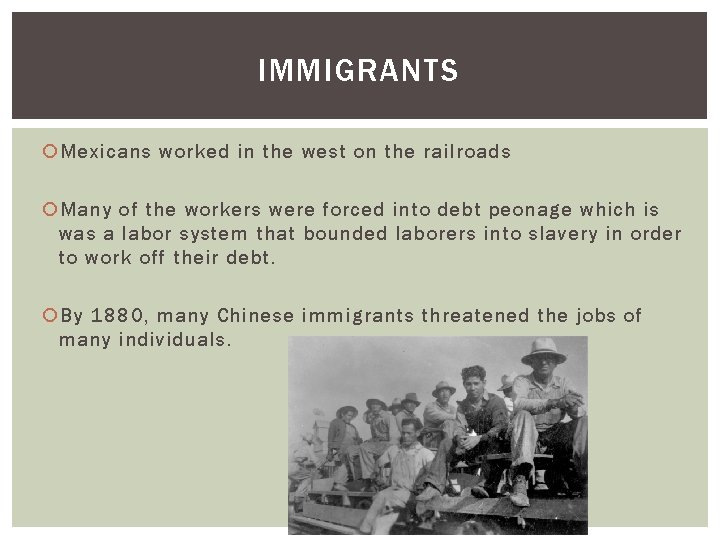
IMMIGRANTS Mexicans worked in the west on the railroads Many of the workers were forced into debt peonage which is was a labor system that bounded laborers into slavery in order to work off their debt. By 1880, many Chinese immigrants threatened the jobs of many individuals.
MASS CULTURE People began to enjoy specific entertainment during their leisure time. Cities begin to build spaces for recreational use and amusement parks Americans begin to enjoy the bicycle and participating in sports such as tennis
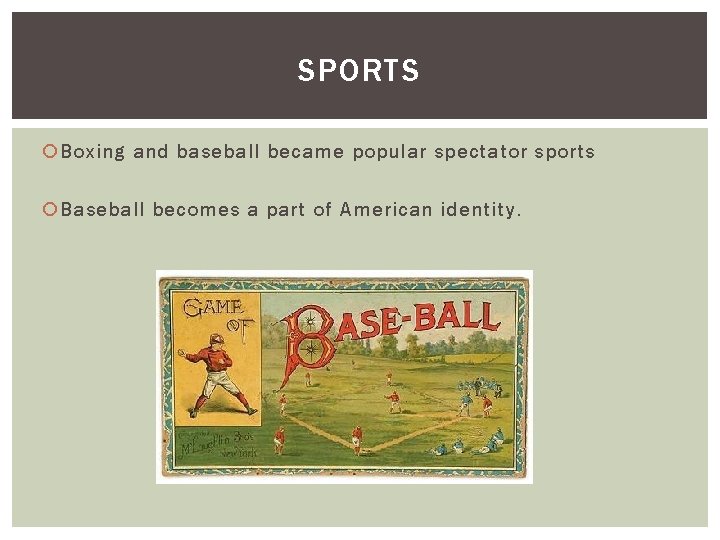
SPORTS Boxing and baseball became popular spectator sports Baseball becomes a part of American identity.
COMMUNICATION Communication corporations began to take advantage of captivating headlines and exaggerate stories in the news. Producing these sensational stories proved to sell a large amount of newspaper copies Literacy rates rose and literature began to play a larger role in society. Literature portrayed a more accurate image of American life.
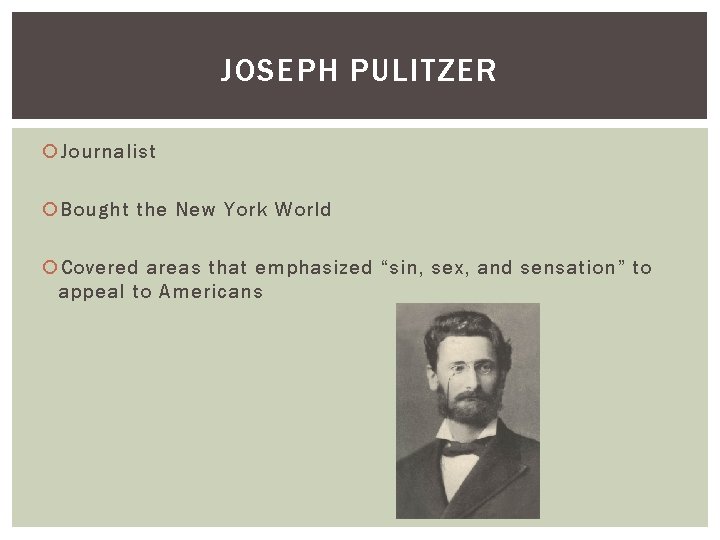
JOSEPH PULITZER Journalist Bought the New York World Covered areas that emphasized “sin, sex, and sensation” to appeal to Americans
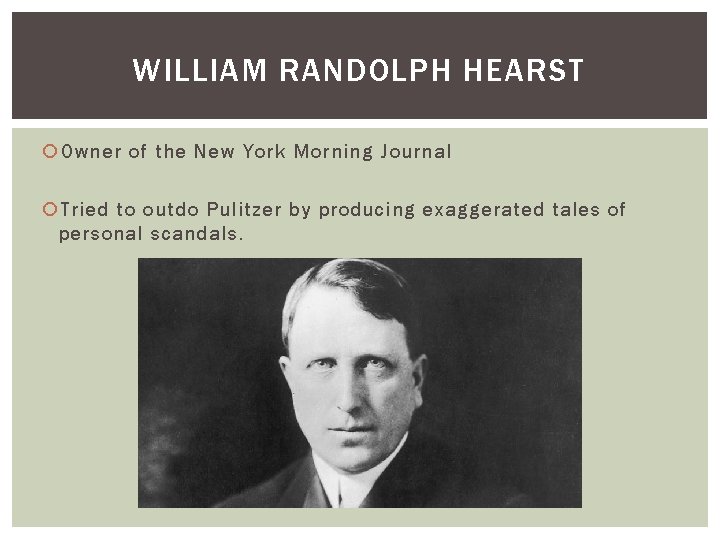
WILLIAM RANDOLPH HEARST Owner of the New York Morning Journal Tried to outdo Pulitzer by producing exaggerated tales of personal scandals.
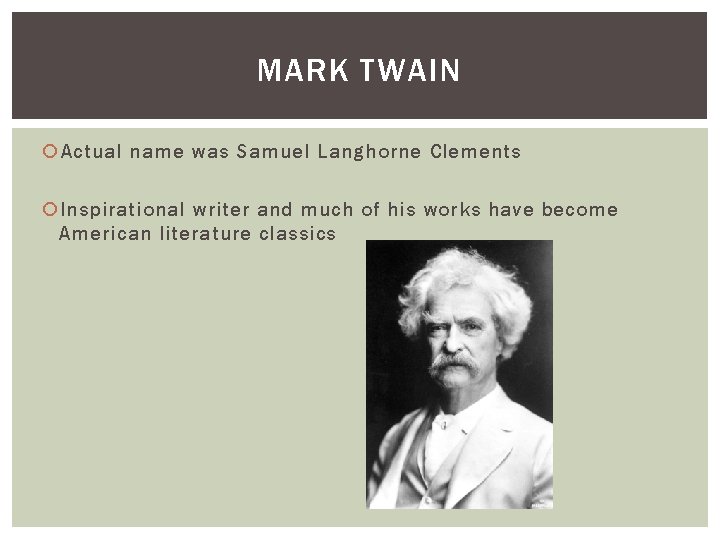
MARK TWAIN Actual name was Samuel Langhorne Clements Inspirational writer and much of his works have become American literature classics
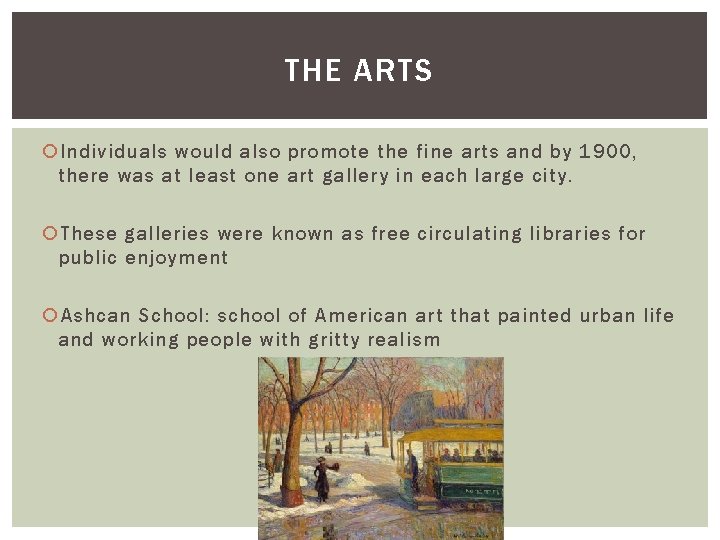
THE ARTS Individuals would also promote the fine arts and by 1900, there was at least one art gallery in each large city. These galleries were known as free circulating libraries for public enjoyment Ashcan School: school of American art that painted urban life and working people with gritty realism
SELLING OF GOODS Shopping centers emerged in 1890 Department stores pay close attention to women customers and offer bargain goods. Chain stores: stores owned by the same person and sells the same goods. Large amount of product with cheap costs
ADVERTISING Catalog shopping, newspapers, magazines Mail order business was promoted by sending catalogs to customers. Rural Free Delivery System: brings packages directly to every home. Large amounts of mail.