
Segmentation Targeting Positioning Overview Segmentation Targeting Positioning Why

- Slides: 31
Segmentation, Targeting & Positioning
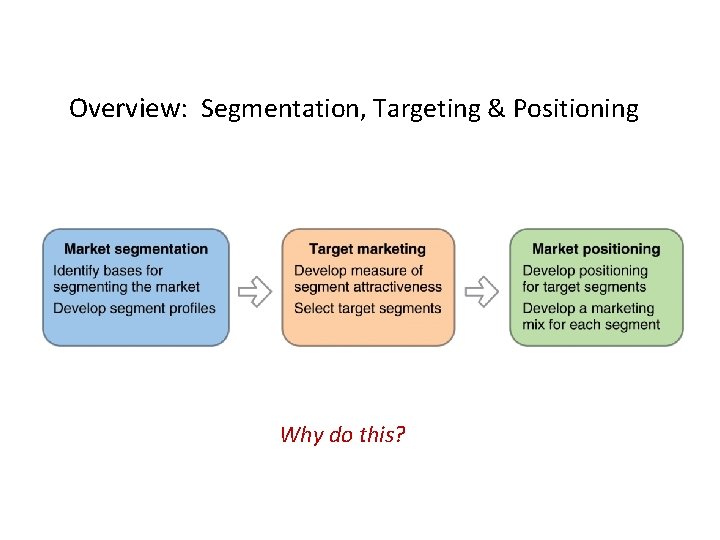
Overview: Segmentation, Targeting & Positioning Why do this?
Market Segmentation - Principles • Segmentation Variables – Geographic – Demographic – Psychographic – Behavioral – Other (anything!) • No single best way to segment a market. • Often best to combine variables and identify smaller, betterdefined target groups.
Geographic Segmentation • Divide markets into different geographic units. • Examples: – World Region or Country: North America, Western Europe, European Union, Pacific Rim, Mexico, etc. – Country Region: Pacific, Mountain, East Coast, etc. – City or Metro Size: New York, San Francisco – Population Density: rural, suburban, urban – Climate: northern, southern, tropical, semi-tropical
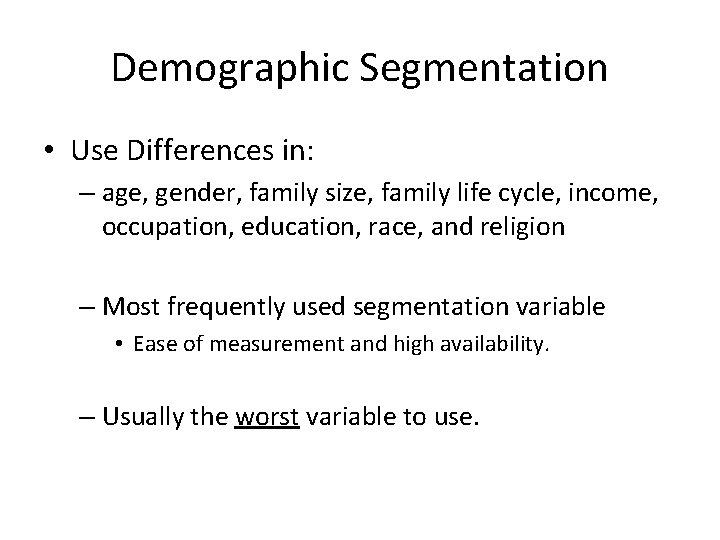
Demographic Segmentation • Use Differences in: – age, gender, family size, family life cycle, income, occupation, education, race, and religion – Most frequently used segmentation variable • Ease of measurement and high availability. – Usually the worst variable to use.
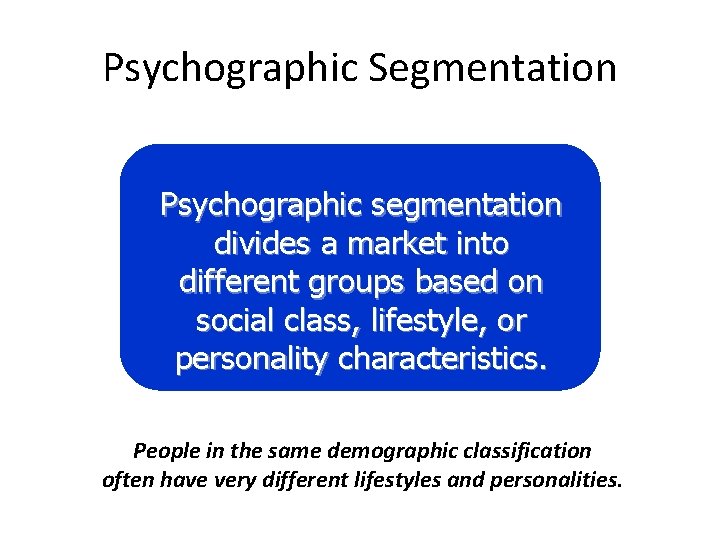
Psychographic Segmentation Psychographic segmentation divides a market into different groups based on social class, lifestyle, or personality characteristics. People in the same demographic classification often have very different lifestyles and personalities.
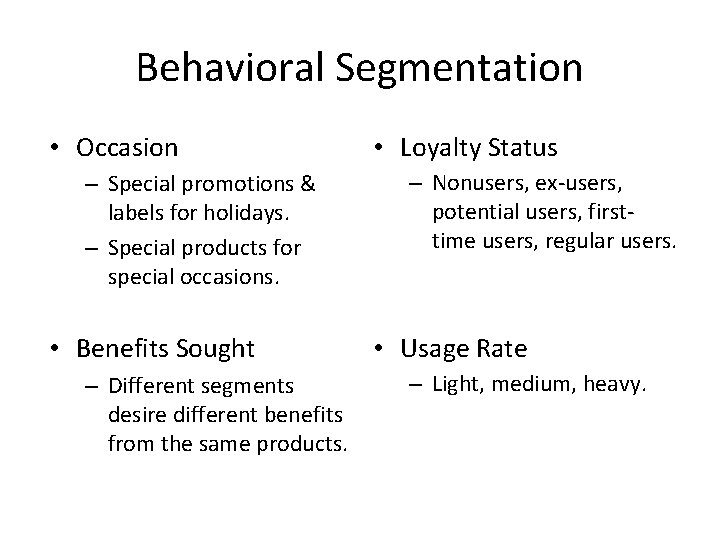
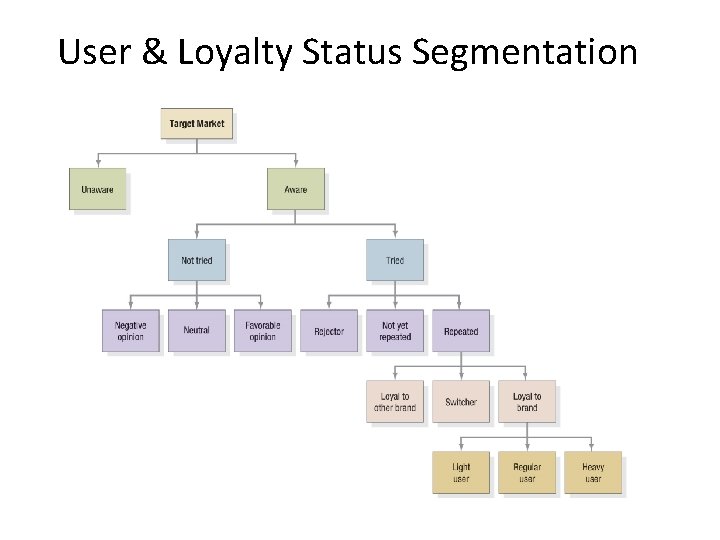
Behavioral Segmentation • Occasion – Special promotions & labels for holidays. – Special products for special occasions. • Benefits Sought – Different segments desire different benefits from the same products. • Loyalty Status – Nonusers, ex-users, potential users, firsttime users, regular users. • Usage Rate – Light, medium, heavy.
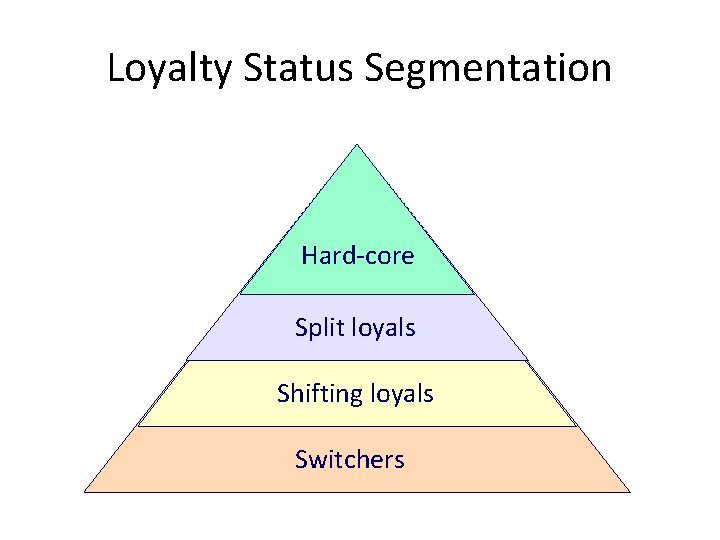
Loyalty Status Segmentation Hard-core Split loyals Shifting loyals Switchers
User & Loyalty Status Segmentation
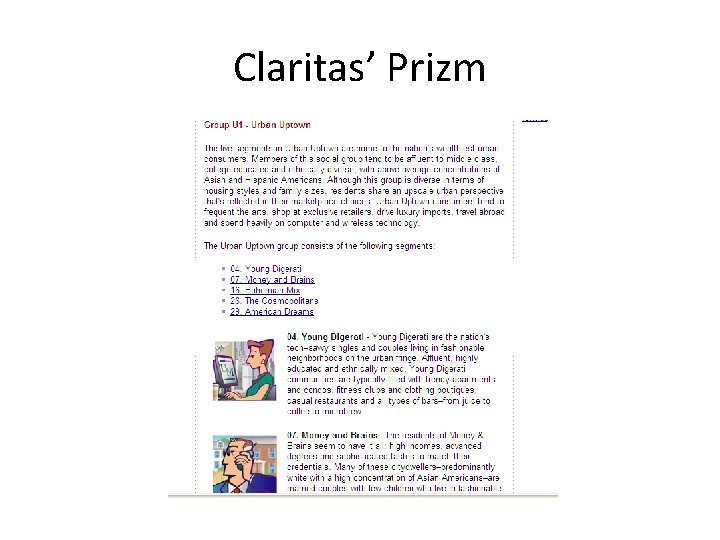
Geodemographic Segmentation • PRIZM, by Claritas – Organized by ZIP code – Based on Census data – Profiles on a place’s neighborhoods
Claritas’ Prizm
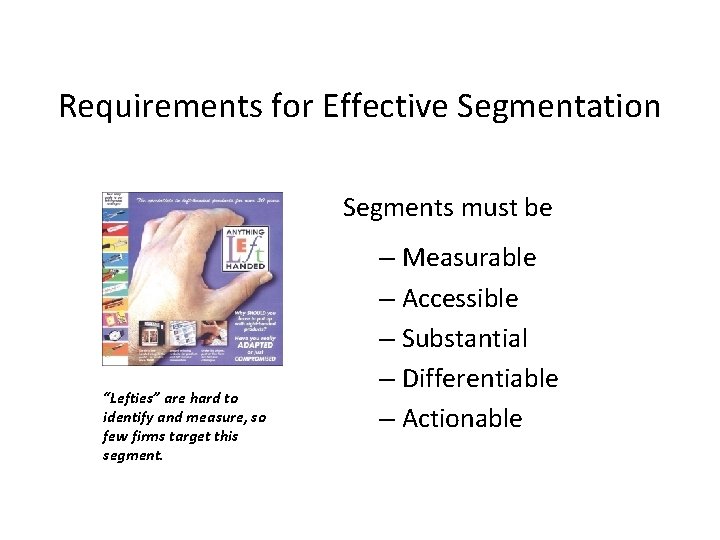
Requirements for Effective Segmentation Segments must be “Lefties” are hard to identify and measure, so few firms target this segment. – Measurable – Accessible – Substantial – Differentiable – Actionable
Evaluating Market Segments • Segment Size and Growth Potential – Sales, profitability and growth rates • Segment Structural Attractiveness – Competition, substitute products, – buyers & supplier power, new entrants (Porter’s Five Forces) • Company Objectives and Resources – Core competencies – “What business do we want to be in? ”
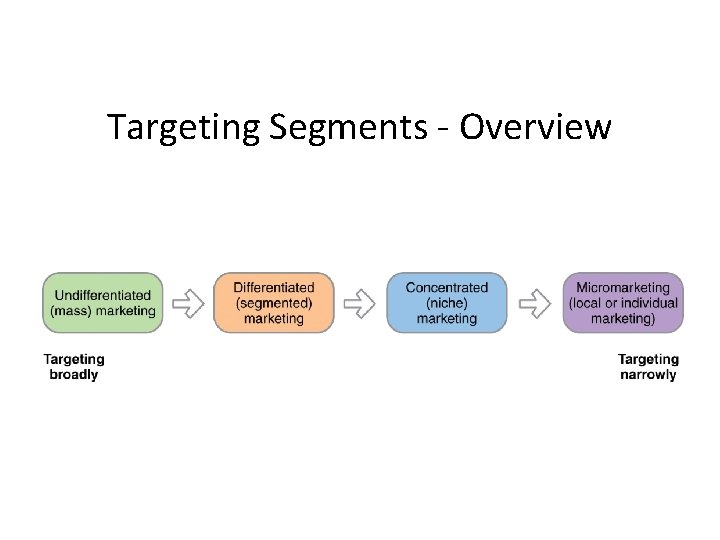
Targeting Segments - Overview
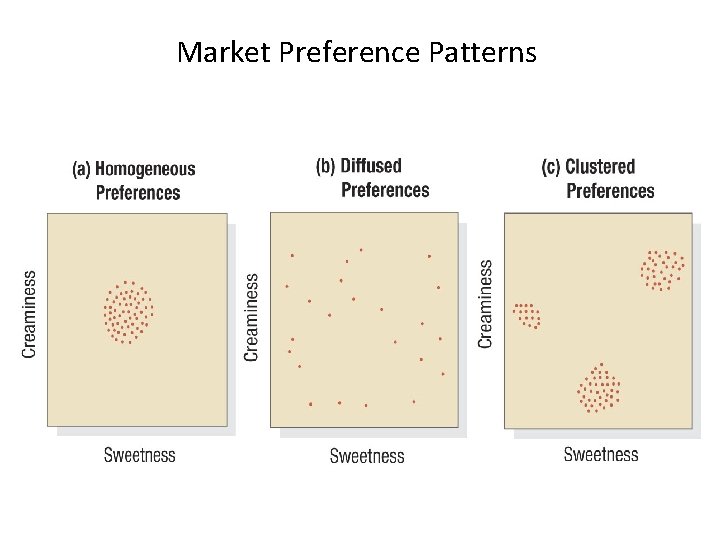
Market Preference Patterns
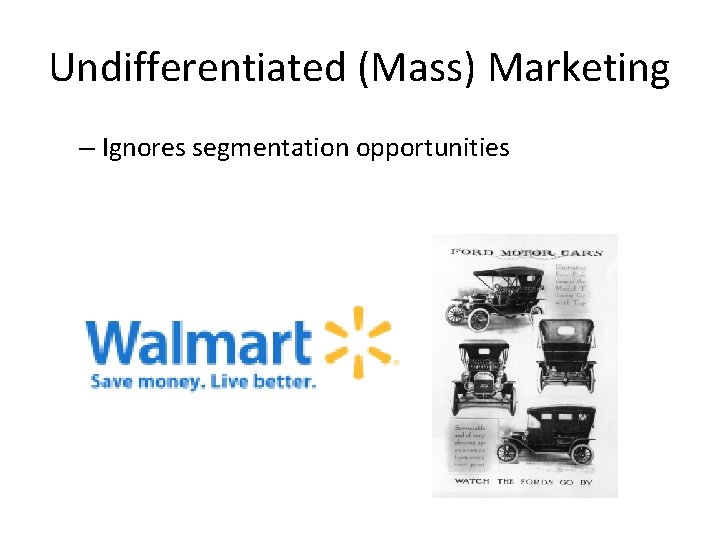
Undifferentiated (Mass) Marketing – Ignores segmentation opportunities
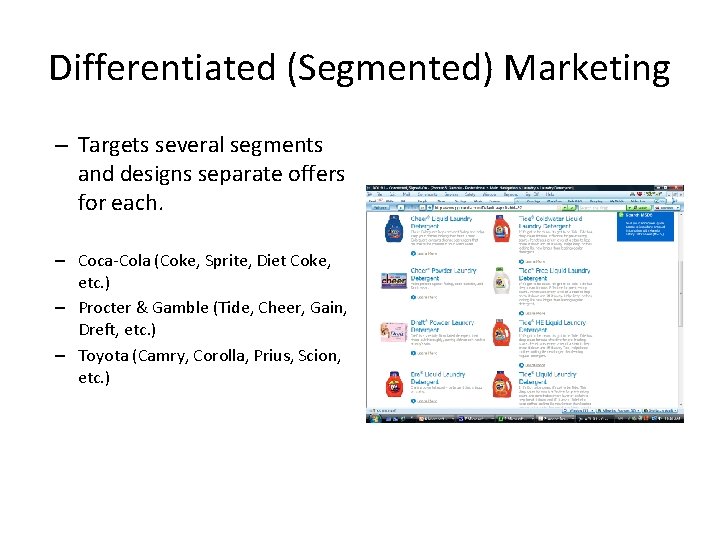
Differentiated (Segmented) Marketing – Targets several segments and designs separate offers for each. – Coca-Cola (Coke, Sprite, Diet Coke, etc. ) – Procter & Gamble (Tide, Cheer, Gain, Dreft, etc. ) – Toyota (Camry, Corolla, Prius, Scion, etc. )
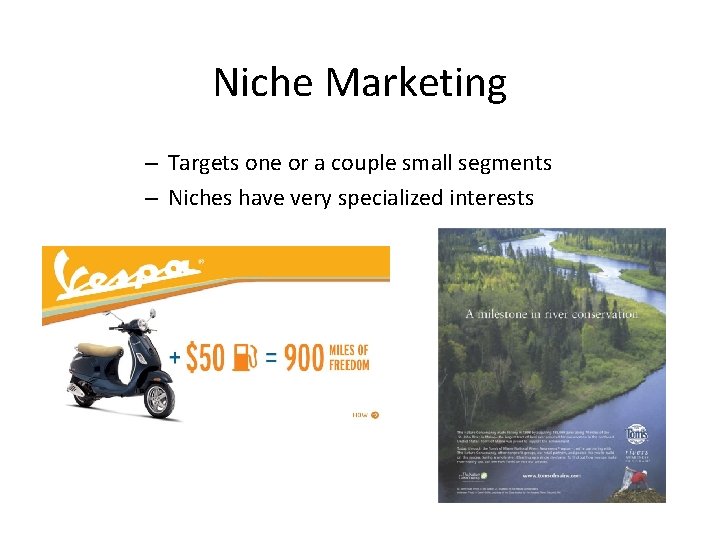
Niche Marketing – Targets one or a couple small segments – Niches have very specialized interests
Micromarketing • Tailoring products and marketing programs to suit the tastes of specific individuals and/or locations.
Flexible Marketing Offerings • “Naked”/Core solution – Product and service elements that all segment members value • Discretionary options – Some segment members value – Options may carry additional charges
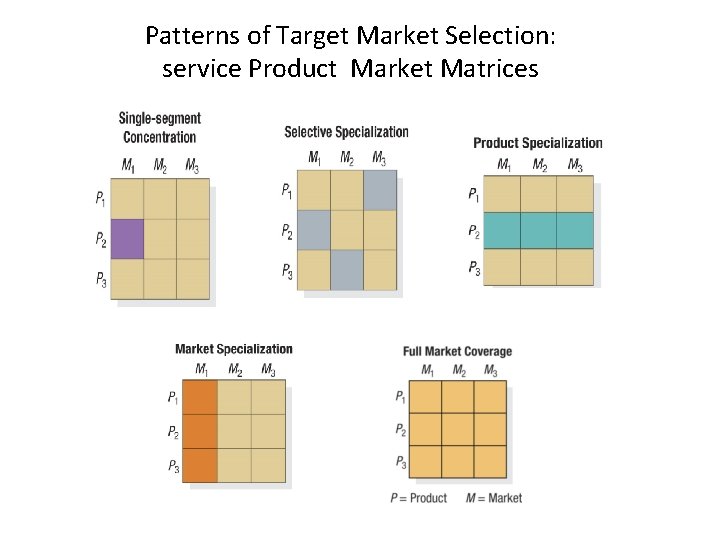
Patterns of Target Market Selection: service Product Market Matrices
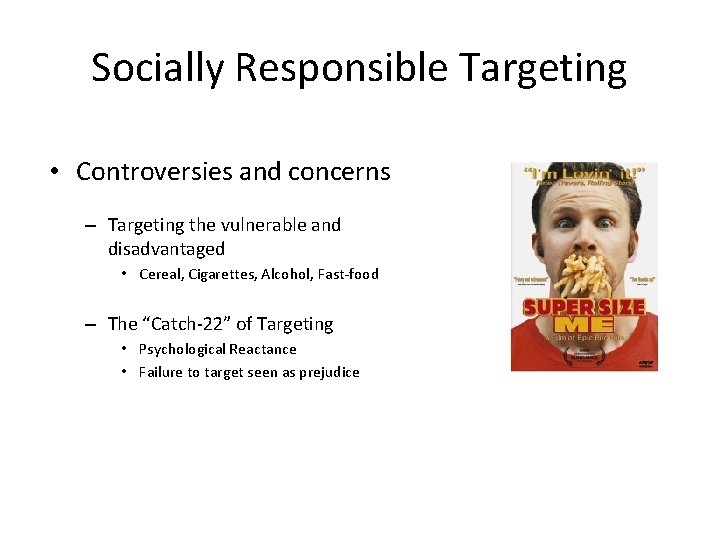
Socially Responsible Targeting • Controversies and concerns – Targeting the vulnerable and disadvantaged • Cereal, Cigarettes, Alcohol, Fast-food – The “Catch-22” of Targeting • Psychological Reactance • Failure to target seen as prejudice
Positioning The place a service product occupies in consumers’ minds relative to competing products.
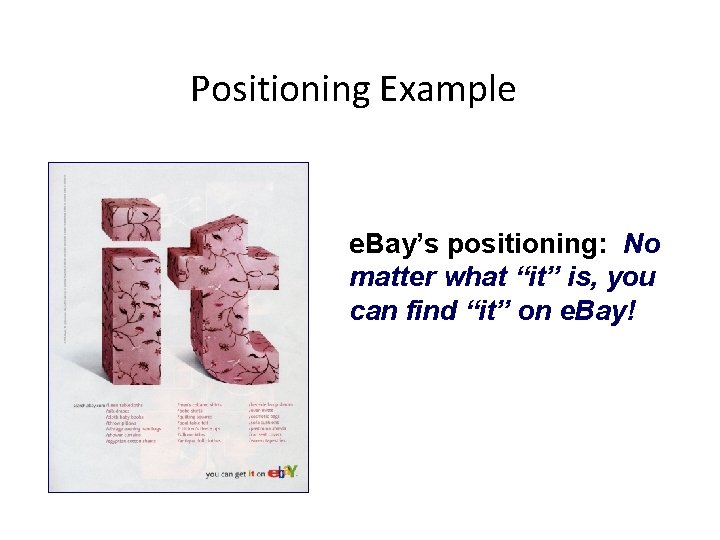
Positioning Example e. Bay’s positioning: No matter what “it” is, you can find “it” on e. Bay!
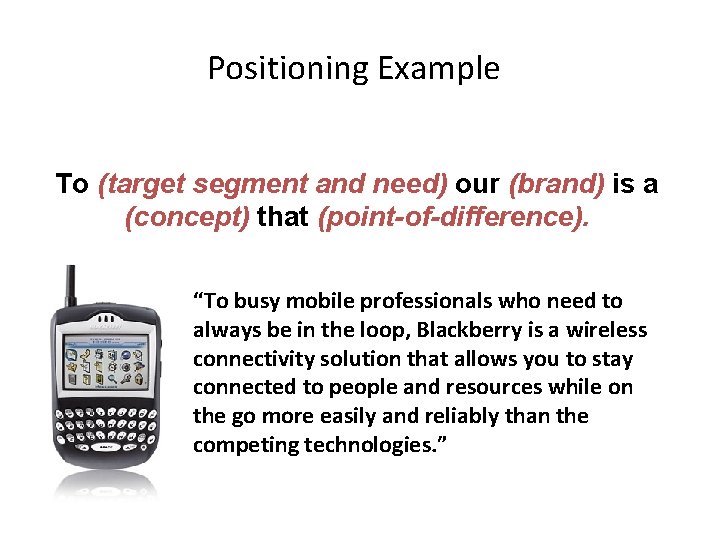
Positioning Example To (target segment and need) our (brand) is a (concept) that (point-of-difference). “To busy mobile professionals who need to always be in the loop, Blackberry is a wireless connectivity solution that allows you to stay connected to people and resources while on the go more easily and reliably than the competing technologies. ”
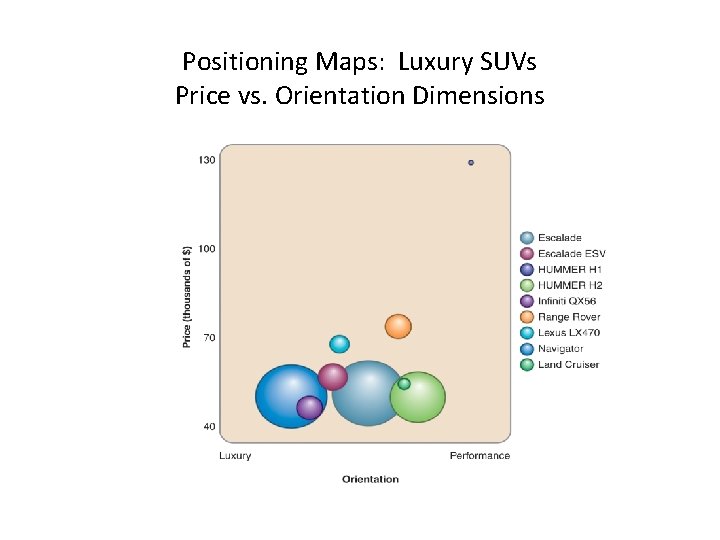
Positioning Maps: Luxury SUVs Price vs. Orientation Dimensions
Positioning Strategy • Competitive advantages • Points of Parity • Points of Difference => Differentiation Positioning results from differentiation and competitive advantages. Positioning may change over time.
Sources of Differentiation – Service Product Design – Quality – Additional Services – Image – People (Staff) – Price – Other 6 -28
Choosing the Right Competitive Advantages • The best competitive advantages are… – – – – Important Distinctive Superior Communicable Pre-emptive Affordable (to company and consumer) Profitable Moral: Avoid meaningless differentiation.
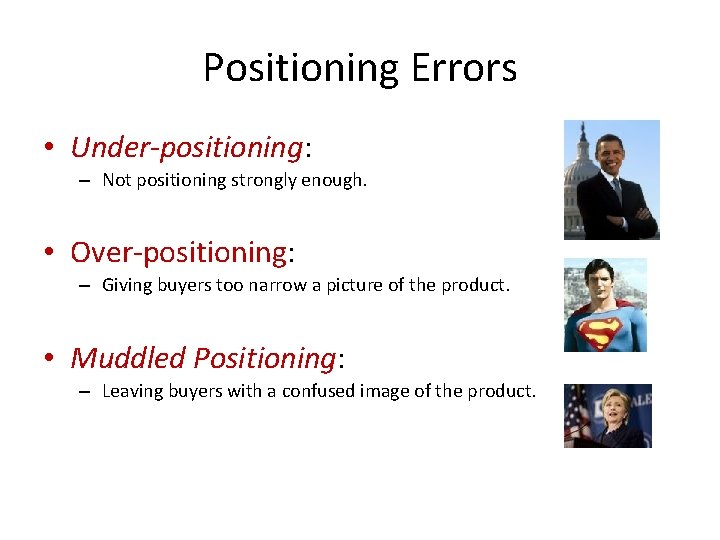
Positioning Errors • Under-positioning: – Not positioning strongly enough. • Over-positioning: – Giving buyers too narrow a picture of the product. • Muddled Positioning: – Leaving buyers with a confused image of the product.
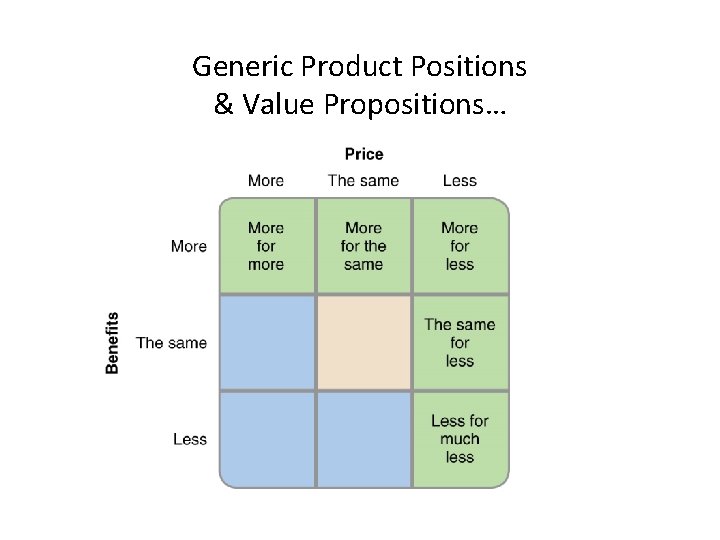
Generic Product Positions & Value Propositions…