
Segmentation Targeting and Positioning Chapter 6 Definition Market


- Slides: 22
Segmentation, Targeting, and Positioning Chapter 6
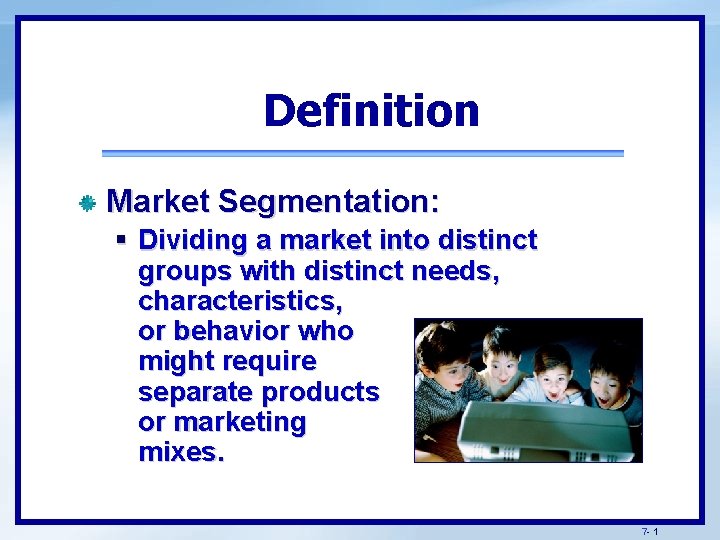
Definition Market Segmentation: § Dividing a market into distinct groups with distinct needs, characteristics, or behavior who might require separate products or marketing mixes. 7 - 1
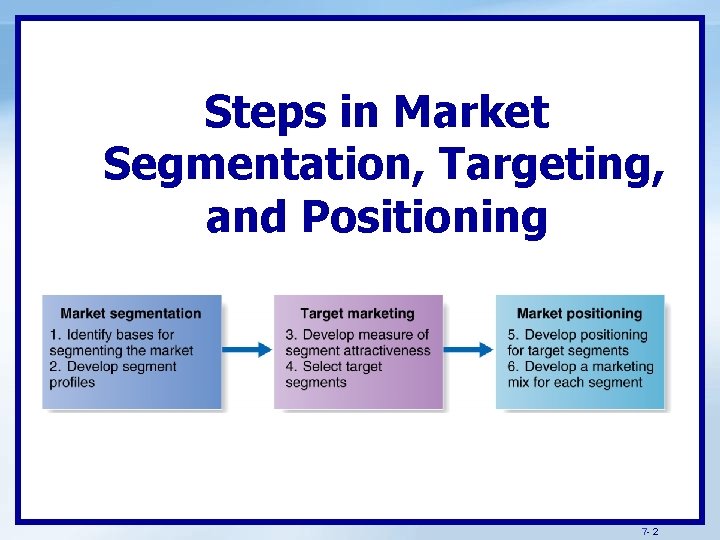
Steps in Market Segmentation, Targeting, and Positioning 7 - 2
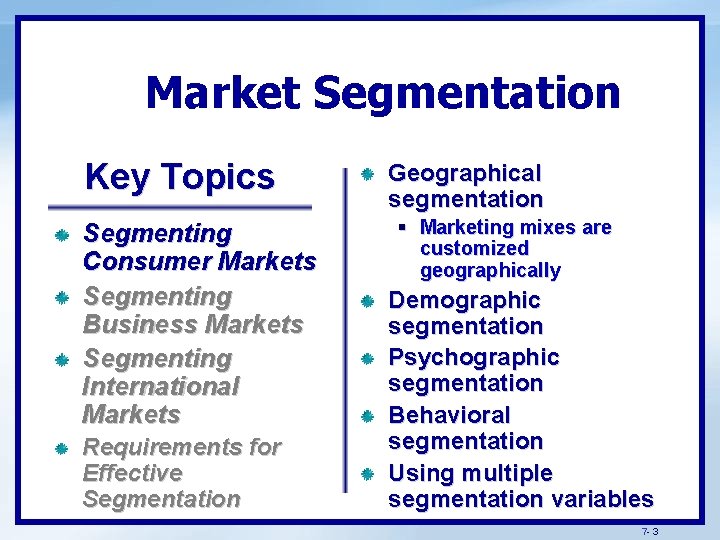
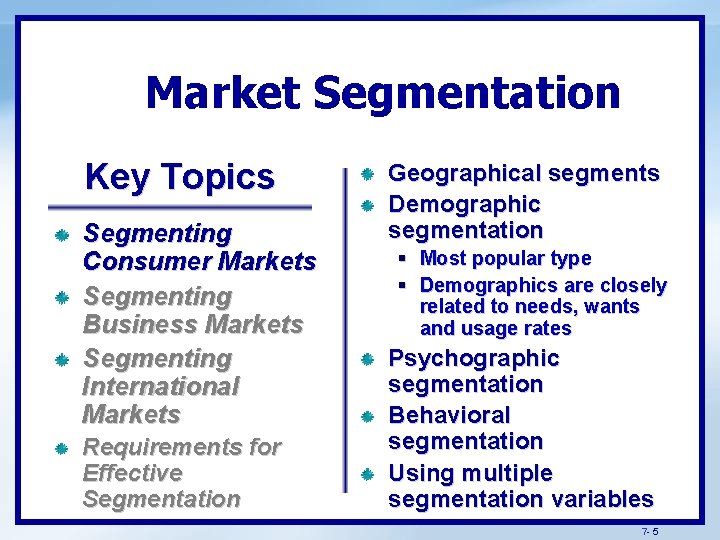
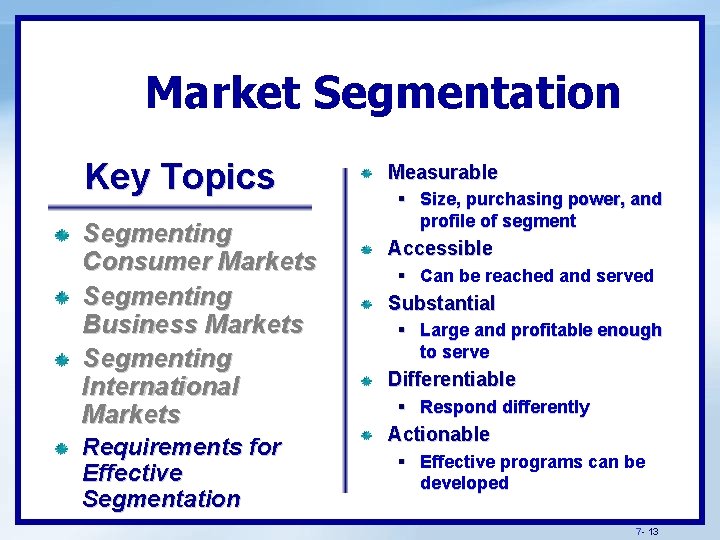
Market Segmentation Key Topics Segmenting Consumer Markets Segmenting Business Markets Segmenting International Markets Requirements for Effective Segmentation Geographical segmentation § Marketing mixes are customized geographically Demographic segmentation Psychographic segmentation Behavioral segmentation Using multiple segmentation variables 7 - 3
Market Segmentation Geographic Segmentation Variables World Region or Country Region City or Metro Size Neighborhood Density Climate 7 - 4
Market Segmentation Key Topics Segmenting Consumer Markets Segmenting Business Markets Segmenting International Markets Requirements for Effective Segmentation Geographical segments Demographic segmentation § Most popular type § Demographics are closely related to needs, wants and usage rates Psychographic segmentation Behavioral segmentation Using multiple segmentation variables 7 - 5
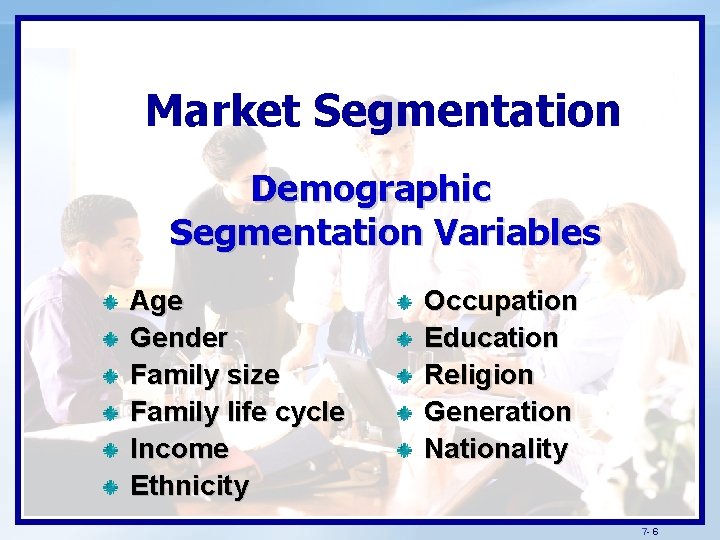
Market Segmentation Demographic Segmentation Variables Age Gender Family size Family life cycle Income Ethnicity Occupation Education Religion Generation Nationality 7 - 6
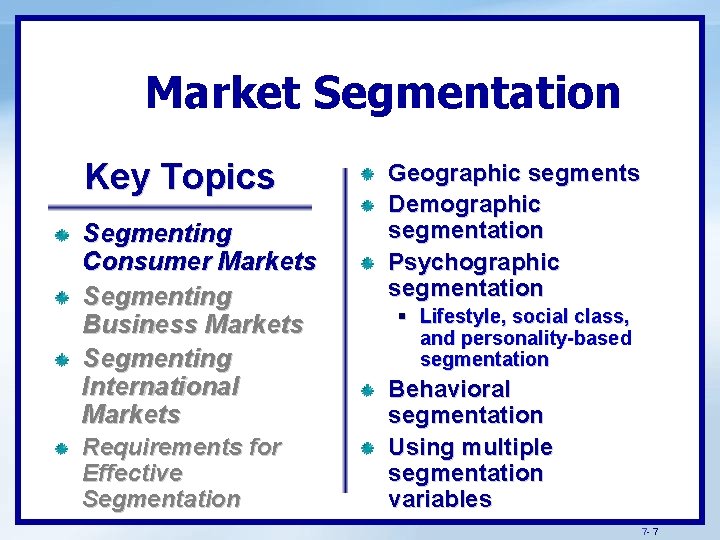
Market Segmentation Key Topics Segmenting Consumer Markets Segmenting Business Markets Segmenting International Markets Requirements for Effective Segmentation Geographic segments Demographic segmentation Psychographic segmentation § Lifestyle, social class, and personality-based segmentation Behavioral segmentation Using multiple segmentation variables 7 - 7
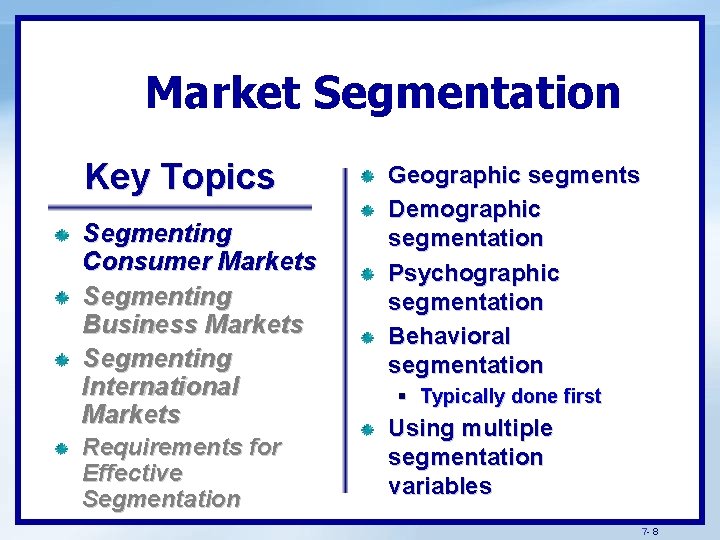
Market Segmentation Key Topics Segmenting Consumer Markets Segmenting Business Markets Segmenting International Markets Requirements for Effective Segmentation Geographic segments Demographic segmentation Psychographic segmentation Behavioral segmentation § Typically done first Using multiple segmentation variables 7 - 8
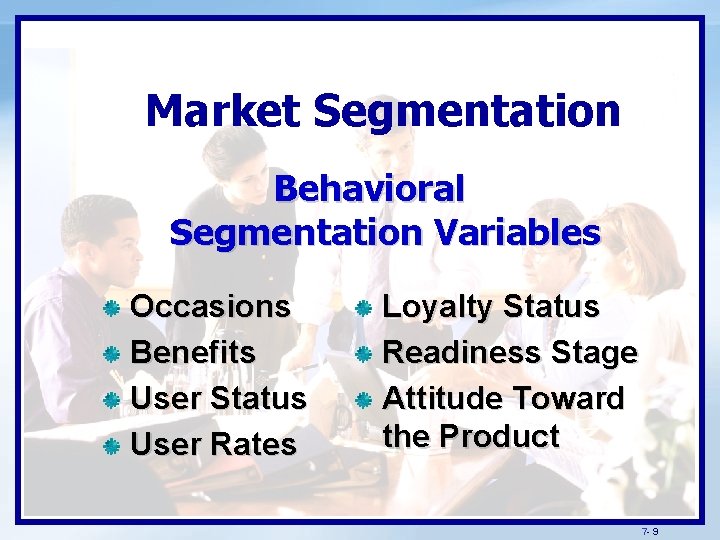
Market Segmentation Behavioral Segmentation Variables Occasions Benefits User Status User Rates Loyalty Status Readiness Stage Attitude Toward the Product 7 - 9
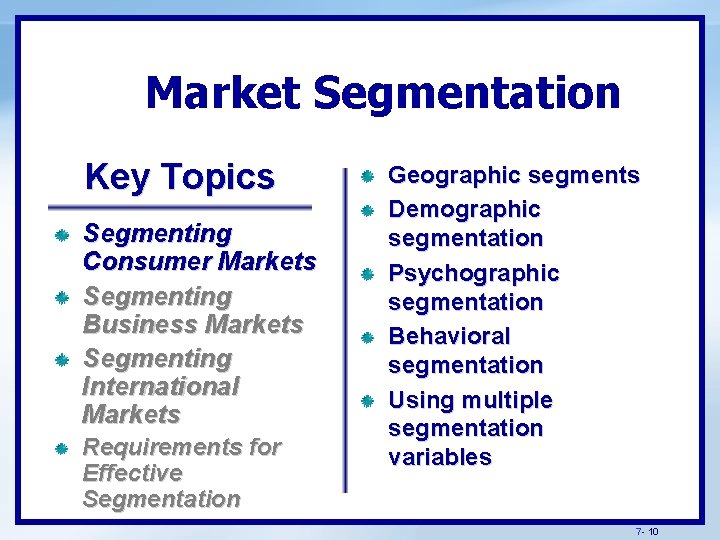
Market Segmentation Key Topics Segmenting Consumer Markets Segmenting Business Markets Segmenting International Markets Requirements for Effective Segmentation Geographic segments Demographic segmentation Psychographic segmentation Behavioral segmentation Using multiple segmentation variables 7 - 10
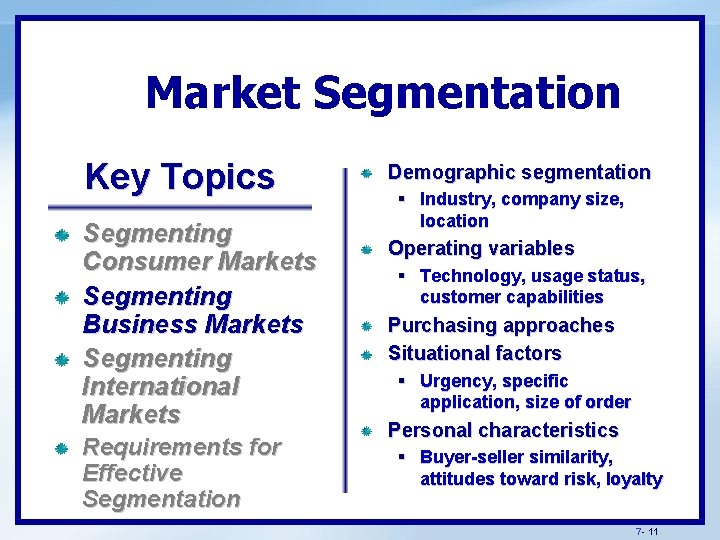
Market Segmentation Key Topics Segmenting Consumer Markets Segmenting Business Markets Segmenting International Markets Requirements for Effective Segmentation Demographic segmentation § Industry, company size, location Operating variables § Technology, usage status, customer capabilities Purchasing approaches Situational factors § Urgency, specific application, size of order Personal characteristics § Buyer-seller similarity, attitudes toward risk, loyalty 7 - 11
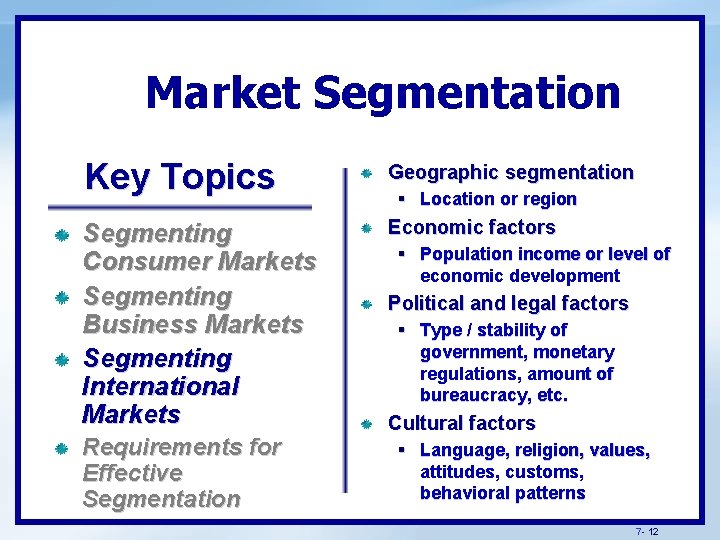
Market Segmentation Key Topics Geographic segmentation Segmenting Consumer Markets Segmenting Business Markets Segmenting International Markets Economic factors Requirements for Effective Segmentation § Location or region § Population income or level of economic development Political and legal factors § Type / stability of government, monetary regulations, amount of bureaucracy, etc. Cultural factors § Language, religion, values, attitudes, customs, behavioral patterns 7 - 12
Market Segmentation Key Topics Segmenting Consumer Markets Segmenting Business Markets Segmenting International Markets Requirements for Effective Segmentation Measurable § Size, purchasing power, and profile of segment Accessible § Can be reached and served Substantial § Large and profitable enough to serve Differentiable § Respond differently Actionable § Effective programs can be developed 7 - 13
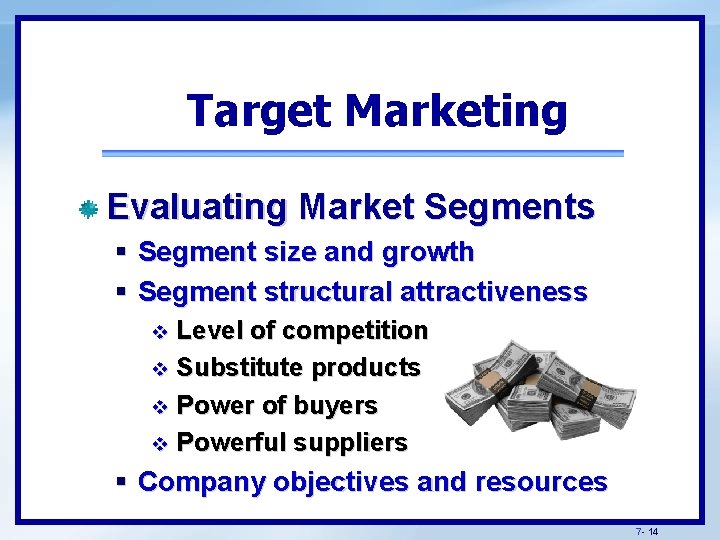
Target Marketing Evaluating Market Segments § Segment size and growth § Segment structural attractiveness Level of competition v Substitute products v Power of buyers v Powerful suppliers v § Company objectives and resources 7 - 14
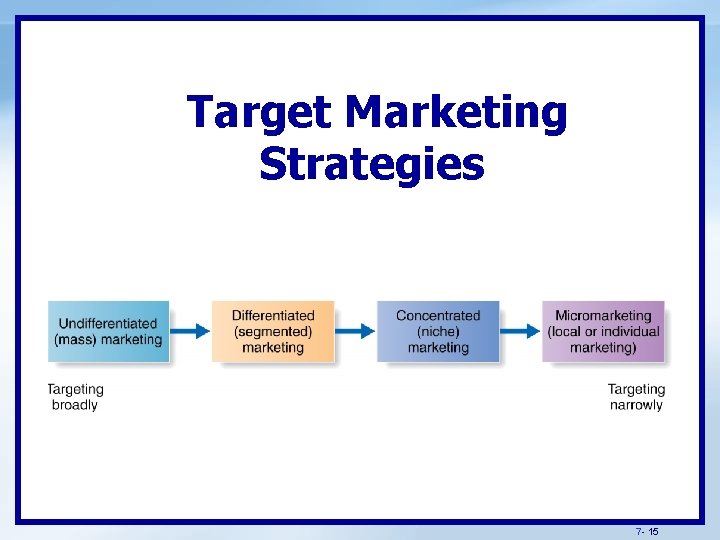
Target Marketing Strategies 7 - 15
Target Marketing Choosing a Target. Marketing Strategy Requires Consideration of: § § § Company resources The degree of product variability Product’s life-cycle stage Market variability Competitors’ marketing strategies 7 - 16
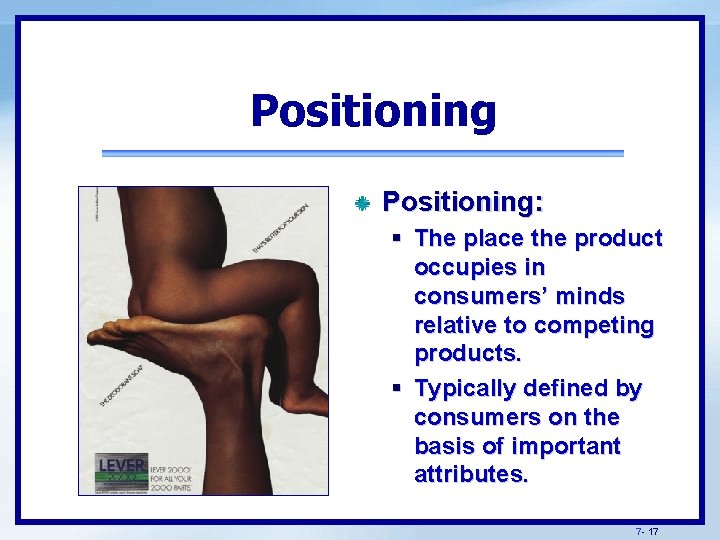
Positioning: § The place the product occupies in consumers’ minds relative to competing products. § Typically defined by consumers on the basis of important attributes. 7 - 17
Positioning Choosing a Positioning Strategy: § Identifying possible competitive advantages -- many potential sources of differentiation exist: Products v Services v Channels v People v Image v 7 - 18
Positioning Choosing a Positioning Strategy: § Choosing the right competitive advantage v How many differences to promote? • Unique selling proposition • Positioning errors to avoid v Which differences to promote? 7 - 19
Positioning Criteria for Meaningful Differences Important Distinctive Superior Communicable Preemptive Affordable Profitable 7 - 20
Positioning Choosing a Positioning Strategy: § Communicating and delivering the chosen position Entire marketing mix must support the chosen strategy v May require changes to the product, pricing, distribution or promotion. v 7 - 21