
SEEGGUIDED RADIOFREQUENCY THERMOCOAGULATION IN EPILEPSY Ciurea Jean Barborica
SEEG-GUIDED RADIO-FREQUENCY THERMO-COAGULATION IN EPILEPSY Ciurea Jean, Barborica Andrei, Rasina Alin, Gheorghiu Ana, Mandruta Ioana, Popa Irina, Maliia Mihai Dragos, Ene Sabina, Donos Cristi Neurology Department, Epilepsy and Sleep Monitoring Unit, University Emergency Hospital Bucharest Neurosurgery Department, Bagdasar-Arseni Hospital Bucharest 3 Physics Department, University of Bucharest, Romania 4 Neurology Department, Neurology and Neurovascular Diseases National Institute, Bucharest, Romania 1 2
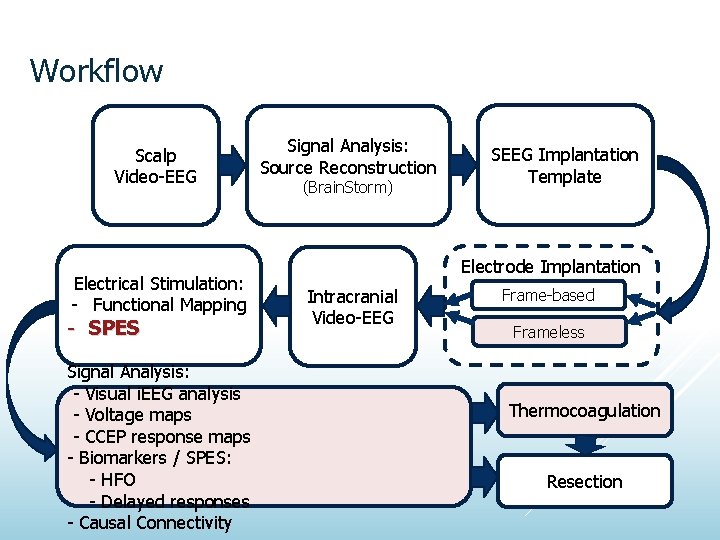
Workflow Scalp Video-EEG Electrical Stimulation: - Functional Mapping - SPES Signal Analysis: - Visual i. EEG analysis - Voltage maps - CCEP response maps - Biomarkers / SPES: - HFO - Delayed responses - Causal Connectivity Signal Analysis: Source Reconstruction (Brain. Storm) SEEG Implantation Template Electrode Implantation Intracranial Video-EEG Frame-based Frameless Thermocoagulation Resection
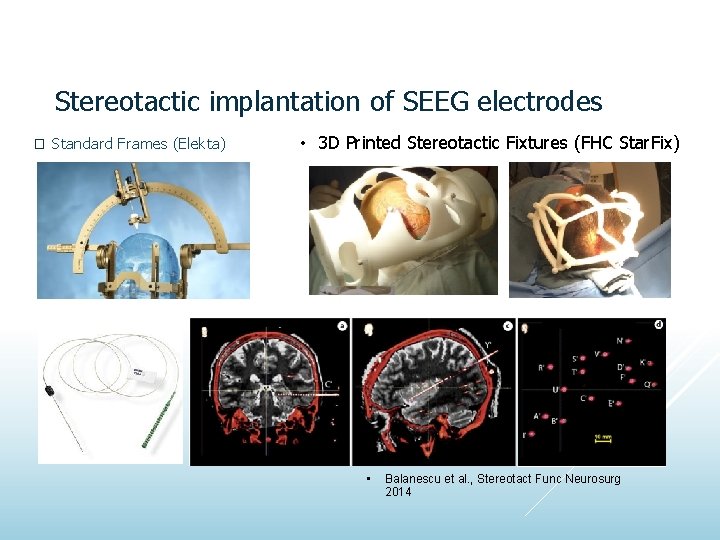
Stereotactic implantation of SEEG electrodes � Standard Frames (Elekta) • 3 D Printed Stereotactic Fixtures (FHC Star. Fix) • Balanescu et al. , Stereotact Func Neurosurg 2014

Thermocoagulation � Radio-frequency-thermo-coagulation (RFTC) is produced without anesthesia � Radiofrequency lesion generator system model RFG by Radionics � Lesions are produced between 2 contiguous contact on the same electrode � Parameters: 50 V, 120 m. A, 10 -40 s -> temperature: 78 -82 0 C � Lesion: 5 -7 mm diameter RFTC lesion in egg white Catenoix H et al SEEG-guided thermocoagulations: a palliative treatment of nonoperable partial epilepsies Neurology 2008.
Indication • RFTC is performed at the end of video-SEEG monitoring • Contacts in cortex area showing low voltage fast activity or spike and wave activity at seizure onset • Prior electrical stimulation of the contacts did not reveal clinical response • The best result are seen in symptomatic epilepsies due to cortical development malformation Catenoix H et al SEEG-guided thermocoagulations: a palliative treatment of nonoperable partial epilepsies Neurology 2008
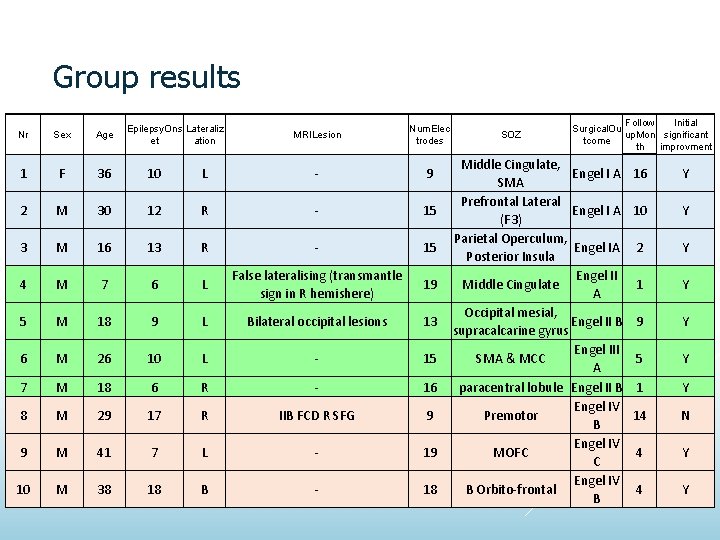
Group results Epilepsy. Ons Lateraliz et ation MRILesion Num. Elec trodes L - 9 12 R - 15 16 13 R - 15 M 7 6 L False lateralising (transmantle sign in R hemishere) 19 5 M 18 9 L Bilateral occipital lesions 13 6 M 26 10 L - 15 7 M 18 6 R - 16 8 M 29 17 R IIB FCD R SFG 9 9 M 41 7 L - 19 10 M 38 18 B - 18 Nr Sex Age 1 F 36 10 2 M 30 3 M 4 SOZ Follow Initial Surgical. Ou up. Mon significant tcome th improvment Middle Cingulate, Engel I A SMA Prefrontal Lateral Engel I A (F 3) Parietal Operculum, Engel IA Posterior Insula Engel II Middle Cingulate A Occipital mesial, Engel II B supracalcarine gyrus Engel III SMA & MCC A paracentral lobule Engel II B Engel IV Premotor B Engel IV MOFC C Engel IV B Orbito-frontal B 16 Y 10 Y 2 Y 1 Y 9 Y 5 Y 14 N 4 Y
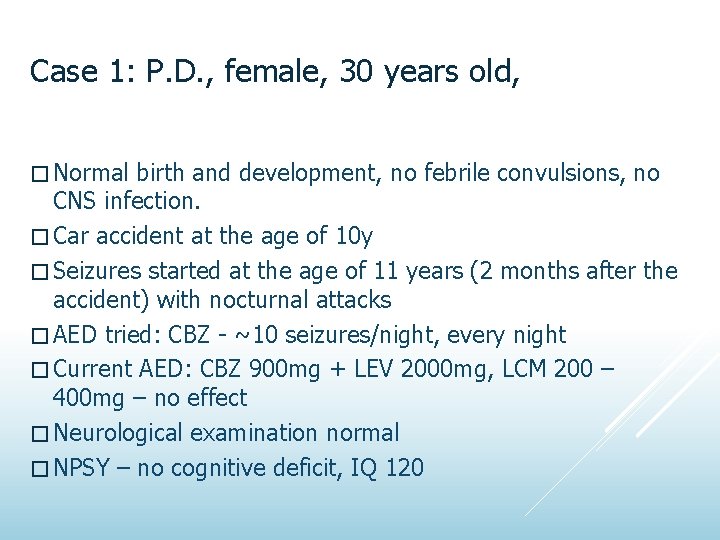
Case 1: P. D. , female, 30 years old, � Normal birth and development, no febrile convulsions, no CNS infection. � Car accident at the age of 10 y � Seizures started at the age of 11 years (2 months after the accident) with nocturnal attacks � AED tried: CBZ - ~10 seizures/night, every night � Current AED: CBZ 900 mg + LEV 2000 mg, LCM 200 – 400 mg – no effect � Neurological examination normal � NPSY – no cognitive deficit, IQ 120
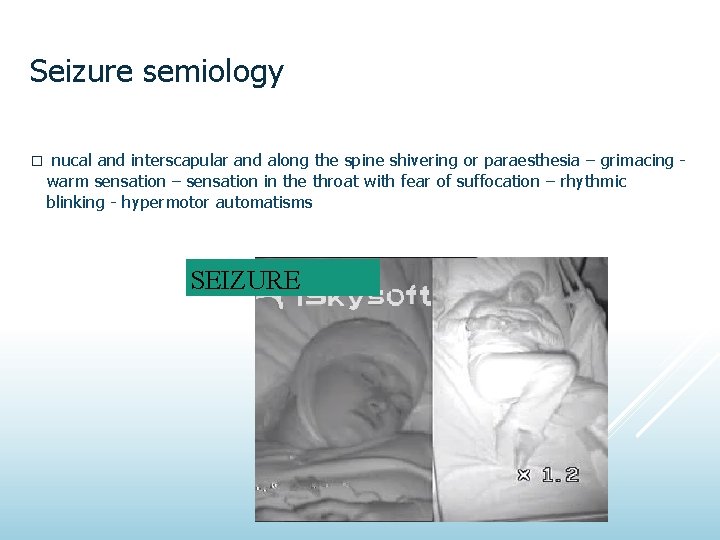
Seizure semiology � nucal and interscapular and along the spine shivering or paraesthesia – grimacing warm sensation – sensation in the throat with fear of suffocation – rhythmic blinking - hypermotor automatisms SEIZURE
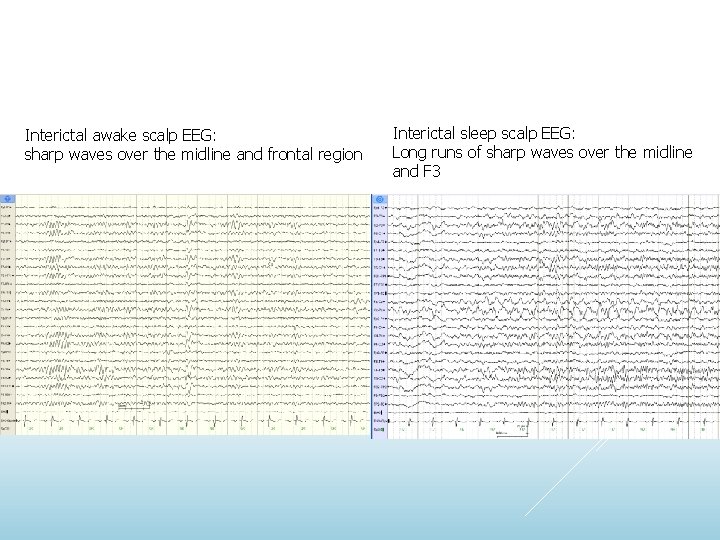
Interictal awake scalp EEG: sharp waves over the midline and frontal region Interictal sleep scalp EEG: Long runs of sharp waves over the midline and F 3
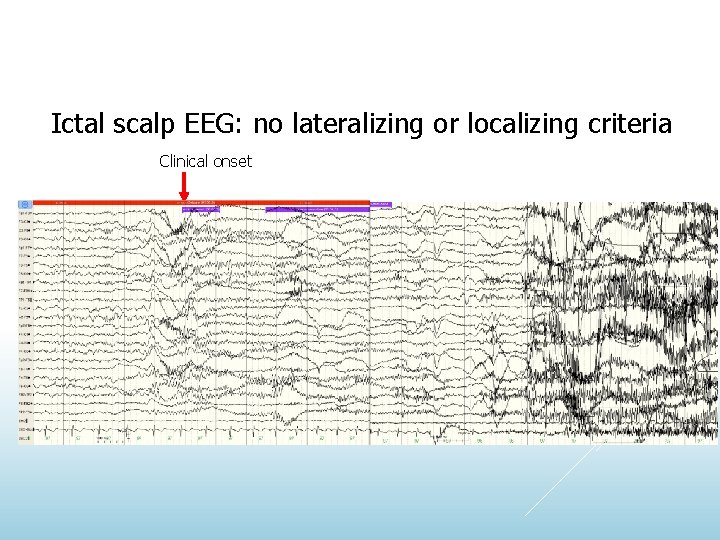
Ictal scalp EEG: no lateralizing or localizing criteria Clinical onset
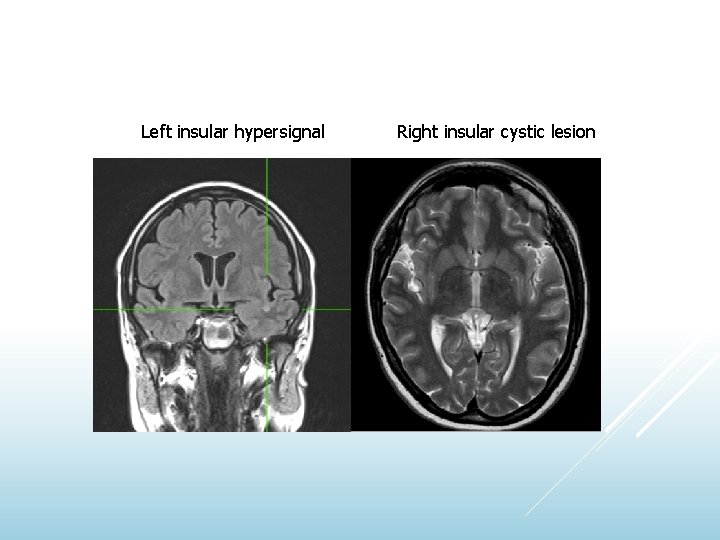
Left insular hypersignal Right insular cystic lesion
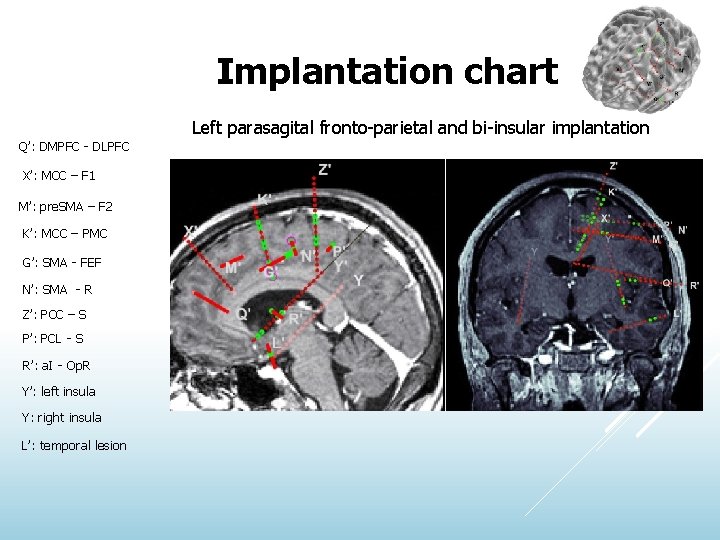
Implantation chart Left parasagital fronto-parietal and bi-insular implantation Q’: DMPFC - DLPFC X’: MCC – F 1 M’: pre. SMA – F 2 K’: MCC – PMC G’: SMA - FEF N’: SMA - R Z’: PCC – S P’: PCL - S R’: a. I - Op. R Y’: left insula Y: right insula L’: temporal lesion
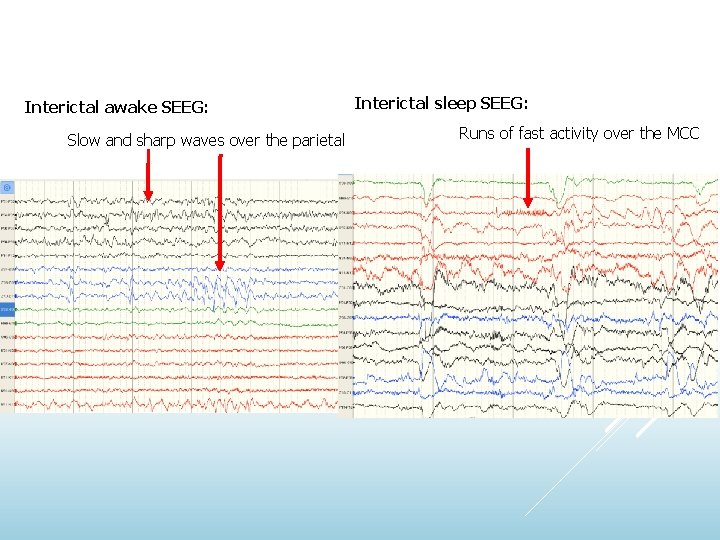
Interictal awake SEEG: Slow and sharp waves over the parietal Interictal sleep SEEG: Runs of fast activity over the MCC
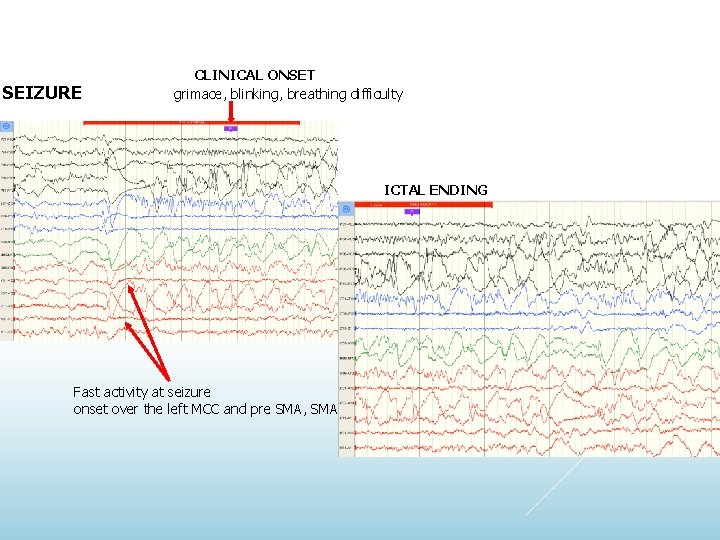
SEIZURE CLINICAL ONSET grimace, blinking, breathing difficulty ICTAL ENDING Fast activity at seizure onset over the left MCC and pre SMA, SMA
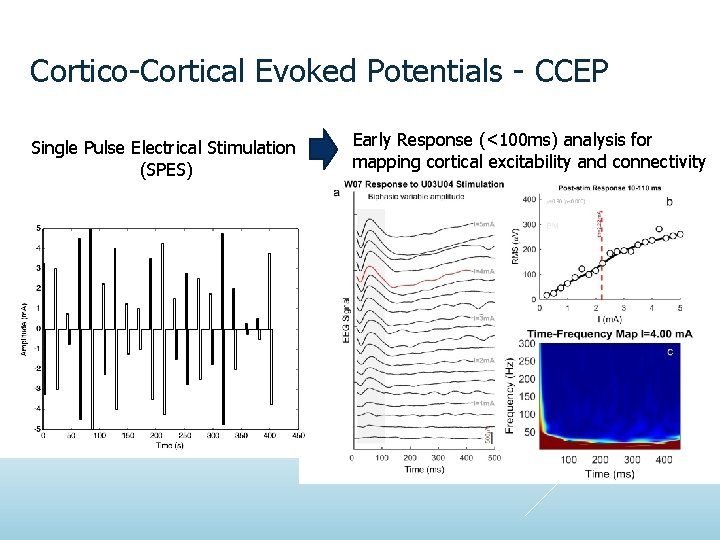
Cortico-Cortical Evoked Potentials - CCEP Single Pulse Electrical Stimulation (SPES) Early Response (<100 ms) analysis for mapping cortical excitability and connectivity
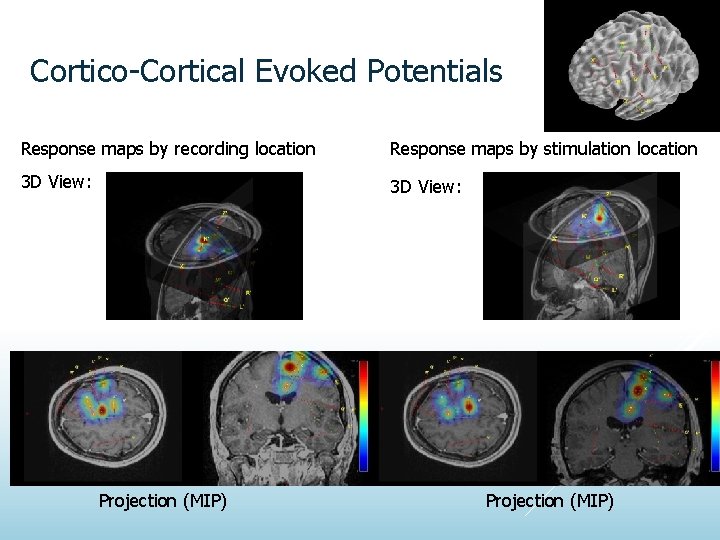
Cortico-Cortical Evoked Potentials Response maps by recording location Response maps by stimulation location 3 D View: Projection (MIP)
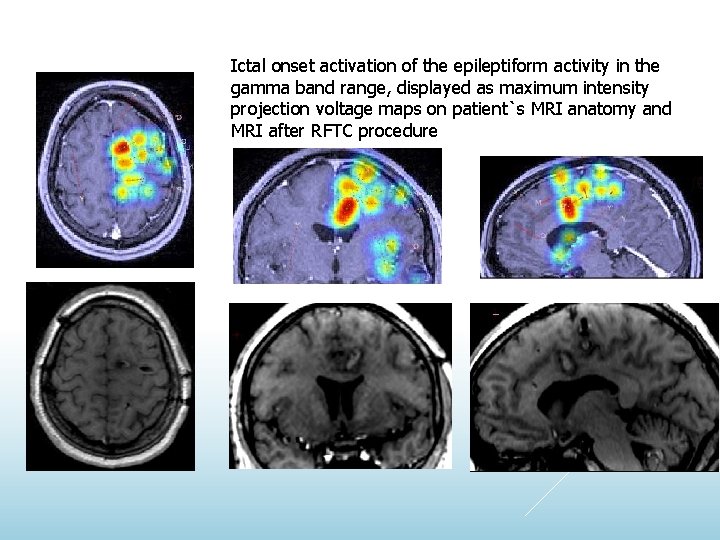
Ictal onset activation of the epileptiform activity in the gamma band range, displayed as maximum intensity projection voltage maps on patient`s MRI anatomy and MRI after RFTC procedure
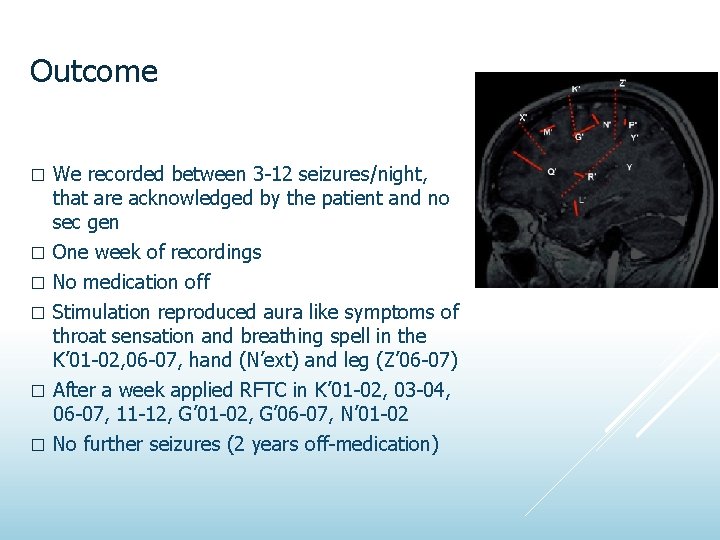
Outcome � � � We recorded between 3 -12 seizures/night, that are acknowledged by the patient and no sec gen One week of recordings No medication off Stimulation reproduced aura like symptoms of throat sensation and breathing spell in the K’ 01 -02, 06 -07, hand (N’ext) and leg (Z’ 06 -07) After a week applied RFTC in K’ 01 -02, 03 -04, 06 -07, 11 -12, G’ 01 -02, G’ 06 -07, N’ 01 -02 No further seizures (2 years off-medication)
THANK YOU!
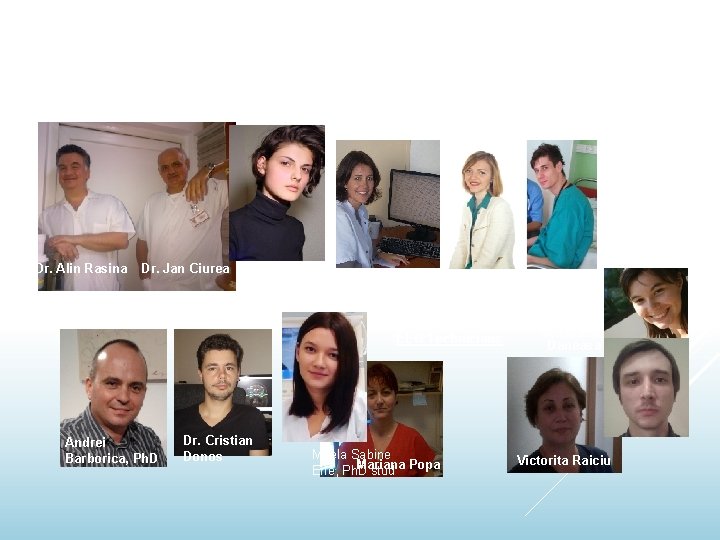
The Team Neurosurgery Dr. Alin Rasina Neurology Dr. Jan Ciurea Dr. Ana Gheorghiu Biophysics Andrei Barborica, Ph. D Dr. Cristian Donos Dr. Ioana Mindruta dr. Irina Popa dr. Mihai Maliia dr Anca Arbune dr. Andrei EEG Technicians Daneasa Mirela Sabine Mariana Ene, Ph. D stud Popa Victorita Raiciu
- Slides: 20