
Seedless Vascular Plants Section 23 4 Compared To

- Slides: 8
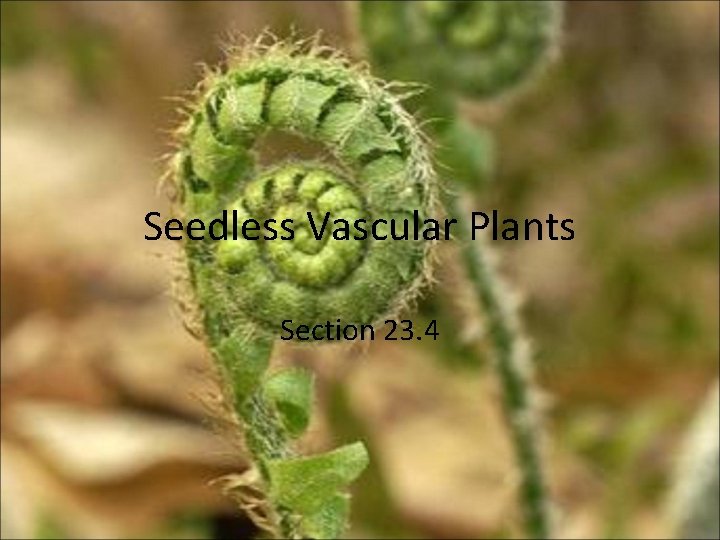
Seedless Vascular Plants Section 23. 4
Compared To Bryophytes • Unlike Bryophytes, their sporophytes contain xylem and phloem and aren’t attached to gametophytes. • Sporophytes are the larger, longer lived phase of the life cycle • Like Bryophytes, a few live in dry habitats, and during seasonal rains reproduce sexually • Both require standing water to reproduce • Their flagellated sperm swim through water to reach eggs
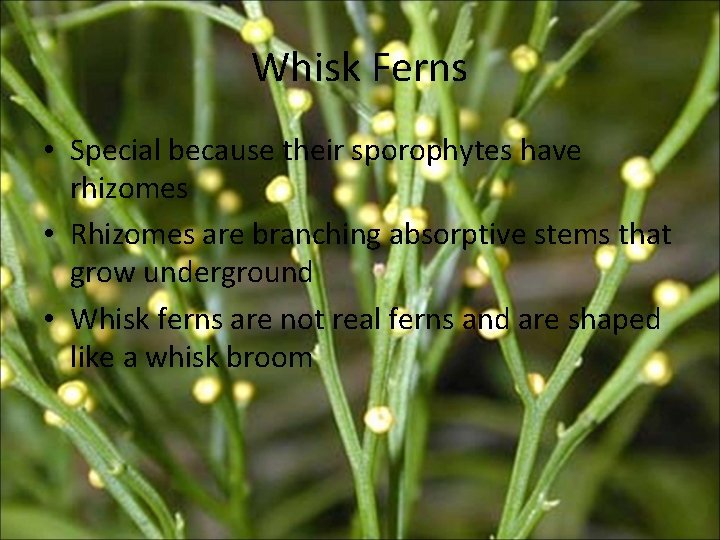
Whisk Ferns • Special because their sporophytes have rhizomes • Rhizomes are branching absorptive stems that grow underground • Whisk ferns are not real ferns and are shaped like a whisk broom
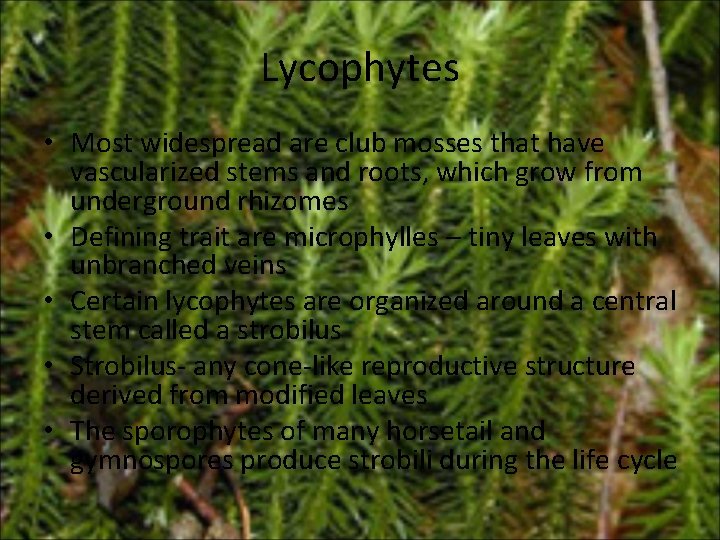
Lycophytes • Most widespread are club mosses that have vascularized stems and roots, which grow from underground rhizomes • Defining trait are microphylles – tiny leaves with unbranched veins • Certain lycophytes are organized around a central stem called a strobilus • Strobilus- any cone-like reproductive structure derived from modified leaves • The sporophytes of many horsetail and gymnospores produce strobili during the life cycle
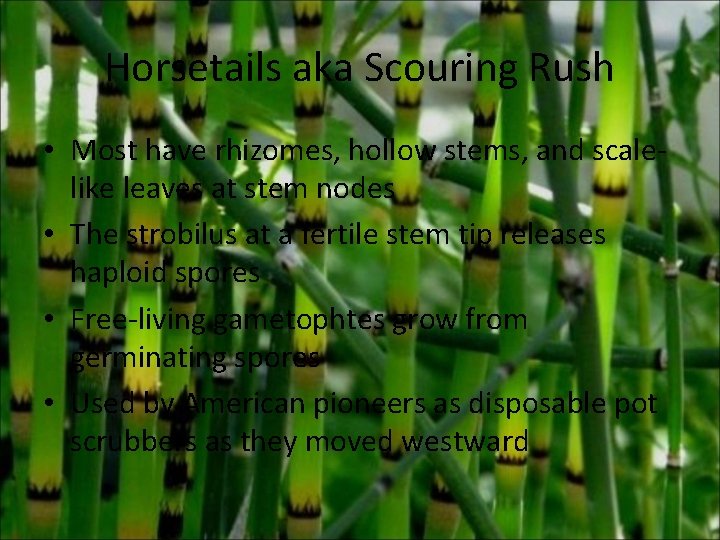
Horsetails aka Scouring Rush • Most have rhizomes, hollow stems, and scalelike leaves at stem nodes • The strobilus at a fertile stem tip releases haploid spores • Free-living gametophtes grow from germinating spores • Used by American pioneers as disposable pot scrubbers as they moved westward
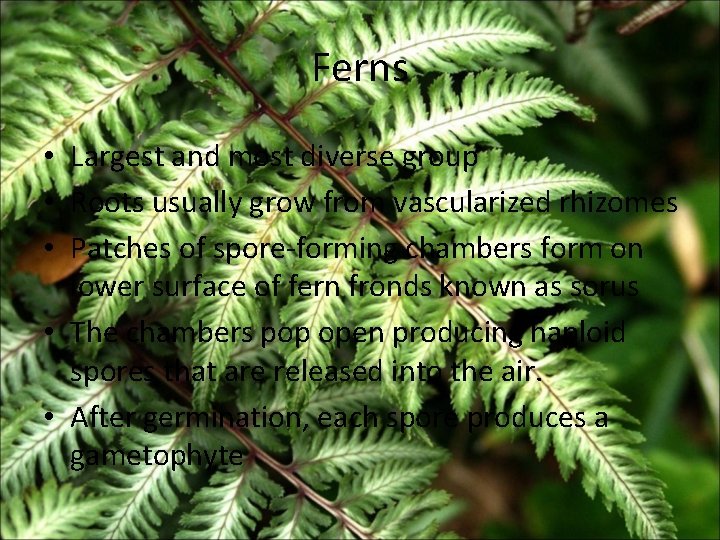
Ferns • Largest and most diverse group • Roots usually grow from vascularized rhizomes • Patches of spore-forming chambers form on lower surface of fern fronds known as sorus • The chambers pop open producing haploid spores that are released into the air. • After germination, each spore produces a gametophyte
Fern Life Cycle
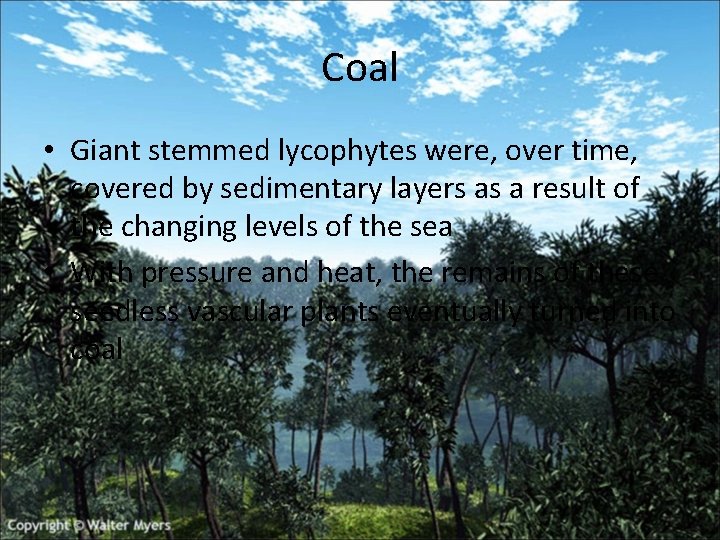
Coal • Giant stemmed lycophytes were, over time, covered by sedimentary layers as a result of the changing levels of the sea • With pressure and heat, the remains of these seedless vascular plants eventually turned into coal