
Seedless Plants 10 2 Plant Reproduction 10 5
- Slides: 68
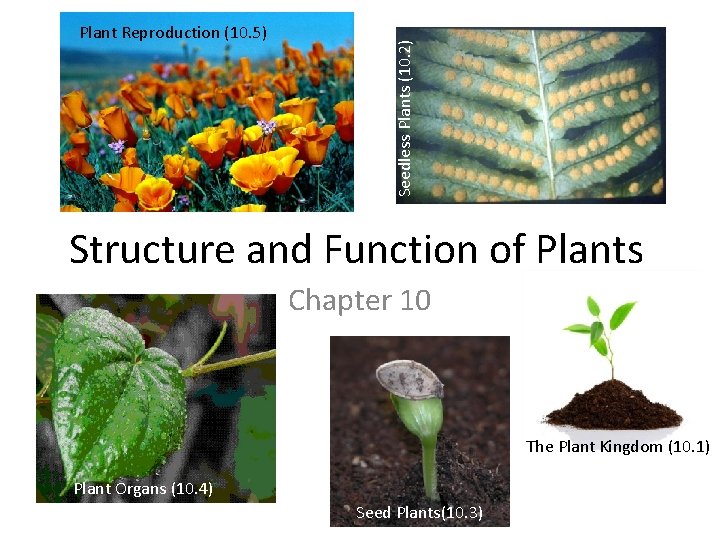
Seedless Plants (10. 2) Plant Reproduction (10. 5) Structure and Function of Plants Chapter 10 The Plant Kingdom (10. 1) Plant Organs (10. 4) Seed Plants(10. 3)
Plant Kingdom Notes Chapter 10. 1
What is a Plant: Autotroph § Plants are autotrophs (they make their own food by photosynthesis) § Sunlight provides the energy for photosynthesis
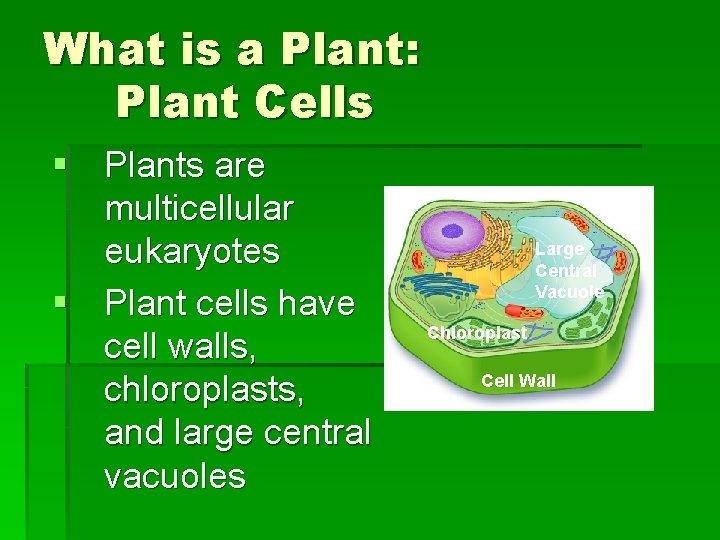
What is a Plant: Plant Cells § Plants are multicellular eukaryotes § Plant cells have cell walls, chloroplasts, and large central vacuoles Large Central Vacuole Chloroplast Cell Wall
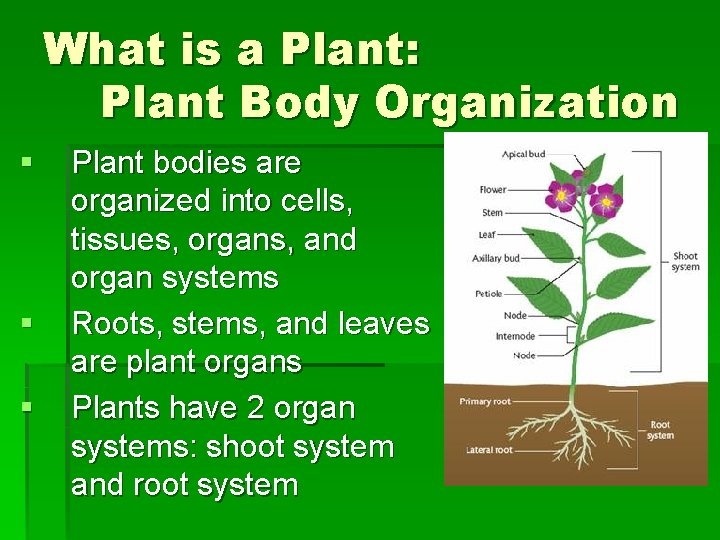
What is a Plant: Plant Body Organization § § § Plant bodies are organized into cells, tissues, organs, and organ systems Roots, stems, and leaves are plant organs Plants have 2 organ systems: shoot system and root system
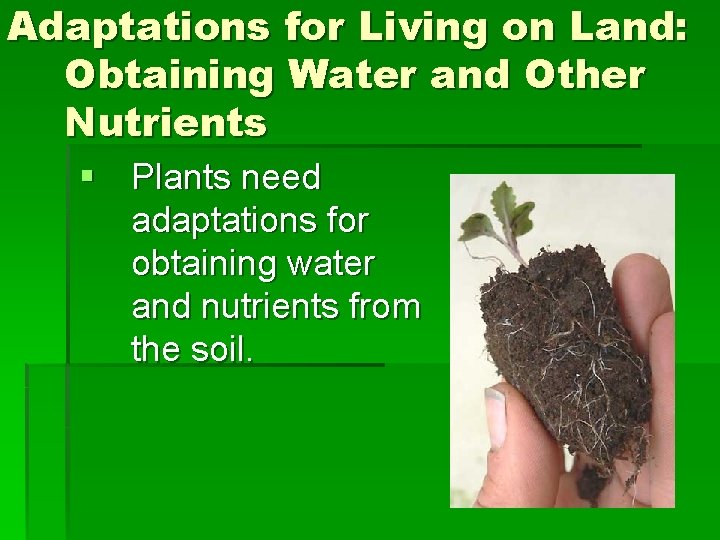
Adaptations for Living on Land: Obtaining Water and Other Nutrients § Plants need adaptations for obtaining water and nutrients from the soil.
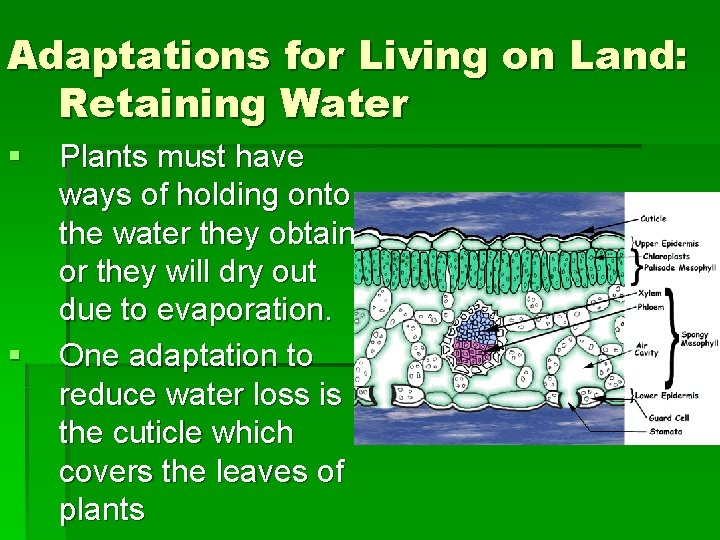
Adaptations for Living on Land: Retaining Water § § Plants must have ways of holding onto the water they obtain or they will dry out due to evaporation. One adaptation to reduce water loss is the cuticle which covers the leaves of plants
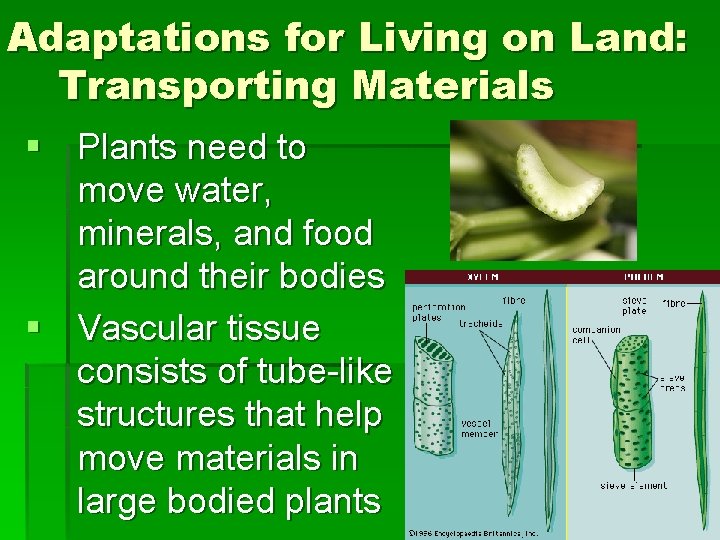
Adaptations for Living on Land: Transporting Materials § Plants need to move water, minerals, and food around their bodies § Vascular tissue consists of tube-like structures that help move materials in large bodied plants
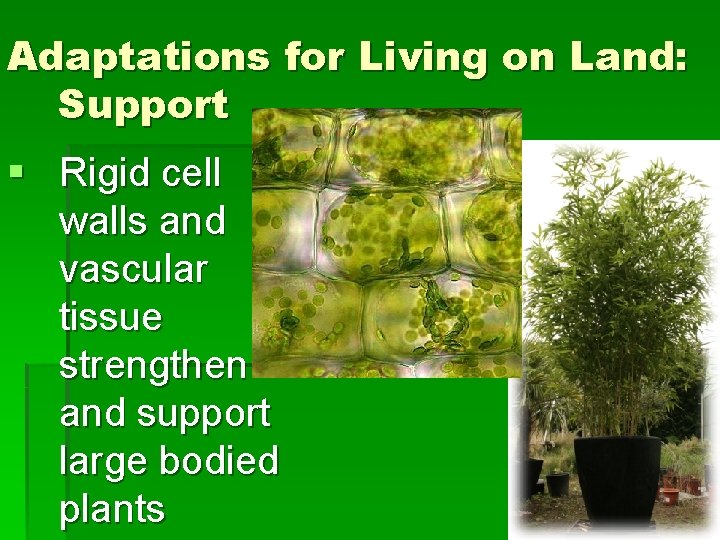
Adaptations for Living on Land: Support § Rigid cell walls and vascular tissue strengthen and support large bodied plants
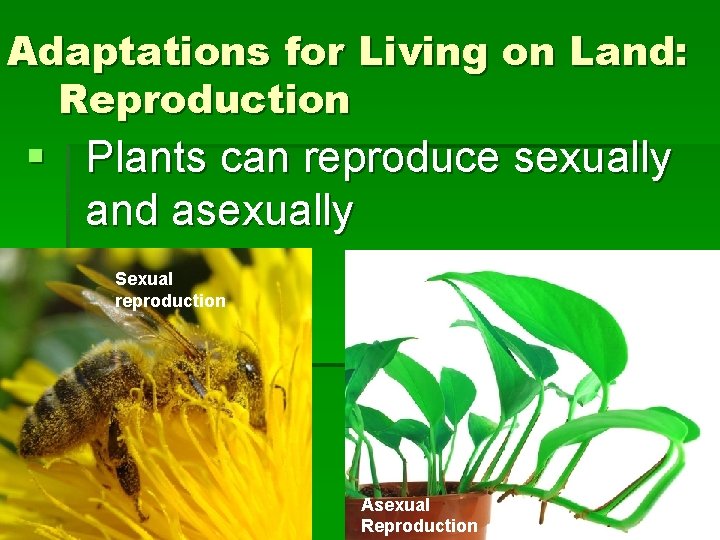
Adaptations for Living on Land: Reproduction § Plants can reproduce sexually and asexually Sexual reproduction Asexual Reproduction
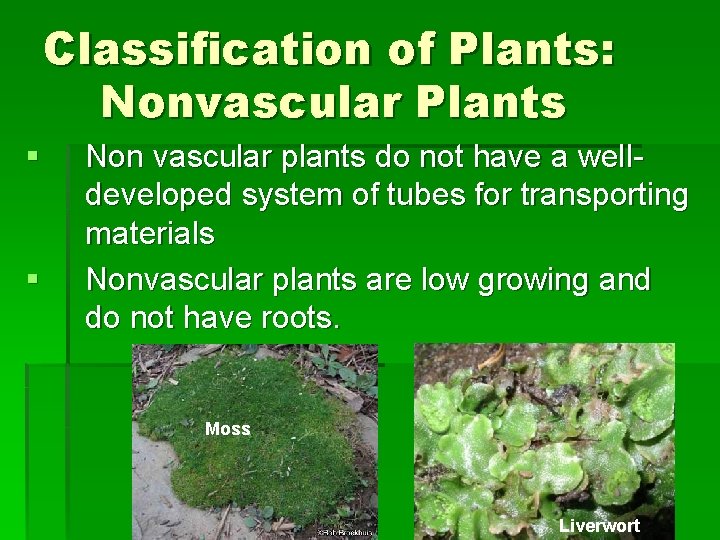
Classification of Plants: Nonvascular Plants § § Non vascular plants do not have a welldeveloped system of tubes for transporting materials Nonvascular plants are low growing and do not have roots. Moss Liverwort
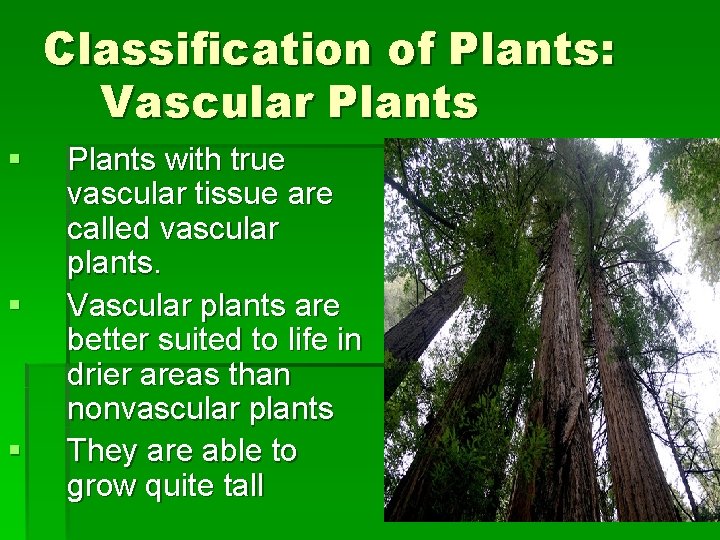
Classification of Plants: Vascular Plants § § § Plants with true vascular tissue are called vascular plants. Vascular plants are better suited to life in drier areas than nonvascular plants They are able to grow quite tall
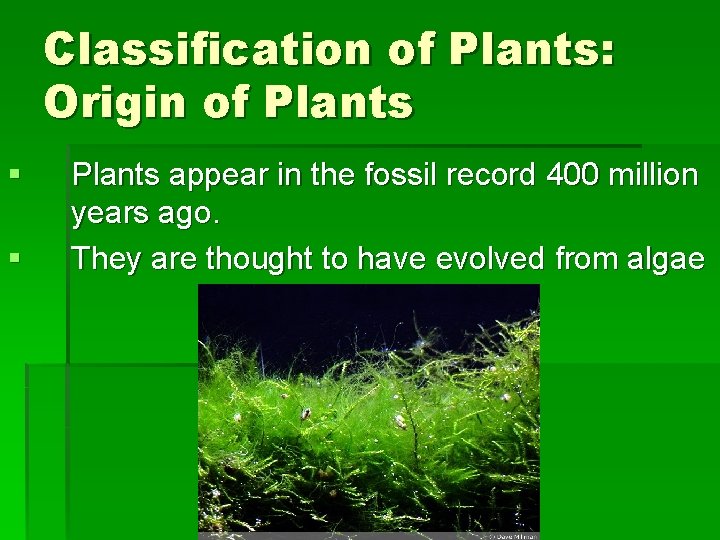
Classification of Plants: Origin of Plants § § Plants appear in the fossil record 400 million years ago. They are thought to have evolved from algae
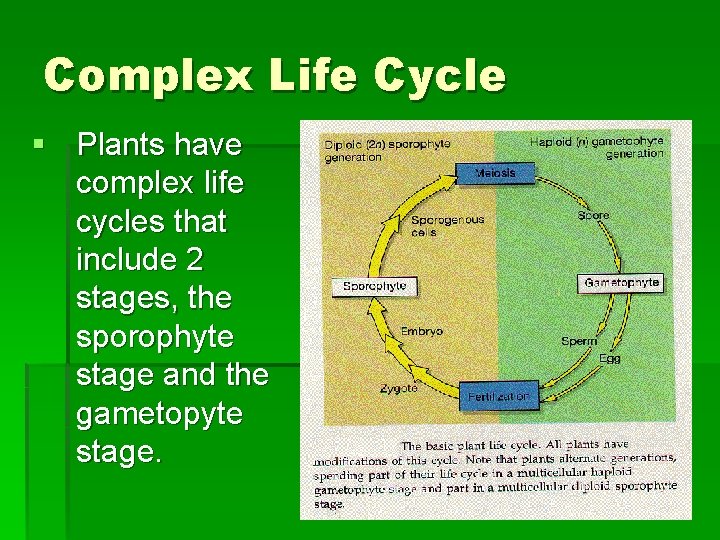
Complex Life Cycle § Plants have complex life cycles that include 2 stages, the sporophyte stage and the gametopyte stage.
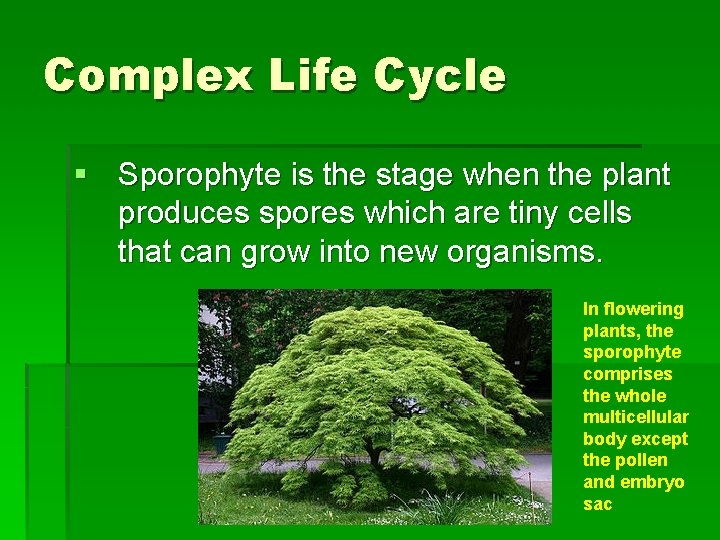
Complex Life Cycle § Sporophyte is the stage when the plant produces spores which are tiny cells that can grow into new organisms. In flowering plants, the sporophyte comprises the whole multicellular body except the pollen and embryo sac
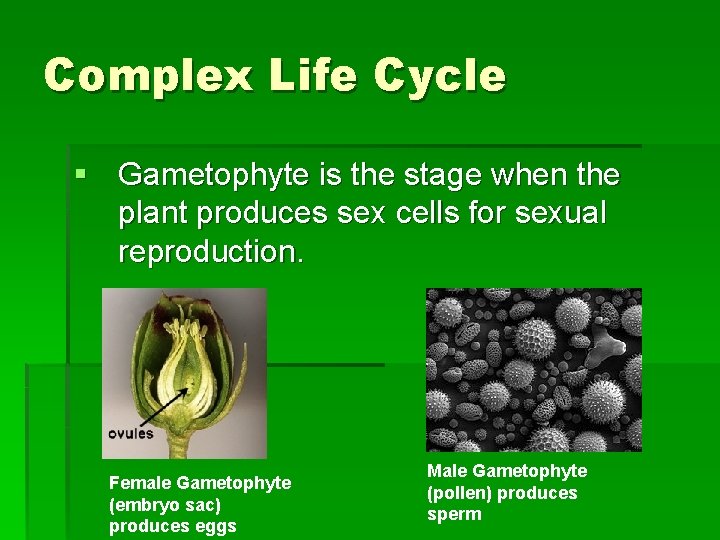
Complex Life Cycle § Gametophyte is the stage when the plant produces sex cells for sexual reproduction. Female Gametophyte (embryo sac) produces eggs Male Gametophyte (pollen) produces sperm
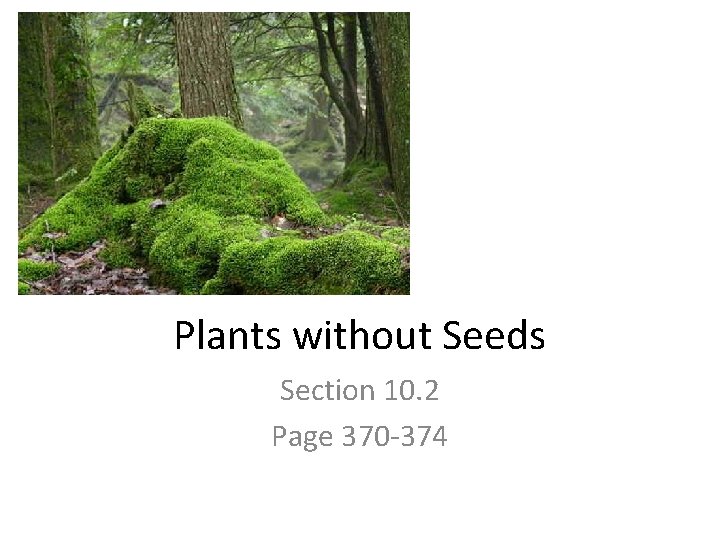
Plants without Seeds Section 10. 2 Page 370 -374
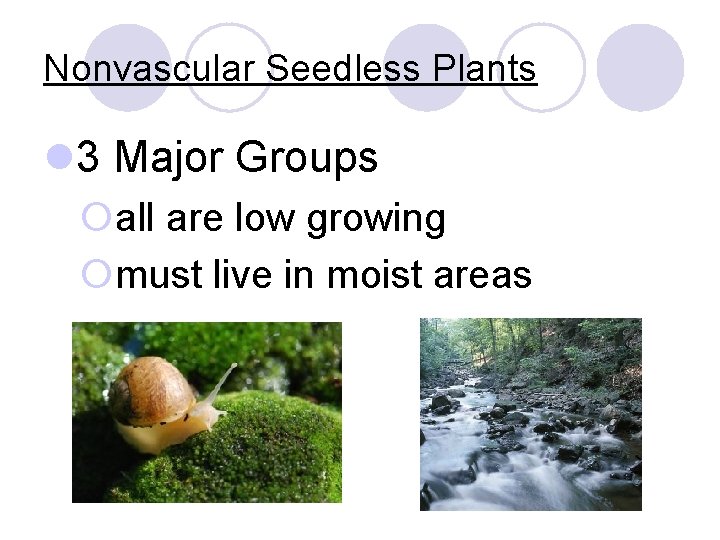
Nonvascular Seedless Plants l 3 Major Groups ¡all are low growing ¡must live in moist areas
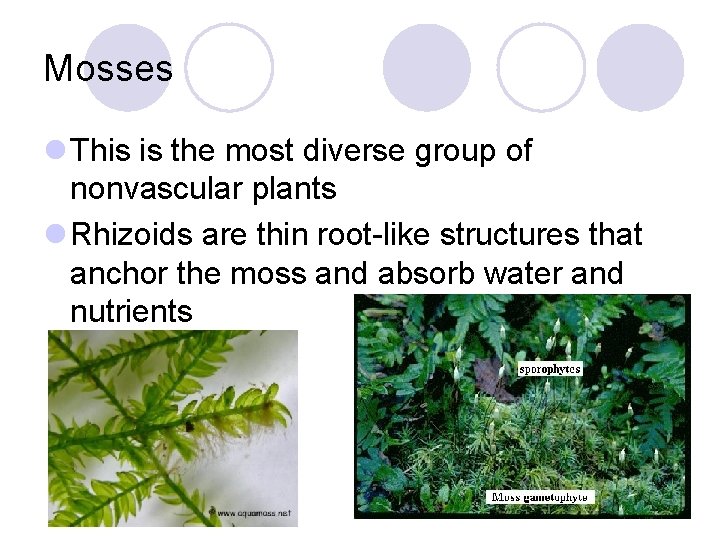
Mosses l This is the most diverse group of nonvascular plants l Rhizoids are thin root-like structures that anchor the moss and absorb water and nutrients
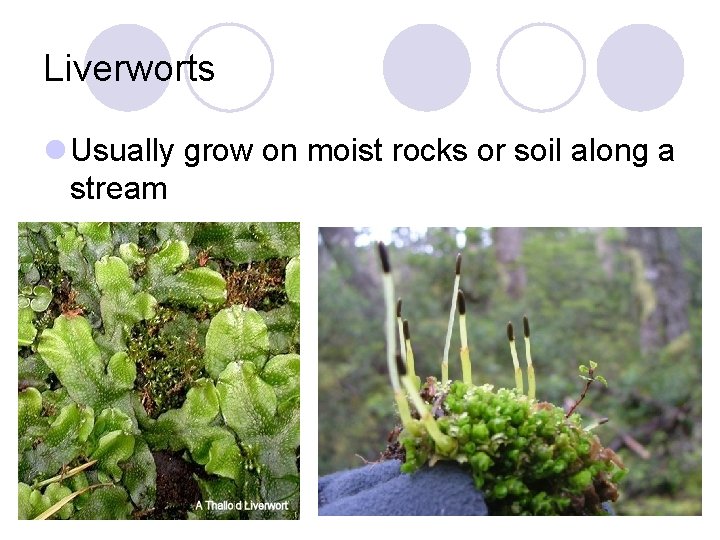
Liverworts l Usually grow on moist rocks or soil along a stream
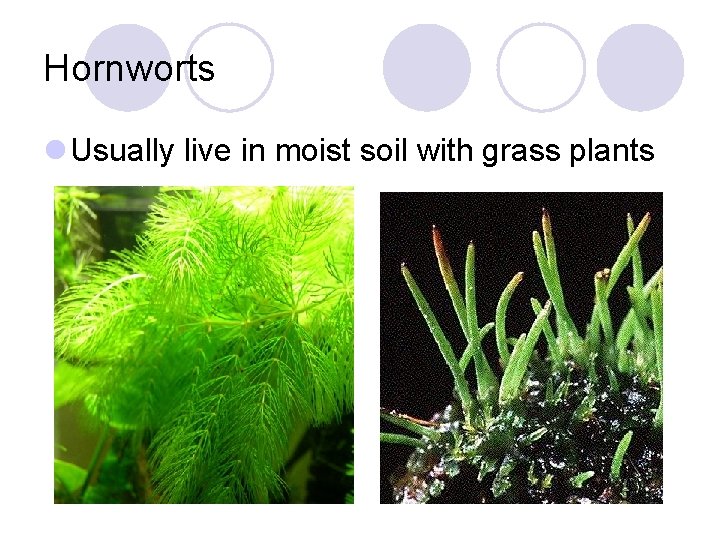
Hornworts l Usually live in moist soil with grass plants
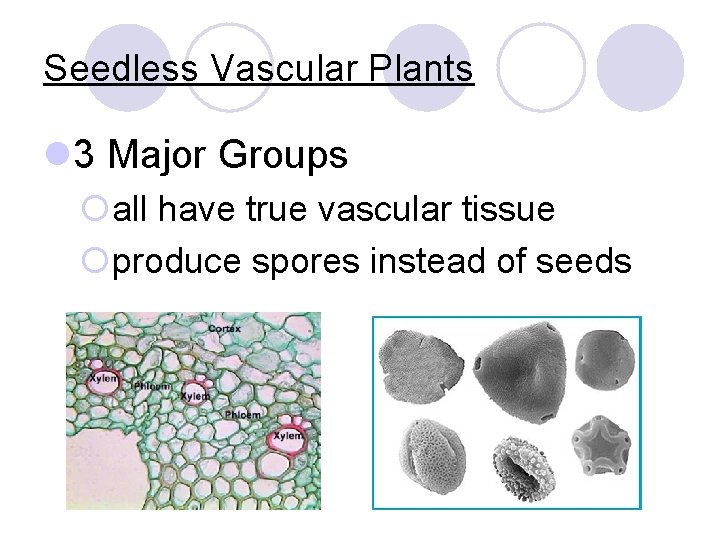
Seedless Vascular Plants l 3 Major Groups ¡all have true vascular tissue ¡produce spores instead of seeds
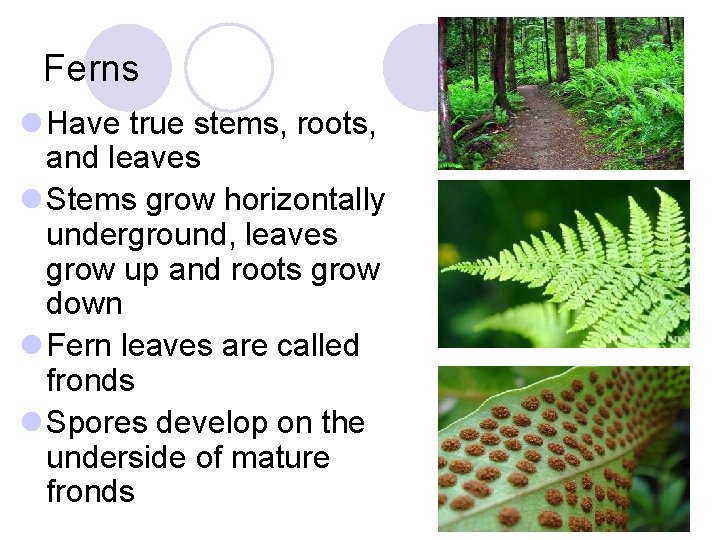
Ferns l Have true stems, roots, and leaves l Stems grow horizontally underground, leaves grow up and roots grow down l Fern leaves are called fronds l Spores develop on the underside of mature fronds
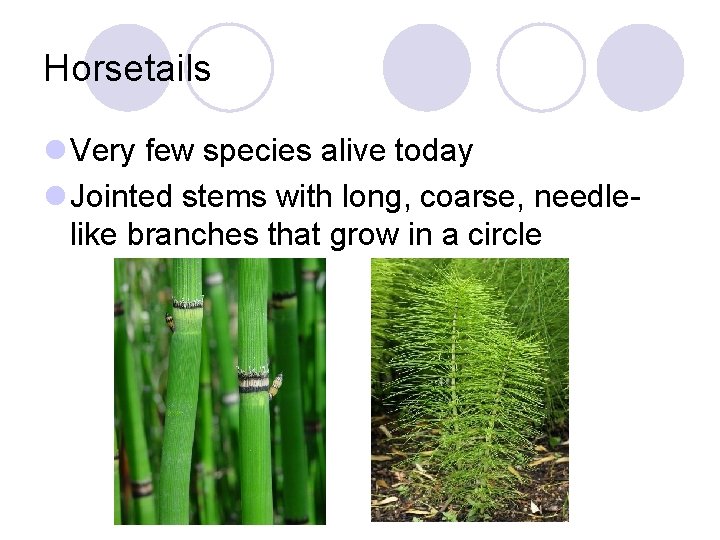
Horsetails l Very few species alive today l Jointed stems with long, coarse, needlelike branches that grow in a circle
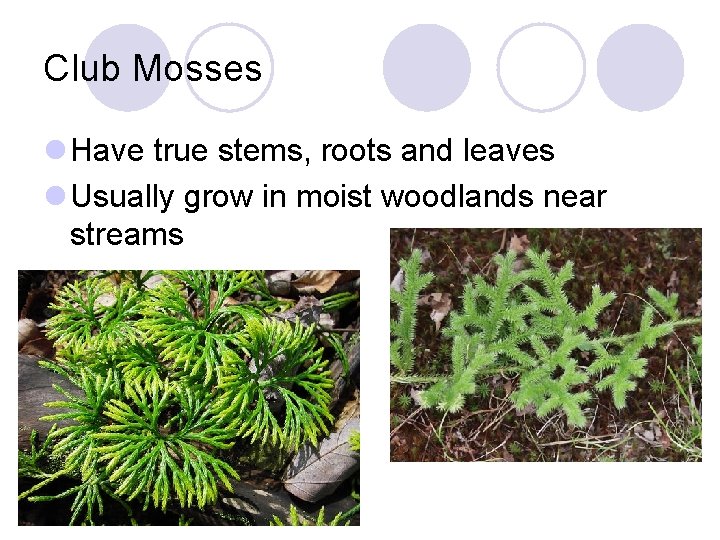
Club Mosses l Have true stems, roots and leaves l Usually grow in moist woodlands near streams
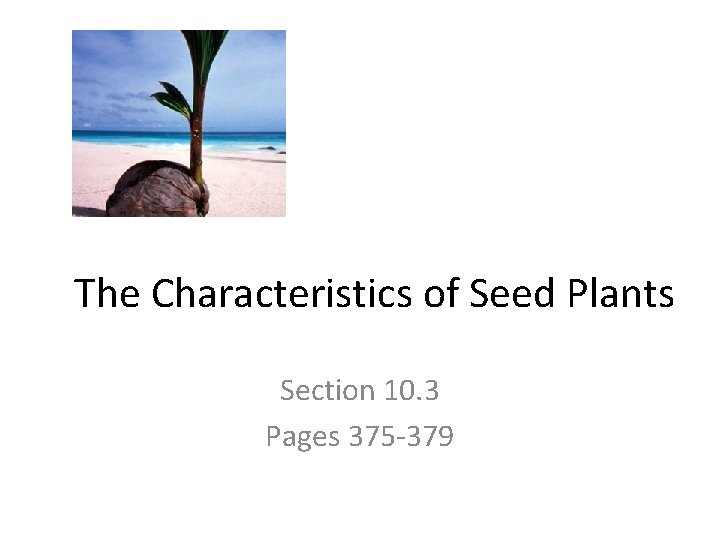
The Characteristics of Seed Plants Section 10. 3 Pages 375 -379
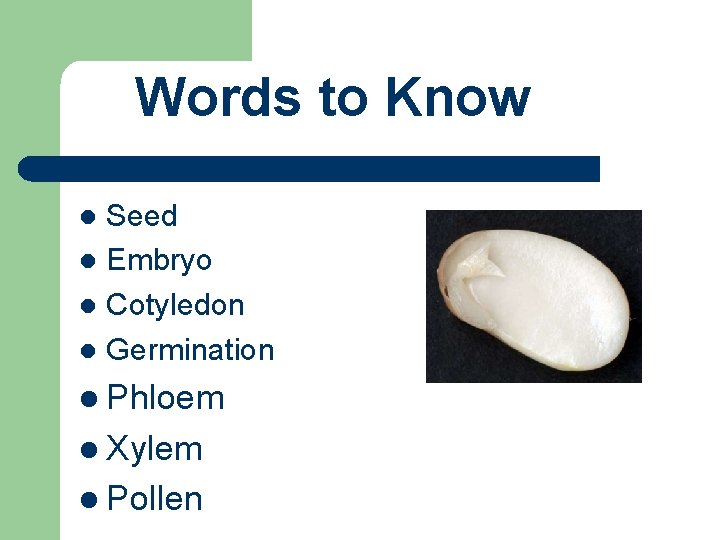
Words to Know Seed l Embryo l Cotyledon l Germination l l Phloem l Xylem l Pollen
Characteristics l Seed plants share two important characteristics. They have vascular tissue – They use pollen and seeds to reproduce. – l They also have organs that include roots, stems, and leaves.
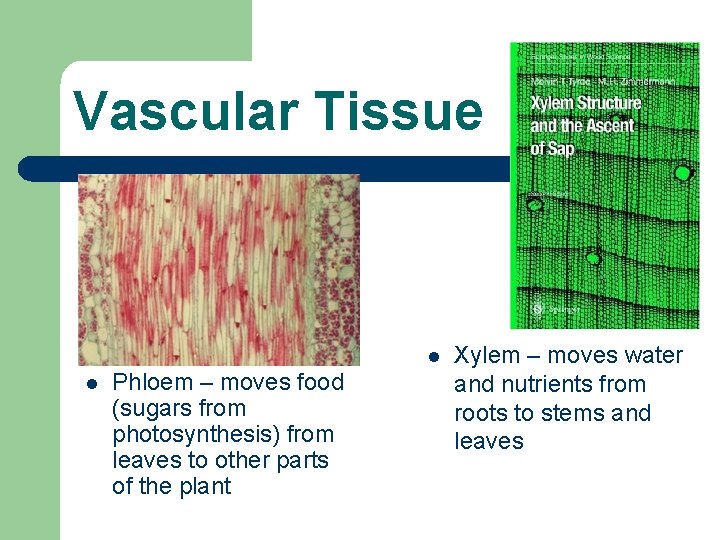
Vascular Tissue l l Phloem – moves food (sugars from photosynthesis) from leaves to other parts of the plant Xylem – moves water and nutrients from roots to stems and leaves
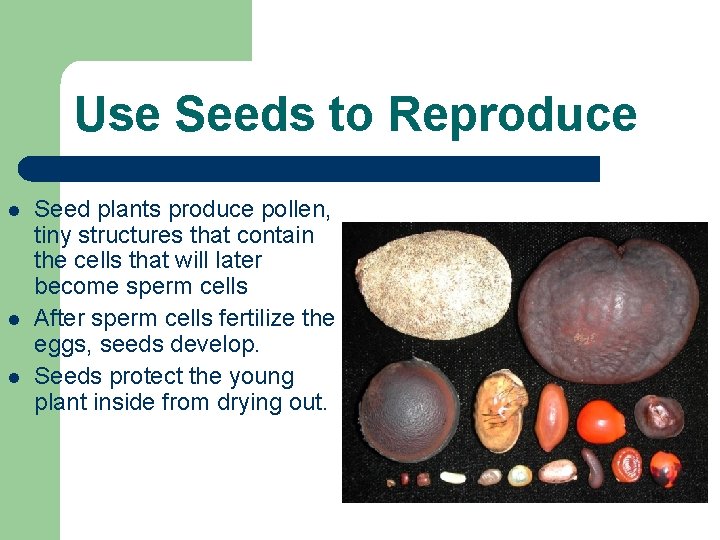
Use Seeds to Reproduce l l l Seed plants produce pollen, tiny structures that contain the cells that will later become sperm cells After sperm cells fertilize the eggs, seeds develop. Seeds protect the young plant inside from drying out.
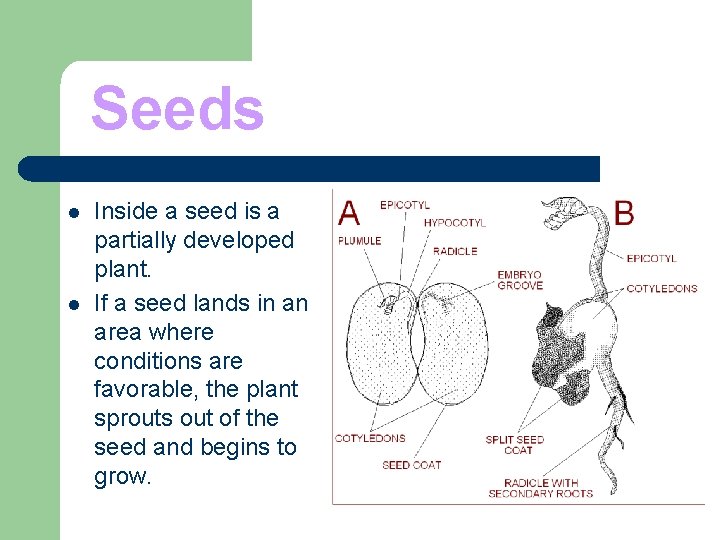
Seeds l l Inside a seed is a partially developed plant. If a seed lands in an area where conditions are favorable, the plant sprouts out of the seed and begins to grow.
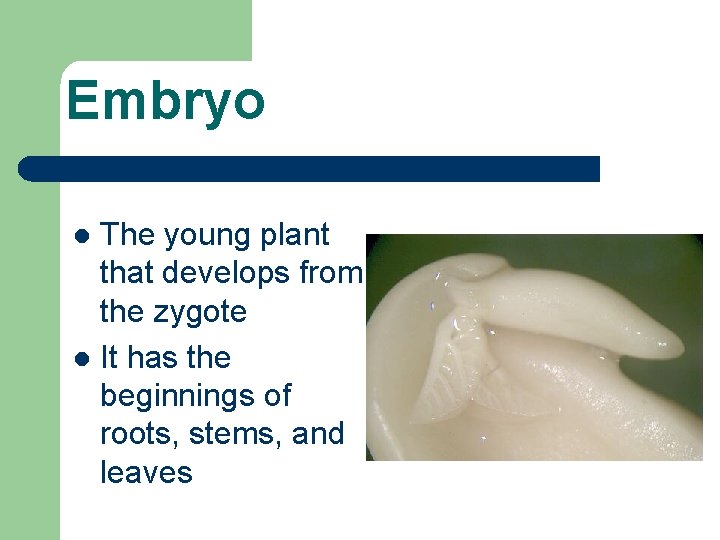
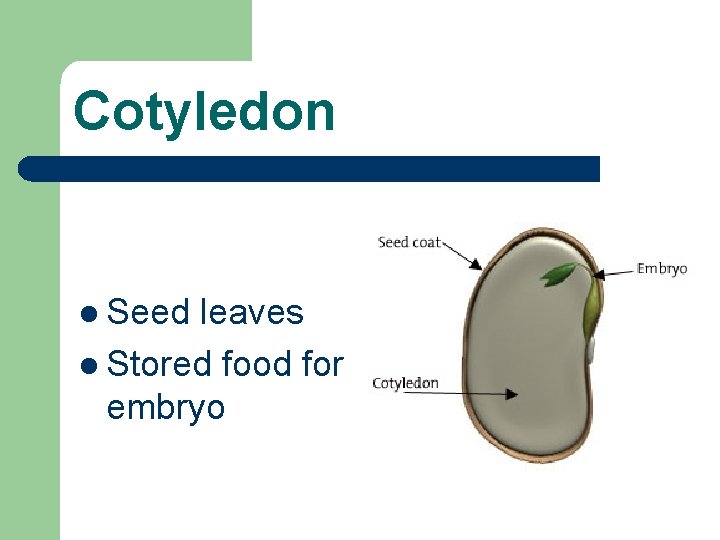
Embryo The young plant that develops from the zygote l It has the beginnings of roots, stems, and leaves l
Cotyledon l Seed leaves l Stored food for embryo
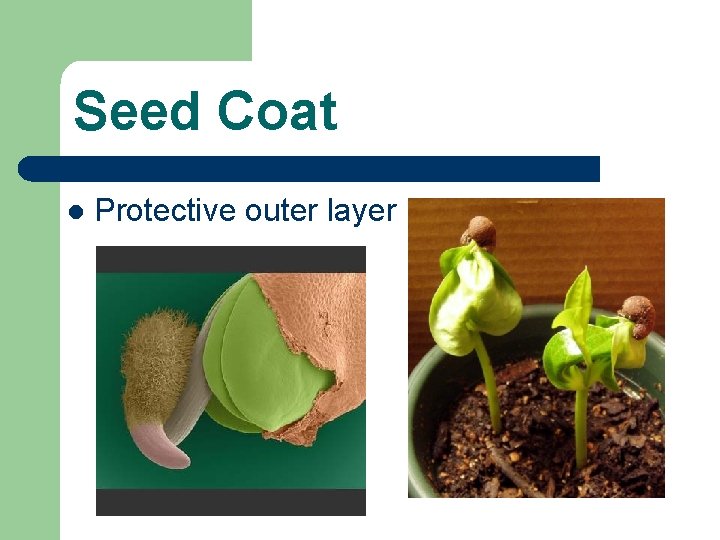
Seed Coat l Protective outer layer
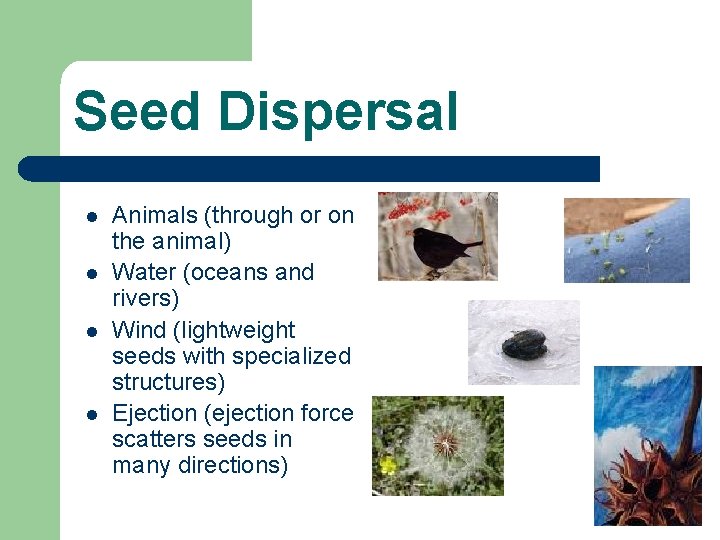
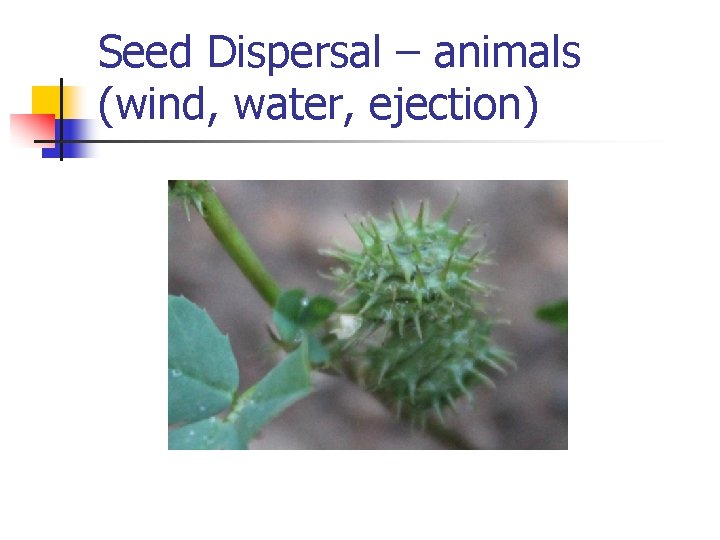
Seed Dispersal l l Animals (through or on the animal) Water (oceans and rivers) Wind (lightweight seeds with specialized structures) Ejection (ejection force scatters seeds in many directions)
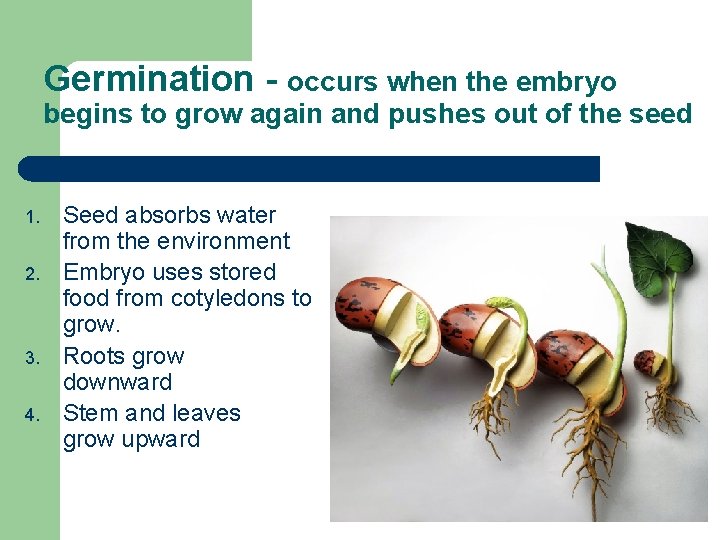
Germination - occurs when the embryo begins to grow again and pushes out of the seed 1. 2. 3. 4. Seed absorbs water from the environment Embryo uses stored food from cotyledons to grow. Roots grow downward Stem and leaves grow upward
Germination l l l Seeds can be inactive for a while before germination. The conditions need to be just right in order for germination to occur. Seeds tend to do better if they are dispersed further away from their parent because they don’t have to compete for light, water, and nutrients.
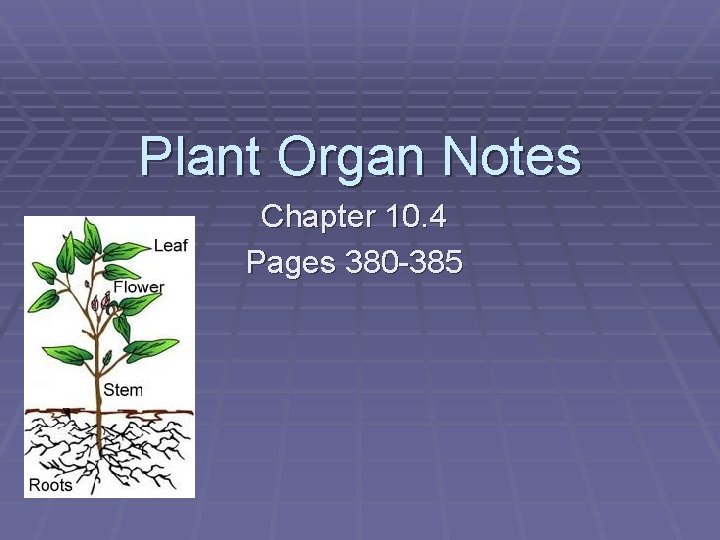
Plant Organ Notes Chapter 10. 4 Pages 380 -385
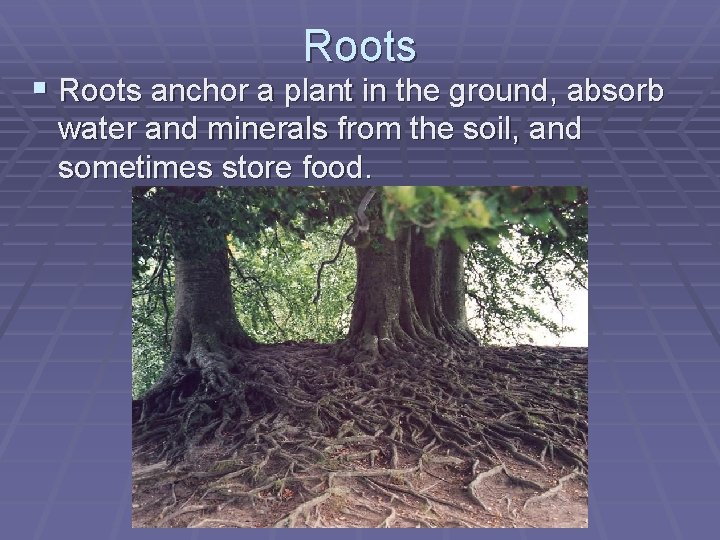
Roots § Roots anchor a plant in the ground, absorb water and minerals from the soil, and sometimes store food.
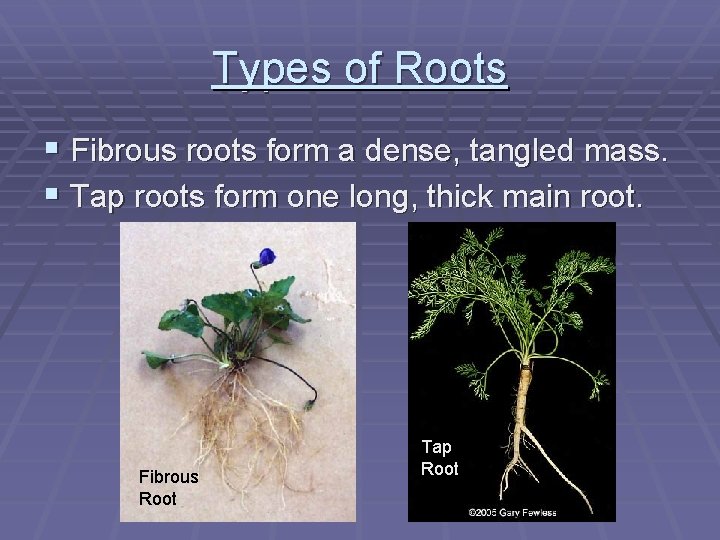
Types of Roots § Fibrous roots form a dense, tangled mass. § Tap roots form one long, thick main root. Fibrous Root Tap Root
Structure of a Root § The root cap protects the root from injury as the root grows through the soil § Root hairs help the plant absorb large amounts of water. § Xylem transports water from the root to the rest of the plant. § Phloem transports food to the root for storage or to use as energy for growth.
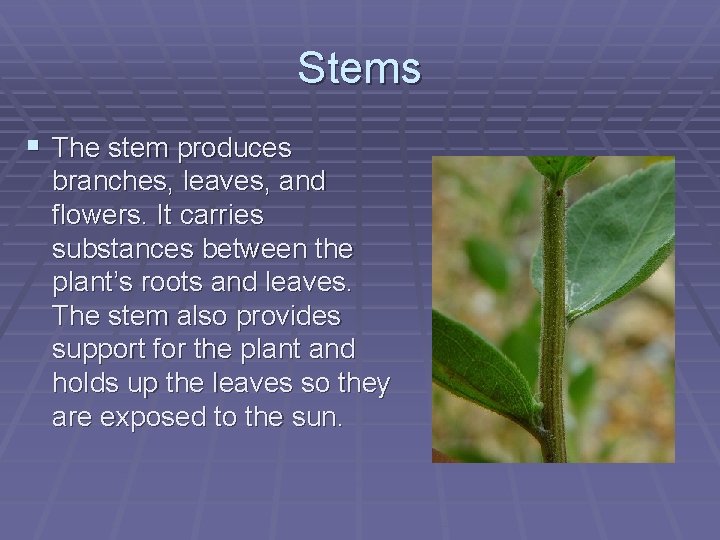
Stems § The stem produces branches, leaves, and flowers. It carries substances between the plant’s roots and leaves. The stem also provides support for the plant and holds up the leaves so they are exposed to the sun.
Structure of a Stem § Stems consist of vascular tissue and other supporting cells. § Xylem and Phloem run all the way from roots to leaves and can be scattered randomly or neatly arranged. § Stems have nodes that contain bud tissue that can grow into branches, leaves, or flowers.
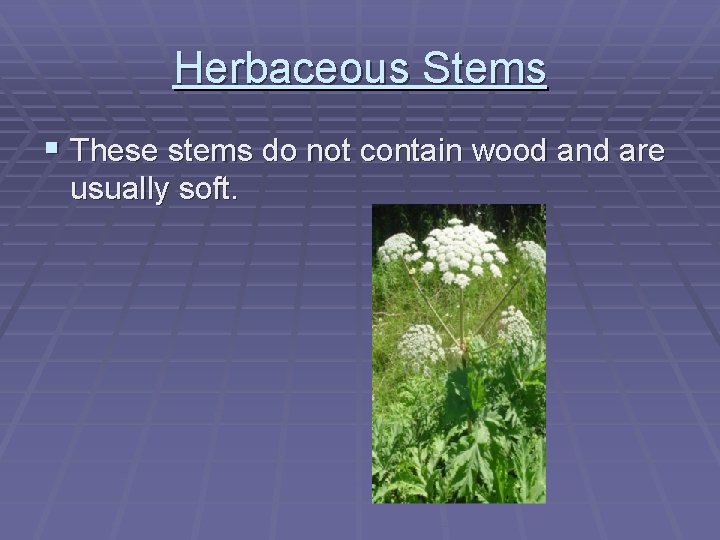
Herbaceous Stems § These stems do not contain wood and are usually soft.
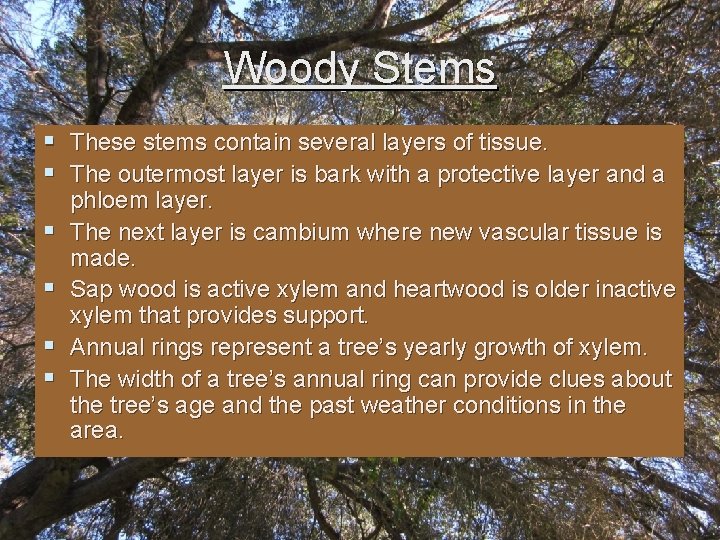
Woody Stems § These stems contain several layers of tissue. § The outermost layer is bark with a protective layer and a § § phloem layer. The next layer is cambium where new vascular tissue is made. Sap wood is active xylem and heartwood is older inactive xylem that provides support. Annual rings represent a tree’s yearly growth of xylem. The width of a tree’s annual ring can provide clues about the tree’s age and the past weather conditions in the area.
Leaves: adapted for capturing the sun’s energy for photosynthesis.
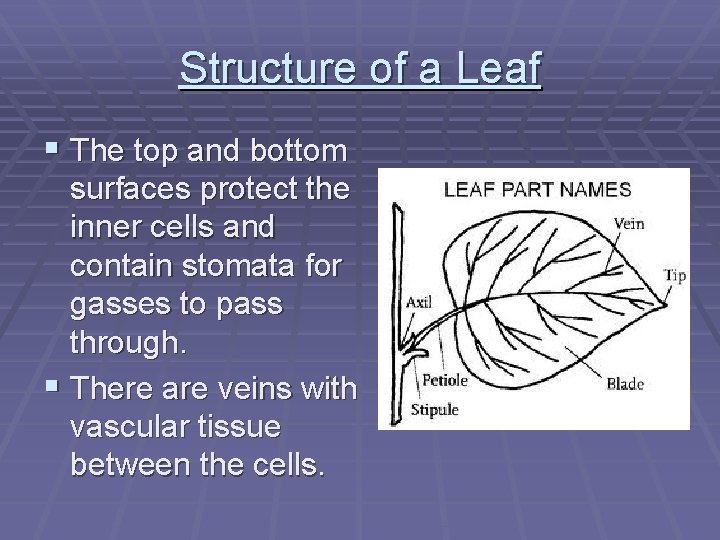
Structure of a Leaf § The top and bottom surfaces protect the inner cells and contain stomata for gasses to pass through. § There are veins with vascular tissue between the cells.
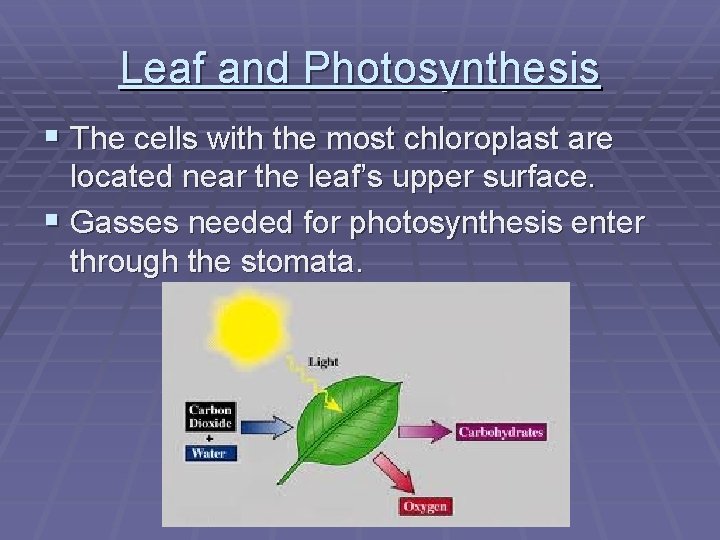
Leaf and Photosynthesis § The cells with the most chloroplast are located near the leaf’s upper surface. § Gasses needed for photosynthesis enter through the stomata.
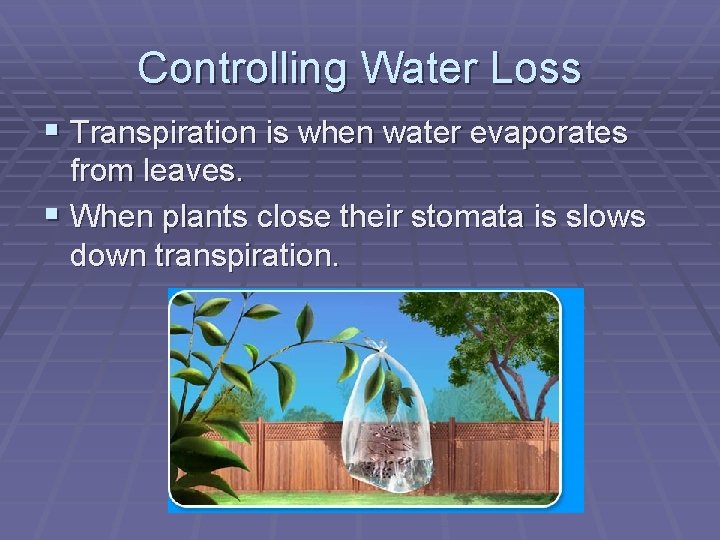
Controlling Water Loss § Transpiration is when water evaporates from leaves. § When plants close their stomata is slows down transpiration.
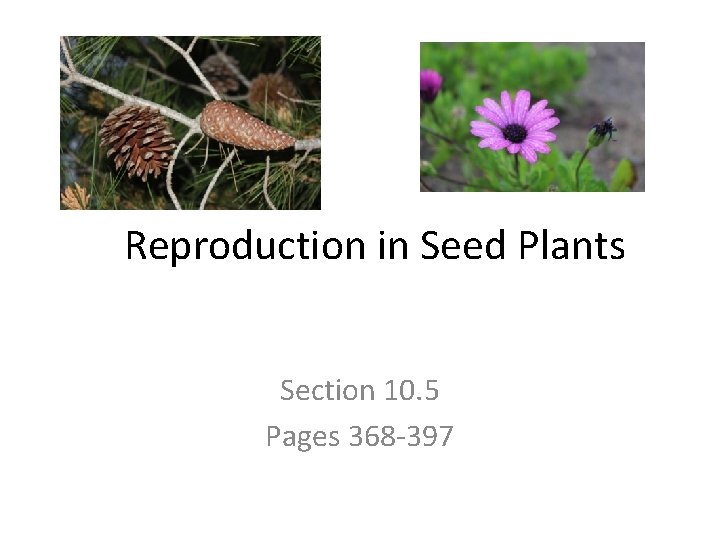
Reproduction in Seed Plants Section 10. 5 Pages 368 -397
Gymnosperm Notes Chapter 10. 5
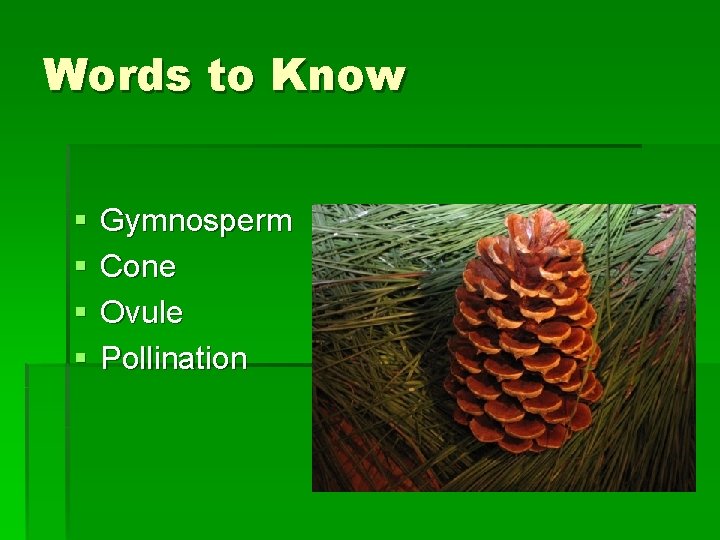
Words to Know § § Gymnosperm Cone Ovule Pollination
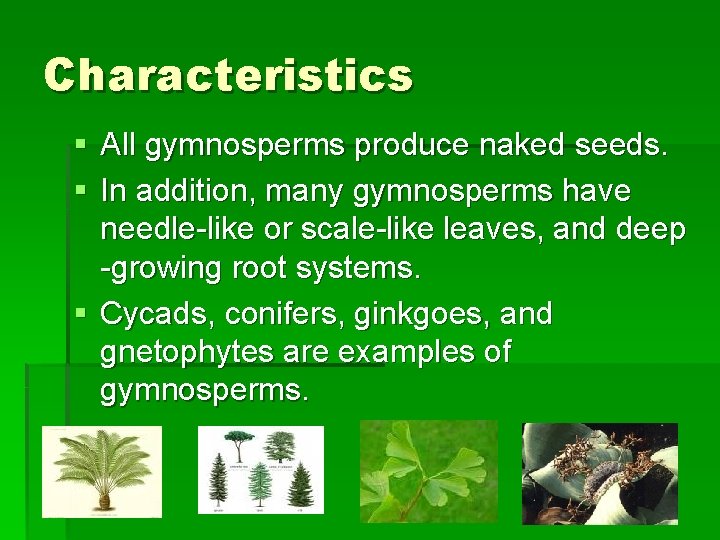
Characteristics § All gymnosperms produce naked seeds. § In addition, many gymnosperms have needle-like or scale-like leaves, and deep -growing root systems. § Cycads, conifers, ginkgoes, and gnetophytes are examples of gymnosperms.
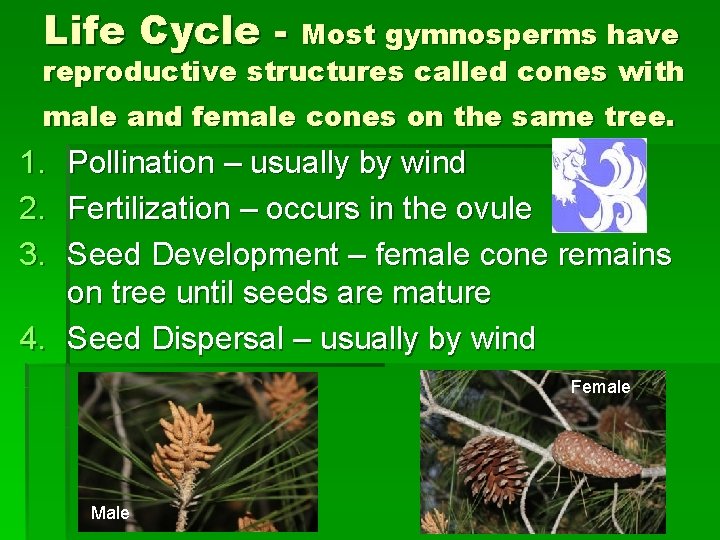
Life Cycle - Most gymnosperms have reproductive structures called cones with male and female cones on the same tree. 1. 2. 3. Pollination – usually by wind Fertilization – occurs in the ovule Seed Development – female cone remains on tree until seeds are mature 4. Seed Dispersal – usually by wind Female Male
Angiosperm Notes Chapter 10. 5
Words to Know n n Angiosperm Flower Sepal Petal n n n Stamen Pistil Ovary Fruit Monocot Dicot
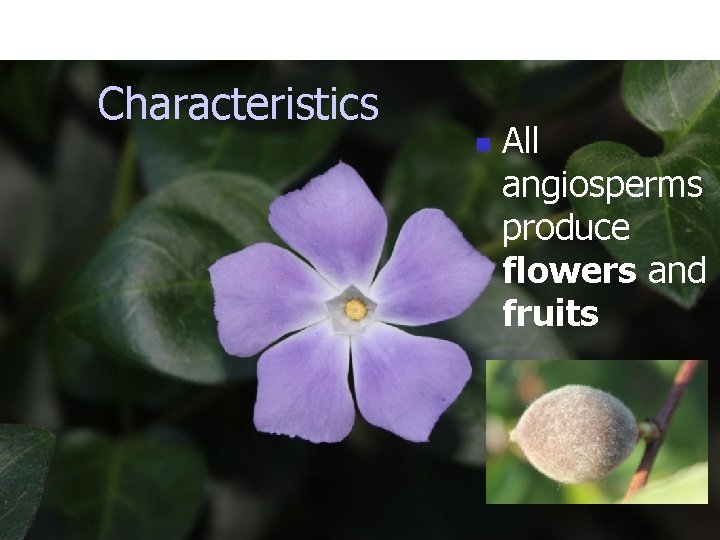
Characteristics n All angiosperms produce flowers and fruits
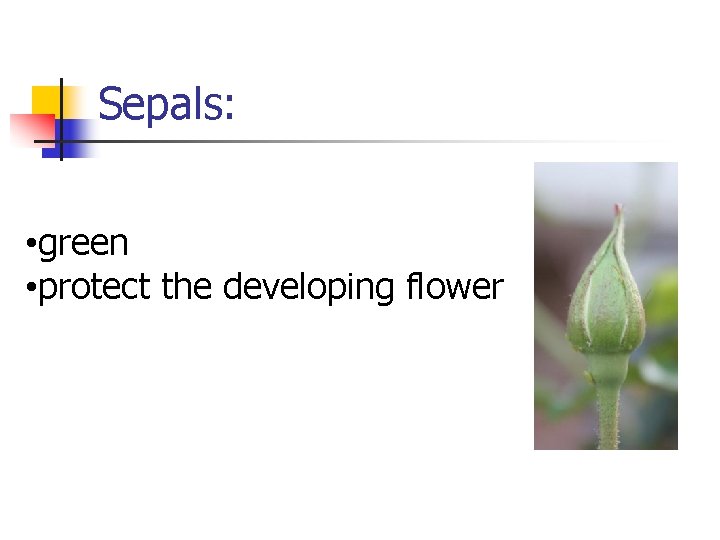
Sepals: • green • protect the developing flower
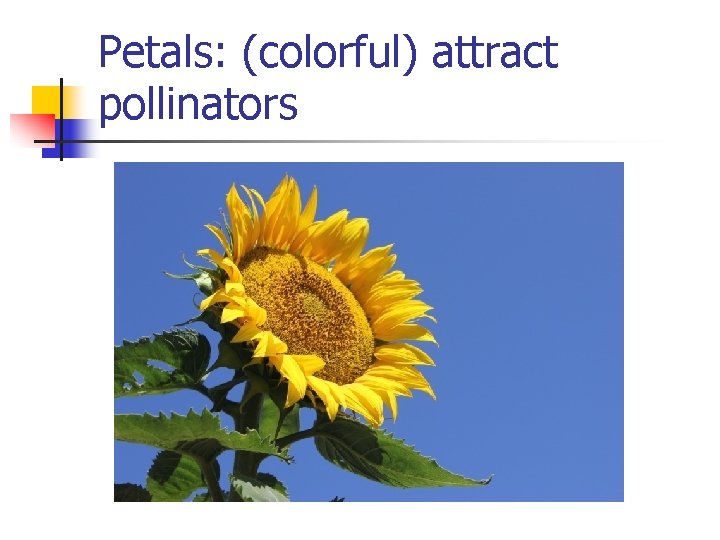
Petals: (colorful) attract pollinators
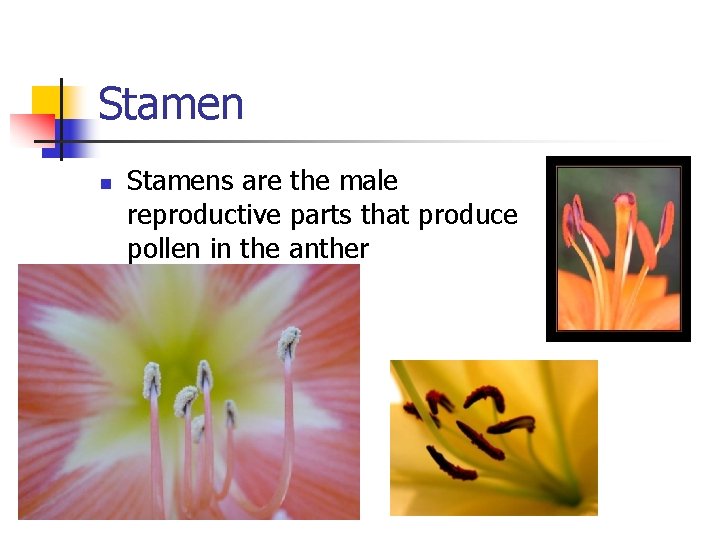
Stamen n Stamens are the male reproductive parts that produce pollen in the anther
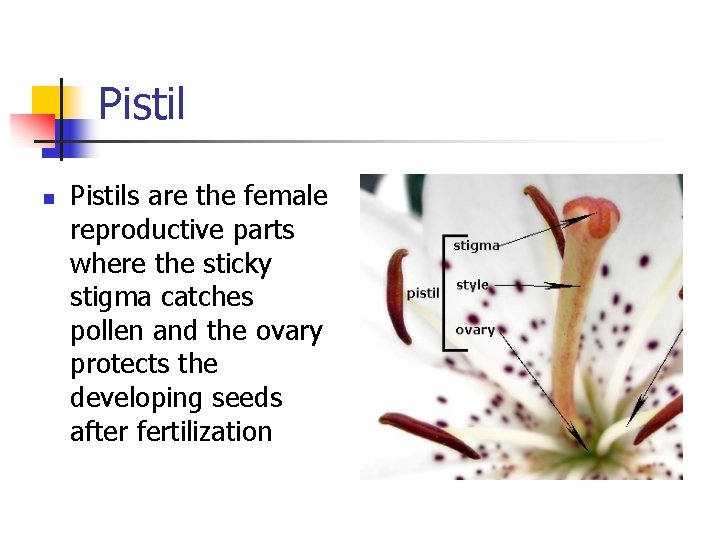
Pistil n Pistils are the female reproductive parts where the sticky stigma catches pollen and the ovary protects the developing seeds after fertilization
Life Cycle n First the pollen falls on the flower’s stigma. In time, the sperm cell and egg cell join together in the flower’s ovule. The zygote develops into the embryo part of the seed.
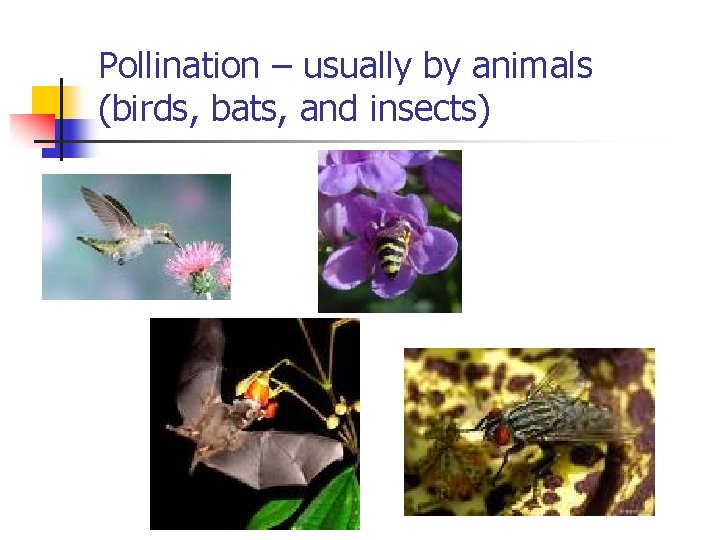
Pollination – usually by animals (birds, bats, and insects)
Fertilization – occurs in the ovule, zygote forms
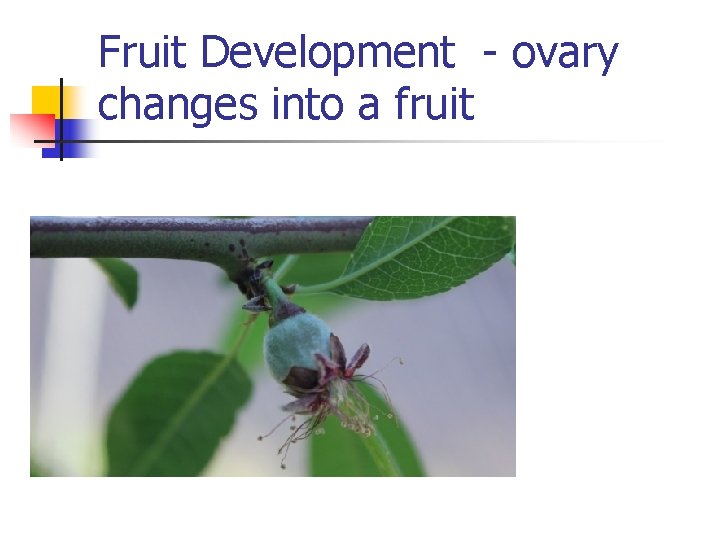
Fruit Development - ovary changes into a fruit
Seed Dispersal – animals (wind, water, ejection)
Germination – seed sprouts
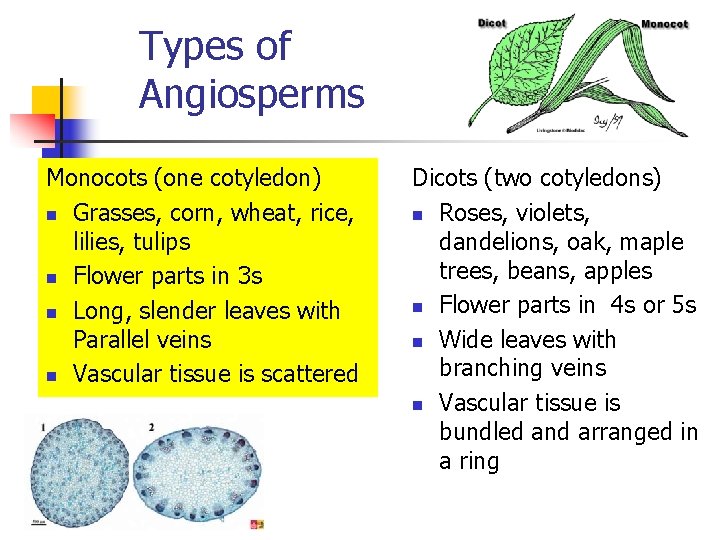
Types of Angiosperms Monocots (one cotyledon) n Grasses, corn, wheat, rice, lilies, tulips n Flower parts in 3 s n Long, slender leaves with Parallel veins n Vascular tissue is scattered Dicots (two cotyledons) n Roses, violets, dandelions, oak, maple trees, beans, apples n Flower parts in 4 s or 5 s n Wide leaves with branching veins n Vascular tissue is bundled and arranged in a ring