
SEED PLANTS Gymnosperms Angiosperms WHAT IS A SEED
- Slides: 28
SEED PLANTS Gymnosperms & Angiosperms
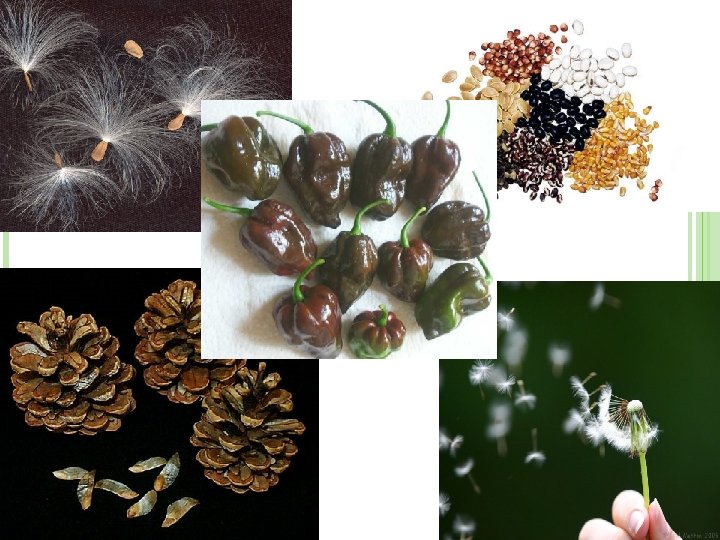
WHAT IS A SEED? A seed contains an embryonic sporophyte Has a protective coat and enough nutrients to support the sporophyte until it is ready to germinate Seeds differ depending on their mode of species dispersal… eg. wind, animals, water etc.
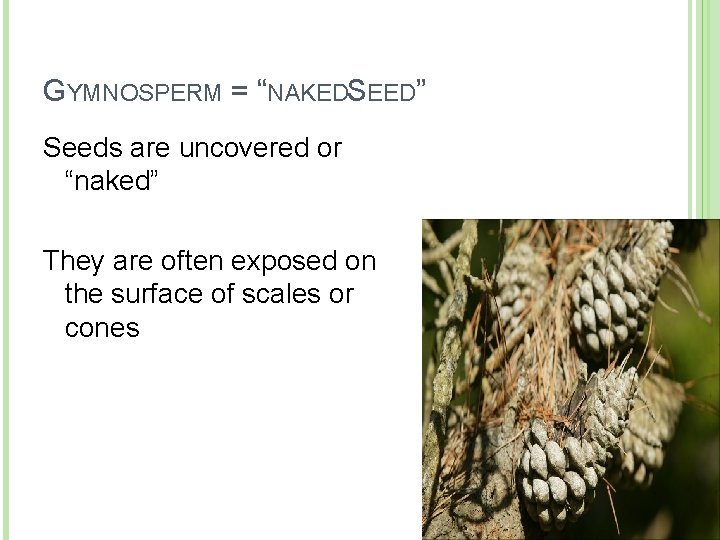
GYMNOSPERM = “NAKEDSEED” Seeds are uncovered or “naked” They are often exposed on the surface of scales or cones
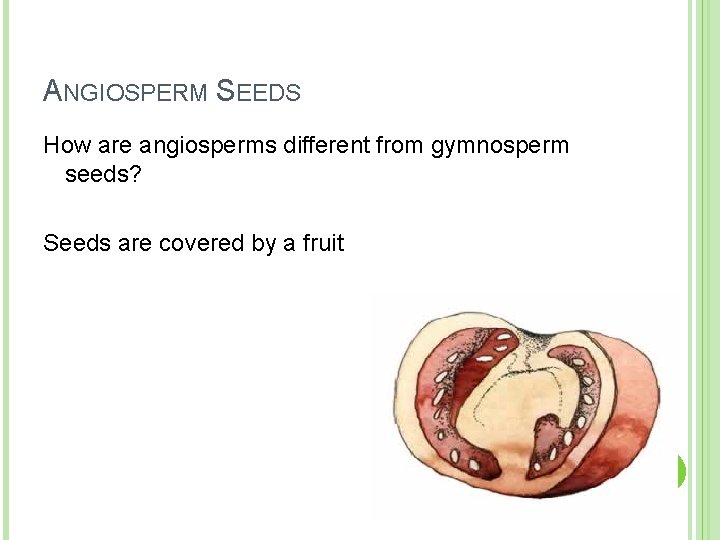
ANGIOSPERM SEEDS How are angiosperms different from gymnosperm seeds? Seeds are covered by a fruit
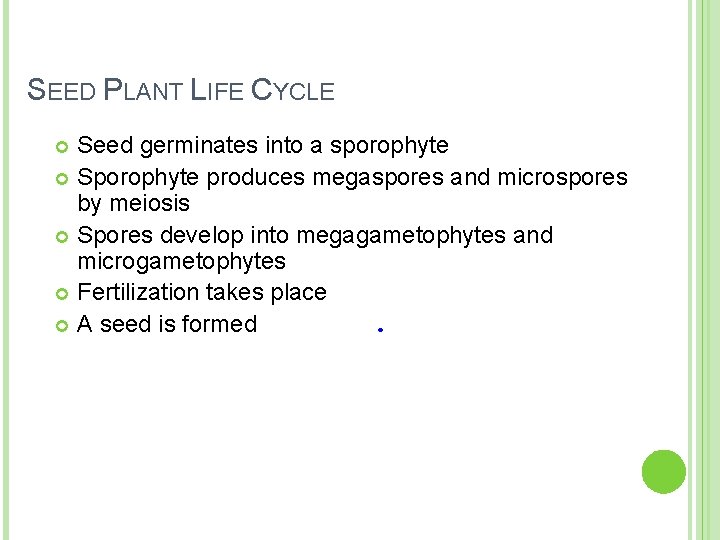
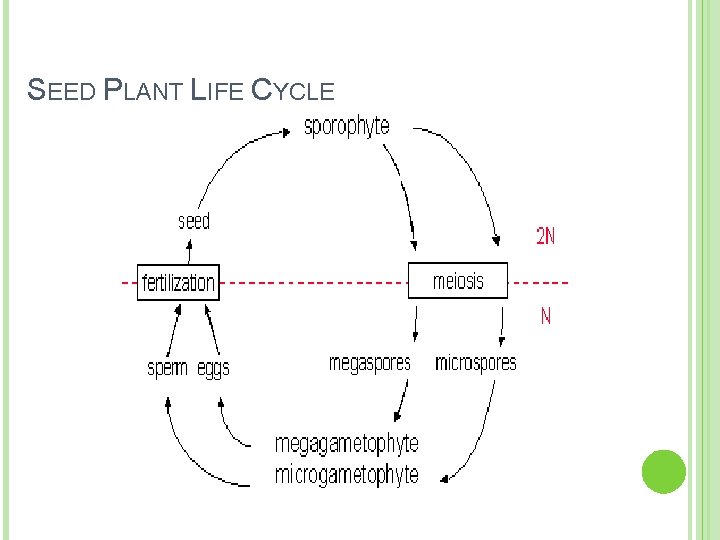
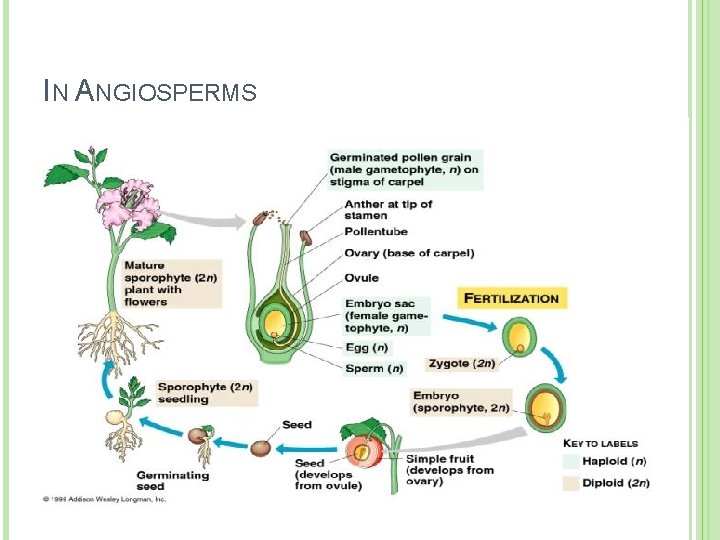
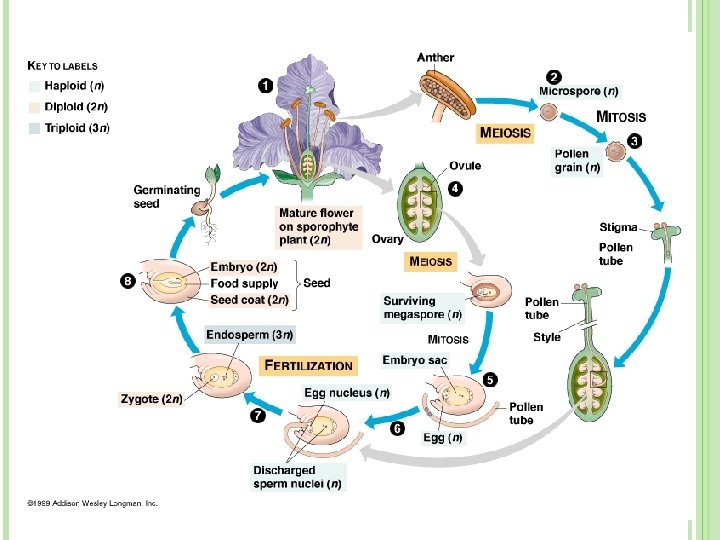
SEED PLANT LIFE CYCLE Seed germinates into a sporophyte Sporophyte produces megaspores and microspores by meiosis Spores develop into megagametophytes and microgametophytes Fertilization takes place A seed is formed
SEED PLANT LIFE CYCLE
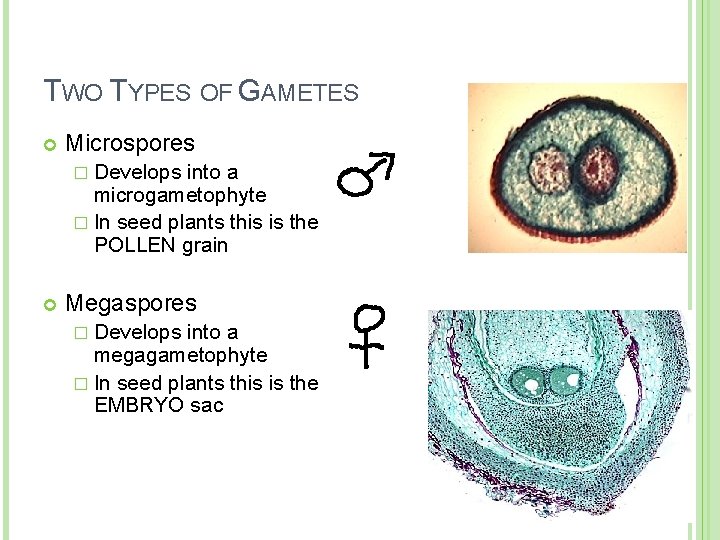
TWO TYPES OF GAMETES Microspores � Develops into a microgametophyte � In seed plants this is the POLLEN grain Megaspores � Develops into a megagametophyte � In seed plants this is the EMBRYO sac
GYMNOSPERMS
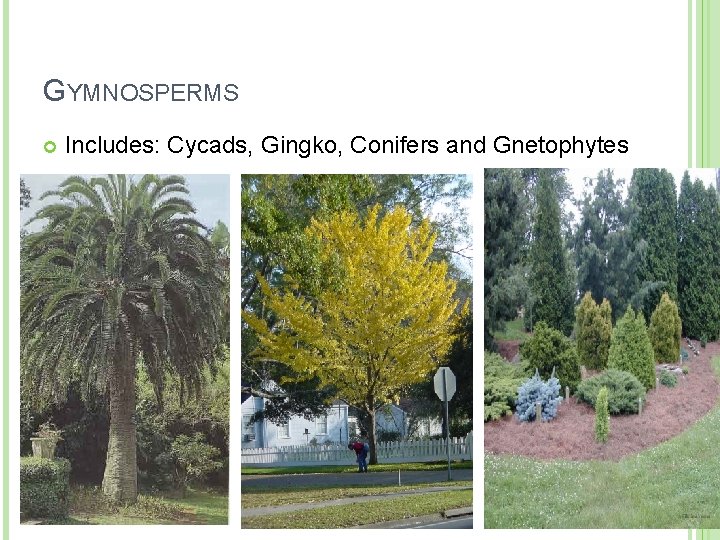
GYMNOSPERMS Includes: Cycads, Gingko, Conifers and Gnetophytes
GYMNOSPERMS ADAPTATIONS TO LAND…. . Seeds → allow for species dispersal on land Needles (or scales) → maintain water balance in dry cold climates Vascular tissue → transport nutrients and water from surroundings throughout the plant (xylem and phloem) Pollen → can be transported by wind, animals or insects for fertilization
OTHER ADAPTATIONS…. . Largest group of gymnosperms are the conifers (“evergreens”) Needle / scale-like leaves which remain all year Sporophyte (2 N) generation is dominant Cell wall is strengthened with lignin
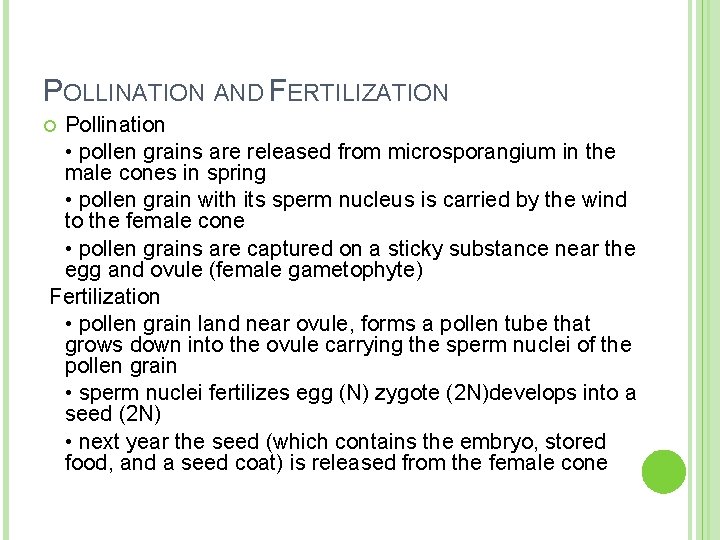
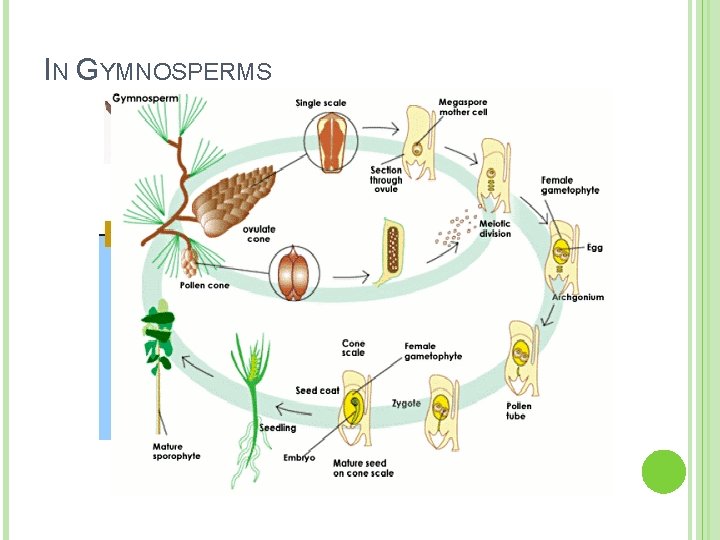
POLLINATION AND FERTILIZATION Pollination • pollen grains are released from microsporangium in the male cones in spring • pollen grain with its sperm nucleus is carried by the wind to the female cone • pollen grains are captured on a sticky substance near the egg and ovule (female gametophyte) Fertilization • pollen grain land near ovule, forms a pollen tube that grows down into the ovule carrying the sperm nuclei of the pollen grain • sperm nuclei fertilizes egg (N) zygote (2 N)develops into a seed (2 N) • next year the seed (which contains the embryo, stored food, and a seed coat) is released from the female cone
IN GYMNOSPERMS
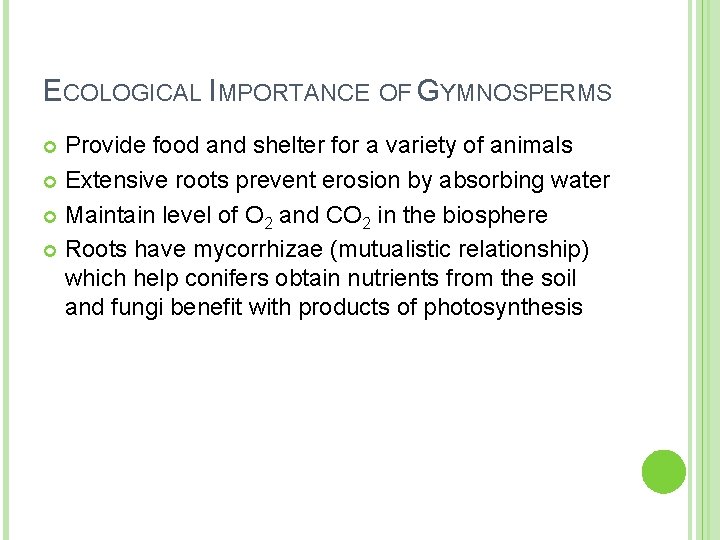
ECOLOGICAL IMPORTANCE OF GYMNOSPERMS Provide food and shelter for a variety of animals Extensive roots prevent erosion by absorbing water Maintain level of O 2 and CO 2 in the biosphere Roots have mycorrhizae (mutualistic relationship) which help conifers obtain nutrients from the soil and fungi benefit with products of photosynthesis
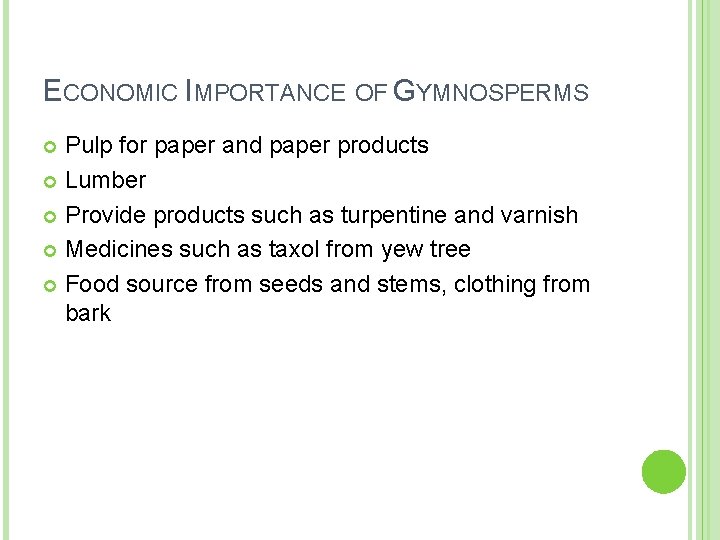
ECONOMIC IMPORTANCE OF GYMNOSPERMS Pulp for paper and paper products Lumber Provide products such as turpentine and varnish Medicines such as taxol from yew tree Food source from seeds and stems, clothing from bark
FOR TOMORROW Bring a gymnosperm sample in for tomorrow. Complete the gymnosperm package.
ANGIOSPERMS
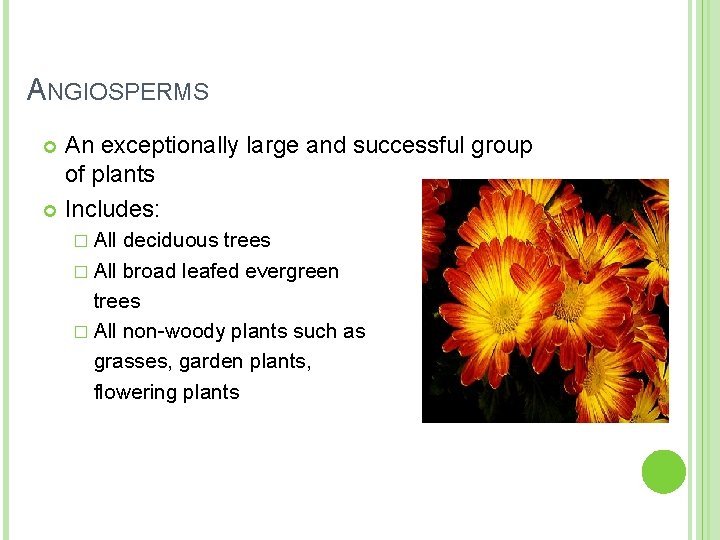
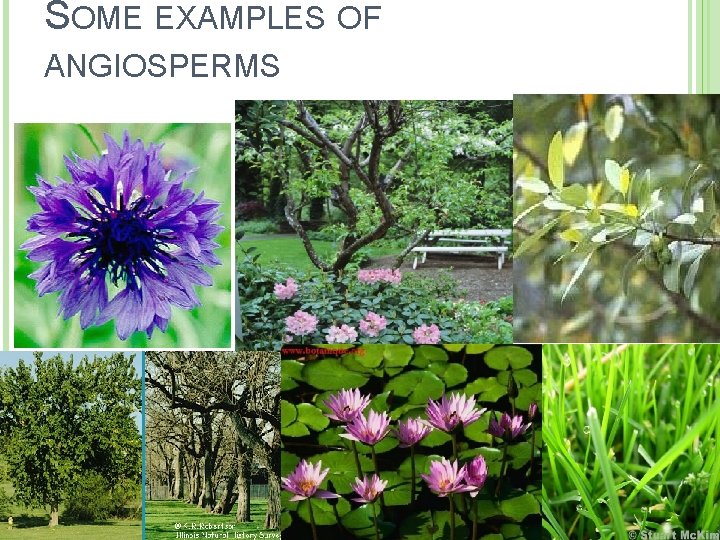
ANGIOSPERMS An exceptionally large and successful group of plants Includes: � All deciduous trees � All broad leafed evergreen trees � All non-woody plants such as grasses, garden plants, flowering plants
SOME EXAMPLES OF ANGIOSPERMS
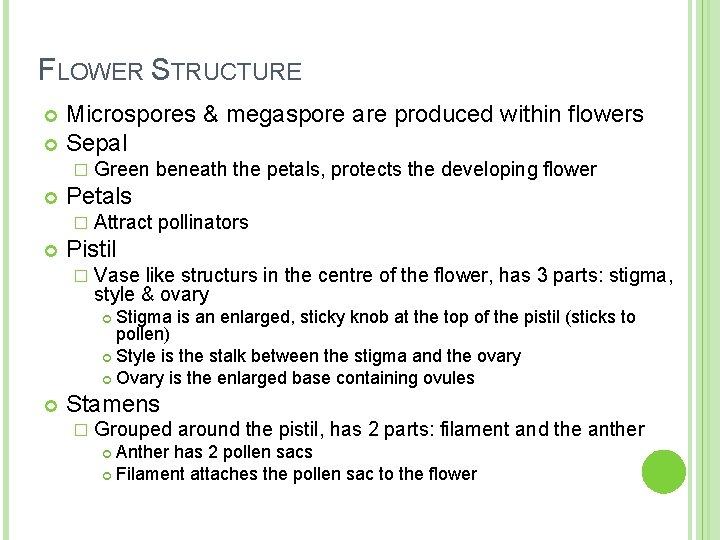
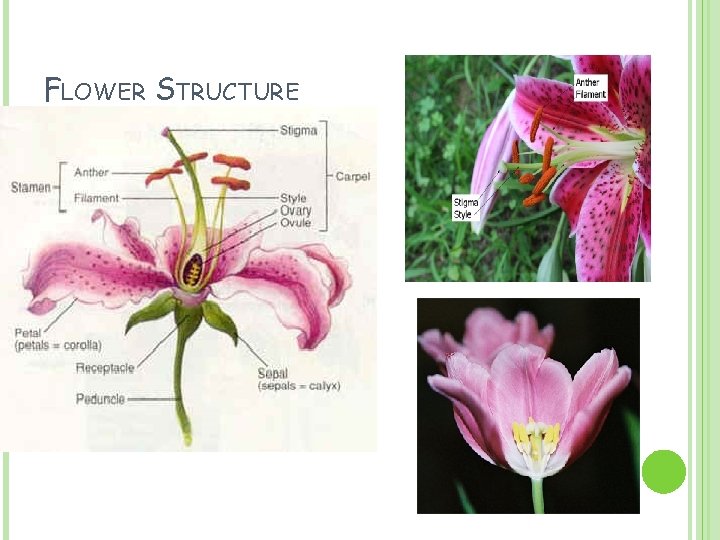
FLOWER STRUCTURE Microspores & megaspore are produced within flowers Sepal � Petals � Green beneath the petals, protects the developing flower Attract pollinators Pistil � Vase like structurs in the centre of the flower, has 3 parts: stigma, style & ovary Stigma is an enlarged, sticky knob at the top of the pistil (sticks to pollen) Style is the stalk between the stigma and the ovary Ovary is the enlarged base containing ovules Stamens � Grouped around the pistil, has 2 parts: filament and the anther Anther has 2 pollen sacs Filament attaches the pollen sac to the flower
FLOWER STRUCTURE
IN ANGIOSPERMS
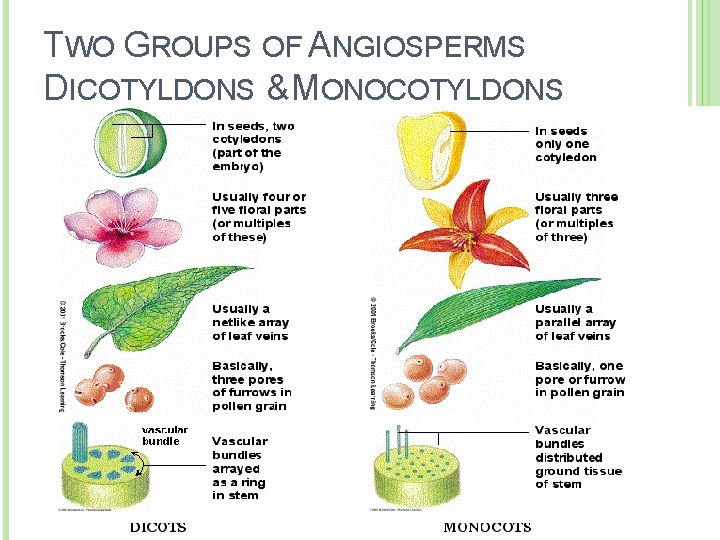
TWO GROUPS OF ANGIOSPERMS DICOTYLDONS & MONOCOTYLDONS
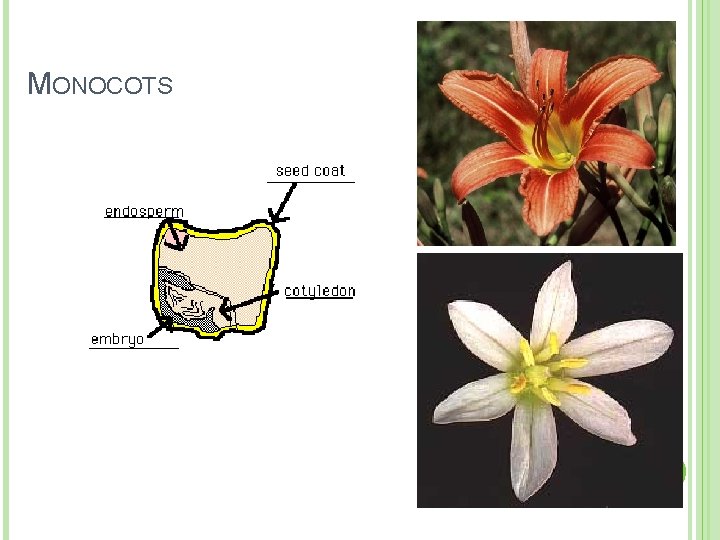
MONOCOTS
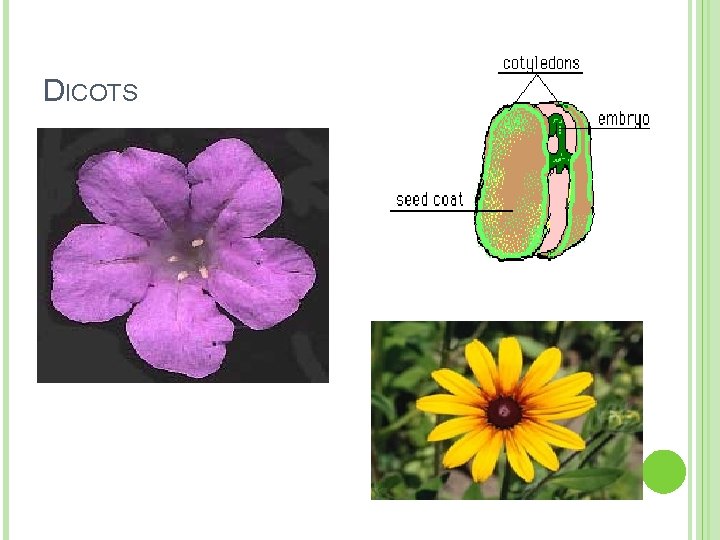
DICOTS
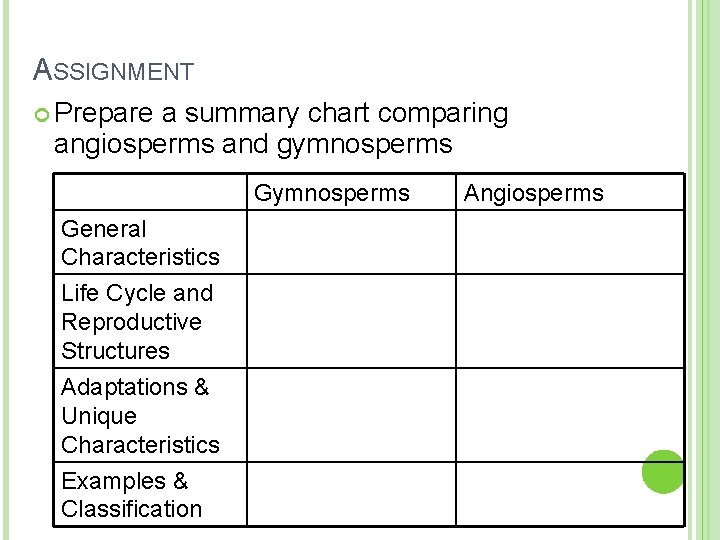
ASSIGNMENT Prepare a summary chart comparing angiosperms and gymnosperms General Characteristics Life Cycle and Reproductive Structures Adaptations & Unique Characteristics Examples & Classification Angiosperms