
Seed plants do not require water for fertilization
- Slides: 10
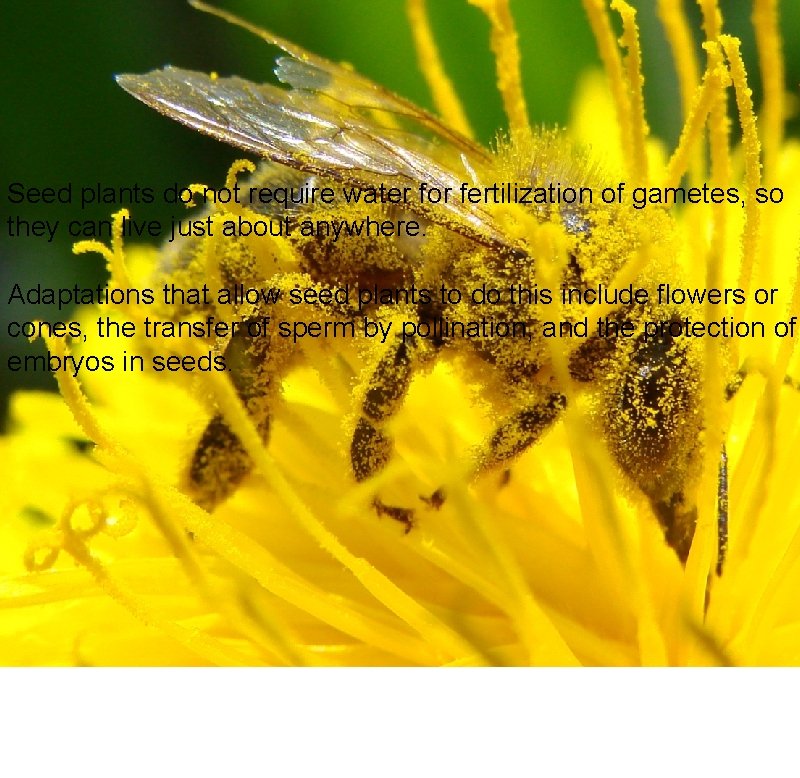
Seed plants do not require water for fertilization of gametes, so they can live just about anywhere. Adaptations that allow seed plants to do this include flowers or cones, the transfer of sperm by pollination, and the protection of embryos in seeds.
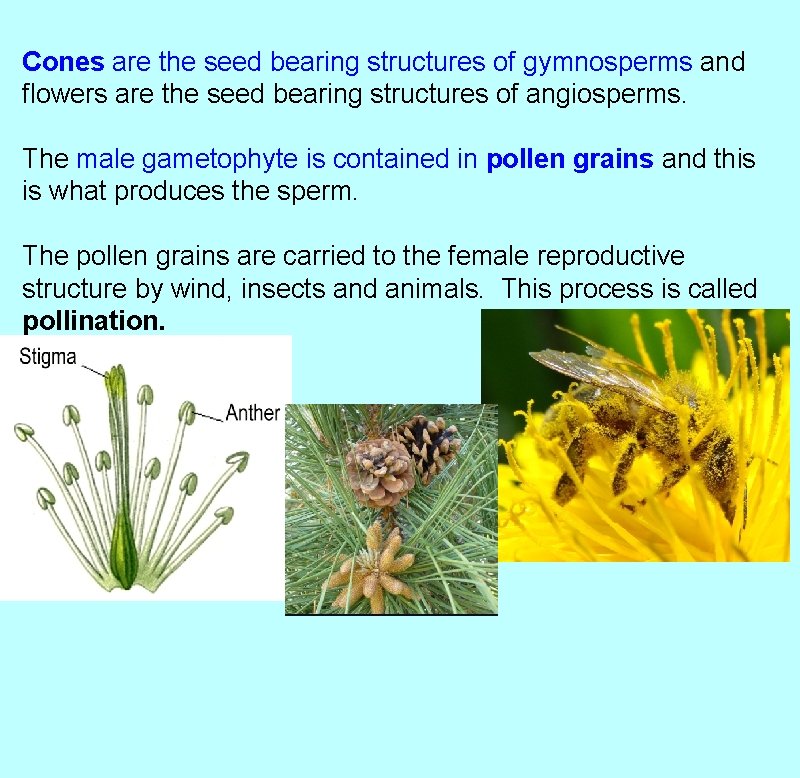
Cones are the seed bearing structures of gymnosperms and flowers are the seed bearing structures of angiosperms. The male gametophyte is contained in pollen grains and this is what produces the sperm. The pollen grains are carried to the female reproductive structure by wind, insects and animals. This process is called pollination.
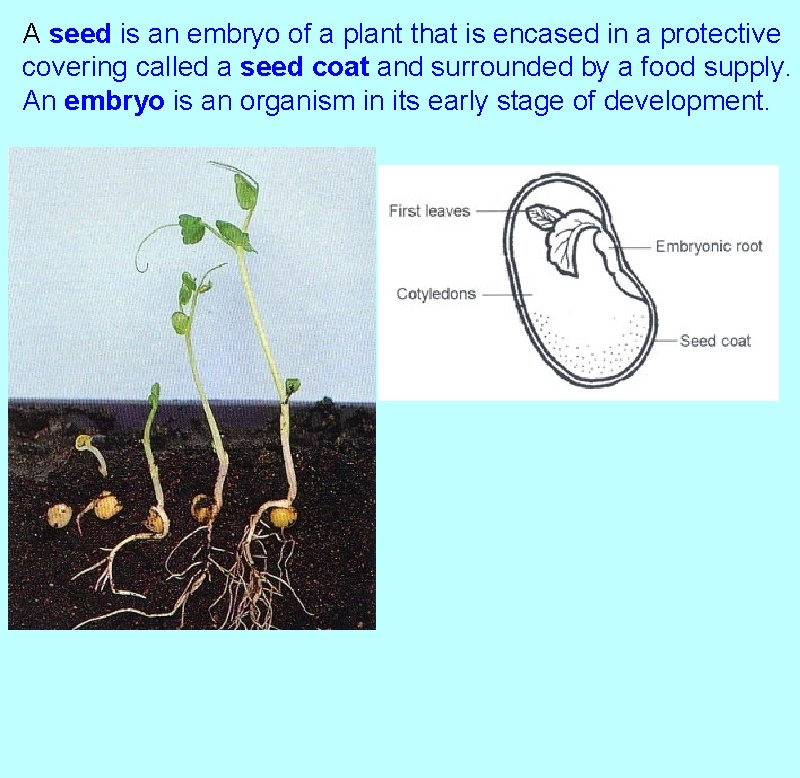
A seed is an embryo of a plant that is encased in a protective covering called a seed coat and surrounded by a food supply. An embryo is an organism in its early stage of development.
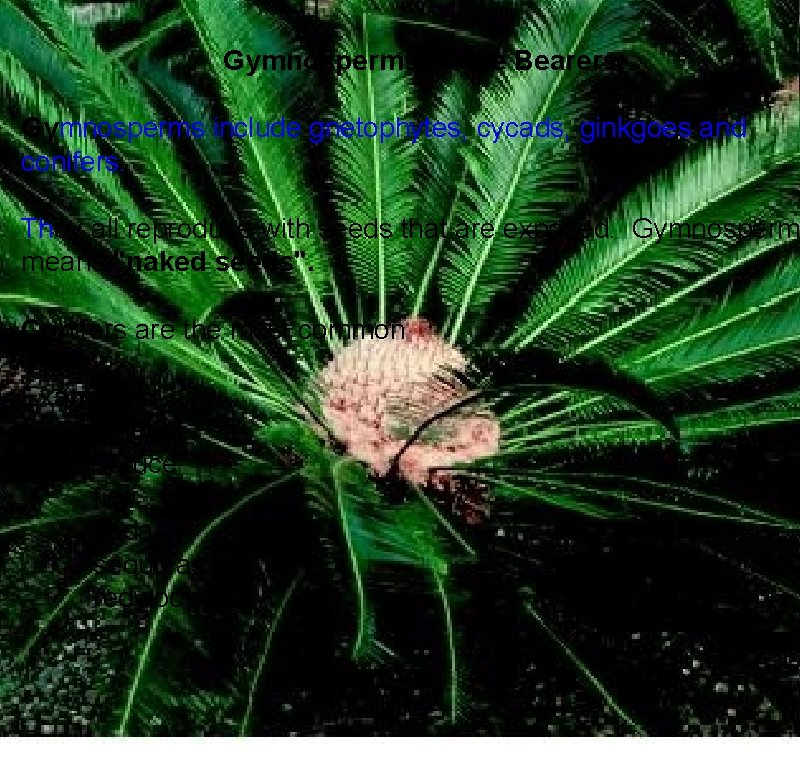
Gymnosperms- Cone Bearers Gymnosperms include gnetophytes, cycads, ginkgoes and conifers. They all reproduce with seeds that are exposed. Gymnosperm means "naked seeds". Conifers are the most common Examples: pine spruce fir cedar sequoias redwood
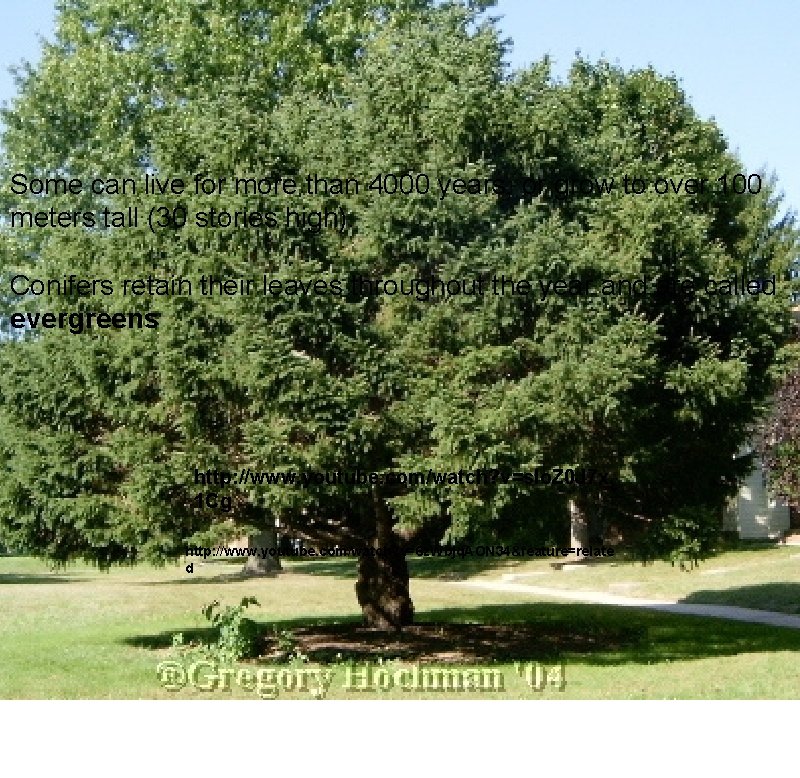
Some can live for more than 4000 years, or grow to over 100 meters tall (30 stories high). Conifers retain their leaves throughout the year and are called evergreens http: //www. youtube. com/watch? v=s. Io. Z 0 J 7 x 1 Cg http: //www. youtube. com/watch? v=6 z. Wbjq. AON 34&feature=relate d
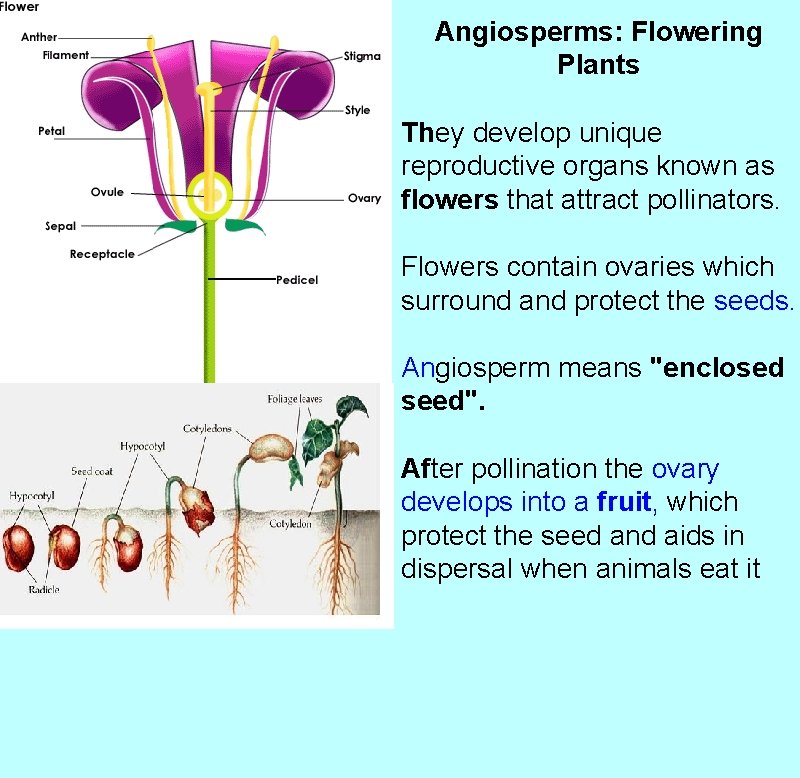
Angiosperms: Flowering Plants They develop unique reproductive organs known as flowers that attract pollinators. Flowers contain ovaries which surround and protect the seeds. Angiosperm means "enclosed seed". After pollination the ovary develops into a fruit, which protect the seed and aids in dispersal when animals eat it
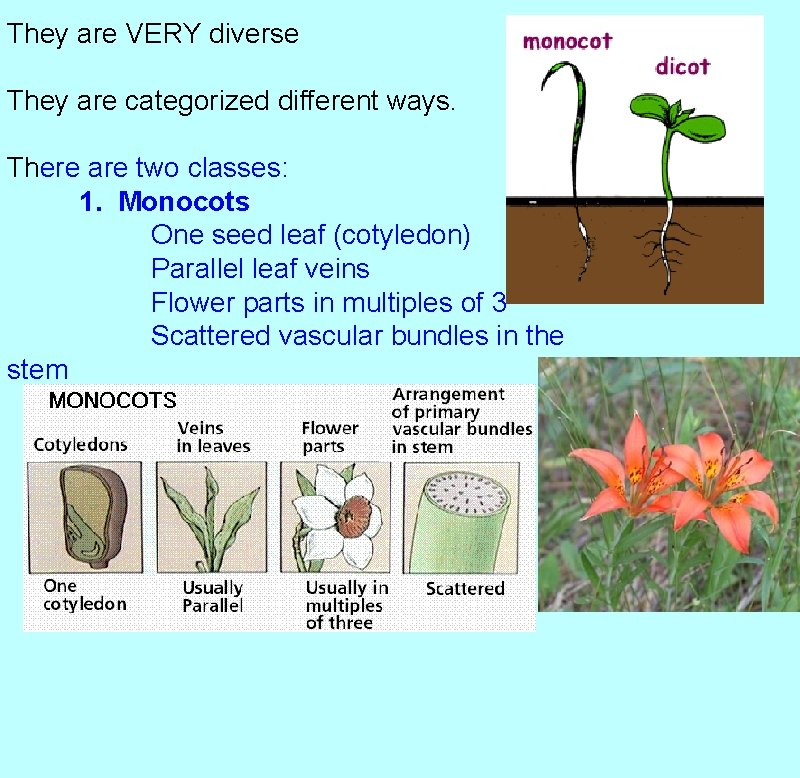
They are VERY diverse They are categorized different ways. There are two classes: 1. Monocots One seed leaf (cotyledon) Parallel leaf veins Flower parts in multiples of 3 Scattered vascular bundles in the stem Fibrous roots
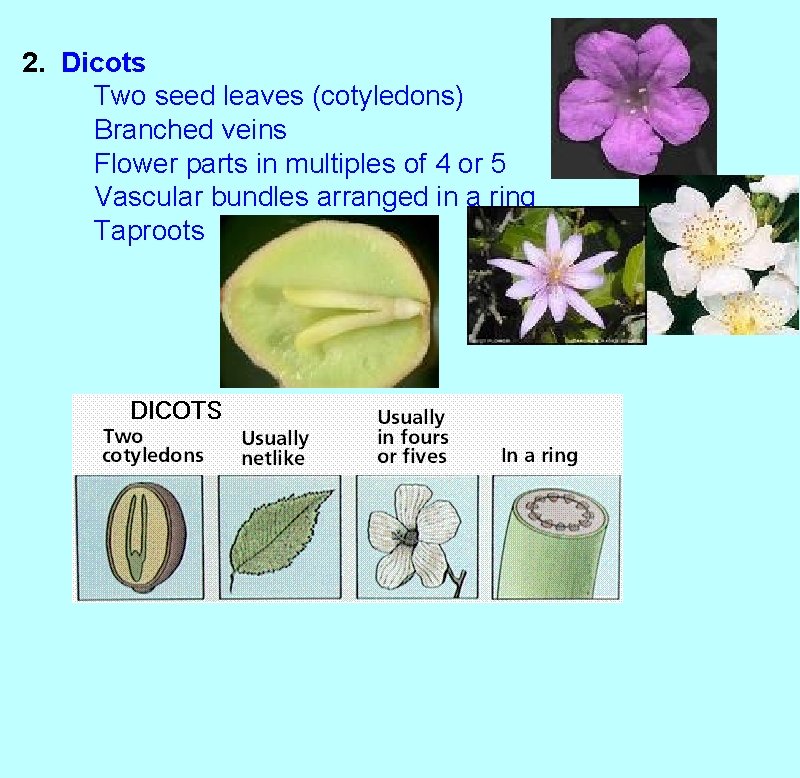
2. Dicots Two seed leaves (cotyledons) Branched veins Flower parts in multiples of 4 or 5 Vascular bundles arranged in a ring Taproots
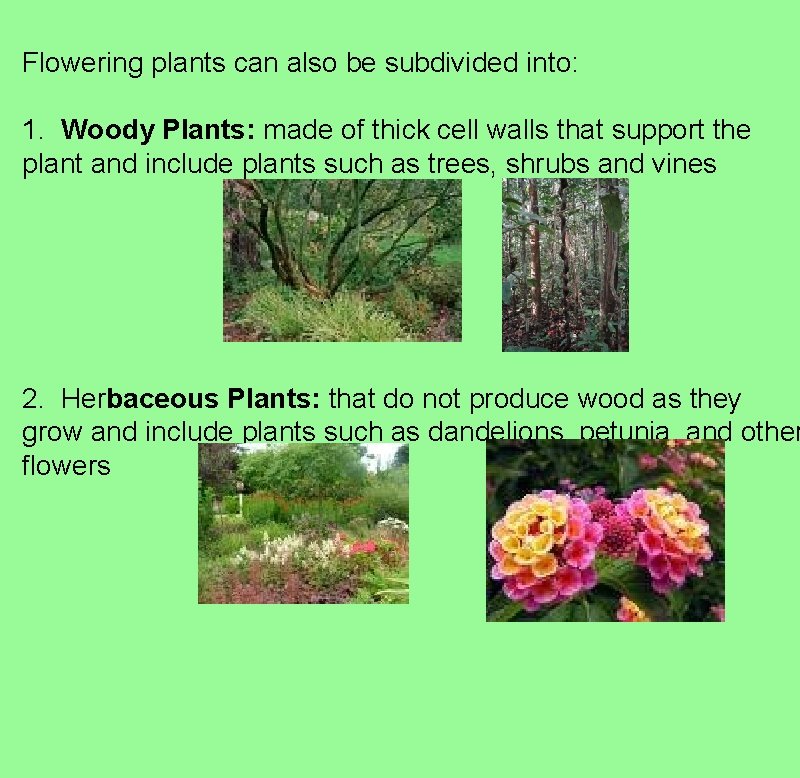
Flowering plants can also be subdivided into: 1. Woody Plants: made of thick cell walls that support the plant and include plants such as trees, shrubs and vines 2. Herbaceous Plants: that do not produce wood as they grow and include plants such as dandelions, petunia, and other flowers
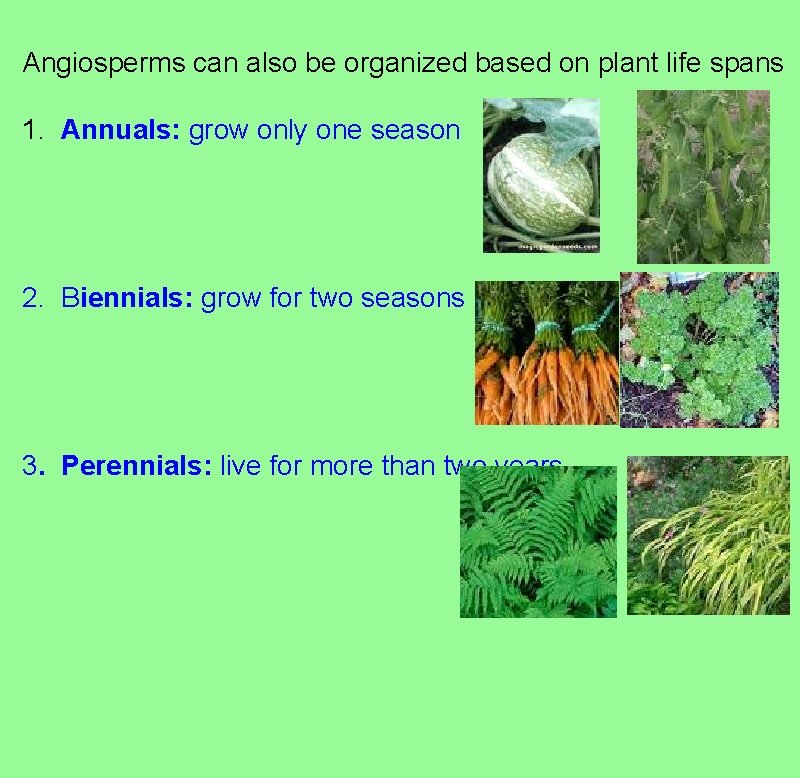
Angiosperms can also be organized based on plant life spans 1. Annuals: grow only one season 2. Biennials: grow for two seasons 3. Perennials: live for more than two years