
Sedimentary Rocks Uluru Australia Grand Canyon Arizona White

- Slides: 26
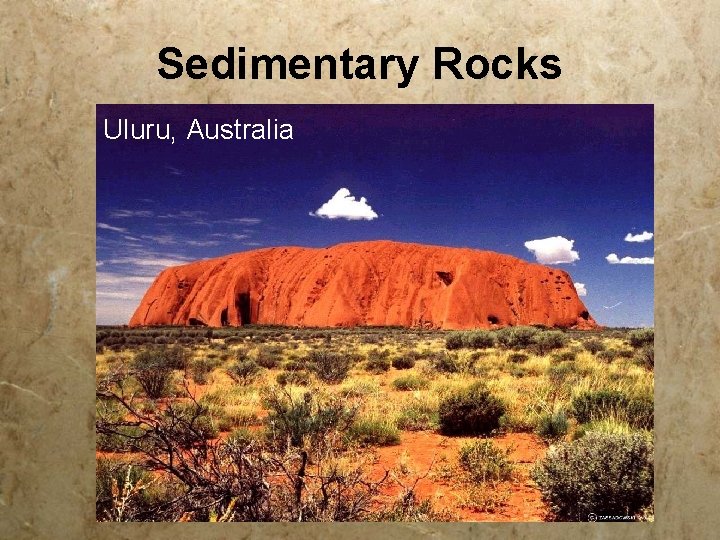
Sedimentary Rocks Uluru, Australia
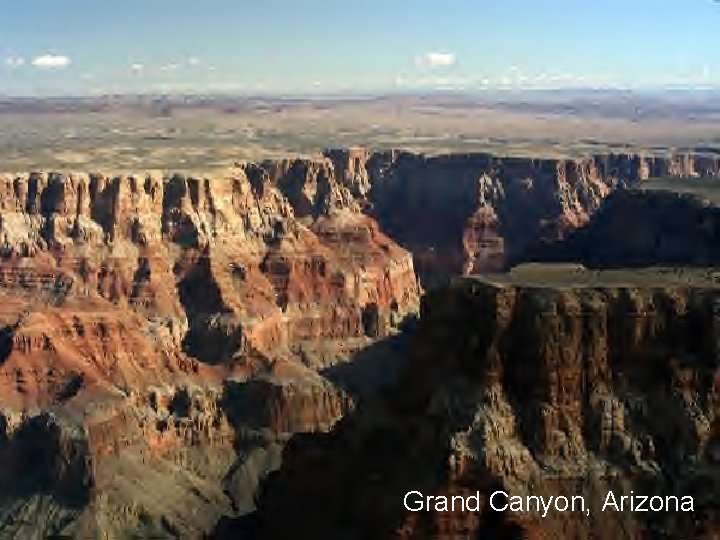
Grand Canyon, Arizona
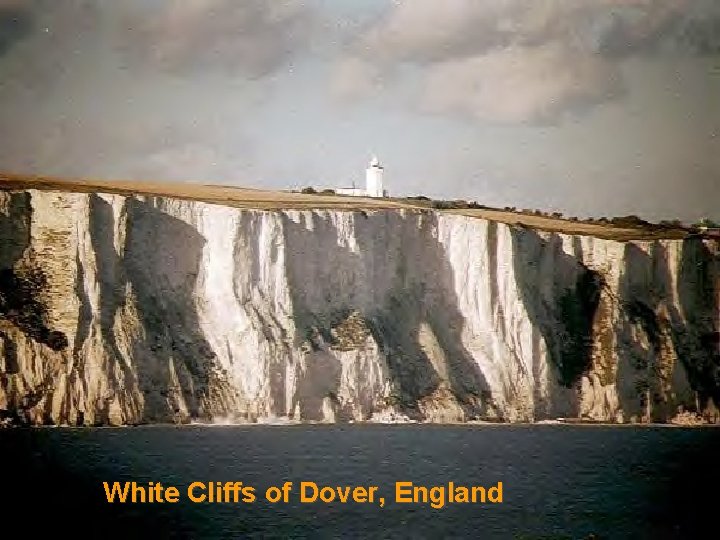
White Cliffs of Dover, England
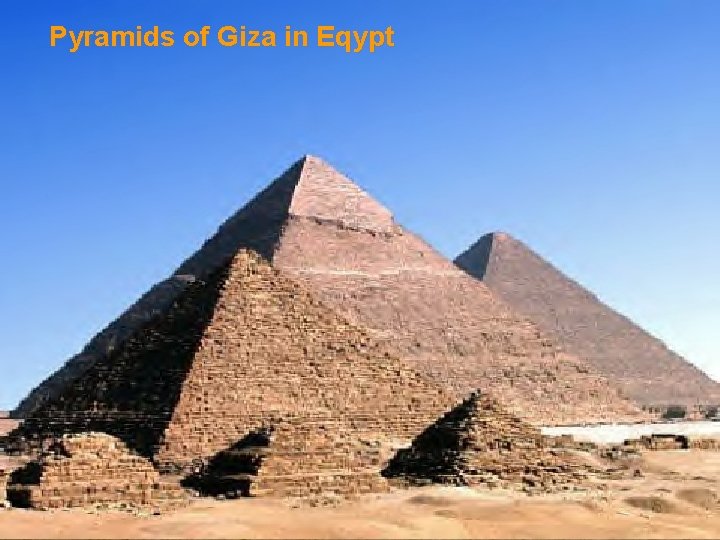
Pyramids of Giza in Eqypt
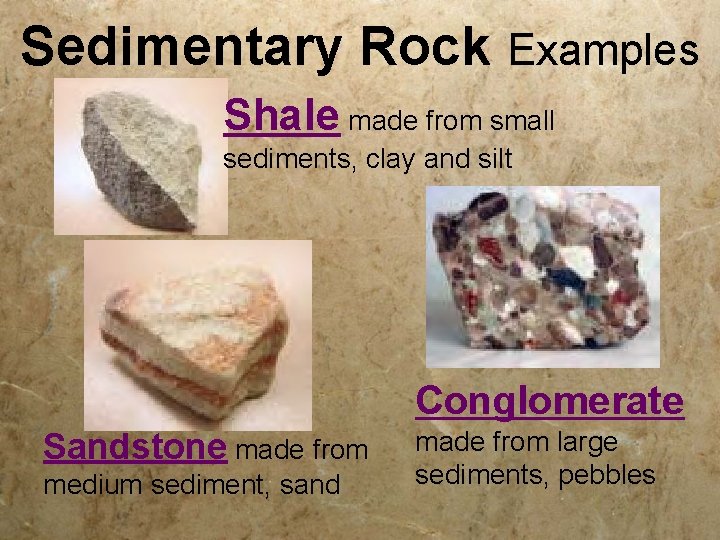
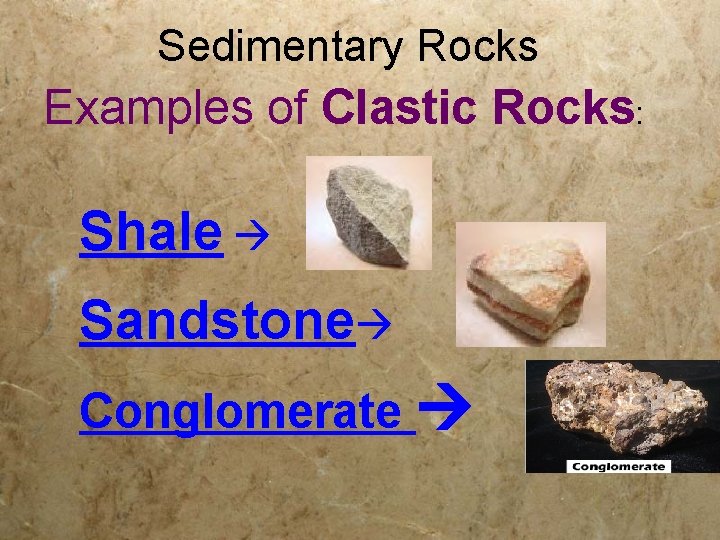
Sedimentary Rock Examples Shale made from small sediments, clay and silt Conglomerate Sandstone made from medium sediment, sand made from large sediments, pebbles
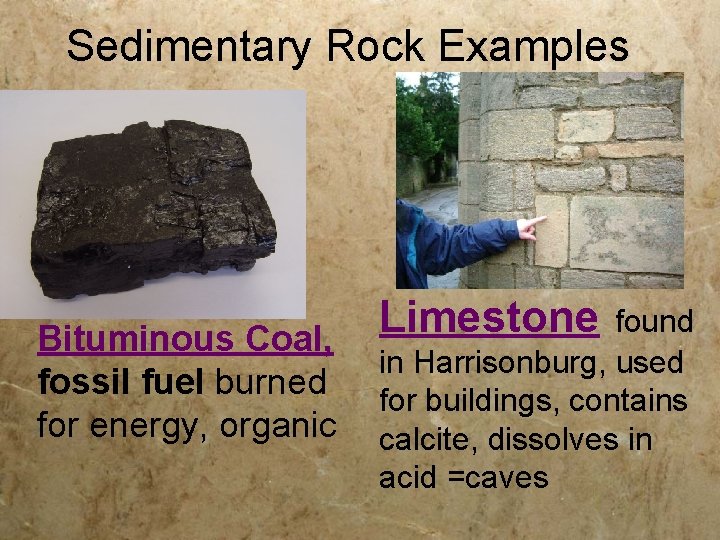
Sedimentary Rock Examples Bituminous Coal, fossil fuel burned for energy, organic Limestone found in Harrisonburg, used for buildings, contains calcite, dissolves in acid =caves
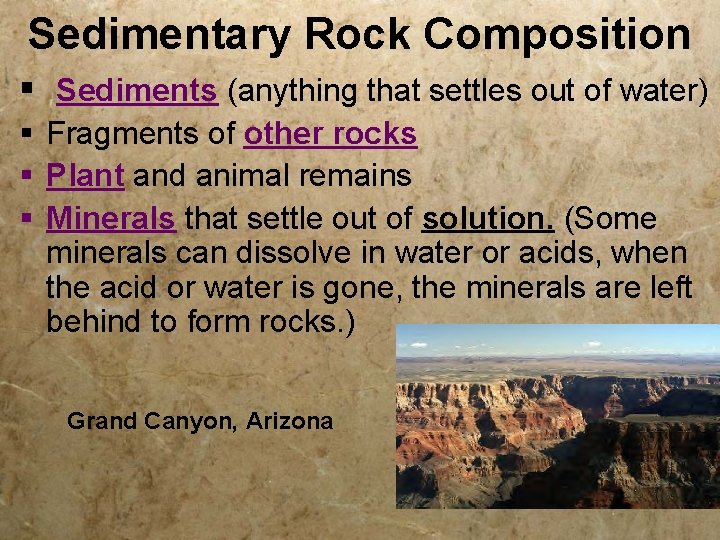
Sedimentary Rock Composition § Sediments (anything that settles out of water) § Fragments of other rocks § Plant and animal remains § Minerals that settle out of solution. (Some minerals can dissolve in water or acids, when the acid or water is gone, the minerals are left behind to form rocks. ) Grand Canyon, Arizona
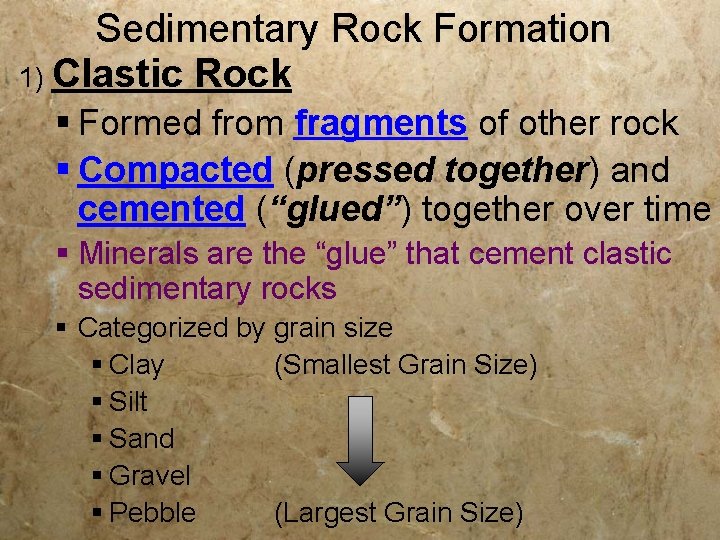
Sedimentary Rock Formation 1) Clastic Rock § Formed from fragments of other rock § Compacted (pressed together) and cemented (“glued”) together over time § Minerals are the “glue” that cement clastic sedimentary rocks § Categorized by grain size § Clay (Smallest Grain Size) § Silt § Sand § Gravel § Pebble (Largest Grain Size)
Sedimentary Rocks Examples of Clastic Rocks: Shale Sandstone Conglomerate
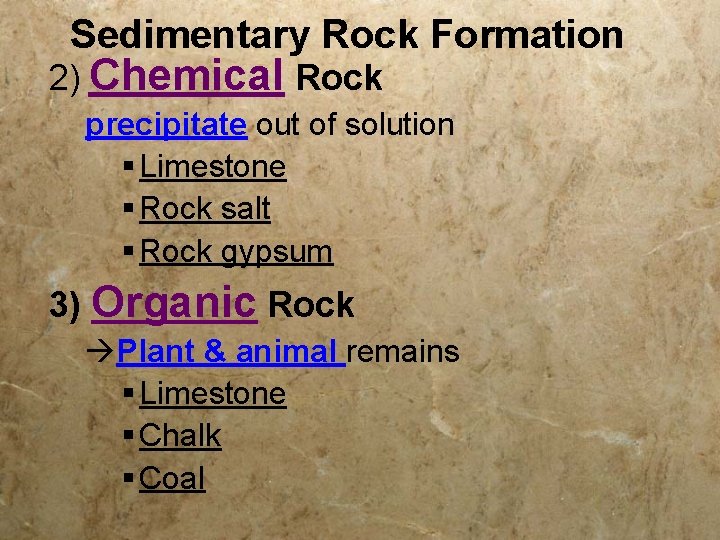
Sedimentary Rock Formation 2) Chemical Rock precipitate out of solution § Limestone § Rock salt § Rock gypsum 3) Organic Rock Plant & animal remains § Limestone § Chalk § Coal
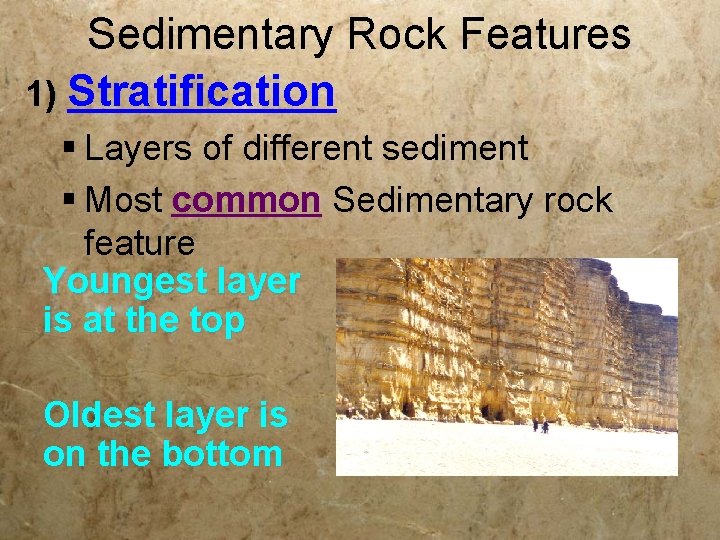
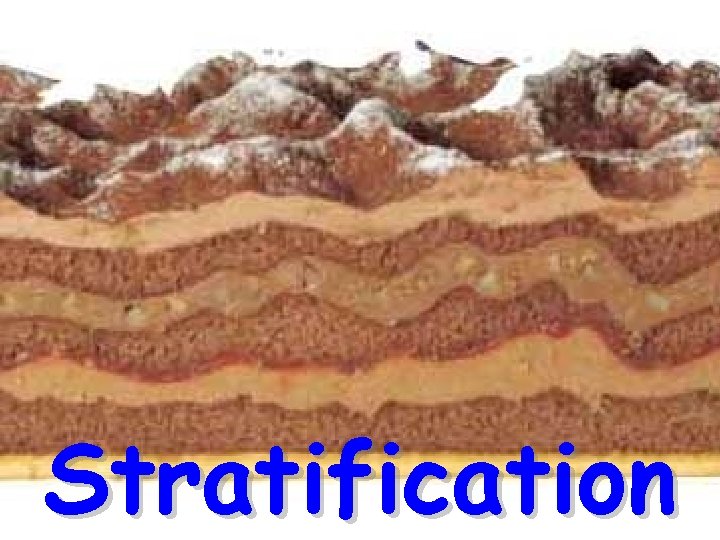
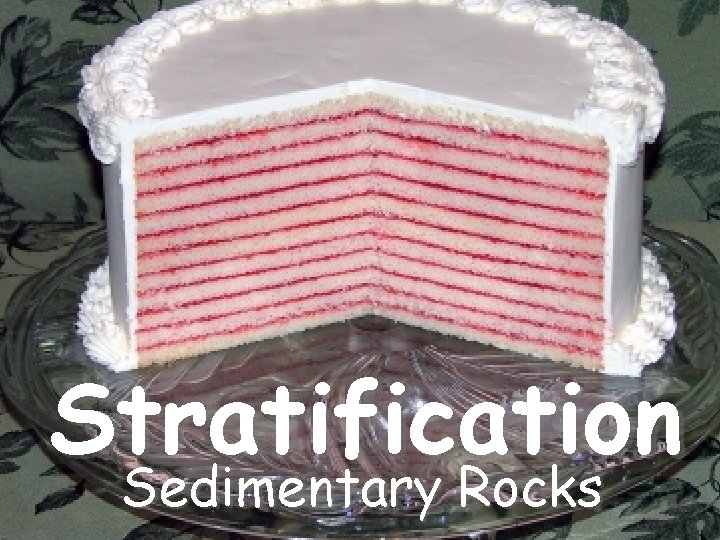
Sedimentary Rock Features 1) Stratification § Layers of different sediment § Most common Sedimentary rock feature Youngest layer is at the top Oldest layer is on the bottom
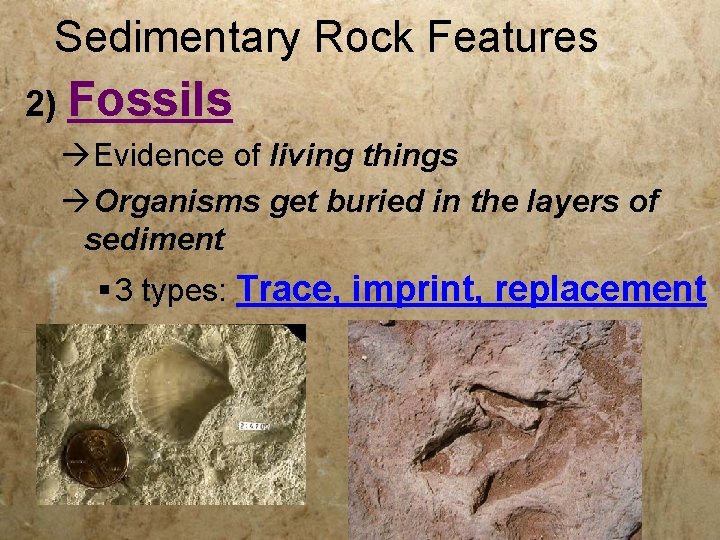
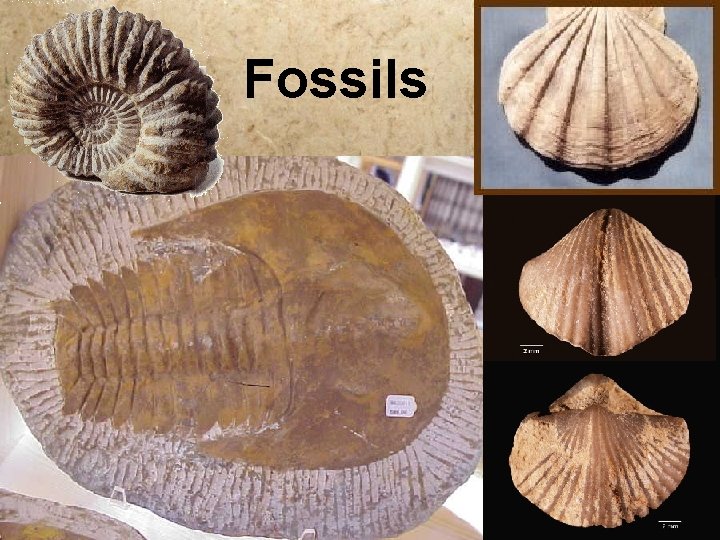
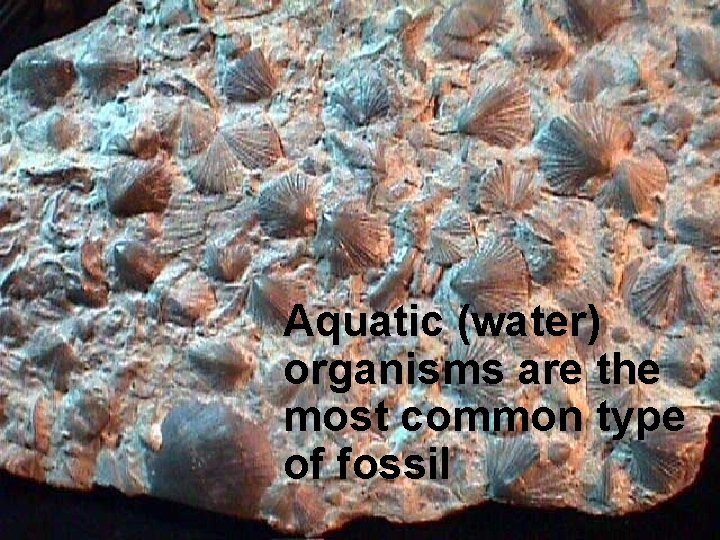
Sedimentary Rock Features 2) Fossils Evidence of living things Organisms get buried in the layers of sediment § 3 types: Trace, imprint, replacement
Fossils
Aquatic (water) organisms are the most common type of fossil
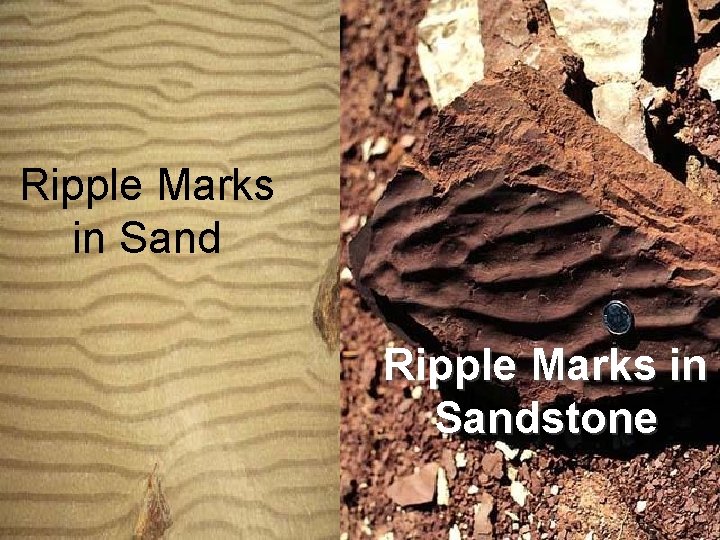
Sedimentary Rock Features 3) Ripple marks § Water or wind action in sand preserved in sandstone § Can be seen on the surface of a bedding plane
Ripple Marks in Sandstone
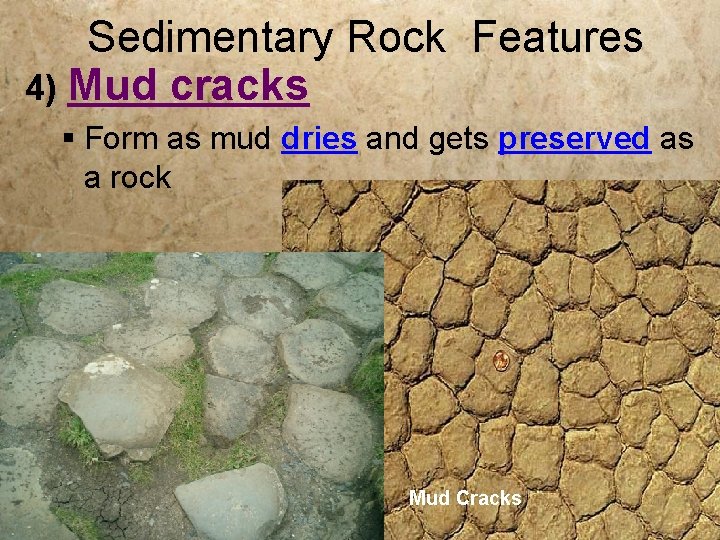
Sedimentary Rock Features 4) Mud cracks § Form as mud dries and gets preserved as a rock Mud Cracks
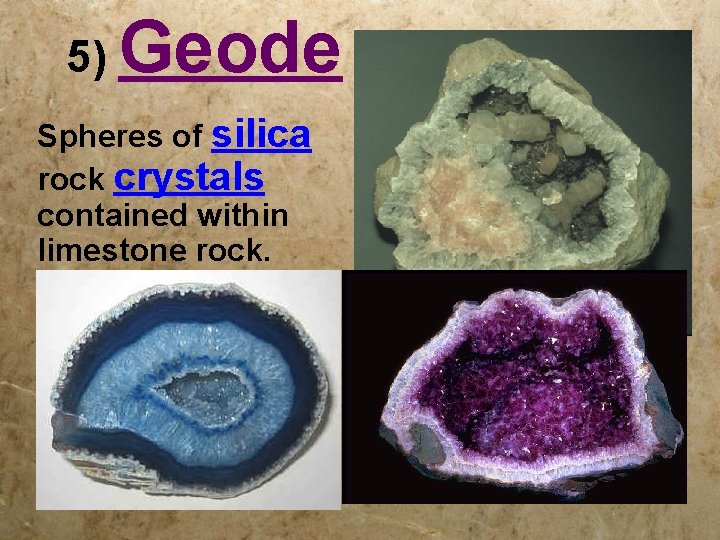
5) Geode Spheres of silica rock crystals contained within limestone rock.
SEDIMENTARY ROCK § CLASTIC § Rock fragments § Compacted and cemented together § Grain size § Silt § Clay § Sand § Gravel
SEDIMENTARY ROCK § CHEMICAL § Minerals precipitate out of solution § Examples: §Limestone §Rock salt §Rock gypsum
SEDIMENTARY ROCK § ORGANIC § Plant and animal remains § Examples include: §Bituminous coal §Limestone §Chalk
SEDIMENTARY ROCK § SEDIMENTARY FEATURES: § Stratification (layers) § Fossils § Ripple marks § Mud cracks § Geodes
Sedimentary Rock Lab § Set up your field notebook (Include TITLE) § Rotate independently between the 16 stations set up around the room § Start with whichever station number you are located § Round 1: You will have 1 minute at each station § Do not switch to the next station until told to do so § Round 2: You may go back to any unoccupied station, if needed
Stratification
Stratification Sedimentary Rocks