
SEDIMENTARY ROCKS Made from an accumulation of various
- Slides: 15
SEDIMENTARY ROCKS Made from an accumulation of various types of sediments
What is sediment? Fragments that result from the breaking (weathering) of rocks, minerals, and organic matter. Ex. Gravel, clay, silt, pebbles, sand, mud, shells, dirt
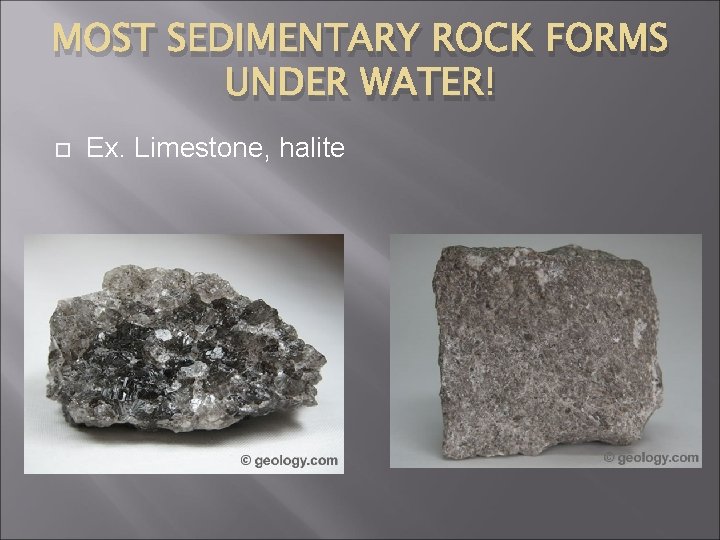
MOST SEDIMENTARY ROCK FORMS UNDER WATER! Ex. Limestone, halite
Sedimentary rock forms from these processes: Weathering, Erosion, and Deposition Compaction: sediments are pushed together and as a result, water and air are squeezed out. Cementation: water passes through the sediments and dissolved minerals left behind act as a cement to hold the sediments together. Precipitation: minerals clump together and fall out of solution Evaporation: Water evaporates and leaves dissolved minerals behind.
Three Types of Sedimentary Rocks
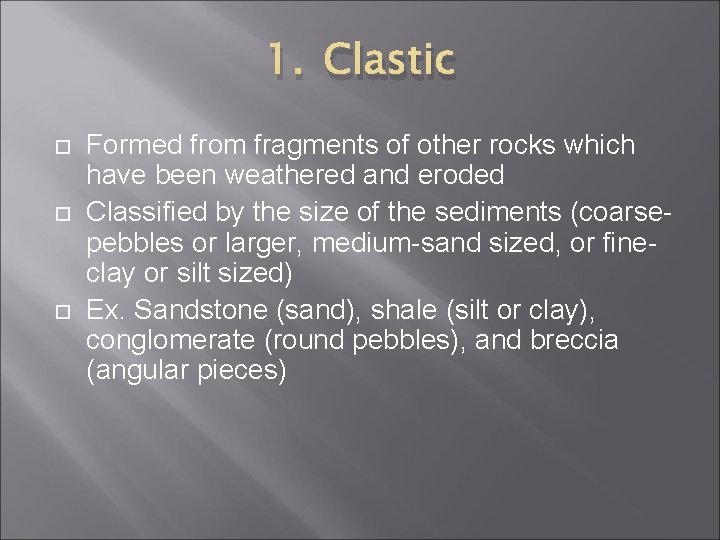
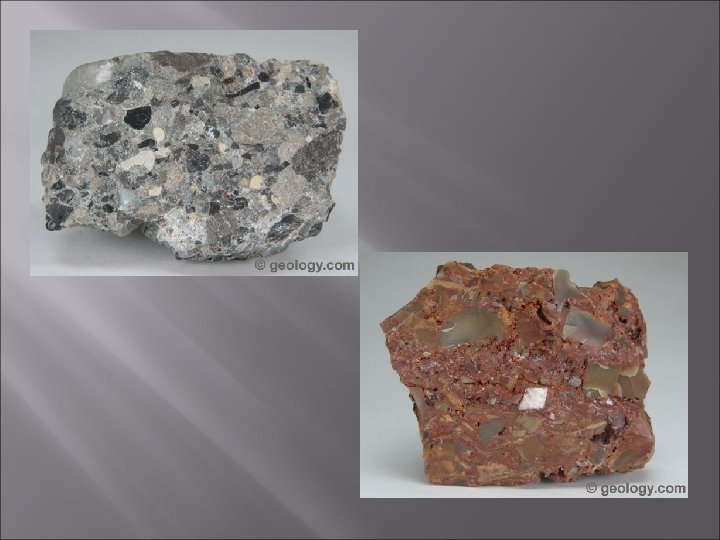
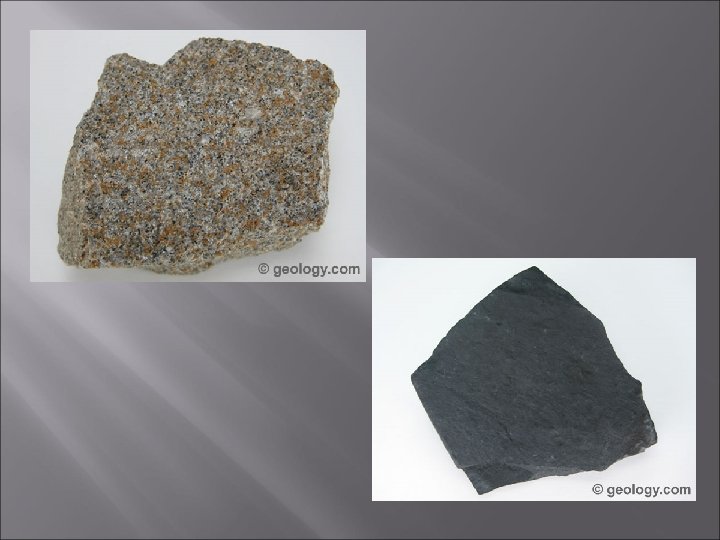
1. Clastic Formed from fragments of other rocks which have been weathered and eroded Classified by the size of the sediments (coarsepebbles or larger, medium-sand sized, or fineclay or silt sized) Ex. Sandstone (sand), shale (silt or clay), conglomerate (round pebbles), and breccia (angular pieces)
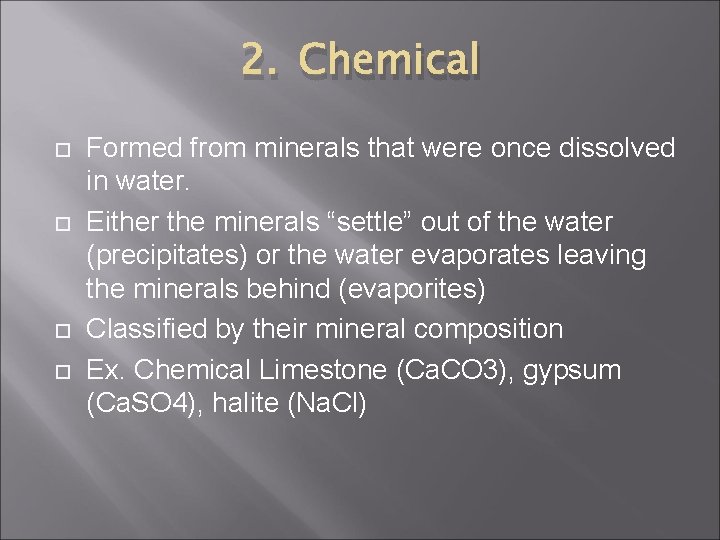
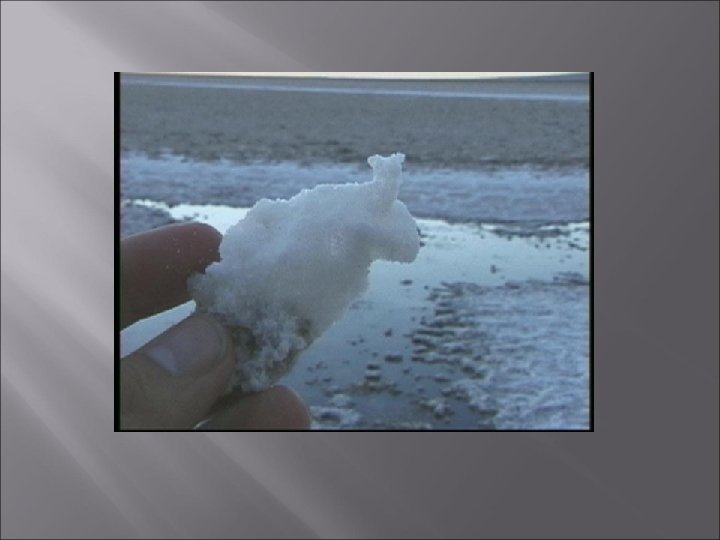
2. Chemical Formed from minerals that were once dissolved in water. Either the minerals “settle” out of the water (precipitates) or the water evaporates leaving the minerals behind (evaporites) Classified by their mineral composition Ex. Chemical Limestone (Ca. CO 3), gypsum (Ca. SO 4), halite (Na. Cl)
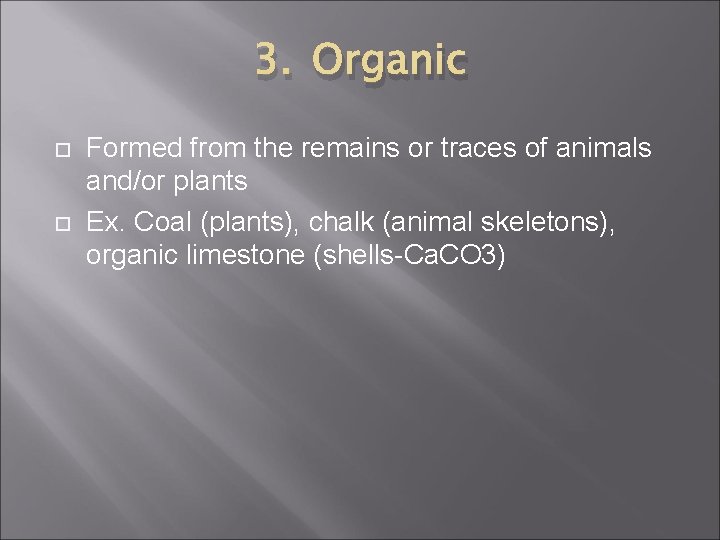
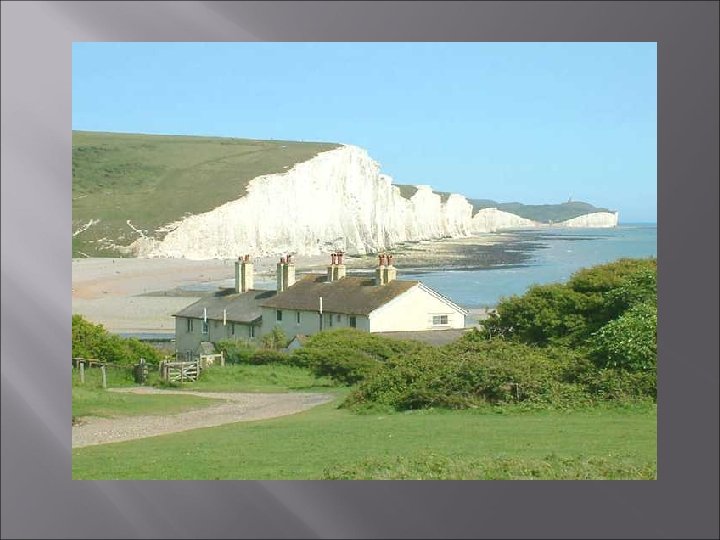
3. Organic Formed from the remains or traces of animals and/or plants Ex. Coal (plants), chalk (animal skeletons), organic limestone (shells-Ca. CO 3)
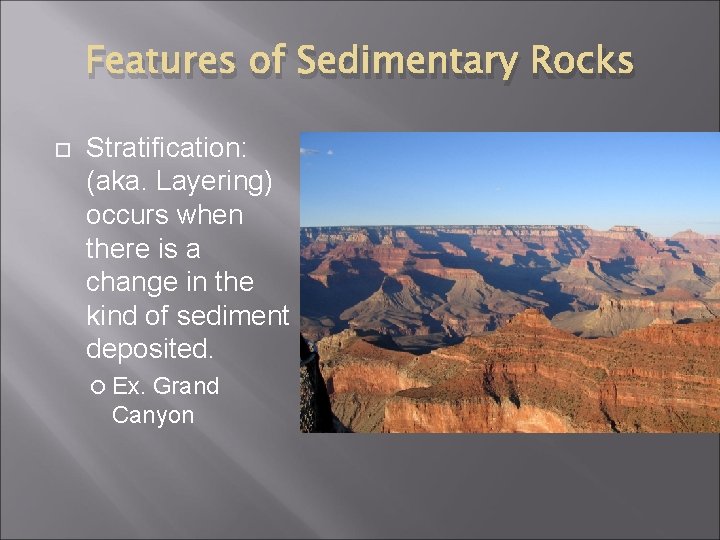
Features of Sedimentary Rocks Stratification: (aka. Layering) occurs when there is a change in the kind of sediment deposited. Ex. Grand Canyon
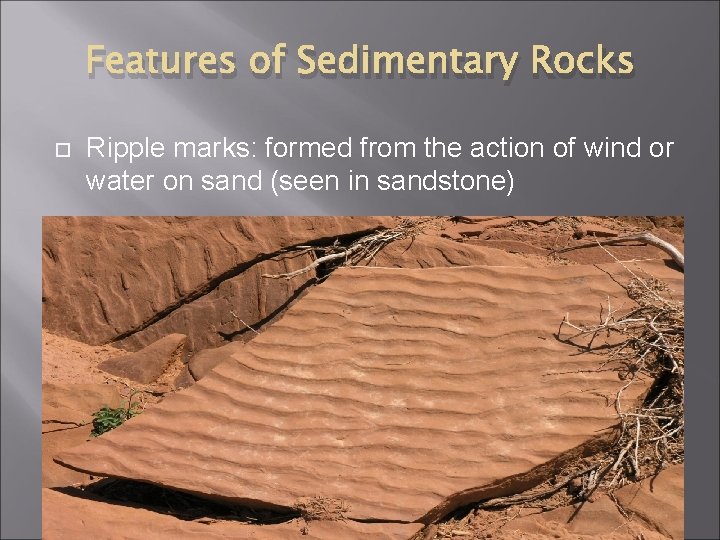
Features of Sedimentary Rocks Ripple marks: formed from the action of wind or water on sand (seen in sandstone)
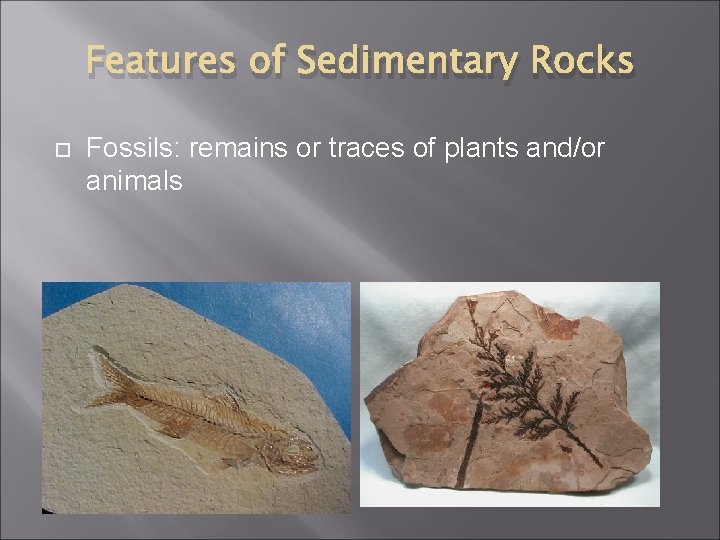
Features of Sedimentary Rocks Fossils: remains or traces of plants and/or animals