
Sedimentary Rocks Formation of Sedimentary Rocks 5 steps
- Slides: 15
Sedimentary Rocks
Formation of Sedimentary Rocks • 5 steps in the formation of sedimentary rocks – Weathering – Erosion – Deposition – Compaction – Cementation
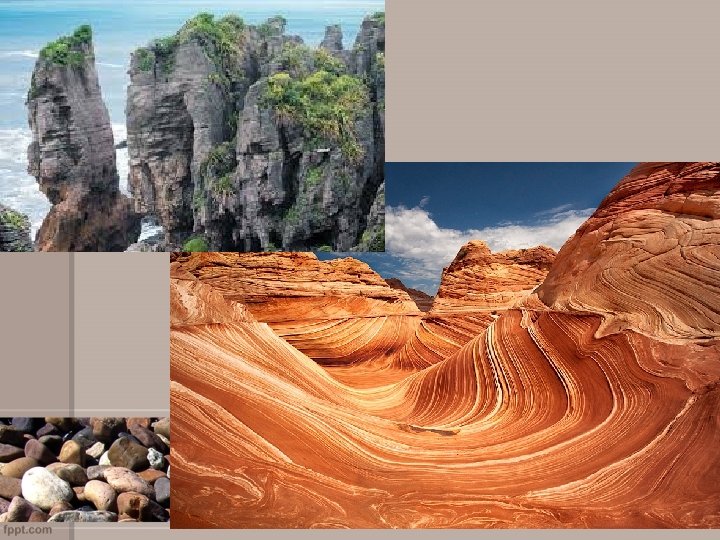
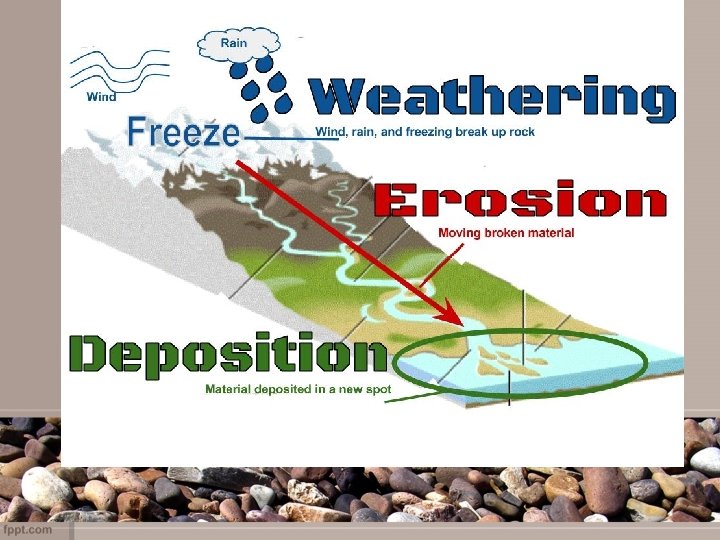
Weathering • Weathering is the breaking down or dissolving of rocks and minerals on Earths surface. Water, ice, acids, salt, plants, animals, and changes in temperature all agents of weathering
• Erosion involves the weathering and the removal of rock. • As soon as a rock particle (loosened by weathering processes) moves, we call it erosion
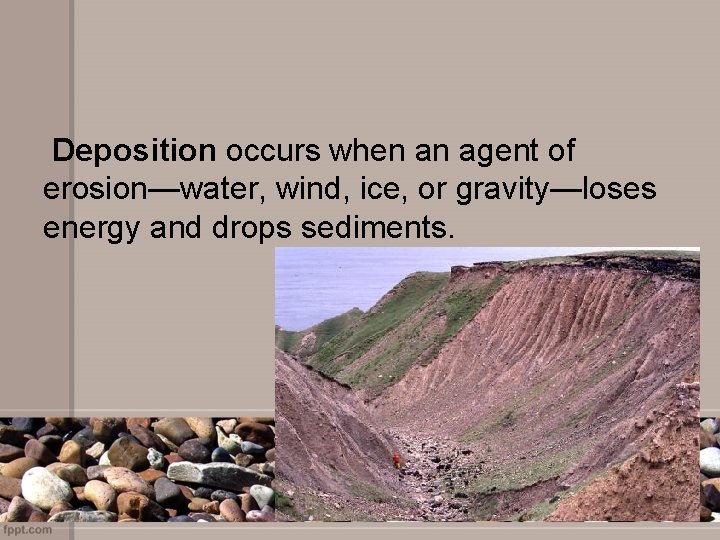
Deposition occurs when an agent of erosion—water, wind, ice, or gravity—loses energy and drops sediments.
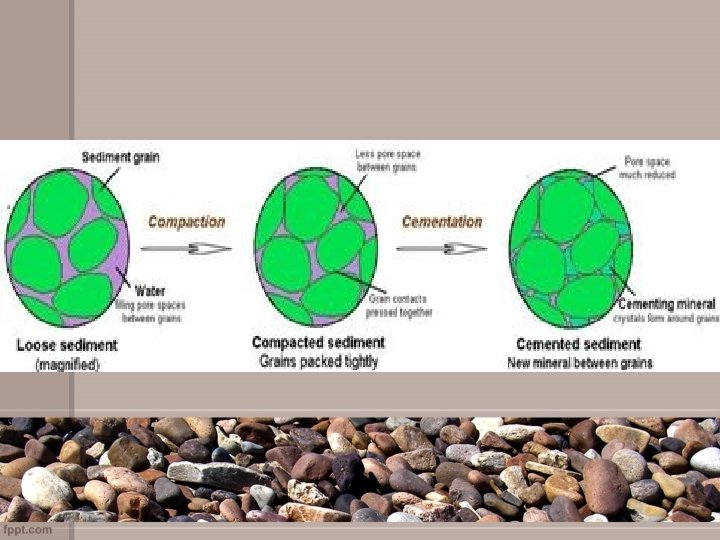
Compaction is a process that squeezes, or compacts, sediments.
• Cementation takes place when dissolved minerals are deposited in the tiny spaces among the sediments.
Classification of Sedimentary Rocks • Two main groups – Clastic – Chemical
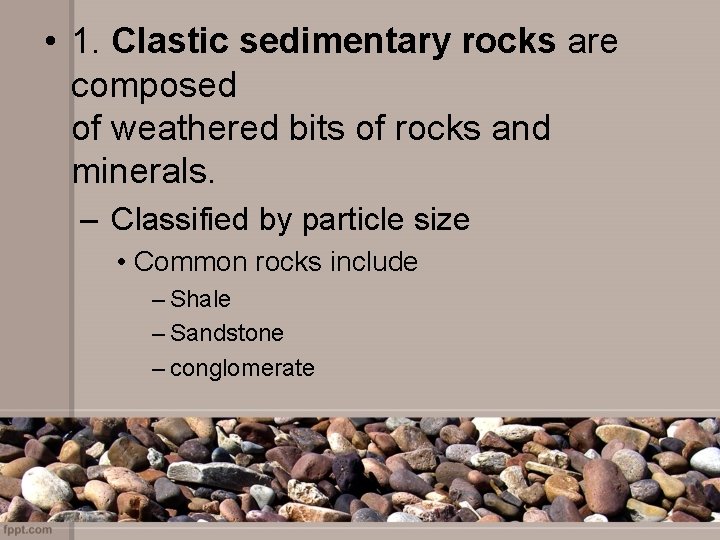
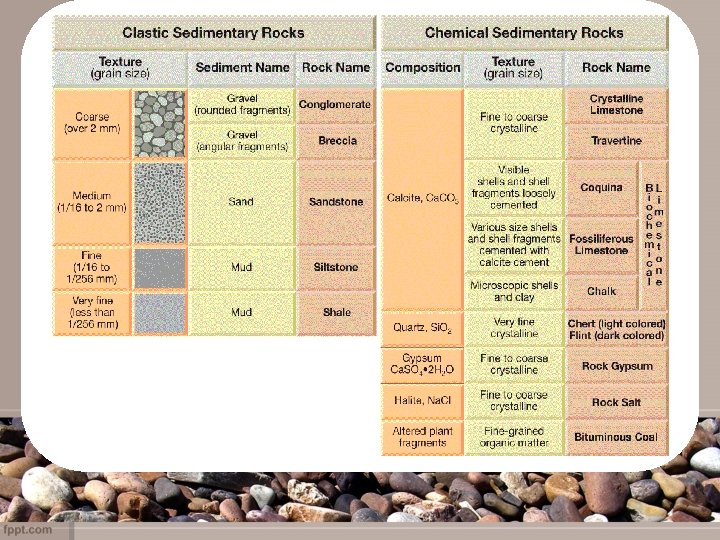
• 1. Clastic sedimentary rocks are composed of weathered bits of rocks and minerals. – Classified by particle size • Common rocks include – Shale – Sandstone – conglomerate
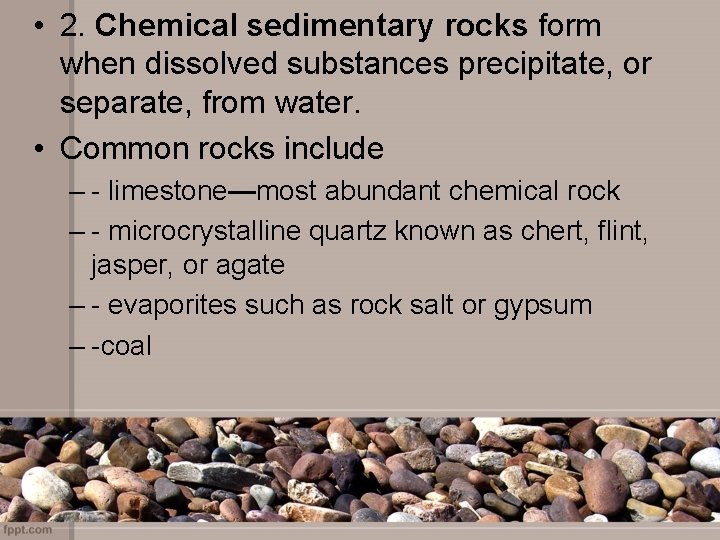
• 2. Chemical sedimentary rocks form when dissolved substances precipitate, or separate, from water. • Common rocks include – - limestone—most abundant chemical rock – - microcrystalline quartz known as chert, flint, jasper, or agate – - evaporites such as rock salt or gypsum – -coal