
SEDIMENTARY ROCK LAB SEDIMENT Deposits of material left
SEDIMENTARY ROCK & LAB

SEDIMENT � Deposits of material left by wind, water, or moving ice.

SEDIMENTARY ROCK � Rock created when different grain size particles of Earth become compacted, cemented or re crystallized (lithification). Teacher note: come back to lithification on slide # 15
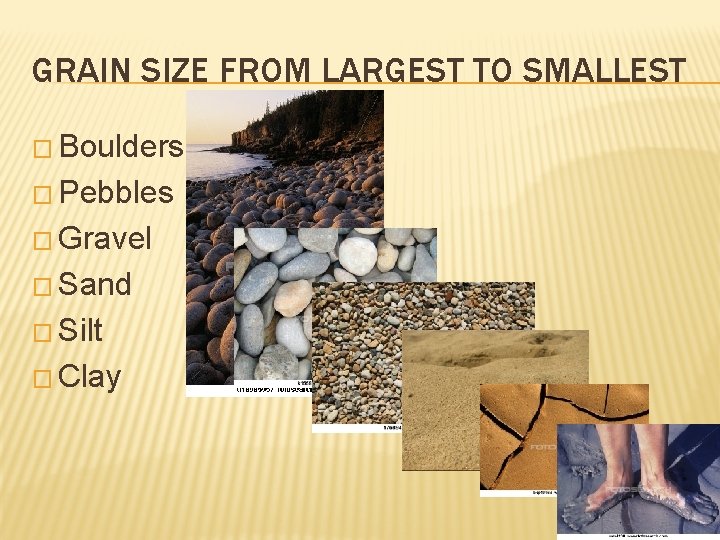
GRAIN SIZE FROM LARGEST TO SMALLEST � Boulders � Pebbles � Gravel � Sand � Silt � Clay
TYPES OF SEDIMENTARY ROCK I Clastic – coarse grained to fine grained � Conglomerate � Breccia � Sandstone � Siltstone � Shale

SEDIMENTARY - CONGLOMERATE � Large grained � Rounded pebbles or gravel compacted and cemented together.
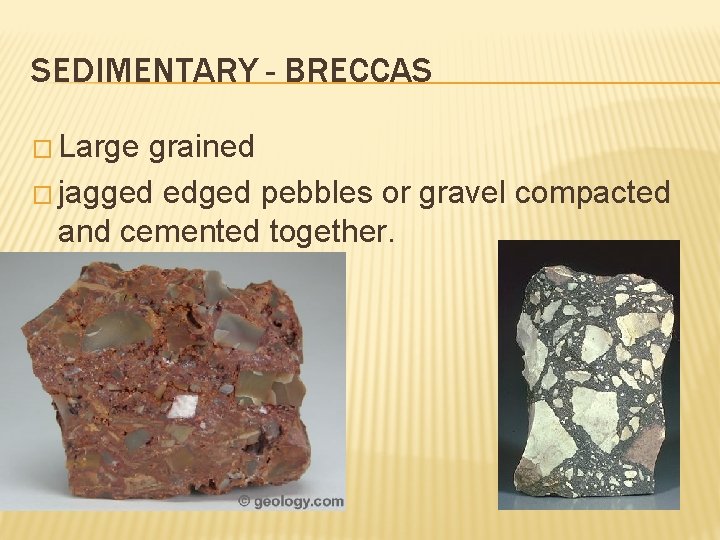
SEDIMENTARY - BRECCAS � Large grained � jagged edged pebbles or gravel compacted and cemented together.
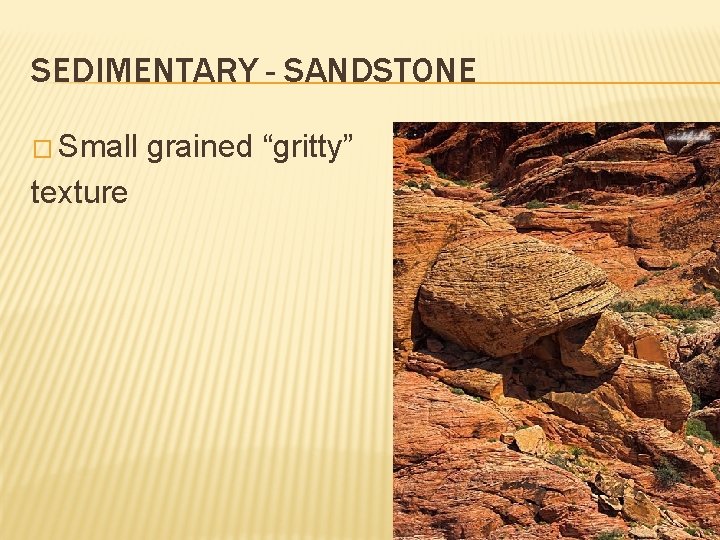
SEDIMENTARY - SANDSTONE � Small texture grained “gritty”
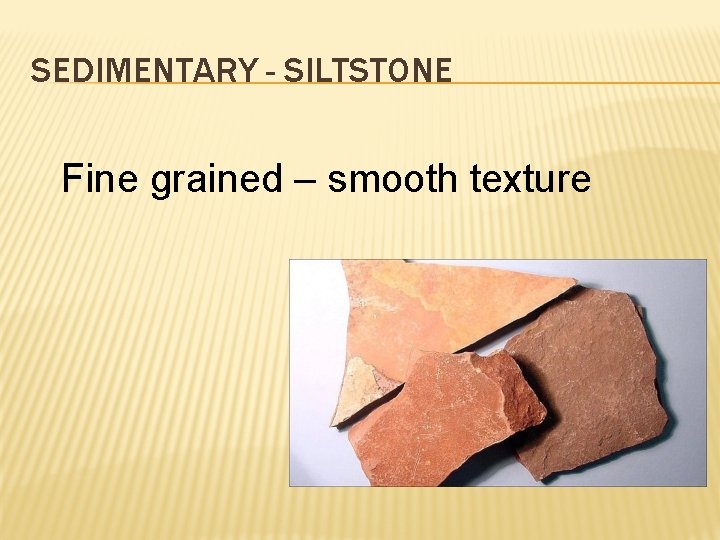
SEDIMENTARY - SILTSTONE Fine grained – smooth texture
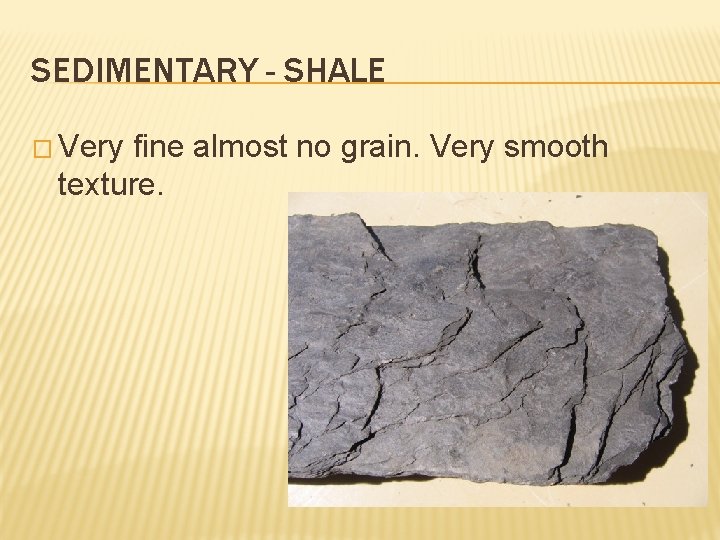
SEDIMENTARY - SHALE � Very fine almost no grain. Very smooth texture.
TYPES OF SEDIMENTARY ROCK II Organic – made from once living organisms. Coal Limestone
SEDIMENTARY - ORGANIC � Coal – made from the remains of decayed plant and animal material. � Peat- plant matter � Lignite- brown coal/still some moisture present � Bituminous- soft black coal/almost all moisture removed � Anthracite – hardened black coal/ almost pure carbon/ no moisture
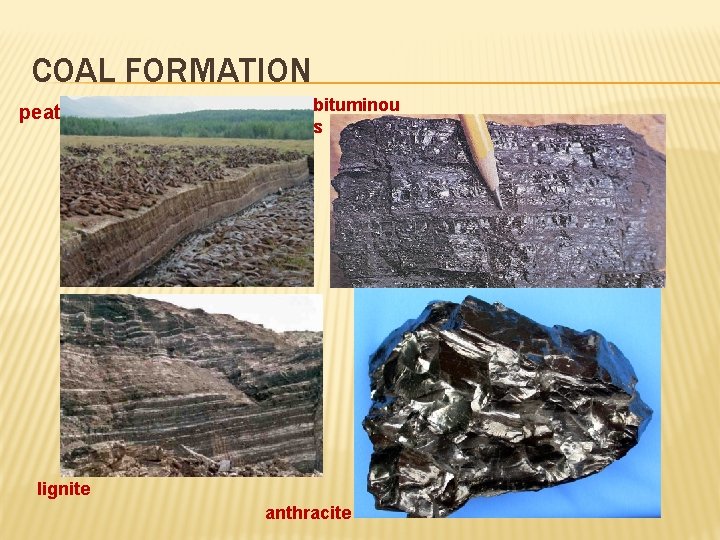
COAL FORMATION peat bituminou s lignite anthracite
SEDIMENTARY ORGANIC � Limestone – begins as shells or calcium bearing animals or plants. � These die and float to the bottom of the ocean or lake they inhabit. � Eventually enough accumulates to create enough pressure to create limestone.
SEDIMENTARY ORGANIC Remember the word, “lithifiction”? Today your going to model lithification and the processes of sedimentary rock formation. Problem: how can we model sedimentary rock formation and lithification? Hypothesis: If we dissolved a compound in water, and pour the water over layers of different size clasts, then let the water evaporate, then the compound should reform around the clasts as they re-crystalize. This would model how lithification binds and holds the clasts together.
SEDIMENTARY ORGANIC Background knowledge – view the video to build some background knowledge.
SEDIMENTARY ROCK � Materials: � Wax paper � Magnifying glass � Water � Sugar (salt? ) � Different sized clasts � Spoon � Paper cups
SEDIMENTARY ROCK Procedures: � Pour one spoonful of each clasts into a paper cup. � Fill another cup with a teaspoon of water. � Stir in 5 poonfulls of sugar until it is dissolved. � Pour the sugar water mixture slowly into the cup clasts until it is moistened. Pour off any excess water. � Let the “sediment”dry then carefully tear the paper cup off over a piece of wax paper. � Let the “sediment” sit for at least 2 days. � Use a magnifying glass to observe your “rock. ” Draw an illustration of what you see. What kind of
SEDIMENTARY ROCK � Tables A and B – sedimentary layers of clasts with dissolved sugar � Tables C and D – mixed clasts with dissolved sugar � Table E and F - sedimentary layers of clasts with dissolved salt � Tables G and H -mixed clasts with dissolved salt � Table I – sedimentary layers of clasts with dissolved sugar AND sedimentary layers of
SEDIMENTARY ROCK � III Chemical sedimentary rock � Evaporates
- Slides: 20