
Sediment Transport Geomorphology Objectives Learn basic concepts of
Sediment Transport & Geomorphology • Objectives – Learn basic concepts of sediment transport and fluvial geomorphology – Understand sediment budgets (sources, sinks, pathways for sediment) – Discuss infrastructure and ecosystem response 1
Sediment Transport and Geomorphology in Planning Steps • Characterize Physical Attributes of – Existing conditions – Reference conditions – Future w/o project conditions – Alternatives • 70% of ecosystem restoration efforts are linked to sediment and geomorphology 2
Sediment Transport & Geomorphology • Sediment Transport – mechanics of sediment erosion, transport, and deposition by water • Geomorphology – geologic science of landscape formation • H&H is the big driver affecting sediment transport and geomorphology 3
Too Much/Too Little Sediment • Problems with too much sediment – Raised flood profiles – Reduced underwater light – Decreased capacity of hydraulic structures • Problems with too little sediment – Incision (channel lowering) – Delta loss – Scour at hydraulic structures 4
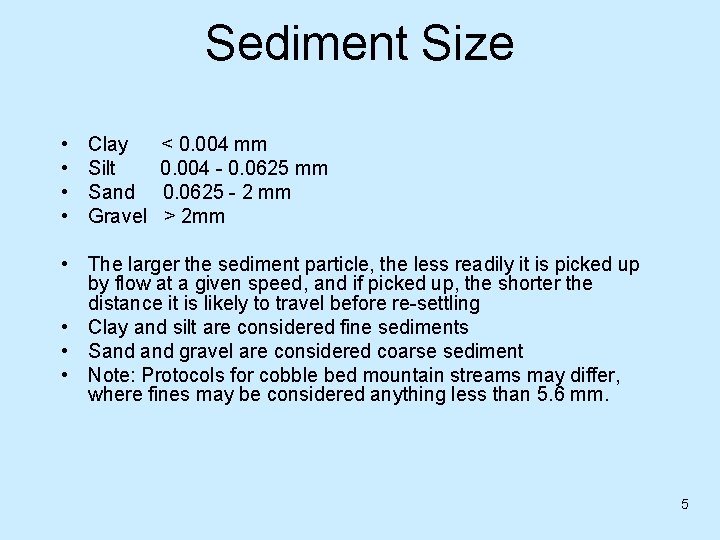
Sediment Size • • Clay Silt Sand Gravel < 0. 004 mm 0. 004 - 0. 0625 mm 0. 0625 - 2 mm > 2 mm • The larger the sediment particle, the less readily it is picked up by flow at a given speed, and if picked up, the shorter the distance it is likely to travel before re-settling • Clay and silt are considered fine sediments • Sand gravel are considered coarse sediment • Note: Protocols for cobble bed mountain streams may differ, where fines may be considered anything less than 5. 6 mm. 5
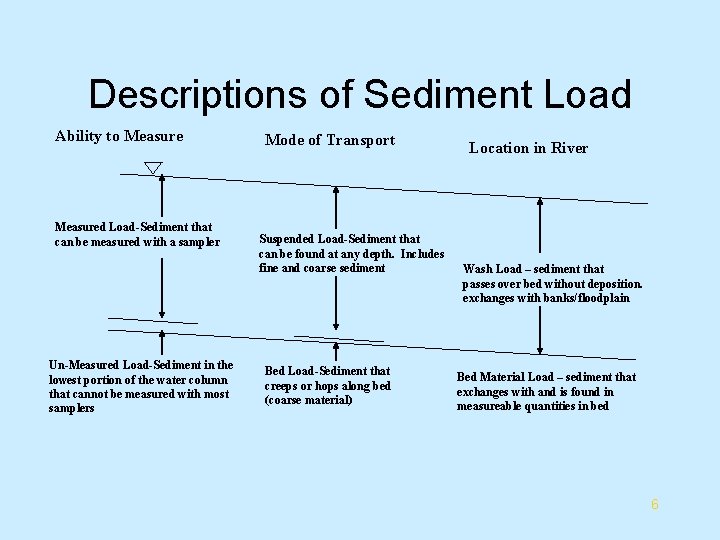
Descriptions of Sediment Load Ability to Measured Load-Sediment that can be measured with a sampler Un-Measured Load-Sediment in the lowest portion of the water column that cannot be measured with most samplers Mode of Transport Suspended Load-Sediment that can be found at any depth. Includes fine and coarse sediment Bed Load-Sediment that creeps or hops along bed (coarse material) Location in River Wash Load – sediment that passes over bed without deposition. exchanges with banks/floodplain Bed Material Load – sediment that exchanges with and is found in measureable quantities in bed 6

Suspended Load Curves (based on measured SS) Suspended sediment can be measured using samplers A plot of suspended sediment load versus water discharge. Note order of magnitude variation. Suspended Sediment Load (tons/day) = Sediment Concentration (mg/L) * Water Discharge (cfs) *. 0027 7
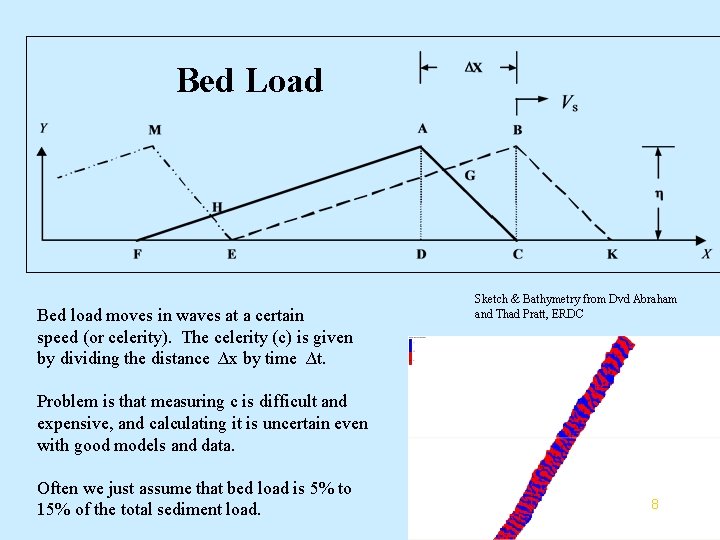
Bed Load Bed load moves in waves at a certain speed (or celerity). The celerity (c) is given by dividing the distance ∆x by time ∆t. Sketch & Bathymetry from Dvd Abraham and Thad Pratt, ERDC Problem is that measuring c is difficult and expensive, and calculating it is uncertain even with good models and data. Often we just assume that bed load is 5% to 15% of the total sediment load. 8
Calculating Sediment Transport • There are dozens of sediment transport functions that predict sediment transport based on: – sediment size, weight, and fall velocity – water velocity and depth – channel width – channel slope and roughness – water temperature • Many assumptions are made • Choose functions appropriate for your conditions 9
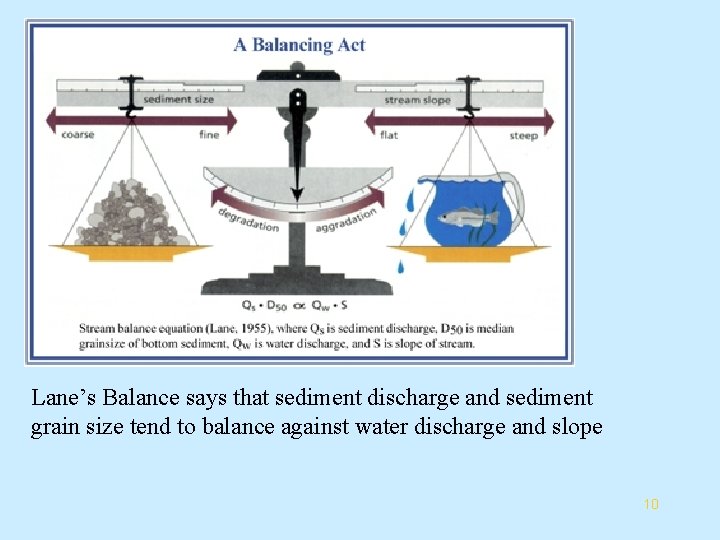
Lane’s Balance says that sediment discharge and sediment grain size tend to balance against water discharge and slope 10
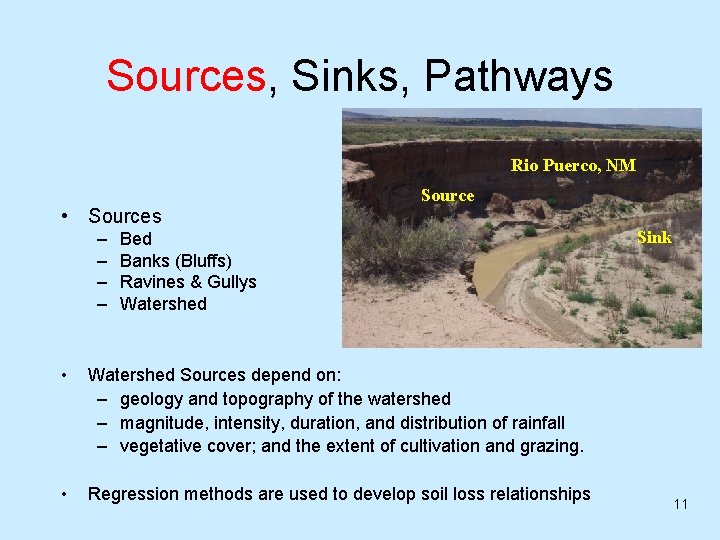
Sources, Sinks, Pathways Rio Puerco, NM • Sources – – Source Bed Banks (Bluffs) Ravines & Gullys Watershed • Watershed Sources depend on: – geology and topography of the watershed – magnitude, intensity, duration, and distribution of rainfall – vegetative cover; and the extent of cultivation and grazing. • Regression methods are used to develop soil loss relationships Sink 11
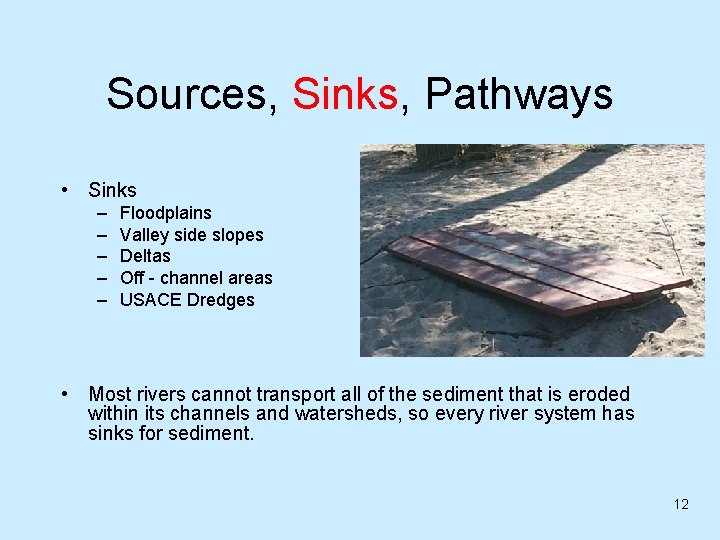
Sources, Sinks, Pathways • Sinks – – – Floodplains Valley side slopes Deltas Off - channel areas USACE Dredges • Most rivers cannot transport all of the sediment that is eroded within its channels and watersheds, so every river system has sinks for sediment. 12
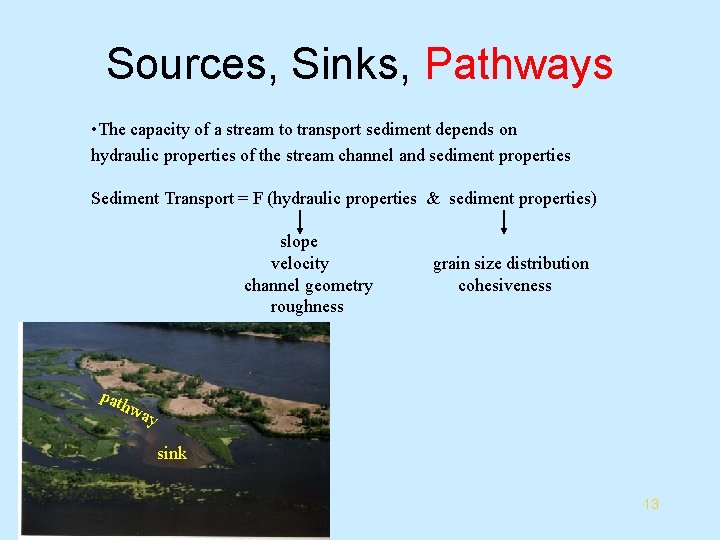
Sources, Sinks, Pathways • The capacity of a stream to transport sediment depends on hydraulic properties of the stream channel and sediment properties Sediment Transport = F (hydraulic properties & sediment properties) slope velocity channel geometry roughness pat h grain size distribution cohesiveness wa y sink 13
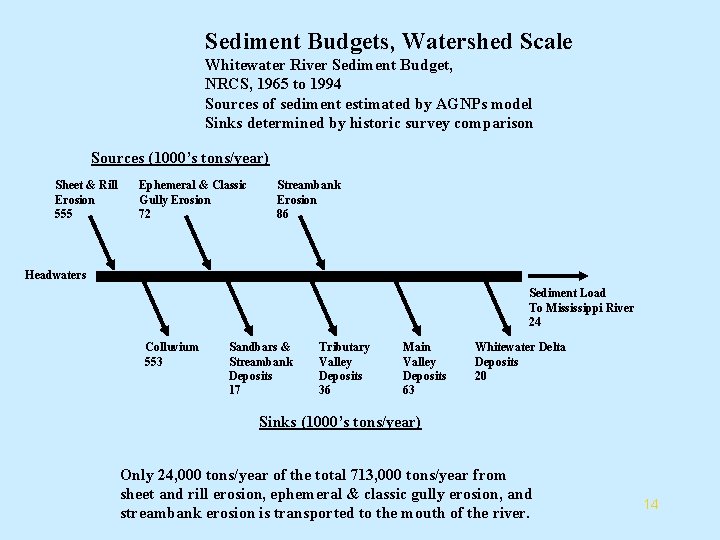
Sediment Budgets, Watershed Scale Whitewater River Sediment Budget, NRCS, 1965 to 1994 Sources of sediment estimated by AGNPs model Sinks determined by historic survey comparison Sources (1000’s tons/year) Sheet & Rill Erosion 555 Ephemeral & Classic Gully Erosion 72 Streambank Erosion 86 Headwaters Sediment Load To Mississippi River 24 Colluvium 553 Sandbars & Streambank Deposits 17 Tributary Valley Deposits 36 Main Valley Deposits 63 Whitewater Delta Deposits 20 Sinks (1000’s tons/year) Only 24, 000 tons/year of the total 713, 000 tons/year from sheet and rill erosion, ephemeral & classic gully erosion, and streambank erosion is transported to the mouth of the river. 14
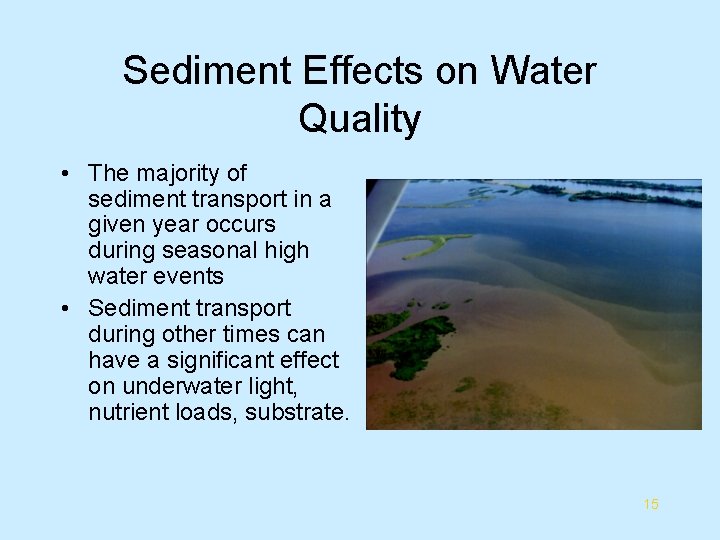
Sediment Effects on Water Quality • The majority of sediment transport in a given year occurs during seasonal high water events • Sediment transport during other times can have a significant effect on underwater light, nutrient loads, substrate. 15
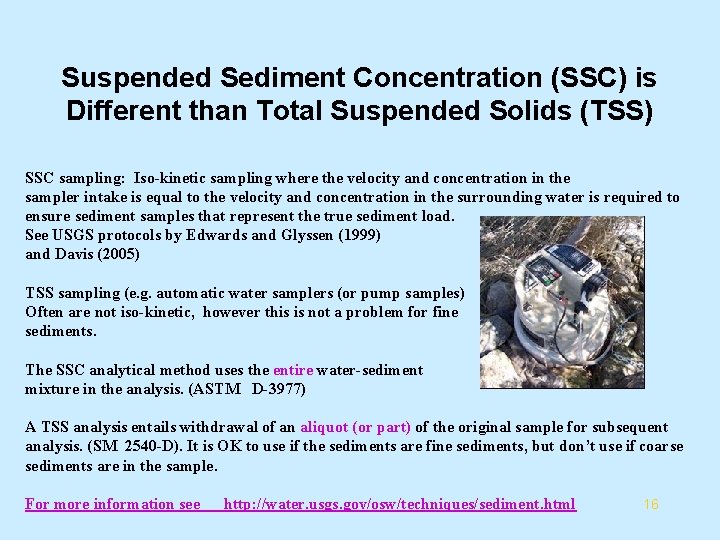
Suspended Sediment Concentration (SSC) is Different than Total Suspended Solids (TSS) SSC sampling: Iso-kinetic sampling where the velocity and concentration in the sampler intake is equal to the velocity and concentration in the surrounding water is required to ensure sediment samples that represent the true sediment load. See USGS protocols by Edwards and Glyssen (1999) and Davis (2005) TSS sampling (e. g. automatic water samplers (or pump samples) Often are not iso-kinetic, however this is not a problem for fine sediments. The SSC analytical method uses the entire water-sediment mixture in the analysis. (ASTM D-3977) A TSS analysis entails withdrawal of an aliquot (or part) of the original sample for subsequent analysis. (SM 2540 -D). It is OK to use if the sediments are fine sediments, but don’t use if coarse sediments are in the sample. For more information see http: //water. usgs. gov/osw/techniques/sediment. html 16
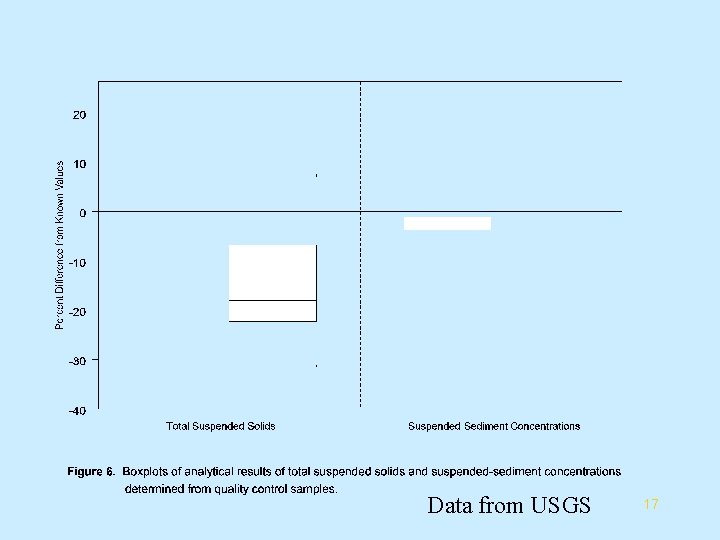
Data from USGS 17

gy ner h. E Hig nnel Cha Geomorphology • Geologic science of landscape formation • Fluvial Geomorphology – landscape formation by streams rgy Ene Low kwater Bac 18
Watershed and Channel Alteration will change H&H Causing Geomorphic Responses Including: • • • Channel incision Channel plugging Land loss along channels Gullying Floodplain deposition 19
Geomorphic Responses may Affect: • Infrastructure: Bridges, FRM • Human uses: Drinking water, recreation, agriculture • Aquatic Habitat • Commercial Navigation • Water Quality: Underwater light, nutrients, contaminants 20
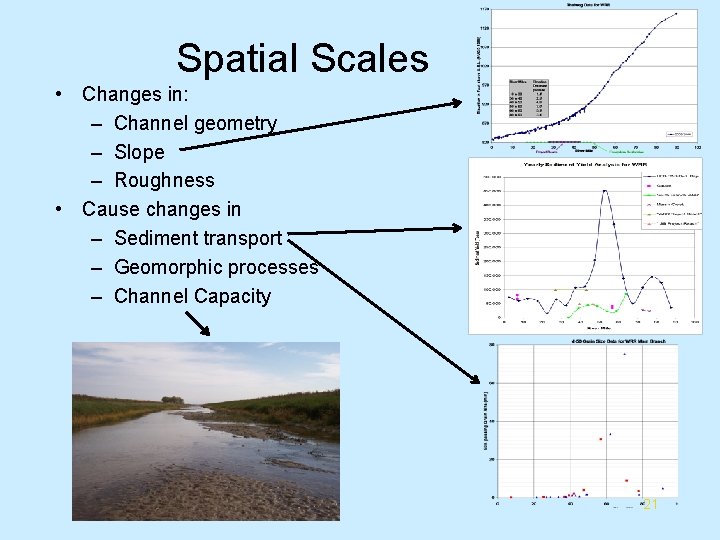
Spatial Scales • Changes in: – Channel geometry – Slope – Roughness • Cause changes in – Sediment transport – Geomorphic processes – Channel Capacity 21
Time-Scales • Annual geomorphic changes like sand bar migration, bank erosion, point bar building occur due to seasonal high flows • Long-Term geomorphic change like incision or delta building or loss might be natural or anthropogenic. • Climate variation, watershed development, channelization, dams, urbanization affect geomorphic change at both scales. 22
Use Multiple Tools for Sediment Transport and Geomorphological Analysis • Field Investigations – Existing conditions substrate, bankfull conditions, vegetation, discussion with local experts • Surveys: – Cross sections, profiles, sediment cores • Analytical Techniques • Numerical Models: – Watershed models – River models • Aerial photo comparisons – Change from Historic conditions • Sediment Budgets • Specific Stage Discharge Analysis 23
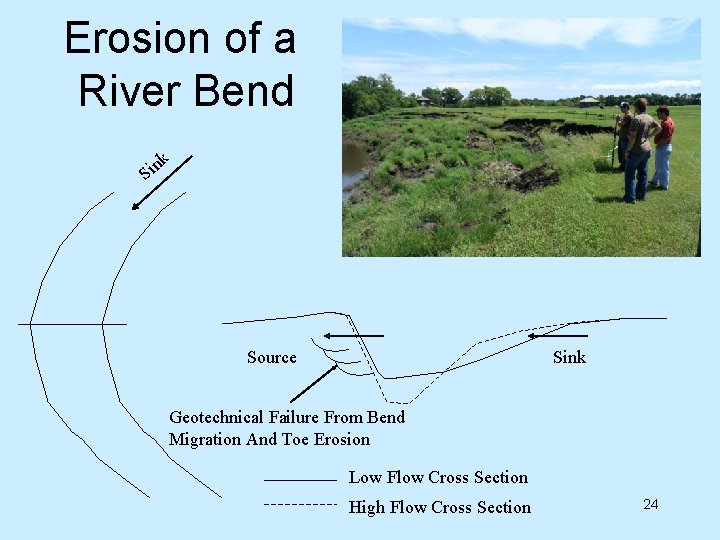
Erosion of a River Bend k n Si Source Sink Geotechnical Failure From Bend Migration And Toe Erosion Low Flow Cross Section High Flow Cross Section 24
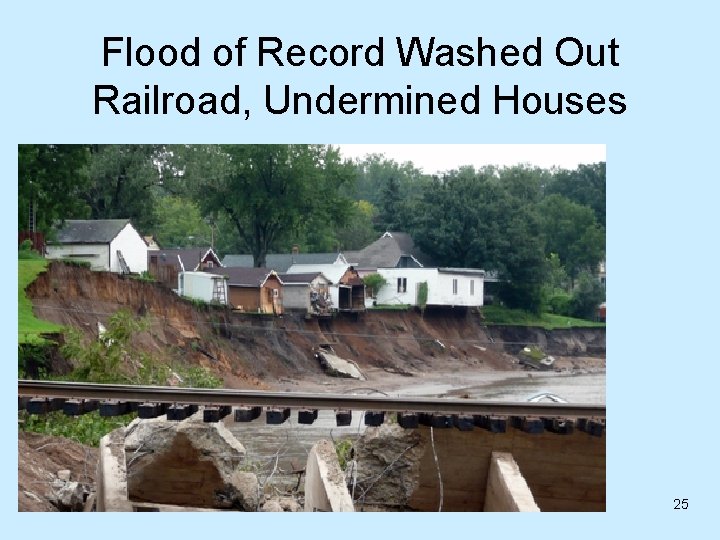
Flood of Record Washed Out Railroad, Undermined Houses 25
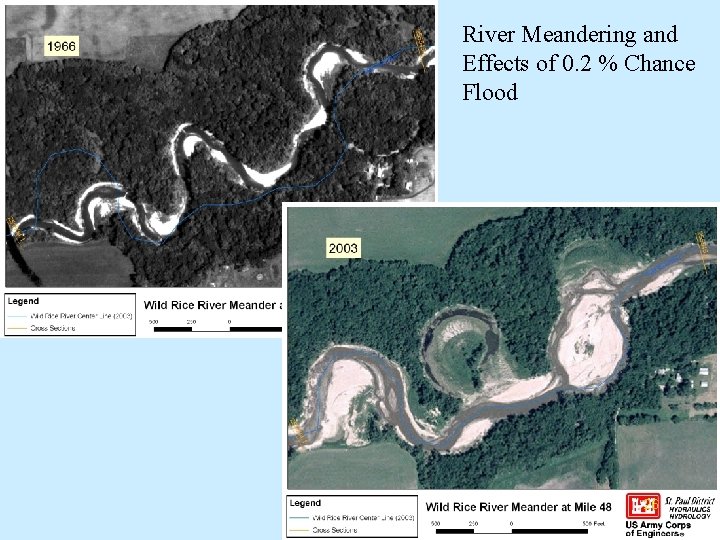
River Meandering and Effects of 0. 2 % Chance Flood 26
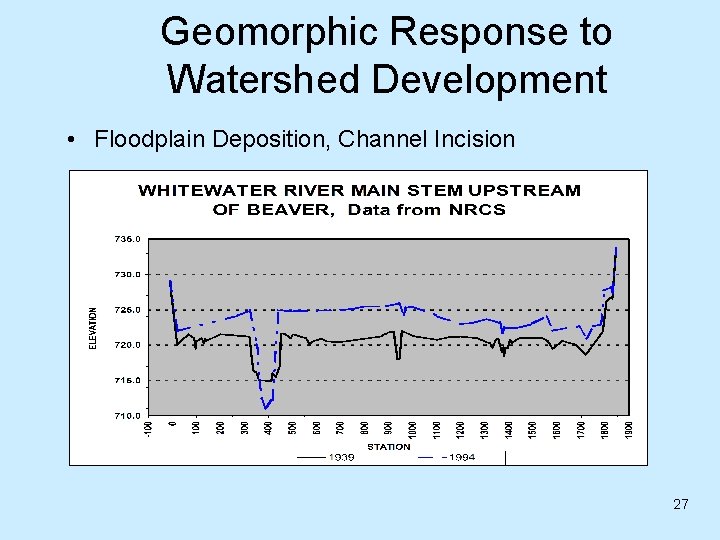
Geomorphic Response to Watershed Development • Floodplain Deposition, Channel Incision 27
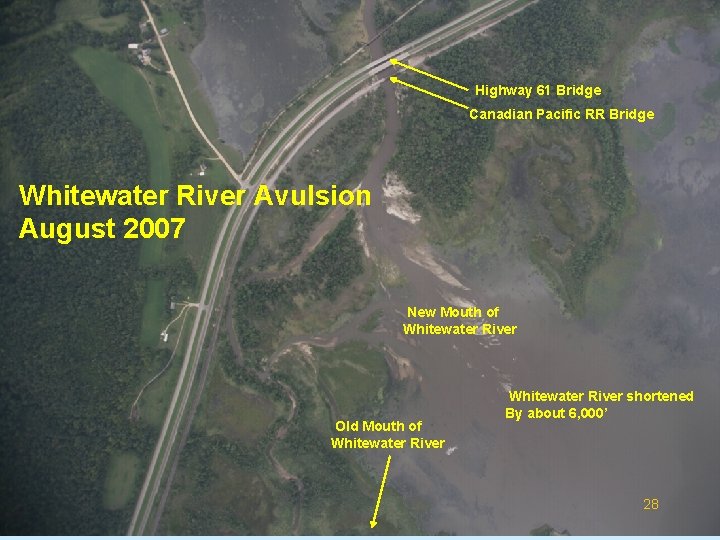
Highway 61 Bridge Canadian Pacific RR Bridge Whitewater River Avulsion August 2007 New Mouth of Whitewater River Old Mouth of Whitewater River shortened By about 6, 000’ 28
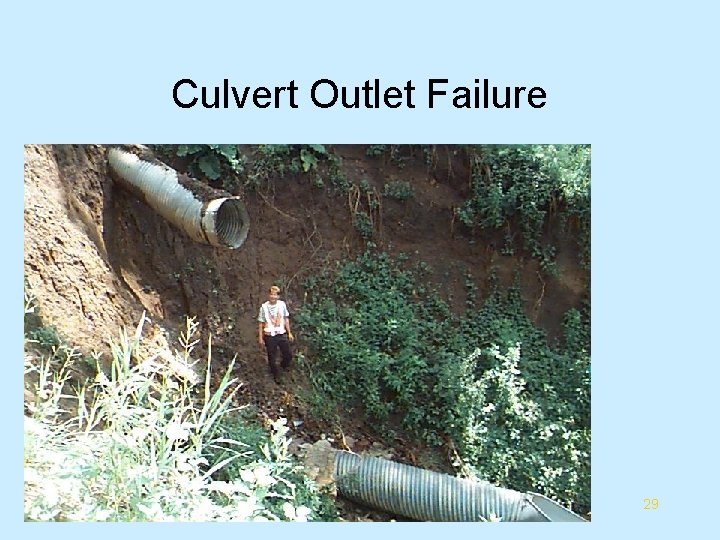
Culvert Outlet Failure 29
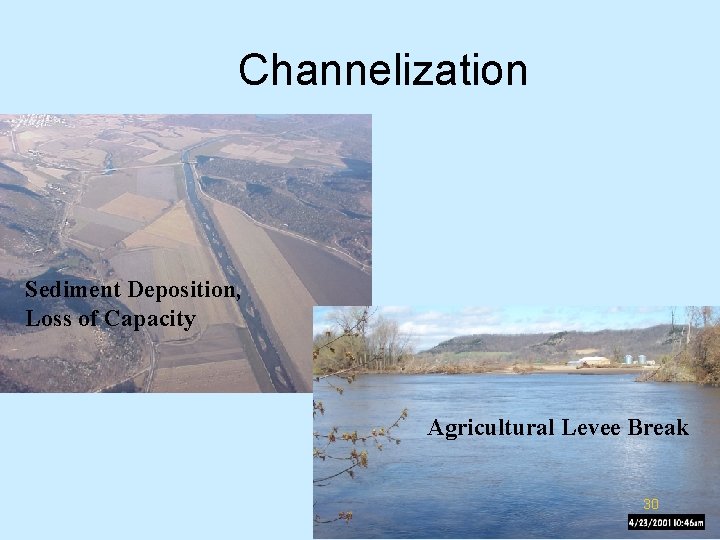
Channelization Sediment Deposition, Loss of Capacity Agricultural Levee Break 30
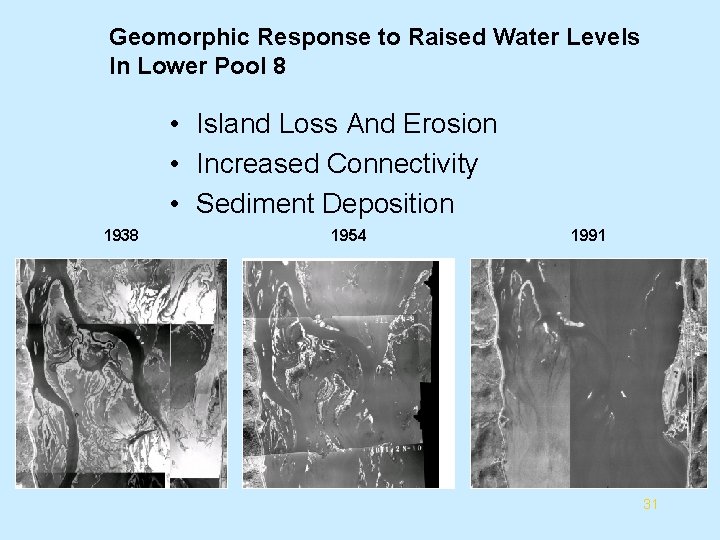
Geomorphic Response to Raised Water Levels In Lower Pool 8 • Island Loss And Erosion • Increased Connectivity • Sediment Deposition 1938 1954 1991 31
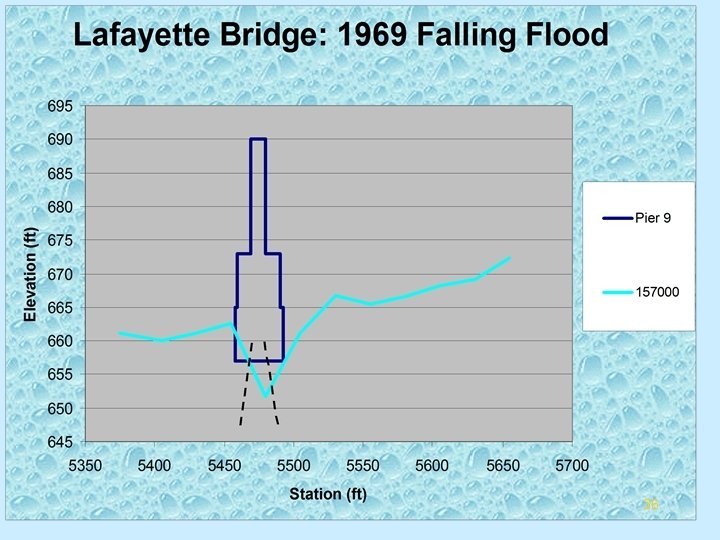
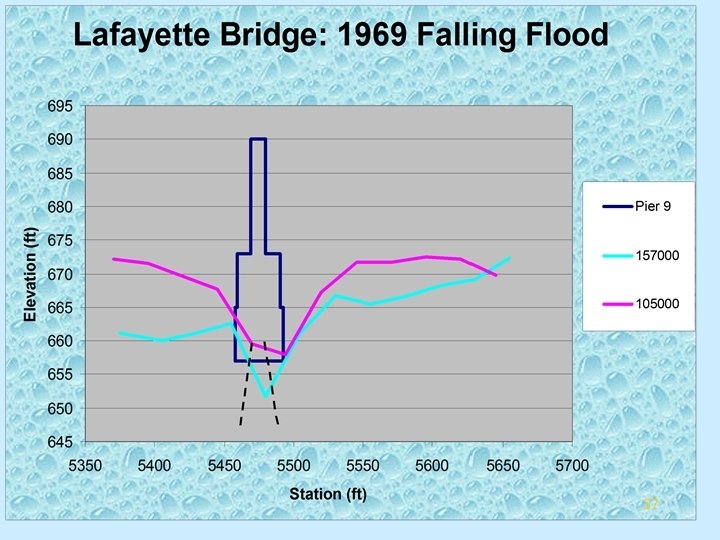
Bridges • Usually footings are deep enough to handle a certain amount of scour. • Changed hydrological conditions (climate variation, land use change) or changed hydraulic conditions (dam removal, debris) can create greater scour levels 32
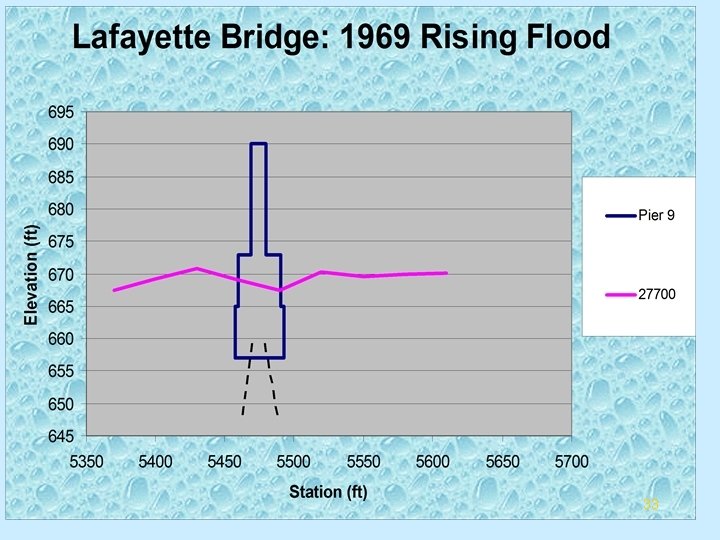
33
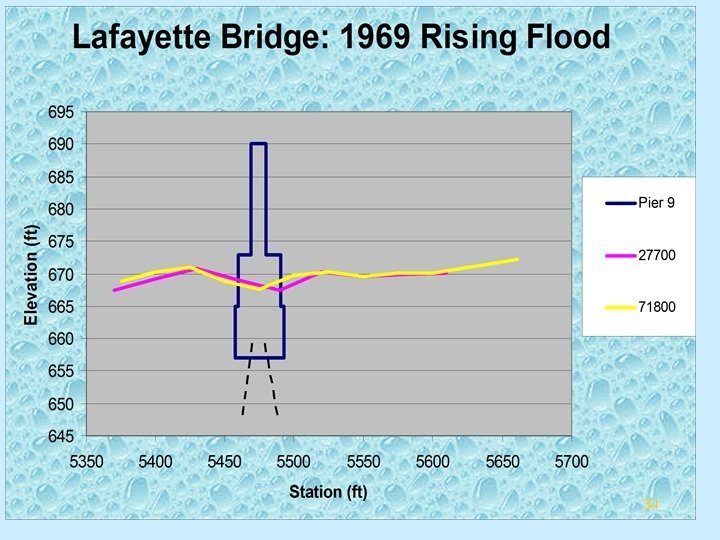
34
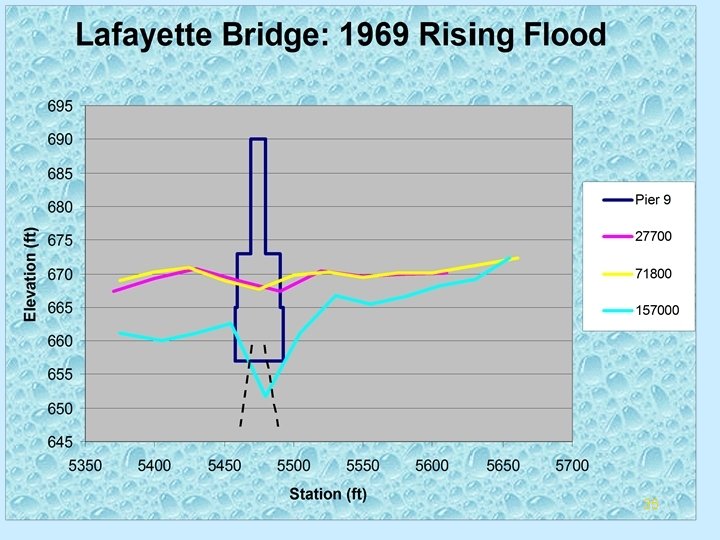
Summary of Rising Flood 35
36
37
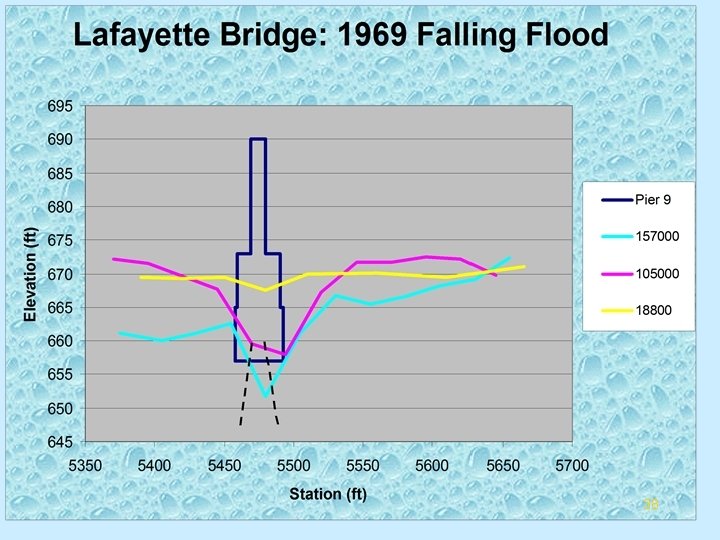
Summary of Falling Flood 38
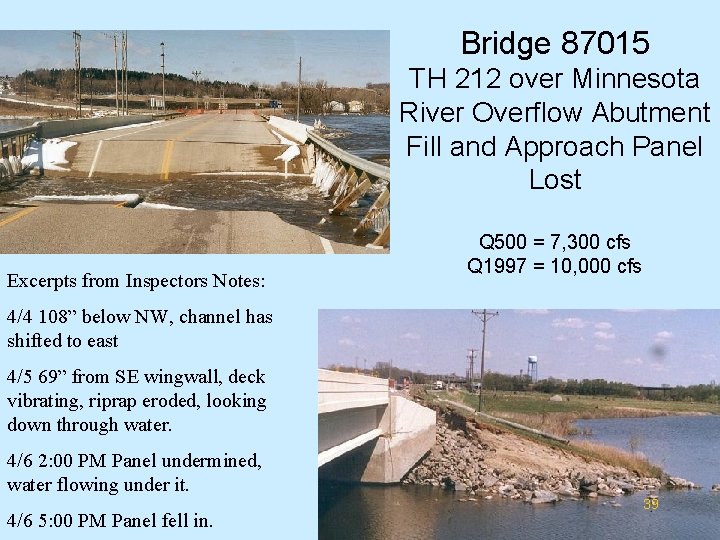
Bridge 87015 TH 212 over Minnesota River Overflow Abutment Fill and Approach Panel Lost Excerpts from Inspectors Notes: Q 500 = 7, 300 cfs Q 1997 = 10, 000 cfs 4/4 108” below NW, channel has shifted to east 4/5 69” from SE wingwall, deck vibrating, riprap eroded, looking down through water. 4/6 2: 00 PM Panel undermined, water flowing under it. 4/6 5: 00 PM Panel fell in. 39
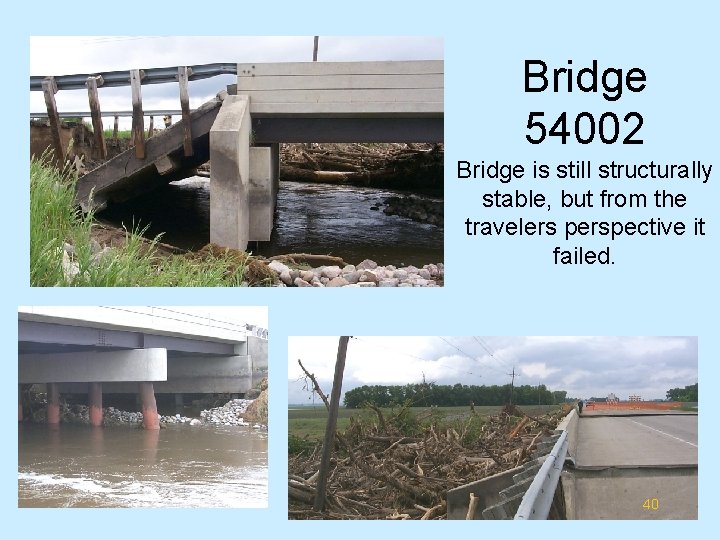
Bridge 54002 Bridge is still structurally stable, but from the travelers perspective it failed. 40
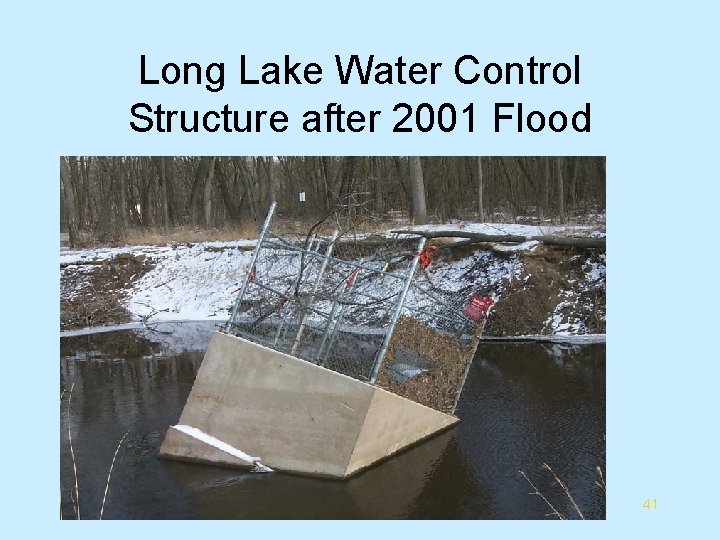
Long Lake Water Control Structure after 2001 Flood 41

~ The End ~ 42
- Slides: 42