
Sediment Rock Practical 1 1 Identify this rock
- Slides: 27
Sediment Rock Practical
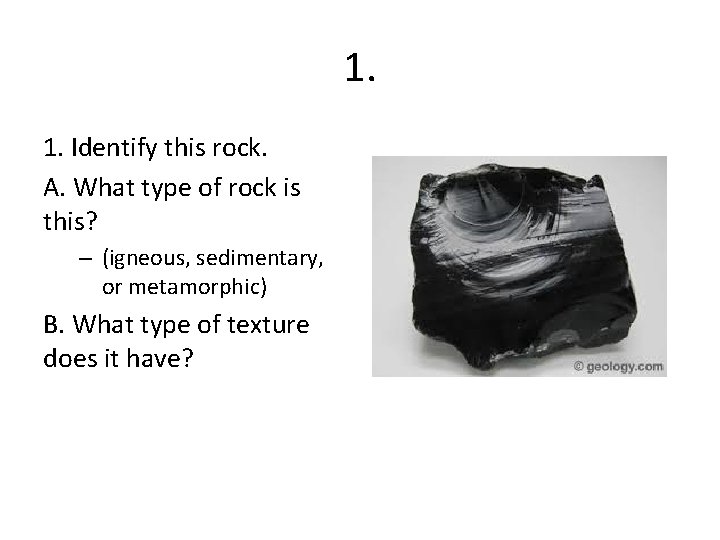
1. 1. Identify this rock. A. What type of rock is this? – (igneous, sedimentary, or metamorphic) B. What type of texture does it have?
2 2. ______ rocks are products of mechanical and chemical weathering. A. Give two examples of a clastic compositional rock
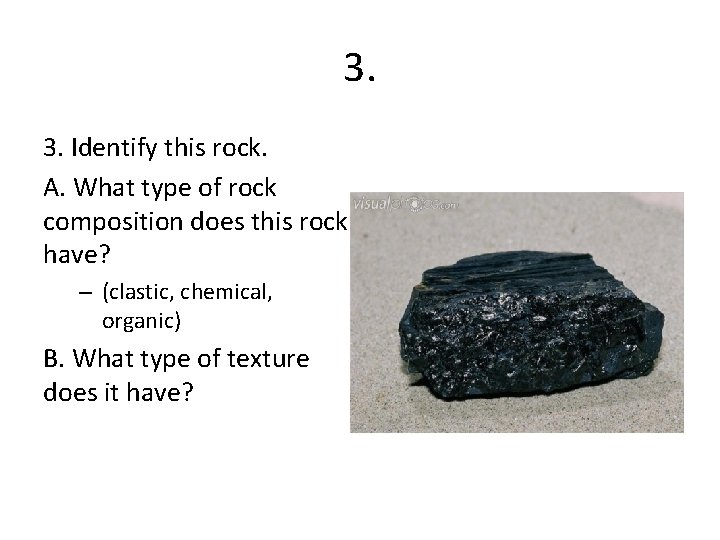
3. 3. Identify this rock. A. What type of rock composition does this rock have? – (clastic, chemical, organic) B. What type of texture does it have?
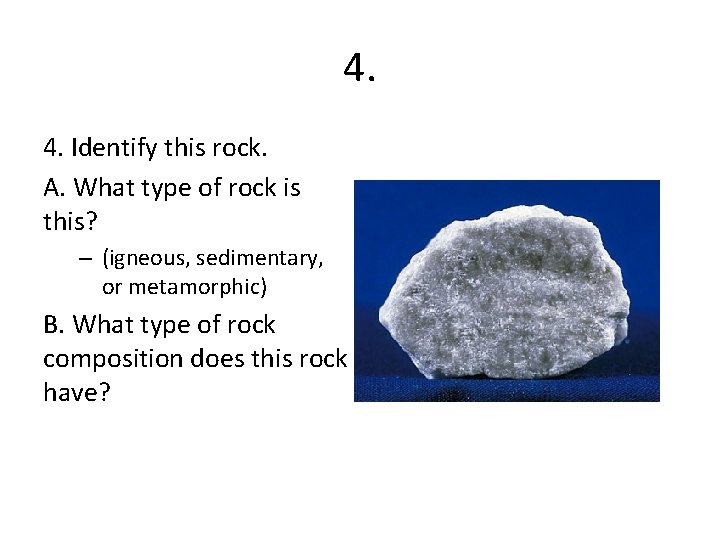
4. 4. Identify this rock. A. What type of rock is this? – (igneous, sedimentary, or metamorphic) B. What type of rock composition does this rock have?
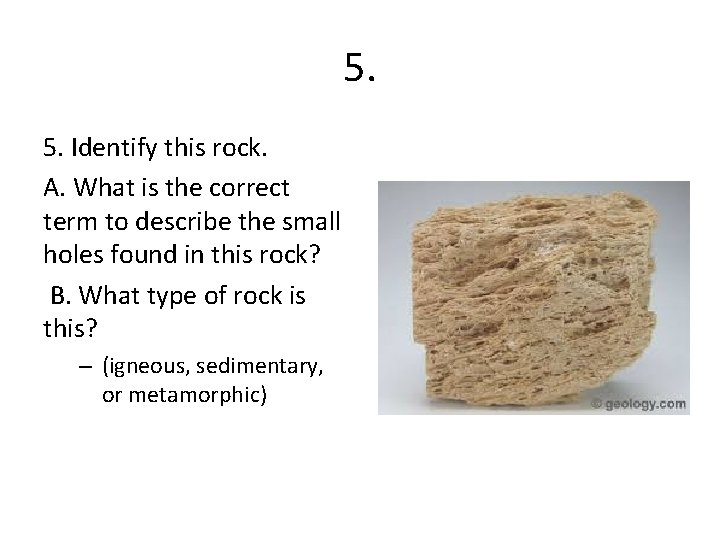
5. 5. Identify this rock. A. What is the correct term to describe the small holes found in this rock? B. What type of rock is this? – (igneous, sedimentary, or metamorphic)
6. 6. Unconsolidated sediments are transformed into solid sedimentary rock by a process known as ________ A. What are three types of sedimentary rock composition that we discussed in class?
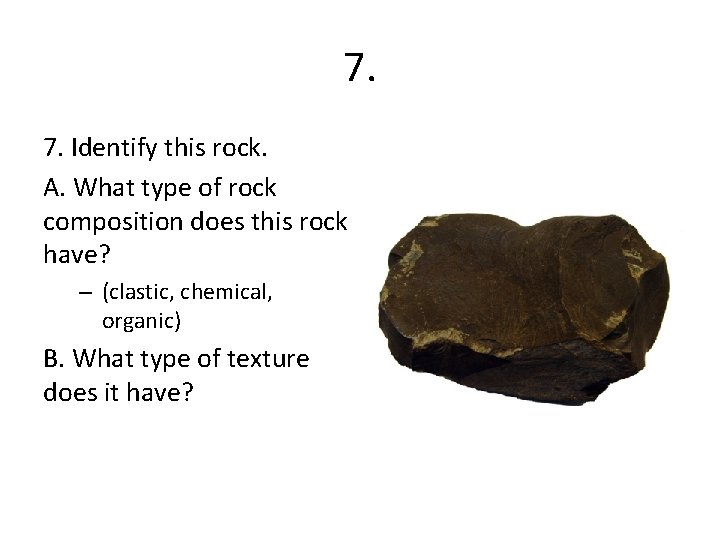
7. 7. Identify this rock. A. What type of rock composition does this rock have? – (clastic, chemical, organic) B. What type of texture does it have?
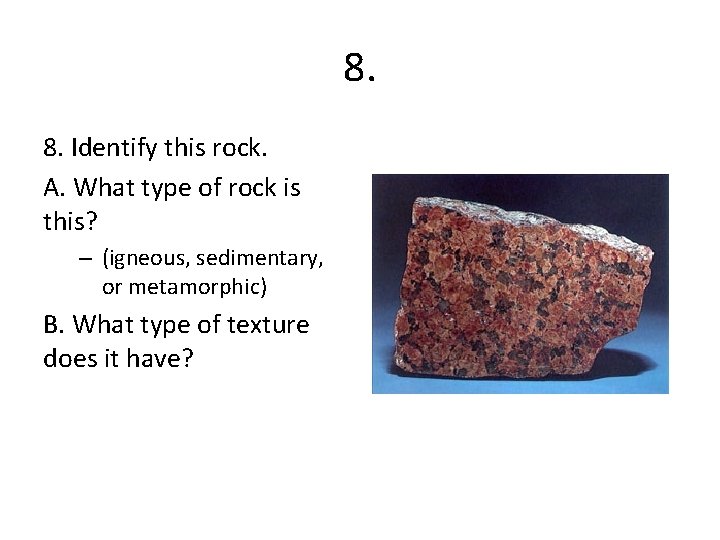
8. 8. Identify this rock. A. What type of rock is this? – (igneous, sedimentary, or metamorphic) B. What type of texture does it have?
9. 9. Sediment that was once in solution are known as _______ sedimentary rocks (detrital or chemical) A. Transported sediment as solid particles are known as _______ sedimentary rock (detrital, or chemical)
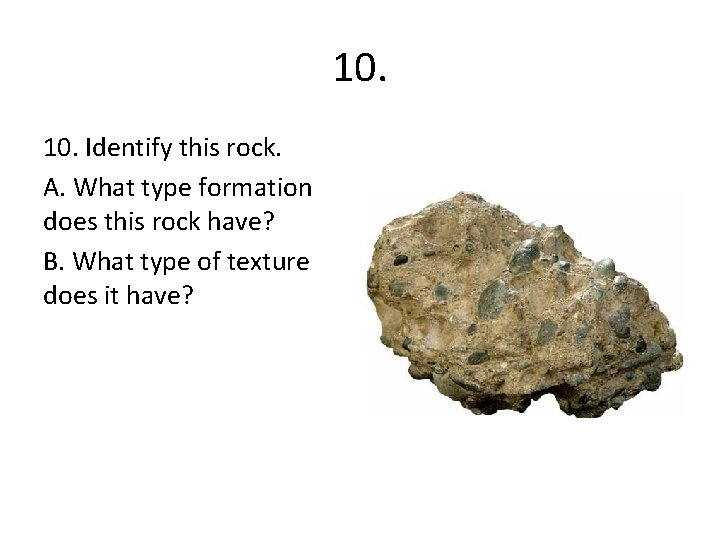
10. Identify this rock. A. What type formation does this rock have? B. What type of texture does it have?
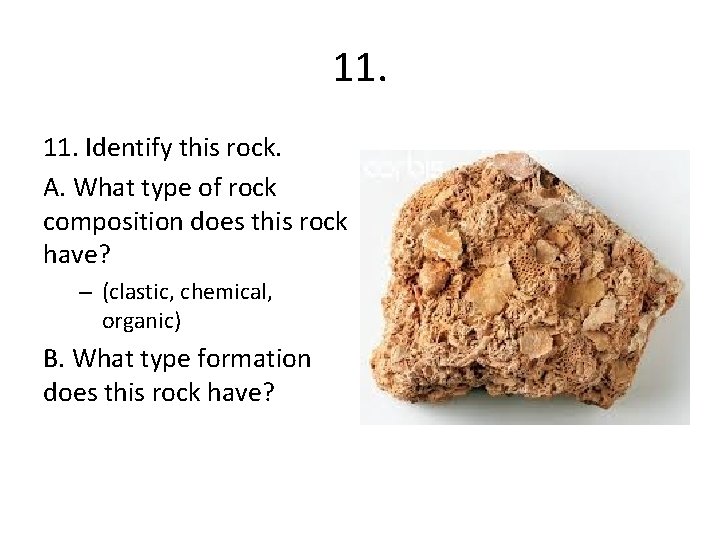
11. Identify this rock. A. What type of rock composition does this rock have? – (clastic, chemical, organic) B. What type formation does this rock have?
12 12. What type of rock is formed from cooled lava that has erupted from a volcano(be specific) A. Cooling magma underneath the Earths crust forms what type of igneous rock.
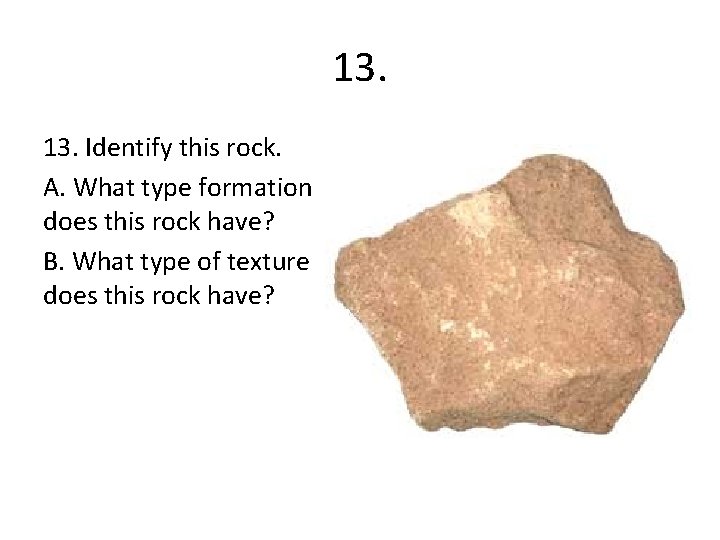
13. Identify this rock. A. What type formation does this rock have? B. What type of texture does this rock have?
14. ______ is the most abundant sedimentary chemical rock A. Give an example of an organic sedimentary rock.
15. Name one example of an Evaporites rock A. What type of rock composition does this rock have? – (clastic, chemical, organic)
16 16. ____ texture describes sedimentary rock that has discrete fragments and partials. A. _____ texture describes sedimentary rock that has a pattern of interlocking crystals, and may resemble igneous rock.
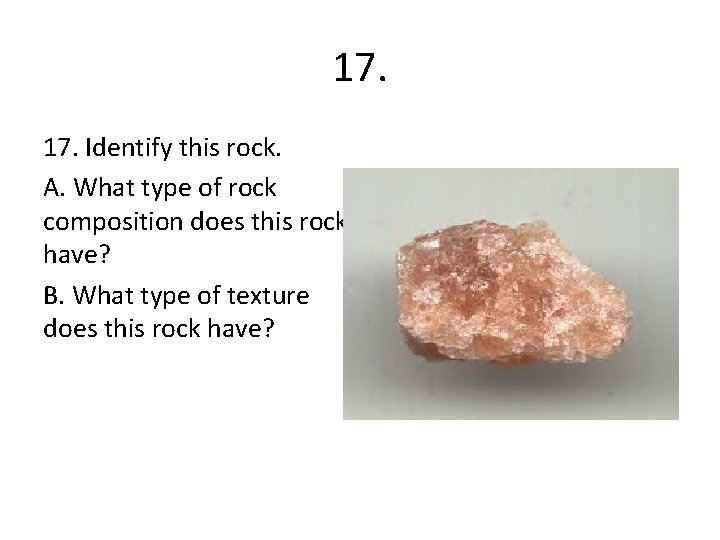
17. Identify this rock. A. What type of rock composition does this rock have? B. What type of texture does this rock have?
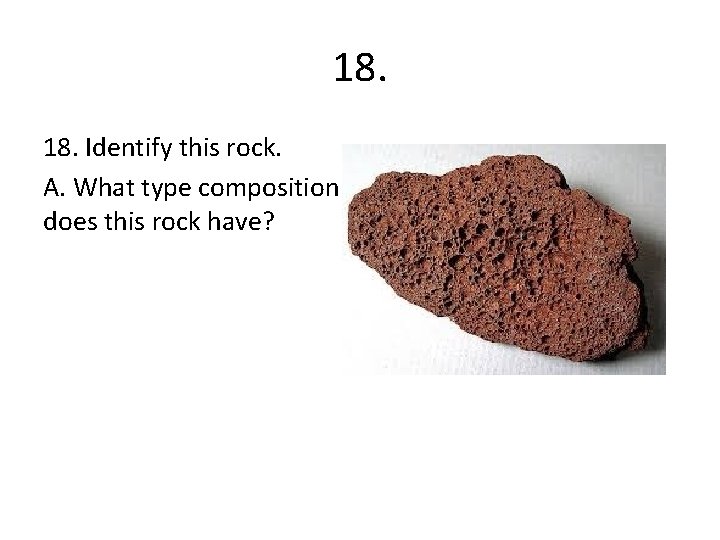
18. Identify this rock. A. What type composition does this rock have?
19 19. What is another term for plutonic rocks? A. Name the 3 types of rocks found in the rock cycle
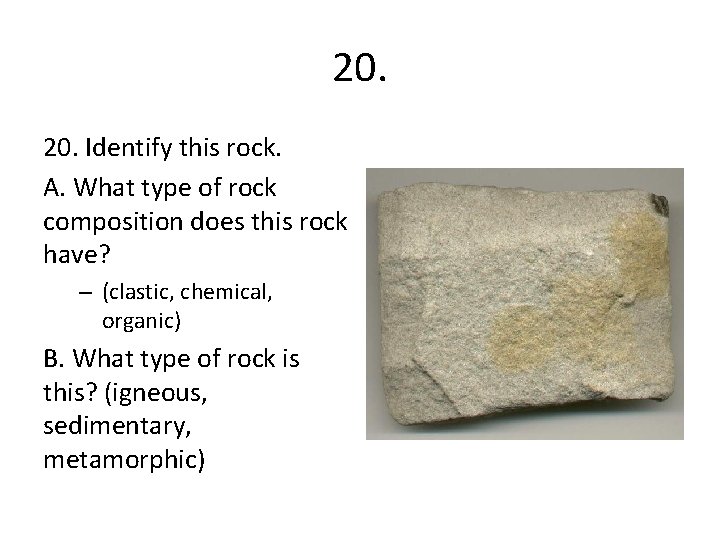
20. Identify this rock. A. What type of rock composition does this rock have? – (clastic, chemical, organic) B. What type of rock is this? (igneous, sedimentary, metamorphic)
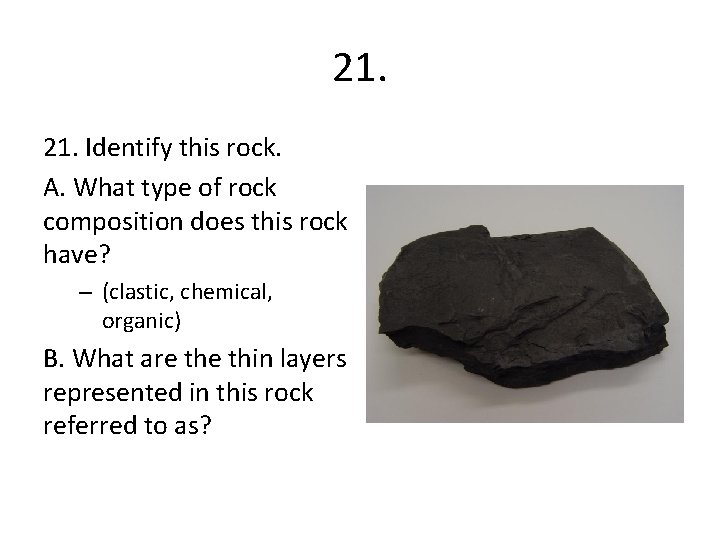
21. Identify this rock. A. What type of rock composition does this rock have? – (clastic, chemical, organic) B. What are thin layers represented in this rock referred to as?
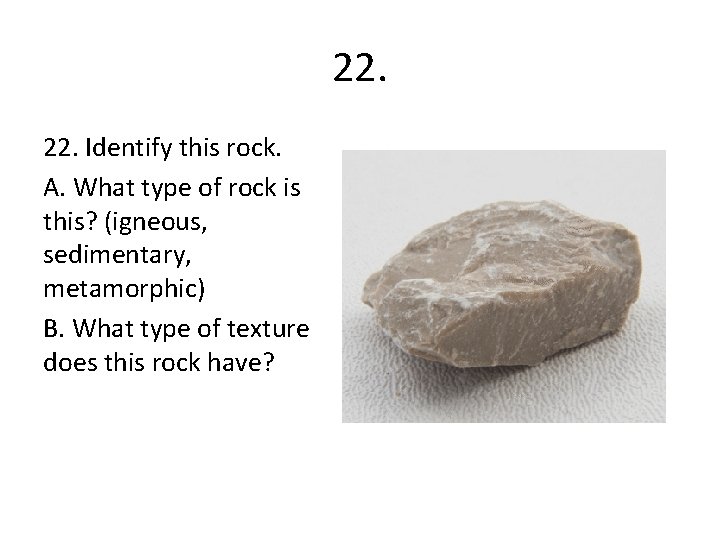
22. Identify this rock. A. What type of rock is this? (igneous, sedimentary, metamorphic) B. What type of texture does this rock have?
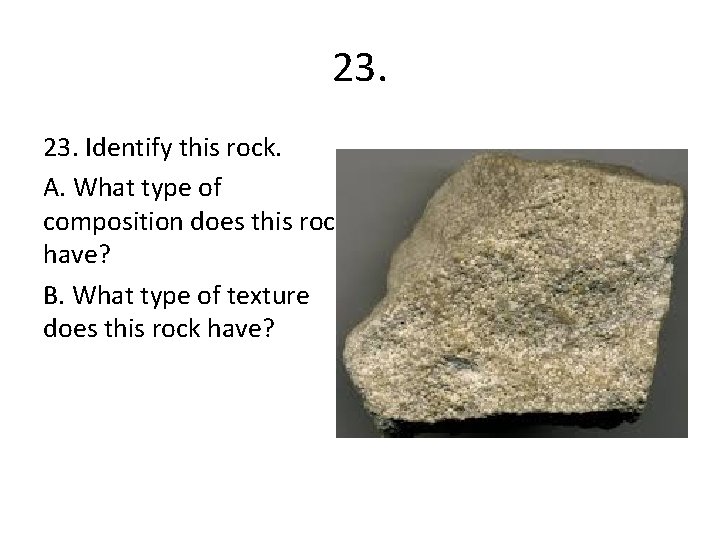
23. Identify this rock. A. What type of composition does this rock have? B. What type of texture does this rock have?
24. Extra Credit 24. Give one example of a laminated rock? A. What group of rocks could be classified as organic or chemical rocks B. Which rock displays structures known as oolites?
25 25. A rock that is formed from volcanic lava is known to have what type of origin? (intrusive or extrusive) A. A igneous rock that is formed from cooling of magma under the continental crust is known to have what type of origin? (intrusive or extrusive)
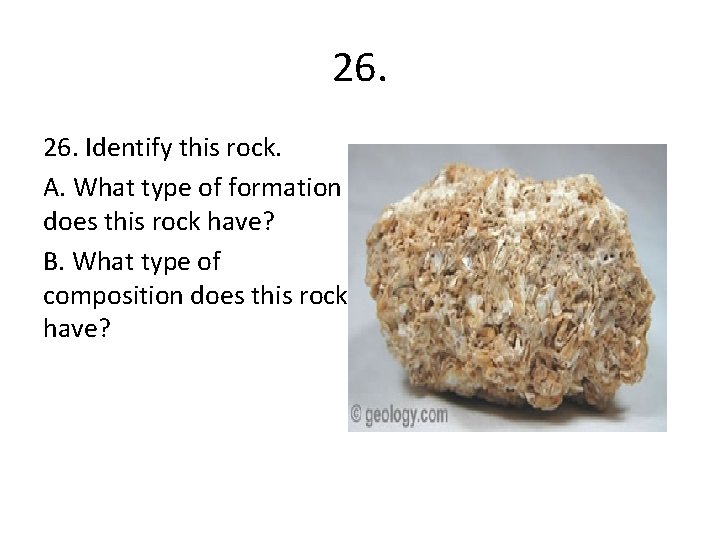
26. Identify this rock. A. What type of formation does this rock have? B. What type of composition does this rock have?