
Sedation Analgesia and Paralytics in the ICU What




- Slides: 21
Sedation, Analgesia and Paralytics in the ICU
What is used for what? O Analgesic O Pain control O Always should be first before sedation O Sedative O Achieve sedation, anxiolysis, amnesia, altered consciousness O Paralytic O Prevents movement O Never should be used without analgesia and sedation
Sedatives
Sedatives O Etomidate O Propofol O Ketamine O Dexmedetomidine
Etomidate O Used mostly for Rapid Sequence Intubation (RSI) O GABA like effects O Minimal effect on BP; can lower ICP O Can reduce plasma cortisol levels O Hepatic metabolism; renally excreted O Dose 0. 3 mg/kg for RSI
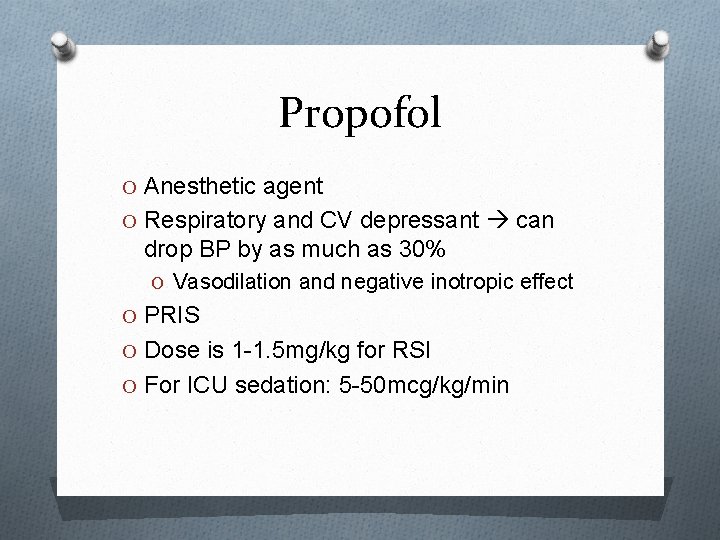
Propofol O Anesthetic agent O Respiratory and CV depressant can drop BP by as much as 30% O Vasodilation and negative inotropic effect O PRIS O Dose is 1 -1. 5 mg/kg for RSI O For ICU sedation: 5 -50 mcg/kg/min
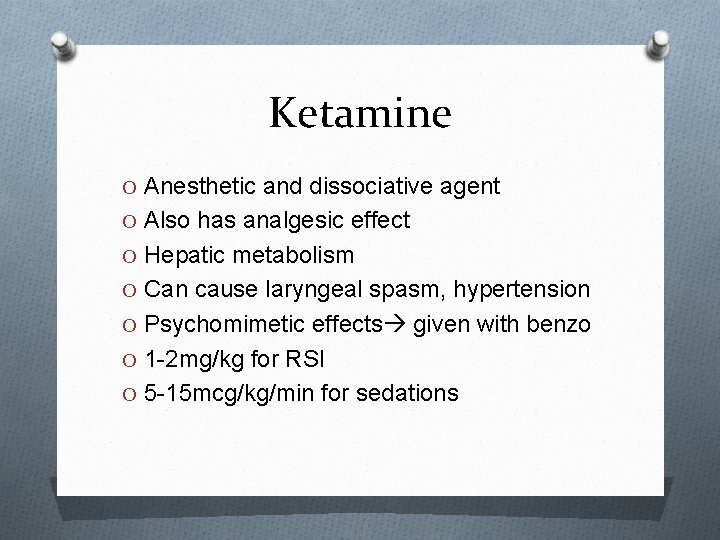
Ketamine O Anesthetic and dissociative agent O Also has analgesic effect O Hepatic metabolism O Can cause laryngeal spasm, hypertension O Psychomimetic effects given with benzo O 1 -2 mg/kg for RSI O 5 -15 mcg/kg/min for sedations
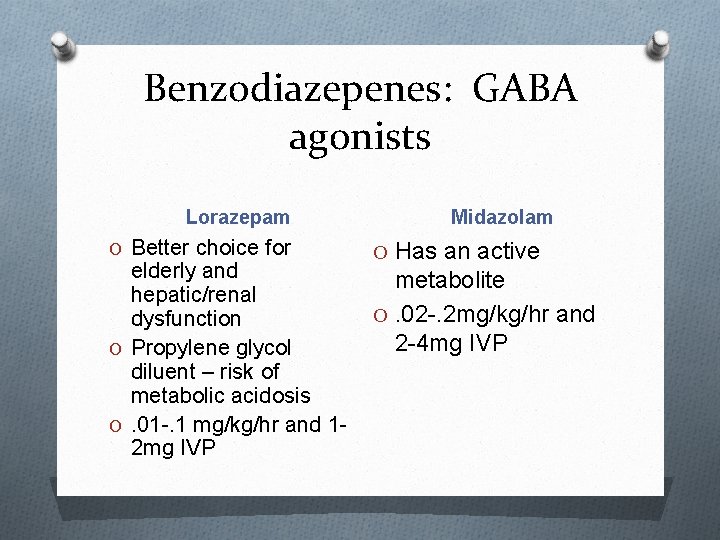
Benzodiazepenes: GABA agonists Lorazepam O Better choice for elderly and hepatic/renal dysfunction O Propylene glycol diluent – risk of metabolic acidosis O. 01 -. 1 mg/kg/hr and 12 mg IVP Midazolam O Has an active metabolite O. 02 -. 2 mg/kg/hr and 2 -4 mg IVP
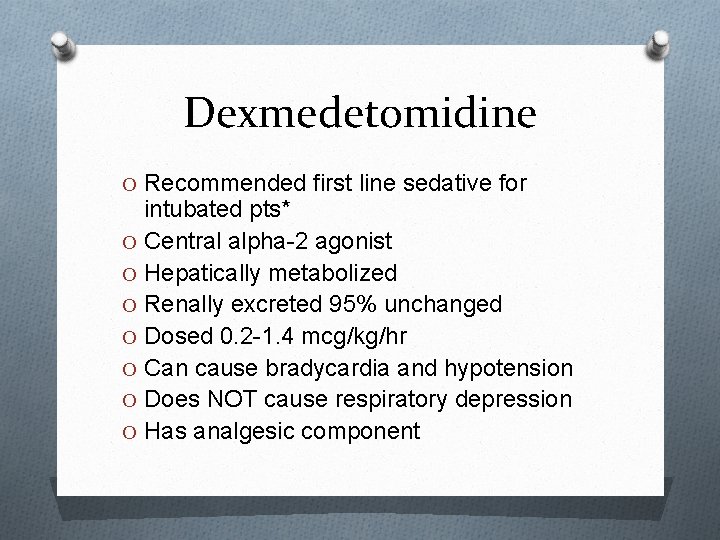
Dexmedetomidine O Recommended first line sedative for intubated pts* O Central alpha-2 agonist O Hepatically metabolized O Renally excreted 95% unchanged O Dosed 0. 2 -1. 4 mcg/kg/hr O Can cause bradycardia and hypotension O Does NOT cause respiratory depression O Has analgesic component
Analgesics
Analgesics O Always treat pain before giving sedation or paralytics O Not all patients requires analgesic infusion as PRN dosing can be just as effective O If able, evaluate your interventions to ensure pain level reduced
Analgesics Fentanyl O 80 -100 x more potent than morphine O Bolus: 1 mcg/kg q 5 minutes O Infusion 0. 53 mcg/kg/hr O Can cause rigid chest, hypotension Morphine O Causes histamine release itching O Bolus. 3 mg/kg q 10 minutes O Infusion: . 0150. 2 mg/kg/hr
Analgesics Hydromorphone Hydrocodone O 1. 5 mg O Oral/enteral formula hydromorphone = 15 mg morphine O T 1/2 2 -3 hours; duration 4 -5 hours O Usually combined with acetaminophen O 25 mg hydrocodone = 10 mg morphine O T½ 4 hours; duration 4 -8 hours
Paralytics
Paralytics O Never use without analgesia and sedation O Used to facilitate intubation (rapid sequence intubation) O Also used in patients with severe pulmonary dysfunction on mechanical ventilation O Cisatricurium most commonly used for infusions
Assessing Degree of Paralysis: Train of Four O Goal of TOF usually 2 twitches About 80% receptors inactive) O 4 twitches = 0 -75% of receptors blocked O Sites: Ulnar nerve, facial nerve, posterior tibial O Start at 10 m. A and increase until twitches seen O If no twitches seen, check different site
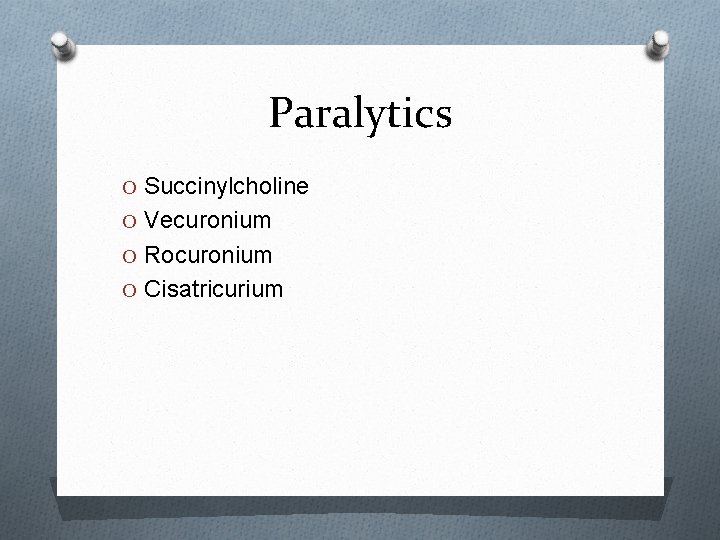
Paralytics O Succinylcholine O Vecuronium O Rocuronium O Cisatricurium
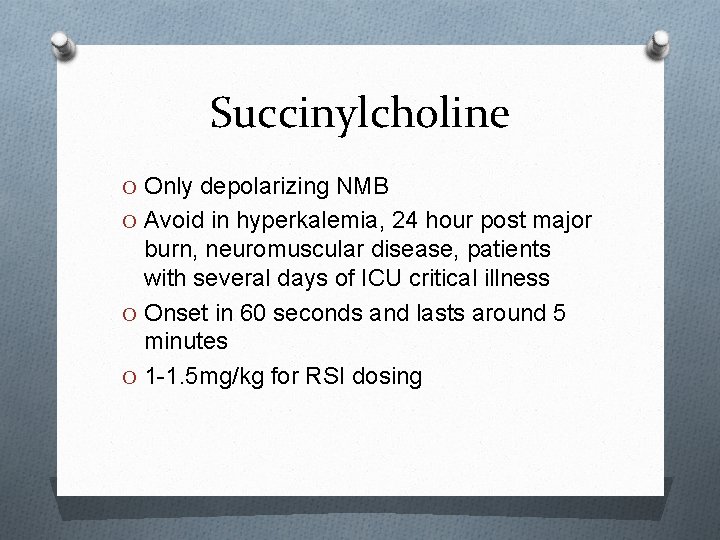
Succinylcholine O Only depolarizing NMB O Avoid in hyperkalemia, 24 hour post major burn, neuromuscular disease, patients with several days of ICU critical illness O Onset in 60 seconds and lasts around 5 minutes O 1 -1. 5 mg/kg for RSI dosing
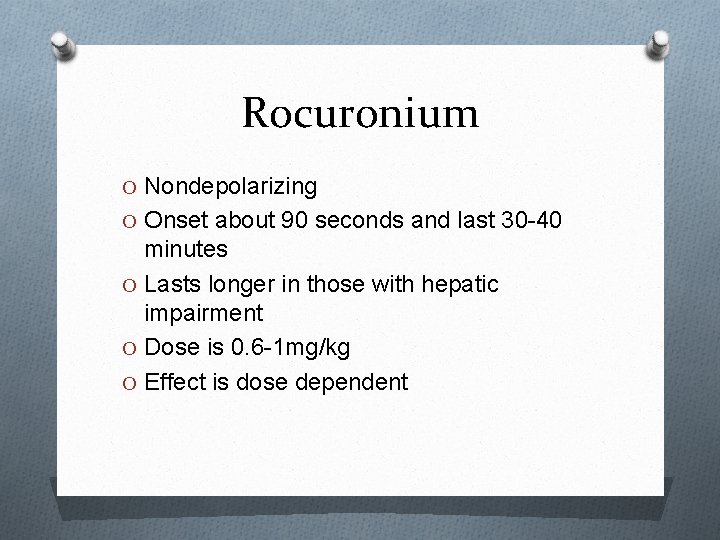
Rocuronium O Nondepolarizing O Onset about 90 seconds and last 30 -40 minutes O Lasts longer in those with hepatic impairment O Dose is 0. 6 -1 mg/kg O Effect is dose dependent
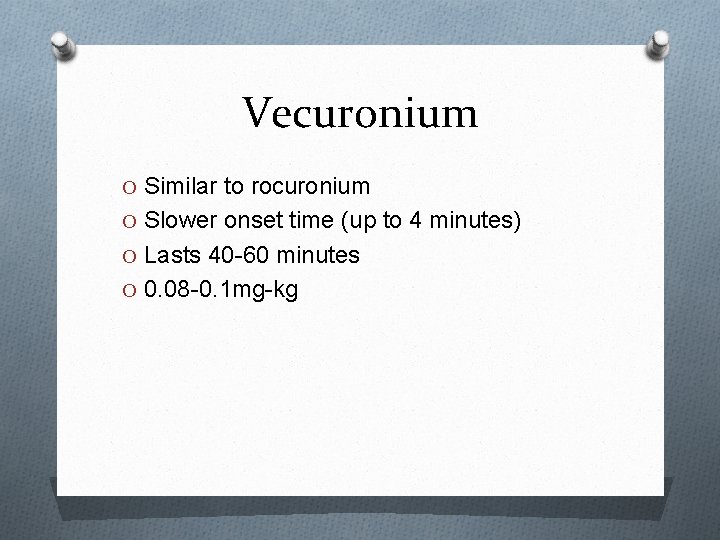
Vecuronium O Similar to rocuronium O Slower onset time (up to 4 minutes) O Lasts 40 -60 minutes O 0. 08 -0. 1 mg-kg
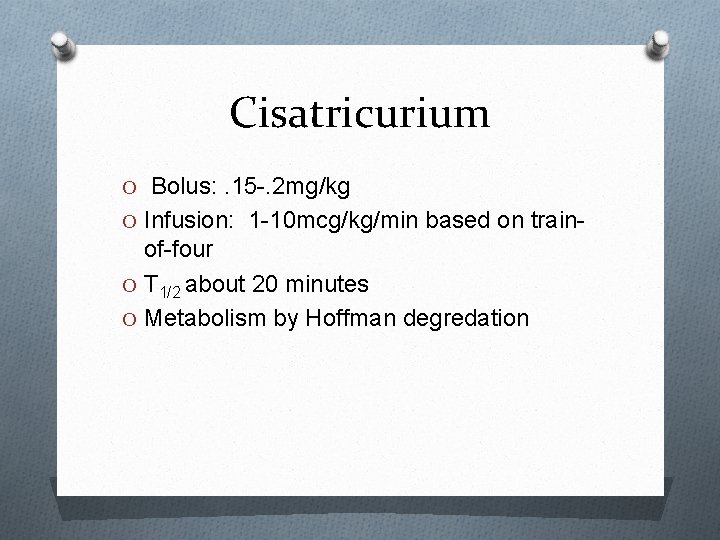
Cisatricurium O Bolus: . 15 -. 2 mg/kg O Infusion: 1 -10 mcg/kg/min based on train- of-four O T 1/2 about 20 minutes O Metabolism by Hoffman degredation