
SecurityEnhanced Linux SELinux Die Hintergrnde verstehen Mario Rosic

- Slides: 28
Security-Enhanced Linux (SELinux): Die Hintergründe verstehen Mario Rosic Linuxtage Graz/Wien 2016 vortrag@rosicmario. eu Internex Gmb. H www. internex. at
Ziele • Keine Anwendung • Keine Befehle • Kein Troubleshooting • sondern. . .
Der Plan 1. Das Problem und die Lösungsversuche 2. SELinux: Wie es funktioniert 3. Exploits, die SELinux verhindert 4. Die Rolle des Linux Audit Framework 5. Kritik
Das Problem und die Lösungsversuche • Discretionary Access Control (DAC) • discretionary (en. ) = willkürlich, beliebig, optional • Wer bin ich, wem gehört die Datei, der Rest ist egal • Hacking like it‘s 1999: www. internex. at/index. php? file=. . /etc/passwd
Das Problem. . . • Was nicht geprüft wird. . .
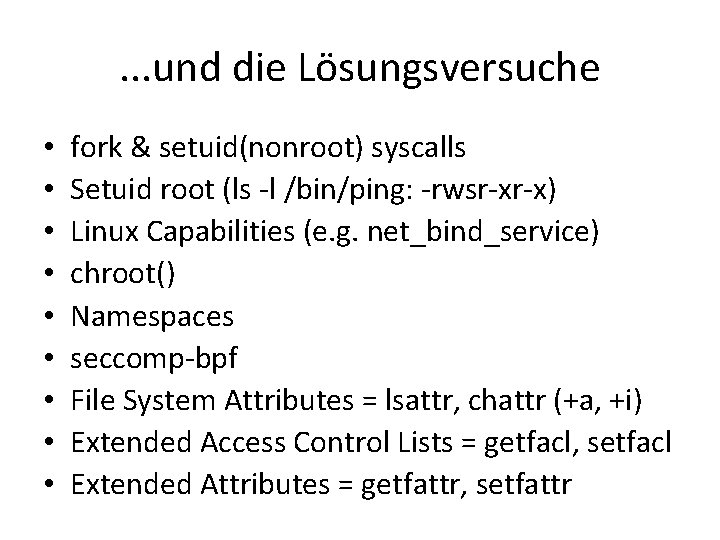
. . . und die Lösungsversuche • • • fork & setuid(nonroot) syscalls Setuid root (ls -l /bin/ping: -rwsr-xr-x) Linux Capabilities (e. g. net_bind_service) chroot() Namespaces seccomp-bpf File System Attributes = lsattr, chattr (+a, +i) Extended Access Control Lists = getfacl, setfacl Extended Attributes = getfattr, setfattr
. . . und die Lösungsversuche Firejail is a SUID sandbox program that reduces the risk of security breaches by restricting the running environment of untrusted applications using Linux namespaces, seccomp-bpf and Linux capabilities.
SELinux: Wie es funktioniert • Linux Security Modules (LSM), Kernel 2. 6 • Mandatory Access Control (MAC) • Extended Attributes!
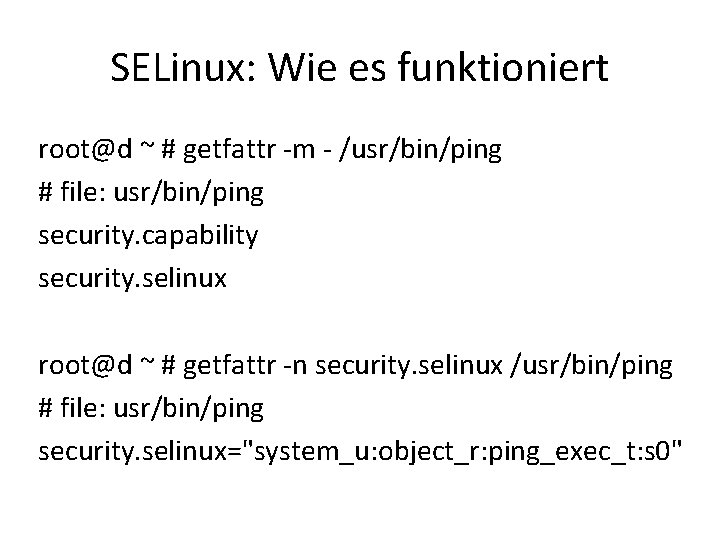
SELinux: Wie es funktioniert root@d ~ # getfattr -m - /usr/bin/ping # file: usr/bin/ping security. capability security. selinux root@d ~ # getfattr -n security. selinux /usr/bin/ping # file: usr/bin/ping security. selinux="system_u: object_r: ping_exec_t: s 0"
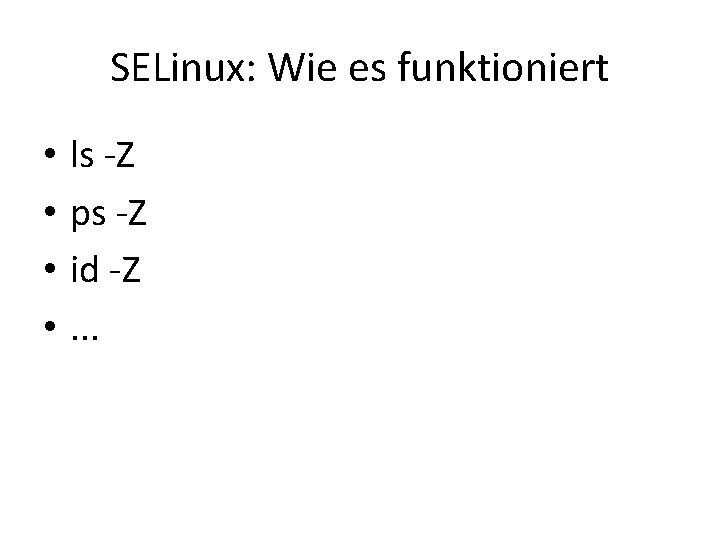
SELinux: Wie es funktioniert • • ls -Z ps -Z id -Z. . .
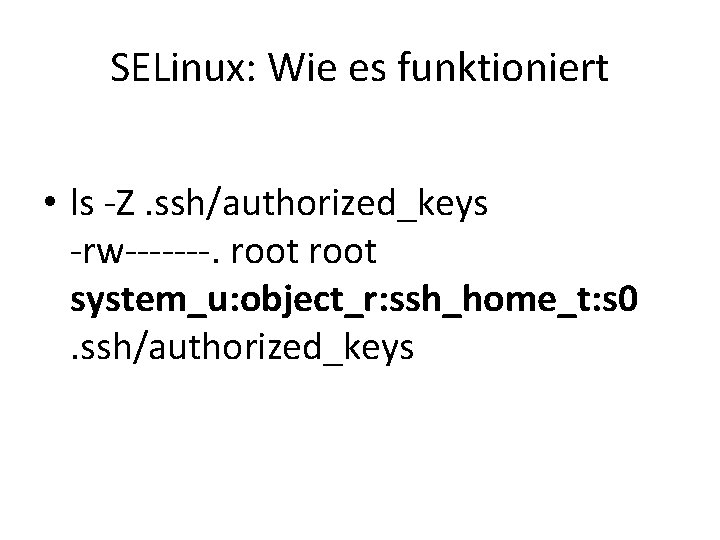
SELinux: Wie es funktioniert • ls -Z. ssh/authorized_keys -rw-------. root system_u: object_r: ssh_home_t: s 0. ssh/authorized_keys
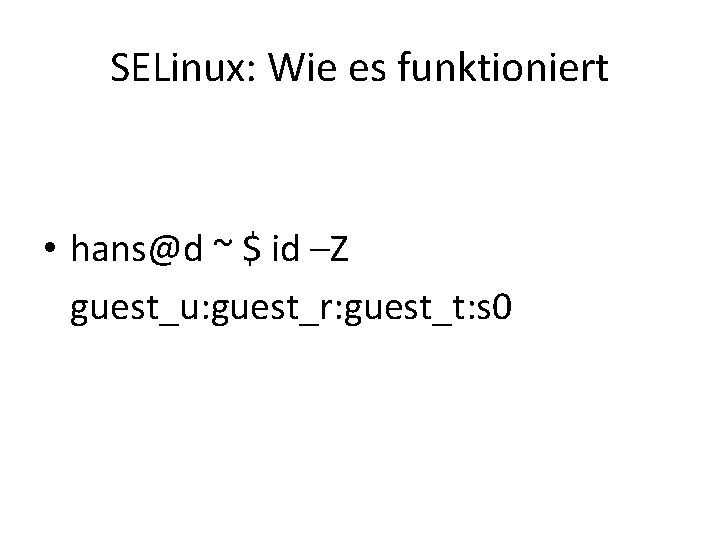
SELinux: Wie es funktioniert • hans@d ~ $ id –Z guest_u: guest_r: guest_t: s 0
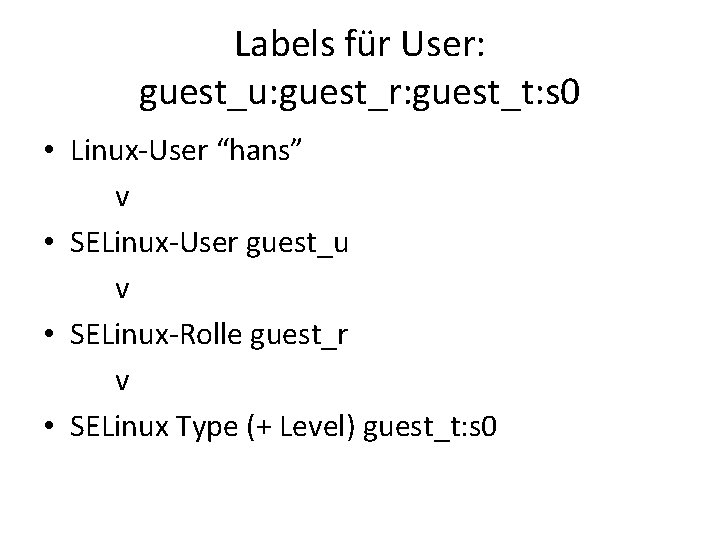
Labels für User: guest_u: guest_r: guest_t: s 0 • Linux-User “hans” v • SELinux-User guest_u v • SELinux-Rolle guest_r v • SELinux Type (+ Level) guest_t: s 0
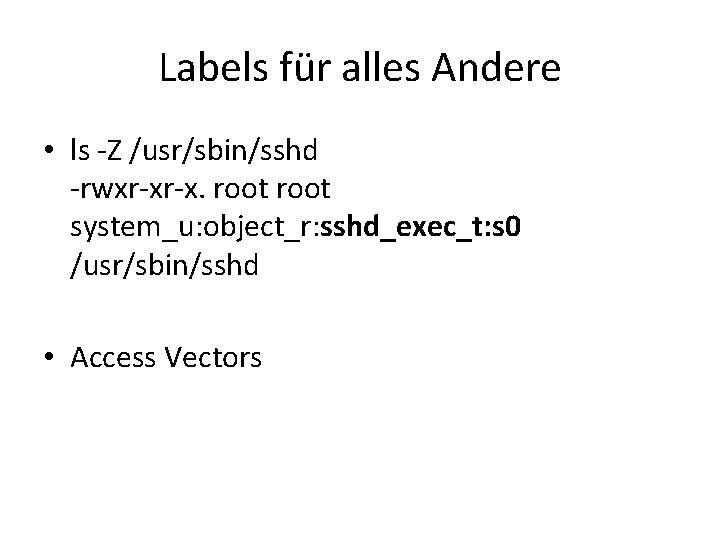
Labels für alles Andere • ls -Z /usr/sbin/sshd -rwxr-xr-x. root system_u: object_r: sshd_exec_t: s 0 /usr/sbin/sshd • Access Vectors
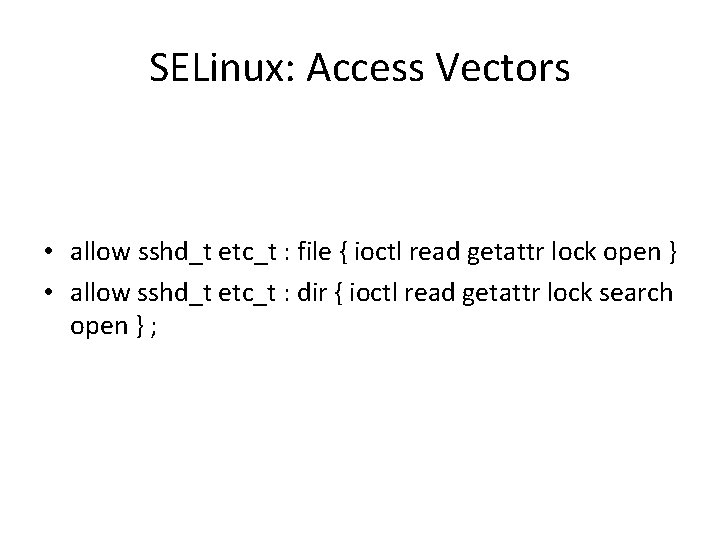
SELinux: Access Vectors • allow sshd_t etc_t : file { ioctl read getattr lock open } • allow sshd_t etc_t : dir { ioctl read getattr lock search open } ;
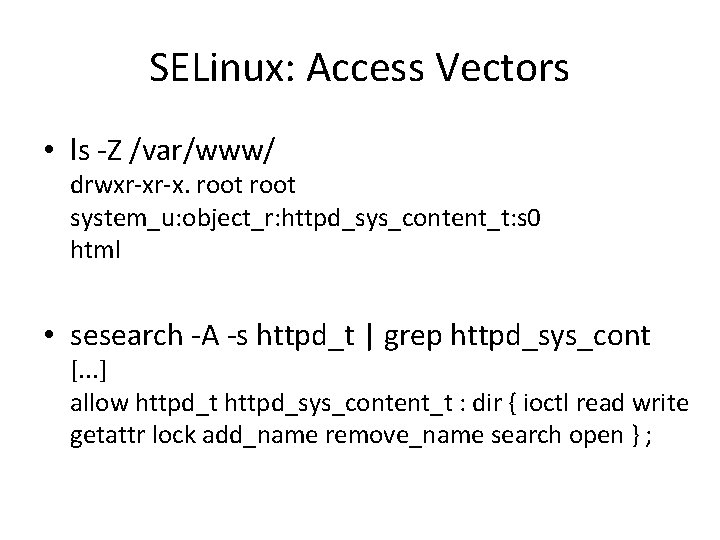
SELinux: Access Vectors • ls -Z /var/www/ drwxr-xr-x. root system_u: object_r: httpd_sys_content_t: s 0 html • sesearch -A -s httpd_t | grep httpd_sys_cont [. . . ] allow httpd_t httpd_sys_content_t : dir { ioctl read write getattr lock add_name remove_name search open } ;
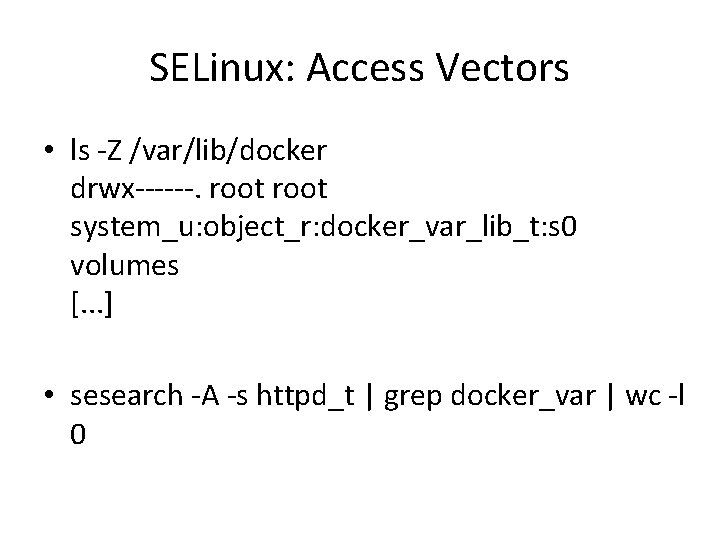
SELinux: Access Vectors • ls -Z /var/lib/docker drwx------. root system_u: object_r: docker_var_lib_t: s 0 volumes [. . . ] • sesearch -A -s httpd_t | grep docker_var | wc -l 0
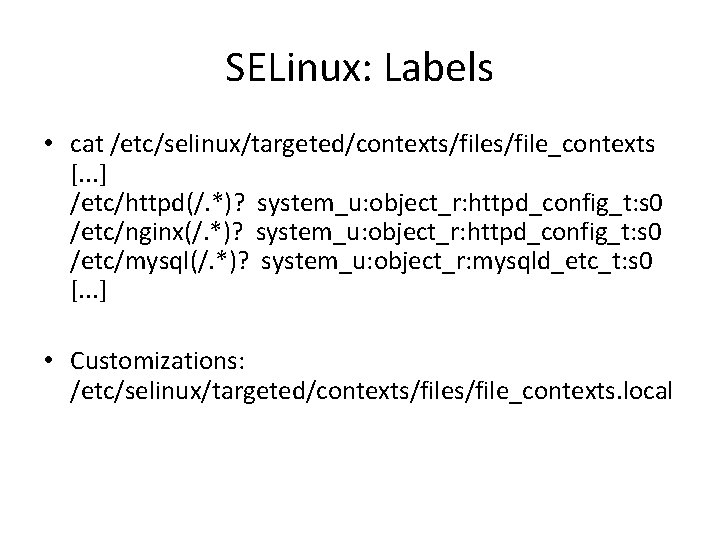
SELinux: Labels • cat /etc/selinux/targeted/contexts/file_contexts [. . . ] /etc/httpd(/. *)? system_u: object_r: httpd_config_t: s 0 /etc/nginx(/. *)? system_u: object_r: httpd_config_t: s 0 /etc/mysql(/. *)? system_u: object_r: mysqld_etc_t: s 0 [. . . ] • Customizations: /etc/selinux/targeted/contexts/file_contexts. local
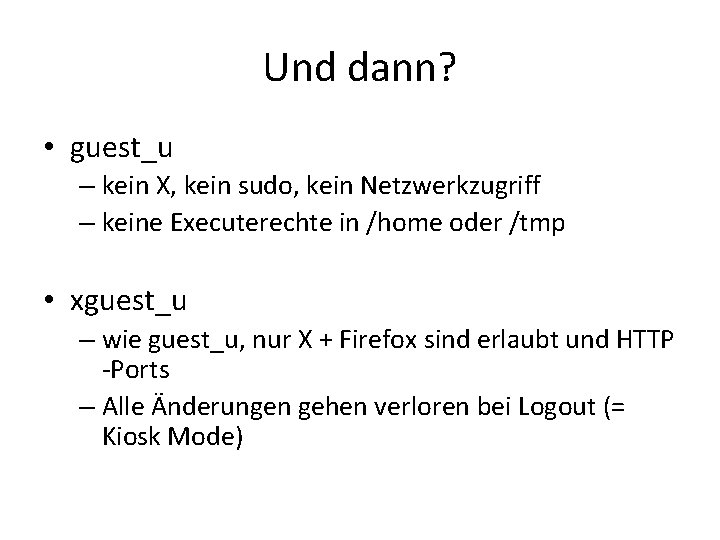
Und dann? • guest_u – kein X, kein sudo, kein Netzwerkzugriff – keine Executerechte in /home oder /tmp • xguest_u – wie guest_u, nur X + Firefox sind erlaubt und HTTP -Ports – Alle Änderungen gehen verloren bei Logout (= Kiosk Mode)
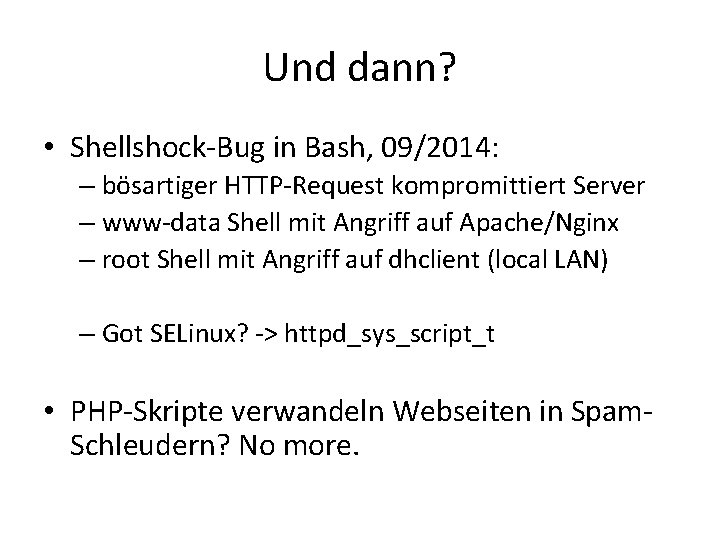
Und dann? • Shellshock-Bug in Bash, 09/2014: – bösartiger HTTP-Request kompromittiert Server – www-data Shell mit Angriff auf Apache/Nginx – root Shell mit Angriff auf dhclient (local LAN) – Got SELinux? -> httpd_sys_script_t • PHP-Skripte verwandeln Webseiten in Spam. Schleudern? No more.
Linux Audit Framework • Host-Based Intrusion Detection System (HIDS) • /var/log/audit. log • audispd – Policy-Verstöße an zentralen Server weiterleiten hunderte Hosts gleichzeitig überwachen
Security Enhanced Linux + Linux Audit Framework = <3
Kritik/Probleme/Nachteile • Nur zum Teil für Desktops geeignet - Kiosk Mode ist super • Primär RHEL/Cent. OS
Kritik/Probleme/Nachteile • Es ist zu kompliziert • Hilft nur eingeschränkt gegen Kernel Expliots • „Grsecurity ist viel cooler, SELinux ist kompliziert und für Noobs!!!!1111 “
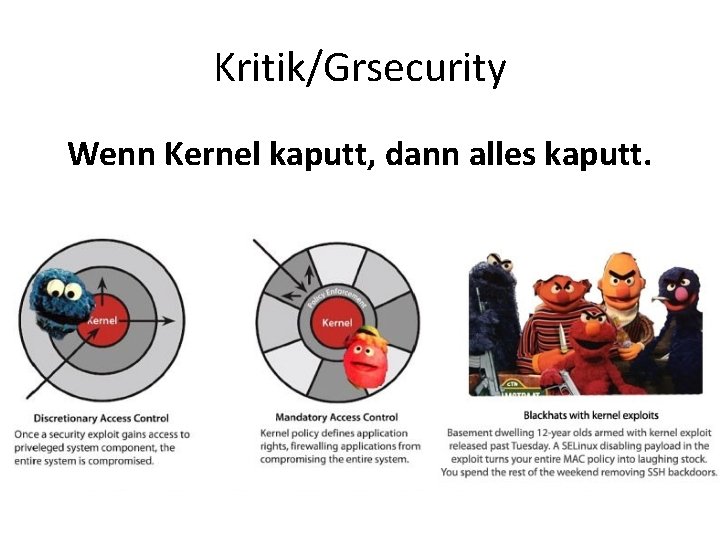
Kritik/Grsecurity Wenn Kernel kaputt, dann alles kaputt.
Danke! Mario Rosic vortrag@rosicmario. eu www. internex. at Suchen u. a. : Linux Sysadmins Netzwerkadmins
SELinux lernen • Beste SELinux-Videos wo gibt: – “Demystifying SELinux Part II: Whos Policy Is It Anyway? - Dave Quigley – https: //www. youtube. com/watch? v=3 YMSG-lf. Pfg • Linux Audit Framework: – https: //people. redhat. com/sgrubb/auditids. pdf • Kernel Secuirty: – https: //outflux. net/slides/2015/ks/security. pdf
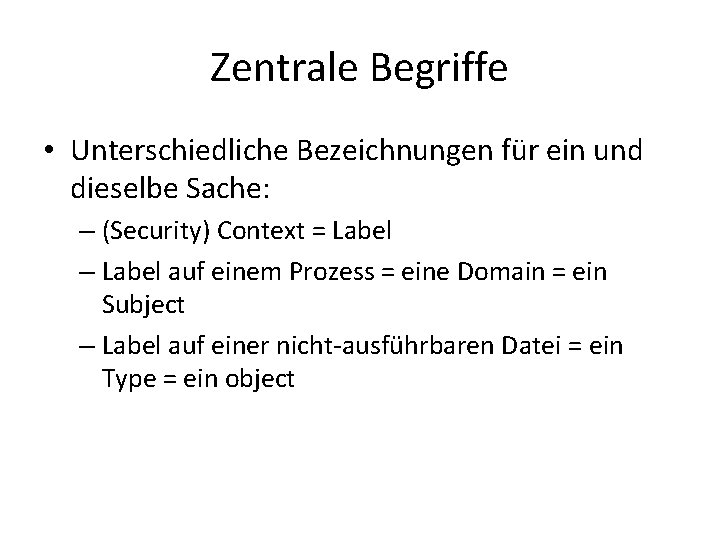
Zentrale Begriffe • Unterschiedliche Bezeichnungen für ein und dieselbe Sache: – (Security) Context = Label – Label auf einem Prozess = eine Domain = ein Subject – Label auf einer nicht-ausführbaren Datei = ein Type = ein object