
Security in semantic web Hassan Abolhassani Leila Sharif
Security in semantic web Hassan Abolhassani, Leila Sharif university of technology abolhassani@sharif. ir
Outline Semantic Web: a short introduction ● Security model in html document based web ● Security issues in a sample semantic web ● Analysis of solutions ● Query reformulation: centralized version ● Query reformulation: distributed version ● Security aware inference engine ●
Semantic web ● ● Bringing meaning to the web Overcome the limitation of current web – – ● Machine processing is not possible Search engines returns a lot of un-related results Impossible using current web: – – – Find information about animals that use sonar but are not either bats or dolpines Finding (best) prices of goods and services Delegating task to agents: Book me a holiday next weekend somewhere warm not too far away
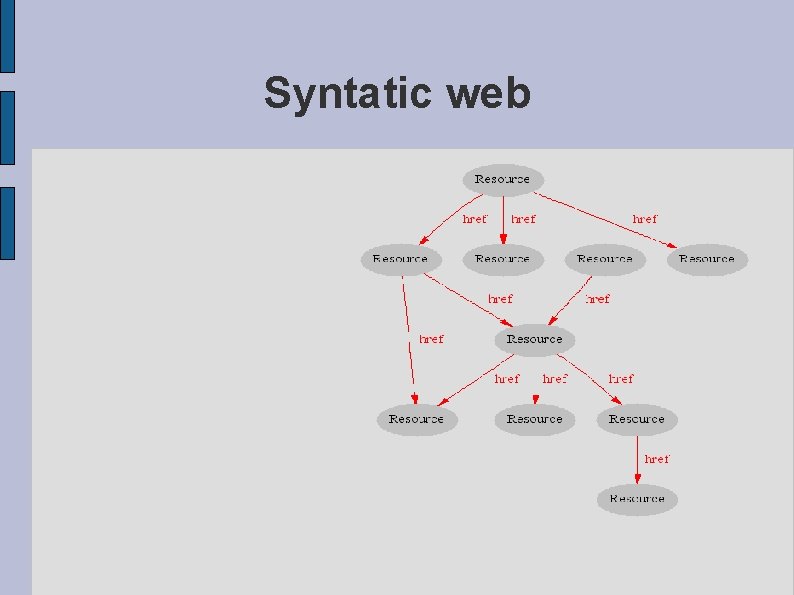
Syntatic web
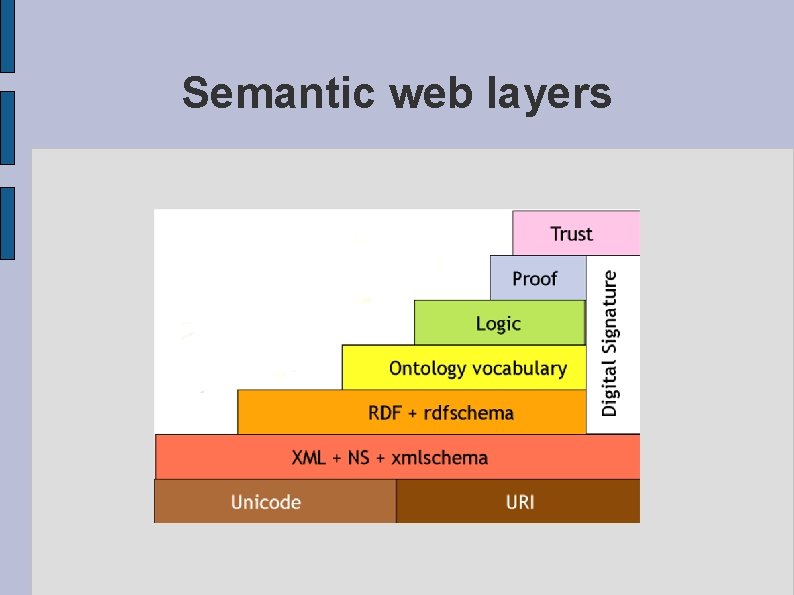
Semantic web layers
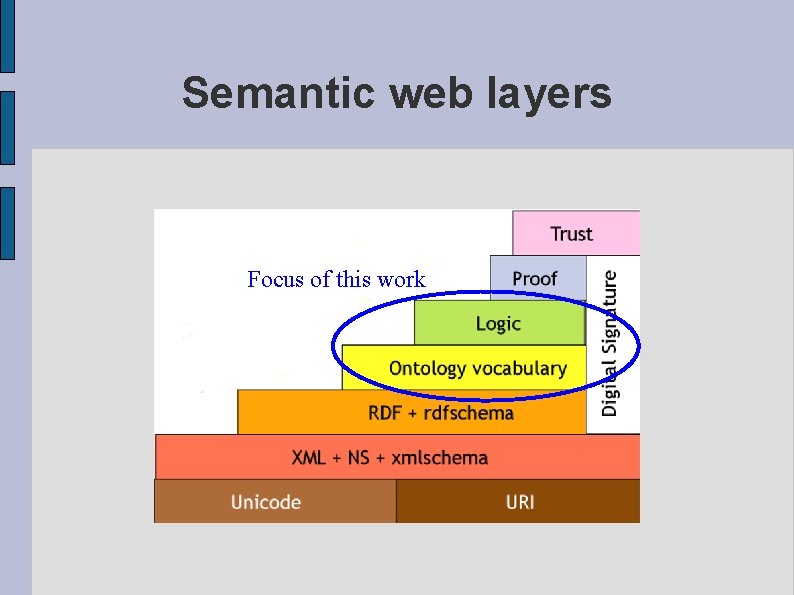
Semantic web layers Focus of this work
Outline Semantic Web: a short introduction ● Security model in html document based web ● Security issues in a sample semantic web ● Analysis of solutions ● Query reformulation: centralized version ● Query reformulation: distributed version ● Security aware inference engine ●
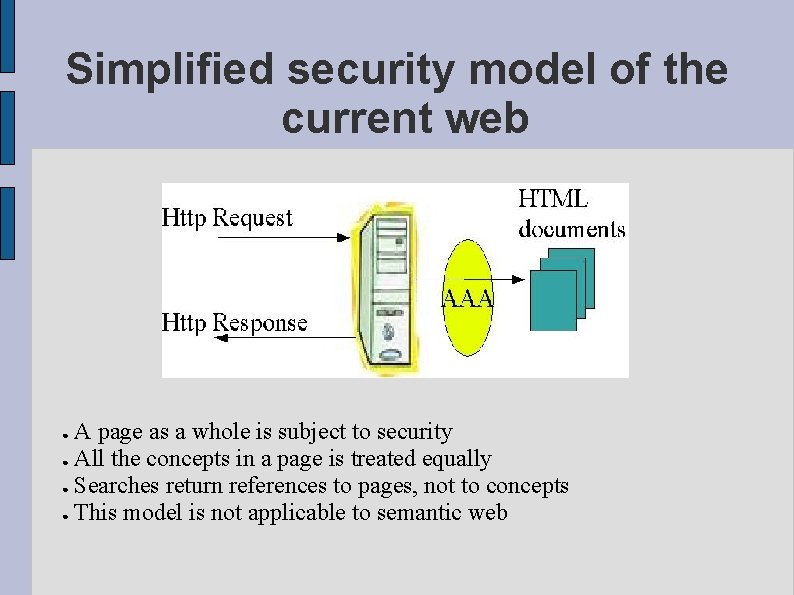
Simplified security model of the current web A page as a whole is subject to security ● All the concepts in a page is treated equally ● Searches return references to pages, not to concepts ● This model is not applicable to semantic web ●
Outline Semantic Web: a short introduction ● Security model in html document based web ● Security issues in a sample semantic web ● Analysis of solutions ● Query reformulation: centralized version ● Query reformulation: distributed version ● Building security aware inference engine ●
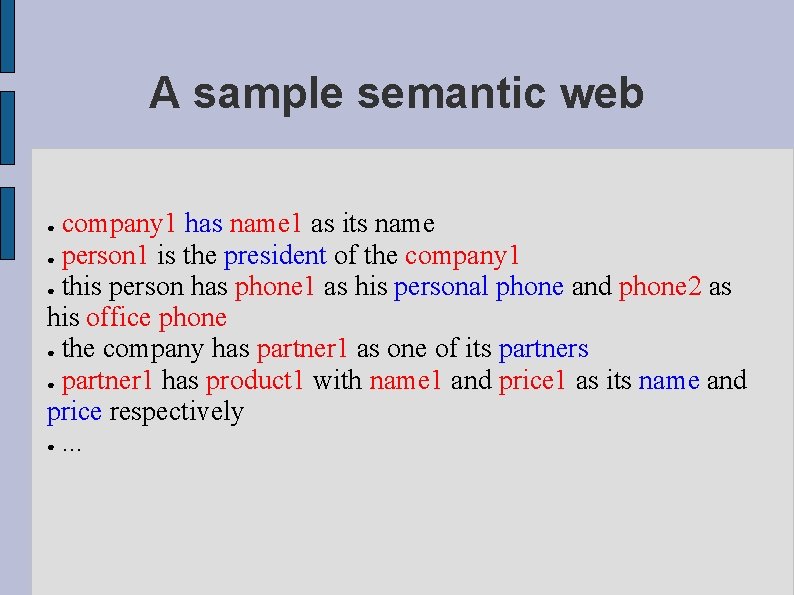
A sample semantic web company 1 has name 1 as its name ● person 1 is the president of the company 1 ● this person has phone 1 as his personal phone and phone 2 as his office phone ● the company has partner 1 as one of its partners ● partner 1 has product 1 with name 1 and price 1 as its name and price respectively ●. . . ●
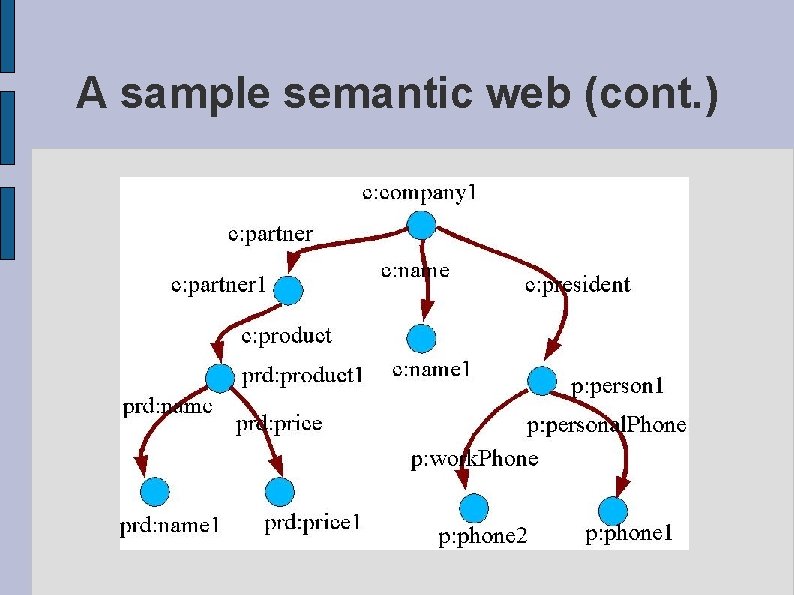
A sample semantic web (cont. )
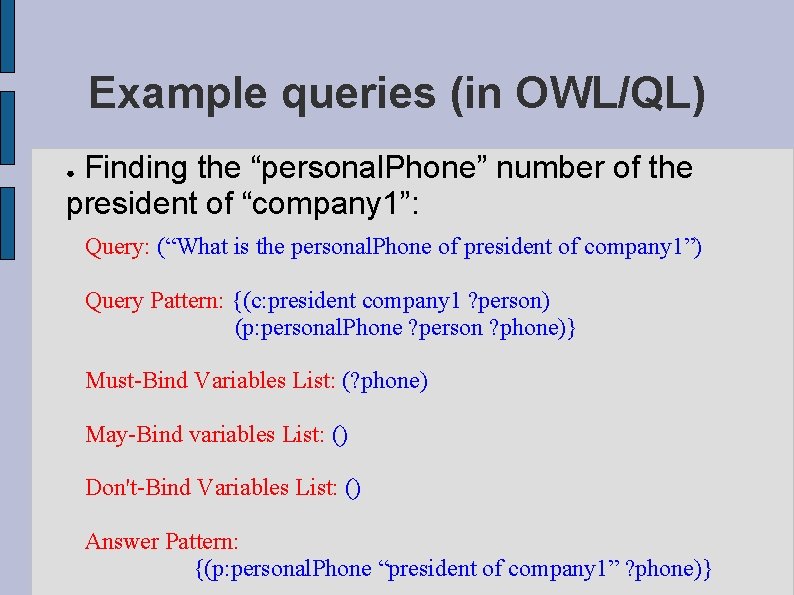
Example queries (in OWL/QL) Finding the “personal. Phone” number of the president of “company 1”: ● Query: (“What is the personal. Phone of president of company 1”) Query Pattern: {(c: president company 1 ? person) (p: personal. Phone ? person ? phone)} Must-Bind Variables List: (? phone) May-Bind variables List: () Don't-Bind Variables List: () Answer Pattern: {(p: personal. Phone “president of company 1” ? phone)}
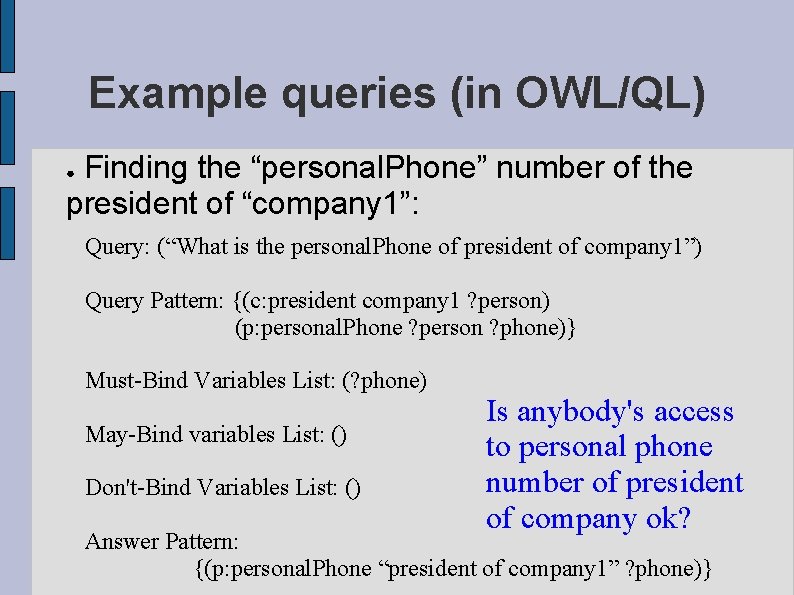
Example queries (in OWL/QL) Finding the “personal. Phone” number of the president of “company 1”: ● Query: (“What is the personal. Phone of president of company 1”) Query Pattern: {(c: president company 1 ? person) (p: personal. Phone ? person ? phone)} Must-Bind Variables List: (? phone) May-Bind variables List: () Don't-Bind Variables List: () Is anybody's access to personal phone number of president of company ok? Answer Pattern: {(p: personal. Phone “president of company 1” ? phone)}
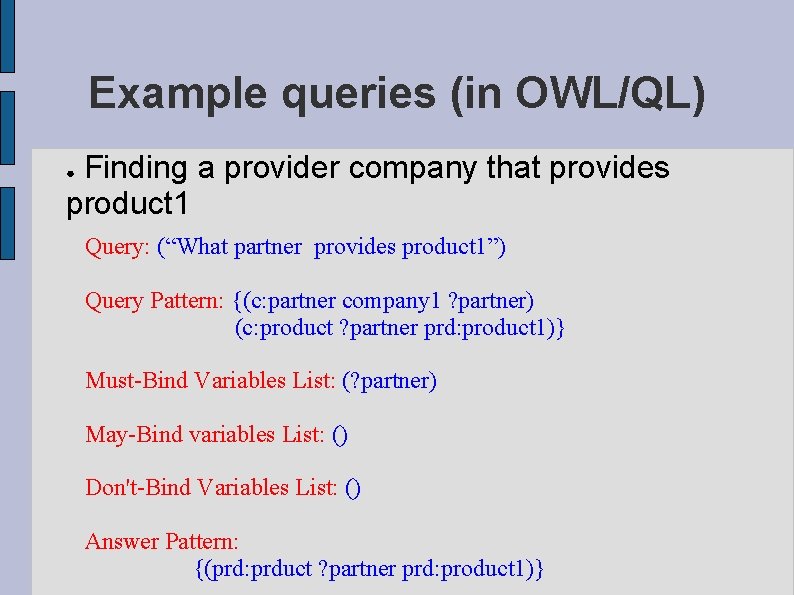
Example queries (in OWL/QL) Finding a provider company that provides product 1 ● Query: (“What partner provides product 1”) Query Pattern: {(c: partner company 1 ? partner) (c: product ? partner prd: product 1)} Must-Bind Variables List: (? partner) May-Bind variables List: () Don't-Bind Variables List: () Answer Pattern: {(prd: prduct ? partner prd: product 1)}
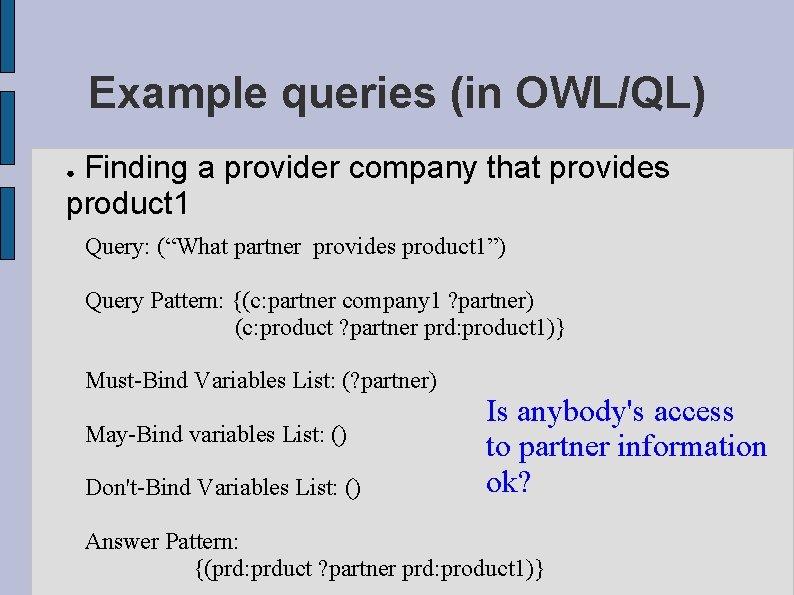
Example queries (in OWL/QL) Finding a provider company that provides product 1 ● Query: (“What partner provides product 1”) Query Pattern: {(c: partner company 1 ? partner) (c: product ? partner prd: product 1)} Must-Bind Variables List: (? partner) May-Bind variables List: () Don't-Bind Variables List: () Is anybody's access to partner information ok? Answer Pattern: {(prd: prduct ? partner prd: product 1)}
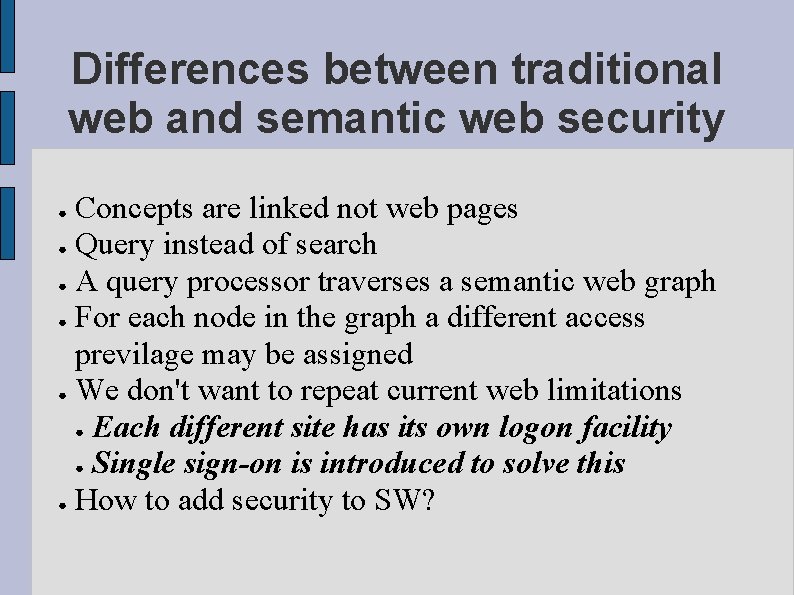
Differences between traditional web and semantic web security Concepts are linked not web pages ● Query instead of search ● A query processor traverses a semantic web graph ● For each node in the graph a different access previlage may be assigned ● We don't want to repeat current web limitations ● Each different site has its own logon facility ● Single sign-on is introduced to solve this ● How to add security to SW? ●
Outline Semantic Web: a short introduction ● Security model in html document based web ● Security issues in a sample semantic web ● Analysis of solutions ● Query reformulation: centralized version ● Query reformulation: distributed version ● Building security aware inference engine ●
Ad-hoc solution Create several semantic webs: ● Separate non-public and public information ● This works but is not a general solution: ● Results in redundant information: creation, maintenamce, and other problems. ● It is not feasible when we have a distributed model (query processor should know about all security measures of involving sites) ●
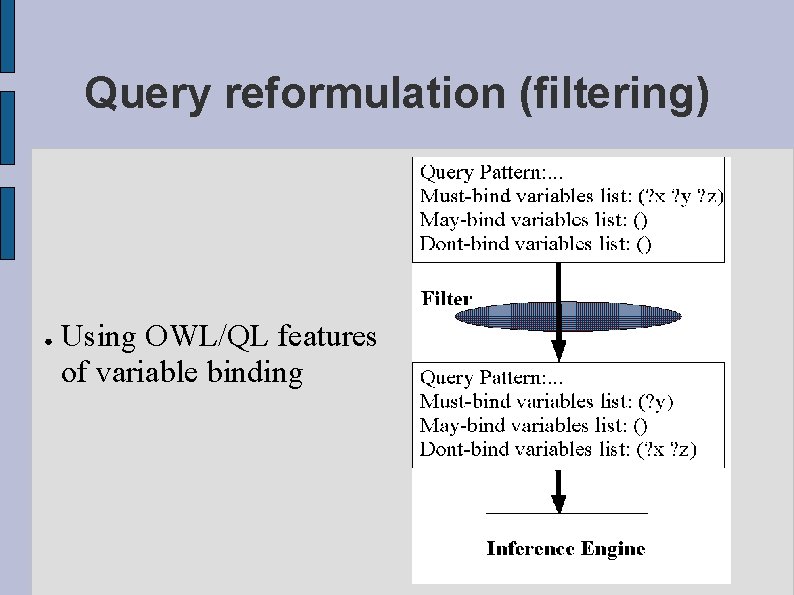
Query reformulation (filtering) ● Using OWL/QL features of variable binding
Query reformulation (cont. ) Merits: ● Easy to implement ● Has not a significant overhead on query processing ● Demerits ● Not applicable when a semantic model is distributed ●
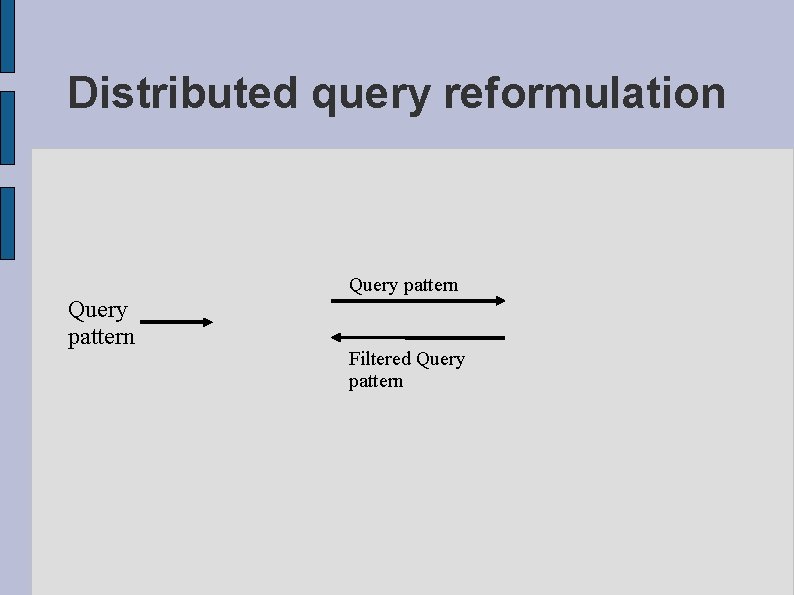
Distributed query reformulation Query pattern Filtered Query pattern
Distributed query reformulation (cont. ) Merits: ● No centeralized control on security is needed ● Applicable to semantic webs that are distributed ● Demerits ● Overhead of pre-prossesing ● The need for filtering agents at each site ● May introduce security holes (should be investigated further) ●
Security aware inference engines It is clear by now that the general solution is to add security at the level of inference engines ● To have a security model we need to have a formalism ● The basic formal model for SW is considered to be Description logic: ● A variable-free logic formalism ● A deciedable fragment of first-order logic ● All constructs are convertible to first-order logic unary and binary predicate ●
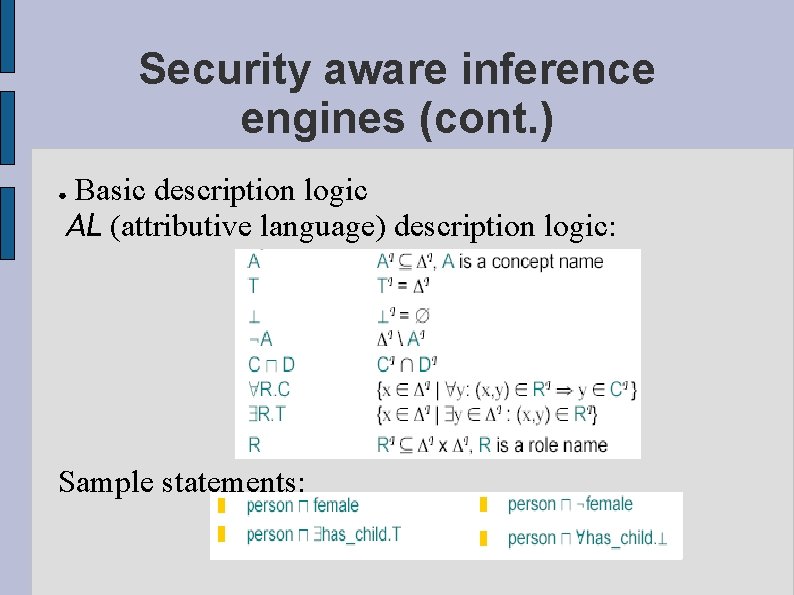
Security aware inference engines (cont. ) Basic description logic AL (attributive language) description logic: ● Sample statements:
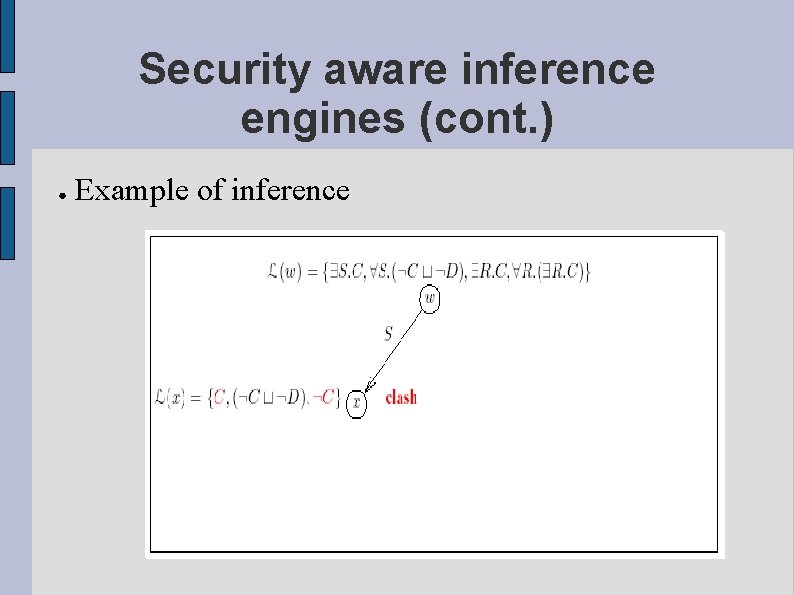
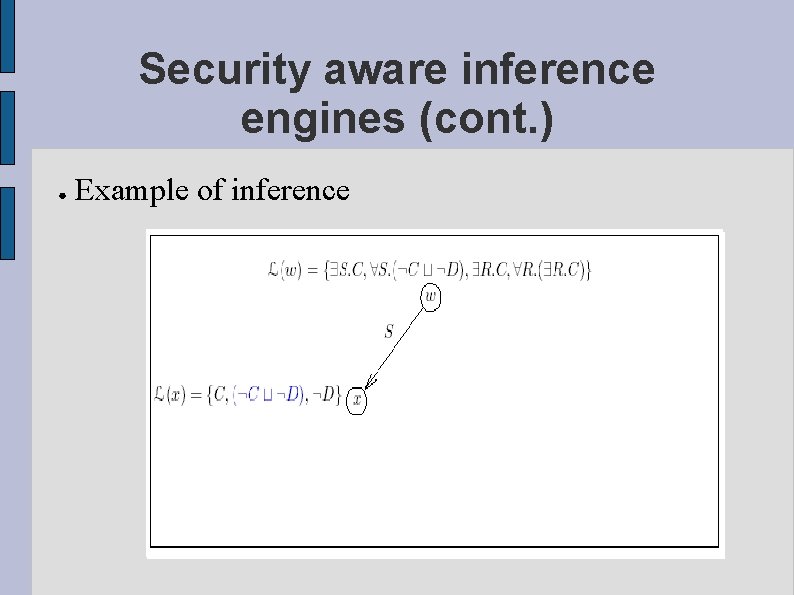
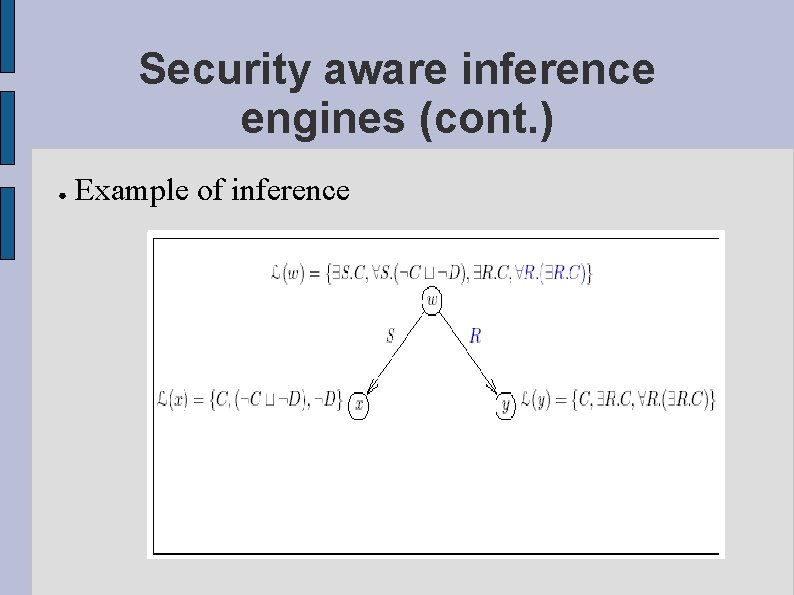
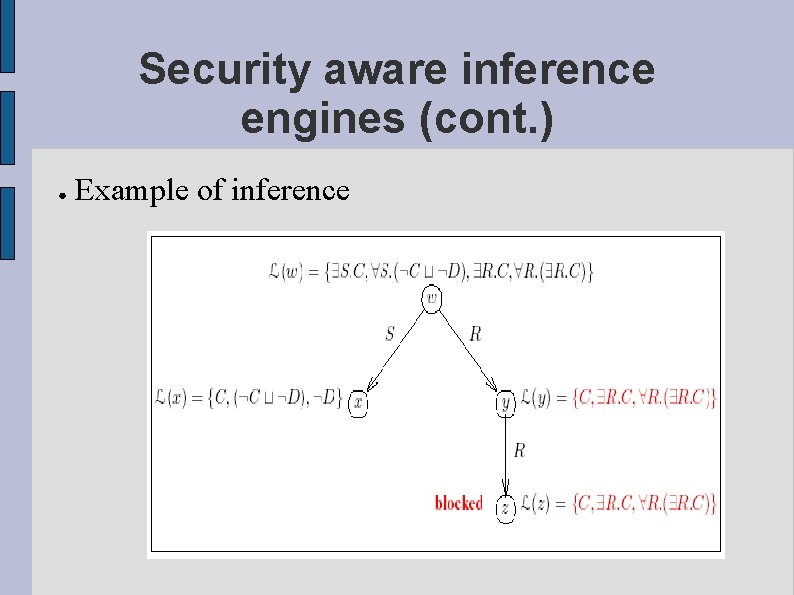
Security aware inference engines (cont. ) ● Inference in Description Logic ● Tableau based reasoning algorithms has been developed ● This algorithms work based on expansion (completion) rules ● A tree is expanded starting from the original statement (i. e. Query) ● Algorithm stops when a clash appears (i. e. C and ~C in the same node)
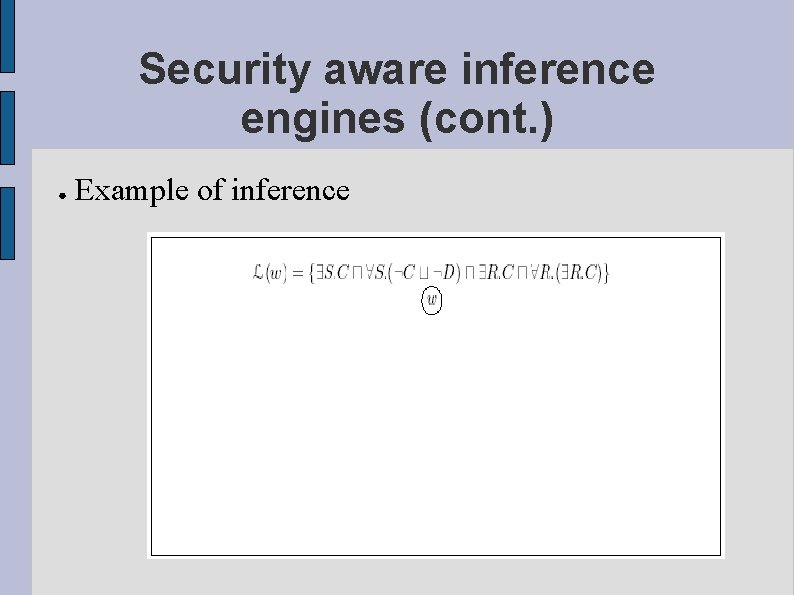
Security aware inference engines (cont. ) ● Example of inference
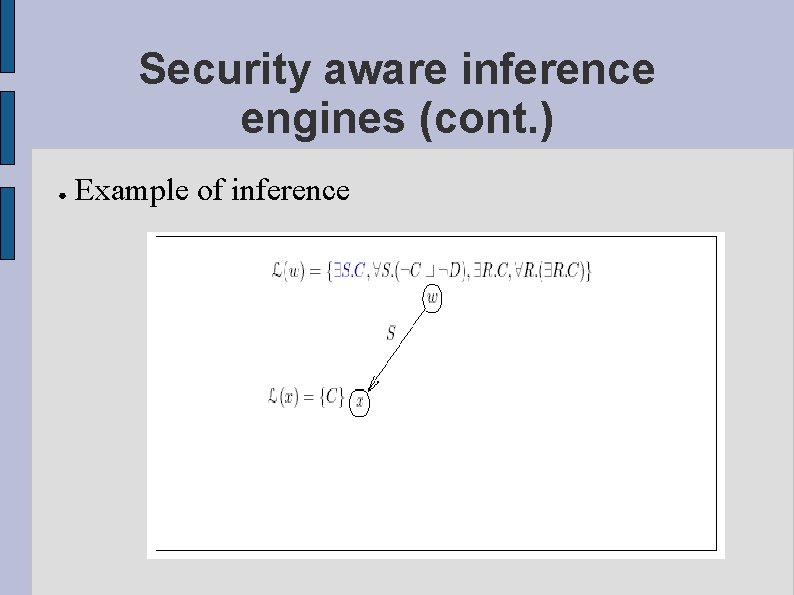
Security aware inference engines (cont. ) ● Example of inference
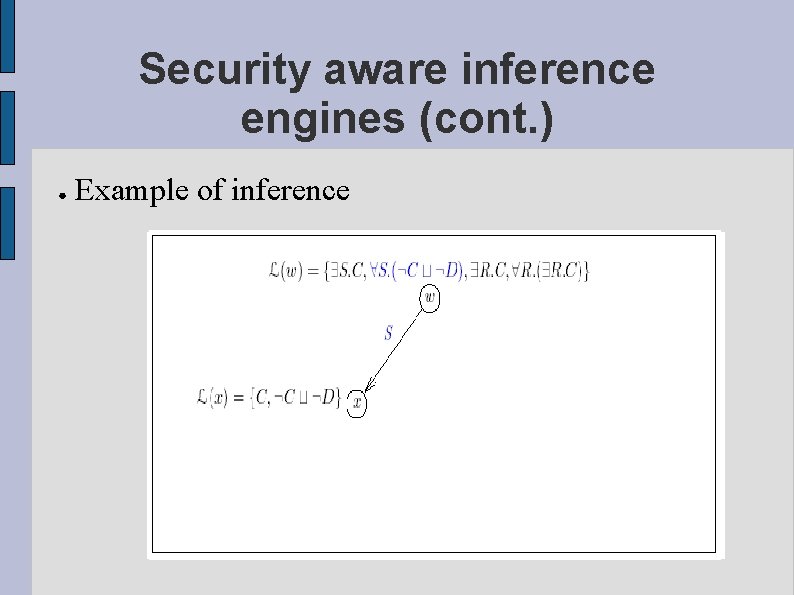
Security aware inference engines (cont. ) ● Example of inference
Security aware inference engines (cont. ) ● Example of inference
Security aware inference engines (cont. ) ● Example of inference
Security aware inference engines (cont. ) ● Example of inference
Security aware inference engines (cont. ) ● Example of inference
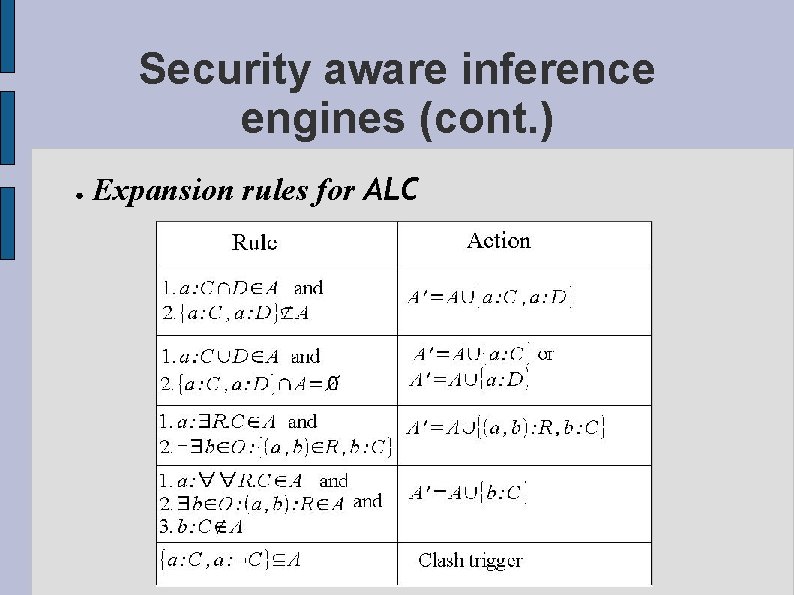
Security aware inference engines (cont. ) ● Expansion rules for ALC
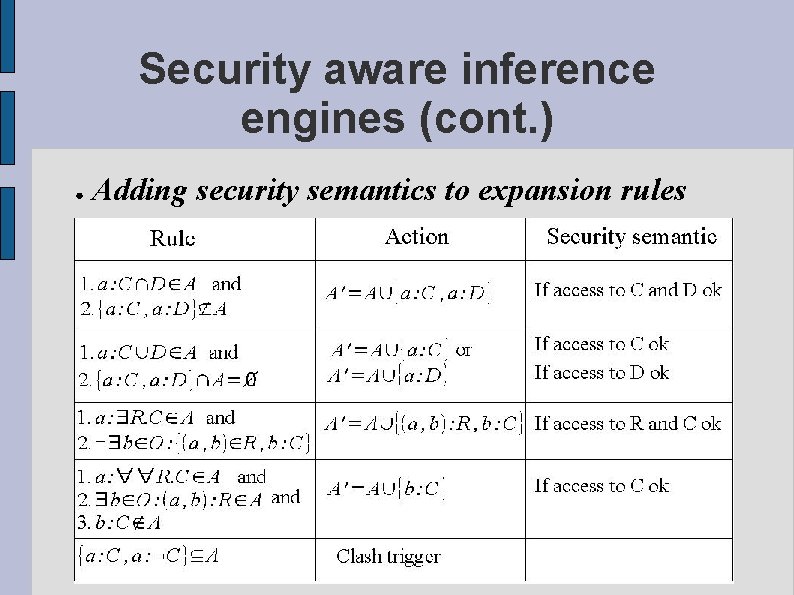
Security aware inference engines (cont. ) ● Adding security semantics to expansion rules
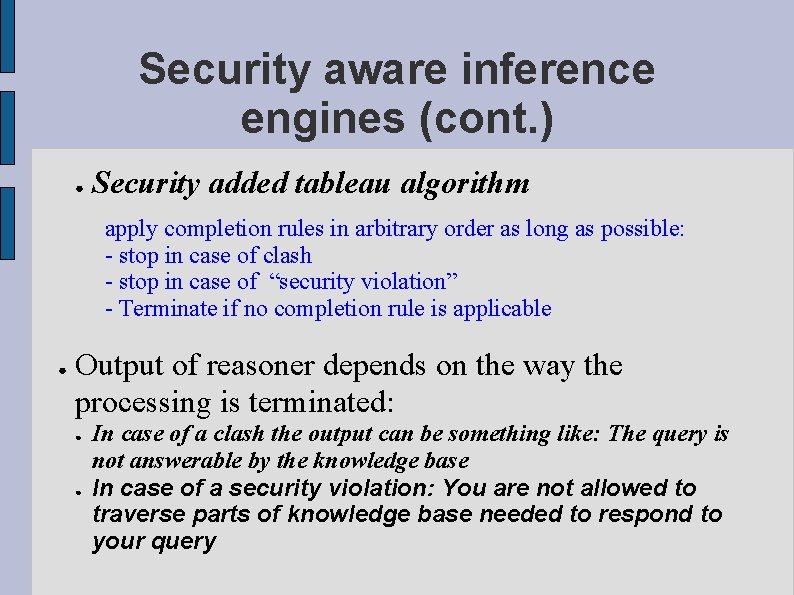
Security aware inference engines (cont. ) ● Security added tableau algorithm apply completion rules in arbitrary order as long as possible: - stop in case of clash - stop in case of “security violation” - Terminate if no completion rule is applicable ● Output of reasoner depends on the way the processing is terminated: ● ● In case of a clash the output can be something like: The query is not answerable by the knowledge base In case of a security violation: You are not allowed to traverse parts of knowledge base needed to respond to your query
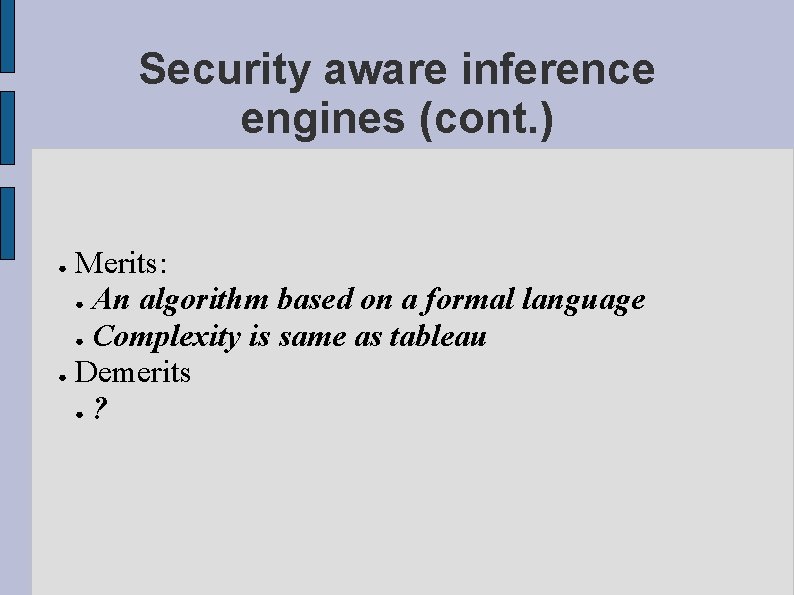
Security aware inference engines (cont. ) Merits: ● An algorithm based on a formal language ● Complexity is same as tableau ● Demerits ● ? ●
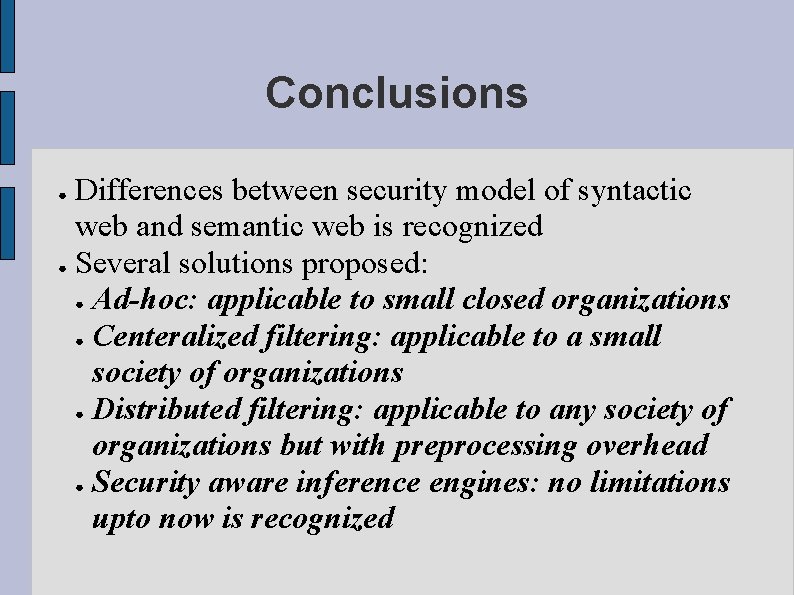
Conclusions Differences between security model of syntactic web and semantic web is recognized ● Several solutions proposed: ● Ad-hoc: applicable to small closed organizations ● Centeralized filtering: applicable to a small society of organizations ● Distributed filtering: applicable to any society of organizations but with preprocessing overhead ● Security aware inference engines: no limitations upto now is recognized ●
Thank you
- Slides: 38