
Security Handshake Pitfalls 1 Authentication Handshakes Secure communication

- Slides: 24
Security Handshake Pitfalls 1
Authentication Handshakes • Secure communication almost always includes an initial authentication handshake: – Authenticate each other – Establish sessions keys – This process may involve many flaws 2
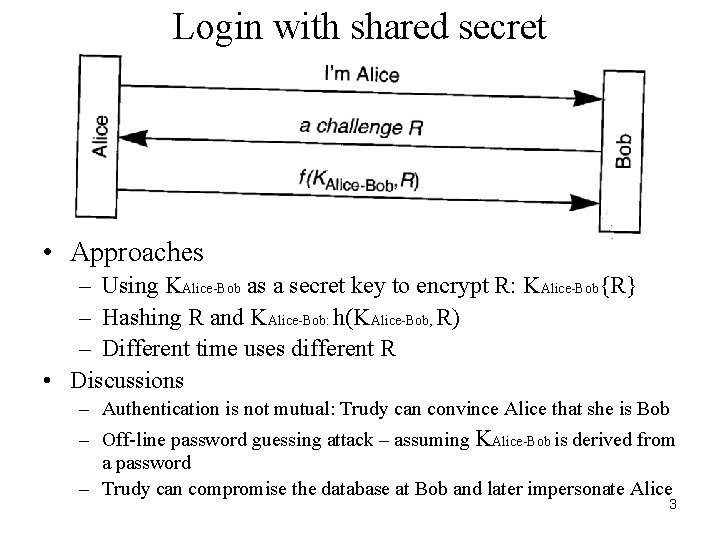
Login with shared secret • Approaches – Using KAlice-Bob as a secret key to encrypt R: KAlice-Bob{R} – Hashing R and KAlice-Bob: h(KAlice-Bob, R) – Different time uses different R • Discussions – Authentication is not mutual: Trudy can convince Alice that she is Bob – Off-line password guessing attack – assuming KAlice-Bob is derived from a password – Trudy can compromise the database at Bob and later impersonate Alice 3
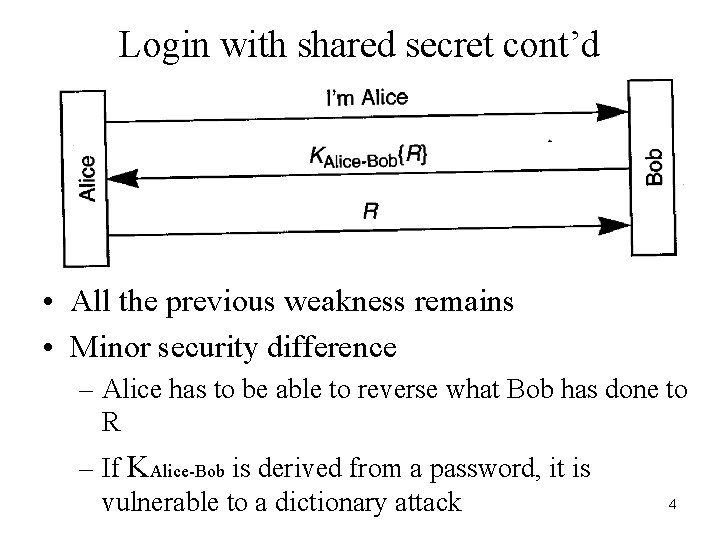
Login with shared secret cont’d • All the previous weakness remains • Minor security difference – Alice has to be able to reverse what Bob has done to R – If KAlice-Bob is derived from a password, it is vulnerable to a dictionary attack 4
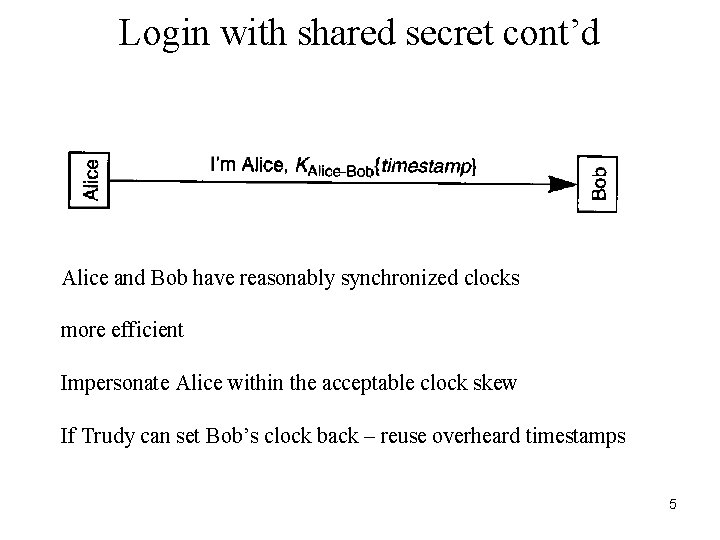
Login with shared secret cont’d Alice and Bob have reasonably synchronized clocks more efficient Impersonate Alice within the acceptable clock skew If Trudy can set Bob’s clock back – reuse overheard timestamps 5
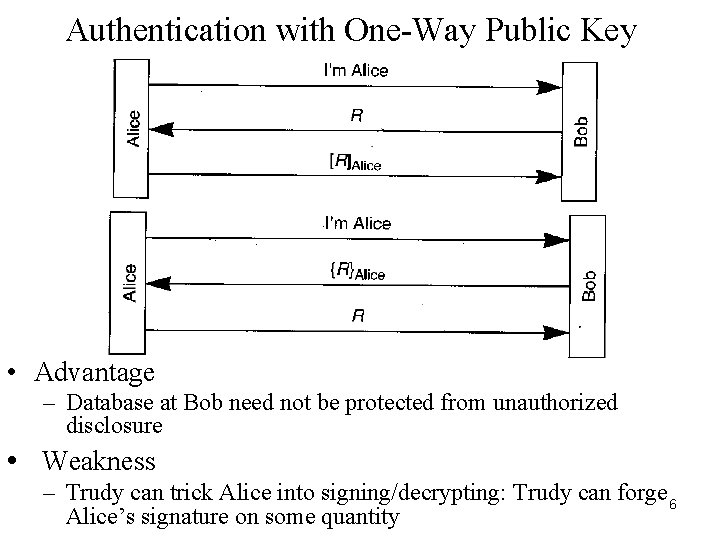
Authentication with One-Way Public Key • Advantage – Database at Bob need not be protected from unauthorized disclosure • Weakness – Trudy can trick Alice into signing/decrypting: Trudy can forge 6 Alice’s signature on some quantity
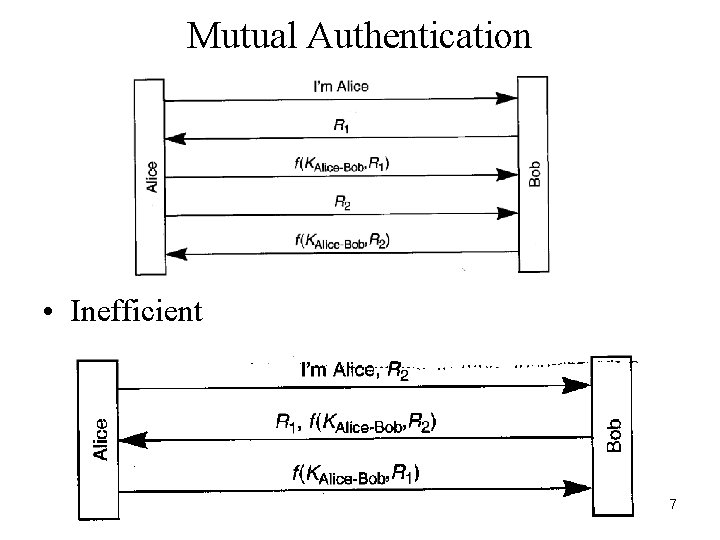
Mutual Authentication • Inefficient 7
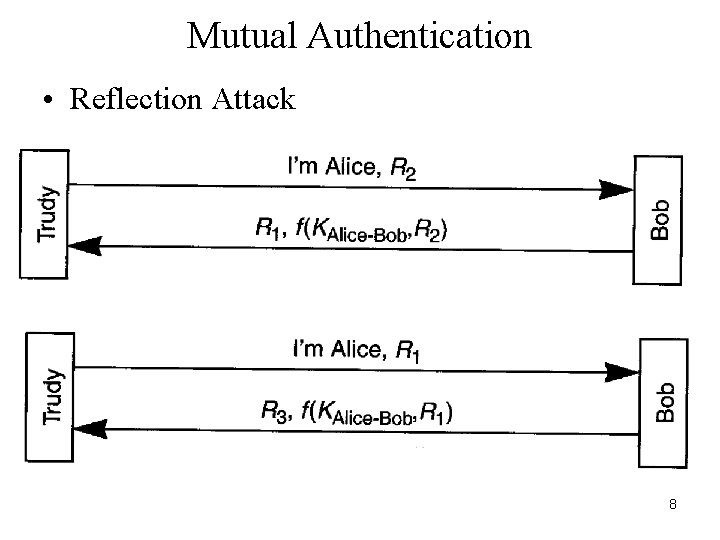
Mutual Authentication • Reflection Attack 8
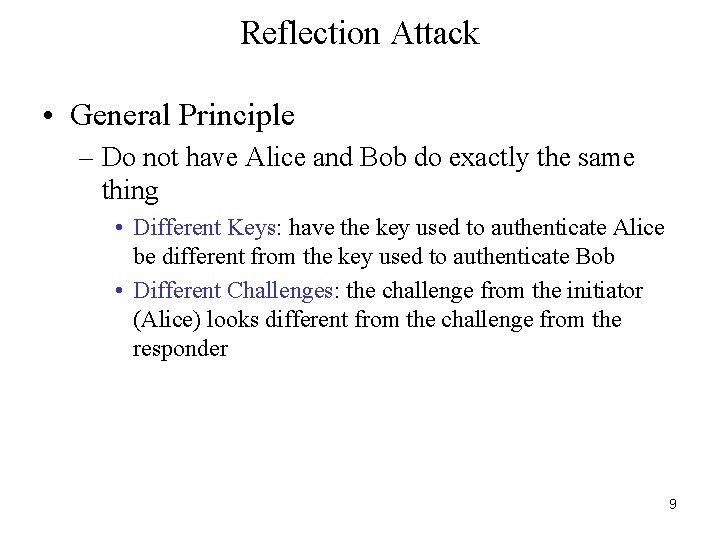
Reflection Attack • General Principle – Do not have Alice and Bob do exactly the same thing • Different Keys: have the key used to authenticate Alice be different from the key used to authenticate Bob • Different Challenges: the challenge from the initiator (Alice) looks different from the challenge from the responder 9
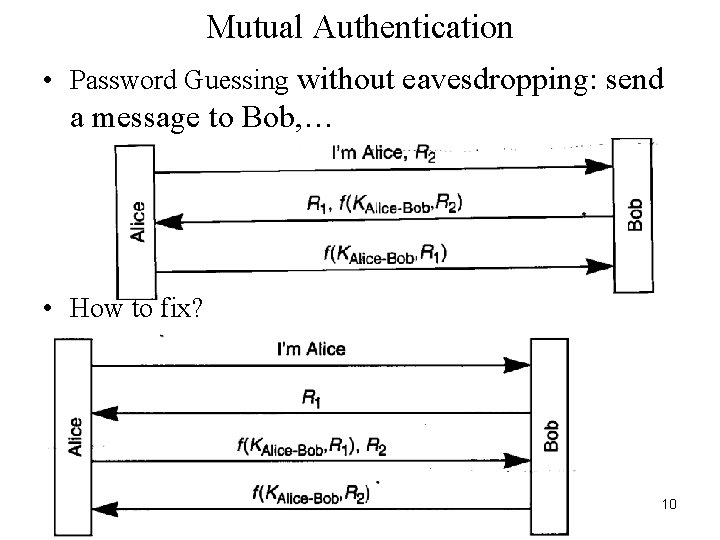
Mutual Authentication • Password Guessing without eavesdropping: send a message to Bob, … • How to fix? 10
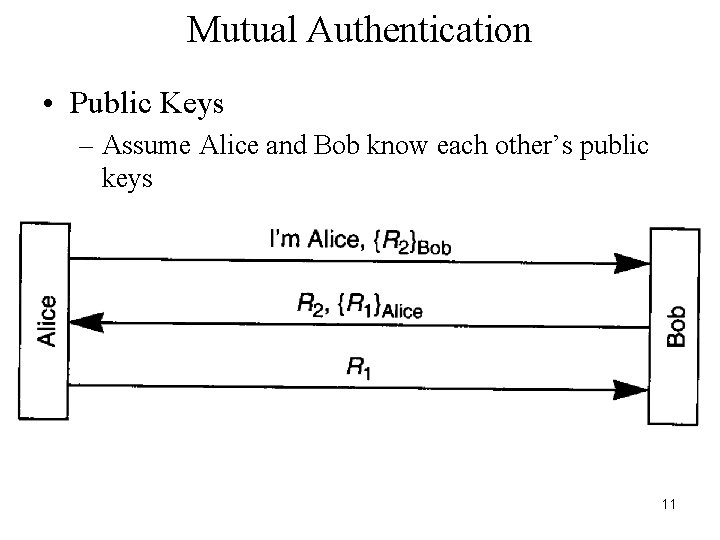
Mutual Authentication • Public Keys – Assume Alice and Bob know each other’s public keys 11
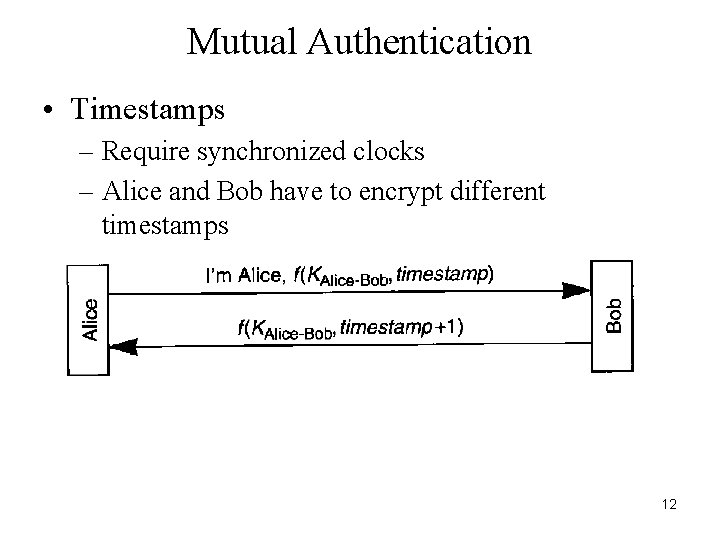
Mutual Authentication • Timestamps – Require synchronized clocks – Alice and Bob have to encrypt different timestamps 12
Integrity/Encryption for Data • In order to provide integrity and/or encryption protection of the data following the authentication exchange, it is necessary for Alice and Bob to encrypt and/or add integrity – Require a session key established during mutual authentication 13
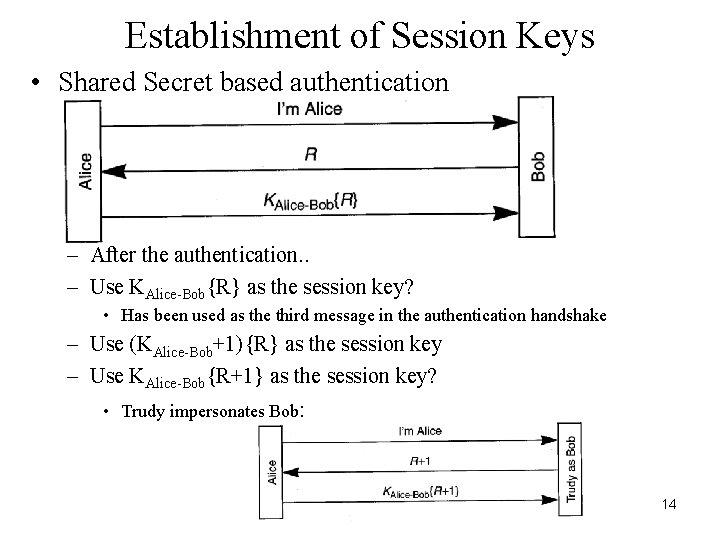
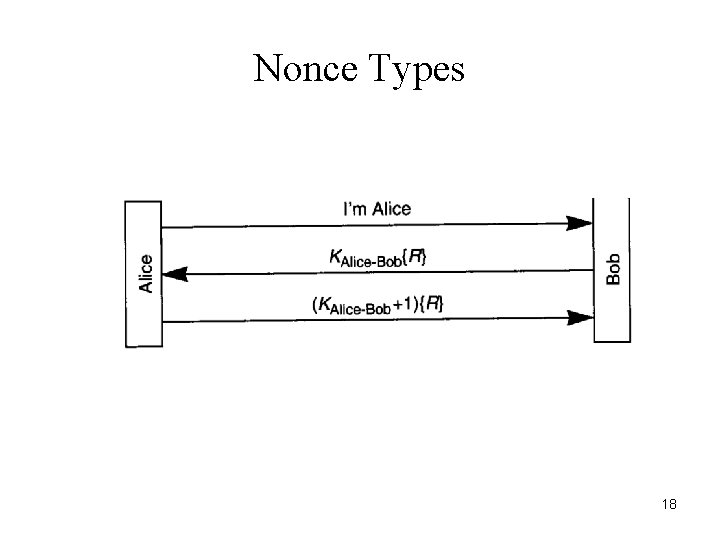
Establishment of Session Keys • Shared Secret based authentication – After the authentication. . – Use KAlice-Bob{R} as the session key? • Has been used as the third message in the authentication handshake – Use (KAlice-Bob+1){R} as the session key – Use KAlice-Bob{R+1} as the session key? • Trudy impersonates Bob: 14
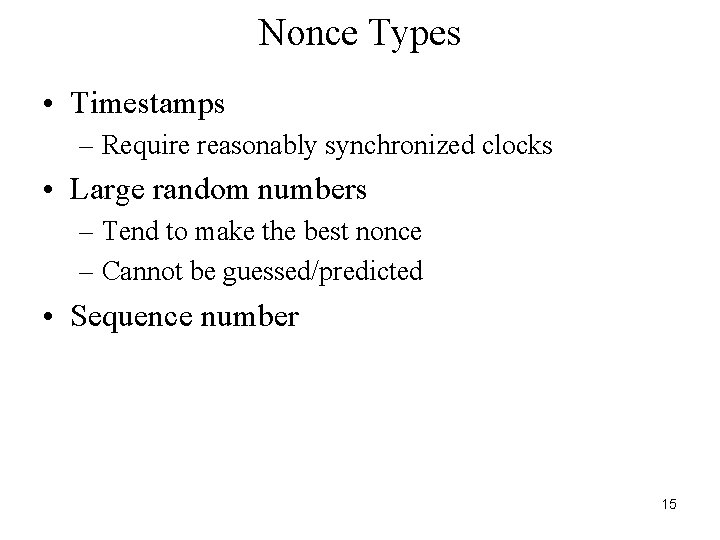
Nonce Types • Timestamps – Require reasonably synchronized clocks • Large random numbers – Tend to make the best nonce – Cannot be guessed/predicted • Sequence number 15
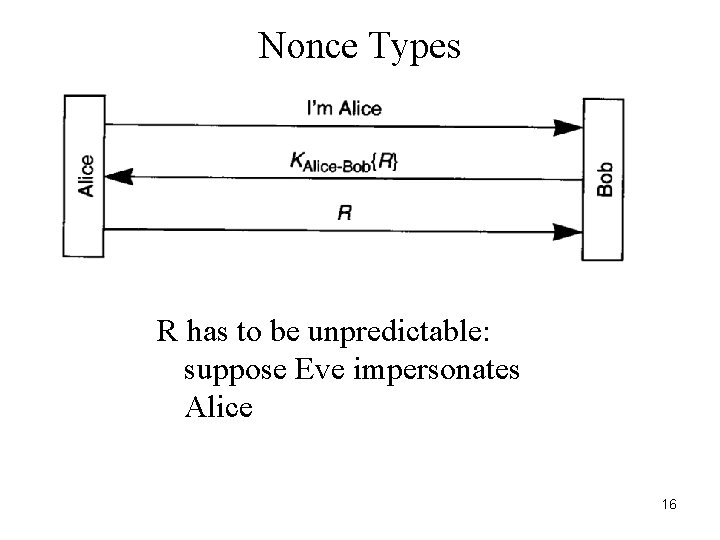
Nonce Types R has to be unpredictable: suppose Eve impersonates Alice 16
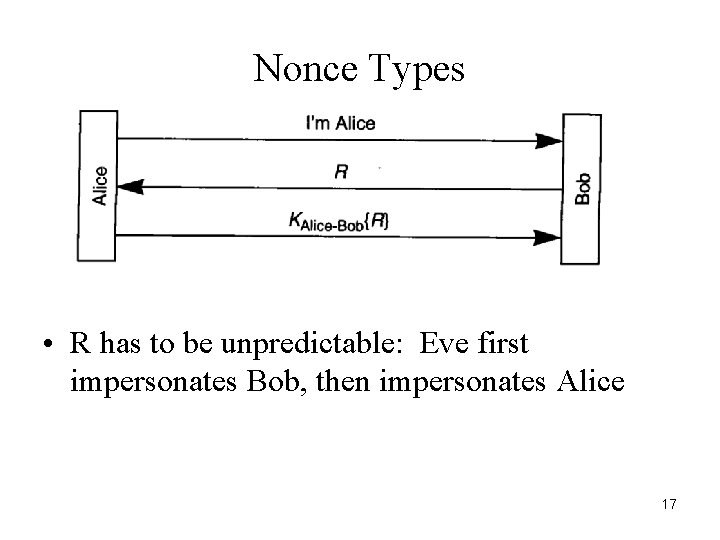
Nonce Types • R has to be unpredictable: Eve first impersonates Bob, then impersonates Alice 17
Nonce Types 18
Privacy and Integrity • Replay attack – Use long sequence numbers • Sequence number space rollover – Key rollover: changing keys in the middle of a conversation 19
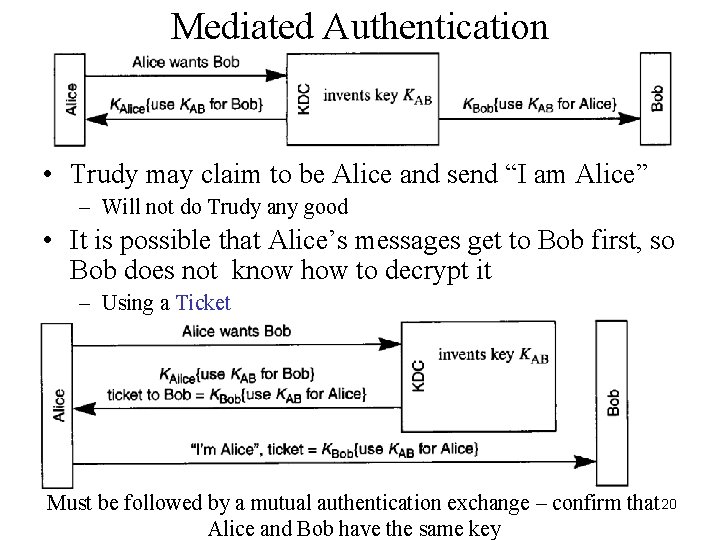
Mediated Authentication • Trudy may claim to be Alice and send “I am Alice” – Will not do Trudy any good • It is possible that Alice’s messages get to Bob first, so Bob does not know how to decrypt it – Using a Ticket Must be followed by a mutual authentication exchange – confirm that 20 Alice and Bob have the same key
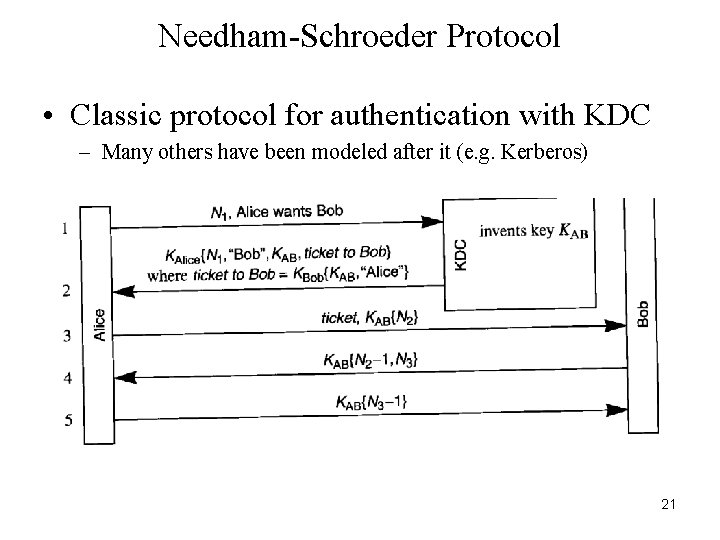
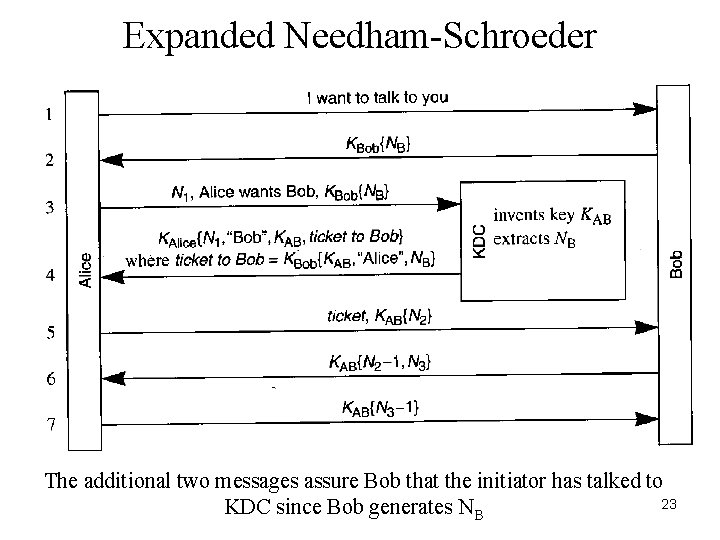
Needham-Schroeder Protocol • Classic protocol for authentication with KDC – Many others have been modeled after it (e. g. Kerberos) 21
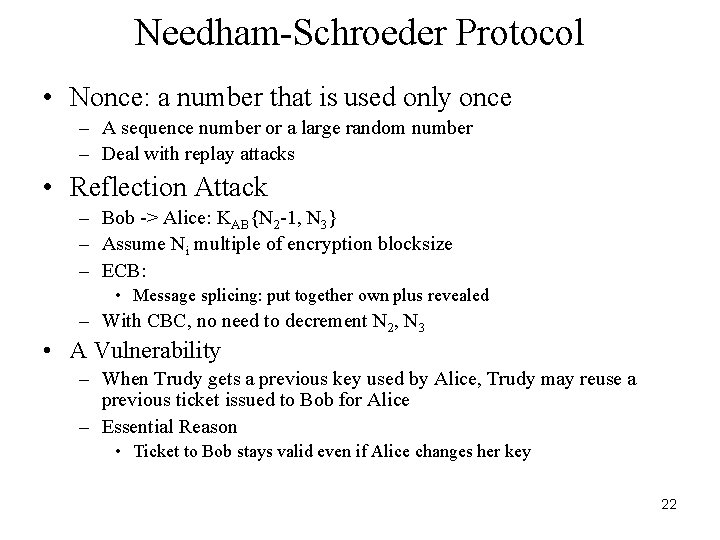
Needham-Schroeder Protocol • Nonce: a number that is used only once – A sequence number or a large random number – Deal with replay attacks • Reflection Attack – Bob -> Alice: KAB{N 2 -1, N 3} – Assume Ni multiple of encryption blocksize – ECB: • Message splicing: put together own plus revealed – With CBC, no need to decrement N 2, N 3 • A Vulnerability – When Trudy gets a previous key used by Alice, Trudy may reuse a previous ticket issued to Bob for Alice – Essential Reason • Ticket to Bob stays valid even if Alice changes her key 22
Expanded Needham-Schroeder The additional two messages assure Bob that the initiator has talked to 23 KDC since Bob generates NB
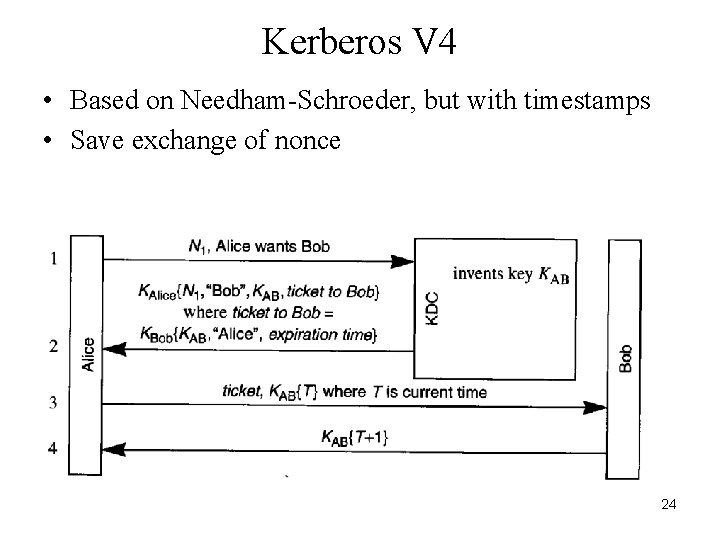
Kerberos V 4 • Based on Needham-Schroeder, but with timestamps • Save exchange of nonce 24