
Security Considerations RFC 3552 Guidelines for Writing RFC

- Slides: 30
Security Considerations RFC 3552 – Guidelines for Writing RFC Text on Security Considerations
Security Directorate is Working on RFC 3552 Update • The foundations in 3552 are still good • Goals • Communication Security • Non-Repudiation • Systems Security • Active vs. Passive attacks • Updates • Pervasive passive monitoring • Updated crypto • But progress is currently stalled
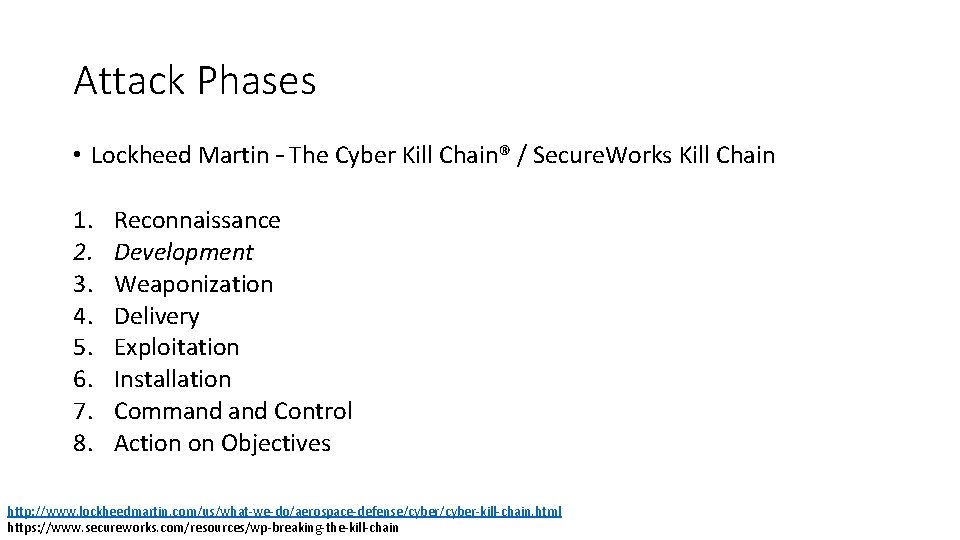
Attack Phases • Lockheed Martin – The Cyber Kill Chain® / Secure. Works Kill Chain 1. 2. 3. 4. 5. 6. 7. 8. Reconnaissance Development Weaponization Delivery Exploitation Installation Command Control Action on Objectives http: //www. lockheedmartin. com/us/what-we-do/aerospace-defense/cyber-kill-chain. html https: //www. secureworks. com/resources/wp-breaking-the-kill-chain
Another Attack Model • The Lockheed Martin (or Secure. Works adaptation) model presumes an adversary intent on persistence • Wants to stay and observe/disrupt your compute system • Maybe not a “simple” cyber criminal
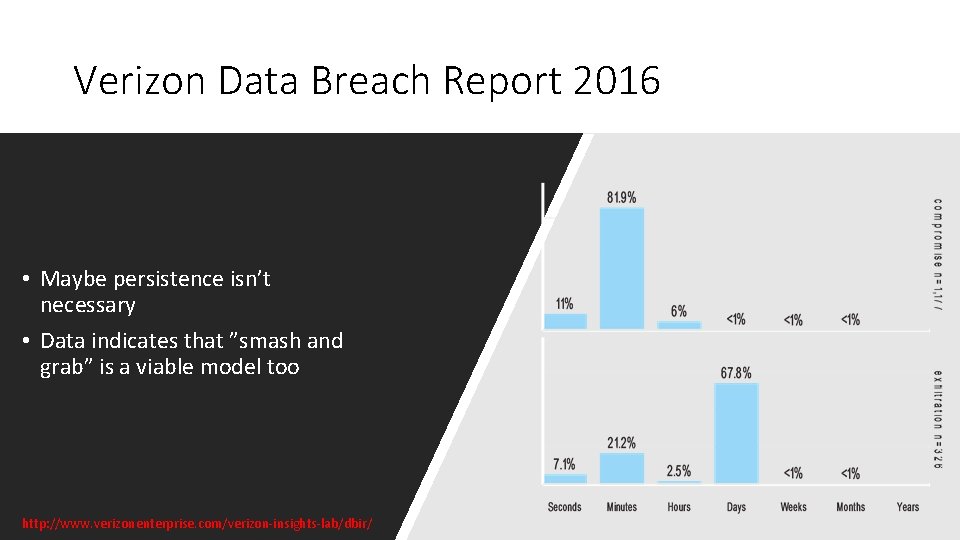
Verizon Data Breach Report 2016 • Maybe persistence isn’t necessary • Data indicates that ”smash and grab” is a viable model too http: //www. verizonenterprise. com/verizon-insights-lab/dbir/
And Pervasive Passive • Metadata collection on a significant portion of Internet conversations • Being able to monitor large scale Internet backbone links • Especially at critical peering points • A different kind of attack against privacy
Passive vs. Active Attackers • Passive attacker • Can see all packets exchanged outside of the defined security border • Can build comprehensive behavioral model of communications • Can do offline analysis/attacks against collected data • Active attacker • Can inject packets into the network • Might be able to modify packets between parties in the network • Packet injection points may be limited or unlimited – state your assumption
Security Considerations Impacts • Helping the security reviewer with understanding your draft • A concise description of what problem your draft addresses • The environment in which your proposed solution will operate in • Developing the attack scenario at the beginning of the security considerations • Passive attacker threats / active attacker threats • Information protection / describing the security boundary • What attacks apply / which attacks do NOT apply and why
Considerations Agenda • Communication Security (Data collection / Information Leakage) • Soft middle networks • DNS – (rendezvous protocols) • Internet of Things • Denial of Service • Amplification Attacks • Phishing • Malicious attachments • Infected Web Sites
Communication Security • Passive attacks collect significant amounts of information • Humans are creatures of habit • Arrive at the office and check their favorite websites and email every morning around the same time of day • Metadata about network connections can reveal quite a bit of information • Not everything on the internet is just reading today’s news • Really smart passive collection is enhanced with minimal packet inspection / active inspection • Determining network defense appliances via header inspection / certificates • Understanding carrier packet manipulation (middle boxes) via targetted probes
Communication Security • Create security boundaries inside protocols to ensure confidentiality • Ensure that the minimum amount of data is used to create a security exchange • Leverage secure protocol layering as soon as is practical • Work to ensure behavioral and side channel attacks against protocol are minimized • Even with encryption, behavioral analysis and possible side channel attacks on protocol behavior may leak information
Security Considerations Impacts • Communications integrity and confidentiality need to both be ensured • Protocols/systems that are designed as middleboxes need to be mindful of impacts to other protocols assumptions • Must assume that the network (unintentionally malicious or not) may interfere with the end-to-end principle • Will cellular network operators optimizations expose detailed customer end point configuration by traffic manipulation/optimization? • Minimize in-the-clear information exchange if needed at all • Be mindful of side-channel information leakage
Soft Middle Networks • Soft Middle Network – all security and protections are provisioned at the perimeter of the network; inside the perimeter there is a high level of trust and a minimal amount of segmentation
Soft Middle Networks • Network security of this design implies that finding a vulnerability in the perimeter is catastrophic to overall system security • Once a toehold is achieved in the network, lateral movement within the network in unimpeded • Keeping separate authorization domains can help delay access to internal network resources • Understanding trust relationships established between devices/protocols to minimize impact
Security Considerations Impact • Understand state trust relationships • Understand basic and enterprise level authentication mechanisms • Employ least privilege into the design of protocols and systems as possible
DNS • A rendezvous protocol: a protocol that lets other protocols determine where to connect – where other protocols should rendezvous • The name translation protocol from human names into network endpoint identifiers (machine names) • The Internet’s distributed database • Holds SRV records on your LAN • X. 509 certificates use DNS Fully Qualified Domain Names (FQDN) as their unique keys
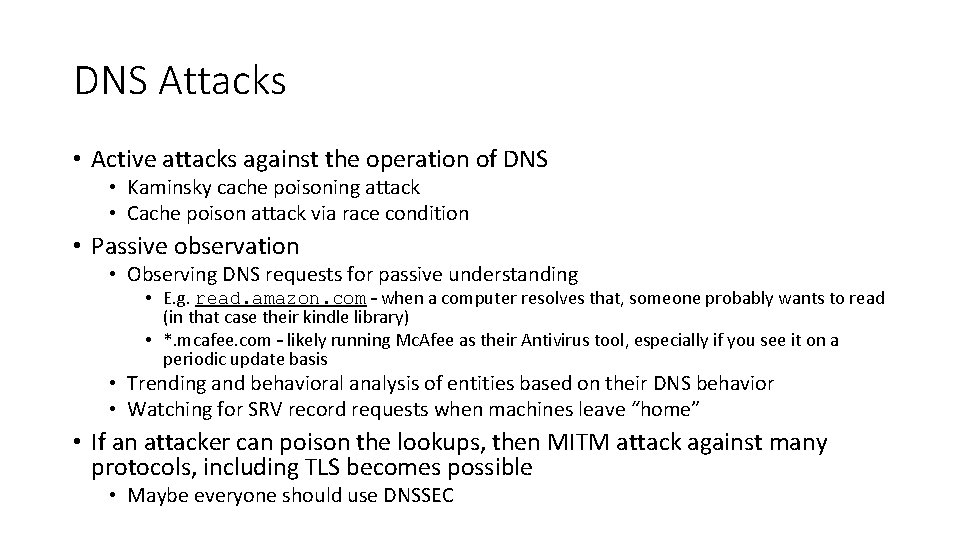
DNS Attacks • Active attacks against the operation of DNS • Kaminsky cache poisoning attack • Cache poison attack via race condition • Passive observation • Observing DNS requests for passive understanding • E. g. read. amazon. com – when a computer resolves that, someone probably wants to read (in that case their kindle library) • *. mcafee. com – likely running Mc. Afee as their Antivirus tool, especially if you see it on a periodic update basis • Trending and behavioral analysis of entities based on their DNS behavior • Watching for SRV record requests when machines leave “home” • If an attacker can poison the lookups, then MITM attack against many protocols, including TLS becomes possible • Maybe everyone should use DNSSEC
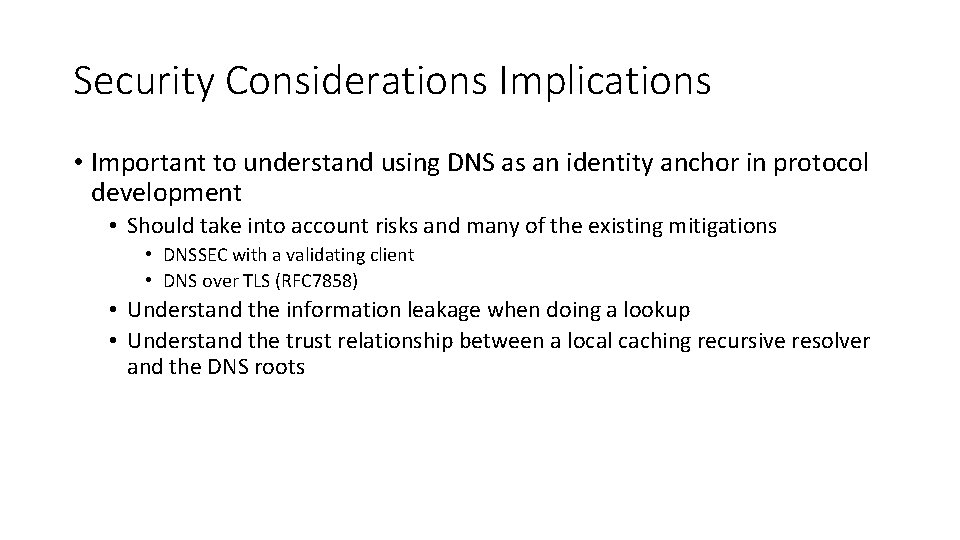
Security Considerations Implications • Important to understand using DNS as an identity anchor in protocol development • Should take into account risks and many of the existing mitigations • DNSSEC with a validating client • DNS over TLS (RFC 7858) • Understand the information leakage when doing a lookup • Understand the trust relationship between a local caching recursive resolver and the DNS roots
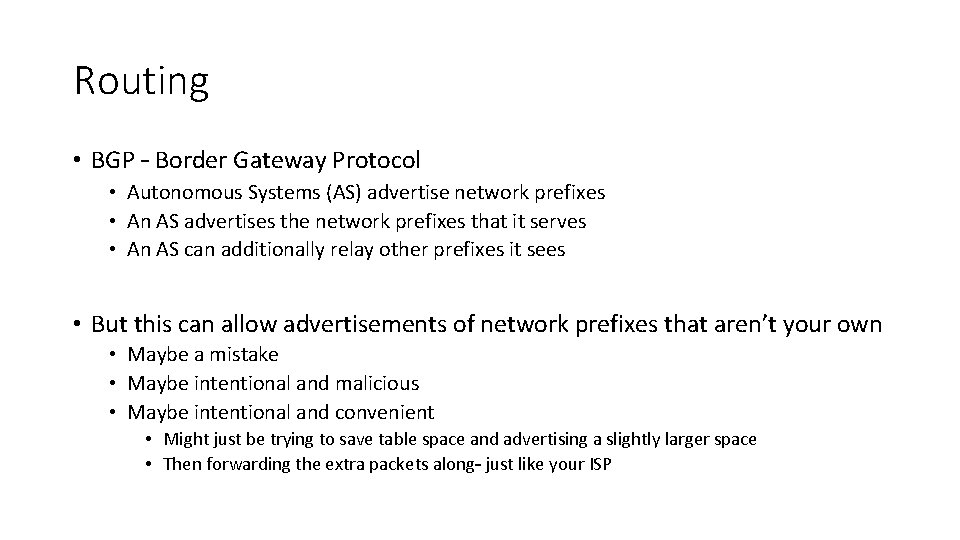
Routing • BGP – Border Gateway Protocol • Autonomous Systems (AS) advertise network prefixes • An AS advertises the network prefixes that it serves • An AS can additionally relay other prefixes it sees • But this can allow advertisements of network prefixes that aren’t your own • Maybe a mistake • Maybe intentional and malicious • Maybe intentional and convenient • Might just be trying to save table space and advertising a slightly larger space • Then forwarding the extra packets along– just like your ISP
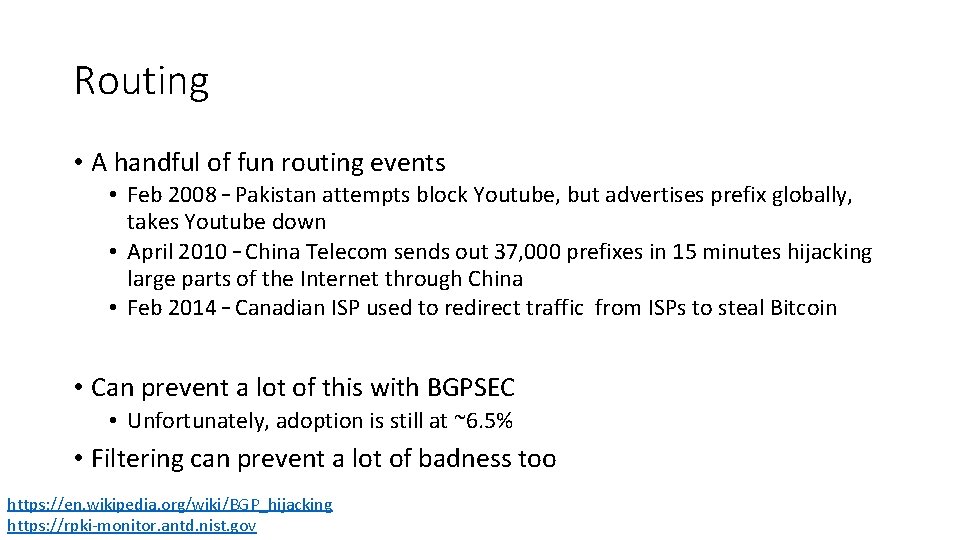
Routing • A handful of fun routing events • Feb 2008 – Pakistan attempts block Youtube, but advertises prefix globally, takes Youtube down • April 2010 – China Telecom sends out 37, 000 prefixes in 15 minutes hijacking large parts of the Internet through China • Feb 2014 – Canadian ISP used to redirect traffic from ISPs to steal Bitcoin • Can prevent a lot of this with BGPSEC • Unfortunately, adoption is still at ~6. 5% • Filtering can prevent a lot of badness too https: //en. wikipedia. org/wiki/BGP_hijacking https: //rpki-monitor. antd. nist. gov
Security Considerations Implications • Networks and network connectivity can be hijacked or black holed via routing • Routing impacts can be global or regional • Combining routing attacks with other attack types can make them more powerful • Can be used for denial of service • Drafts should ensure their trust anchors are durable to such infrastructure attacks
Internet of Things • Manufacturers, PLEASE follow basic security engineering • • • No non-disablable backdoors No default passwords Use a modern up-to-date and patched OS image Do secure (signed) image software updates Use crypto wisely
Denial of Service Amplification Attacks • If we put enough completely insecure Io. T devices then no one will be able to withstand the ensuing DDo. S attacks • Careful about naturally asymmetric protocols • Small queries with large responses allow asymmetric network behavior • See DNS and NTP • If an attacker can forge the end-point address, then can leverage public Internet services to amplify network bandwidth
Security Considerations Implications • IETF is doing a lot of good work on Io. T management and security • ACE, ACME, HIP, HOMENET, SAVI, JOSE • A lot of guidance from non-IETF sources • Too many to list, see draft-ietf-opsec-efforts-20. txt
Other
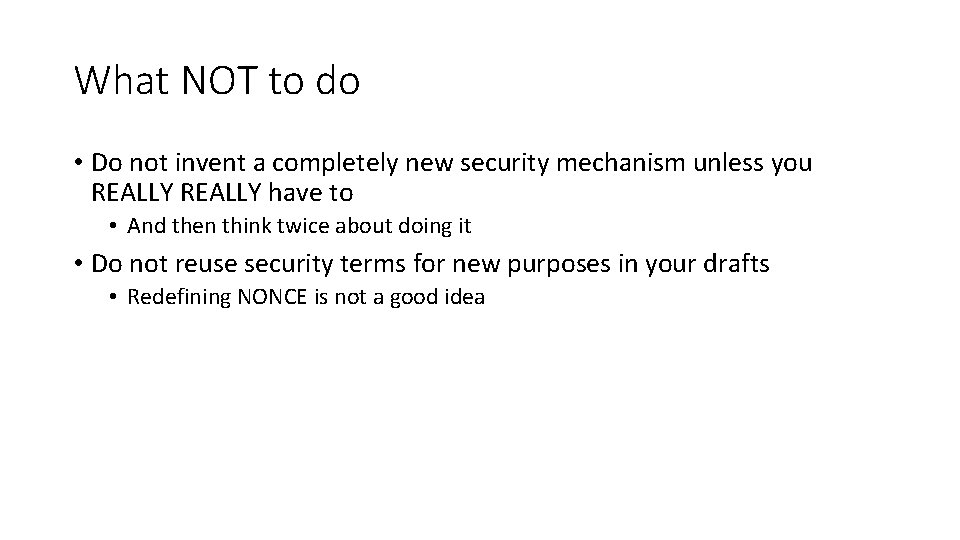
What NOT to do • Do not invent a completely new security mechanism unless you REALLY have to • And then think twice about doing it • Do not reuse security terms for new purposes in your drafts • Redefining NONCE is not a good idea
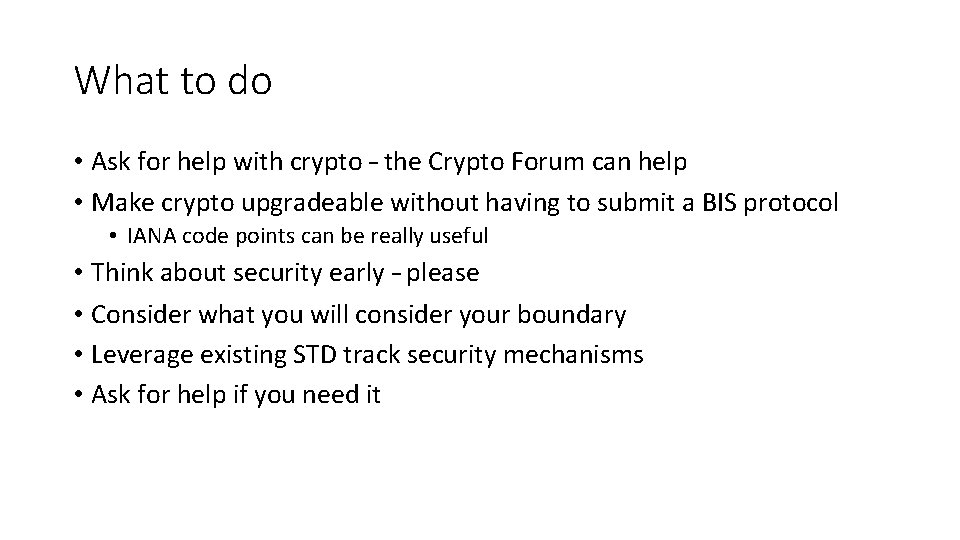
What to do • Ask for help with crypto – the Crypto Forum can help • Make crypto upgradeable without having to submit a BIS protocol • IANA code points can be really useful • Think about security early – please • Consider what you will consider your boundary • Leverage existing STD track security mechanisms • Ask for help if you need it
Backups
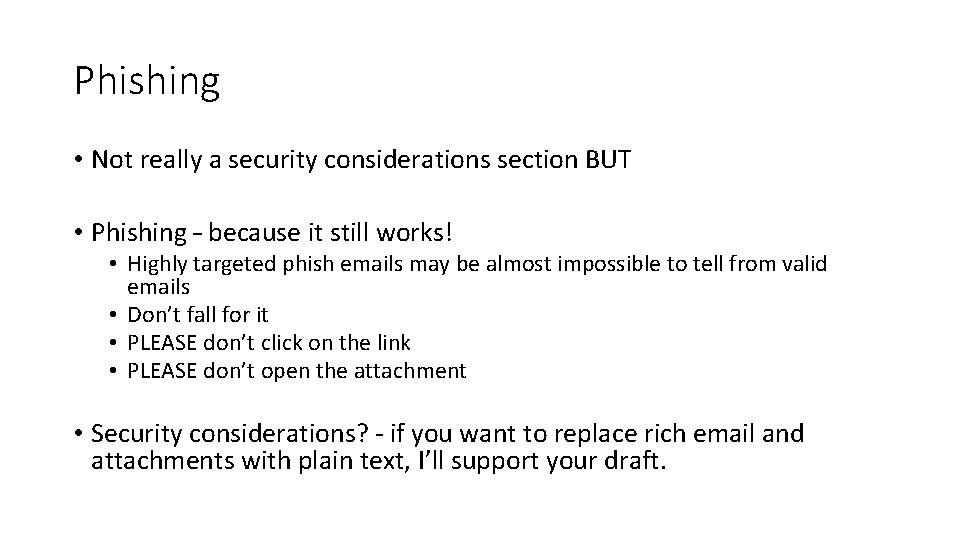
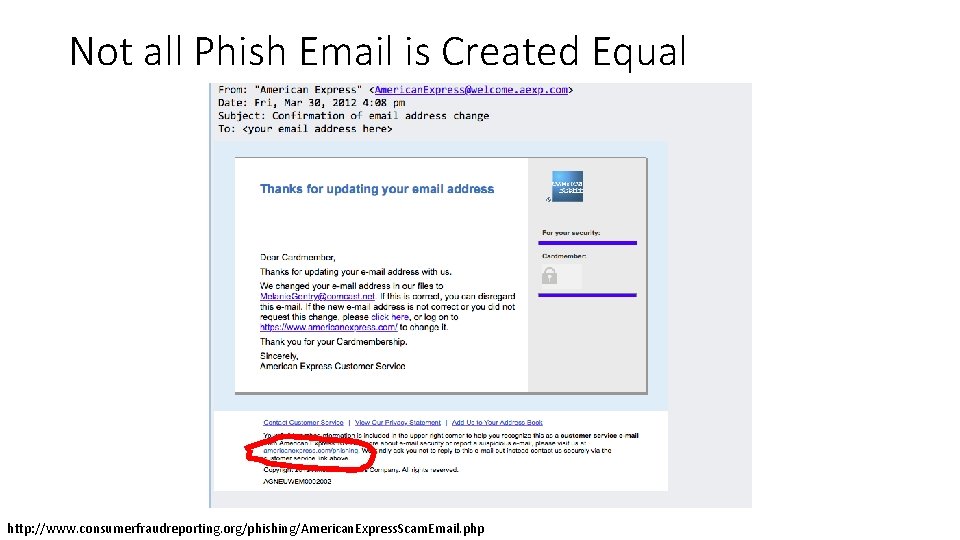
Phishing • Not really a security considerations section BUT • Phishing – because it still works! • Highly targeted phish emails may be almost impossible to tell from valid emails • Don’t fall for it • PLEASE don’t click on the link • PLEASE don’t open the attachment • Security considerations? - if you want to replace rich email and attachments with plain text, I’ll support your draft.
Not all Phish Email is Created Equal http: //www. consumerfraudreporting. org/phishing/American. Express. Scam. Email. php