
Securities Fraud Rule 10 b5 Last updated 20
Securities Fraud Rule 10 b-5 Last updated 20 Feb 12
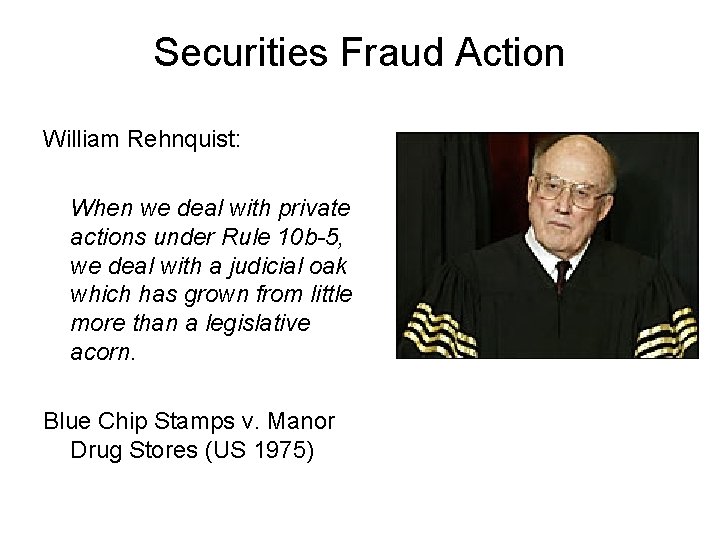
Securities Fraud Action William Rehnquist: When we deal with private actions under Rule 10 b-5, we deal with a judicial oak which has grown from little more than a legislative acorn. Blue Chip Stamps v. Manor Drug Stores (US 1975)
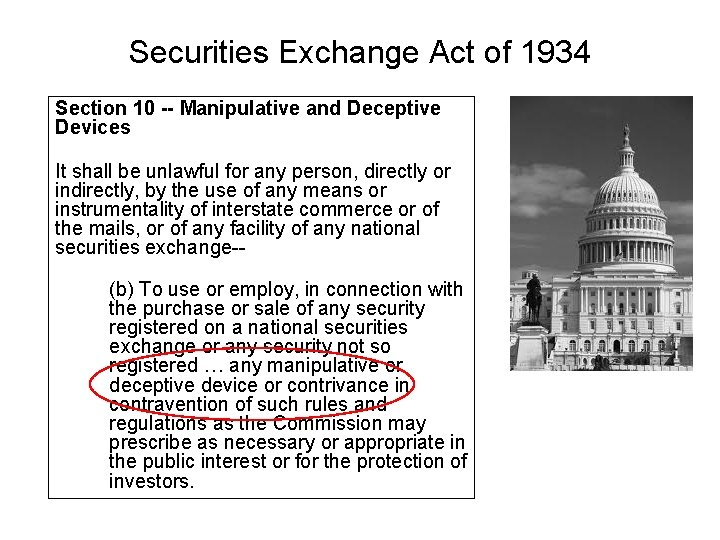
Securities Exchange Act of 1934 Section 10 -- Manipulative and Deceptive Devices It shall be unlawful for any person, directly or indirectly, by the use of any means or instrumentality of interstate commerce or of the mails, or of any facility of any national securities exchange-(b) To use or employ, in connection with the purchase or sale of any security registered on a national securities exchange or any security not so registered … any manipulative or deceptive device or contrivance in contravention of such rules and regulations as the Commission may prescribe as necessary or appropriate in the public interest or for the protection of investors.
Securities Fraud Action Rule 10 b-5 • Transactional nexus • Plaintiff • Defendant • Elements • Procedure Transactional nexus • By means of interstate commerce or mails • “in connection with purchase or sale”
Securities Fraud Action Rule 10 b-5 • Transactional nexus • Plaintiff • Defendant • Elements • Procedure Plaintiff • Purchaser or seller • Except in SEC action
Securities Fraud Action Rule 10 b-5 • Transactional nexus • Plaintiff • Defendant • Elements • Procedure Defendant • Primary violator (makes statements on which reliance) • Includes company statements • No aiding & abetting (accts / advisors)
Securities Fraud Action Rule 10 b-5 • Transactional nexus • Plaintiff • Defendant • Elements • Procedure Elements • Material misrepresent / omission • Scienter – not negligence / knowledge, reckless • Reliance – “fraud on market” • Causation – must be proved • Damages – out-of-pocket
Securities Fraud Action Rule 10 b-5 • Transactional nexus • Plaintiff • Defendant • Elements • Procedure • Statute of limitations (2 yrs + 5 yrs) • Special rules for class actions • Venue (where company has headquarters) • Worldwide service of process • Federal discovery rules
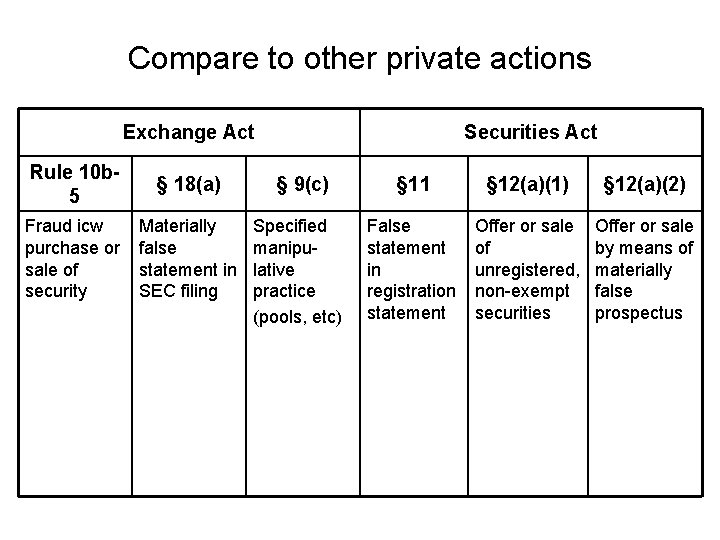
Compare to other private actions Exchange Act Securities Act Rule 10 b 5 § 18(a) § 9(c) § 11 § 12(a)(1) § 12(a)(2) Fraud icw purchase or sale of security Materially false statement in SEC filing Specified manipulative practice (pools, etc) False statement in registration statement Offer or sale of unregistered, non-exempt securities Offer or sale by means of materially false prospectus
Securities Fraud Class Action “when talk is not cheap”
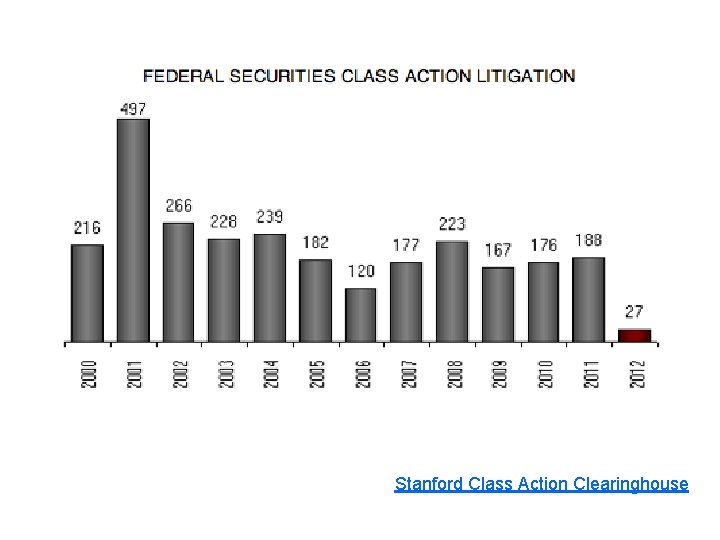
Stanford Class Action Clearinghouse

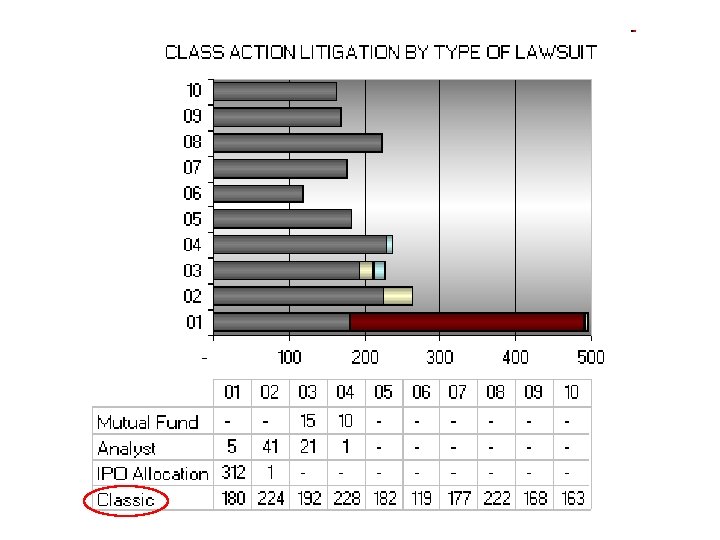
Federal Securities Fraud Class Action Litigation (lawsuits filed) Pre-Reform Post-Reform Stanford Class Action Clearinghouse
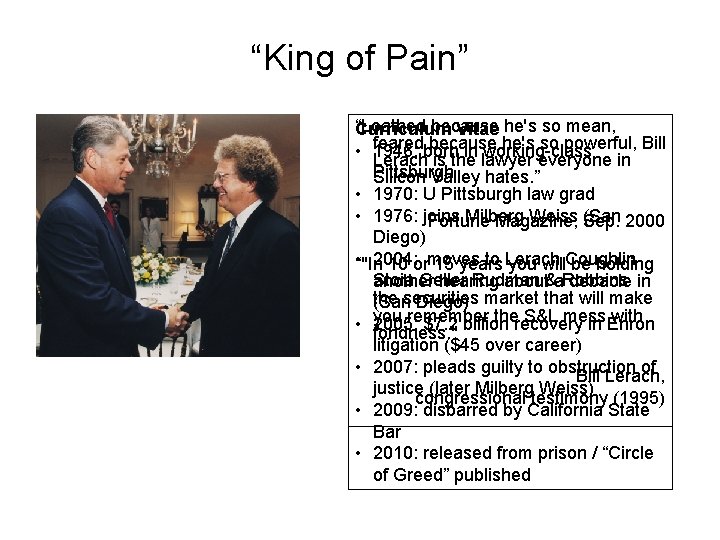
“King of Pain” “Loathed because Curriculum Vitae he's so mean, because he's so powerful, Bill • feared 1946: born in working-class Lerach is the lawyer everyone in Pittsburgh Silicon Valley hates. ” • 1970: U Pittsburgh law grad • 1976: joins Milberg Weiss Sep. (San 2000 Fortune Magazine, Diego) • “"In 2004: to Lerach 10 ormoves 15 years you will. Coughlin be holding Stoia Geller Rudman another hearing about&a. Robbins debacle in the (Sansecurities Diego) market that will make remember therecovery S&L mess with • you 2005: $7. 2 billion in Enron fondness. " litigation ($45 over career) • 2007: pleads guilty to obstruction of Bill Lerach, justice (later Milberg Weiss) congressional testimony (1995) • 2009: disbarred by California State Bar • 2010: released from prison / “Circle of Greed” published
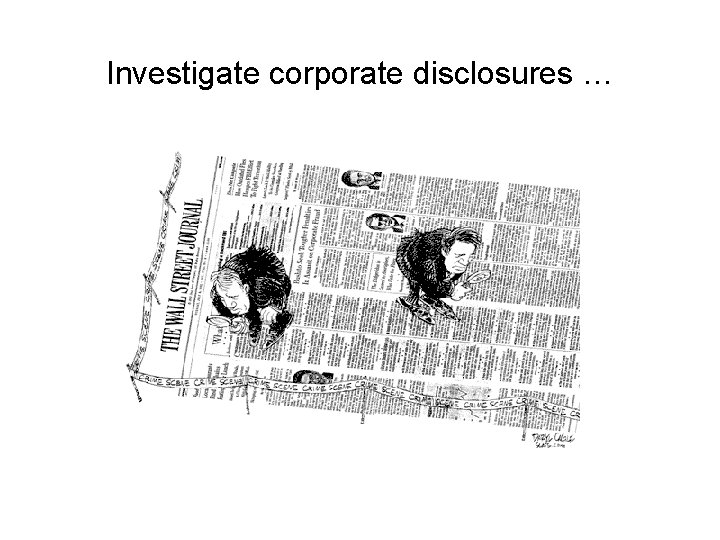
Investigate corporate disclosures …
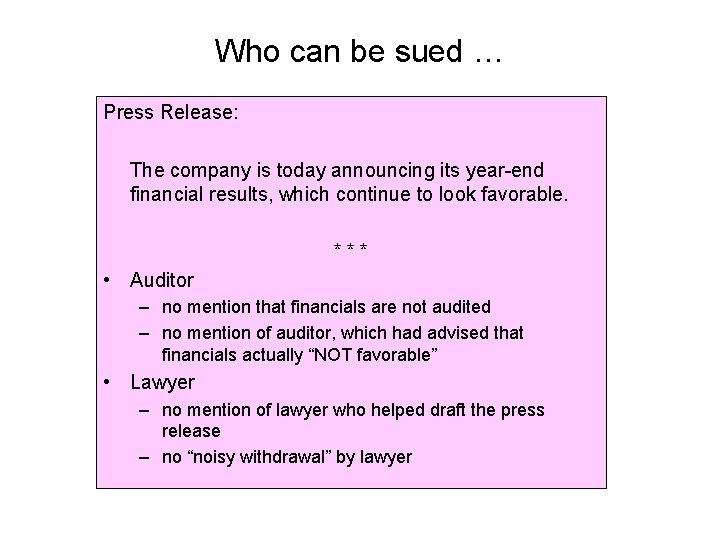
Who can be sued … Press Release: The company is today announcing its year-end financial results, which continue to look favorable. *** • Auditor – no mention that financials are not audited – no mention of auditor, which had advised that financials actually “NOT favorable” • Lawyer – no mention of lawyer who helped draft the press release – no “noisy withdrawal” by lawyer
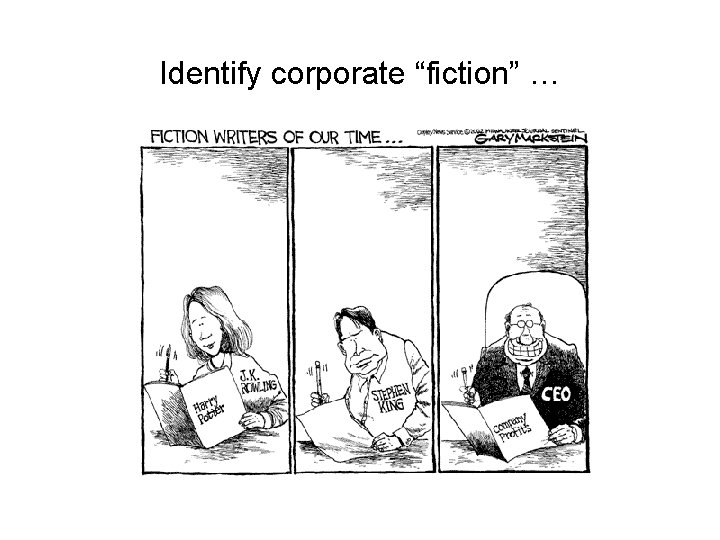
Identify corporate “fiction” …
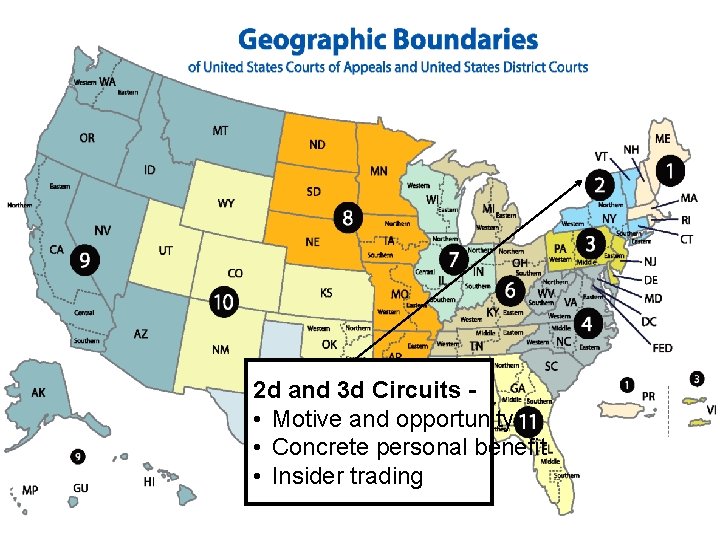
2 d and 3 d Circuits • Motive and opportunity • Concrete personal benefit • Insider trading
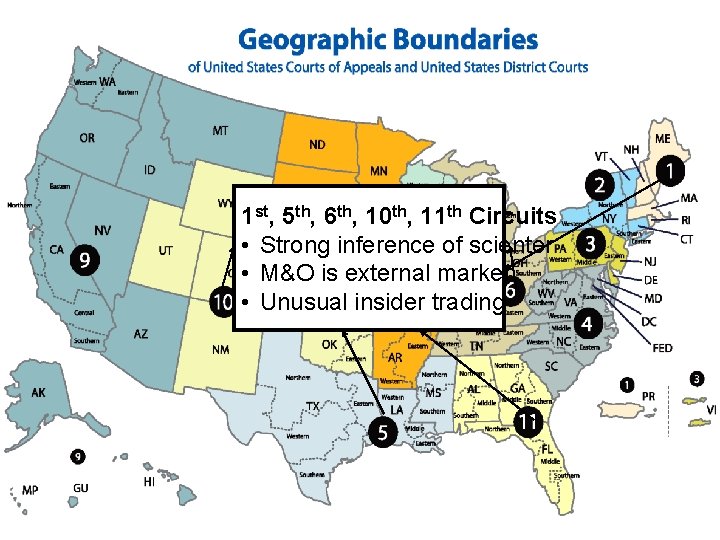
1 st, 5 th, 6 th, 10 th, 11 th Circuits • Strong inference of scienter • M&O is external marker • Unusual insider trading
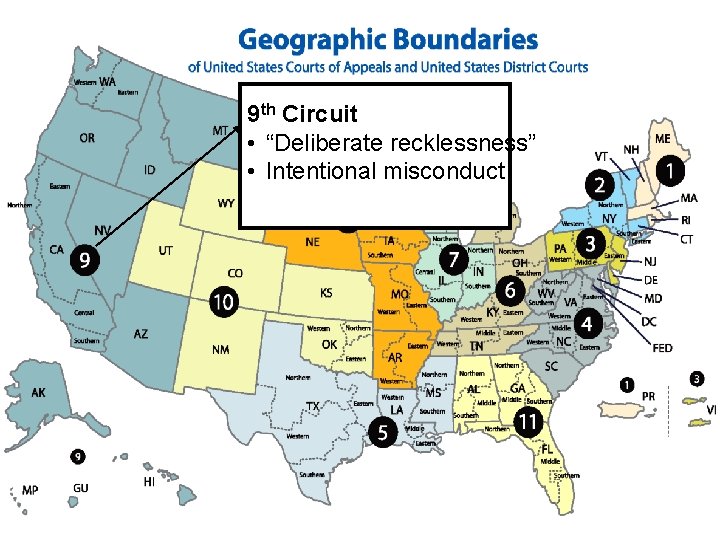
9 th Circuit • “Deliberate recklessness” • Intentional misconduct
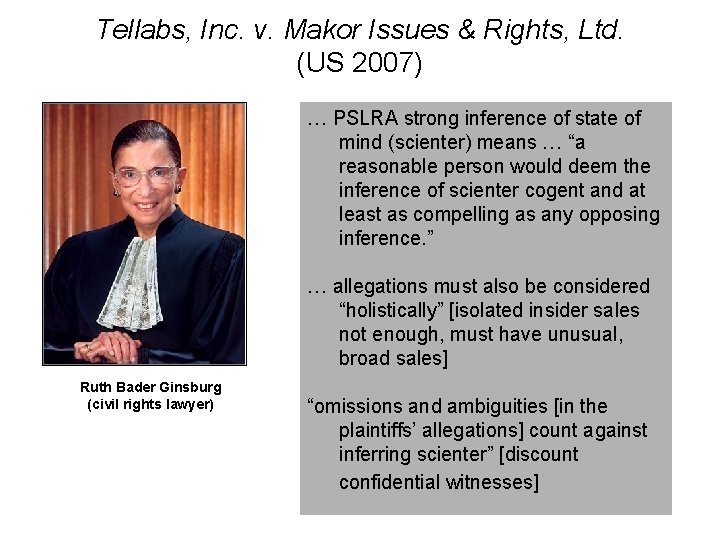
Tellabs, Inc. v. Makor Issues & Rights, Ltd. (US 2007) … PSLRA strong inference of state of mind (scienter) means … “a reasonable person would deem the inference of scienter cogent and at least as compelling as any opposing inference. ” … allegations must also be considered “holistically” [isolated insider sales not enough, must have unusual, broad sales] Ruth Bader Ginsburg (civil rights lawyer) “omissions and ambiguities [in the plaintiffs’ allegations] count against inferring scienter” [discount confidential witnesses]
… followed by “surprise”
… resulting in “price drop”
Basic Inc v. Levinson (US 1988) Timeline The lies – 10/21/77: news interview that “no reason for stock activity and no negotiations” – 9/25/78: response to NYSE inquiry that “management unaware of development” – 11/6/78: Quarterly report that “unaware of any developments” The truth – 12/18/78: announce tender offer by Combustion
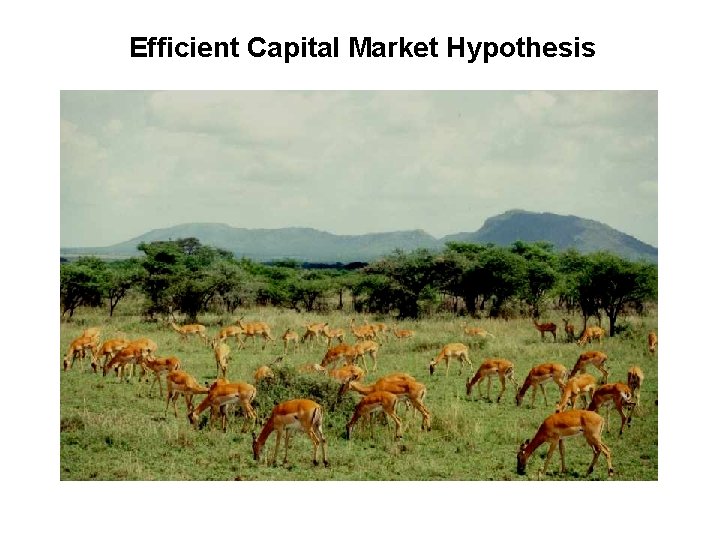
Efficient Capital Market Hypothesis
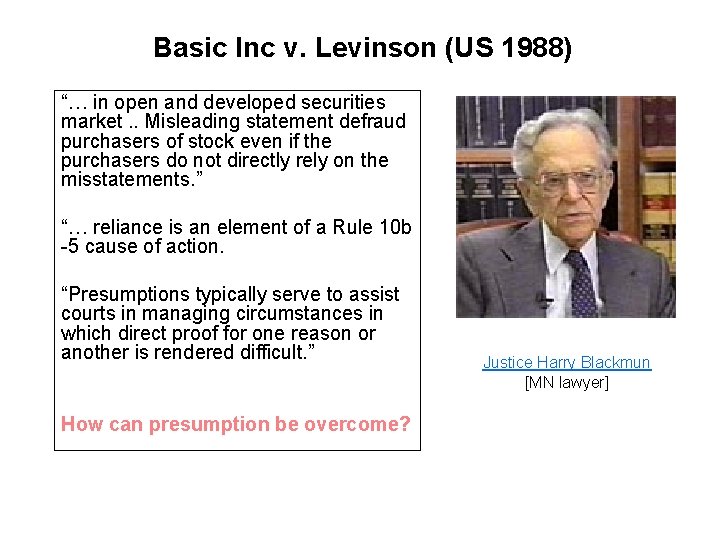
Basic Inc v. Levinson (US 1988) “… in open and developed securities market. . Misleading statement defraud purchasers of stock even if the purchasers do not directly rely on the misstatements. ” “… reliance is an element of a Rule 10 b -5 cause of action. “Presumptions typically serve to assist courts in managing circumstances in which direct proof for one reason or another is rendered difficult. ” How can presumption be overcome? Justice Harry Blackmun [MN lawyer]
Basic Inc v. Levinson (US 1988) “… I fear that the Court’s decision may have many adverse, unintended effects as it is applied and interpreted in the years to come. ” “… Court assumes buyers and sellers rely on the “integrity of the market price … which most mystifies me. ” Justice Byron White [former football player]
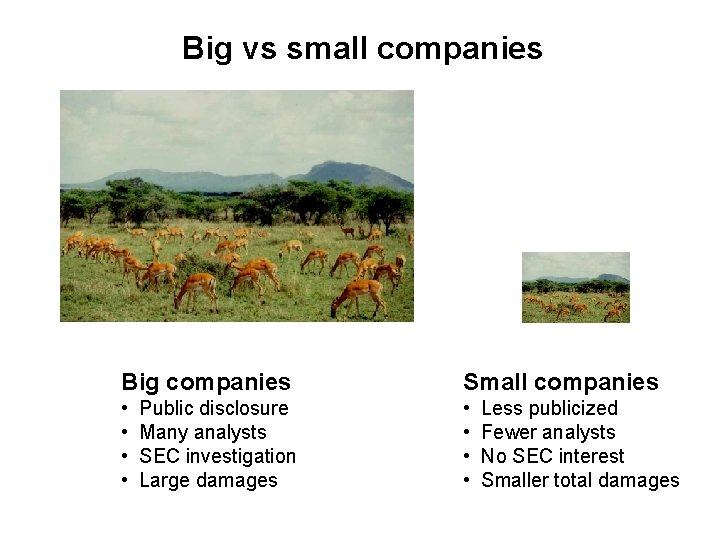
Big vs small companies Big companies Small companies • • Public disclosure Many analysts SEC investigation Large damages Less publicized Fewer analysts No SEC interest Smaller total damages
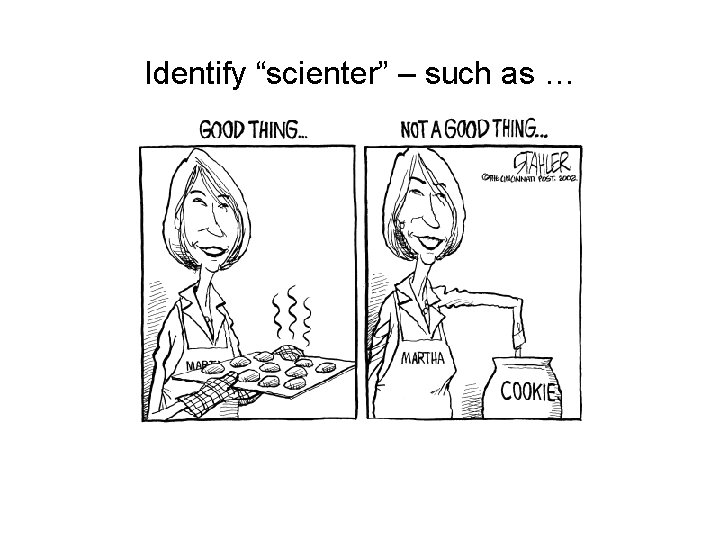
Identify “scienter” – such as …
![Plead “scienter” … PSLRA [Exchange Act 21 D(b)(1)] In any private action arising under](http://slidetodoc.com/presentation_image_h2/725d7e539ef63e813070abdf0fc2f4da/image-31.jpg "Plead “scienter” … PSLRA [Exchange Act 21 D(b)(1)] In any private action arising under")
Plead “scienter” … PSLRA [Exchange Act 21 D(b)(1)] In any private action arising under this chapter in which the plaintiff may recover money damages only on proof that the defendant acted with a particular state of mind, the complaint shall, with respect to each act or omission alleged to violate this chapter, state with particularity facts giving rise to a strong inference that the defendant acted with the required state of mind.
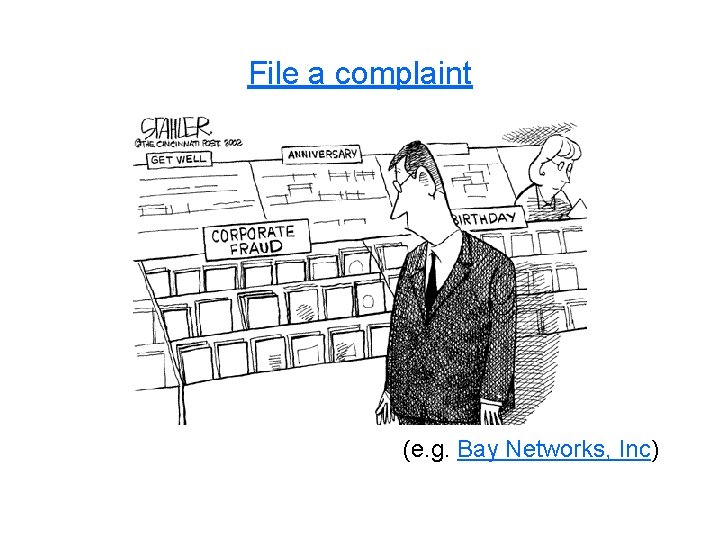
File a complaint (e. g. Bay Networks, Inc)
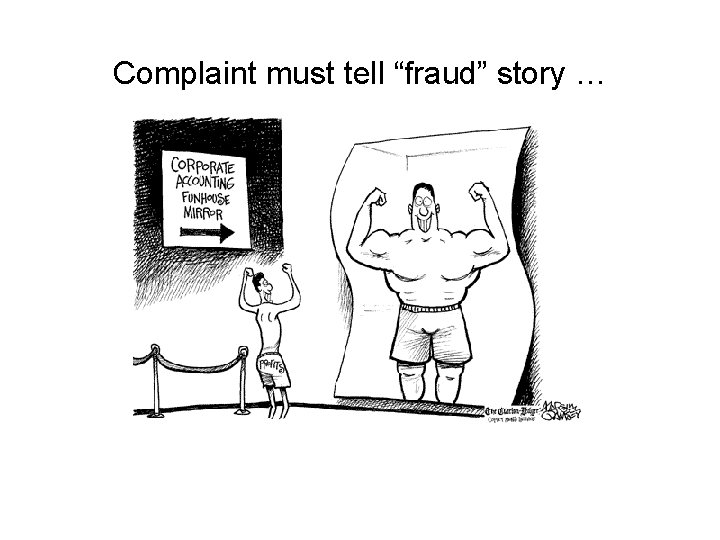
Complaint must tell “fraud” story …
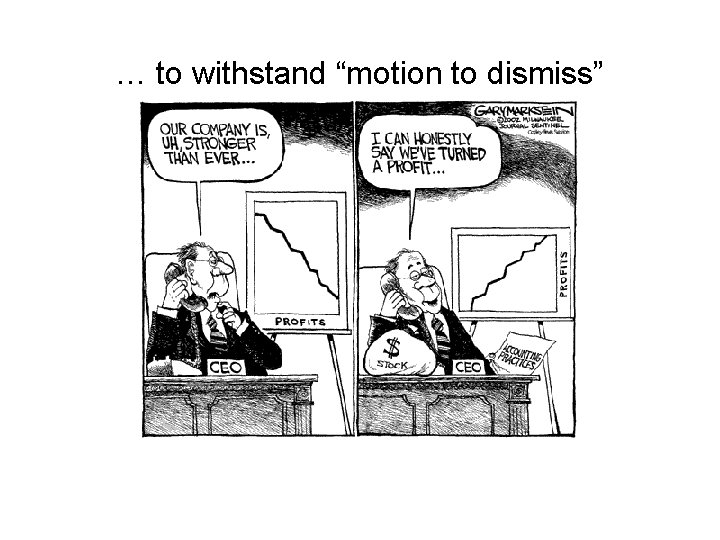
… to withstand “motion to dismiss”
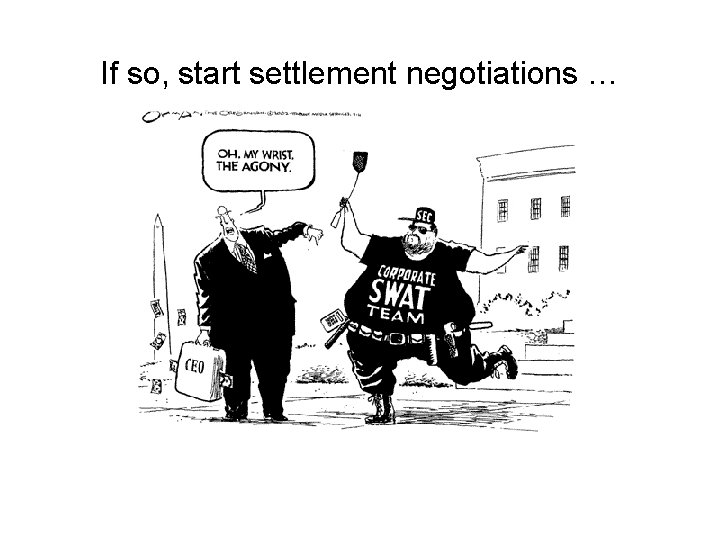
If so, start settlement negotiations …
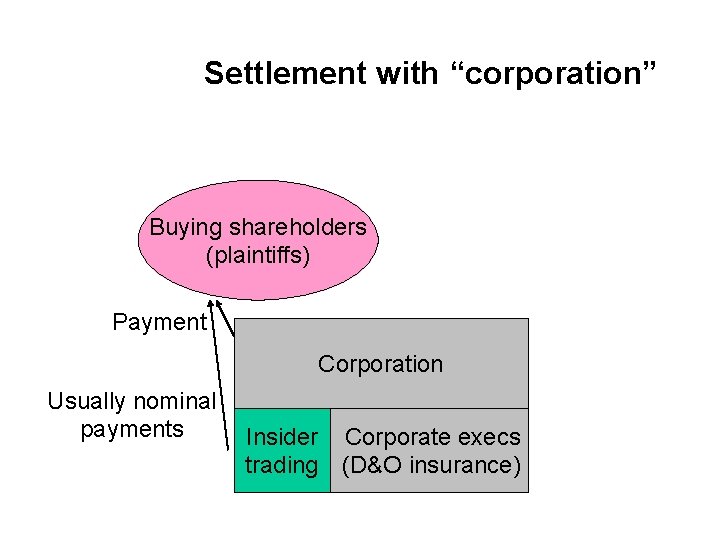
Settlement with “corporation” Buying shareholders (plaintiffs) Payment Corporation Usually nominal payments Insider Corporate execs trading (D&O insurance)
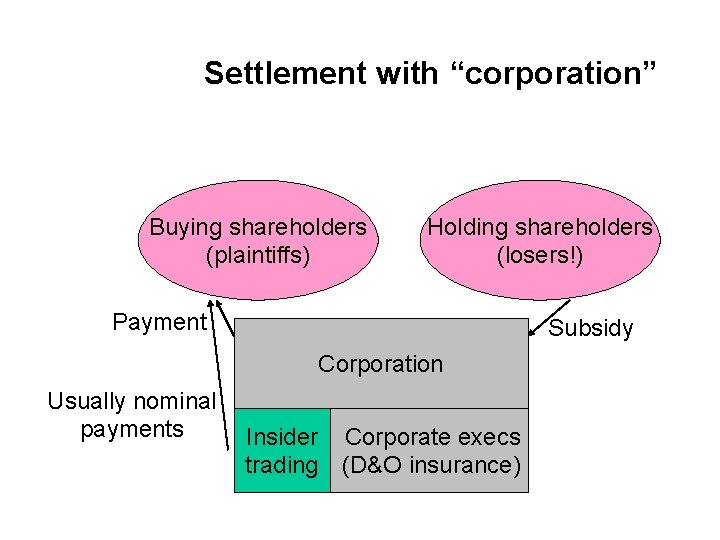
Settlement with “corporation” Buying shareholders (plaintiffs) Holding shareholders (losers!) Payment Subsidy Corporation Usually nominal payments Insider Corporate execs trading (D&O insurance)
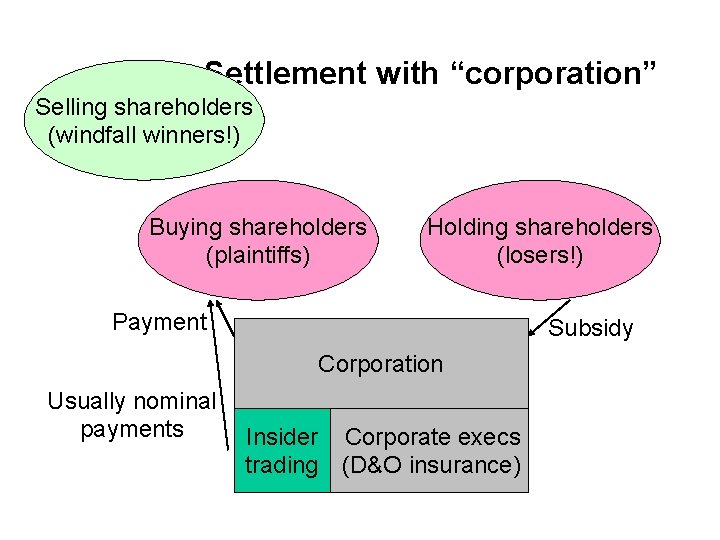
Settlement with “corporation” Selling shareholders (windfall winners!) Buying shareholders (plaintiffs) Holding shareholders (losers!) Payment Subsidy Corporation Usually nominal payments Insider Corporate execs trading (D&O insurance)
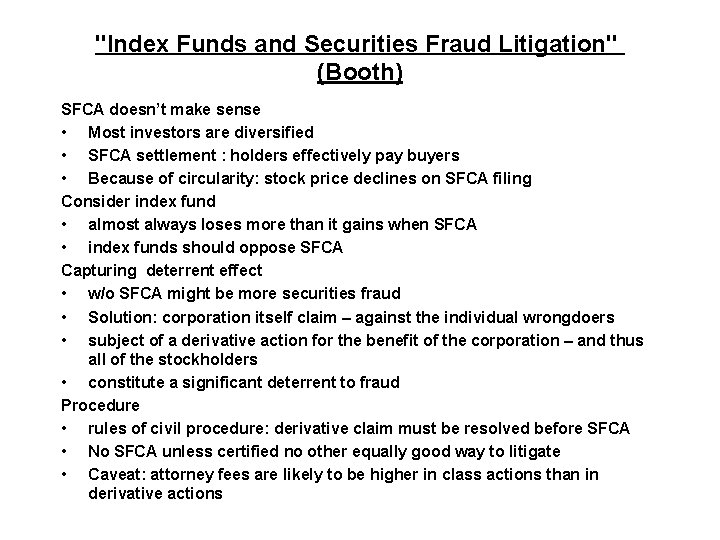
"Index Funds and Securities Fraud Litigation" (Booth) SFCA doesn’t make sense • Most investors are diversified • SFCA settlement : holders effectively pay buyers • Because of circularity: stock price declines on SFCA filing Consider index fund • almost always loses more than it gains when SFCA • index funds should oppose SFCA Capturing deterrent effect • w/o SFCA might be more securities fraud • Solution: corporation itself claim – against the individual wrongdoers • subject of a derivative action for the benefit of the corporation – and thus all of the stockholders • constitute a significant deterrent to fraud Procedure • rules of civil procedure: derivative claim must be resolved before SFCA • No SFCA unless certified no other equally good way to litigate • Caveat: attorney fees are likely to be higher in class actions than in derivative actions
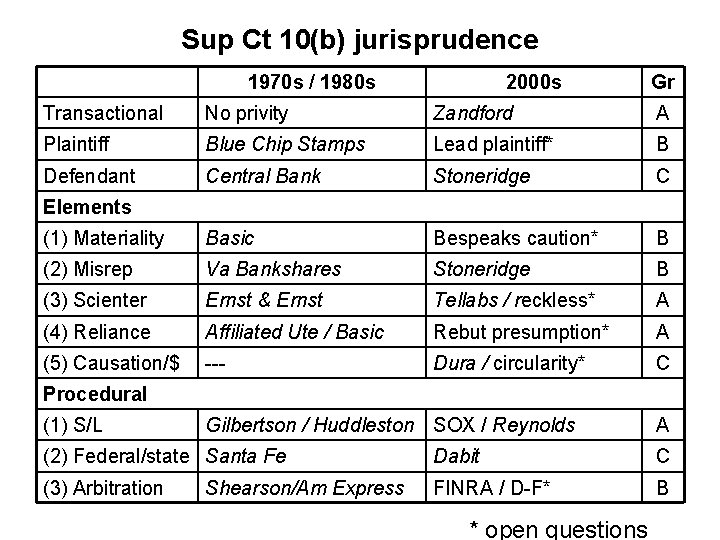
Sup Ct 10(b) jurisprudence 1970 s / 1980 s 2000 s Gr Transactional No privity Zandford A Plaintiff Blue Chip Stamps Lead plaintiff* B Defendant Central Bank Stoneridge C (1) Materiality Basic Bespeaks caution* B (2) Misrep Va Bankshares Stoneridge B (3) Scienter Ernst & Ernst Tellabs / reckless* A (4) Reliance Affiliated Ute / Basic Rebut presumption* A (5) Causation/$ --- Dura / circularity* C Elements Procedural (1) S/L Gilbertson / Huddleston SOX / Reynolds A (2) Federal/state Santa Fe Dabit C (3) Arbitration FINRA / D-F* B Shearson/Am Express * open questions
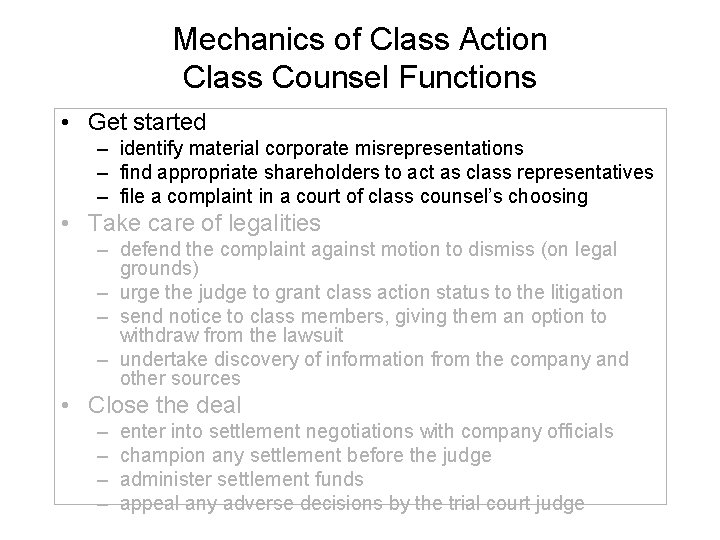
Mechanics of Class Action Class Counsel Functions • Get started – identify material corporate misrepresentations – find appropriate shareholders to act as class representatives – file a complaint in a court of class counsel’s choosing • Take care of legalities – defend the complaint against motion to dismiss (on legal grounds) – urge the judge to grant class action status to the litigation – send notice to class members, giving them an option to withdraw from the lawsuit – undertake discovery of information from the company and other sources • Close the deal – – enter into settlement negotiations with company officials champion any settlement before the judge administer settlement funds appeal any adverse decisions by the trial court judge
Mechanics of Class Action Class Counsel Functions • Get started – identify material corporate misrepresentations – find appropriate shareholders to act as class representatives – file a complaint in a court of class counsel’s choosing • Take care of legalities – defend the complaint against motion to dismiss (on legal grounds) – urge the judge to grant class action status to the litigation – send notice to class members, giving them an option to withdraw from the lawsuit – undertake discovery of information from the company and other sources • Close the deal – – enter into settlement negotiations with company officials champion any settlement before the judge administer settlement funds appeal any adverse decisions by the trial court judge
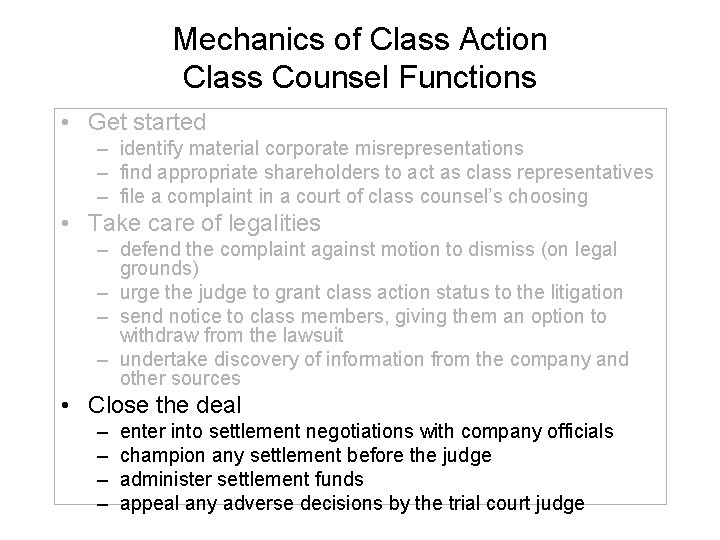
Mechanics of Class Action Class Counsel Functions • Get started – identify material corporate misrepresentations – find appropriate shareholders to act as class representatives – file a complaint in a court of class counsel’s choosing • Take care of legalities – defend the complaint against motion to dismiss (on legal grounds) – urge the judge to grant class action status to the litigation – send notice to class members, giving them an option to withdraw from the lawsuit – undertake discovery of information from the company and other sources • Close the deal – – enter into settlement negotiations with company officials champion any settlement before the judge administer settlement funds appeal any adverse decisions by the trial court judge
- Slides: 43