
Securing the Ptolemaic Dynasty Amber Kearns Ptolemy II
Securing the Ptolemaic Dynasty Amber Kearns
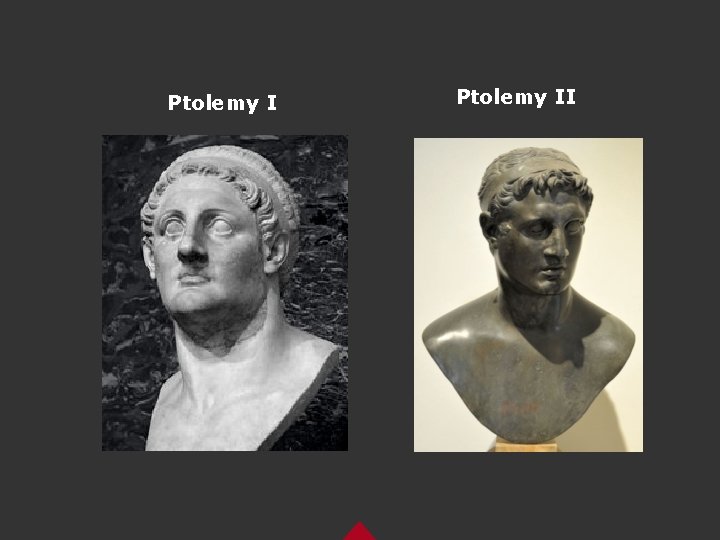
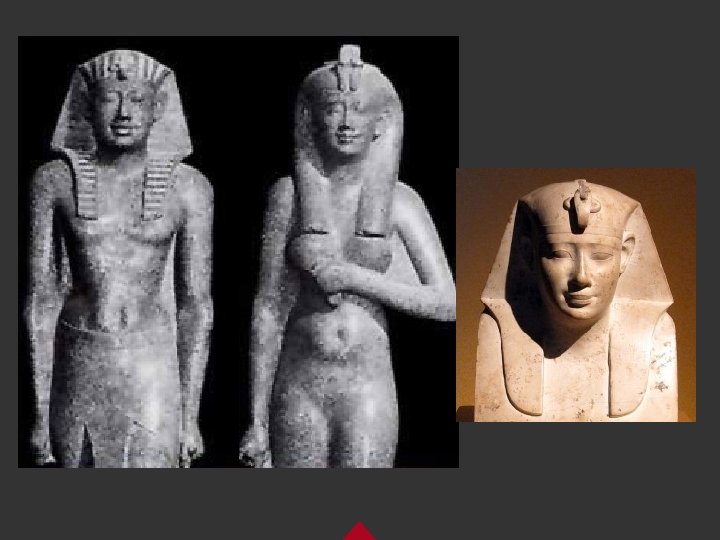
Ptolemy II

Zeus Ammon Alexander as Son of Zeus Ammon
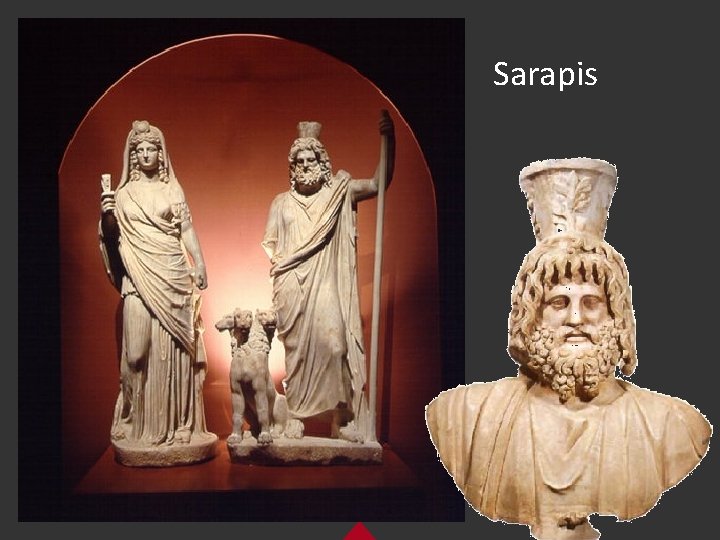
Sarapis
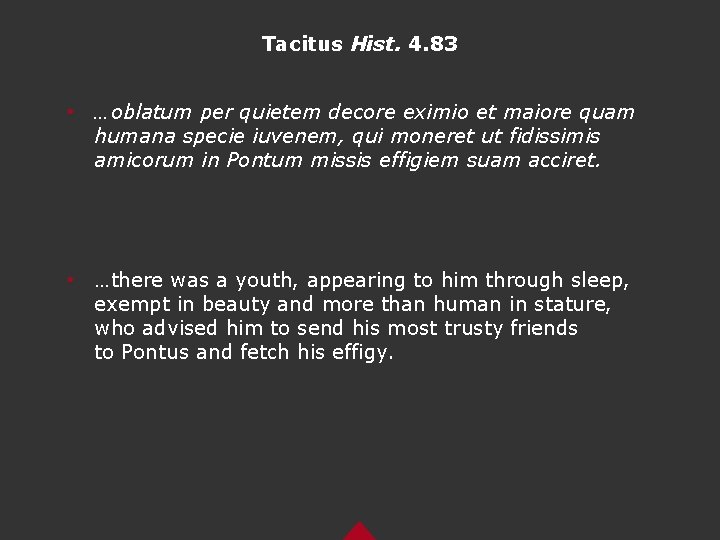
Tacitus Hist. 4. 83 • …oblatum per quietem decore eximio et maiore quam humana specie iuvenem, qui moneret ut fidissimis amicorum in Pontum missis effigiem suam acciret. • …there was a youth, appearing to him through sleep, exempt in beauty and more than human in stature, who advised him to send his most trusty friends to Pontus and fetch his effigy.
Tacitus Hist. 4. 83 • Ptolemaeus omine et miraculo excitus sacerdotibus Aegyptiorum, quibus mos talia intellegere, nocturnos visus aperit. atque illis Ponti et externorum parum gnaris, Timotheum Atheniensem e gente Eumolpidarum, quem ut antistitem caerimoniarum Eleusine exciverat, quaenam illa superstitio, quod numen, interrogat. • Ptolemy, stirred by the omen and the marvel, disclosed the night vision to the Egyptian priests, whose custom is to understand such things. And since they knew too little of Pontus or foreign things, he inquired of the Athenian Timotheus, of the family Eumolpids, whom he had called forth from Eleusis as an overseer of the sacred rites, what this superstition was, and what was the divine power.
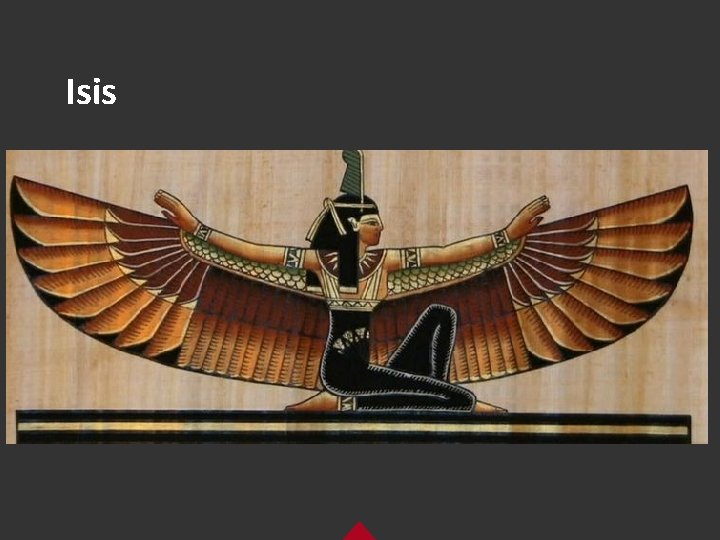
Isis
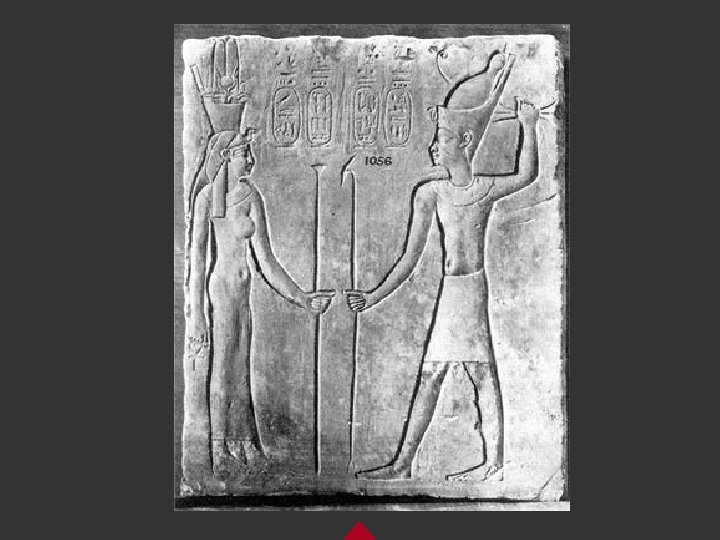
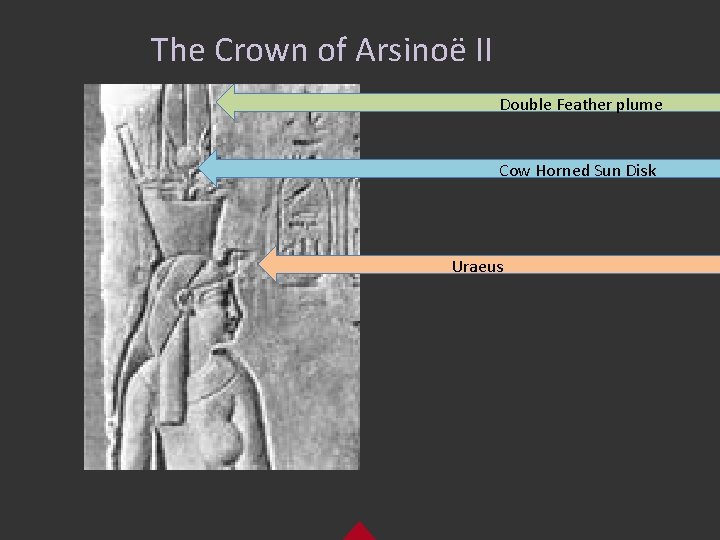
The Crown of Arsinoë II Double Feather plume Cow Horned Sun Disk Uraeus
Bibliography Adamson, P. B. "Consanguinous Marriages in the Ancient World. " Folklore 93, no. 1 (1982): 85 -92. Ager, Sheila L. "Familiarity Breeds: Incest and the Ptolemaic Dynasty. " The Journal of Hellenic Studies 125 (2005): 1 -34. Ager, S. (2006). The Power of Excess: Royal Incest and the Ptolemaic Dynasty. Anthropologica, 48(2), 165 -186. Bevan, Edwyn Robert. The House of Ptolemy: A History of Egypt under the Ptolemaic Dynasty. Chicago, IL: Argonaut INC Publishers, 1968. Bixler, R. (1982). Comment on the Incidence and Purpose of Royal Sibling Incest. American Ethnologist, 9(3), 580 -582. Ellis, Walter M. Ptolemy of Egypt. London: Routledge, 1994. Hammond, N. (1988). Which Ptolemy Gave Troops and Stood as Protector of Pyrrhus' Kingdom? Historia: Zeitschrift Für Alte Geschichte, 37(4), 405 -413. Hill, Dorothy Kent. "Material on the Cult of Sarapis. " Hesperia: The Journal of the American School of Classical Studies at Athens 15, no. 1 (1946): 60 -72. J. Andrew Foster. "Arsinoe II as Epic Queen: Encomiastic Allusion in Theocritus, Idyll 15. " Transactions of the American Philological Association (1974 -) 136, no. 1 (2006): 133 -48. . Nilsson, Maria. The Crown of Arsinoe II. The Creation and Development of An Imagery of Authority. Dissertation, Goteborgs Universitet, 2010. Otto, Walter and Bengtson, Hermann. Zur Geschichte des Niederganges des Ptolemaerreiches. 1938 Rawlinson, George. "History of the Egyptian Kingdom of the Ptolemies. " History of the Egyptian Kingdom of the Ptolemies. Accessed September 15, 2016. http: //www. historyofmacedonia. org/Ancient. Macedonia/Ptolemies. htm. Rice, E. E. , and Kallixeinos. The Grand Procession of Ptolemy Philadelphus. Oxford: Oxford University Press, 1983. Stiehl, Ruth. "The Origin of the Cult of Sarapis. " History of Religions 3, no. 1 (1963): 21 -33. Thorslev, Peter L. "Incest as Romantic Symbol. " Comparative Literature Studies 2, no. 1 (1965): 41 -58. Welles, C. (1962). The Discovery of Sarapis and the Foundation of Alexandria. Historia: Zeitschrift Für Alte Geschichte, 11(3), 271 -298. Whitehorne, J. 1995. "Women's Work in Theocritus, Idyll 15. " Hermes 123: 63 -75.
- Slides: 11