
Securing Open Stack Chris C Kemp About Chris
Securing Open. Stack Chris C. Kemp
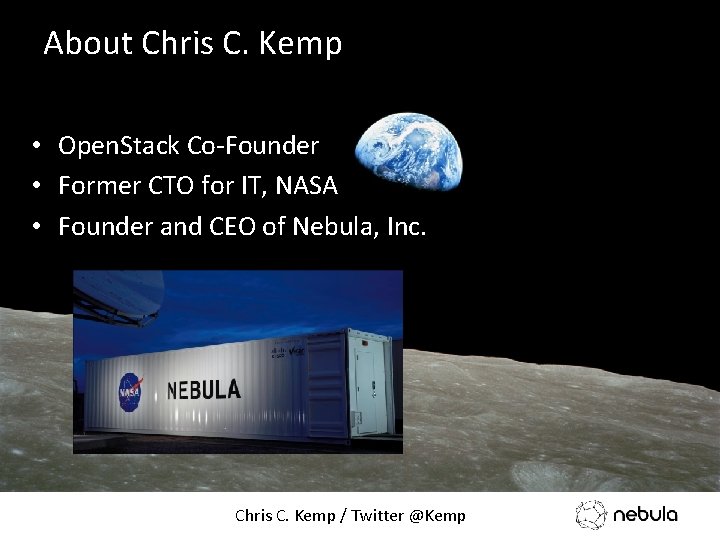
About Chris C. Kemp • Open. Stack Co-Founder • Former CTO for IT, NASA • Founder and CEO of Nebula, Inc. Chris C. Kemp / Twitter @Kemp
Open source software for building private and public clouds.
Open. Stack is a wonderful choice for the security-minded enterprise’s private cloud *if* best practices are followed during all stages of implementation and operation. I’m not *only* making outrageous claims, I’m going to make some points to back this up with the rest of my talk.
Open. Stack is a *true* cloud platform 1. 2. 3. 4. 5. On-demand … through self-service interfaces Elastic … dynamically scale up and down Shared … pooled resources Metered by use … at high level of granularity Accessible … broadly over the network

Open. Stack Details • Multi-tenant, massively scalable, open source cloud operating system. • Supports various hypervisors, including: Xen/Xen. Server , KVM, Hyper-V, VMWare/ESX, Linux Containers (LXC), QEMU, UML • Flexible network and storage options • Apache 2. 0 open source license
Why Build Private Cloud? 1. Maturity. Ability to overcome barriers to entry related to culture, process, technology, experience, and tools. 2. Performance. Need to deploy an application near the data and services that are already deployed on premises - lower latency and increased bandwidth. 3. Security. Must keep data inside Company’s security perimeter, where we trust security team, tools, and processes. 4. Cost. TCO much higher for predictable Iaa. S workloads. 5. Architectural Constraints. Application is not architected to run well in public cloud, or has unique technical requirements.
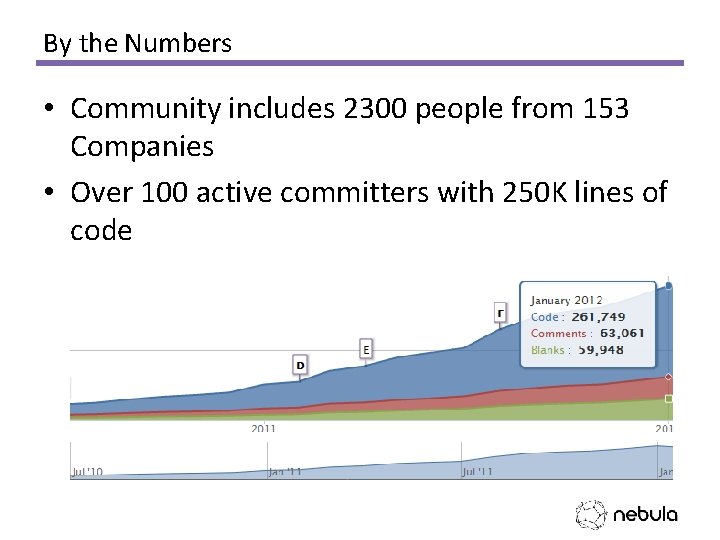
By the Numbers • Community includes 2300 people from 153 Companies • Over 100 active committers with 250 K lines of code
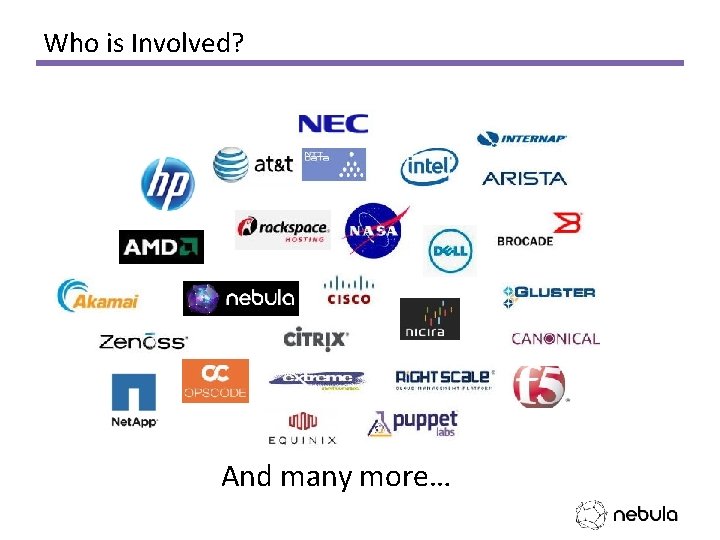
Who is Involved? And many more…
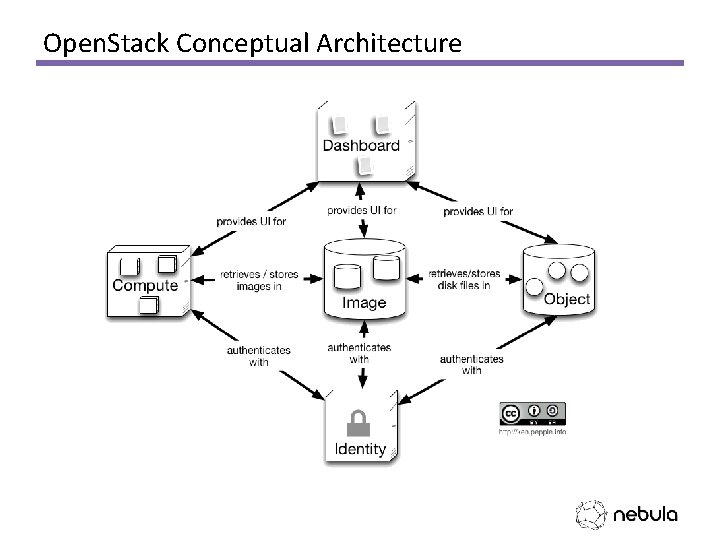
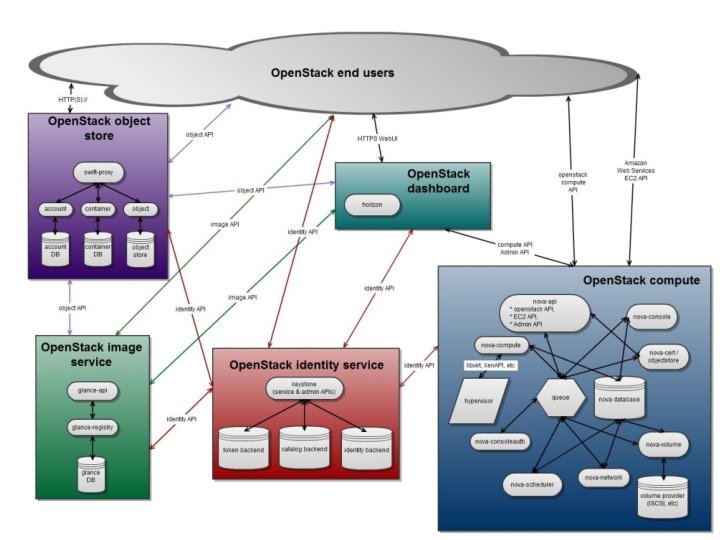
Open. Stack Conceptual Architecture
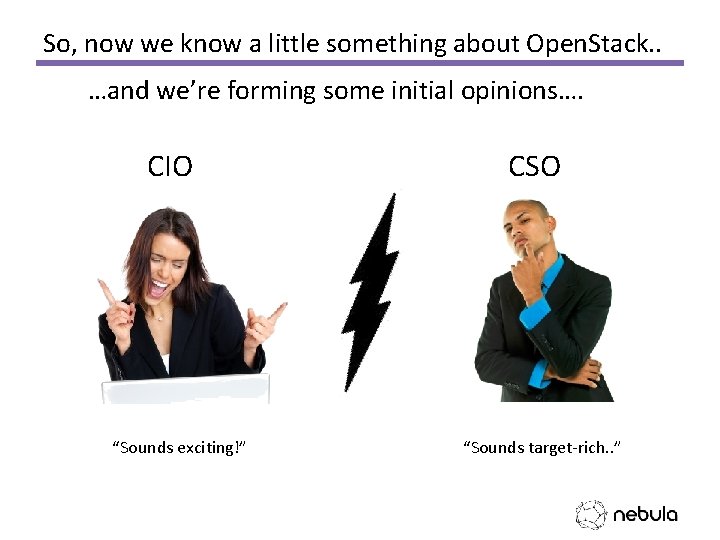
So, now we know a little something about Open. Stack. . …and we’re forming some initial opinions…. CIO “Sounds exciting!” CSO “Sounds target-rich. . ”
Security and the Open. Stack project

Open. Stack Security Community Highlights Open. Stack project groups Vulnerability response Formalizing security Audit projects Multiple security-centric blueprints – ongoing code improvements – – Commercial efforts – Professional penetration Testing / API fuzzing – Sponsored bugfests with growing participation – Active and ongoing source code review process
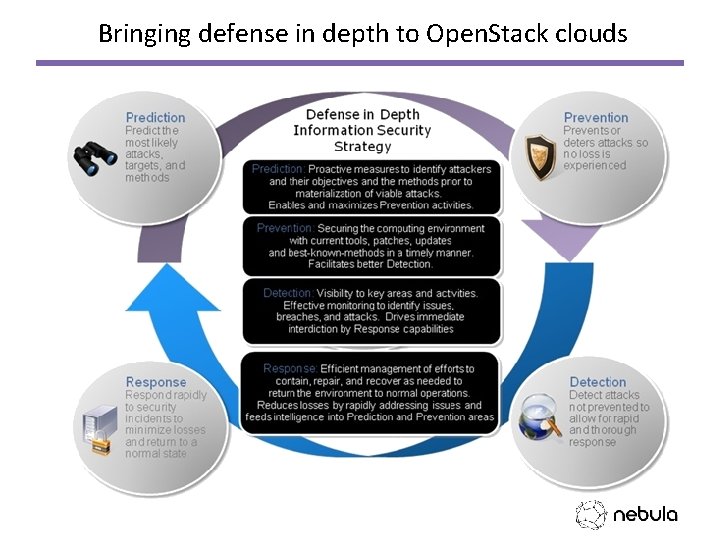
Bringing defense in depth to Open. Stack clouds
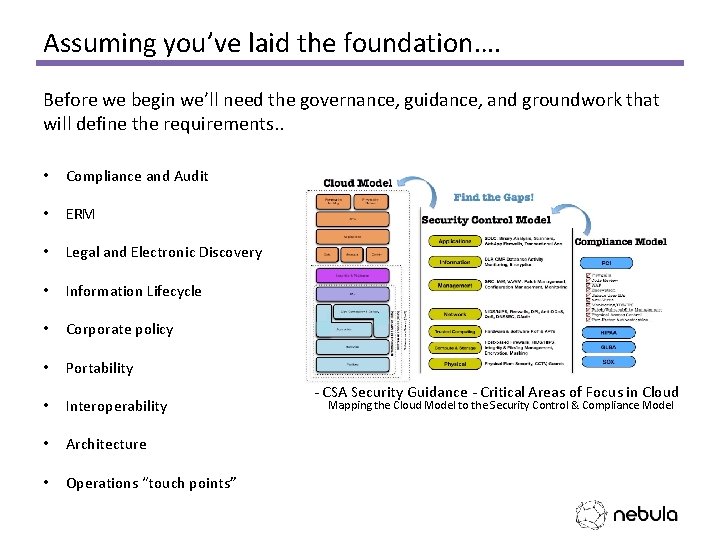
Assuming you’ve laid the foundation…. Before we begin we’ll need the governance, guidance, and groundwork that will define the requirements. . • Compliance and Audit • ERM • Legal and Electronic Discovery • Information Lifecycle • Corporate policy • Portability • Interoperability • Architecture • Operations “touch points” - CSA Security Guidance - Critical Areas of Focus in Cloud Mapping the Cloud Model to the Security Control & Compliance Model
…. let’s take a closer look at the technologies in play.
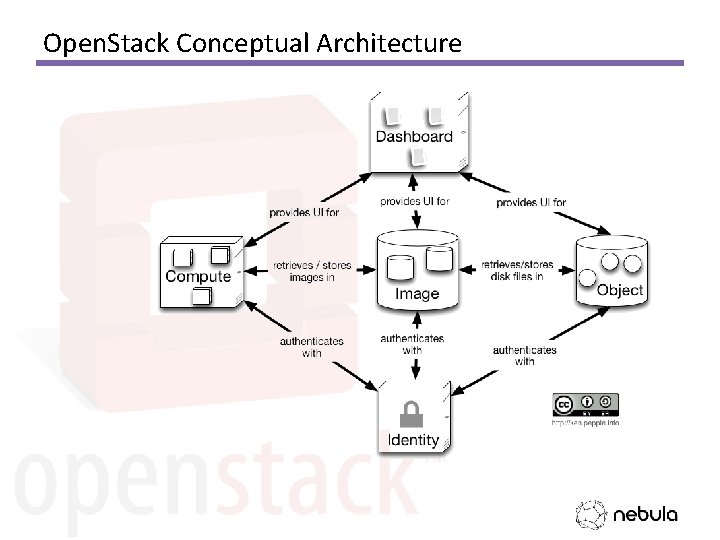
Open. Stack Conceptual Architecture
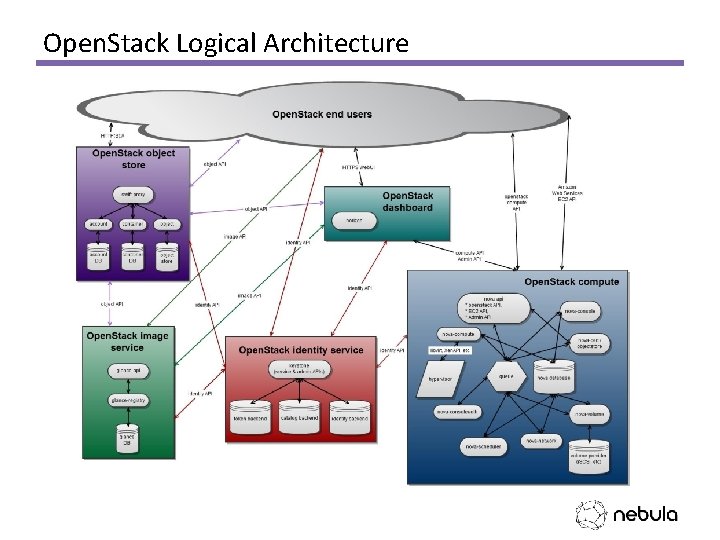
Open. Stack Logical Architecture
Open. Stack - Under the hood… • Mostly implemented in Python • REST and WSGI communication between services • Multiple application choices to implement backend • databases • queue • networking Everything needs to be hardened and continuously monitored. …Luckily, we have a few best practices for doing this stuff with open source software.
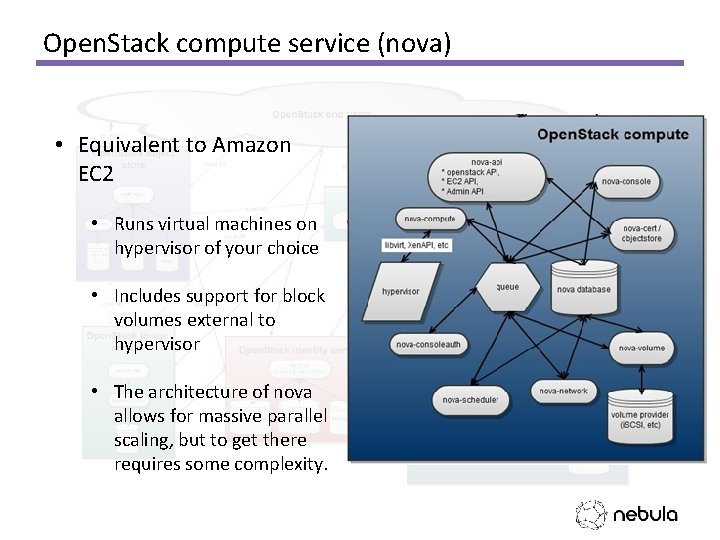
Open. Stack compute service (nova) • Equivalent to Amazon EC 2 • Runs virtual machines on hypervisor of your choice • Includes support for block volumes external to hypervisor • The architecture of nova allows for massive parallel scaling, but to get there requires some complexity.
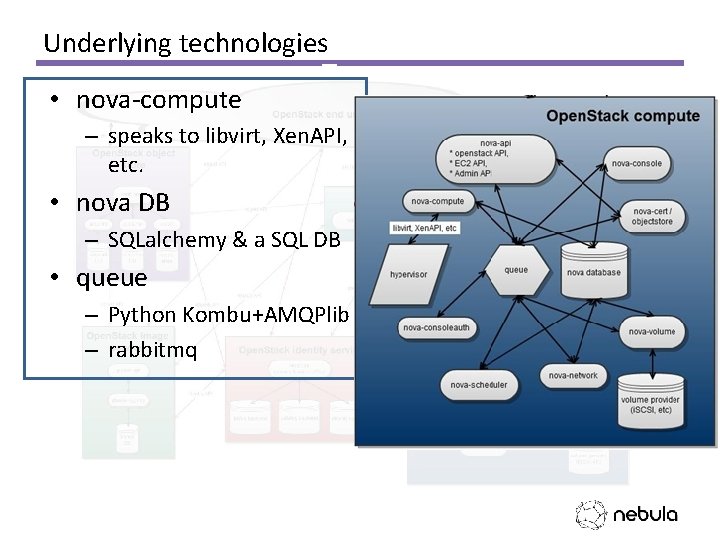
Underlying technologies • nova-compute – speaks to libvirt, Xen. API, etc. • nova DB – SQLalchemy & a SQL DB • queue – Python Kombu+AMQPlib – rabbitmq
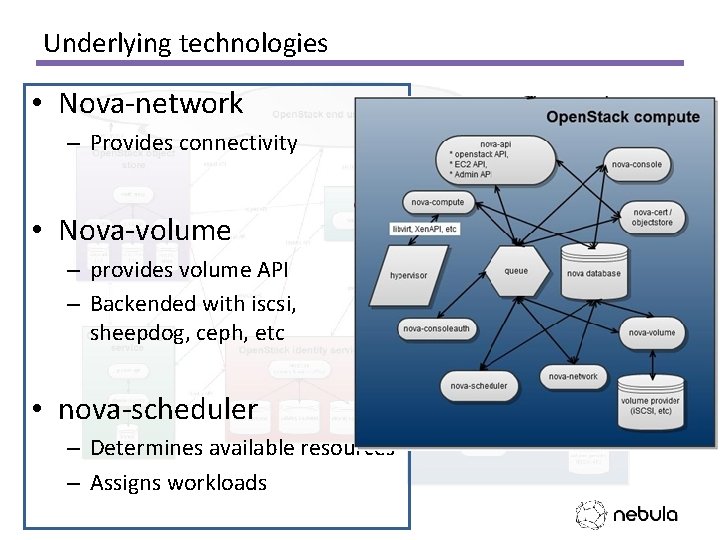
Underlying technologies • Nova-network – Provides connectivity • Nova-volume – provides volume API – Backended with iscsi, sheepdog, ceph, etc • nova-scheduler – Determines available resources – Assigns workloads
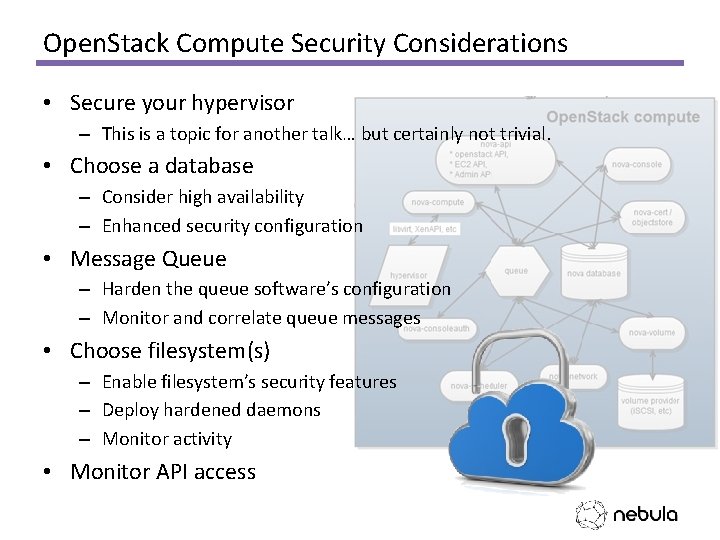
Open. Stack Compute Security Considerations • Secure your hypervisor – This is a topic for another talk… but certainly not trivial. • Choose a database – Consider high availability – Enhanced security configuration • Message Queue – Harden the queue software’s configuration – Monitor and correlate queue messages • Choose filesystem(s) – Enable filesystem’s security features – Deploy hardened daemons – Monitor activity • Monitor API access
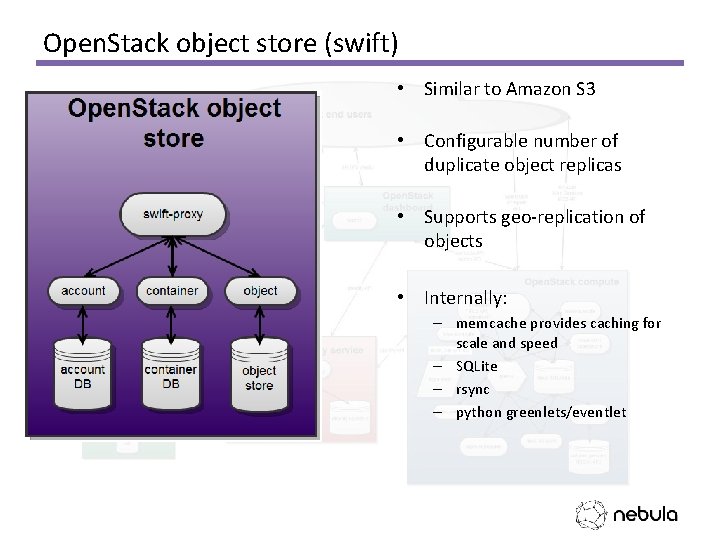
Open. Stack object store (swift) • Similar to Amazon S 3 • Configurable number of duplicate object replicas • Supports geo-replication of objects • Internally: – memcache provides caching for scale and speed – SQLite – rsync – python greenlets/eventlet
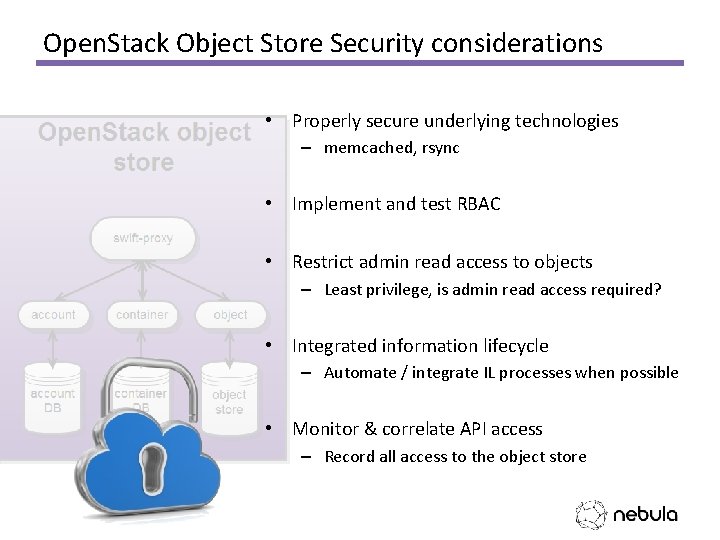
Open. Stack Object Store Security considerations • Properly secure underlying technologies – memcached, rsync • Implement and test RBAC • Restrict admin read access to objects – Least privilege, is admin read access required? • Integrated information lifecycle – Automate / integrate IL processes when possible • Monitor & correlate API access – Record all access to the object store
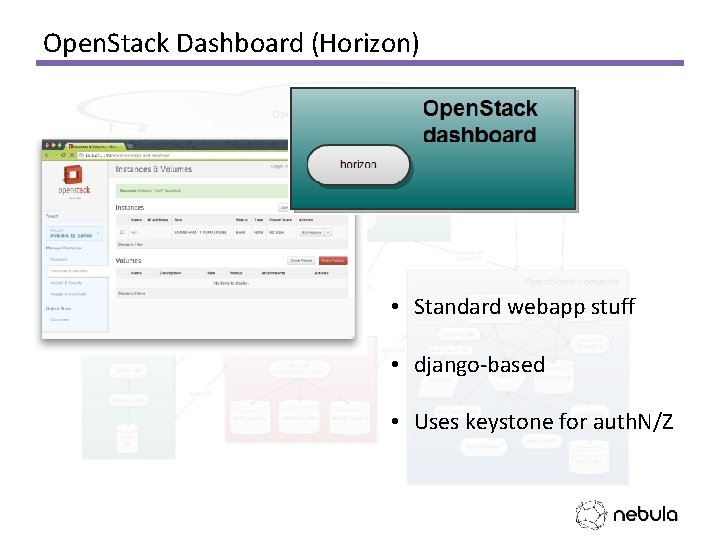
Open. Stack Dashboard (Horizon) • Standard webapp stuff • django-based • Uses keystone for auth. N/Z
Open. Stack Dashboard Security considerations • Use enterprise authentication behind keystone • Standard webapp hardening process • Protect credentials • Monitor access and correlate
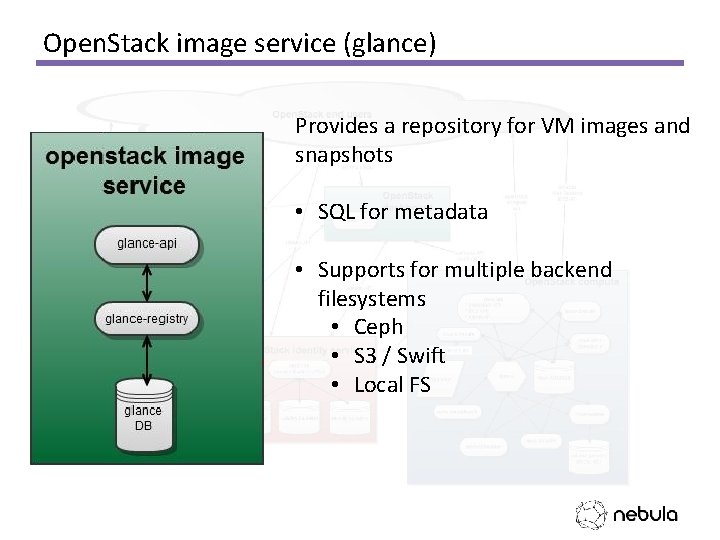
Open. Stack image service (glance) Provides a repository for VM images and snapshots • SQL for metadata • Supports for multiple backend filesystems • Ceph • S 3 / Swift • Local FS
Open. Stack Image Service Security Considerations • Choose distributed filesystem(s) – Enable filesystem’s security features and configure hardened endpoints – Monitor activity • Choose a database – Consider high availability – Enhanced security configuration • Audit – Automate audit of images for OS controls • Patch management – Automate patching and configuration updates to OS images
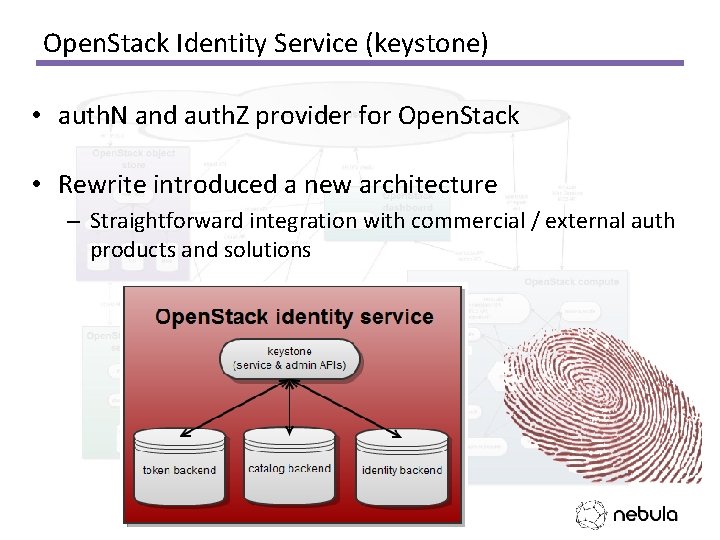
Open. Stack Identity Service (keystone) • auth. N and auth. Z provider for Open. Stack • Rewrite introduced a new architecture – Straightforward integration with commercial / external auth products and solutions
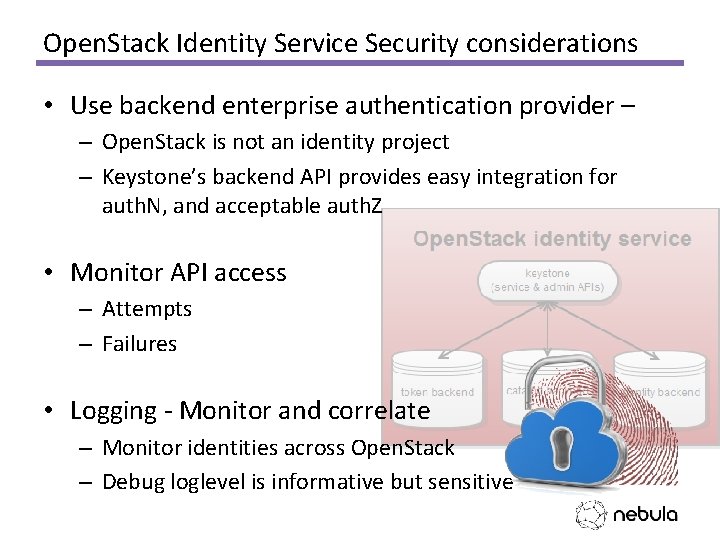
Open. Stack Identity Service Security considerations • Use backend enterprise authentication provider – – Open. Stack is not an identity project – Keystone’s backend API provides easy integration for auth. N, and acceptable auth. Z • Monitor API access – Attempts – Failures • Logging - Monitor and correlate – Monitor identities across Open. Stack – Debug loglevel is informative but sensitive
Other parts of the Open. Stack ecosystem • Open. Stack incubated projects – Two exciting networking projects • Quantum • Mélange • Other interesting Open. Stack projects – Database-as-a-Service – Dashboard enhancements and plugins – Hybrid cloud functionality (cloudgateway, etc)
…Zooming back out Enough of the trenches. This is a keynote, after all.
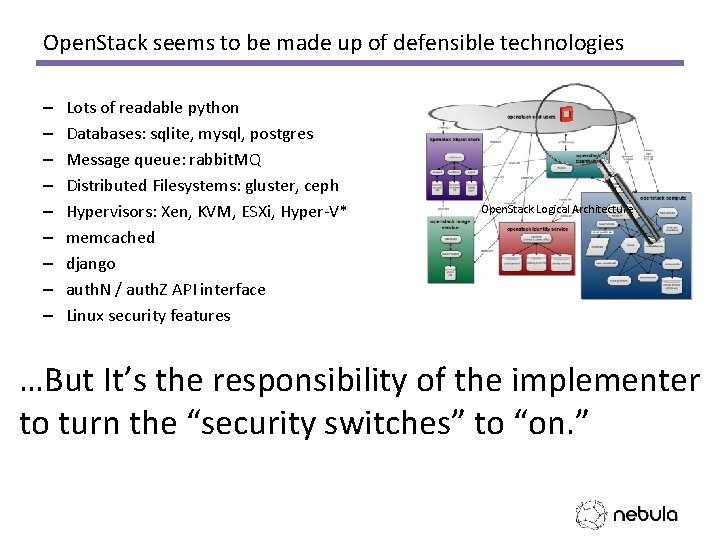
Open. Stack seems to be made up of defensible technologies – – – – – Lots of readable python Databases: sqlite, mysql, postgres Message queue: rabbit. MQ Distributed Filesystems: gluster, ceph Hypervisors: Xen, KVM, ESXi, Hyper-V* memcached django auth. N / auth. Z API interface Linux security features Open. Stack Logical Architecture …But It’s the responsibility of the implementer to turn the “security switches” to “on. ”
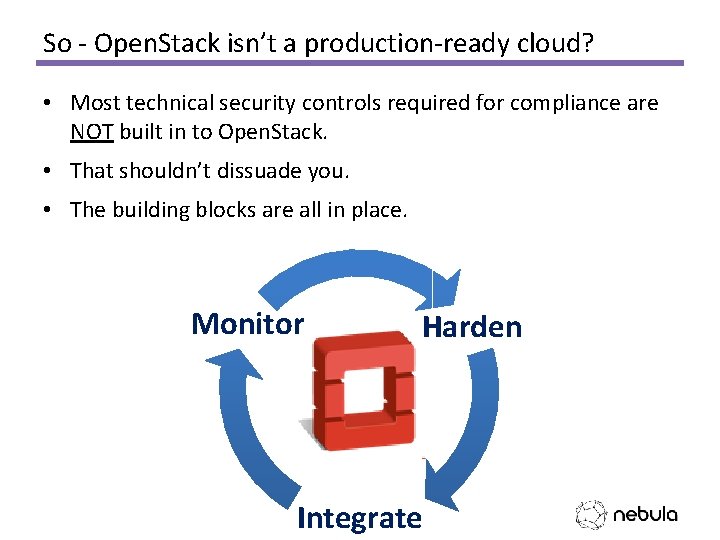
So - Open. Stack isn’t a production-ready cloud? • Most technical security controls required for compliance are NOT built in to Open. Stack. • • That shouldn’t dissuade you. • The building blocks are all in place. Monitor Harden Integrate
Hardening Open. Stack system environments • Restrict network and data access to least privilege • Enable security features of underlying software • Configure security features of the underlying OS • Harden the hypervisor • Use PKI for SSL • Implement database security
Integration - benefits to even the playing field Some integration points: • • • SIM/ SIEM IR automation / Live Forensics CMDB / Service desk Asset mgmt / Patch mgmt Auditing process automation IPAM Integrating the underlying cloud framework into these elements yields huge benefits
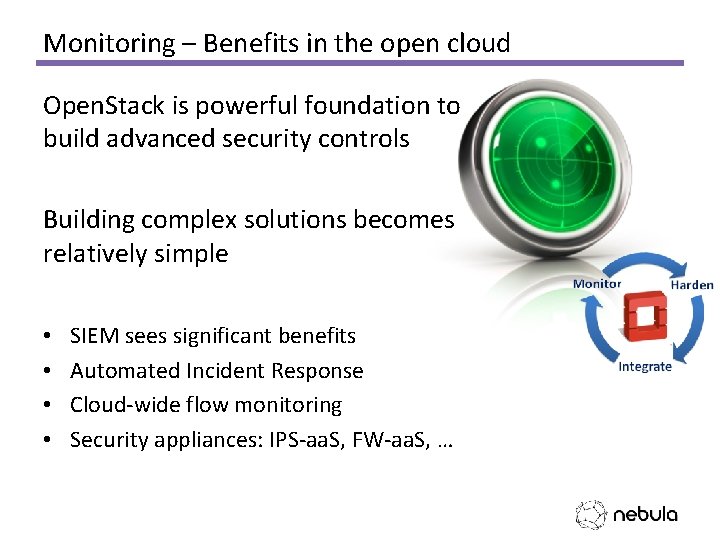
Monitoring – Benefits in the open cloud Open. Stack is powerful foundation to build advanced security controls Building complex solutions becomes relatively simple • • SIEM sees significant benefits Automated Incident Response Cloud-wide flow monitoring Security appliances: IPS-aa. S, FW-aa. S, …
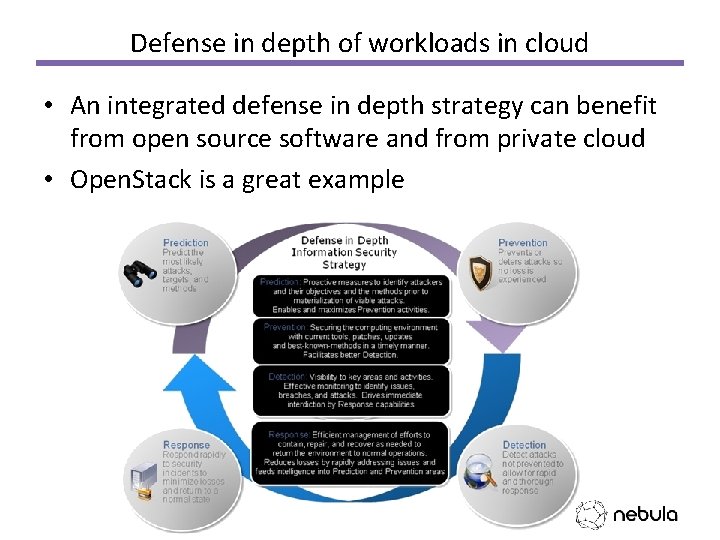
Defense in depth of workloads in cloud • An integrated defense in depth strategy can benefit from open source software and from private cloud • Open. Stack is a great example
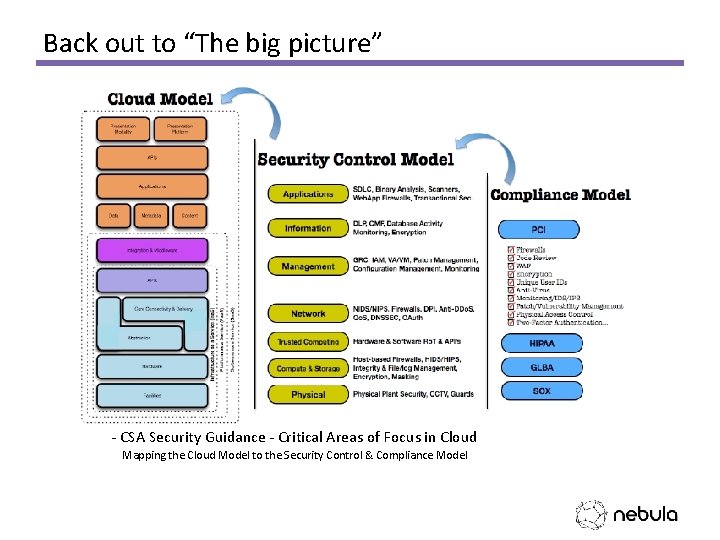
Back out to “The big picture” - CSA Security Guidance - Critical Areas of Focus in Cloud Mapping the Cloud Model to the Security Control & Compliance Model
Looking ahead - 2012 and Open. Stack security The coming year looks to be very exciting for the Open. Stack project, and specifically for Open. Stack security. Open. Stack-based products could offer powerful security options. A few ideas we’re kicking around at : • Interesting security-as-a-service potential – Quantum provides some of the missing building blocks needed for metered and scalable security controls on demand in Open. Stack • IR process integration offers excellent coverage – Potential for huge efficiency improvements in remediation of incidents and live response activities • SIM / SIEM benefits – Coverage over large infrastructure increases value of SIM integration – The visibility and control that Iaa. S offers eases SIM complexity
Conclusion • Open. Stack is a flexible foundation – It’s a viable option, but not necessarily right out of the box – It’s not right for every workload or enterprise – Its open-ness is a big plus for security • Still some significant unanswered security questions – Expect to see commercial Open. Stack-based products bridging this gap • Exciting new developments improving the security of Open. Stack are happening every day
Thanks for listening! Chris C. Kemp Twitter: @Kemp
- Slides: 44