
Securing a Future for the Great Barrier Reef
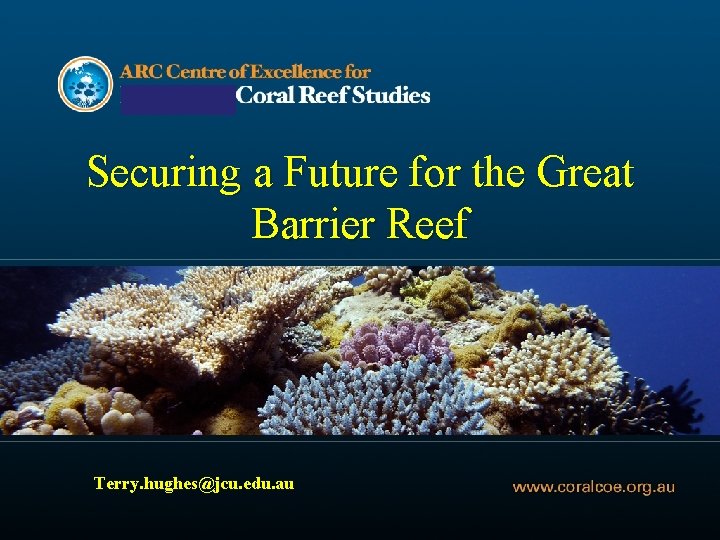
Securing a Future for the Great Barrier Reef Terry. hughes@jcu. edu. au
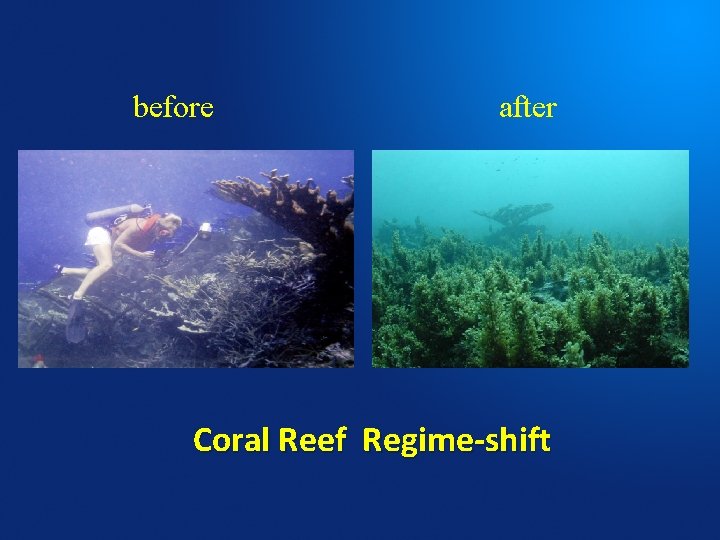
before after Coral Reef Regime-shift
Drivers of Change • Human population growth and migration • Wealth, consumption, and evolving markets … Leading to changes in land/sea use, freshwater use, pollution, biogeochemical cycles, biodiversity, ozone depletion, and climate change
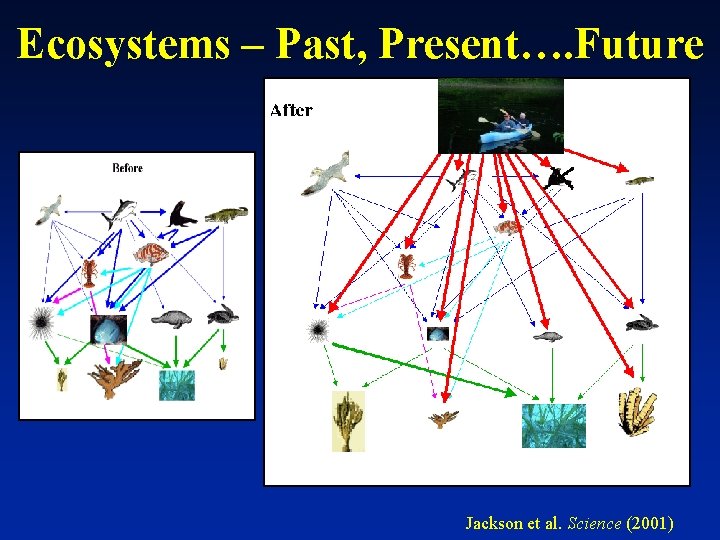
Ecosystems – Past, Present…. Future Jackson et al. Science (2001)
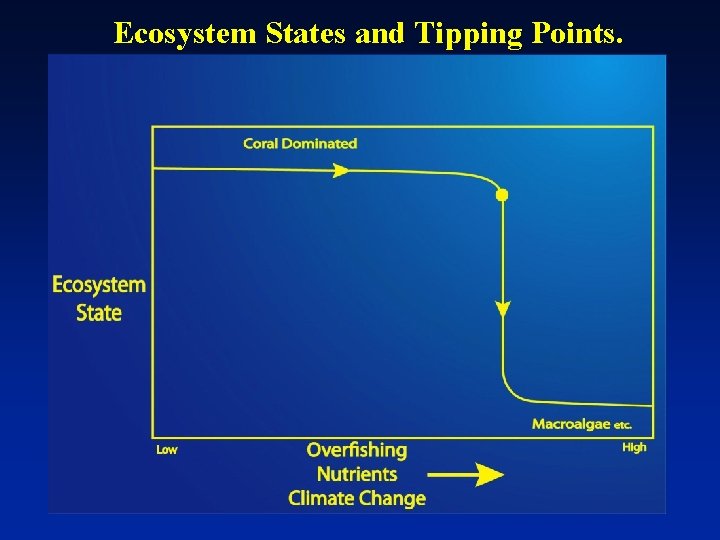
Ecosystem States and Tipping Points.
Talk Outline Trajectories of change in multi-scale drivers, in ecosystems, and in governance of the Great Barrier Reef (GBR) What is the future prognosis?
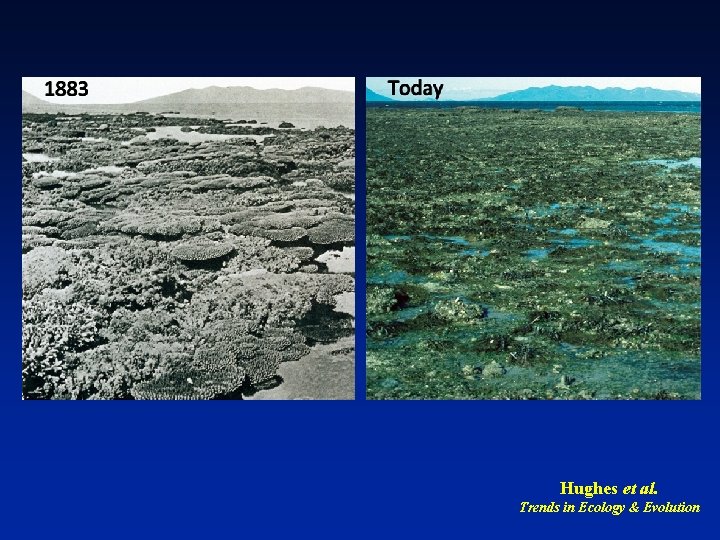
Hughes et al. Trends in Ecology & Evolution
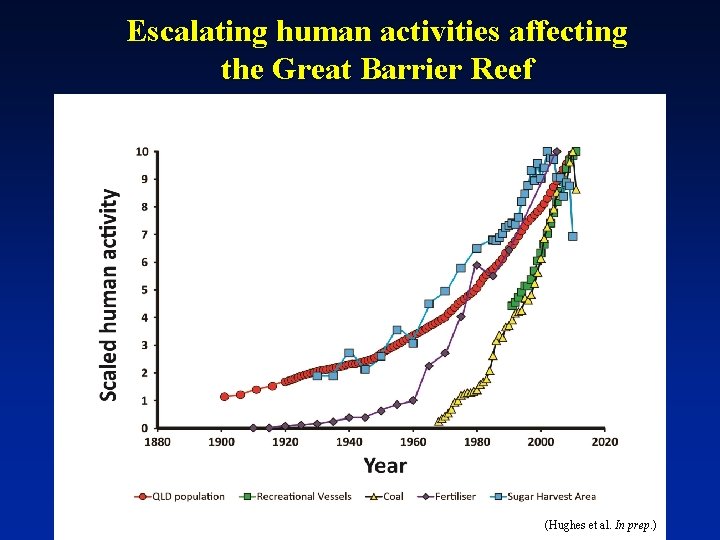
Escalating human activities affecting the Great Barrier Reef (Hughes et al. In prep. )
Responses of GBR ecosystems to escalating drivers: • Declining mega-fauna, sea grasses and corals • Distorted foodwebs • Increased bleaching, diseases and starfish outbreaks • Loss of resilience to natural events – cyclones, floods
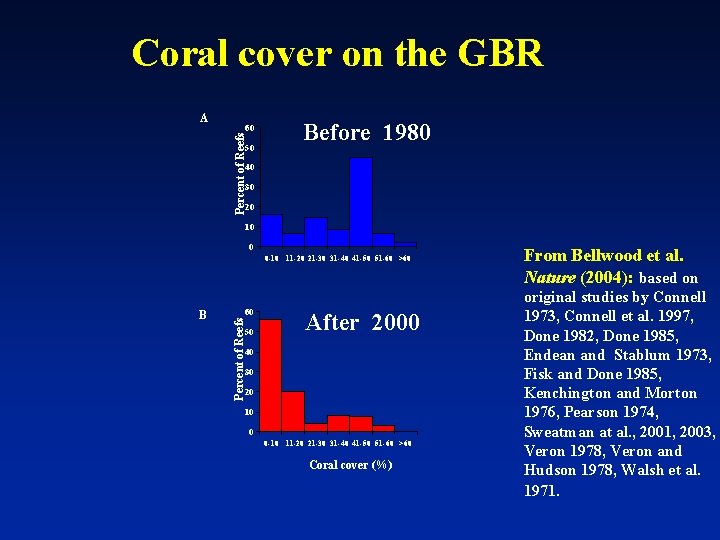
Coral cover on the GBR 60 Percent of Reefs A 50 Before 1980 40 30 20 10 0 0 -10 11 -20 21 -30 31 -40 41 -50 51 -60 >60 Percent of Reefs B 60 50 After 2000 40 30 20 10 0 0 -10 11 -20 21 -30 31 -40 41 -50 51 -60 >60 Coral cover (%) From Bellwood et al. Nature (2004): based on original studies by Connell 1973, Connell et al. 1997, Done 1982, Done 1985, Endean and Stablum 1973, Fisk and Done 1985, Kenchington and Morton 1976, Pearson 1974, Sweatman at al. , 2001, 2003, Veron 1978, Veron and Hudson 1978, Walsh et al. 1971.
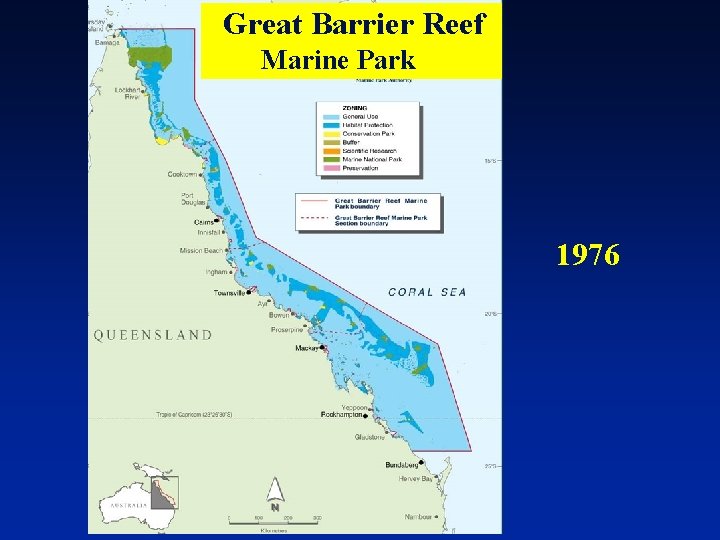
Great Barrier Reef Marine Park 1976
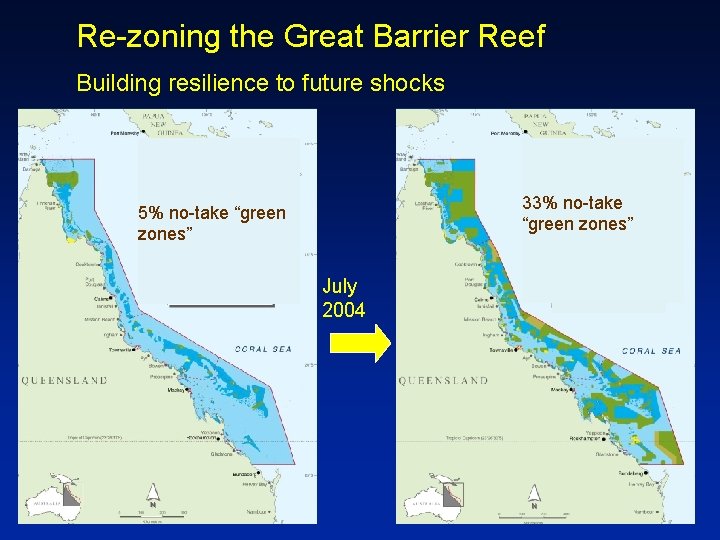
Re-zoning the Great Barrier Reef Building resilience to future shocks 33% no-take “green zones” 5% no-take “green zones” July 2004
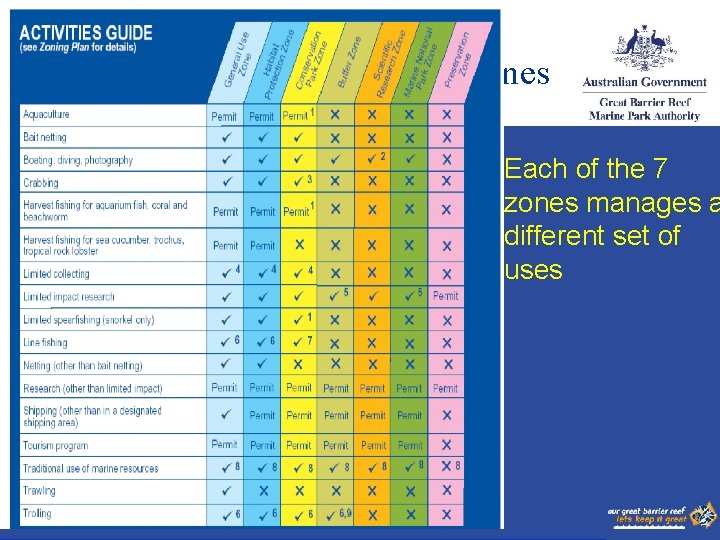
More than just no-take (green) zones Each of the 7 zones manages a different set of uses
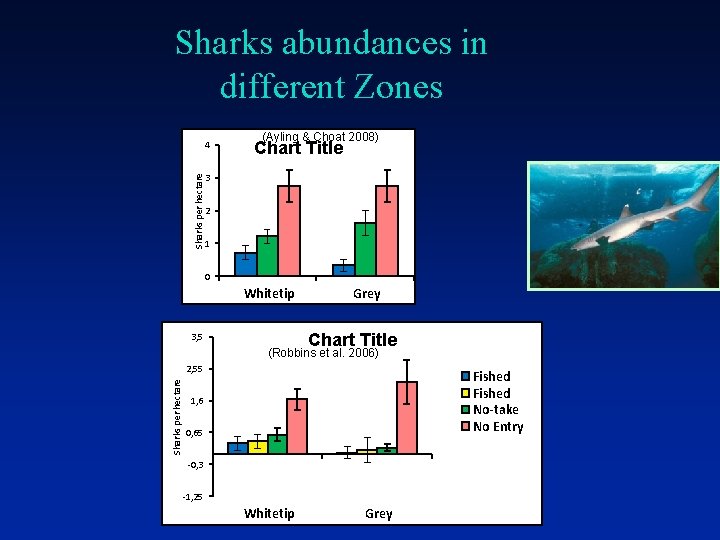
Sharks abundances in different Zones Sharks per hectare 4 (Ayling & Choat 2008) Chart Title 3 2 1 0 Whitetip Grey Chart Title 3, 5 (Robbins et al. 2006) Sharks per hectare 2, 55 Fished No-take No Entry 1, 6 0, 65 -0, 3 -1, 25 Whitetip Grey
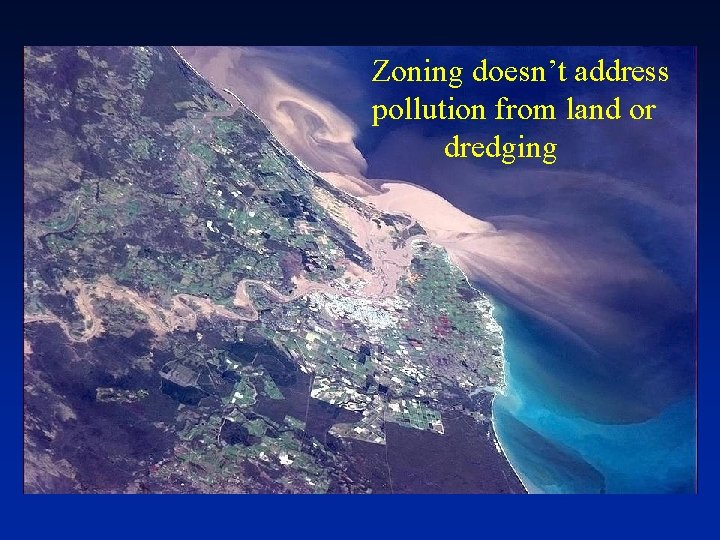
Zoning doesn’t address pollution from land or dredging
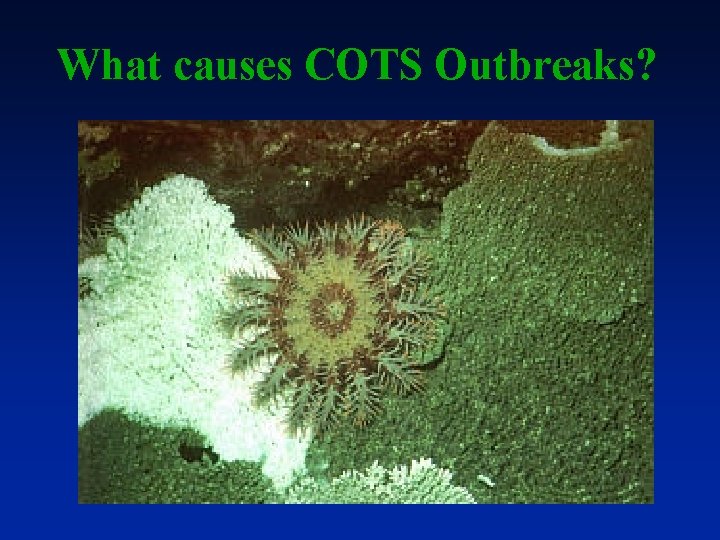
What causes COTS Outbreaks?
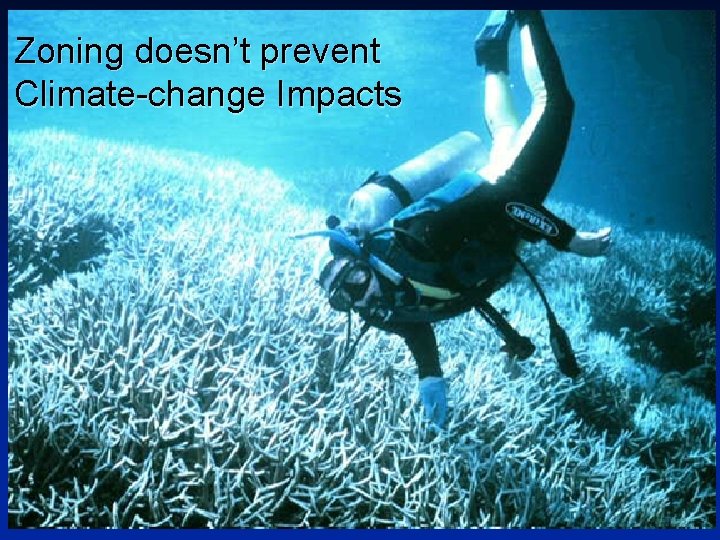
Zoning doesn’t prevent Climate-change Impacts
SUMMARY • Climate change, runoff, dredging and over- harvesting are the four big issues that ALL have to be addressed to protect the GBR • Prevention is better than cure • Effective management of the GBR will require a scaling-up of governance
Take-home message: • The problems of the GBR and elsewhere cannot be solved locally or at any single scale…… because it is no longer a closed or isolated system. The key challenge for sustainability is to design governance structures that can simultaneously address local, regional and global drivers.
Terry. hughes@jcu. edu. au ……. . Thanks
- Slides: 21