
SECTORS OF THE ECONOMY BREZEANU BOGDAN The three
SECTORS OF THE ECONOMY BREZEANU BOGDAN
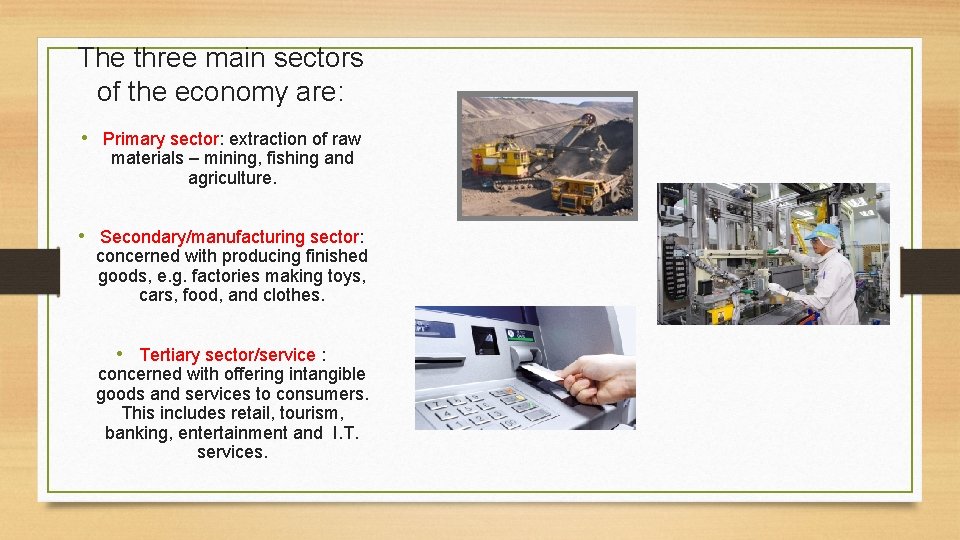
The three main sectors of the economy are: • Primary sector: extraction of raw materials – mining, fishing and agriculture. • Secondary/manufacturing sector: concerned with producing finished goods, e. g. factories making toys, cars, food, and clothes. • Tertiary sector/service : concerned with offering intangible goods and services to consumers. This includes retail, tourism, banking, entertainment and I. T. services.
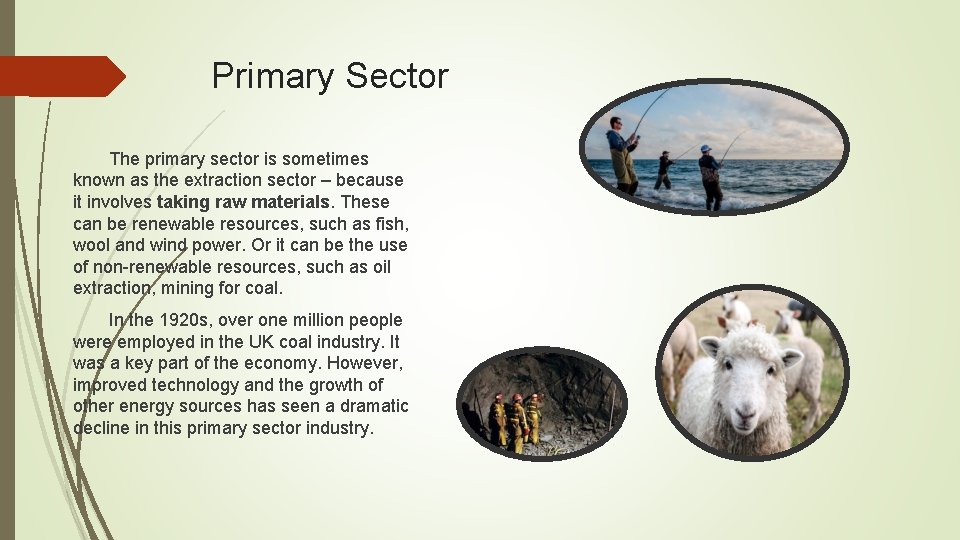
Primary Sector The primary sector is sometimes known as the extraction sector – because it involves taking raw materials. These can be renewable resources, such as fish, wool and wind power. Or it can be the use of non-renewable resources, such as oil extraction, mining for coal. In the 1920 s, over one million people were employed in the UK coal industry. It was a key part of the economy. However, improved technology and the growth of other energy sources has seen a dramatic decline in this primary sector industry.
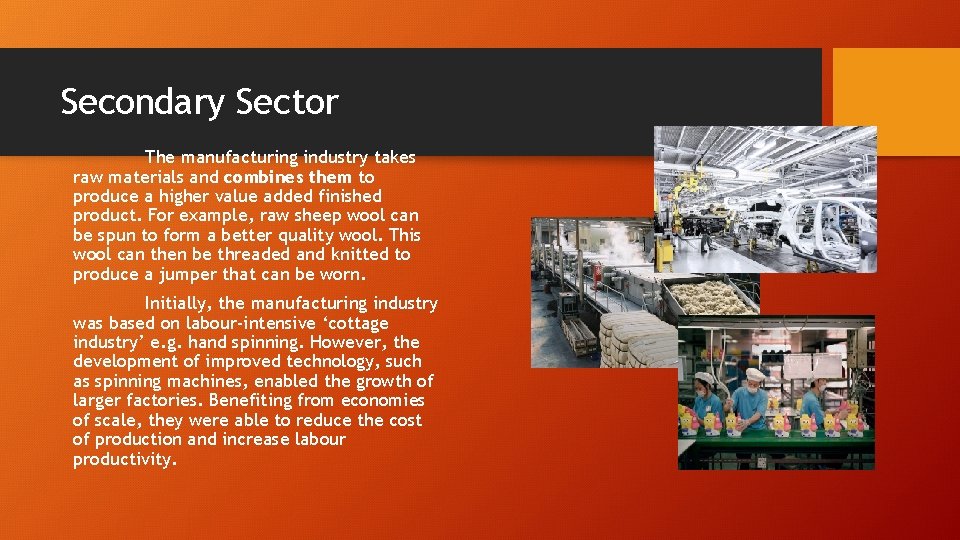
Secondary Sector The manufacturing industry takes raw materials and combines them to produce a higher value added finished product. For example, raw sheep wool can be spun to form a better quality wool. This wool can then be threaded and knitted to produce a jumper that can be worn. Initially, the manufacturing industry was based on labour-intensive ‘cottage industry’ e. g. hand spinning. However, the development of improved technology, such as spinning machines, enabled the growth of larger factories. Benefiting from economies of scale, they were able to reduce the cost of production and increase labour productivity.
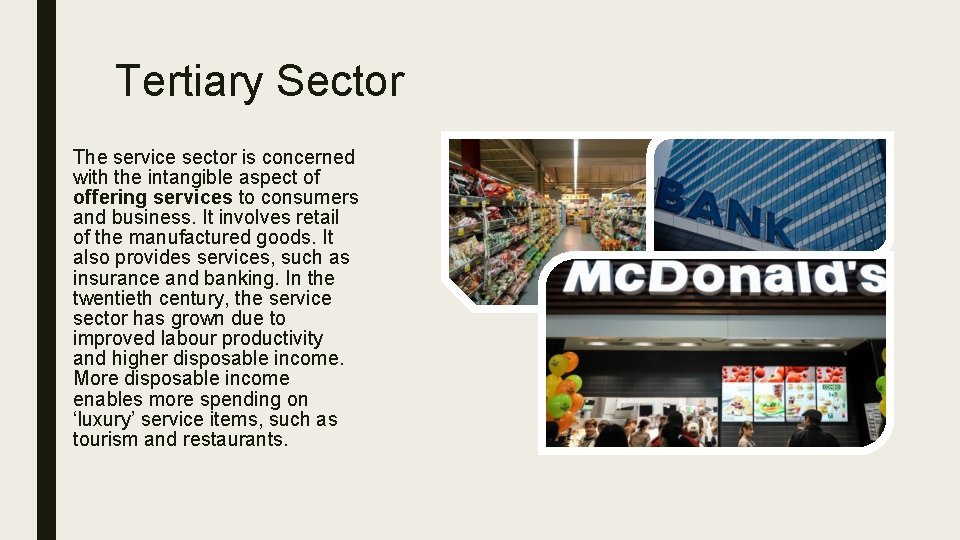
Tertiary Sector The service sector is concerned with the intangible aspect of offering services to consumers and business. It involves retail of the manufactured goods. It also provides services, such as insurance and banking. In the twentieth century, the service sector has grown due to improved labour productivity and higher disposable income. More disposable income enables more spending on ‘luxury’ service items, such as tourism and restaurants.
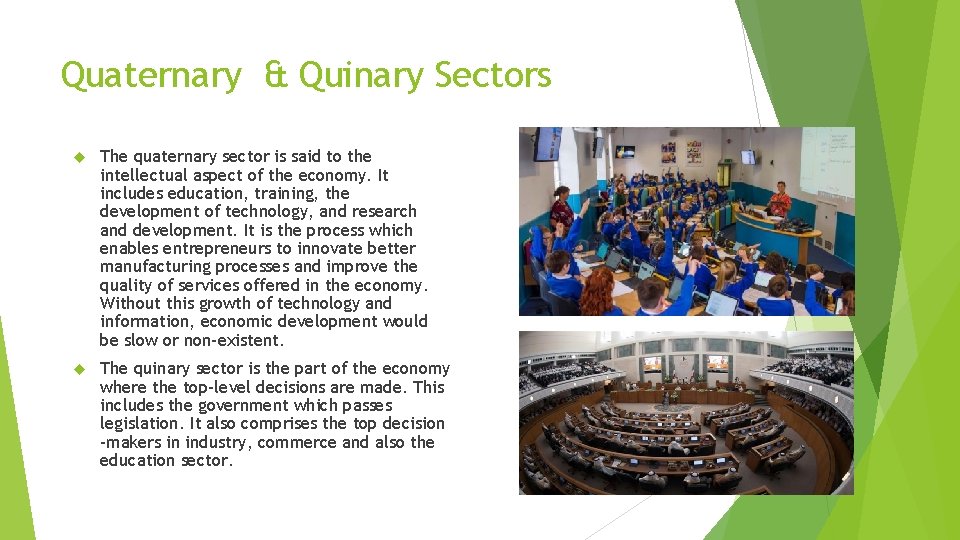
Quaternary & Quinary Sectors The quaternary sector is said to the intellectual aspect of the economy. It includes education, training, the development of technology, and research and development. It is the process which enables entrepreneurs to innovate better manufacturing processes and improve the quality of services offered in the economy. Without this growth of technology and information, economic development would be slow or non-existent. The quinary sector is the part of the economy where the top-level decisions are made. This includes the government which passes legislation. It also comprises the top decision -makers in industry, commerce and also the education sector.
- Slides: 6